• ABOUT
  • BIRDING 2018
  • Birding 2019
  • BLOG POSTS
  • Butterflies 2018
  • Resources

earthstar

~ a celebration of nature

earthstar

Tag Archives: fungus

The sexual habits of lichen

28 Monday Dec 2015

Posted by sconzani in fungi, lichen, nature, nature photography

≈ Leave a comment

Tags

fungi, fungus, lichen

Lichen have two methods of reproduction: one is asexual – they simply expand to cover more of the surface on which they’re living; the other is sexual but, it’s not the actual lichen that is reproducing sexually, it’s the fungus the lichen is in a symbiotic relationship with.

151228 lichen sex pontcanna trees (1)

The saucer-shaped discs in my photos are apothecia, one of the two main types of sexual fruiting bodies of the fungi in the Ascomycota group, to which the majority of lichens belong. Spores (the correct term is propagules) are dispersed from these discs by air, water or attaching themselves to minibeasties, and must then meet up with an algal partner in order to form new lichen.

151228 lichen sex pontcanna trees (2)

The yellow- and orange-coloured lichen in these photographs are, I believe, Xanthoria parietina, which is very common on both tree bark and stonework throughout Britain, and has a particular liking for Elder trees and coastal rocks.

Like Loading...

The trooping of the funnels

26 Saturday Dec 2015

Posted by sconzani in fungi, nature, nature photography

≈ 2 Comments

Tags

fungi, fungus, Monk's Head, Trooping funnel

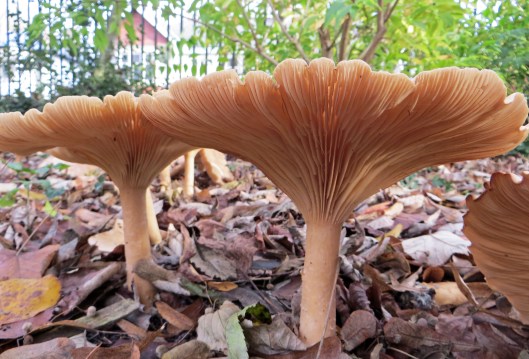
My photos of this most majestic of mushrooms were taken on 16 November, yet these fungi have only just disappeared, succumbing eventually to the almost constant rain we’ve had in the past month. But what a show they put on! Clumped together in twos or threes and standing up to eight inches tall, they trooped grandly across a garden bed at my local park in an arc that was at least five metres long, as if they were parading for royalty!

Clitocybe geotropa Trooping Funnel (2)

This is the aptly named Trooping funnel, until recently known by the scientific name Clitocybe geotropa – clitocybe means ‘sloping head’ and geotropa, in ancient Greek, means ‘towards the earth’ – but now reclassified Infundibulicybe geotropa. Such reclassifications are common in the fungi world now that their individual characteristics can be more accurately identified with the benefit of modern technology. This fungus also has other common names: Monk’s Head (I guess its soft leathery texture does look a bit like a shaven pate) and, in Scotland, the Rickstone Funnel-cap (its shape resembles a particular method of stacking corn, straw or hay).

Clitocybe geotropa Trooping Funnel (1)

The Trooping funnel is a common enough woodland fungus but is most famous for its impressive fairy rings. One such ring in France was recorded at more than half a mile wide and was believed to be 800 years old!

Clitocybe geotropa Trooping Funnel (5)

Like Loading...

The quintessential mushroom

20 Sunday Dec 2015

Posted by sconzani in fungi, nature, nature photography

≈ Leave a comment

Tags

autumn, autumn colour, Fly agaric, Fly amanita, fungi, fungus, Scarlet flycap

I was living in Auckland, New Zealand, when I first spotted one of these mushrooms and I admit to having had a ‘wow’ moment. It was like walking into a fairytale … I half expected fairies and elves to emerge and perform a magical dance amongst the leaf litter. This is, after all, the classic what-every-kid-would-draw-if-you-asked-them mushroom.

151220 Amanita muscaria fly agaric (1)

The Fly agaric (Amanita muscaria), also known as the Fly amanita and the Scarlet flycap, isn’t native to New Zealand but was unintentionally introduced there due to its rather intimate relationship with pine trees. Since its arrival, it has been quite wanton and, as it has now begun forming relationships with native trees, to the detriment of native fungi, it is considered a pest.

151220 Amanita muscaria fly agaric (2)

On the left, a young mushroom; on the right, an aging specimen

As the flesh of the Fly agaric contains psychoactive substances it has been used for centuries in religious and shamanistic rituals in Asia and parts of northern Europe. This fungus is, however, classified as poisonous, so forget the hallucinogenic adventure and feast with your eyes only!

Like Loading...

When is a parrot not a bird?

14 Monday Dec 2015

Posted by sconzani in autumn, fungi, nature, nature photography

≈ 2 Comments

Tags

autumn, cemetery, fungi, fungus, parrot toadstool, parrot waxcap, waxcap

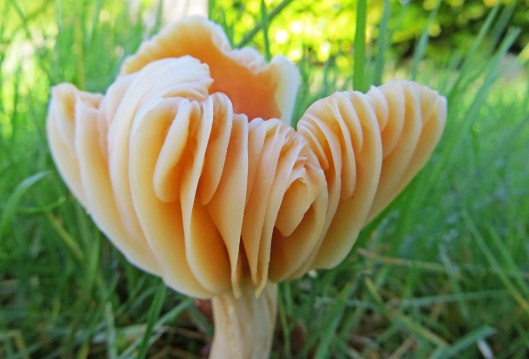
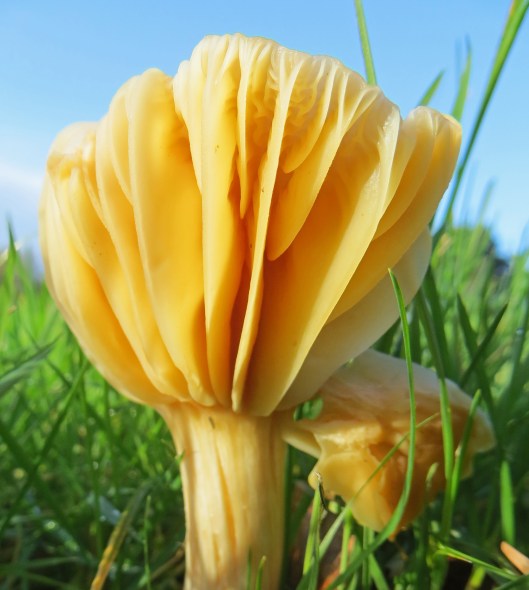
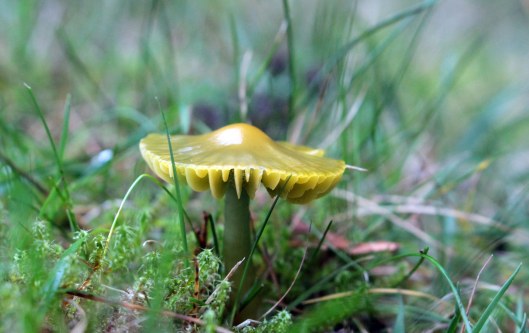
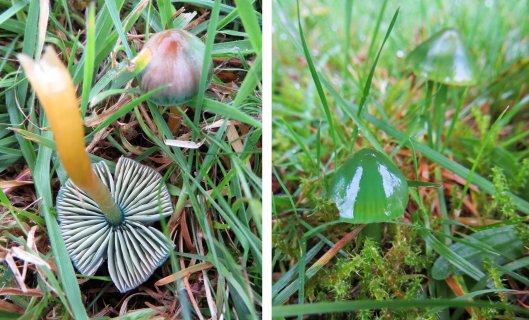
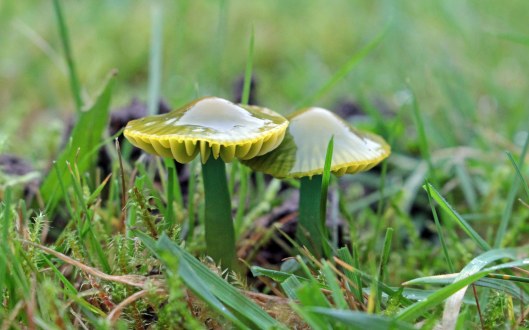
When it’s a waxcap, of course. Still none the wiser? Well, meet Gliophorus psittacinus (the fungus formerly known as Hygrocybe psittacina), the gorgeous little Parrot waxcap or toadstool.

151214 parrot waxcap (2)

Latin names are a bit of a mouthful but both gliophorus and hygrocybe (tissue carrying / watery head) refer to the tendency for all waxcaps to look and feel quite slimy. Psittacinus is Latin for parrot, and it’s easy to see where this little fungus gets that name – it’s just as colourful as any parrot you’ll ever see, ranging in colour from green, yellow and orange through to pink, purple and brown. Bright green seems to be its predominant hue when young, then the other colours are more easily seen as the green slime washes off its cap.

151214 parrot waxcap (3)

Like all waxcaps it can be found in summer and autumn in grassy areas that have received no artificial fertilisers for 30 years or more, so look for it on roadside verges, in cropped paddocks and in older cemeteries, often in mossy areas. In Britain, it’s more likely to be found in the western counties and in Wales, and it also grows in the cooler parts of mainland Europe and in parts of North America.

151214 parrot waxcap (1)

Like Loading...

Feeling sluggish

11 Friday Dec 2015

Posted by sconzani in fungi, nature, nature photography, slugs

≈ 2 Comments

Tags

cemetery, fungi, fungus, gastropod mollusc, Leopard slug, slug

Once the rain stopped this afternoon, I went out for a wander, looking to see if there were any new fungi after the dampness of recent days. What I found were shell-less terrestrial gastropod molluscs, big fat slippery slimy slugs that had at least partially devoured many of the tasty-to-them, newly sprouted mushrooms.

151211 slugs (2)

Isn’t it interesting that we use a lot of ‘slug’ idioms and expressions in the English language? If we are fighting, we are also slugging it out. If we’re working hard at a task, we’re slugging away at it. If we’re having a shot of alcohol, we’re having a slug of the drink. Well, today I saw many literal illustrations of the word sluggish: all those terrestrial gastropod molluscs, like the Leopard slug (Limax maximus) in my photos, were looking decidedly sluggish as they sleepily digested the hefty portions of fungi they’d consumed for their lunch.

151211 slugs (1)

In case you’re a gardener and think I should have killed this creature, this slug is actually one of the good guys. It won’t damage healthy living plants, preferring fungi, rotting plants and even other slugs, and it recycles nutrients, helping to fertilise the soil.

151211 slugs (3)

Like Loading...

The stars that fell to earth

08 Tuesday Dec 2015

Posted by sconzani in fungi, nature, nature photography

≈ 1 Comment

Tags

cemetery, collared earthstar, earthstar, fungi, fungus

151208 earthstar (1)

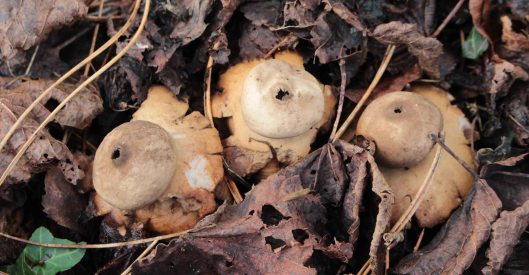
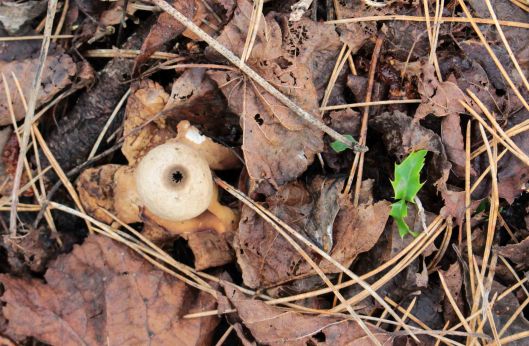
I could hardly believe my luck last Friday when I discovered my very first Collared Earthstars (Geastrum triplex) in a Cardiff cemetery!

Nestled cosily amongst the leaf litter and liberally sprinkled with layers of pine needles from the trees above, they were almost hidden from view. It was only the regularity of the little orb, sitting atop the collar, that caught my eye and, at a quick glance, I thought it must be a grave ornament. But no!

Those first two Earthstars were well past their best but, for a relatively new fungi fancier like me, they were still a delight to behold. Imagine my joy then, when I returned the next day for a more thorough investigation, to find a total of fourteen (!) growing in close proximity to the first ones. I’ll certainly be keeping a sharp eye on this area in the future to see if I can spot any more little stars that have fallen to earth.

151208 earthstar (2)

Like Loading...
Newer posts →

About me

sconzani

sconzani

I'm a writer and photographer; researcher and blogger; birder and nature lover; countryside rambler and city strider; volunteer and biodiversity recorder.

View Full Profile →

Follow earthstar on WordPress.com

Enter your email address to follow this blog and receive notifications of new posts by email.

Recent blog posts

  • City Hall Peregrine January 12, 2026
  • Blackthorn in bloom January 11, 2026
  • Weevil: Mecinus pyraster January 10, 2026
  • Red in beak and claw January 9, 2026
  • Who’s watching who? January 8, 2026

From the archives

COPYRIGHT

Unless otherwise acknowledged, the text and photographs on this blog are my own and are subject to international copyright. Nothing may be downloaded or copied without my permission.

Fellow Earth Stars!

  • Unknown's avatar
  • Unknown's avatar
  • Unknown's avatar
  • Unknown's avatar
  • Unknown's avatar
  • Unknown's avatar
  • Unknown's avatar
  • Unknown's avatar
  • Unknown's avatar
  • Unknown's avatar
  • Unknown's avatar
  • Unknown's avatar
  • Unknown's avatar
  • Unknown's avatar
  • Unknown's avatar
  • Unknown's avatar
  • Unknown's avatar
  • Unknown's avatar
  • Unknown's avatar
  • Unknown's avatar
  • Unknown's avatar
  • Unknown's avatar
  • Unknown's avatar
  • Unknown's avatar
  • Unknown's avatar
  • Unknown's avatar
  • Unknown's avatar
  • Unknown's avatar
  • Unknown's avatar
  • Unknown's avatar
  • Unknown's avatar
  • Unknown's avatar
  • Unknown's avatar
  • Unknown's avatar
  • Unknown's avatar
  • Unknown's avatar
  • Unknown's avatar
  • Unknown's avatar
  • Unknown's avatar
  • Unknown's avatar
  • Unknown's avatar
  • Unknown's avatar
  • Unknown's avatar
  • Unknown's avatar
  • Unknown's avatar
  • Unknown's avatar
  • Unknown's avatar
  • Unknown's avatar
  • Unknown's avatar
  • Unknown's avatar

Blog at WordPress.com.

Privacy & Cookies: This site uses cookies. By continuing to use this website, you agree to their use.
To find out more, including how to control cookies, see here: Cookie Policy
  • Subscribe Subscribed
    • earthstar
    • Join 669 other subscribers
    • Already have a WordPress.com account? Log in now.
    • earthstar
    • Subscribe Subscribed
    • Sign up
    • Log in
    • Report this content
    • View site in Reader
    • Manage subscriptions
    • Collapse this bar
 

Loading Comments...
 

You must be logged in to post a comment.

    %d