• ABOUT
  • BIRDING 2018
  • Birding 2019
  • BLOG POSTS
  • Butterflies 2018
  • Resources

earthstar

~ a celebration of nature

earthstar

Tag Archives: Glamorgan Bird Club

Birding at Ogmore and Kenfig

10 Saturday Feb 2018

Posted by sconzani in birds, nature, seaside, walks

≈ 2 Comments

Tags

birding, birdwatching, Glamorgan Bird Club, Goldeneye, Greenfinch, Kenfig National Nature Reserve, Kenfig Pool, Ogmore, Slavonian grebe, Stonechat

Wednesday dawned clear and frosty so on went the layers of clothing, scarf, hat, gloves and boots, in the backpack went the camera, binoculars, a spot of lunch and rain jacket (this is Wales and I was once a Girl Guide so I was prepared!). I’d scanned tweets, posts and blogs so knew vaguely what to expect and left the house hopeful.

180211 Birding at Ogmore & Kenfig (10)

And I did not despair, nor was I disappointed. On my first Glamorgan Bird Club trip of the year, to Ogmore – both the river and the beach – and then on to Kenfig National Nature Reserve, I added ten new birds to my 2018 list, including two lifetime firsts in the Slavonian grebe and Short-eared owls.
180211 Birding at Ogmore & Kenfig (3)

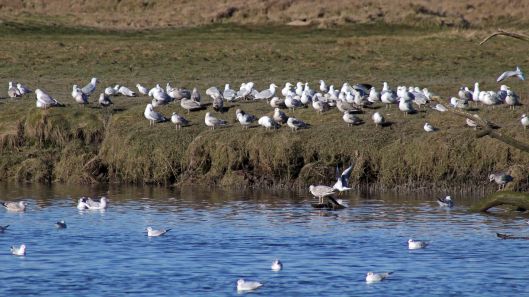
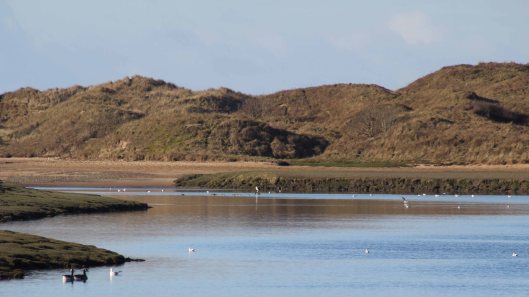
At Ogmore, the weather was glorious – blue skies, and heat in the sun, if you managed to shelter from the chilly breeze. There were gulls galore, mostly Herring and Black-headed, a sprinkling of Common and a single Med, as well as, further down river, a Great black-backed gull – what beasts they are!
180211 Birding at Ogmore & Kenfig (2)

180211 Birding at Ogmore & Kenfig (1)

A Kingfisher added its flash of turquoise, to the mostly white, grey and brown colours of the other birds (Little egret, Cormorant, Mallard, Redshank, Canada goose, Mute swan). But I don’t mean to imply the other avian species were boring – just look at these dazzling Goldeneyes!

180211 Birding at Ogmore & Kenfig (4)

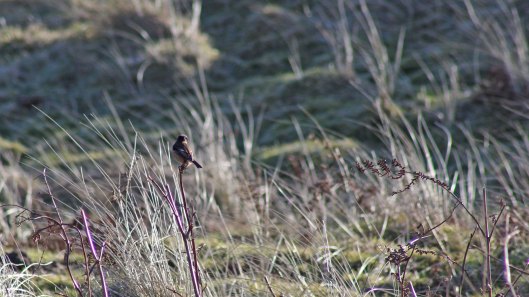
As we wandered further towards the river mouth, a Stonechat popped up to survey the humans adorned with bins, scopes and cameras, all staring in the opposite direction, to peep briefly, ‘Look at me!’. So I did.
180211 Birding at Ogmore & Kenfig (9)

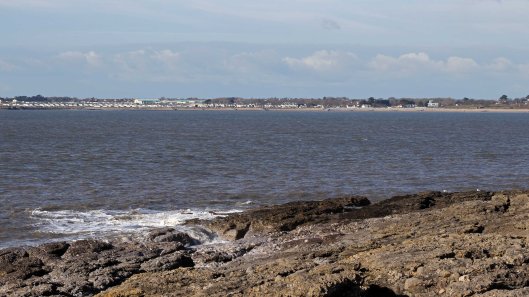
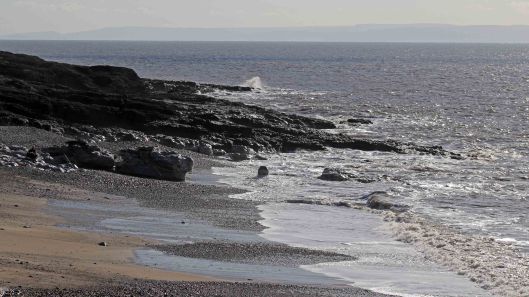
At Ogmore beach, we were hoping for Purple sandpipers but, even with 21 pairs of eyes surveying every nook and rock cranny, we lucked out. Turns out the birds were spending the day across the bay at Newton and Porthcawl. But hey, the scenery was glorious, with glimpses of the recent dumps of snow across the water on Exmoor.
180211 Birding at Ogmore & Kenfig (5)180211 Birding at Ogmore & Kenfig (6)

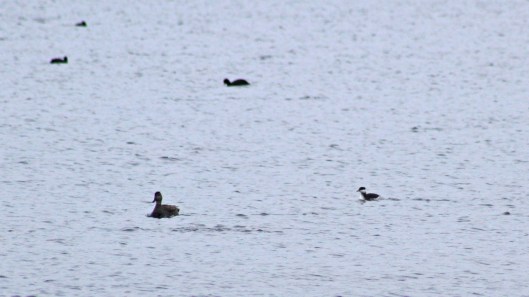
Sandwiches devoured, we headed to Kenfig and stomped down to the pool, where I almost immediately got on to my first lifer of the day, the little black-and-white Slavonian grebe that’s been overwintering there. It’s small, a frequent diver, and was distant but was plainly see-able through bins and scopes, if not such a great subject for my camera.
180211 Birding at Ogmore & Kenfig (7)

By this time, the sun had clouded over, and even a stroll through boggy fields, over wonky stiles, around the lake’s edge in search of White-fronted geese failed to keep the chill from my bones – and we didn’t see those geese. But, a small stalwart seven of us – the others peeling off to heated cars and homes – decided to head for a high point to survey the dunes for the Short-eared owls that have recently been sighted hunting at dawn and dusk. Another lifer! Two birds were seen, one flying low, back and forth amongst the dunes, the other gliding high, with a Kestrel for company.

180211 Birding at Ogmore & Kenfig (11)

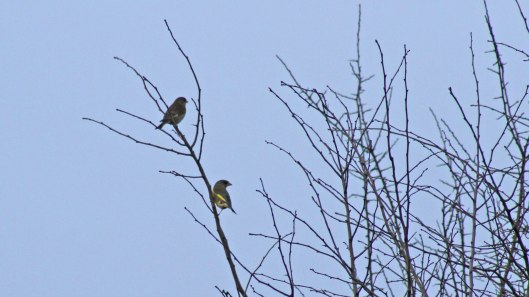
And to finish off a wonderful day’s birding, we got the call that tea, coffee and cake awaited us at the Kenfig office, and spotted these two Greenfinch amongst trees along the way. Just perfect!
180211 Birding at Ogmore & Kenfig (8)

We saw 62 species in total: the full list can be seen on the Glamorgan Bird Club’s website here.

Like Loading...

Birding at Rhaslas Pond

05 Tuesday Dec 2017

Posted by sconzani in autumn, birds, nature

≈ 4 Comments

Tags

birding, birdwatching, Fieldfare, Glamorgan Bird Club, Mute swan, Rhaslas Pond, Stonechat, Tufted duck, Wigeon

Following on from yesterday’s blog about our Glamorgan Bird Club outing to Parc Cwm Darran, we also ventured a little further north to Rhaslas Pond. I presume the pond is artificial as it has a grassed-over dam running along the north side and concrete to the south. And, as it has a large black drainage tube running into it, I further presume that is, or was, a reservoir or drainage pond for the huge ugly blight on the nearby landscape that is the Dowlais opencast coal mine.

171205 Rhaslas Pond (7)

171205 Rhaslas Pond (4)

Despite its industrial connections, the pond is very well frequented by both local and passage-migrating birds, and it provides a crucial breeding site for endangered birds like Lapwing and Curlew, amongst many others. As soon as we arrived, we saw birds – a friendly little Stonechat was dotting around in the long grass, a Pied wagtail was ‘chissicking’ merrily along the old roadway, and I saw my first-ever Fieldfares grazing on the grass nearby.

171205 Rhaslas Pond (1)
171205 Rhaslas Pond (2)

On the pond itself, there were lots of Wigeon, Tufted ducks, Mallards, Great crested grebes, my first-ever Goldeneyes, Lesser Black-backed and Herring Gulls, Goosander and a single Mute swan. We also saw Red kites flying overhead.

171205 Rhaslas Pond (5)171205 Rhaslas Pond (6)

Though this was another stunning location and the birds were sublime, there was a bitterly cold wind blowing so we didn’t linger too long. There are plans afoot to destroy this pond and the surrounding landscape to excavate another huge opencast mine. Let’s hope local authorities realise the madness of allowing such a mine and, rather than destroy the pond and surrounding land, recognise its environmental value and turn it into a local nature reserve for all to enjoy.

171205 Rhaslas Pond (3)

Like Loading...

Birding at Parc Cwm Darran

04 Monday Dec 2017

Posted by sconzani in birds, nature, parks, trees

≈ Leave a comment

Tags

birding, birdwatching, Crossbill, Glamorgan Bird Club, Indian runner, Parc Cwm Darran, Siskin, Welsh valleys

With temperatures hovering around zero and a brisk wind making it feel even colder, our eleven intrepid Glamorgan Bird Club members were well wrapped up for last Wednesday’s birding at Parc Cwm Darran (and Rhaslas Pond, but more on that tomorrow).

171204 Parc Cwm Darran (1)

171204 Parc Cwm Darran (2)
171204 Parc Cwm Darran (3)

171204 Parc Cwm Darran (4)

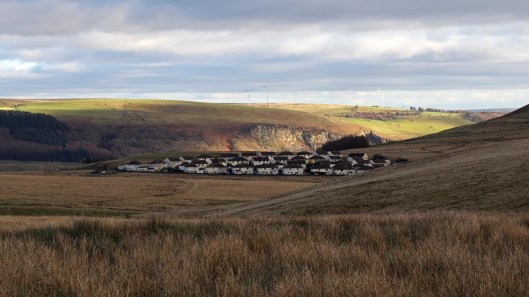
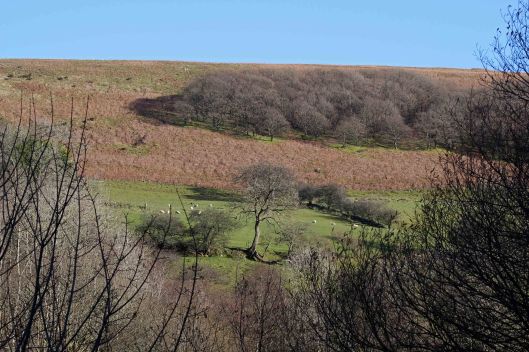
The park sits on the site of the old Ogilvie Colliery, which was active from the early 1900s through to 1975, and various buildings and pieces of mining equipment can still be seen around the park. The scenery was stunning, with glorious old trees dotting the landscape, as well as areas of more modern plantings. One of our party was a local and showed us one particularly beautiful hidden gem, a waterfall cascading over the edge of an old quarry into a pool below.

171204 Parc Cwm Darran (5)171204 Parc Cwm Darran (6)

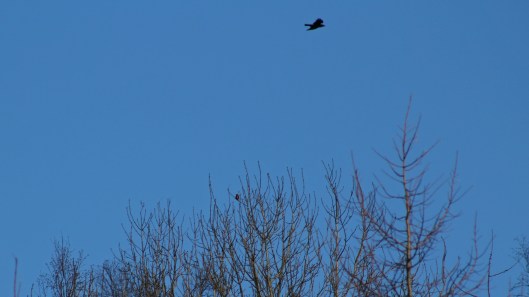
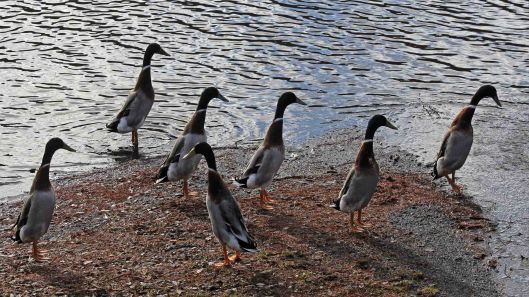
The birds were also stunning. We had good ’scope views of a male Crossbill, who sat very obligingly atop a tree for at least 15 minutes; we enjoyed sightings of several birds of prey, including four Buzzards, one of which came flying low straight towards us out of the quarry; and I saw my first Siskins of the year. The prize for the most entertaining birds, however, must go to the seven Indian runners, who looked to have Mallard in their genes and who were convinced we had food for them, running out of the water towards us and following us as we walked along the lake edge. 

171204 Parc Cwm Darran (7)

You’ll have to take my word about the dot in the tree being a Crossbill!

171204 Parc Cwm Darran (8)171204 Parc Cwm Darran (9)

The full list of the 44 species seen (these include those seen at Rhaslas Pond) is: Mute Swan, Canada Goose, Wigeon, Mallard, Tufted Duck, Goldeneye, Goosander, Great Crested Grebe, Red Kite, Sparrowhawk, Buzzard, Kestrel, Coot, Lesser Black-backed Gull, Herring Gull, Green Woodpecker, Magpie, Jay, Rook, Carrion Crow, Raven, Blue Tit, Great Tit, Coal Tit, Long-tailed Tit, Goldcrest, Wren, Nuthatch, Treecreeper, Starling, Blackbird, Fieldfare, Song Thrush, Mistle Thrush, Robin, Stonechat, Dunnock, House Sparrow, Pied Wagtail, Chaffinch, Goldfinch, Siskin, Common Crossbill and Bullfinch, though somehow I missed the Green woodpecker and Mistle thrushes.

Like Loading...

Cirl bunting

18 Saturday Nov 2017

Posted by sconzani in birds, nature

≈ Leave a comment

Tags

bird conservation, birding, birdwatching, British birds, Cirl bunting, Cirl Bunting Project, Emberiza cirlus, Glamorgan Bird Club, Labrador Bay

I find the constant reports of dwindling biodiversity, increasing numbers of creatures at risk of extinction, and the destruction of the environment to build yet another road quite depressing so it’s nice to be able to write about a conservation success story. Though the Cirl bunting was once a common bird throughout southern England and Wales, changes in farming practices meant that its population had plummeted to just 118 pairs in 1989. But, thanks to the RSPB and a small number of supportive organisations, plus environmentally aware farmers and The Countryside Stewardship Scheme (which compensates farmers for making small areas of their land more wildlife-friendly), the Cirl bunting population has increased to at least 862 pairs, and the birds have been reintroduced to an area in Cornwall where they had previously died out.

171118 Cirl bunting (1)

On a Glamorgan Bird Club trip to England’s south coast last weekend, our group called in at the RSPB’s Labrador Bay reserve, which was created especially for these gorgeous little birds and, despite the freezing cold, strong winds blowing over this stunning coastal site, we were privileged to see three Cirl buntings dotting about in the hedgerows.

171118 Cirl bunting (2)
171118 Cirl bunting (3)
171118 Cirl bunting (5)

You can read more about the Cirl Bunting Project on the RSPB website. Oh and, in case you’re wondering, Cirl is pronounced Sirl, and the word comes from the bird’s Latin name Emberiza cirlus, which, apparently, comes from the Italian zirlare, meaning to chirp. Let’s hope these little birds keep on chirping, and increasing, in the years ahead.

171118 Cirl bunting (4)

Like Loading...

Arne and the Sika

26 Thursday Oct 2017

Posted by sconzani in animals, mammal, nature

≈ Leave a comment

Tags

Avocet, birding, birdwatching, Cervus nippon, Corfe Castle, Glamorgan Bird Club, RSPB Arne, Sika deer, Sika fawn, Sika hind

171028 Arne (1)

On the way back from Portland our group of Glamorgan Bird Clubbers detoured to RSPB Arne to follow up on the reported sighting of a Stilt sandpiper.

171028 Arne (2)
171028 Arne birders (7)
171028 Arne Avocets

It was down there somewhere, amidst the large numbers of waders – it was a real treat to see so many Avocets together – but I can’t definitively say I saw it.

171028 Corfe Castle from Arne

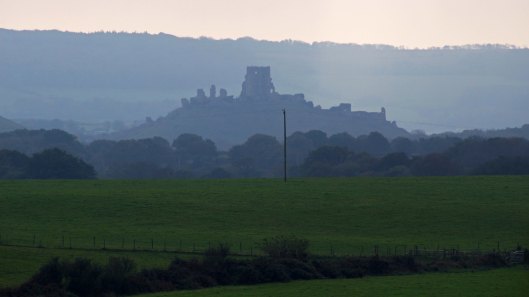
However, we did have fabulous views of the surrounding countryside and the distant Corfe Castle – another place added to my list of ‘must visits’ – and, to my delight, we also had wonderful views of a Sika deer mother and fawn, the first time I’ve seen these deer.

171028 Arne Sika deer (1)

The Sika (Cervus nippon) is about the size of a Fallow deer – this hind would’ve been between 50 and 90cm at the shoulder, her fawn, obviously, smaller – but the Sika’s coat is generally darker. They do have whitish spots in the summer but these can be very faint, almost invisible in the winter months. Fawns are usually born in May – June so this little one must’ve been 4 to 5 months old.

171028 Arne Sika deer (2)
171028 Arne Sika deer (3)
171028 Arne Sika deer (4)

The countryside at Arne is perfect for Sika as they prefer coniferous woodlands and acidic heathland, where they nibble away at grasses and heather. Although these Sika are not a native British species – three different Asian species have been kept on estates and parklands, escapees from the Japanese species (hence C. nippon) can be found through much of Britain where the habitat is right, particularly in parts of Scotland.

Like Loading...

Birding at Portland

23 Monday Oct 2017

Posted by sconzani in birds, nature

≈ 2 Comments

Tags

birding, birdwatching, Cormorant, Dorset coastline, Gannet, Glamorgan Bird Club, Kestrel, Little owl, Portland, Portland Bird Observatory, Portland stone

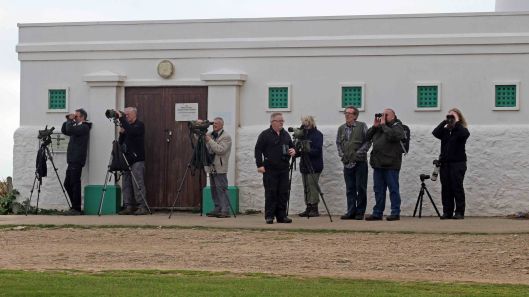
One more birding blog from my wonderful weekend at the Portland Bird Observatory and then no more about Portland … till next year.

171023 Portland Bird Observatory (3)171023 Portland lighthouse

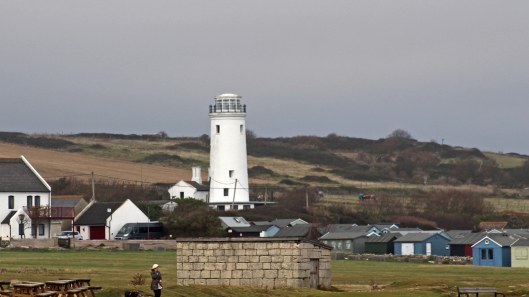
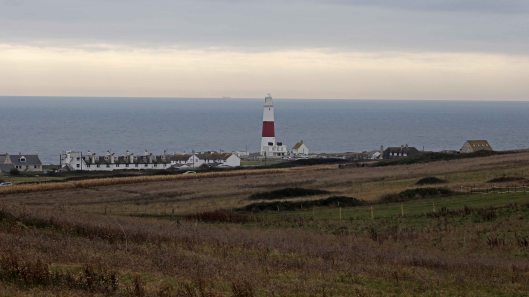
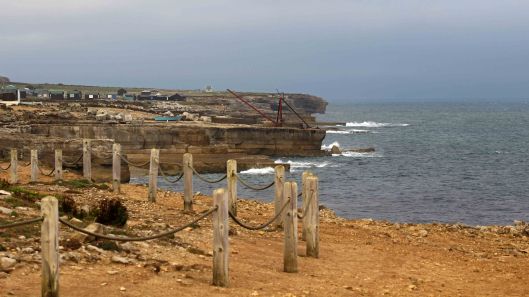
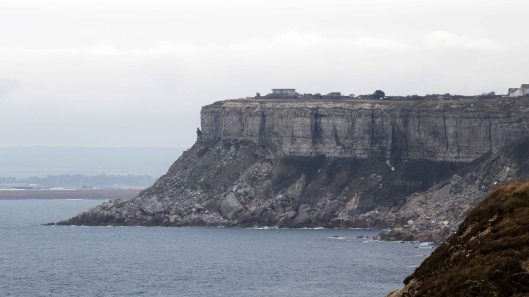
In case you don’t know, Portland is sort of an island – it is actually connected to the mainland – but it looks for all the world like a small island jutting out into the English Channel. It’s where the famous Portland stone (used to build such landmarks as St Paul’s Cathedral in London) comes from, and so the coastline is dramatically rocky and the land is riddled with quarries, many of which are now disused.

171023 Portland coastline (1)171023 Portland coastline (2)

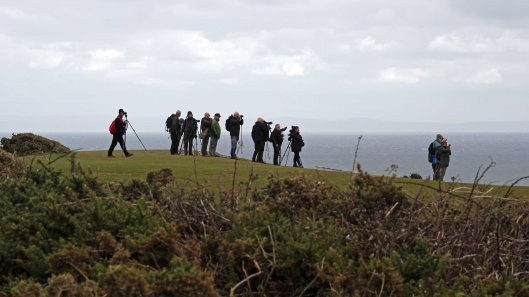
On the Saturday of our long weekend we went for a wonderful walk, along the cliff-top coastal paths and inland through fields, and later in to one of the old quarries. Those with ’scopes spotted some nice seabirds passing by, and gannets, shags, cormorants and various gulls could easily be seen with the naked eye and bins.

171023 Seawatching birders

171023 Cormorants
171023 Gannet

Kestrels were abundant – one sat obligingly on top of a post (though shooting in to a bright sky didn’t make for good photos) and I managed to get a reasonable fly-by shot.

171023 Kestrel (2)
171023 Kestrel (1)

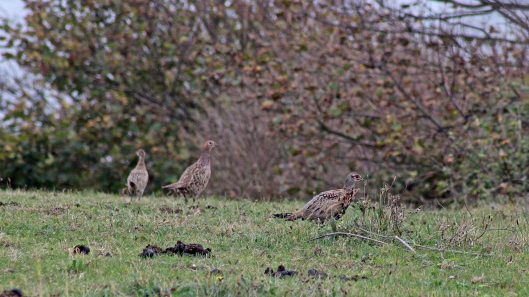
As well as seeing Stonechats, Meadow pipits, a Whinchat, Wheatears and large flocks of Goldfinches and Linnets, we also disturbed a family of Pheasants (mum, dad and two kids) in one of the fields.

171023 Pheasants

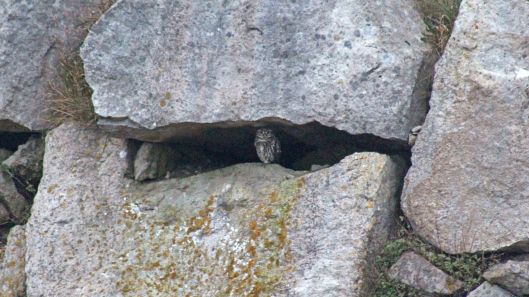
And the resident Little owl popped out of its hidey hole in a local quarry for a short time early on Sunday morning, though, again, the light was not the best for photography.

171023 Little owl

All up the group total for the weekend was 117 species seen or heard. At 82, my personal total was a bit lower but it’s the quality, not the quantity that counts – of those 82, 15 were lifers, birds I’d never seen before – and that’s a pretty impressive total for just three days’ birding!

Like Loading...

Gadding about

17 Tuesday Oct 2017

Posted by sconzani in birds, nature

≈ 1 Comment

Tags

Anas strepera, birding, birdwatching, British birds, dabbling duck, duck, Gadwall, Glamorgan Bird Club, Lodmoor, RSPB Lodmoor

Here’s another beauty from last weekend’s wonderful birding trip with the Glamorgan Bird Club. Though this bird is not the rarity of yesterday’s Rustic bunting, it’s not terribly common either, and is ‘Amber listed’, meaning its population has declined in recent years and its situation is being monitored.

171017 Gadwall (1)

This is a male Gadwall (Anas strepera), a very handsome dabbling duck, a little smaller than a Mallard. Sitting on one of the ponds at the RSPB’s Lodmoor Reserve near Weymouth in Dorset, he was looking a little sleepy. Perhaps that’s why he wasn’t bothered about us looking at him, as he actually approached quite near – a bonus for me trying to get reasonable photos. We didn’t hear a peep out of him but, apparently, it’s their chattering call that originally gave the Gadwalls their imitative name.

171017 Gadwall (2)
171017 Gadwall (3)
171017 Gadwall (4)
171017 Gadwall (5)
Like Loading...

A bird in the hand

16 Monday Oct 2017

Posted by sconzani in birds, nature

≈ 6 Comments

Tags

birding, birdwatching, British birds, Emberiza rustica, Glamorgan Bird Club, Portland Bird Observatory, Portland Obs, rare bird, Rustic bunting

I’ve just had a fantastic long weekend’s birding with the Glamorgan Bird Club at the Portland Bird Observatory in Dorset. Not only did we stay in an old lighthouse but we saw an incredible number of amazing birds. I haven’t typed up my list yet but I do know I had fifteen (yes, 15!!!) lifers (for non-birders, I saw fifteen species I had never seen before).

171016 Rustic bunting (3)

This little beauty was one of them: it’s a Rustic bunting (Emberiza rustica), a bird that breeds in northern Europe and in Asia and normally migrates to Japan and parts of China and south-east Asia to over-winter. This little one may have been blown the wrong way by strong winds or perhaps, by mistake, it joined up with a group of other small birds heading for Britain.

171016 Rustic bunting (1)

It was both an amazing experience and a real privilege to see such a rarity up close. (You can read more about this bird and see more pictures on the Portland Obs blog here.)

171016 Rustic bunting (2)

Like Loading...

Birding on Gower

10 Tuesday Oct 2017

Posted by sconzani in birds, coastal fauna, nature, seaside, walks

≈ 4 Comments

Tags

birding, birdwatching, British birds, coastal cliffs, dramatic coastline, Glamorgan Bird Club, Gower, Mewslade, Rhossili Beach, Worm's Head

It was a wild and windy but not wet day last week when I ventured for the first time to the incredible Gower peninsula, on a birding trip with my Glamorgan Bird Club friends.

171010 Glamorgan bird clubbers

We parked near Mewslade Beach, then walked a circuit from there along the cliff-top coastal path, across the medieval field system of The Vile, through the little village of Rhossili and then back to the car park. Most of the birds were best viewed through binoculars or ’scopes so I don’t have many images of them to share but the scenery was just stunning! High stone cliffs honed in places to a razor edge by millennia of wind and rain, secret little coves nestled between tall protective hills, the long stretch of golden-sand beach at Rhossili that was recently named the best beach in Britain and one of the world’s top ten – Gower really does deserve the adjective ‘awesome’!

171010 Gower (1)
171010 Gower (2)
171010 Gower (4)
171010 Gower (3)
171010 Gower (5)
171010 Gower (6)

Oh, and getting back to the birds – I saw a total of 34 species: Cormorant, Sparrowhawk, Common Buzzard, Kestrel, Peregrine, Oystercatcher, Lesser Black-backed Gull, Herring Gull, Woodpigeon, Collared Dove, Pheasant, Magpie, Jackdaw, Carrion Crow, Raven, Blue Tit, Great Tit, Coal Tit, Long-tailed Tit, Chiffchaff, Goldcrest, Wren, Blackbird, Robin, Stonechat, Dunnock, House Sparrow, Pied Wagtail, Meadow Pipit, Chaffinch, Goldfinch, Linnet, and the two highlights for me, Common Scoter (a group of perhaps 20 floating together on the sea – seen through a ’scope) and several Gannets, flying low to the waves not far offshore, plus a bonus sighting of at least one Grey seal lolling about in the waves in one of the bays.

171010 Linnets
171010 Meadow pipits
171010 Goldfinches

The group total was 46 species as I was too busy admiring the scenery to notice these: Shag, Kittiwake, Guillemot, Razorbill, Green Woodpecker, Great Spotted Woodpecker, Chough, Rook, Bullfinch, Song Thrush, Common Gull, and Great Black-backed Gull. Thanks to John and Glamorgan Bird Club members for yet another fantastic day out!

171010 Rhossili beach

Like Loading...

Birding at Goldcliff

28 Thursday Sep 2017

Posted by sconzani in birds, nature

≈ 4 Comments

Tags

birding, birdwatching, British birds, Dunlin, Glamorgan Bird Club, Goldcliff lagoons, Greenshank, Knot, Newport Wetlands, Shelduck, Spotted redshank, Wheatear

190728 2 mixed flock

I am SO pleased I bought binoculars. My second trip to Goldcliff lagoons and Newport Wetlands with my Glamorgan Bird Club buddies last weekend was just so much better for having them, as there was an incredible diversity of birds to be seen but most were distant views from hides or platforms. Using the bins not only brings the birds closer but it also means I get to watch and learn more of each bird species’ habits and actions, which I really enjoy.

190728 4 spotted redshank dunlin greenshank flying

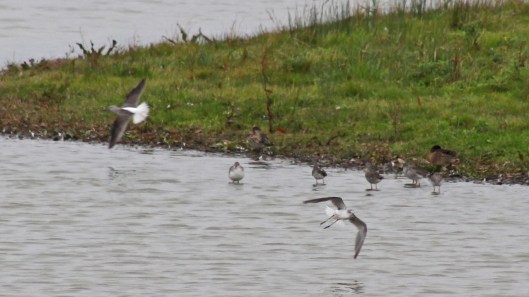
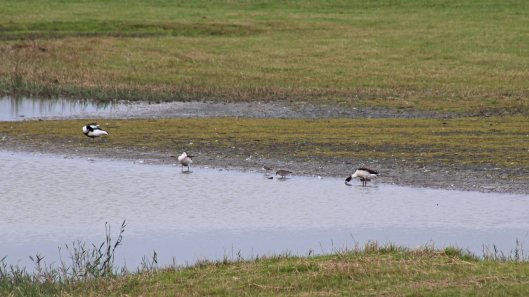
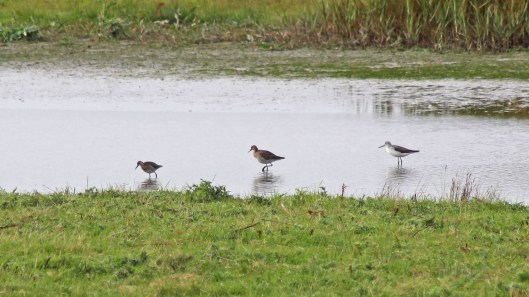
Though I’m not an obsessive twitcher, I am keeping a personal list of bird sightings this year and saw a few new birds to add to my list (which now totals a respectable but not huge 130). The Club’s list for the day totalled 77 species but I didn’t see (or hear) the Great Crested Grebe, Siskin, Great Spotted Woodpecker, Goldcrest, Song Thrush, Mistle Thrush and Yellow Wagtail, so my total was 69 species: Mute Swan, Canada Goose, Shelduck, Wigeon, Gadwall, Teal, Shoveler, Tufted Duck, Little Grebe, Grey Heron, Little Egret, Cormorant, Marsh Harrier, Buzzard, Kestrel, Sparrowhawk, Peregrine, Water Rail (heard), Moorhen, Coot, Oystercatcher, Ringed Plover, Lapwing, Knot,

190728 1 shelduck knot ringed plover

and Little Stint (below with Ringed plover),

190728 little stint ringed plover

and Dunlin, Ruff (two below with a Greenshank),

190728 3 ruff greenshank

and Snipe, Black-tailed Godwit, Whimbrel, Curlew, Spotted Redshank, Greenshank,

190728 5 greenshank

and Redshank, Black-headed Gull, Lesser Black-backed Gull, Herring Gull, Feral Pigeon, Woodpigeon, Collared Dove, Kingfisher, Magpie, Jay, Carrion Crow, Raven, Blue Tit, Great Tit, Skylark, House Martin, Swallow, Cetti’s Warbler (heard, several times), Long-tailed Tit, Chiffchaff, Willow Warbler, Sedge Warbler, Blackcap, Wren, Starling, Blackbird, Robin, Stonechat, Wheatear (they do like their fenceposts),

190728 6 wheatear
190728 7 wheatear

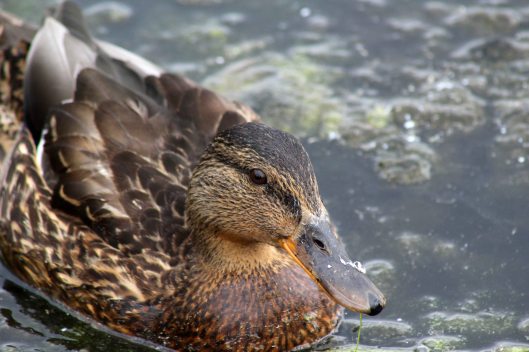
and House Sparrow, Pied Wagtail, Meadow Pipit, Chaffinch, Goldfinch, Linnet, Reed Bunting, and Mallard. It was a wonderful day’s birding.

190728 8 mallard female

Like Loading...
← Older posts
Newer posts →

About me

sconzani

sconzani

I'm a writer and photographer; researcher and blogger; birder and nature lover; countryside rambler and city strider; volunteer and biodiversity recorder.

View Full Profile →

Follow earthstar on WordPress.com

Enter your email address to follow this blog and receive notifications of new posts by email.

Recent blog posts

  • The Marl Med gull January 29, 2026
  • Recording Grey squirrels January 28, 2026
  • Jimmy Wren January 27, 2026
  • Millipede: Nanogona polydesmoides January 26, 2026
  • Mid-winter 10 January 25, 2026

From the archives

COPYRIGHT

Unless otherwise acknowledged, the text and photographs on this blog are my own and are subject to international copyright. Nothing may be downloaded or copied without my permission.

Fellow Earth Stars!

  • Unknown's avatar
  • Unknown's avatar
  • Unknown's avatar
  • Unknown's avatar
  • Unknown's avatar
  • Unknown's avatar
  • Unknown's avatar
  • Unknown's avatar
  • Unknown's avatar
  • Unknown's avatar
  • Unknown's avatar
  • Unknown's avatar
  • Unknown's avatar
  • Unknown's avatar
  • Unknown's avatar
  • Unknown's avatar
  • Unknown's avatar
  • Unknown's avatar
  • Unknown's avatar
  • Unknown's avatar
  • Unknown's avatar
  • Unknown's avatar
  • Unknown's avatar
  • Unknown's avatar
  • Unknown's avatar
  • Unknown's avatar
  • Unknown's avatar
  • Unknown's avatar
  • Unknown's avatar
  • Unknown's avatar
  • Unknown's avatar
  • Unknown's avatar
  • Unknown's avatar
  • Unknown's avatar
  • Unknown's avatar
  • Unknown's avatar
  • Unknown's avatar
  • Unknown's avatar
  • Unknown's avatar
  • Unknown's avatar
  • Unknown's avatar
  • Unknown's avatar
  • Unknown's avatar
  • Unknown's avatar
  • Unknown's avatar
  • Unknown's avatar
  • Unknown's avatar
  • Unknown's avatar
  • Unknown's avatar
  • Unknown's avatar

Blog at WordPress.com.

Privacy & Cookies: This site uses cookies. By continuing to use this website, you agree to their use.
To find out more, including how to control cookies, see here: Cookie Policy
  • Subscribe Subscribed
    • earthstar
    • Join 670 other subscribers
    • Already have a WordPress.com account? Log in now.
    • earthstar
    • Subscribe Subscribed
    • Sign up
    • Log in
    • Report this content
    • View site in Reader
    • Manage subscriptions
    • Collapse this bar
 

Loading Comments...
 

You must be logged in to post a comment.

    %d