
Tags
British beetles, British insects, Cryptocephalus aureoles, green beetles, metallic green beetles
There are other species of similar metallic green beetles in Britain, but the UK Beetles website says only one (Cryptocephalus hypochaeridis) is likely to cause confusion, so I think I’ve got my identification right here. Meet Cryptocephalus aureoles, a beetle that is reasonably common in much of southern Britain, particularly in sunny, open, dry environments, like woodland and countryside footpath edges, roadsides, embankments and, in my case, the south-facing slope of a coal spoil tip.
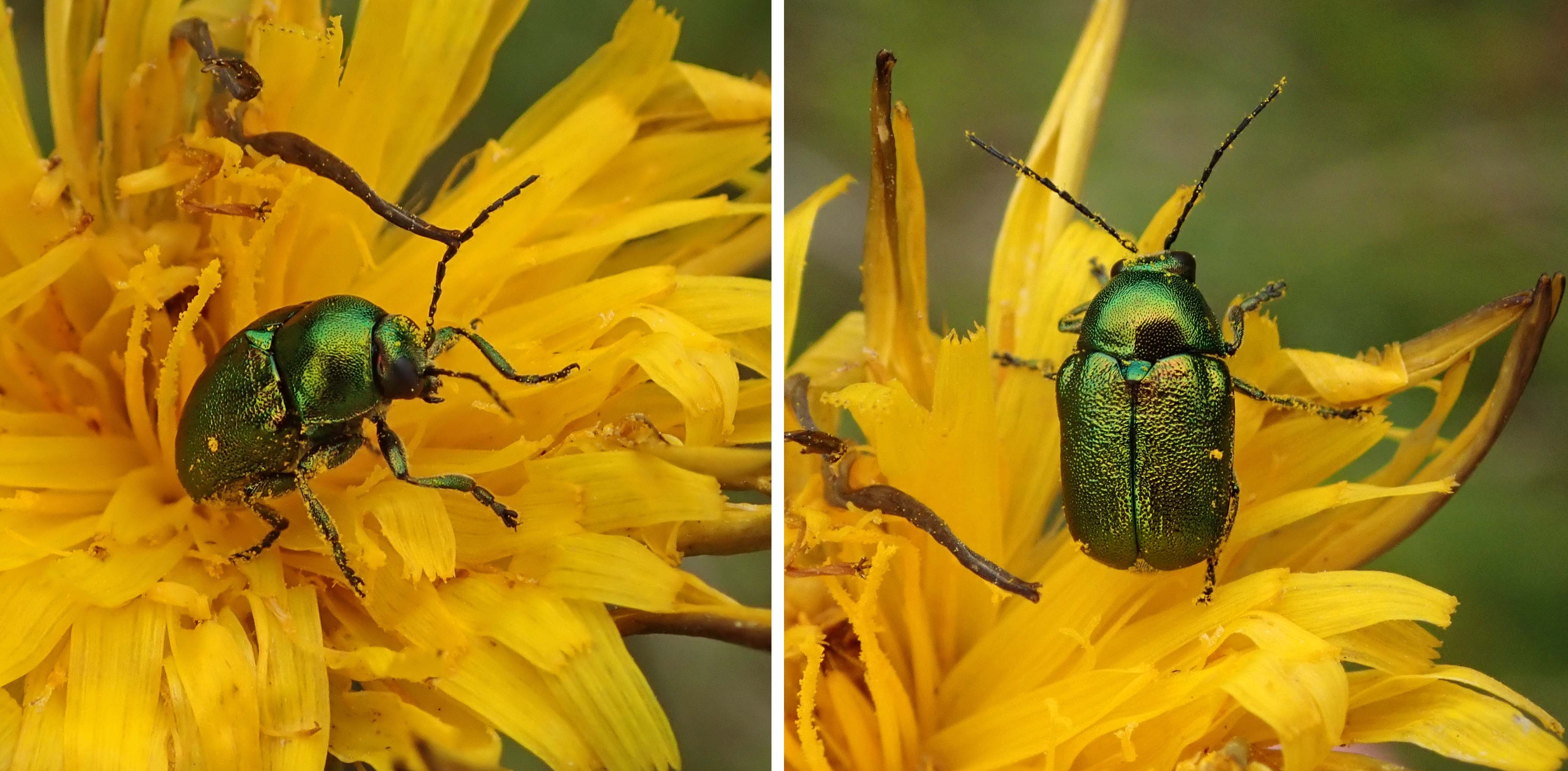
Though the adults can be seen from April through to September, they are particularly active in June and July, when they are often to be found feeding on various species of plants with yellow flowers – hawkweeds (Hieraceum sp.) and cat’s-ears (Hypochaeris sp.) are particular favourites.
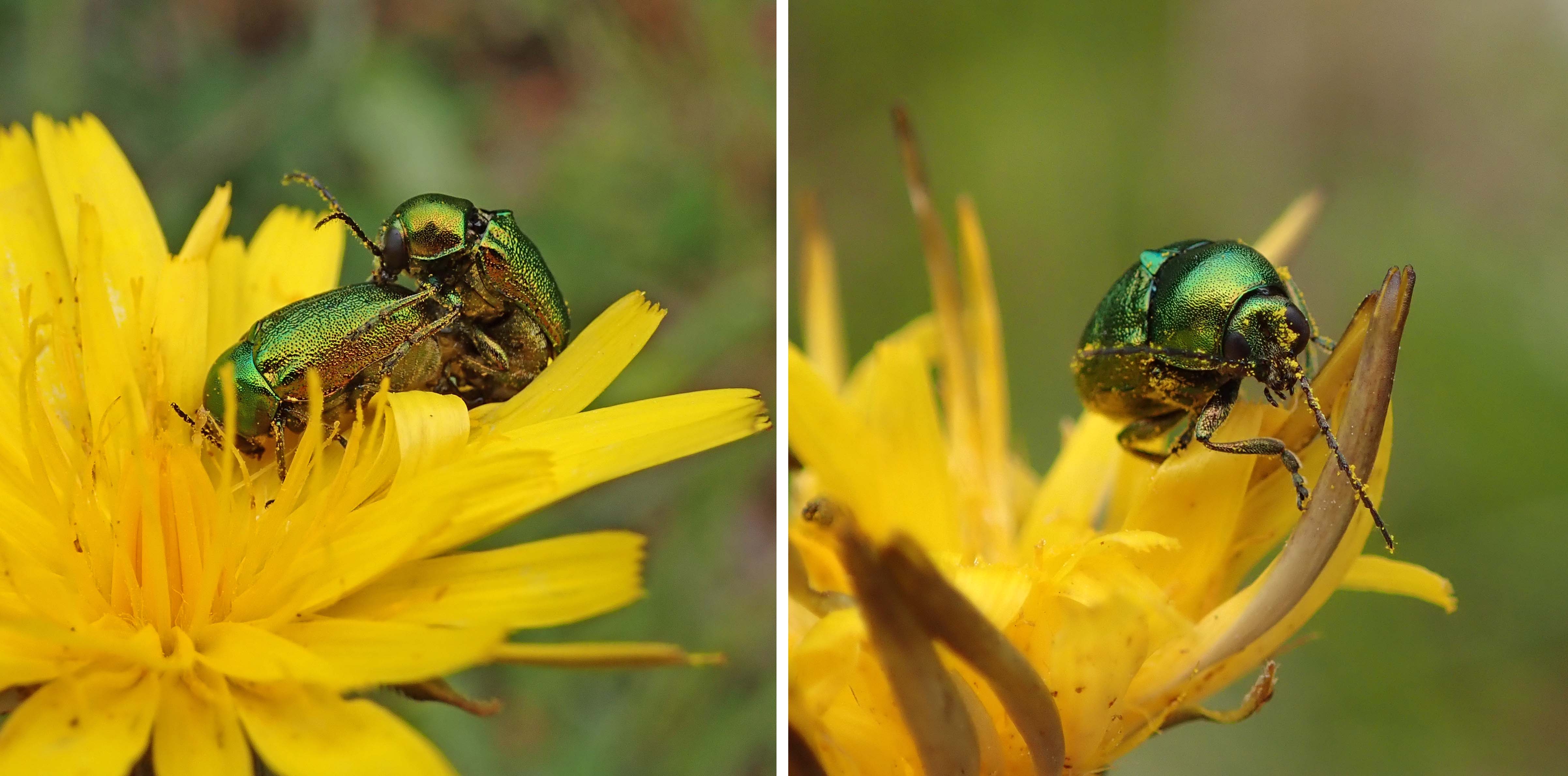
Somewhat surprisingly, their exact life cycle has not been confirmed. The UK Beetles website explains that, after mating,
oviposition occurs from late spring; each egg being coated with faecal matter and secretions and dropped to the ground by the female. Larvae emerge after three or four weeks, depending on the temperature, and develop through the summer, it is not known which stage overwinters but young larvae have been recorded late in the summer and so it is likely to be as larvae which complete their development and pupate in the spring
 earthstar
You must be logged in to post a comment.