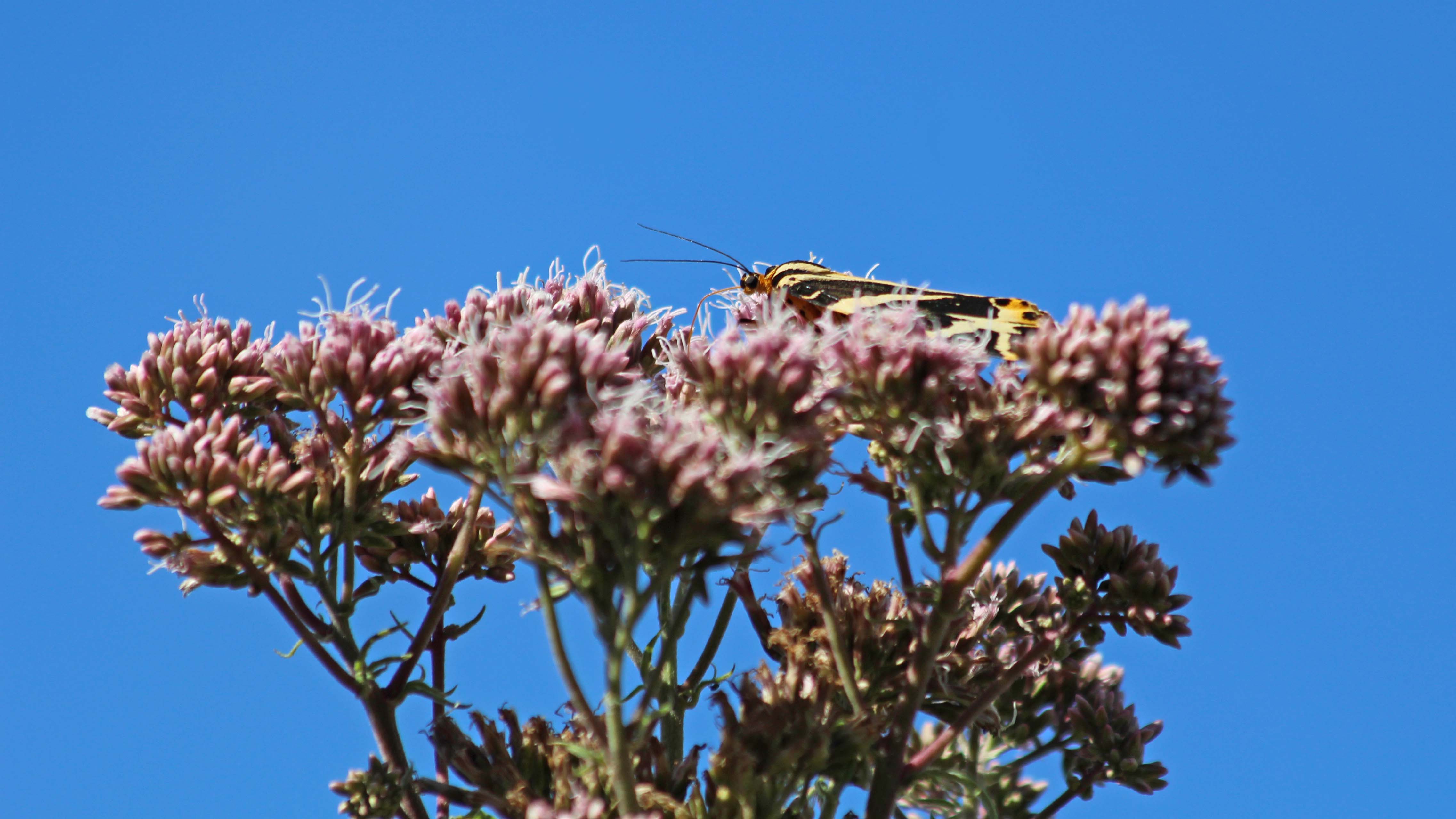
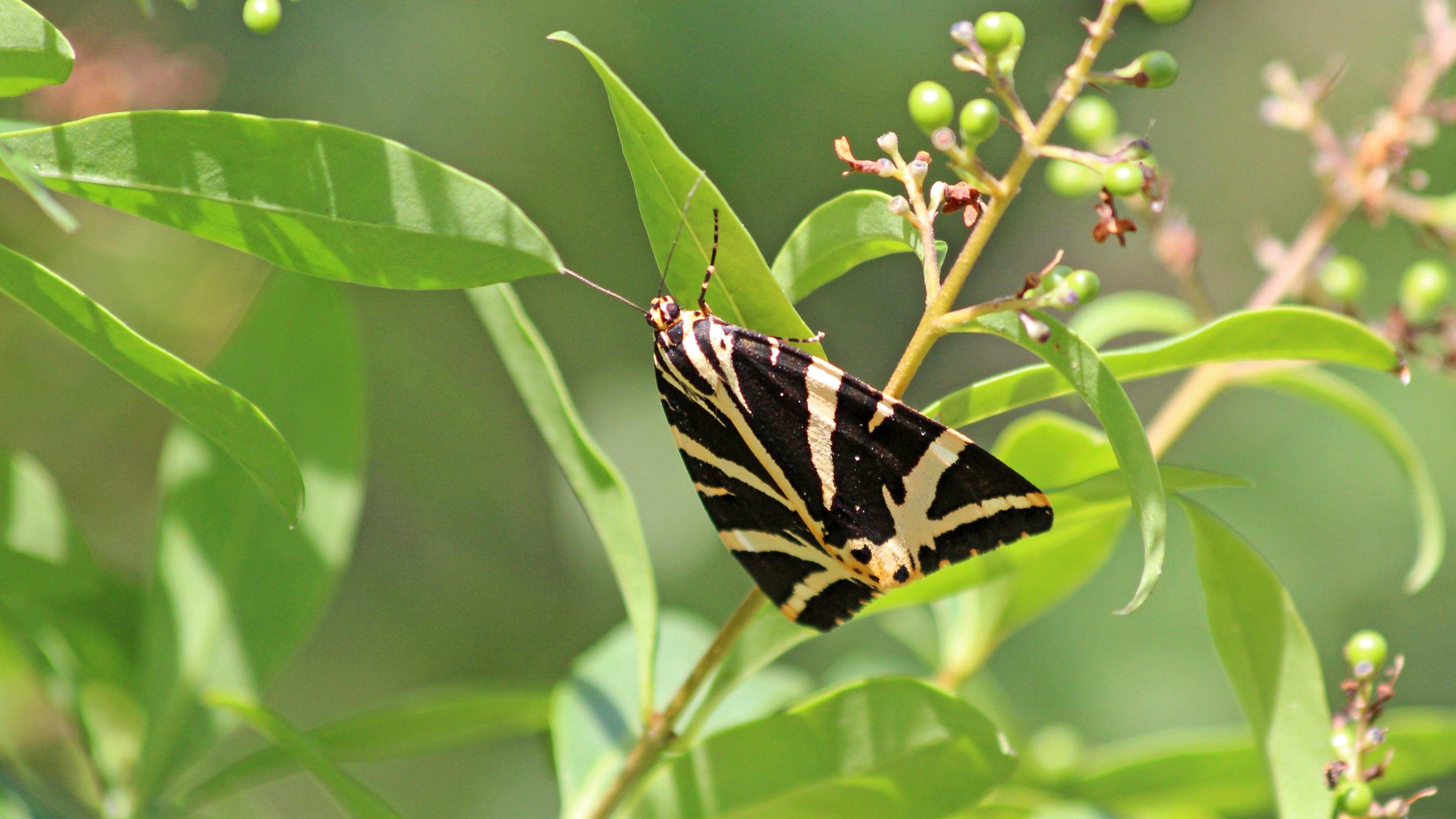
In the summers of 2018, 2019 and 2020 one of the local nature reserves near me held what seemed like a healthy population of Jersey tiger moths (Euplagia quadripunctaria), then they vanished. I don’t know why this was but several people have looked for them at the reserve in the intervening years and, though the occasional single moth has been sighted, the healthy population is no more. Away from that reserve, I would struggle to see any Jersey tigers, and saw none at all in 2021 and 2022.
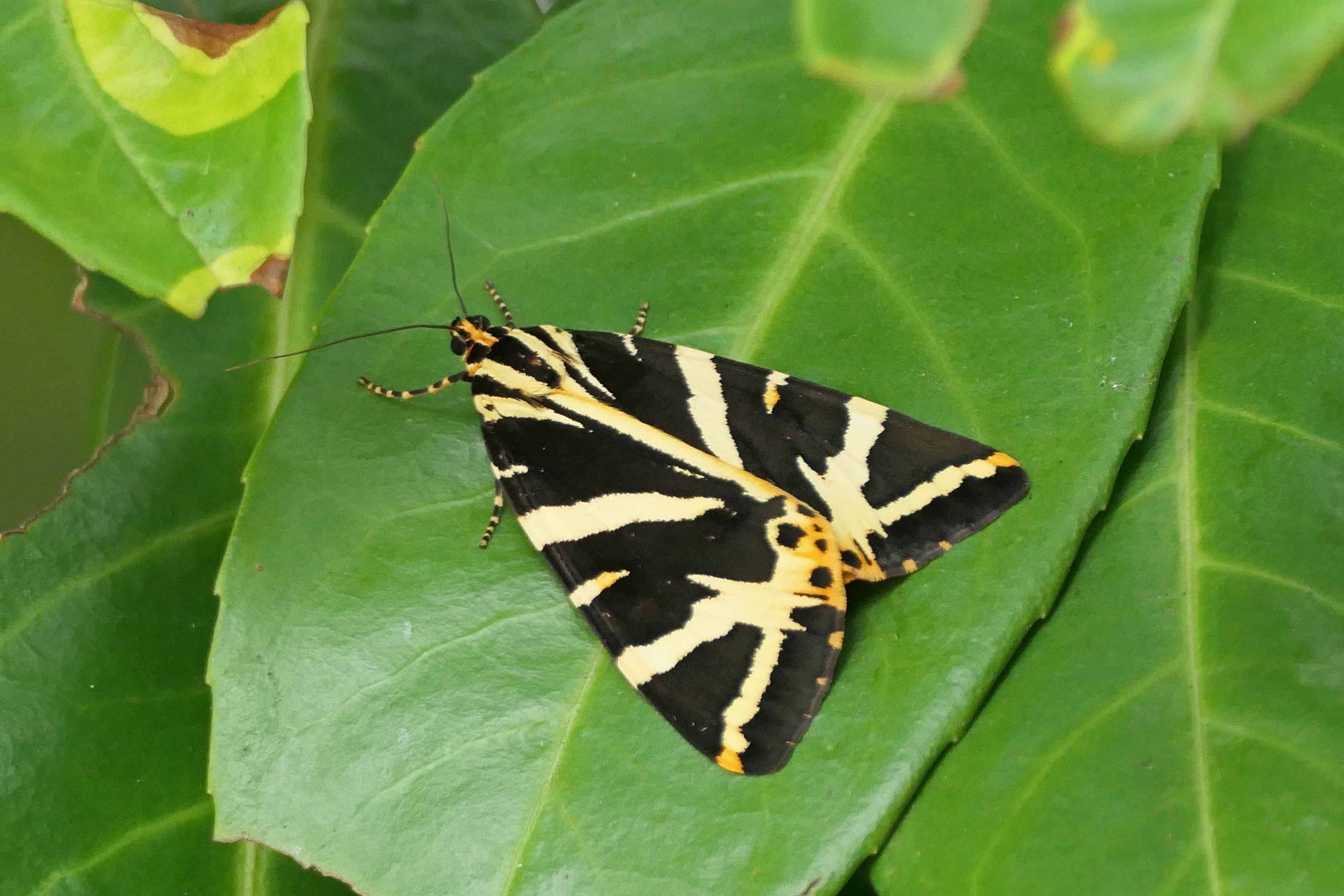
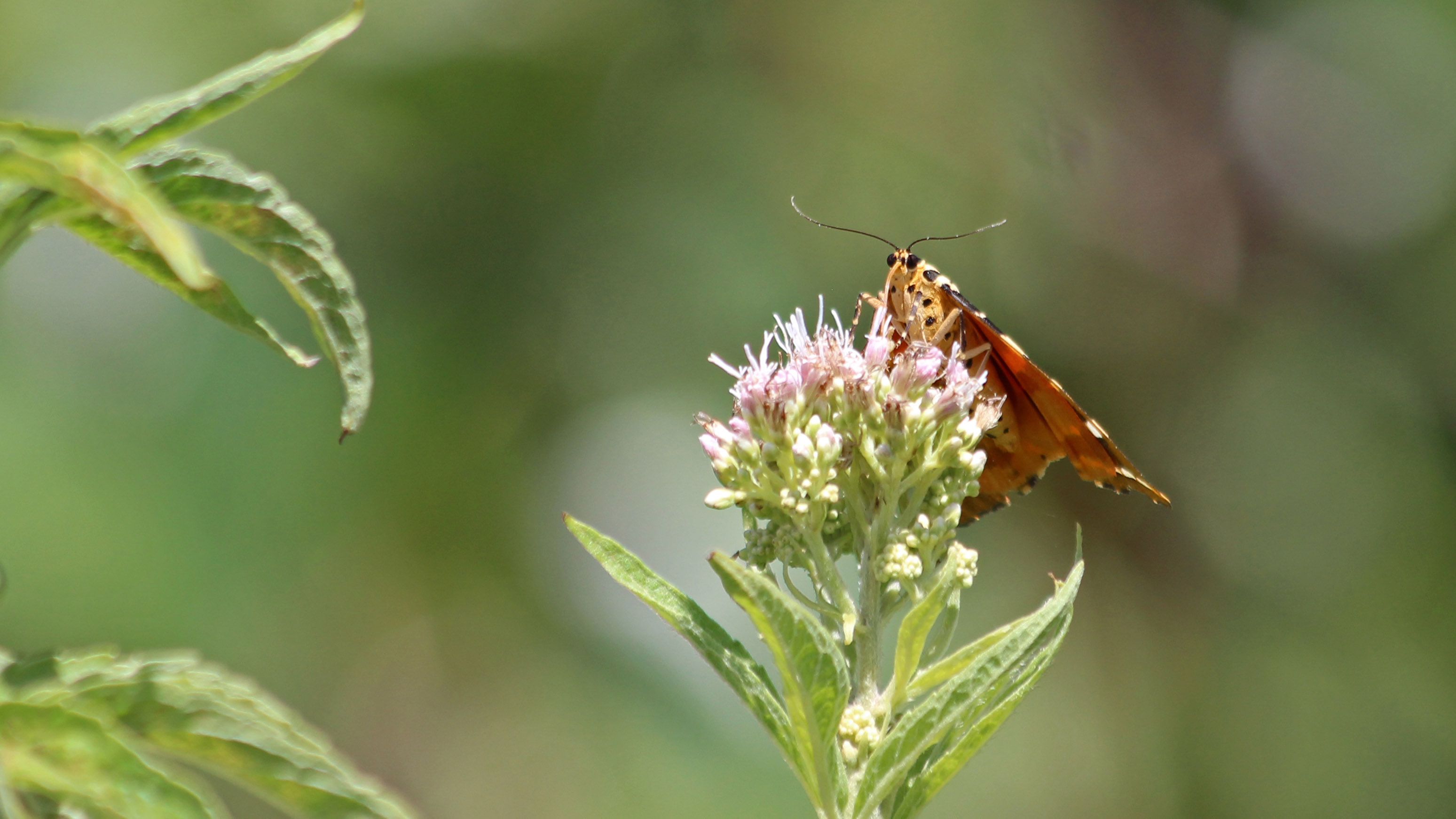
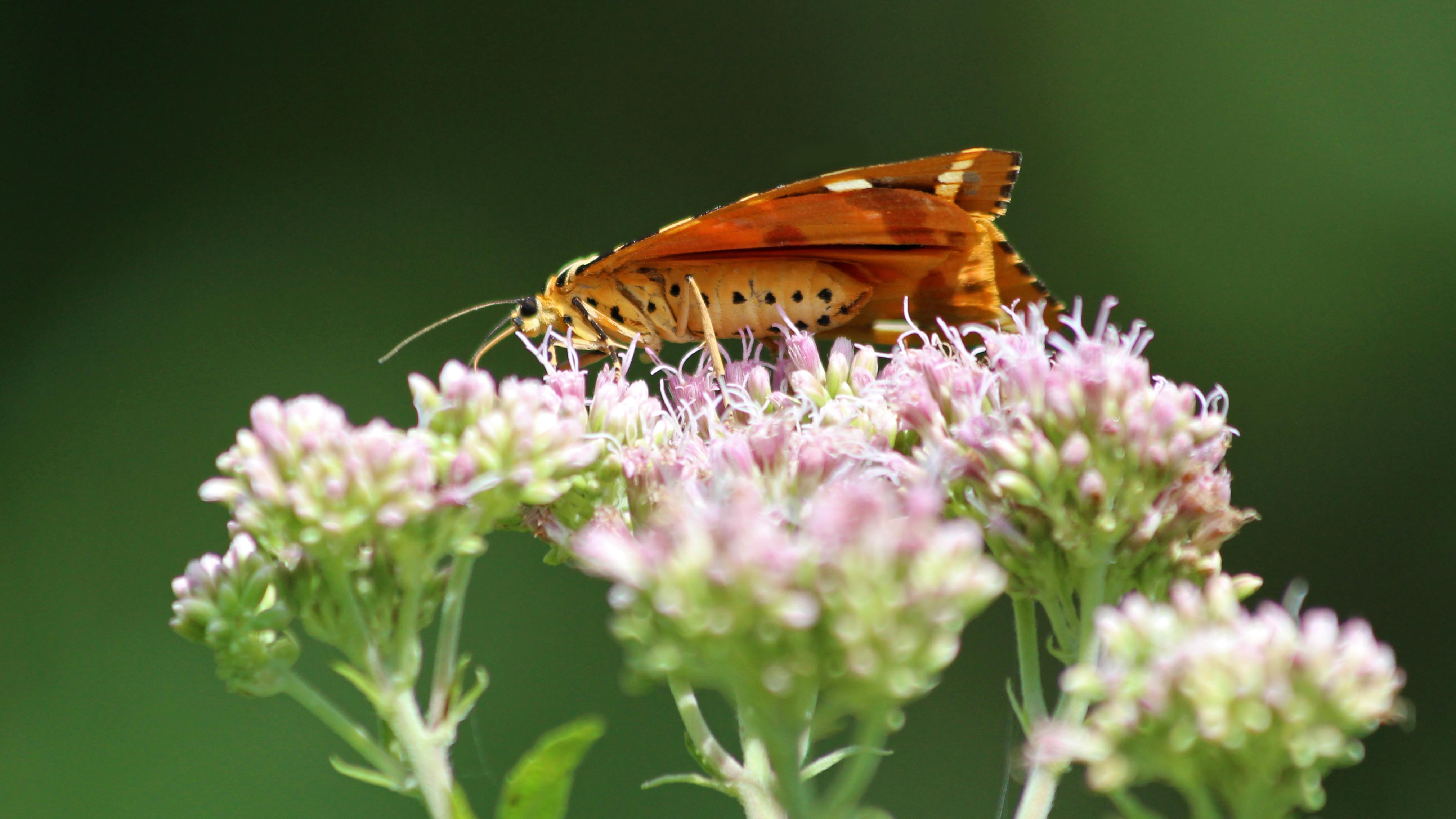
So, this year, it has been an absolute delight for me to have enjoyed many, seemingly random sightings of these beautiful moths. By random, I mean that there haven’t been any large numbers concentrated in any specific location or area; instead, either I’ve spotted them lurking on trees and bushes, or my passing has disturbed them, there’s been a flash of their vibrant orange underwings as they’ve fluttered out and I’ve seen them once they’ve resettled.
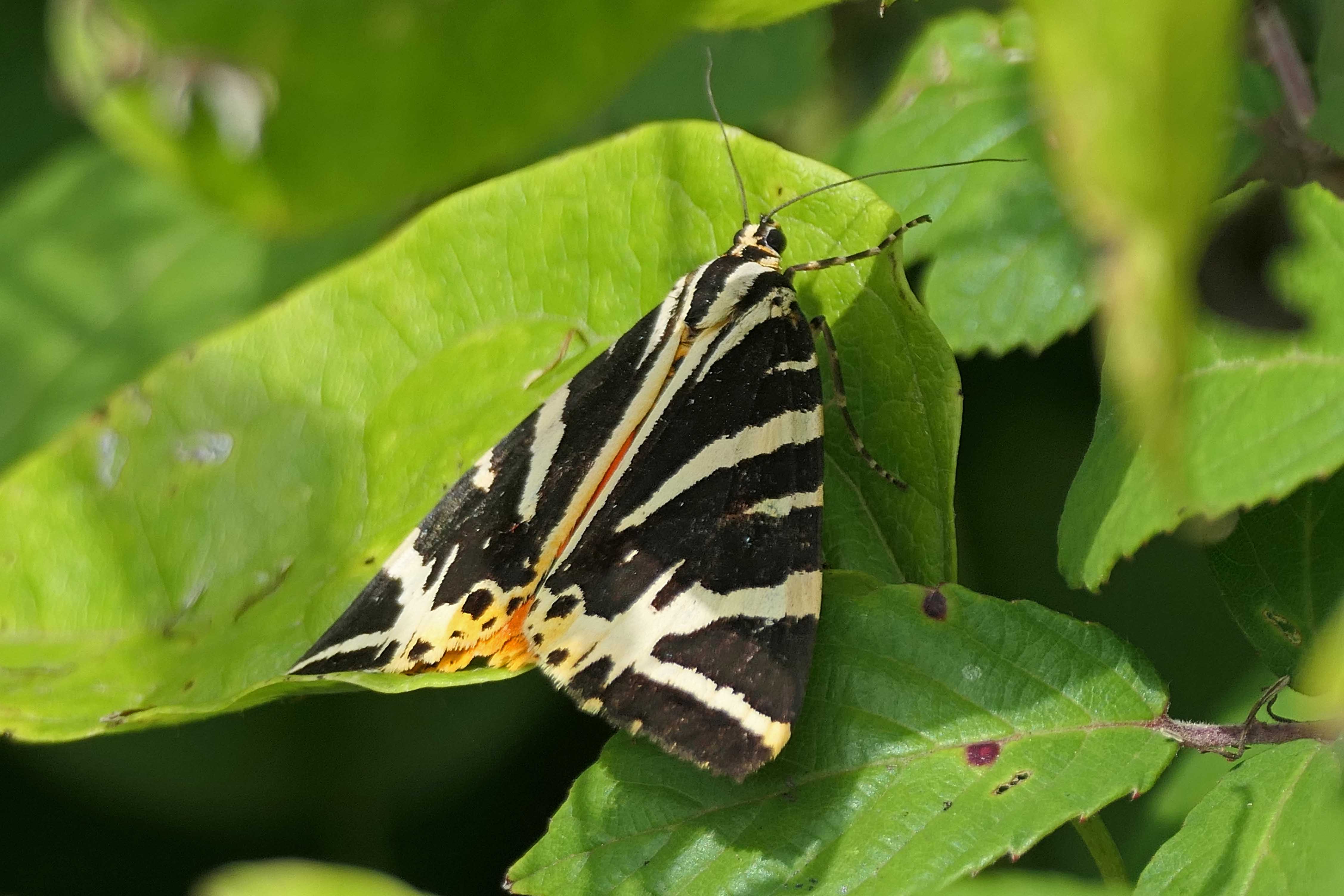
And it seems my experience of seeing greater numbers of Jersey tigers this year has not been unique. This is a species that is included in Butterfly Conservation’s Big Butterfly Count, and, even before the count had ended, with 7 of the count’s 24 days remaining, that organisation had noted a ‘whopping 78%’ increase in reported Jersey tigers this year compared to last year. Butterfly Conservation’s blog post speculates that the dramatic increase was due to this summer’s record-breaking high temperatures.
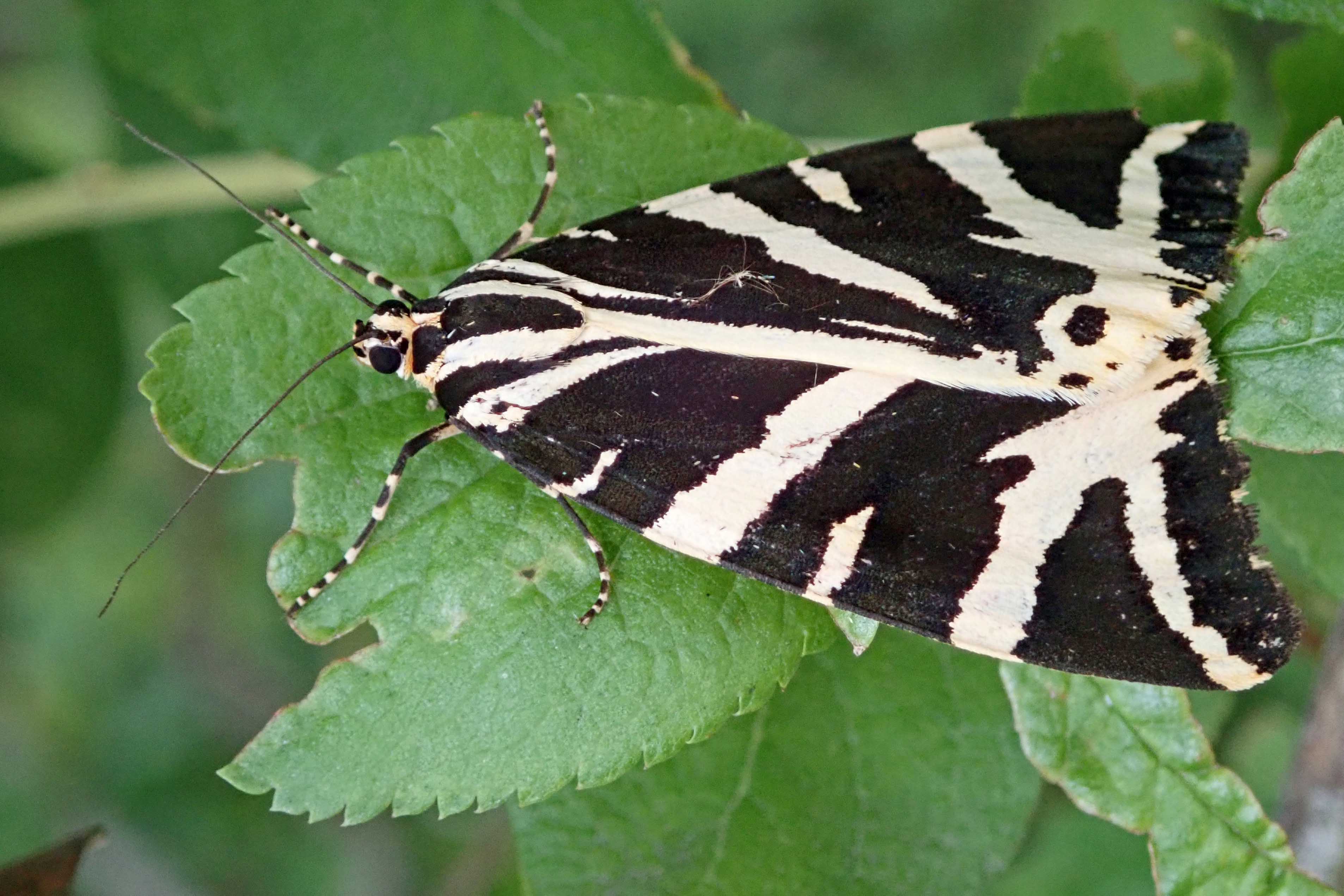
As Dr Richard Fox, BC’s Head of Science is quoted as saying
The increase we’re seeing in Jersey Tiger moth sightings is a striking example of how climate change is reshaping the distribution of wildlife.
While it’s a delight to spot such a vibrant moth in gardens, parks and green spaces, it’s also a reminder of how rising temperatures are altering our natural environment.

 earthstar
You must be logged in to post a comment.