• ABOUT
  • BIRDING 2018
  • Birding 2019
  • BLOG POSTS
  • Butterflies 2018
  • Resources

earthstar

~ a celebration of nature

earthstar

Tag Archives: primrose

Primrose x Cowslip = False Oxlip

12 Friday May 2017

Posted by sconzani in flowers, nature, wildflowers

≈ Leave a comment

Tags

British flora, British wildflowers, Cowslip, False oxlip, flora hybridisation, flower hybrids, primrose, Primula veris, Primula vulgaris, Primula vulgaris x veris = P. x polyantha


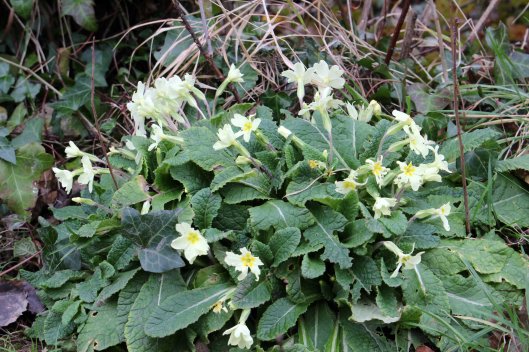
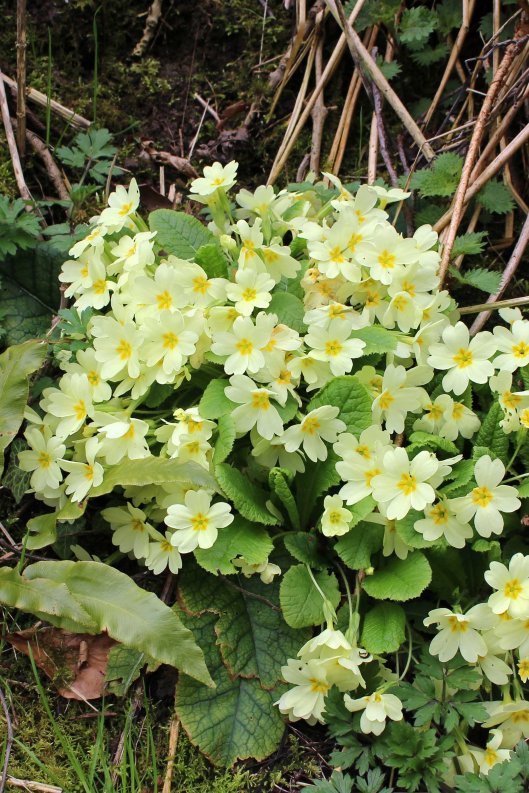
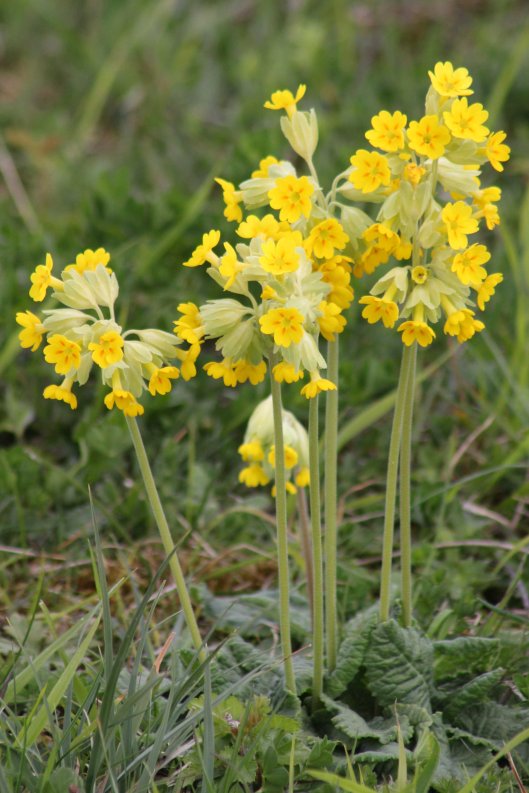
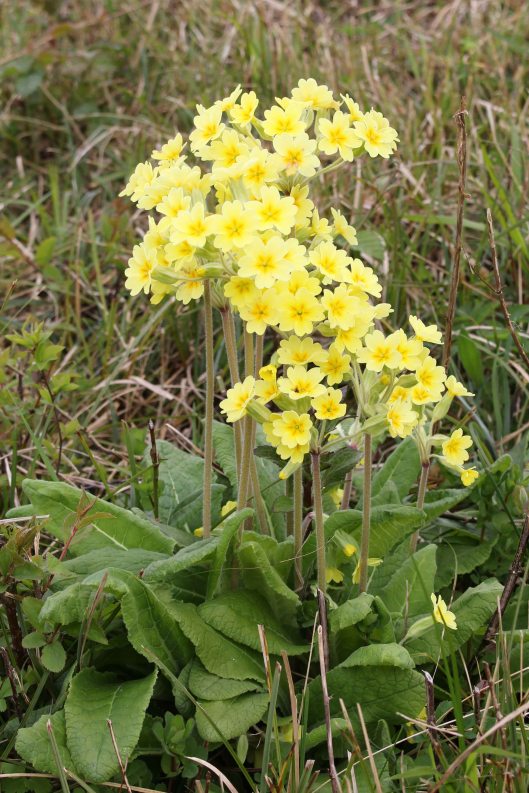
Where Primroses (Primula vulgaris) and Cowslips (Primula veris) grow in close proximity they will occasionally hybridise to produce the False Oxlip (Primula vulgaris x veris = P. x polyantha). Though this is not really clear from my images, the hybrid is usually a larger plant than the Cowslip, and I think it combines the prettiest traits of both parents to produce a real stunner!

170512 A Primrose
170512 B Cowslip
170512 C False oxlip
Like Loading...

Sweet-potato-pink primroses

06 Monday Mar 2017

Posted by sconzani in flowers, nature, spring, wildflowers

≈ 4 Comments

Tags

British native flora, British wildflowers, genetic variation in primrose, pink-purple primrose, primrose, Primula vulgaris

One of the earliest signs of Spring here in Britain is the flowering of the native primrose (Primula vulgaris). Its flowers range in colour from milk white through clotted cream to buttery yellow but there is also a sweet-potato-pink variation. In a delectable continuation of my comestible metaphors, in his Flora Britannica author Richard Mabey labels this form rhubarb-and-custard.

170306-primrose-1

I found these flowers growing locally in the now-public grounds of an old house, built between 1790 and 1810. Though some areas of the grounds have obviously been cultivated, there are also wilder areas where native flowers grow, and these lilac-flowered primroses are sprinkled in amongst the more common yellow forms, suggesting they are not garden escapees. In Flora Britannica, Mabey goes on to say that the rhubarb-and-custard variety ‘is most frequent in churchyards and on banks close to villages, so there is some doubt about its origins. But it also occurs in much wilder sites, especially in west Wales, and is so constant in its colouration that it is almost certainly a genetically different form.’ Delicious!

170306-primrose-2

Like Loading...

Signs of spring

23 Monday Jan 2017

Posted by sconzani in flowers, nature, spring

≈ 11 Comments

Tags

crocus, Galanthus nivalis, Lesser Celandine, primrose, Primula vulgaris, snowdrop, spring flowers in January

It’s not even the end of January and the spring flowers are starting to open. I saw these Snowdrops (Galanthus nivalis), Crocuses (Crocus sp.), Lesser celandines (Ficaria verna) and Primroses (Primula vulgaris) yesterday during a walk through my local park and cemetery. They’re wonderful to see but I have a feeling winter hasn’t quite finished with us yet.

170122-signs-of-spring-1
170122-signs-of-spring-2
170122-signs-of-spring-3
170122-signs-of-spring-4
Like Loading...

‘Dedicated Naturalist’: The Primrose

29 Friday Apr 2016

Posted by sconzani in 'Dedicated Naturalist' Project, flowers, nature

≈ 2 Comments

Tags

Dr Mary Gillham, primrose, wildflowers

A snippet from my volunteer work on the ‘Dedicated Naturalist’ Project, helping to decipher and digitise, record and publicise the life’s work of naturalist extraordinaire, Dr Mary Gillham.

It’s almost 79 years to the day since fifteen-year-old Mary Gillham drew these very precise illustrations of the anatomy of a primrose. (Note the teacher’s comment: ‘This shows improvement in neatness’!)
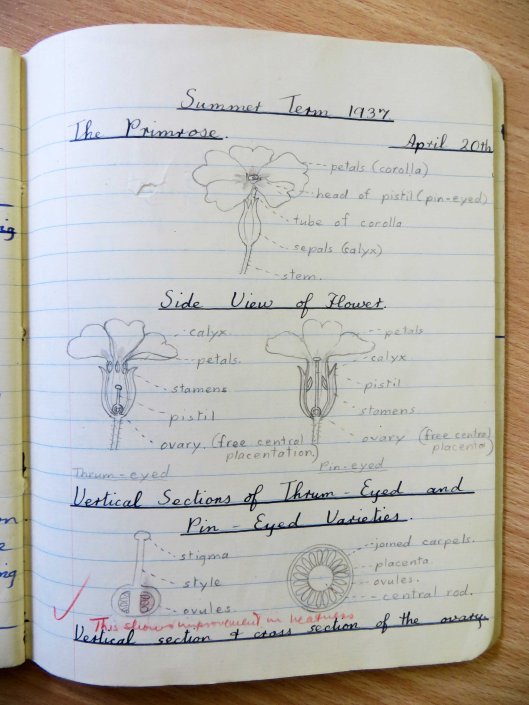
160429 primrose (1)

She was in her final, fifth form year at Ealing Grammar School for Girls, and, as you can see from her work, she already had well-developed powers of observation and a fine drawing style. Though she was raised in the London suburb of Ealing, Mary’s love of the natural world began early,

looking at birds and flowers in the local parks and on family Saturdays in the country. I brought bits and pieces for the wild flower shelf in my Junior School and began collecting and pressing specimens of the commoner species. One such collection, classified not very scientifically under flower colour, was sent by the school to a museum in Russia, as an example of an eleven-year-old’s work. 

From small beginnings come great naturalists! 

You can follow our progress with this project on Facebook and on Twitter. A website will follow soon.

160429 primrose (2)

Like Loading...

Bute Park wildflowers

17 Sunday Apr 2016

Posted by sconzani in nature, spring, wildflowers

≈ 2 Comments

Tags

Bluebell, Bute Park, Common dog-violet, Daisy, dandelion, Germander speedwell, Golden saxifrage, gorse, Greater stitchwort, Green alkanet, Herb Robert, Lesser Celandine, primrose, Red campion, Sweet violet, White deadnettle, Wild garlic, Wild strawberry, Wood anemone

This weekend I could have paid £12 to see what I’m sure would have been gorgeous flowers and inspirational displays at the Royal Horticultural Society’s Flower Show being held here in Cardiff’s Bute Park but, as I don’t have that kind of cash to splash at the moment, I decided to see what flowers I could find in Bute Park for nothing. With 18 different types of wildflowers currently in bloom I certainly wasn’t disappointed. Enjoy!

160417 bluebell
160417 daisy bellis perennis
160417 dandelion
160417 dead nettle white
160417 geranium robertianum herb robert
160417 germander speedwell
160417 gorse
160417 greater stitchwort Stellaria holostea
160417 Green Alkanet Pentaglottis sempervirens
160417 lesser celandine
160417 opposite leaved golden saxifrage
160417 primrose primula vulgaris
160417 red campion
160417 violet blue
160417 violet white
160417 wild garlic
160417 wild strawberry
160417 wood anemone

There were: Bluebell (mostly Spanish but I found a few natives) (Hyacinthoides non-scripta); Daisy (Bellis perennis); Dandelion (Taraxacum officinale); White deadnettle (Lamium album); Herb Robert (Geranium robertianum); Germander speedwell (Veronica Chamaedrys); Gorse (Ulex europaeus); Greater stitchwort (Stellaria holostea); Green alkanet (Pentaglottis sempervirens); Lesser celandine (Ranunculus ficaria); Opposite-leaved golden saxifrage (Chrysosplenium oppositifolium); Primrose (Primula vulgaris); Red campion (Silene dioica); Common dog-violet (Viola riviniana) and Sweet violet (Viola odorata); Wild garlic (Allium ursinum); Wild strawberry (Fragaria vesca); and Wood anemone (Anemone nemorosa).

Like Loading...

Sweet early Flower

10 Wednesday Feb 2016

Posted by sconzani in flowers, nature, spring, wildflowers

≈ 3 Comments

Tags

primrose, spring flowers

From Samuel Taylor Coleridge’s poem, ‘To a Primrose’

Thy smiles I note, sweet early Flower,
That peeping from thy rustic bower
The festive news to earth dost bring,
A fragrant messenger of Spring.

160210 primrose (1)

As Coleridge noted, the primrose (Primula vulgaris) is one of the first spring flowers, blooming as early as December when the weather is as mild as it has been so far this winter, and continuing on until May. The primrose was the favourite flower of British Prime Minster Benjamin Disraeli (1804-81) and so was used as the emblem for the Primrose League, an organisation founded a couple of years after Disraeli’s death and active until the 1990s, whose purpose was to promote the ideals of the Conservative Party throughout Britain.

160210 primrose (2)

In the language of flowers, the primrose has several somewhat conflicting meanings: it’s symbolic of timidity but also of fickleness, it can refer to young love but can also convey the message ‘I can’t live without you’. In Norse mythology, the primrose was sacred to Freya, the goddess of love, and in England there is a superstition that you must always bring 13 primrose flowers into the home – any more or any less means bad luck.

Like Loading...
Newer posts →

About me

sconzani

sconzani

I'm a writer and photographer; researcher and blogger; birder and nature lover; countryside rambler and city strider; volunteer and biodiversity recorder.

View Full Profile →

Follow earthstar on WordPress.com

Enter your email address to follow this blog and receive notifications of new posts by email.

Recent blog posts

  • The Marl Med gull January 29, 2026
  • Recording Grey squirrels January 28, 2026
  • Jimmy Wren January 27, 2026
  • Millipede: Nanogona polydesmoides January 26, 2026
  • Mid-winter 10 January 25, 2026

From the archives

COPYRIGHT

Unless otherwise acknowledged, the text and photographs on this blog are my own and are subject to international copyright. Nothing may be downloaded or copied without my permission.

Fellow Earth Stars!

  • Unknown's avatar
  • Unknown's avatar
  • Unknown's avatar
  • Unknown's avatar
  • Unknown's avatar
  • Unknown's avatar
  • Unknown's avatar
  • Unknown's avatar
  • Unknown's avatar
  • Unknown's avatar
  • Unknown's avatar
  • Unknown's avatar
  • Unknown's avatar
  • Unknown's avatar
  • Unknown's avatar
  • Unknown's avatar
  • Unknown's avatar
  • Unknown's avatar
  • Unknown's avatar
  • Unknown's avatar
  • Unknown's avatar
  • Unknown's avatar
  • Unknown's avatar
  • Unknown's avatar
  • Unknown's avatar
  • Unknown's avatar
  • Unknown's avatar
  • Unknown's avatar
  • Unknown's avatar
  • Unknown's avatar
  • Unknown's avatar
  • Unknown's avatar
  • Unknown's avatar
  • Unknown's avatar
  • Unknown's avatar
  • Unknown's avatar
  • Unknown's avatar
  • Unknown's avatar
  • Unknown's avatar
  • Unknown's avatar
  • Unknown's avatar
  • Unknown's avatar
  • Unknown's avatar
  • Unknown's avatar
  • Unknown's avatar
  • Unknown's avatar
  • Unknown's avatar
  • Unknown's avatar
  • Unknown's avatar
  • Unknown's avatar

Blog at WordPress.com.

Privacy & Cookies: This site uses cookies. By continuing to use this website, you agree to their use.
To find out more, including how to control cookies, see here: Cookie Policy
  • Subscribe Subscribed
    • earthstar
    • Join 670 other subscribers
    • Already have a WordPress.com account? Log in now.
    • earthstar
    • Subscribe Subscribed
    • Sign up
    • Log in
    • Report this content
    • View site in Reader
    • Manage subscriptions
    • Collapse this bar
 

Loading Comments...
 

You must be logged in to post a comment.

    %d