
Tags
British odonata, colour changes in Large red damselflies, colour variations in Large red damselflies, Large red damselflies, Odonata, Pyrrhosoma nymphula
This was initially going to be a ‘Yay, the dragonflies are on the wing’ blog but then I went down a rabbit hole of how Large red damselflies change colour over time and how there are several variations in their colour patterns, and here we are.
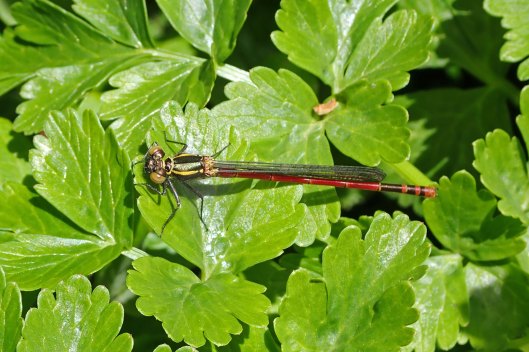
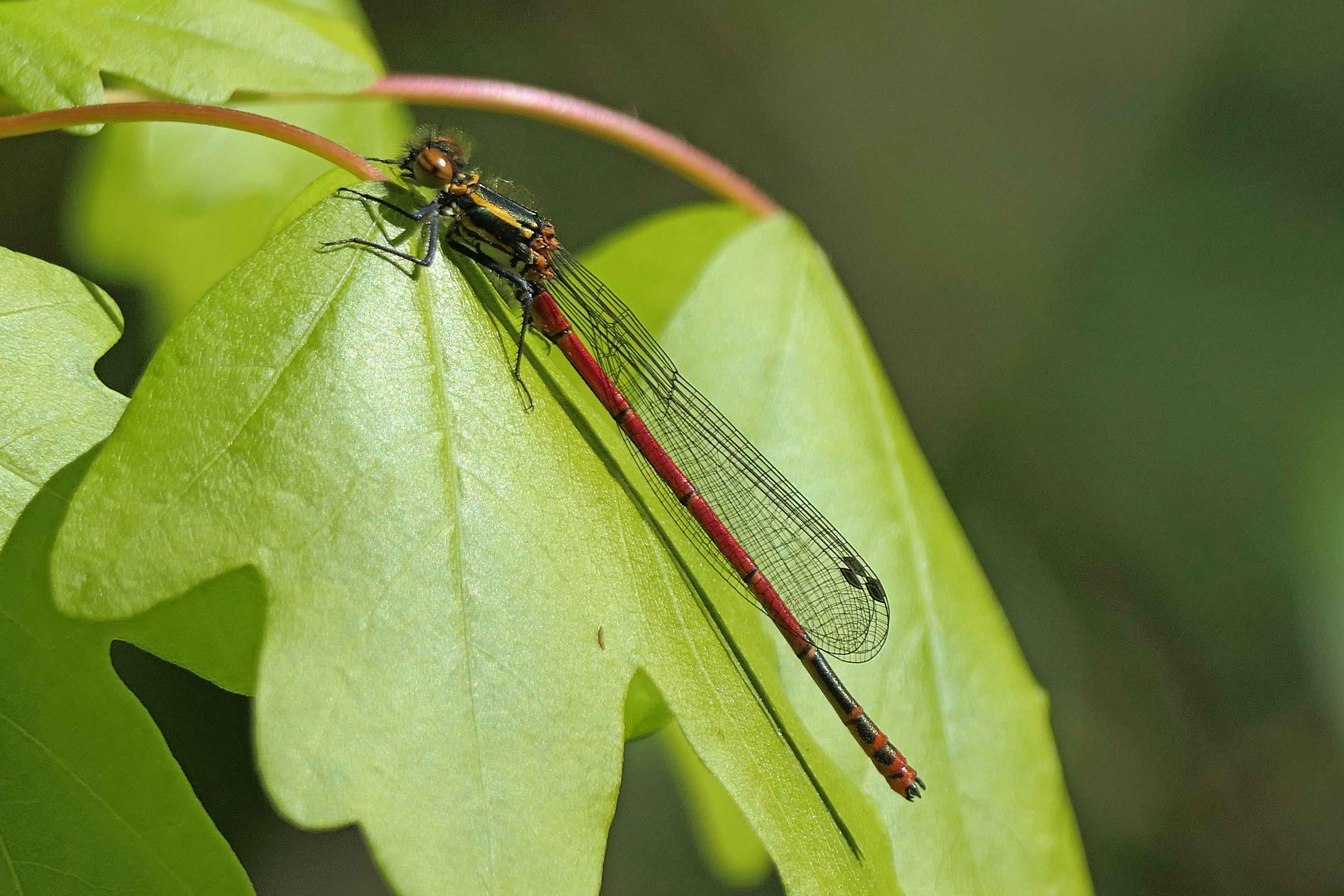
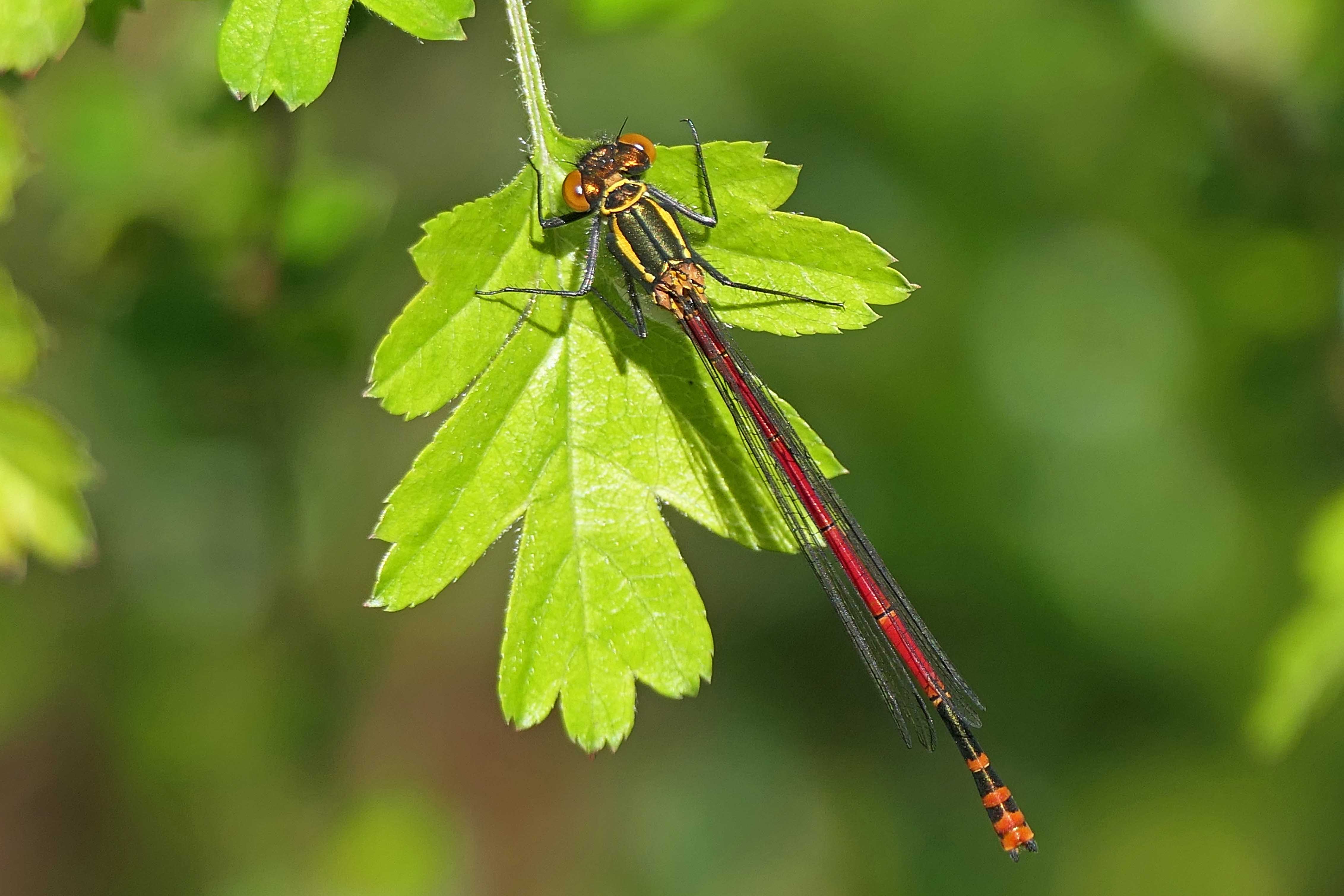
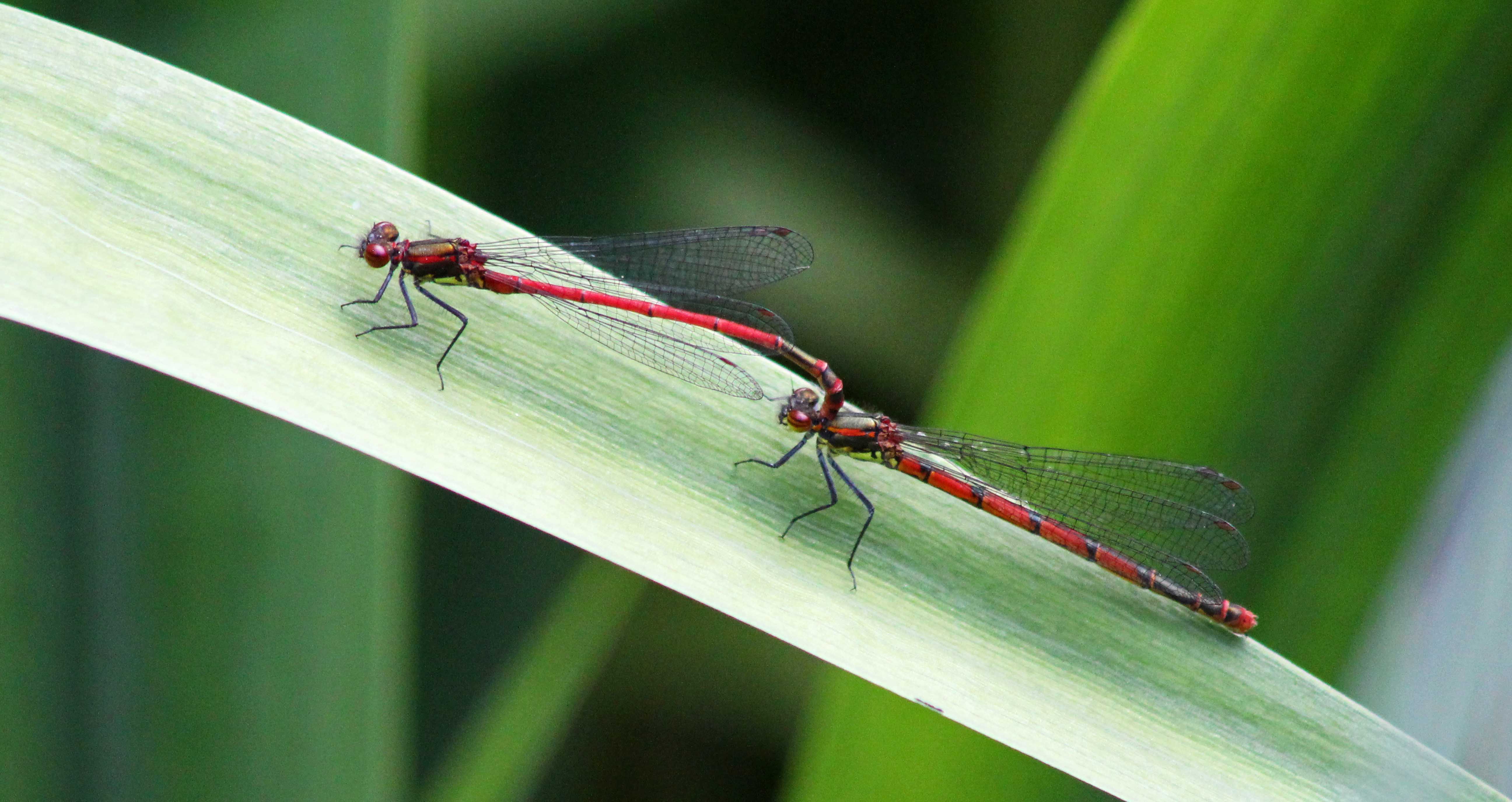
I saw my first odonata of the season, the Large red damselfly (Pyrrhosoma nymphula) shown above, on 21 April, but I’ve been holding off blogging about it until I found one that showed how these beauties change colour as they mature. The photo below was taken this morning, and I hope you can see how the antehumeral stripes (the longitudinal stripes on the sides of the thorax) have changed from yellow in the newly emerged damselfly to red in the older specimen. The eyes also darken to a very deep red as the damselflies age.
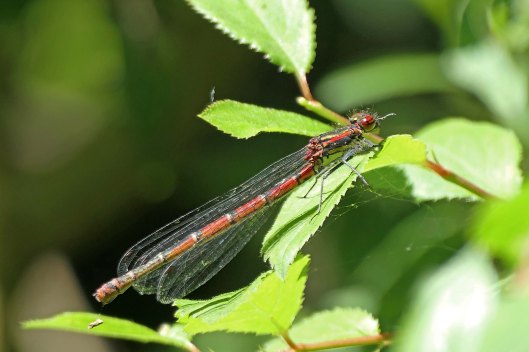
The ‘rabbit hole’ article, ‘In-depth Identification Feature – Large Red Damselflies’ by John Curd (which you can read on the British Dragonfly Society website), also pointed out the different colour forms’ based upon the extent of dorsal black on the abdomen’. John’s photos show the variations, which, I am a little ashamed to admit, I had never noticed before, and that led me to go back through my own photos of Large red damselflies.
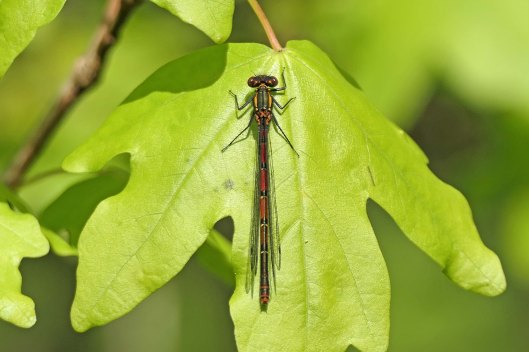
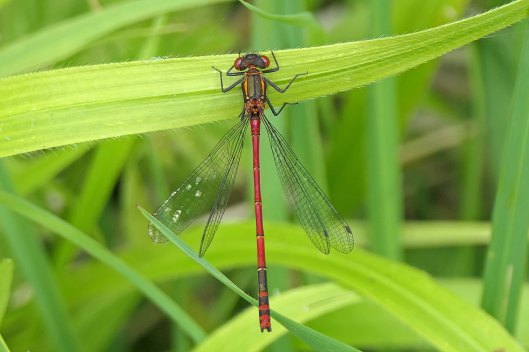
It turns out I’ve only ever photographed two of the variations: f. (form) typica/intermedia, shown above, which has more black at the sutures along the abdomen, and f. fulvipes, below, which has much less black. The latter seems much more common in my area, based on my photographs. The third form (or third and fourth, as some argue this one has two types), f. melanotum, is entirely black and is much rarer.




 earthstar
You must be logged in to post a comment.