• ABOUT
  • BIRDING 2018
  • Birding 2019
  • BLOG POSTS
  • Butterflies 2018
  • Resources

earthstar

~ a celebration of nature

earthstar

Tag Archives: Serengeti Plains

Dawn, 2017!

01 Sunday Jan 2017

Posted by sconzani in nature, seasons

≈ 8 Comments

Tags

1 January 2017, dawn, New Year, Serengeti Plains, sunrise, Tanzania

170101-sunrise

The sun rises over the Serengeti Plains, Tanzania, August 2014

‘Those who contemplate the beauty of the earth find reserves of strength that will endure as long as life lasts. There is something infinitely healing in the repeated refrains of nature – the assurance that dawn comes after night, and spring after winter.’

Rachel Carson (1907-1964) was an American marine biologist and conservationist. This quote is taken from her seminal work Silent Spring, 1962.

Like Loading...

World wildlife Wednesday: Antelopes anonymous

13 Wednesday Jul 2016

Posted by sconzani in animals, nature

≈ 6 Comments

Tags

antelope, Ngorongoro Crater, safari, Serengeti National Park, Serengeti Plains, Tanzania

I used the word anonymous in my title because I’m not entirely sure what all of these animals are. And I use the word ‘antelopes’ in the broadest possible sense, as my photos may well include creatures that are not strictly speaking members of the antelope family. The trouble is that when you go on safari in a country like Tanzania, it’s far too easy to be overwhelmed by and enraptured with the less common, more sensational animals (the lions and leopards and cheetahs), so the ‘antelopes’, though no less interesting in themselves, tend to get ignored just a little.

160713 antelopes (7)

Having said that I did have to sort through more than a hundred ‘antelope’ photos when choosing which to include in this post. And, because I knew I would forget them, I did ask our guides the names of what we were seeing and made a list – I’m just not sure now which is which on that list. So, these photos may or may not include: impala, topi, Thomson’s gazelle, Grant’s gazelle, dik-dik, waterbuck, bushbuck, Cape eland, and Coke’s hartebeest.

160713 antelopes (1)
160713 antelopes (2)
160713 antelopes (3)
160713 antelopes (5)
160713 antelopes (8)
160713 antelopes (9)
160713 antelopes (11)
160713 antelopes (4)
160713 antelopes (10)
160713 antelopes (6)
Like Loading...

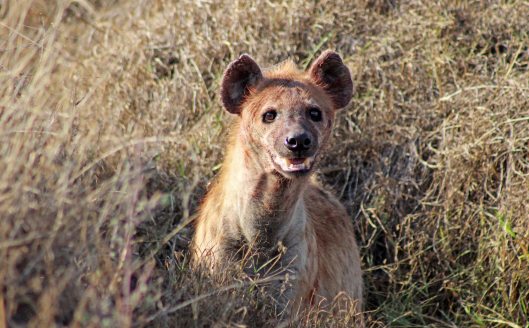
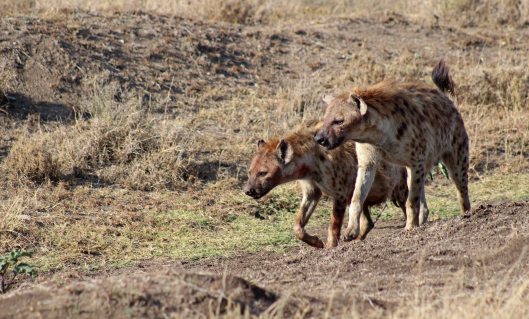
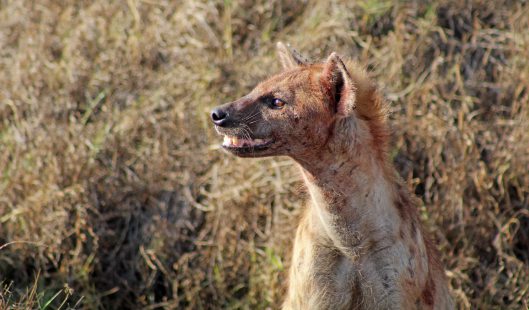
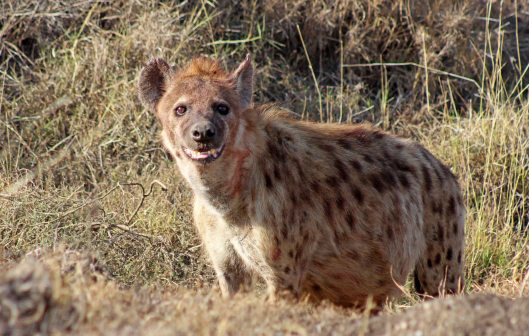
The laughing hyena

20 Wednesday Apr 2016

Posted by sconzani in animals, nature, nature photography

≈ 2 Comments

Tags

Hyena, Serengeti National Park, Serengeti Plains, Spotted hyena, Tanzania

‘A sense of humor is good for you. Have you ever heard of a laughing hyena with heart burn?’ ~ Bob Hope

160420 hyena (4)

‘HYENA, n. A beast held in reverence by some oriental nations from its habit of frequenting at night the burial-places of the dead. But the medical student does that.’ ~ Ambrose Bierce

160420 hyena (3)

‘There’s always the hyena of morality at the garden gate, and the real wolf at the end of the street.’ ~ D. H. Lawrence

160420 hyena (1)

‘Do let’s pretend that I’m a hungry hyena, and you’re a bone!’ ~ Lewis Carroll

160420 hyena (2a)

‘We slander the hyena; man is the fiercest and cruellest animal.’ ~ Henry David Thoreau

160420 hyena (5)

Like Loading...

The rock hyrax

06 Wednesday Apr 2016

Posted by sconzani in animals, nature, nature photography

≈ 6 Comments

Tags

Procavia capensis, rock hyrax, Serengeti National Park, Serengeti Plains, Tanzania

On safari in the Serengeti even the places where we stopped for lunch had amazing wildlife, some of them lazing around in the sun as if just waiting for the animal paparazzi to show up. These critters are Rock hyraxes (Procavia capensis), also known as Cape hyraxes and rock badgers. Incredibly, though they look a bit like huge hamsters, their closest living relatives – cousins many times removed – are elephants and sea cows. Just like their cousins, they have prominent (though obviously much smaller) tusk-like upper incisors, and the males’ testes are permanently enclosed inside their abdomens.

160406 hyrax (4)

Their bodies do not regulate heat very efficiently so, though they look rather fat and lazy, they are more active in the early morning and in the evening but need simply to bask during the hottest hours of the day. Hyraxes live in large social groups, using sentries to warn of danger when foraging for their favourite food plants, and communicating through a series of at least 21 different vocalisations which can, apparently, inform other hyraxes of their age, size, body weight, social status and hormonal condition. They can be found in most of the sub-Saharan countries in Africa, and are just plain cute!

160406 hyrax (1)
160406 hyrax (2)
160406 hyrax (3)
Like Loading...

‘The king of the jungle’

30 Wednesday Mar 2016

Posted by sconzani in animals, nature, nature photography

≈ 2 Comments

Tags

king of the jungle, lion, Ngorongoro Crater, Serengeti National Park, Serengeti Plains, Tanzania

Did you know …

160330 lions (1)

The ‘king of the jungle’ is just an expression as lions actually live in grasslands and plains.

160330 lions (2)

The roar of a lion can be heard up to 8kms (5 miles) away.

160330 lions (3)

A lion can run at 50 mph but only for short distances and can leap as far as 36 feet.
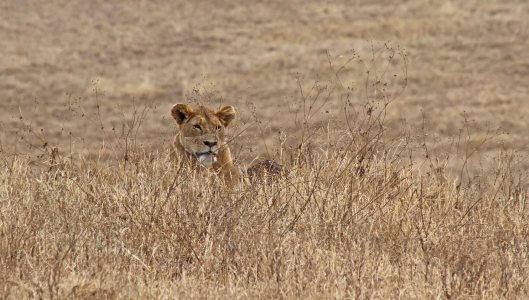
160330 lions (4)

When it walks, a lion’s heels don’t touch the ground.
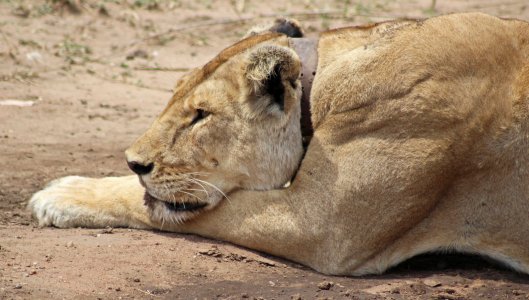
160330 lions (5)

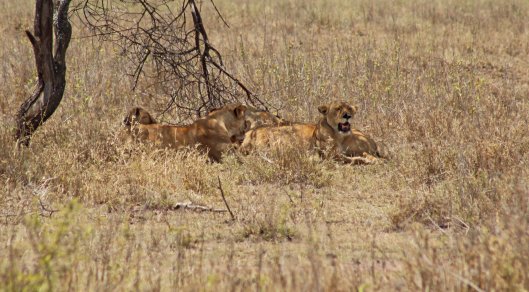
Lions are the only big cats to live in family groups, known as prides.
160330 lions (6)

The reason lions spend up to 20 hours a day resting and sleeping is because their bodies have very few sweat glands so it is easier for them to be active in the cool of the night.

160330 lions (7)

Lions’ eyes are six times more sensitive to light than human eyes, which means they have excellent night vision.

160330 lions (8)

The darker the mane, the older the lion, and lionesses seem to prefer males with darker manes.

My photographs of lions were taken on the Serengeti Plains and in the Ngorongoro Crater in Tanzania in 2014, at the end of a week-long trip with The Giving Lens, an organisation that combines photography workshops with mentoring, media and financial support for local NGOs.

Like Loading...

Cat climbs a tree

19 Saturday Mar 2016

Posted by sconzani in animals, nature, nature photography

≈ Leave a comment

Tags

Earth Hour, leopard, leopard climbs a tree, Serengeti National Park, Serengeti Plains, Tanzania

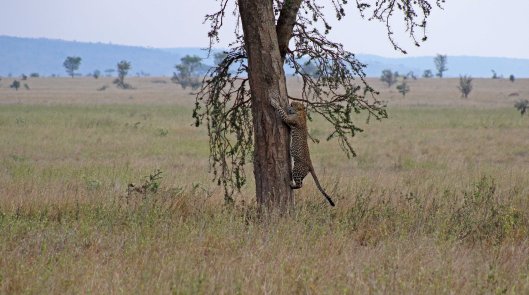
Today, at varying times around the globe, we celebrate Earth Hour, a movement in which 7000 cities and towns around the world unite in turning off their power, as a way of showing their support for environmental issues, as a way of uniting in their desire to protect planet earth.

160319 leopard (1)

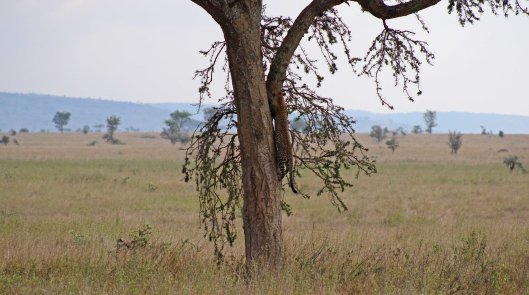
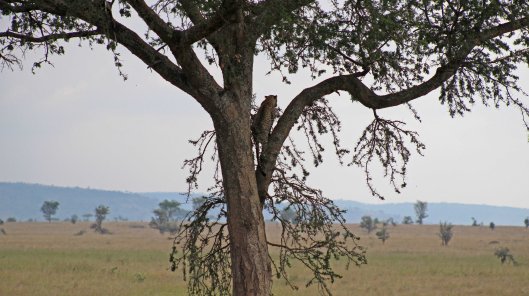
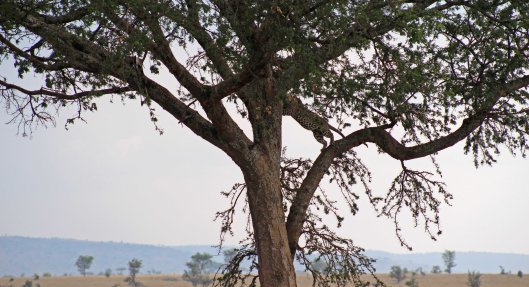
In honour of this special day I thought I would share one of the most special times I have experienced on this amazing planet we call home. If we don’t unite to protect our earth, sights like this will disappear forever. It is a simple act – a cat climbs a tree – but this is not just any cat, this is a pregnant female leopard, climbing the tree where she has previously stashed a kill, in the Serengeti, in Tanzania.

I hope we can all work together to protect our planet so that everyone has the opportunity to see this. I hope one day you get to see this. I hope one day your grandchildren get to see this.

160319 leopard (2)160319 leopard (3)160319 leopard (4)160319 leopard (5)160319 leopard (6)160319 leopard (7)160319 leopard (8)160319 leopard (9)160319 leopard (10)160319 leopard (11)

Like Loading...

Giraffe necking

16 Wednesday Mar 2016

Posted by sconzani in animals, nature, nature photography

≈ 4 Comments

Tags

giraffe, giraffe necking, Serengeti National Park, Serengeti Plains, Tanzania

160315 giraffes 1 (1)

Though I had seen giraffes in zoos, it was a totally different experience to see wild creatures like these in their natural environment, on the Serengeti Plains, in Tanzania, in 2014. In a zoo, you are safe: the animal is confined and, if not tame, at least partially used to human interaction. In the Serengeti, though I never felt unsafe, I was very much aware that I was out of place, an intruder in a savage world, where death and violence are commonplace.

160315 giraffes 1 (2)160315 giraffes 1 (3)

I felt this most when we were watching these three young male giraffes. Initially, they looked like they were just hanging out like good buddies but, as we watched, they started necking. This is a common, often violent ritual to establish dominance in the herd or to impress a female. They swing their necks and try to hit each other with those hard bumps (ossicles) on the tops of their heads. And it must hurt – those whacks and thumps sounded brutal and can apparently be heard up to a kilometre away. These three didn’t injure each other but older males have been known to knock each other unconscious with the power of their blows. It was certainly sobering to watch.

160315 giraffes 1 (4)
160315 giraffes 1 (5)
160315 giraffes 1 (6)
160315 giraffes 1 (7)
Like Loading...

About me

sconzani

sconzani

I'm a writer and photographer; researcher and blogger; birder and nature lover; countryside rambler and city strider; volunteer and biodiversity recorder.

View Full Profile →

Follow earthstar on WordPress.com

Enter your email address to follow this blog and receive notifications of new posts by email.

Recent blog posts

  • N is for nest December 19, 2025
  • M is for mite December 18, 2025
  • L is for lepidopteran lifers December 17, 2025
  • K is for Keeled skimmers December 16, 2025
  • J is for Jersey tiger December 15, 2025

From the archives

COPYRIGHT

Unless otherwise acknowledged, the text and photographs on this blog are my own and are subject to international copyright. Nothing may be downloaded or copied without my permission.

Fellow Earth Stars!

  • Unknown's avatar
  • Unknown's avatar
  • Unknown's avatar
  • Unknown's avatar
  • Unknown's avatar
  • Unknown's avatar
  • Unknown's avatar
  • Unknown's avatar
  • Unknown's avatar
  • Unknown's avatar
  • Unknown's avatar
  • Unknown's avatar
  • Unknown's avatar
  • Unknown's avatar
  • Unknown's avatar
  • Unknown's avatar
  • Unknown's avatar
  • Unknown's avatar
  • Unknown's avatar
  • Unknown's avatar
  • Unknown's avatar
  • Unknown's avatar
  • Unknown's avatar
  • Unknown's avatar
  • Unknown's avatar
  • Unknown's avatar
  • Unknown's avatar
  • Unknown's avatar
  • Unknown's avatar
  • Unknown's avatar
  • Unknown's avatar
  • Unknown's avatar
  • Unknown's avatar
  • Unknown's avatar
  • Unknown's avatar
  • Unknown's avatar
  • Unknown's avatar
  • Unknown's avatar
  • Unknown's avatar
  • Unknown's avatar
  • Unknown's avatar
  • Unknown's avatar
  • Unknown's avatar
  • Unknown's avatar
  • Unknown's avatar
  • Unknown's avatar
  • Unknown's avatar
  • Unknown's avatar
  • Unknown's avatar
  • Unknown's avatar

Blog at WordPress.com.

Privacy & Cookies: This site uses cookies. By continuing to use this website, you agree to their use.
To find out more, including how to control cookies, see here: Cookie Policy
  • Subscribe Subscribed
    • earthstar
    • Join 667 other subscribers
    • Already have a WordPress.com account? Log in now.
    • earthstar
    • Subscribe Subscribed
    • Sign up
    • Log in
    • Report this content
    • View site in Reader
    • Manage subscriptions
    • Collapse this bar
 

Loading Comments...
 

You must be logged in to post a comment.

    %d