• ABOUT
  • BIRDING 2018
  • Birding 2019
  • BLOG POSTS
  • Butterflies 2018
  • Resources

earthstar

~ a celebration of nature

earthstar

Tag Archives: snails

A walk of snails

09 Thursday Jan 2025

Posted by sconzani in molluscs

≈ Leave a comment

Tags

Balea perversa, British snails, Brown-lipped snail, Cepaea hortensis, Cepaea nemoralis, Discus rotundatus, snails, Wall snail, White-lipped snail

On days when I don’t feel like getting my hands dirty in the leaf litter, and I’m walking in that direction, I’ve increasingly been turning my attention to one of my local parks, as I find all manner of creatures on the park’s roadside railings (as witnessed by my recent posts: Vapourer cocoon and eggs, 2 January, and Lesser thorn-tipped longhorn beetle, 4 January). Snails are also frequent finds; presumably they don’t mind the exposed conditions and the frequent rain, and I guess they find the surface of the railings easy to slide along. So far, I’ve found four species there …

250109 snail balea perversa

Wall snail (Balea perversa) (also known as Tree snail)

250109 snail white-lipped

White-lipped snail (Cepaea hortensis)

250109 snail brown-lipped

Brown-lipped snail (Cepaea nemoralis)
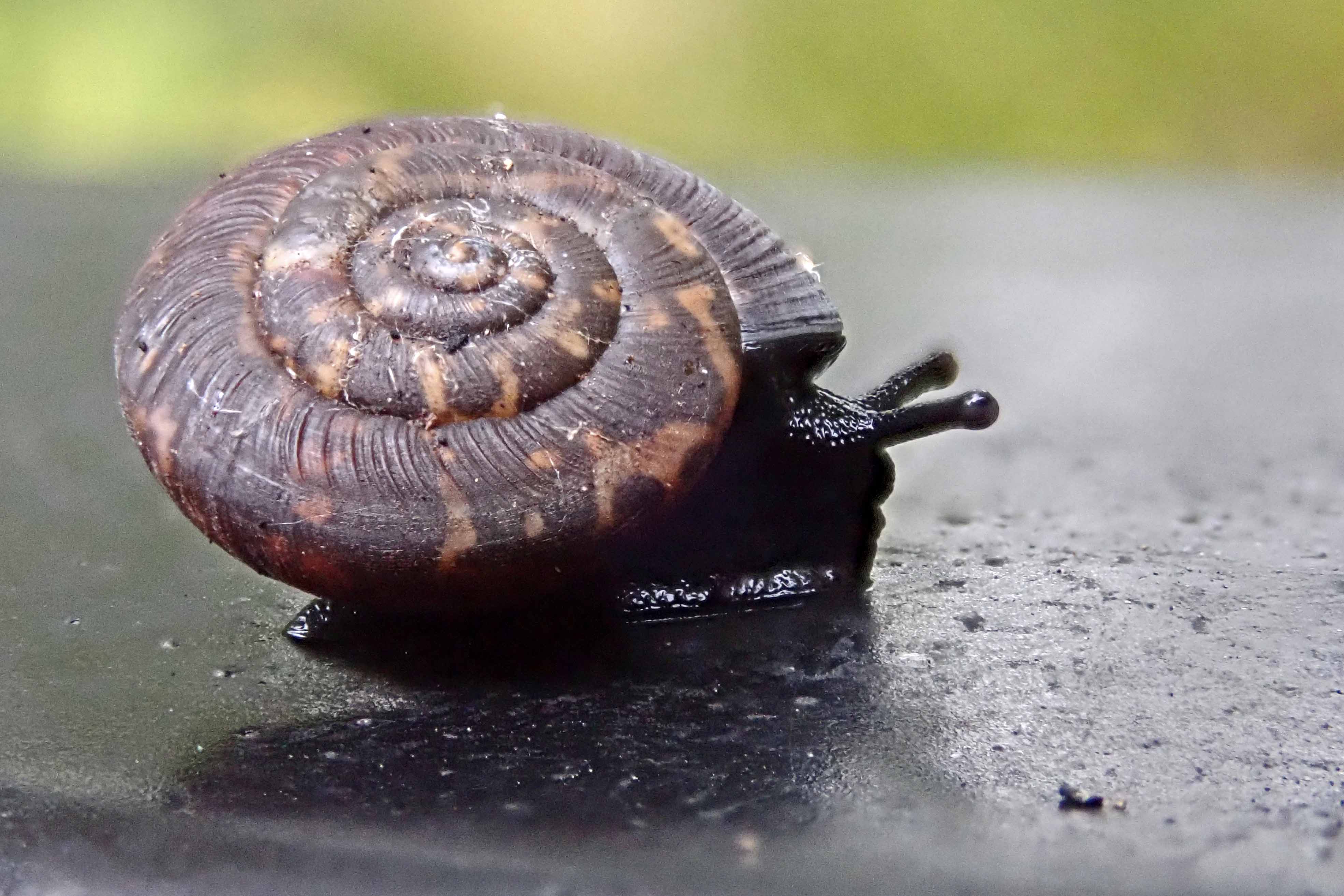
250109 snail Discus rotundatus

Discus rotundatus

Oh, and if you’re wondering about the title of this blog, apparently ‘walk’ is the correct, if somewhat ironic collective noun for snails.
Like Loading...

333/366 Striped snail

28 Saturday Nov 2020

Posted by sconzani in molluscs

≈ Leave a comment

Tags

Banded snail, British molluscs, British snails, Cernuella virgata, snails, Striped snail

And now for something completely different….

201128 striped snail (1)

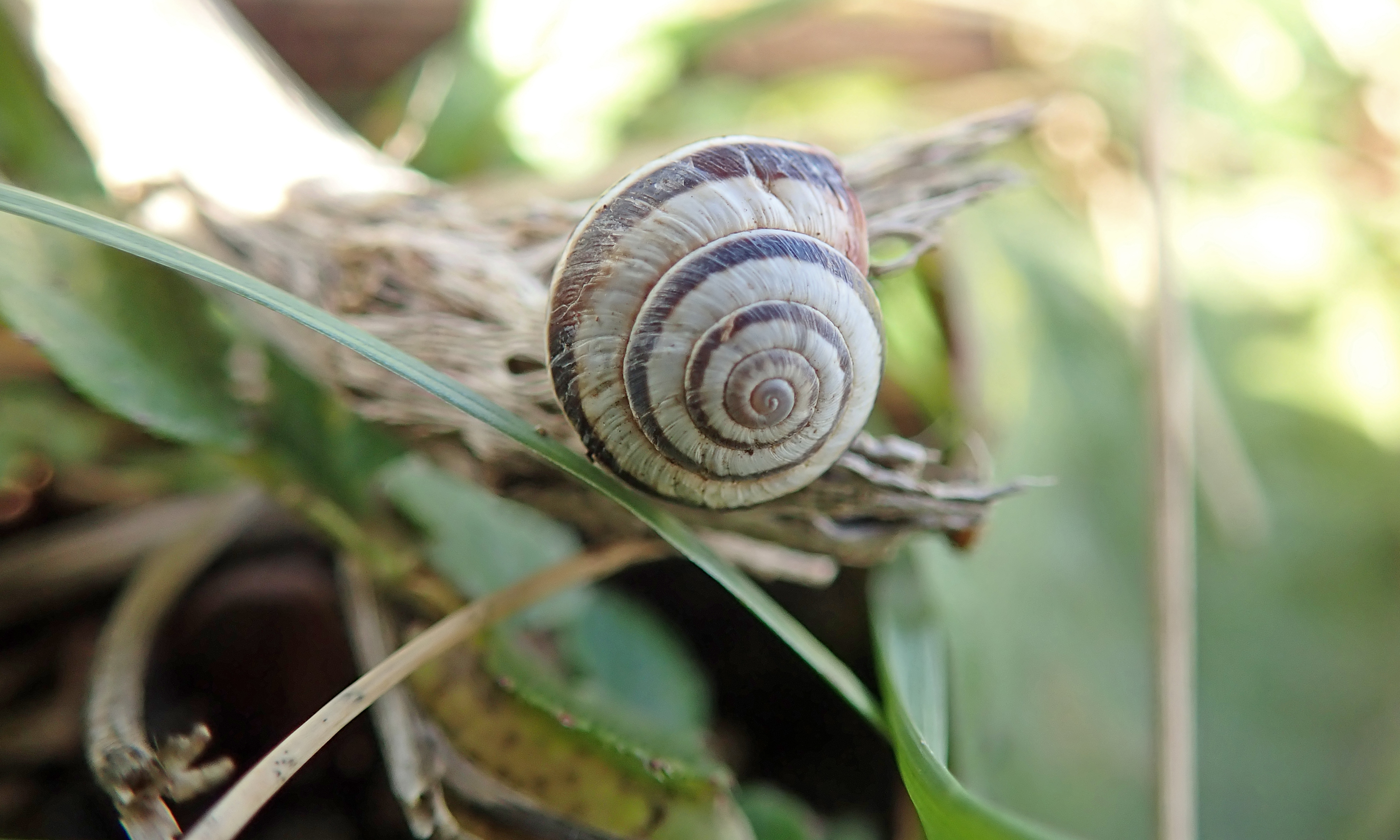
I don’t often look at molluscs but these banded beauties caught my eye when I was walking across the Cardiff Bay Barrage earlier this week. I’m fairly sure they’re Cernuella virgata, Striped or Banded snails.

201128 striped snail (3)
201128 striped snail (4)

The presence of dark-on-light spiralling bands on their shells is one defining feature, as is their semi-spherical, rather than flat, shape, and the small open umbilicus. And they’re usually found on coastal sites, particularly in calcareous grassland, which fits the Barrage location.

201128 striped snail (2)

Like Loading...

191/366 Snail sex

09 Thursday Jul 2020

Posted by sconzani in molluscs, nature

≈ Leave a comment

Tags

British snails, snail love dart, snail reproduction, snail sex, snails

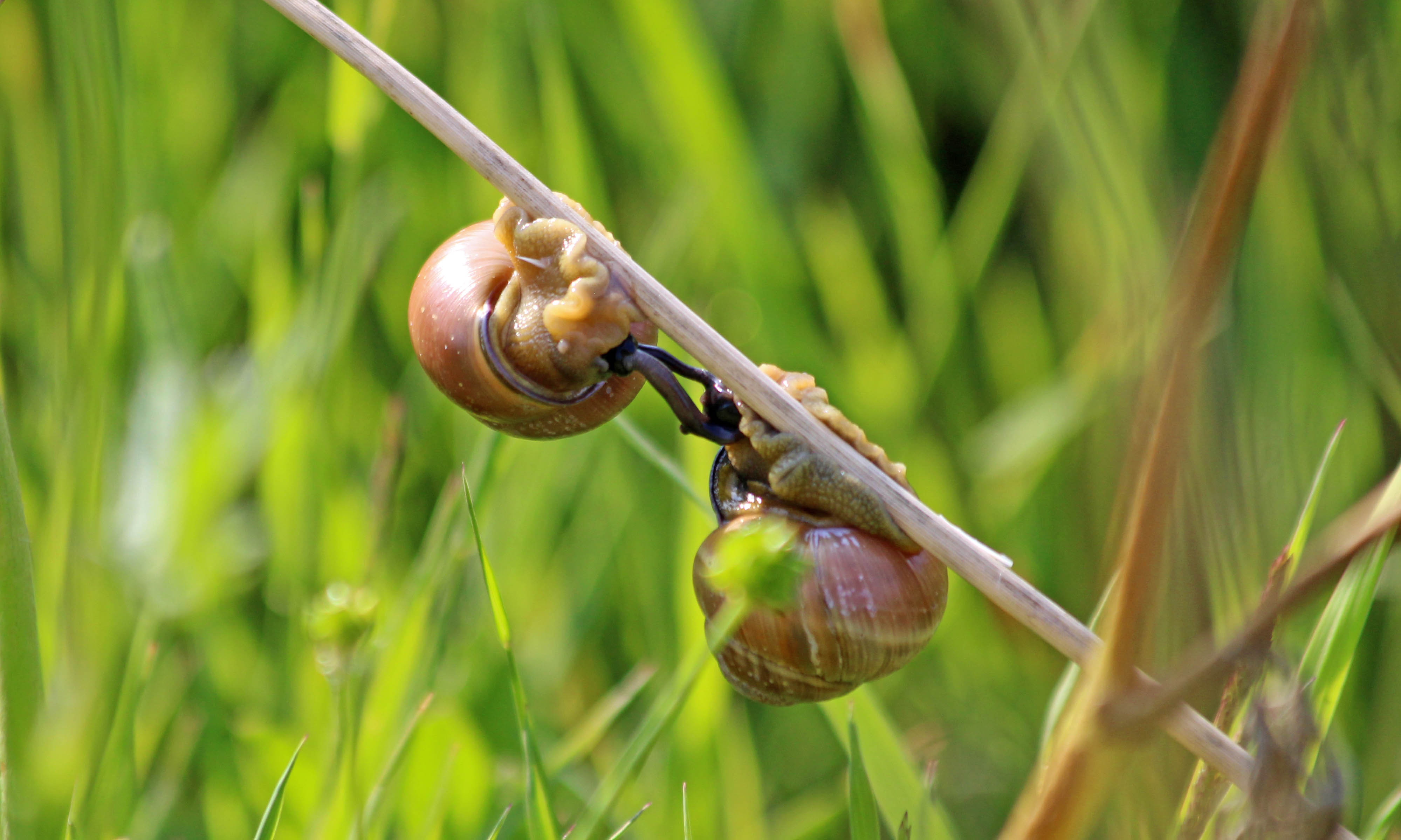
I’ve noticed snails cwtched up together many times in the past but I’d never observed the nitty gritty of what they were actually doing until I saw this pair. Because they’d pulled slightly apart, it was possible to see their ‘apparatus’ in action.

200709 mating snails (1)

And what about the tiny white spike on the snail at left? Is that one of the love darts that snails stab their mates with? I don’t know enough about snails to be sure but, for more on this point, you can read about the sharp end of snail sex on the National Geographic website here.

200709 mating snails (2)

Like Loading...

Under the log

29 Saturday Dec 2018

Posted by sconzani in fungi, insects, molluscs, nature, slugs, winter

≈ 2 Comments

Tags

#7DaysofWildChristmas, brain fungi, Catinella olivacea, Cogan Wood, Cosmeston Lakes Country Park, earthworms, Harvestman, orange slime, slugs, snails, turning over logs, woodlice

The weather was back to grey and drizzly again today so I donned my wet weather gear and headed to Cogan Wood to spend part of day 5 of my #7DaysofWildChristmas challenge turning over a few rotten logs and branches. And what did I find lurking there?

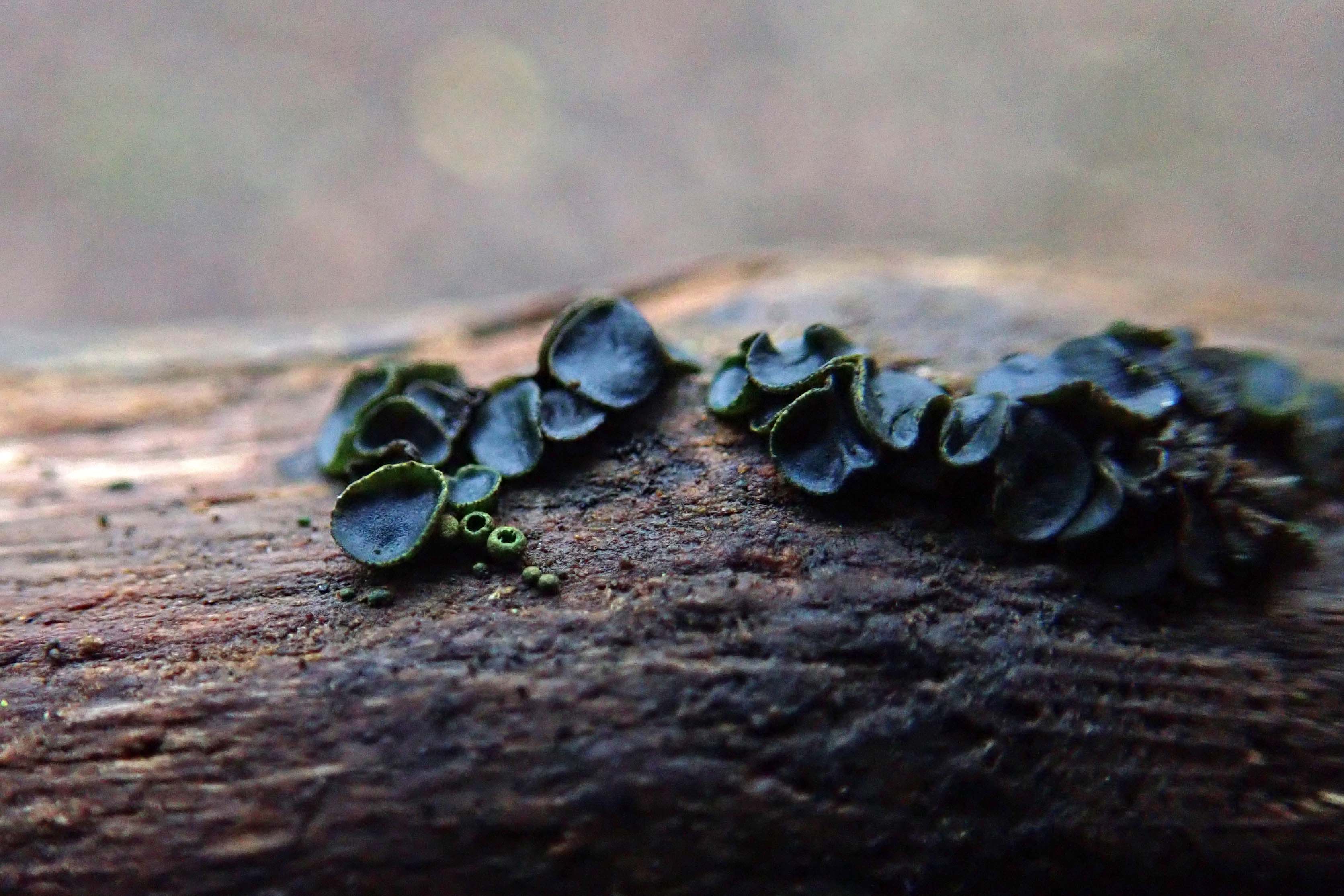
Woodlice; snails both long and rotund; earthworms; luscious balls of orange slime; tiny globular balls that looked like the eggs of something or other; pale little lumps of White or Crystal brain fungi; slugs brown and black; a stripey legged Harvestman; miniscule white mushrooms adorned with drops of water; a young centipede or millipede – I can never be quite sure which is which; dark little cup fungi, black with olive rims (Catinella olivacea) – very pleased with that find; and various other things, the photographs of which were either out of focus or too grainy due to the poor light conditions in the woodland. There’s nothing quite like getting wild and muddy – it was fun!

181229 under the log (11)

181229 under the log (1)
181229 under the log (2)

181229 under the log (3)
181229 under the log (4)

181229 under the log (5)
181229 under the log (6)

181229 under the log (7)
181229 under the log (8)

181229 under the log (9)
181229 under the log (10)

Like Loading...

At a snail’s pace

26 Sunday Mar 2017

Posted by sconzani in molluscs, nature

≈ 8 Comments

Tags

Aegopinella nitidula, British snails, Clear glass snail, Discus rotundatus, Discus snail, Kentish snail, Monacha cantiana, Rounded snail, Smotth glass snail, snails, Waxy glass snail

I had no intention of sliding down the slippery slope of snail identification but I’ve found a few in recent weeks and couldn’t not try to ID them. And then a friend, who has given up on that ‘too hard’ process, gifted me his guide book. Luckily, there is also a good ‘Slugs and Snails of the British Isles’ group of very helpful folks on Facebook, though you do have to know which bits of the snail to photograph for them to be able to help. So, these little snails are hopefully correctly identified as follows:

170326 snail Aegopinella nitidula

Smooth glass snail (Aegopinella nitidula)
Also known as the Clear glass snail or Waxy glass snail, this little land mollusc can be found munching away on plant matter all year round in gardens and hedgerows, rough grassland, waste ground and woodlands throughout much of Britain. It only grows to around 10mm so is quite little.

170326 snail Discus rotundatus

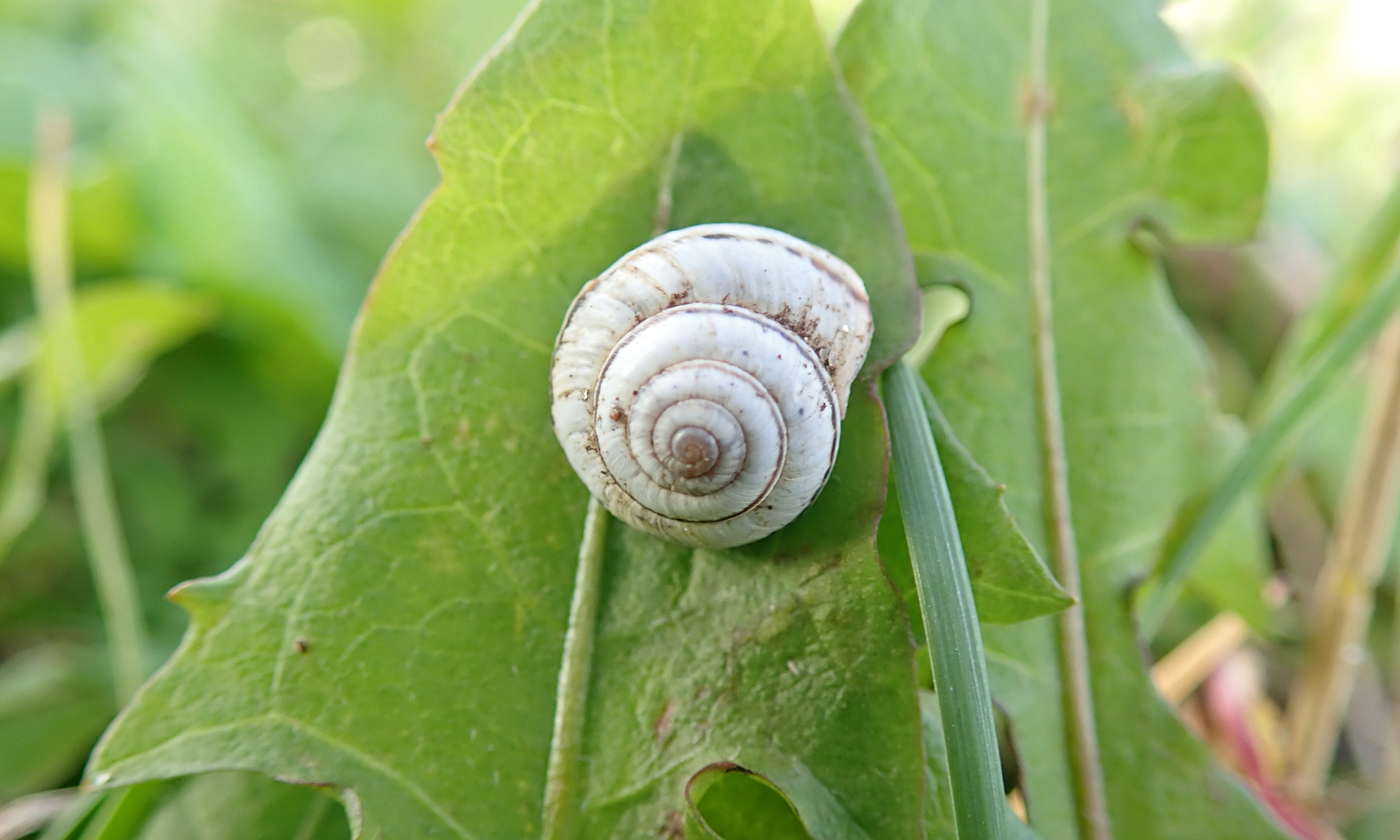
Rounded snail (Discus rotundatus)
At between 5 and 7mm across, the Rounded or Discus snail (I think that second name suits it very well) is also rather small. Its shell is quite flat but tightly coiled, with up to 6 whorls, and its upper surface is densely ribbed. It’s another very common snail (I obviously haven’t been looking very hard as this was my first sighting) and is especially partial to sheltered damp spots under logs, amongst leaf litter, beneath stones and rubble. Apparently it feeds on detritus (I’m never quite sure what that means!) and fungi.

170326 snail Monacha cantiana (2)
170326 snail Monacha cantiana (1)

Kentish snail (Monacha cantiana)
It may be named the Kentish snail but this is actually an introduced species. According to the German website Animal Base, it was ‘introduced to Great Britain with farmers in late Roman times and spread mainly in the mediaeval period, occupying a compact area covering S and E England, and still continues spreading (isolated sites in Wales, W central England and Scotland)’. The slight hairiness of my little friend (see photo above right) is because it’s a juvenile – those hairs will rub off as it grows to its full size of around 16mm.

170326 snail Monacha cantiana (3)

Like Loading...

About me

sconzani

sconzani

I'm a writer and photographer; researcher and blogger; birder and nature lover; countryside rambler and city strider; volunteer and biodiversity recorder.

View Full Profile →

Follow earthstar on WordPress.com

Enter your email address to follow this blog and receive notifications of new posts by email.

Recent blog posts

  • Weevil: Mecinus pyraster January 10, 2026
  • Red in beak and claw January 9, 2026
  • Who’s watching who? January 8, 2026
  • Springtail: Orchesella cincta January 7, 2026
  • A good year for Redwings January 6, 2026

From the archives

COPYRIGHT

Unless otherwise acknowledged, the text and photographs on this blog are my own and are subject to international copyright. Nothing may be downloaded or copied without my permission.

Fellow Earth Stars!

  • Unknown's avatar
  • Unknown's avatar
  • Unknown's avatar
  • Unknown's avatar
  • Unknown's avatar
  • Unknown's avatar
  • Unknown's avatar
  • Unknown's avatar
  • Unknown's avatar
  • Unknown's avatar
  • Unknown's avatar
  • Unknown's avatar
  • Unknown's avatar
  • Unknown's avatar
  • Unknown's avatar
  • Unknown's avatar
  • Unknown's avatar
  • Unknown's avatar
  • Unknown's avatar
  • Unknown's avatar
  • Unknown's avatar
  • Unknown's avatar
  • Unknown's avatar
  • Unknown's avatar
  • Unknown's avatar
  • Unknown's avatar
  • Unknown's avatar
  • Unknown's avatar
  • Unknown's avatar
  • Unknown's avatar
  • Unknown's avatar
  • Unknown's avatar
  • Unknown's avatar
  • Unknown's avatar
  • Unknown's avatar
  • Unknown's avatar
  • Unknown's avatar
  • Unknown's avatar
  • Unknown's avatar
  • Unknown's avatar
  • Unknown's avatar
  • Unknown's avatar
  • Unknown's avatar
  • Unknown's avatar
  • Unknown's avatar
  • Unknown's avatar
  • Unknown's avatar
  • Unknown's avatar
  • Unknown's avatar
  • Unknown's avatar

Blog at WordPress.com.

Privacy & Cookies: This site uses cookies. By continuing to use this website, you agree to their use.
To find out more, including how to control cookies, see here: Cookie Policy
  • Subscribe Subscribed
    • earthstar
    • Join 669 other subscribers
    • Already have a WordPress.com account? Log in now.
    • earthstar
    • Subscribe Subscribed
    • Sign up
    • Log in
    • Report this content
    • View site in Reader
    • Manage subscriptions
    • Collapse this bar
 

Loading Comments...
 

You must be logged in to post a comment.

    %d