• ABOUT
  • BIRDING 2018
  • Birding 2019
  • BLOG POSTS
  • Butterflies 2018
  • Resources

earthstar

~ a celebration of nature

earthstar

Tag Archives: sycamore

Leafmines: Caloptilia rufipennella

23 Monday Sep 2024

Posted by sconzani in insects, trees

≈ Leave a comment

Tags

British leafminers, Caloptilia rufipennella, leaf-mining moth larvae, leaf-mining moths, leafminers on Sycamore, sycamore

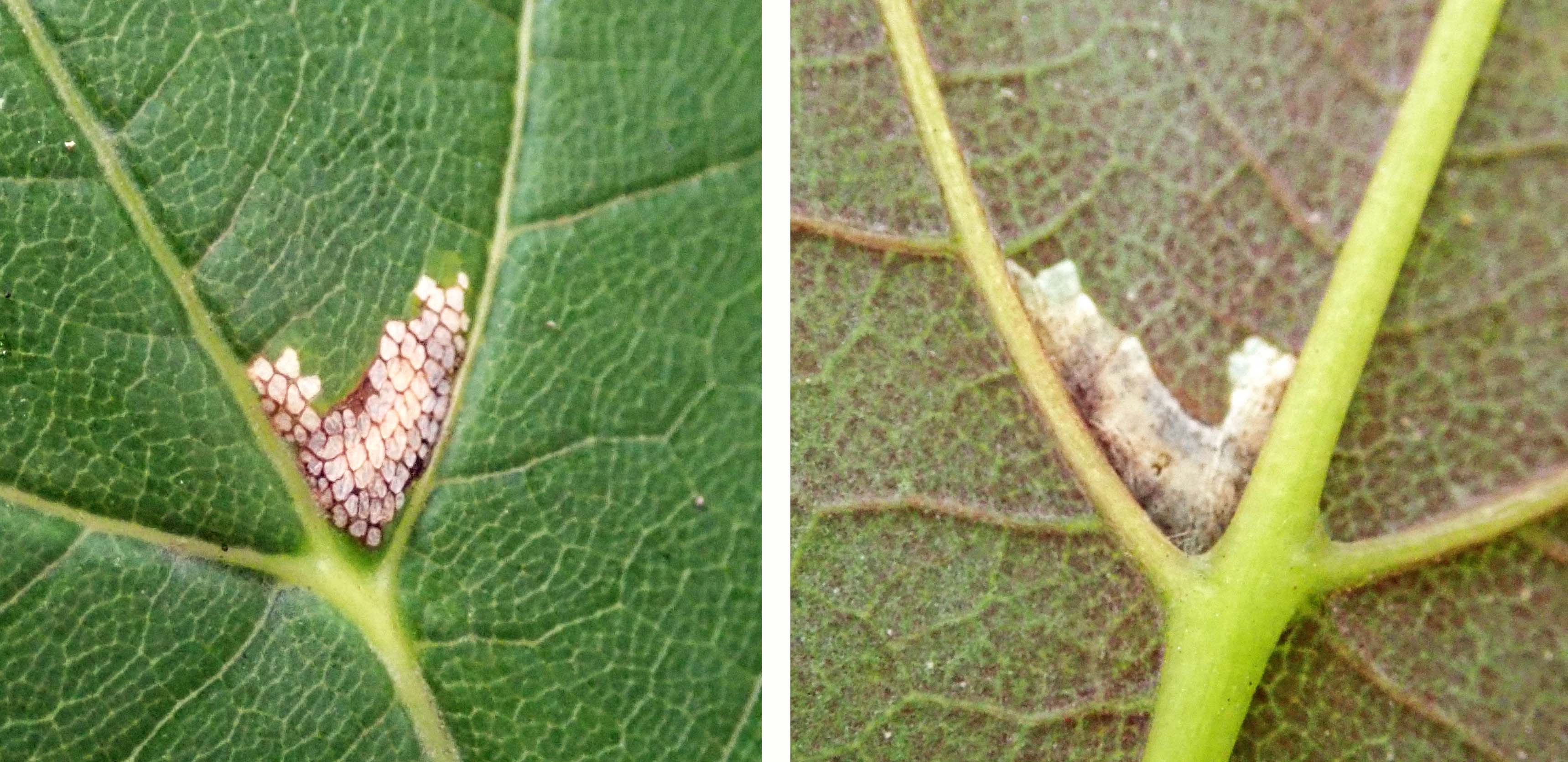
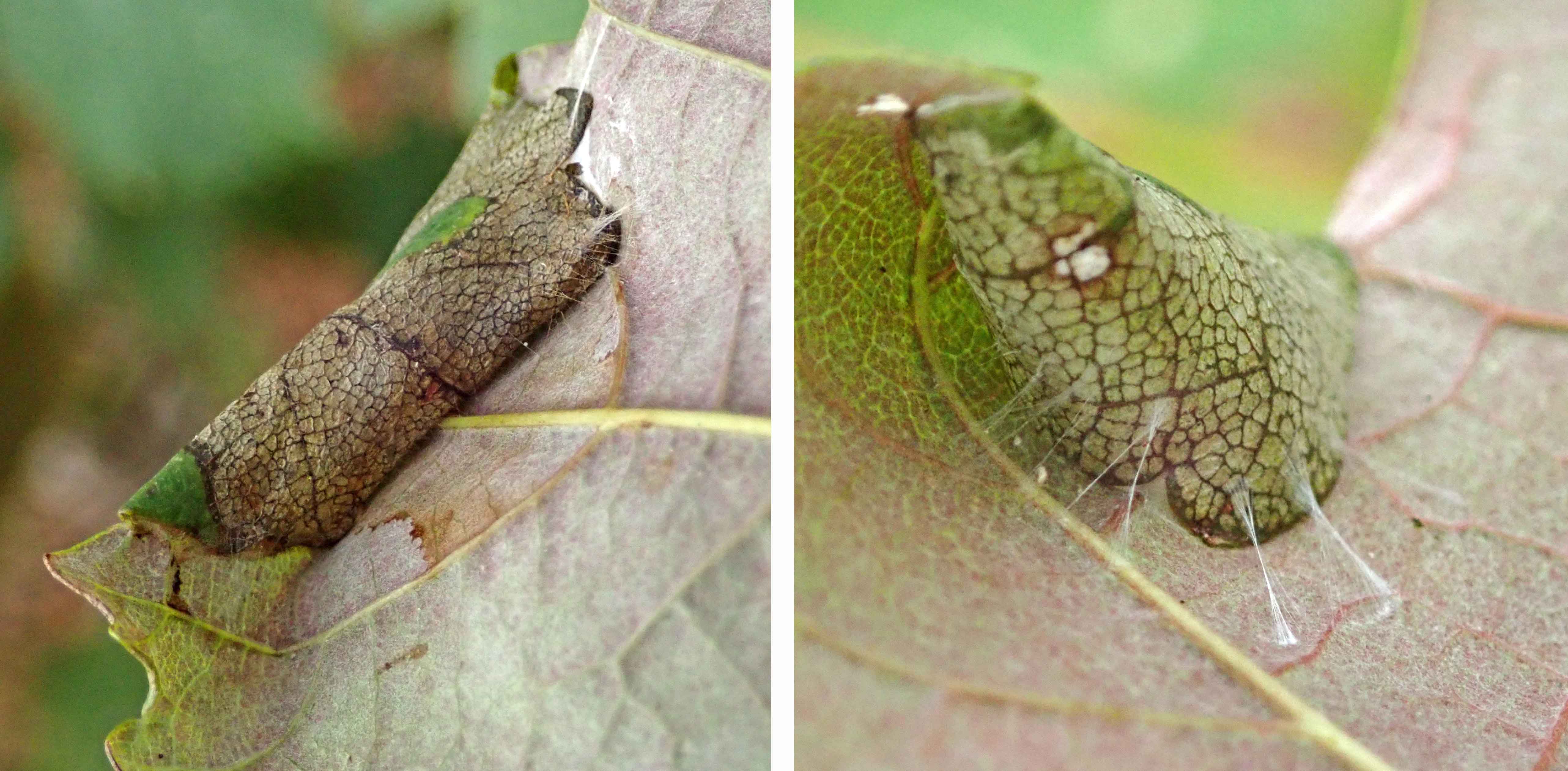
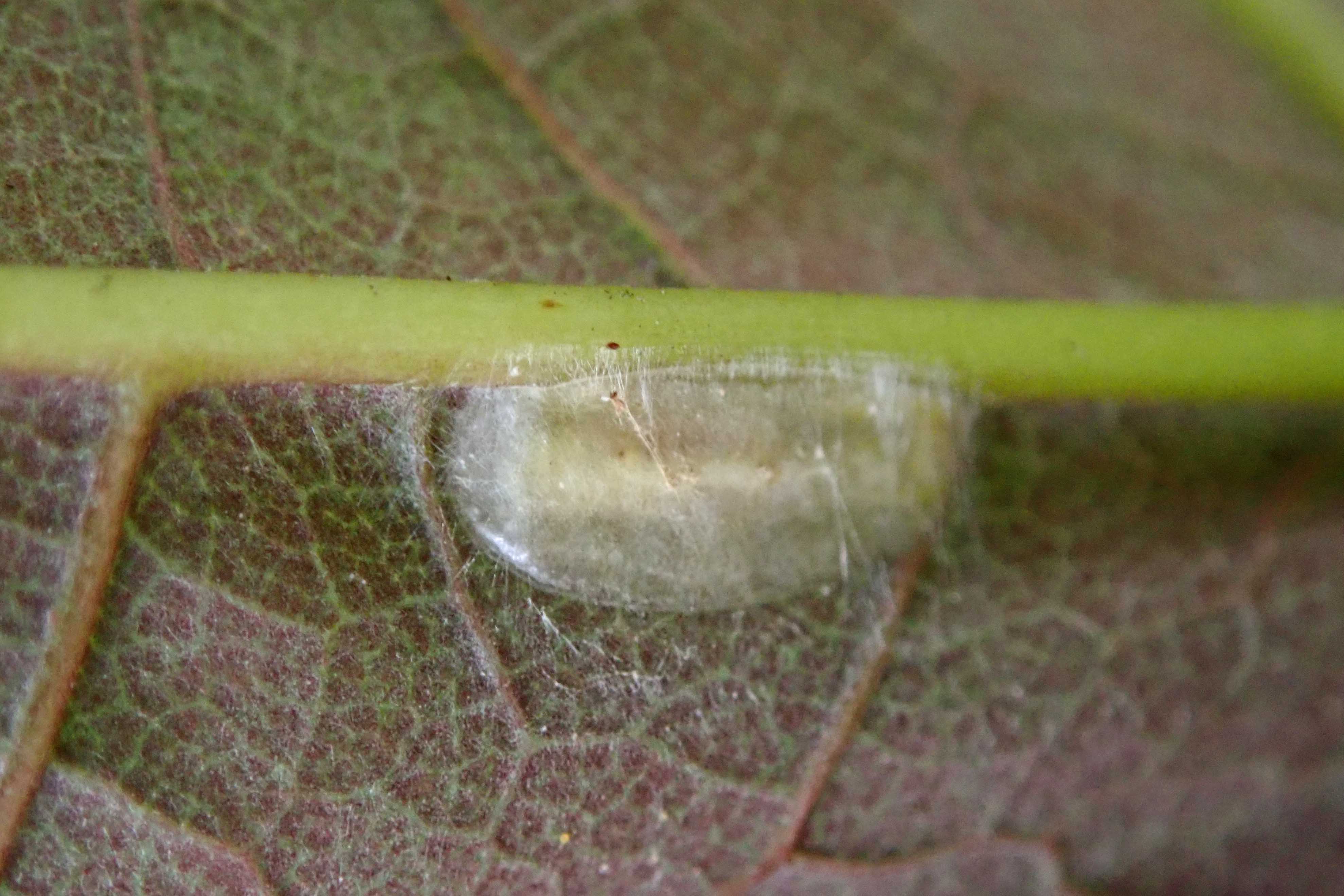
I was really pleased with my leaf-turning results on this particular Sycamore tree as I managed to find all three stages of this leaf-mining larva’s progress through the leaves. They illustrate quite well the breeding cycle of the little brown moth, Caloptilia rufipennella (you can see what it looks like on the UK Moths website).
240923 Caloptilia rufipennella (1)

After hatching from its egg, the larva chews away at the leaf, always in the angle between the veins, creating a small, often triangular-shaped blotch. The photos above show the upper and lower sides of the leaf where it has been feeding. The larva then moves to the tips of the lobes of the leaf where it creates a series of two or three cones, folding the tip of the lobe to create a little shelter in which to feed, each cone bigger than the previous one as the larva grows (as shown below).
240923 Caloptilia rufipennella (2)

And finally, once it’s fully grown, the larva weaves itself a little cocoon in which to pupate (see below). Interestingly, the UK Moths website says that Caloptilia rufipennella was discovered in Britain as recently as 1970 but is now quite common in most of England and Scotland. Wales doesn’t get a mention but the Welsh national database shows records starting in 1980 and now scattered across the country.
OLYMPUS DIGITAL CAMERA

Like Loading...

Sycamore tarspot

09 Friday Sep 2022

Posted by sconzani in fungi, trees

≈ Leave a comment

Tags

British fungi, fungus on Sycamore leaves, Rhytisma acerinum, sycamore, Sycamore tarspot

As the South East Wales Biodiversity Records Centre has only 400 records of the very easily identifiable Sycamore tarspot (Rhytisma acerinum) in its database, SEWBReC staff have chosen this fungus to be the September species of the month to inspire as many people as possible to find and record this fungus. Using the Welsh records database Aderyn, it’s possible to see where people have recorded Sycamore tarspot and, more importantly for this exercise, where they haven’t. I know this fungus is very common in my local area, yet there are few records.

So, I’m making it my mission during my walks this month to find and record Sycamore tarspot in as many 1-km squares as possible. I got off to a good start on Wednesday, with records logged in four new squares. It will be interesting to see how many more I can get, and to see how many records other people manage to find over the next few weeks. I’m picking the map will change dramatically by 30 September.

220909 sycamore tarspot

Like Loading...

Syrphus hoverfly larvae

06 Saturday Nov 2021

Posted by sconzani in autumn, insects, leaves, trees

≈ Leave a comment

Tags

British hoverflies, hoverfly larva, hoverfly larva on Sycamore, insects on Sycamore, sycamore, Syrphus sp larvae, Syrphus species

We’ve seen the Godzilla of hoverfly larvae, one of the Dasysyrphus species, and, back in February 2020, I featured my very first hoverfly larva, one of the Platycheirus family, and then in September we saw the larva and adult of Scaeva pyrastri. However, I haven’t yet shown you the larvae I see most often, those of the Syrphus species of hoverfly.

211106 syrphus sp (1)

I usually find these on Sycamore leaves, the undersides of which are home to thriving families of aphids, the hoverfly larvae’s favourite food. Occasionally, I’ve found larvae on the tops of leaves or on branches, perhaps on the move to a new leaf. And yesterday, on Twitter, I saw a short video by my go-to hoverfly larvae expert on the various species of hoverfly larvae he had found on gravestones under Sycamore trees in his local cemetery. I’ll be checking out that idea during one of next week’s nature walks. Meantime, try turning over some Sycamore leaves – you never know what might be lurking underneath.

211106 syrphus sp (2)
211106 syrphus sp (3)
211106 syrphus sp (4)
211106 syrphus sp (5)
Like Loading...

Fungi finger prints

06 Sunday Mar 2016

Posted by sconzani in fungi, nature, nature photography, trees

≈ Leave a comment

Tags

fungus, Rhytisma acerinum, sulphur dioxide air pollution, sycamore, Tar spot

Well, they look a bit like finger prints to me – or, perhaps, the wax seals people used to stamp on their communications and documents. But no! These are, in fact, the signs of Tar spot, a disease that most often affects sycamore trees but can also occur in other species of acer, and is caused by the fungus Rhytisma acerinum.

Rhytisma acerinum Sycamore Tarspot (1)

The spots start out yellow in the springtime, then eventually morph into the slightly raised bumpy black spots you can see in my photos. Although they look a little ugly, the spots don’t affect the health of the trees – they merely cause the leaves to drop a little earlier than normal in the autumn.

Rhytisma acerinum Sycamore Tarspot (2)
Rhytisma acerinum Sycamore Tarspot (3)

Though you might not like the look of them, there is one big benefit to seeing these spots on your sycamore tree: as the fungus is particularly sensitive to sulphur dioxide air pollution, its presence indicates your air is relatively clean and healthy.

Rhytisma acerinum Sycamore Tarspot (4)

Like Loading...

About me

sconzani

sconzani

I'm a writer and photographer; researcher and blogger; birder and nature lover; countryside rambler and city strider; volunteer and biodiversity recorder.

View Full Profile →

Follow earthstar on WordPress.com

Enter your email address to follow this blog and receive notifications of new posts by email.

Recent blog posts

  • M is for mite December 18, 2025
  • L is for lepidopteran lifers December 17, 2025
  • K is for Keeled skimmers December 16, 2025
  • J is for Jersey tiger December 15, 2025
  • I is for Ichneumon December 14, 2025

From the archives

COPYRIGHT

Unless otherwise acknowledged, the text and photographs on this blog are my own and are subject to international copyright. Nothing may be downloaded or copied without my permission.

Fellow Earth Stars!

  • Unknown's avatar
  • Unknown's avatar
  • Unknown's avatar
  • Unknown's avatar
  • Unknown's avatar
  • Unknown's avatar
  • Unknown's avatar
  • Unknown's avatar
  • Unknown's avatar
  • Unknown's avatar
  • Unknown's avatar
  • Unknown's avatar
  • Unknown's avatar
  • Unknown's avatar
  • Unknown's avatar
  • Unknown's avatar
  • Unknown's avatar
  • Unknown's avatar
  • Unknown's avatar
  • Unknown's avatar
  • Unknown's avatar
  • Unknown's avatar
  • Unknown's avatar
  • Unknown's avatar
  • Unknown's avatar
  • Unknown's avatar
  • Unknown's avatar
  • Unknown's avatar
  • Unknown's avatar
  • Unknown's avatar
  • Unknown's avatar
  • Unknown's avatar
  • Unknown's avatar
  • Unknown's avatar
  • Unknown's avatar
  • Unknown's avatar
  • Unknown's avatar
  • Unknown's avatar
  • Unknown's avatar
  • Unknown's avatar
  • Unknown's avatar
  • Unknown's avatar
  • Unknown's avatar
  • Unknown's avatar
  • Unknown's avatar
  • Unknown's avatar
  • Unknown's avatar
  • Unknown's avatar
  • Unknown's avatar
  • Unknown's avatar

Blog at WordPress.com.

Privacy & Cookies: This site uses cookies. By continuing to use this website, you agree to their use.
To find out more, including how to control cookies, see here: Cookie Policy
  • Subscribe Subscribed
    • earthstar
    • Join 667 other subscribers
    • Already have a WordPress.com account? Log in now.
    • earthstar
    • Subscribe Subscribed
    • Sign up
    • Log in
    • Report this content
    • View site in Reader
    • Manage subscriptions
    • Collapse this bar
 

Loading Comments...
 

You must be logged in to post a comment.

    %d