
Tags
British leafmines, British weevils, leaf-mining weevil larvae, leafmines on Wych elm, Orchestes alni, weevil leafmines, weevils on Elm species
It seems, from my online research, that some of my North American readers may consider today’s creature a pest (see, for example, this web page from The Morton Arboretum in Illinois) but, here in Britain, sightings are few and far between; my find was the first in my local 10km area since 1916, and only 20 records are showing in the Welsh biodiversity database.

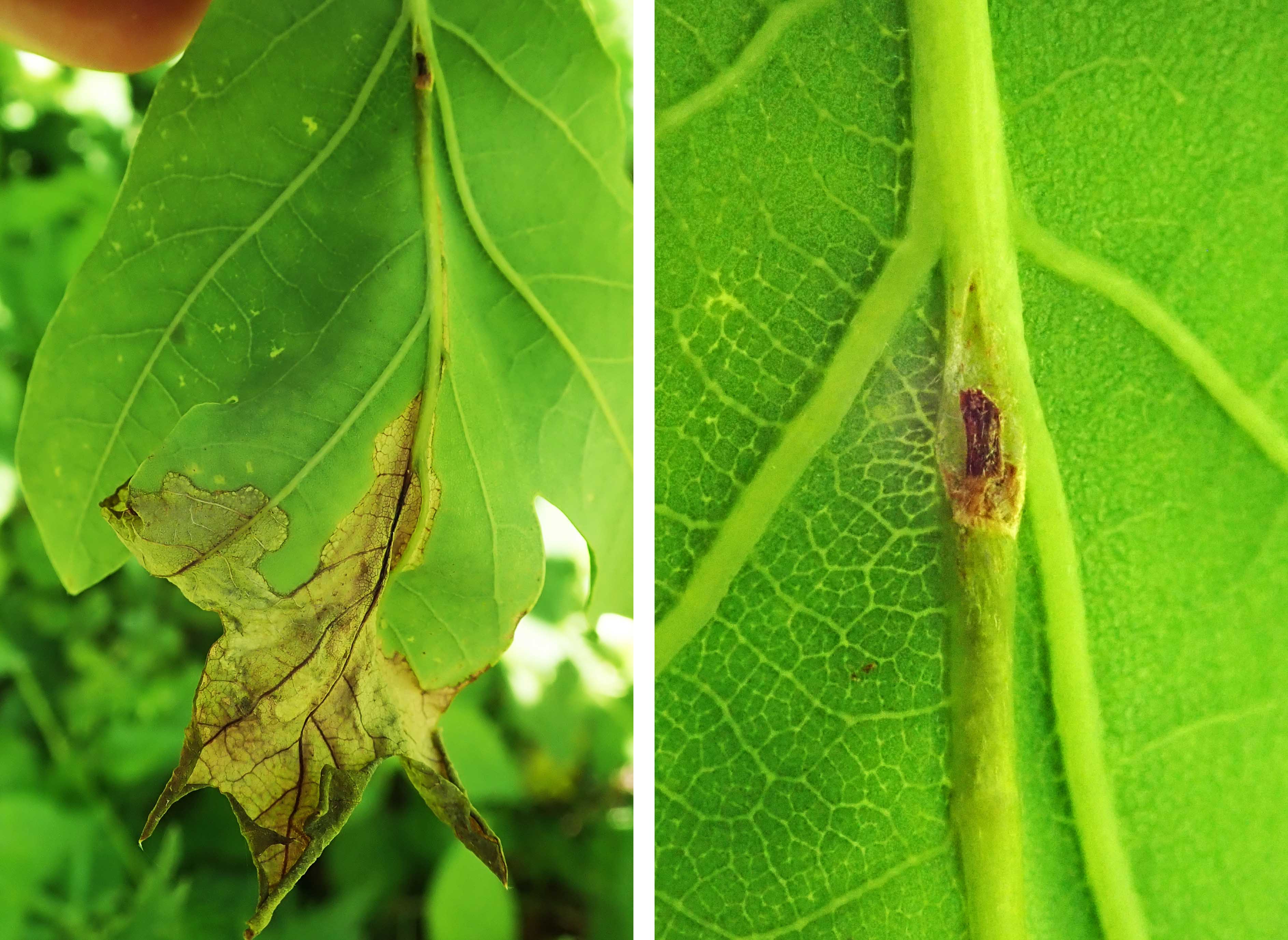
Making a change from the usual moth and fly larvae leafminers, today’s mines were made by the larvae of a weevil, Orchestes alni, also known as the European elm flea weevil. The adult female weevil lays her eggs inside the midrib of a leaf on one of the Elm species, in this case on Wych elm (Ulmus glabra); you might just be able to make out the scar in the midrib of the underside of the leaf, shown in the photo on the right above. Once hatched, the tiny larva burrows into the leaf, initially creating a gallery mine running towards the leaf edge, then the mine widens out to a blotch. When it’s eaten its fill and the time is right, the larva spins itself a cocoon and pupates within the mine. The hole in the leaf shown above indicates that the adult weevil has emerged from its cocoon and exited the mine.
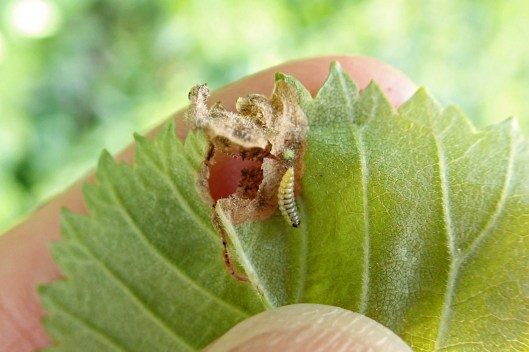
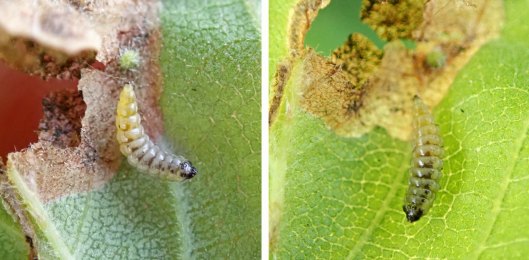
I found several mines on this one Wych elm, and most were already empty – this leafminer starts early in the season – but a couple were still occupied. As I didn’t think I would be damaging the weevil population and, yes, I was curious – I’d never seen a weevil larva before – I opened one of the mines. So, now you get to see a tiny weevil larva as well.
There is another weevil that also mines the leaves of Elm species, Orchestes betuleti, but, as I wrote above, Orchestes alni starts early in the season, whereas O. betuleti doesn’t usually begin egg-laying until May.


 earthstar
You must be logged in to post a comment.