From its nectar-and-pollen-providing flowers to its luscious juicy berries for birds, Ivy is a wonder plant, and I read somewhere recently that it also hosts over 100 species of insect larvae. Amazing!



02 Thursday Dec 2021
Posted in plants
From its nectar-and-pollen-providing flowers to its luscious juicy berries for birds, Ivy is a wonder plant, and I read somewhere recently that it also hosts over 100 species of insect larvae. Amazing!
11 Wednesday Dec 2019
Tags
berries for winter thrushes, winter berries, Yew, Yew arils, Yew berries, Yew fruit, Yew taxanes, yew tree
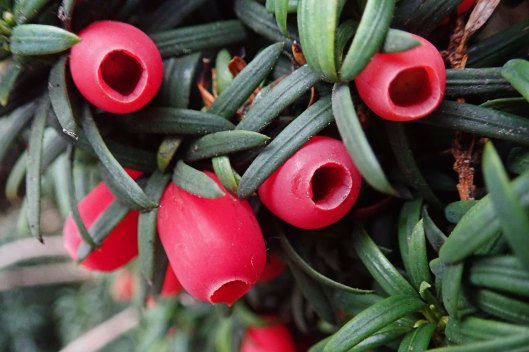
If the two large Yew trees I passed on my way to the library this morning were not growing on a main road, I’m sure their copious quantities of red berries would all have been scoffed by now by hungry winter thrushes.
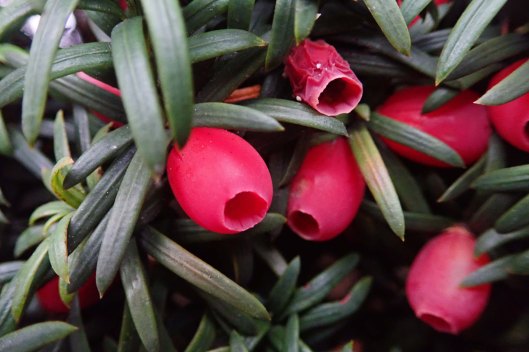
And if the berries last a while longer and the weather gets colder, they still might be, the birds forced to brave the passing traffic and pedestrians in search of nourishing food.
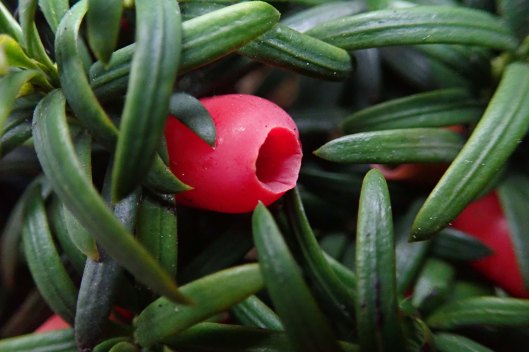
The stones inside those juicy red berries (which are more correctly named arils) are poisonous to most creatures but they pass right through a bird’s digestive system so the bird remains unharmed.
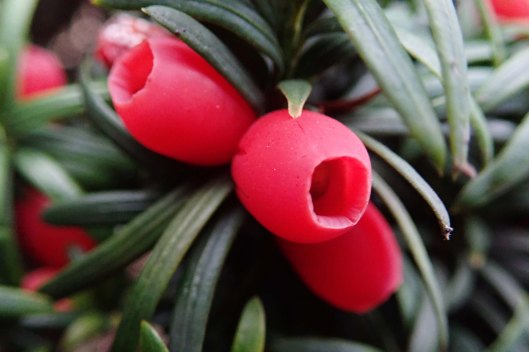
In fact, birds are essential to the growth and spread of Yew trees – their digestive system helps to weaken the seed’s tough coating, which enables it to sprout, and birds are the main dispersal agents for Yew seeds.
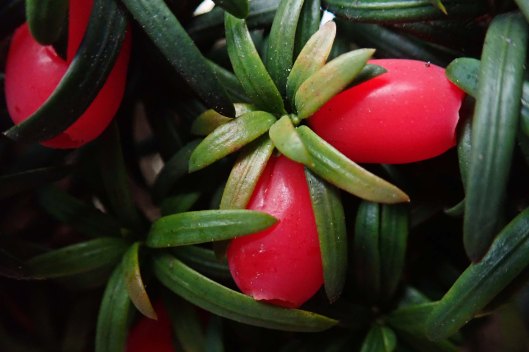
We humans should never eat the seeds, however, as our stomach acids are strong enough to break down the seed coating, thereby releasing the taxanes (the poisonous alkaloids) into our bodies.
05 Thursday Dec 2019
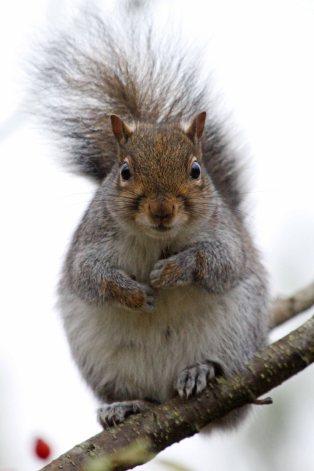
It’s not just the birds that are consuming winter berries at the moment.
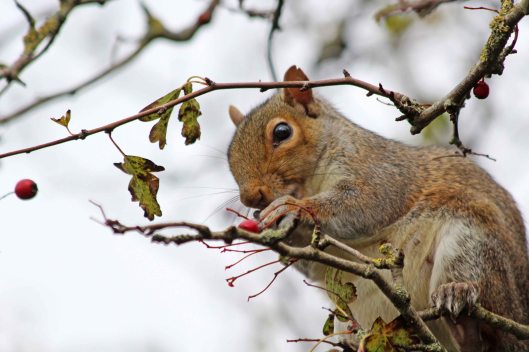
When I’m out walking, I often hear scurrying noises in the tree branches above my head and look up to see Grey squirrels, their cheeks stuffed with berries, their paws reaching out for the next delicious morsels.
And it’s not just a berry dessert they crave, of course, as they’re also well known for their liking for nuts. In the photo, right, the squirrel is holding Alder cones, which it has just been munching on.
 earthstar
You must be logged in to post a comment.