• ABOUT
  • BIRDING 2018
  • Birding 2019
  • BLOG POSTS
  • Butterflies 2018
  • Resources

earthstar

~ a celebration of nature

earthstar

Tag Archives: #WorldWildlifeWednesday

85/366 Water lilies

25 Wednesday Mar 2020

Posted by sconzani in flowers, nature

≈ Leave a comment

Tags

#WorldWildlifeWednesday, beautiful flowers, water lilies, water lily

200318 waterlilies (8)

It’s easy to see why water lilies inspired Monet to depict these sublime blooms over and over again, in a series of around 250 compositions in oils – such delicate hues, such symmetrical structures.

200318 waterlilies (1)
200318 waterlilies (2)
200318 waterlilies (3)
200318 waterlilies (4)
200318 waterlilies (5)
200318 waterlilies (6)

My photos are no match for Monet’s impressionistic masterpieces but, really, the flowers themselves are the masterpieces. These were flourishing in a huge public garden in the tropical climate of Singapore.

200318 waterlilies (7)

Like Loading...

64/366 ‘A wonderful bird’

04 Wednesday Mar 2020

Posted by sconzani in birds, nature

≈ 3 Comments

Tags

#WorldWildlifeWednesday, American white pelican, Great white pelican, Kuala Lumpur Bird Park, pelican

A wonderful bird is the pelican,
His bill will hold more than his belican,
He can take in his beak
Food enough for a week,
But I’m damned if I see how the helican.
~  The Pelican, Dixon Lanier Merritt, American poet

200304 great white pelican (1)
200304 great white pelican (2)
200304 great white pelican (3)
200304 great white pelican (4)

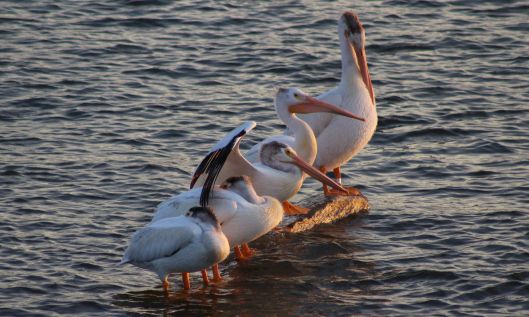
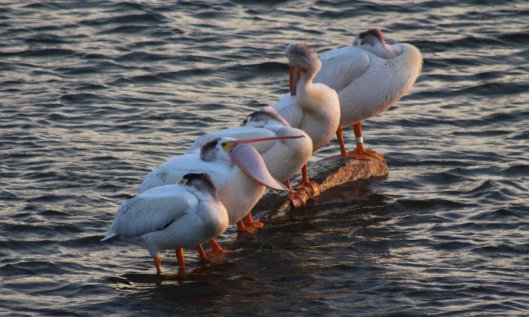
I met the stunning Great white pelican (Pelecanus onocrotalus) above at the Kuala Lumpur Bird Park in Malaysia in May 2013. The great thing about the bird park was its huge aviaries, where the birds had plenty of space and a relatively natural environment to roam in. The American white pelicans (Pelecanus erythrorhynchos), below, were gathering to roost on the Fox River, in De Pere, in the US state of Wisconsin in July 2015.

200304 american white pelican (1)200304 american white pelican (2)

I can’t help but wonder what the pelican with its beak open is doing – scratching an itch?

Like Loading...

57/366 WWW : Colombian butterflies

26 Wednesday Feb 2020

Posted by sconzani in insects, nature

≈ Leave a comment

Tags

#WorldWildlifeWednesday, Colombian butterflies, Monarch butterfly, Owl butterfly, Rusty-tipped page, South American butterflies

These gorgeous butterflies were in the botanical gardens, the Jardín Botánico, in the Colombian city of Medellin, a treasure trove of beautiful flowers, lush plantings, and exotic creatures.

200226 Owl (1)
200226 Owl (2)

Owl (Caligo illioneus) : this is such a lovely butterfly and it’s easy to see how it got its common name, with those enormous eye-like markings on its lower wings. Presumably, those eyes are meant to scare away any potential predators.

200226 Monarch

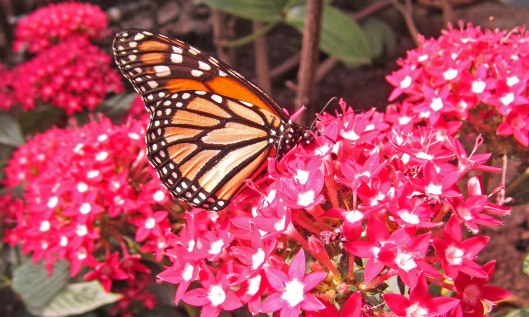
Monarch (Danaus plexippus) : I’m sure everyone will recognise this beautiful creature – it’s probably the world’s most recognisable butterfly, and most people know of its mass migrations in North America. I know of the Monarch, as it’s also found in New Zealand, where it’s considered a native because it self-established, a remarkable feat when you consider how far New Zealand is from the Americas.

200226 Rusty-tipped page

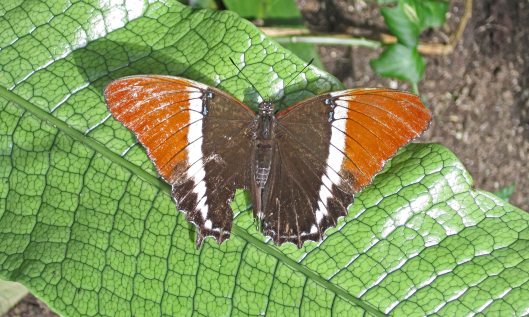
Rusty-tipped page (Siproeta epaphus) : It took a while to find (through googling) the name of this butterfly. It’s a pretty little thing – if you click on the link, you can see photos that are rather better than mine.

Like Loading...

50/366 WWW : Flickers

19 Wednesday Feb 2020

Posted by sconzani in birds, nature

≈ Leave a comment

Tags

#WorldWildlifeWednesday, Andean flicker, Campo flicker, Colaptes campestris, Colaptes rupicola, South American birds, South American woodpeckers, woodpeckers

In the past on this blog, I published ‘world wildlife Wednesday’ posts, sharing some of the creatures I have been lucky enough to see in my travels. I thought I had mostly exhausted that topic but, last week, while going through my masses of photos, I found a few more. Which all goes to explain why today’s post includes two South American members of the woodpecker family, two flickers, both of which spend much of their lives on the ground, rather than in trees.

200219 Andean Flicker (1)
200219 Andean Flicker (2)

This first is an Andean flicker (Colaptes rupicola), photographed at Chinchero, a little town about 30 kilometres from Cusco, from the days when I lived in Peru.

200219 Campo flicker

And this second woodpecker is a Campo flicker (Colaptes campestris), seen near the small town of La Cumbre in the province of Córdoba, in Argentina.

Like Loading...

Praying or preying?

03 Wednesday May 2017

Posted by sconzani in insects, nature

≈ 2 Comments

Tags

#WorldWildlifeWednesday, insects, Mantids, Praying mantis, Praying mantis Cambodia, Praying mantis New Zealand, Preying mantis

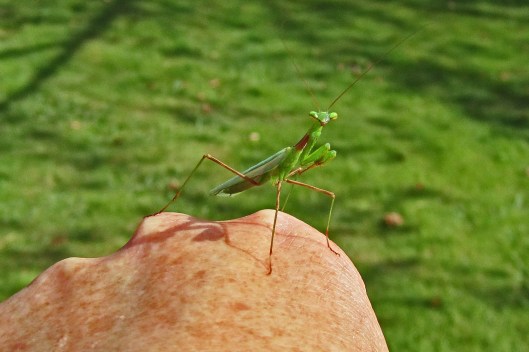
The correct name for this insect is Praying mantis (or, in fact, Praying mantid as my photos were taken in New Zealand (above) and Cambodia (below) and I’m not sure which species these are), the word ‘praying’ coming from its stance – with its large front legs bent and resting together, the insect looks like it’s praying. However, the word ‘preying’ seems equally appropriate for the mantis as it’s a formidable hunter.
170503 Praying mantis New Zealand

Mantids are masters of camouflage and use this ability to change their colouration to blend in with their surroundings, partly as a way to avoid being eaten by their predators but also, as they are mostly ambush predators themselves, as a way to more easily capture their own victims. They are also masters of the rapid pounce and their diet includes living insects like flies and aphids, crickets, moths, grasshoppers and even cockroaches.

170503 Praying mantis Cambodia

But wait, there’s more. The Praying mantis can also be cannibalistic. When food is scarce, they will eat their own kind, though male mantids are most at risk from the females at mating time. It seems hungry females have a tendency to eat their mates if the males don’t dismount and run away as rapidly as possible after copulation.

Like Loading...

The donkeys of Morocco

12 Wednesday Apr 2017

Posted by sconzani in animals, nature

≈ Leave a comment

Tags

#WorldWildlifeWednesday, beasts of burdens, donkeys, donkeys in Morocco, Moroccan donkeys, Morocco

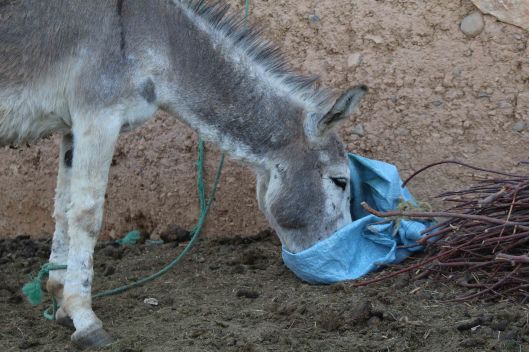
We’ve seen Mary Gillham and her many donkey friends, and we’ve looked at donkeys in Peru; now it’s time for the donkeys (and a horse or two, or perhaps a mule) of Morocco to show their charming faces. Morocco may be a rapidly westernising nation but equine power still rules in the narrow, meandering alleyways of the centuries-old medinas, where motorised vehicles will never fit or be welcomed, and in the more remote rural areas that roads do not, may never reach.

170412 Moroccan donkeys horses mules (1)

If you’re exploring the medinas of ancient Moroccan cities, one word you must immediately commit to memory is balak because, if you don’t take heed and ‘watch out’ or ‘get out of the way’, you may well be bowled over by a donkey carrying anything from full panniers of groceries to back-breaking loads of animal skins bound for the local tanneries. These animals are not pets – they don’t have names – and they are worked hard but, for the most part, they are looked after because they are valuable assets, providing essential transportation services to their owners and customers alike.

170412 Moroccan donkeys horses mules (3)
170412 Moroccan donkeys horses mules (4)
170412 Moroccan donkeys horses mules (5)
170412 Moroccan donkeys horses mules (6)
170412 Moroccan donkeys horses mules (7)
170412 Moroccan donkeys horses mules (8)

If you’re a donkey lover and would like to read more about the donkeys of Morocco, I found this article from their quarterly Journeys magazine on the Smithsonian website – it’s a great read.

170412 Moroccan donkeys horses mules (9)

Like Loading...

About me

sconzani

sconzani

I'm a writer and photographer; researcher and blogger; birder and nature lover; countryside rambler and city strider; volunteer and biodiversity recorder.

View Full Profile →

Follow earthstar on WordPress.com

Enter your email address to follow this blog and receive notifications of new posts by email.

Recent blog posts

  • O is for Odonata December 20, 2025
  • N is for nest December 19, 2025
  • M is for mite December 18, 2025
  • L is for lepidopteran lifers December 17, 2025
  • K is for Keeled skimmers December 16, 2025

From the archives

COPYRIGHT

Unless otherwise acknowledged, the text and photographs on this blog are my own and are subject to international copyright. Nothing may be downloaded or copied without my permission.

Fellow Earth Stars!

  • Unknown's avatar
  • Unknown's avatar
  • Unknown's avatar
  • Unknown's avatar
  • Unknown's avatar
  • Unknown's avatar
  • Unknown's avatar
  • Unknown's avatar
  • Unknown's avatar
  • Unknown's avatar
  • Unknown's avatar
  • Unknown's avatar
  • Unknown's avatar
  • Unknown's avatar
  • Unknown's avatar
  • Unknown's avatar
  • Unknown's avatar
  • Unknown's avatar
  • Unknown's avatar
  • Unknown's avatar
  • Unknown's avatar
  • Unknown's avatar
  • Unknown's avatar
  • Unknown's avatar
  • Unknown's avatar
  • Unknown's avatar
  • Unknown's avatar
  • Unknown's avatar
  • Unknown's avatar
  • Unknown's avatar
  • Unknown's avatar
  • Unknown's avatar
  • Unknown's avatar
  • Unknown's avatar
  • Unknown's avatar
  • Unknown's avatar
  • Unknown's avatar
  • Unknown's avatar
  • Unknown's avatar
  • Unknown's avatar
  • Unknown's avatar
  • Unknown's avatar
  • Unknown's avatar
  • Unknown's avatar
  • Unknown's avatar
  • Unknown's avatar
  • Unknown's avatar
  • Unknown's avatar
  • Unknown's avatar
  • Unknown's avatar

Blog at WordPress.com.

Privacy & Cookies: This site uses cookies. By continuing to use this website, you agree to their use.
To find out more, including how to control cookies, see here: Cookie Policy
  • Subscribe Subscribed
    • earthstar
    • Join 667 other subscribers
    • Already have a WordPress.com account? Log in now.
    • earthstar
    • Subscribe Subscribed
    • Sign up
    • Log in
    • Report this content
    • View site in Reader
    • Manage subscriptions
    • Collapse this bar
 

Loading Comments...
 

You must be logged in to post a comment.

    %d