
The Turkey tail (Trametes versicolour) is surely the multi-storey condominium of the fungus world. This is one of a huge range of bracket fungi and, as the name suggests, bracket fungi resemble shelves or brackets growing from the sides of tree trunks, branches and logs in forests and woodlands (or condominiums, with large balconies, ranging down the sides of cliffs, if you have an imagination like mine).
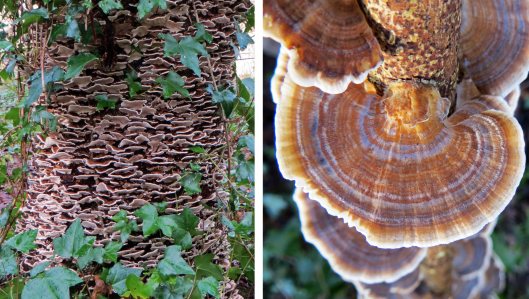
Turkey tail brackets range in size from 20 to 100mm wide and display concentric zones of colour in shades of beige, yellow, orange, brown and even blue. The common name of Turkey tail originated in North America, as these bands of colour apparently resemble the multi-hued tail of their wild turkey, and this is an extremely variable fungus so no two groupings have the same colour patterns (see slideshow below).
Not only lovely to look at, the Turkey tail is also useful medicinally. Asian people have long extolled the virtues of Turkey tail tea, and science has now proven that this fungus contains polysaccharides, derivatives of which have proven effective both in boosting the body’s immune systems in the fight against cancer and in the actual treatment of certain types of cancer.
 earthstar
Now this is a species I recognise, love the colour variations. Love the slideshow too, never tried it myself but much less effort required than flicking through individual images.
LikeLiked by 1 person
Thanks, Theresa. Yep, this should be familiar to most folk, I think. First time I’d tried the slideshow – just wanted to show some of those different colours. Thanks for letting me know it worked for you. :-).
LikeLiked by 1 person