• ABOUT
  • BIRDING 2018
  • Birding 2019
  • BLOG POSTS
  • Butterflies 2018
  • Resources

earthstar

~ a celebration of nature

earthstar

Monthly Archives: March 2016

Flowering Yew trees

21 Monday Mar 2016

Posted by sconzani in nature, trees

≈ Leave a comment

Tags

male yew flowers, male yew tree, yew tree

I bumped against a branch of a yew tree at the local cemetery today, then spent the next 10 minutes brushing myself down. Why? Because March and April are the months the male yew trees shed their yellow pollen. The yew is dioecious (‘di’ meaning two and ‘oikos’, from the Greek, meaning house), so the male and female flowers grow on separate trees. The male flowers, called cones, start as small green buds, then develop into yellowish-white globes that open to release their pollen from tiny florets.

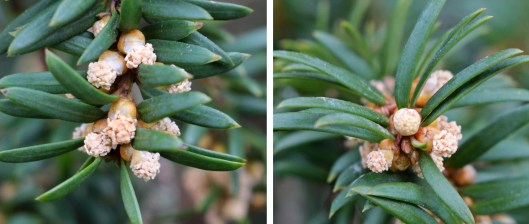
160321 yews flowering 1160321 yews flowering 2

The yew tree is very long-lived – I have yet to visit the 4000-year-old tree that grows in a North Wales churchyard but it’s certainly on my list. In fact, the yew can frequently be seen in churchyards, though this association may have a pre-Christian origin – the evergreen yew provides dense shade so was often planted at pagan sites of worship, which were then taken over by the early Christians to build their churches. There is a more practical reason for yews in churchyards, too – the leaves are poisonous to the sheep that were used to ‘mow’ the grass around the graves so the trees survived the sheep’s eager grazing.

160321 yew tree heath

A yew tree that’s not in a churchyard!

Like Loading...

It’s World Sparrow Day!

20 Sunday Mar 2016

Posted by sconzani in birds, nature, nature photography

≈ 3 Comments

Tags

birding, birds, birdwatching, British birds, Cambodia sparrow, house sparrow, New Zealand sparrow, Red list, rufous-collared sparrow, sparrow, Tanzanian sparrow

I miss sparrows.

160320 sparrow (1)

In my homeland, New Zealand, they are probably the most common and well known bird, though the New Zealand sparrow is not a native – it was introduced there several times between 1866 and 1871, and has clearly made itself at home. Sparrows were also familiar birds during the time I lived in Peru and in Cambodia but, here in Wales, I seldom see them, because, in recent years, the humble house sparrow (Passer domesticus domesticus) has undergone a huge decline in Britain. And I do mean huge – the British Trust for Ornithology website reports that the population has declined by 71% since 1977, possibly due to loss of habitat but also to a decline in the insects adult birds feed their young. The house sparrow is now on Britain’s red list, as a bird of the highest conservation concern.

160320 sparrow (2)

Around the world there are 26 species of house sparrow, native to Europe, Asia and north-west Africa. There are also American sparrows (from a separate family, the Emberizidae) and birds with similar names, like the Java sparrow (also a different family, the Estrildidae). Still, the world would be much the poorer if it lost the lovely British house sparrow, so it is gratifying to know that various wildlife organisations are working to improve its situation and increase its population. Today, let’s celebrate the humble sparrow!

160320 sparrow nz (1)

female (left) and male (right) New Zealand sparrows

160320 sparrow cambodia (1)

a sparrow in Cambodia

160320 sparrow tanzania & rufous-collared peru

left, a sparrow in Tanzania (far too busy gathering nest materials to pose for a photo), and, right, a rufous-collared sparrow in Peru

Like Loading...

Cat climbs a tree

19 Saturday Mar 2016

Posted by sconzani in animals, nature, nature photography

≈ Leave a comment

Tags

Earth Hour, leopard, leopard climbs a tree, Serengeti National Park, Serengeti Plains, Tanzania

Today, at varying times around the globe, we celebrate Earth Hour, a movement in which 7000 cities and towns around the world unite in turning off their power, as a way of showing their support for environmental issues, as a way of uniting in their desire to protect planet earth.

160319 leopard (1)

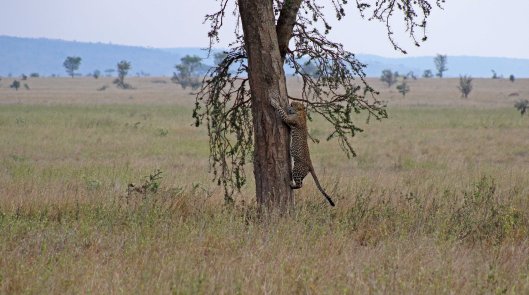
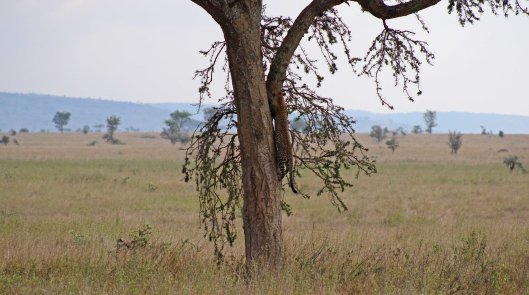
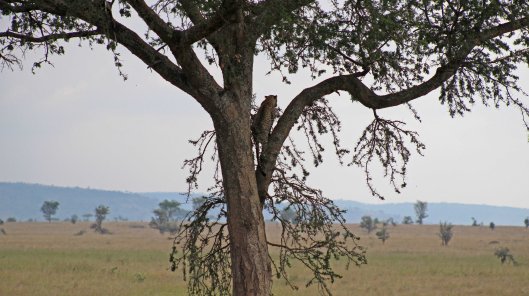
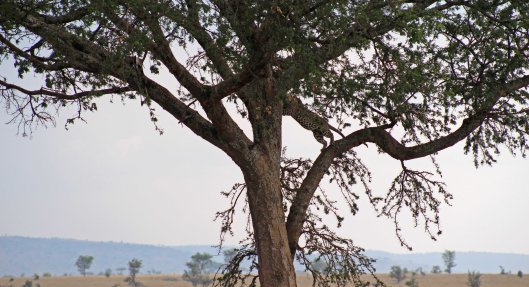
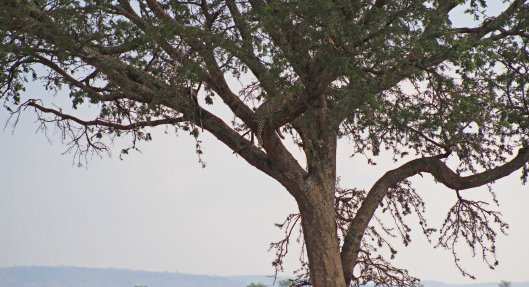
In honour of this special day I thought I would share one of the most special times I have experienced on this amazing planet we call home. If we don’t unite to protect our earth, sights like this will disappear forever. It is a simple act – a cat climbs a tree – but this is not just any cat, this is a pregnant female leopard, climbing the tree where she has previously stashed a kill, in the Serengeti, in Tanzania.

I hope we can all work together to protect our planet so that everyone has the opportunity to see this. I hope one day you get to see this. I hope one day your grandchildren get to see this.

160319 leopard (2)160319 leopard (3)160319 leopard (4)160319 leopard (5)160319 leopard (6)160319 leopard (7)160319 leopard (8)160319 leopard (9)160319 leopard (10)160319 leopard (11)

Like Loading...

That yellow lichen in the graveyard

18 Friday Mar 2016

Posted by sconzani in lichen, nature

≈ 4 Comments

Tags

Caloplaca flavescens, graveyard lichen, headstone lichen, yellow lichen

If you go for a wander through your local cemetery, this is one of the most common lichen you will see on old limestone headstones and grave monuments. Growing up to 10cm (4 inches) across and coming in vibrant shades of yellow and orange, the crust lichen Caloplaca flavescens is easy to spot.

160318 caloplaca flavescens (5)

The outer part of the thallus (that’s lichen for body!) has lobes and, at least in the beginning, the pattern in its centre can look a little like white dried-out mud (or, as one website described it, ‘crazy paving’) but that part later seems to disappear, leaving a single outer ring, or a series of thin arcs, that look to me almost like the outline of a rose in flower. If you look very closely, you can sometimes see the fruiting bodies (known as apothecia). These are a darker orange, disc-shaped, and tiny (up to 1.5mm across) – you might need your specs to see them.

160318 caloplaca flavescens (6)

Of course, you don’t just see this lichen in graveyards. It can be found on any calcareous rocks and walls, particularly those where birds have frequently been perching, as this lichen finds nourishment in nutrient-rich bird poo!

160318 caloplaca flavescens (1)
160318 caloplaca flavescens (2)
160318 caloplaca flavescens (3)
160318 caloplaca flavescens (4)
Like Loading...

The pretty Lenten rose

17 Thursday Mar 2016

Posted by sconzani in flowers, nature

≈ 4 Comments

Tags

hellebore, Helleborus orientalis, Lenten rose, poisonous plant

160317 hellebore (1)

On Tuesday I featured the Stinking hellebore I had found in a local woodland. Today, we have Helleborus orientalis, the Lenten rose, which is currently flowering profusely in the gardens of Roath Park here in Cardiff. The flowers are very beautiful, though, as with all the hellebores, this plant is poisonous so please do take care when handling it.

160317 hellebore (2)

I particularly liked one piece of folklore related on The Poison Garden website. It seems if you ‘spread the powdered root onto the floor … when you step on the powder you become invisible’, though the report continues:

That story about invisibility seems to originate with the ever unreliable Mrs Grieve. In ‘A Modern Herbal’ she says ‘In an old French romance, the sorcerer, to make himself invisible when passing through the enemy’s camp, scatters powdered Hellebore in the air, as he goes.’ The change from scattering in the air to spreading on the ground illustrates how folklore mutates.

Given the plant’s toxicity, I’m very reluctant to try the trick, though I admit it might sometimes come in very handy!

160317 hellebore (6)
160317 hellebore (5)

160317 hellebore (4)

Like Loading...

Giraffe necking

16 Wednesday Mar 2016

Posted by sconzani in animals, nature, nature photography

≈ 4 Comments

Tags

giraffe, giraffe necking, Serengeti National Park, Serengeti Plains, Tanzania

160315 giraffes 1 (1)

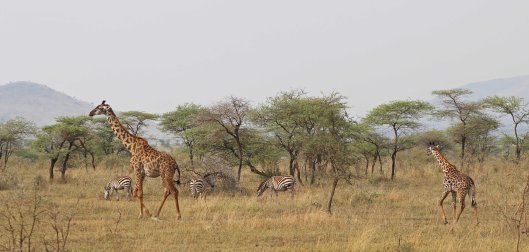
Though I had seen giraffes in zoos, it was a totally different experience to see wild creatures like these in their natural environment, on the Serengeti Plains, in Tanzania, in 2014. In a zoo, you are safe: the animal is confined and, if not tame, at least partially used to human interaction. In the Serengeti, though I never felt unsafe, I was very much aware that I was out of place, an intruder in a savage world, where death and violence are commonplace.

160315 giraffes 1 (2)160315 giraffes 1 (3)

I felt this most when we were watching these three young male giraffes. Initially, they looked like they were just hanging out like good buddies but, as we watched, they started necking. This is a common, often violent ritual to establish dominance in the herd or to impress a female. They swing their necks and try to hit each other with those hard bumps (ossicles) on the tops of their heads. And it must hurt – those whacks and thumps sounded brutal and can apparently be heard up to a kilometre away. These three didn’t injure each other but older males have been known to knock each other unconscious with the power of their blows. It was certainly sobering to watch.

160315 giraffes 1 (4)
160315 giraffes 1 (5)
160315 giraffes 1 (6)
160315 giraffes 1 (7)
Like Loading...

Stinking hellebore

15 Tuesday Mar 2016

Posted by sconzani in flowers, nature

≈ 2 Comments

Tags

Foetid hellebore, hellebore, Helleborus foetidus, poisonous plant, Stinking helebore, Stinkwort, wildflowers

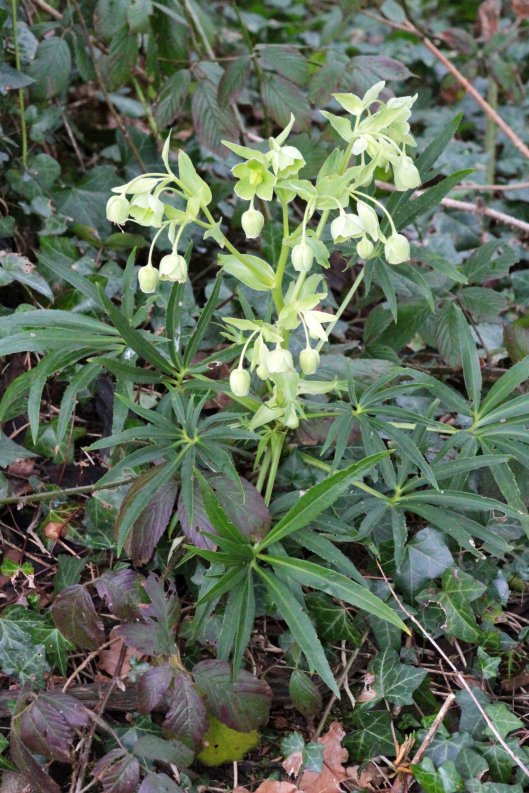
With a scientific name of Helleborus foetidus and common names of Stinking hellebore, Foetid hellebore and Stinkwort, you might well assume that this wildflower has a bad smell. Well, I didn’t smell a thing when I took a close look at it and I’ve since read that you need to crush the leaves to release a smell described as ‘beefy’. However, I’m actually very glad I didn’t crush the leaves, or even touch the plant, because every part of this native wildflower is poisonous. Though it was used in times gone by as a remedy for intestinal worms, it did, on occasion, kill the patient as well as the worms! At the very least, if ingested, it will cause vomiting and nausea, delirium and diarrhoea, and some of its poisons can also be absorbed through the skin, so best look but don’t touch.

160315 Stinking Hellebore Helleborus foetidus (1)

In the wild, the Stinking hellebore grows in scrub and woodlands (which is where I found it) but, perhaps surprisingly, people do grow it in their gardens. Though it has a very pretty flower, I think its hazardous properties would be enough to put me off.

160315 Stinking Hellebore Helleborus foetidus (2)

Like Loading...

Prime lakefront real estate at Cosmeston

14 Monday Mar 2016

Posted by sconzani in birds, nature, nature photography

≈ 2 Comments

Tags

birding, birds, birdwatching, British birds, Coot, Great Crested Grebe, nesting

During my wonderful exploration of Cosmeston Lakes Country Park on Friday, I went into the bird hide on the west lake to check out the view.

160314 nesting site (1)

There before me in the reed beds – prime lakefront real estate to a wetland bird – was a coot, pottering about on the beginnings of a nest, tweaking the position of a reed or two.

160314 nesting site (2)160314 nesting site (3)

It headed off along the lake unaware that a pair of Great crested grebes had their eye on the same piece of real estate. Seeing an opportunity to gazump the coot, they quickly paddled over.

160314 nesting site (4)

Mrs Grebe tried the ‘nest’ for size.

160314 nesting site (5)

A conversation ensued. Did it have potential? Was it cosy enough? Did it have a good view? What about the neighbours?

160314 nesting site (6)

The property seemed to meet with the grebes’ approval as one of them sailed off along the lake, leaving the other to stand guard.

160314 nesting site (7)

I didn’t stick around to find out what happened when the coot returned!

Like Loading...

The ponies of Dartmoor

13 Sunday Mar 2016

Posted by sconzani in animals, nature

≈ Leave a comment

Tags

Dartmoor, Dartmoor pony, horse, pony

160313 dartmoor ponies (1)

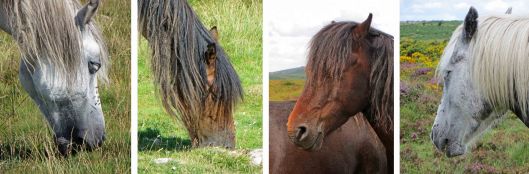
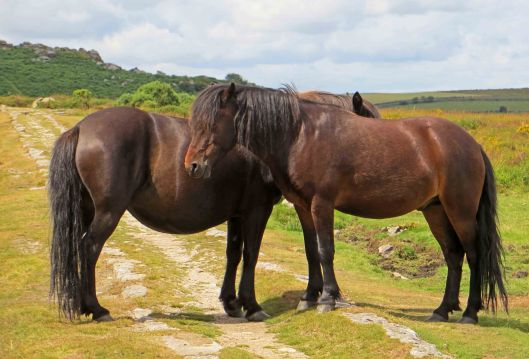
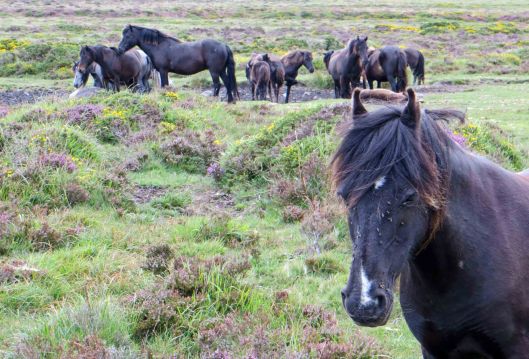
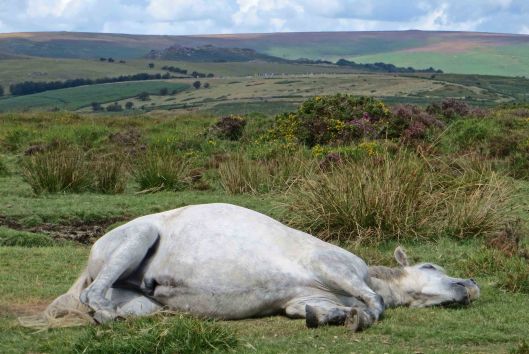
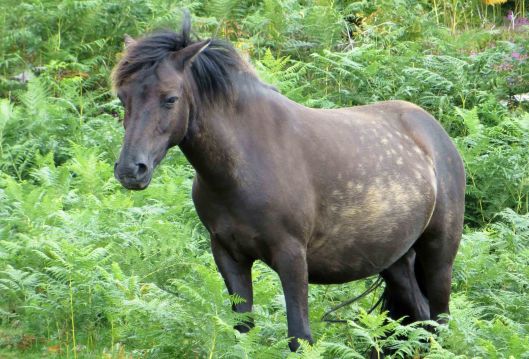
In August 2014 I visited Dartmoor for the first time, and loved it. During a week-long holiday with my friend Viv, we twice went walking on the moors and, of course, saw many of the beautiful Dartmoor ponies. These days the ponies are not really wild animals – their owners are allowed to graze them on the moorlands as they help to maintain the pastureland habitat. Neither are they the original pure-bred Dartmoor ponies as, over the centuries, there has been much interbreeding between the native pony, mixed breeds and even Shetland ponies.

160313 dartmoor ponies (2)

Domesticated ponies have been living on Dartmoor a very long time. The first historical record dates to AD 1012 but hoof prints discovered in the 1970s proved that ponies had been on the moors since at least 1500 BC. In medieval times they were used to transport all many of goods from place to place and in the 1800s they hauled trucks laden with granite up and down the tramways that can still be seen on the moors. Ponies were also the workhorses of the mining industry, hauling coal wagons to and fro underground. These days, they enjoy a much easier life, free to roam and munch their way through the abundant pasture, with the flies and midges the only annoyance in their otherwise peaceful days.

160313 dartmoor ponies (3)160313 dartmoor ponies (4)160313 dartmoor ponies (5)160313 dartmoor ponies (6)160313 dartmoor ponies (7)

160313 dartmoor ponies (8)

Like Loading...

Tit elation

12 Saturday Mar 2016

Posted by sconzani in birds, nature, nature photography

≈ 11 Comments

Tags

birding, birds, birdwatching, Blue tit, British birds, Cosmeston Lakes Country Park, Great tit

Yesterday saw my first visit to Cosmeston Lakes Country Park, just outside Penarth, here in south Wales. And what a fabulous place it is! With two former quarries now filled to form lakes, large meadows, seemingly endless tree-lined walks and an extensive woodland, it’s perfect for everything from family picnics and walking the dog, jogging and mountain-biking, to exercising the pony and birdwatching. I’ll certainly be heading back there again soon.

0 great tit

As I’m mad keen on birds I particularly enjoyed my wonderful long wander through Cogan Wood. The place was alive with all the little birds I love the most, and the most prolific of these were the Great tits and Blue tits. Though the weather was not particularly cold and there was plenty of natural food around for them, they acted like they were starving and, in the most wonderful way, I was almost mobbed by them as I walked along. I tell ya, those critters can smell seed even when it’s tucked away in a plastic box in a backpack! I rewarded them well for all the delightful photo opportunities they provided.

1 blue tit2 great tit3 blue tit4 great tit5 blue tit6 great tit7 blue tit

Like Loading...
← Older posts
Newer posts →

About me

sconzani

sconzani

I'm a writer and photographer; researcher and blogger; birder and nature lover; countryside rambler and city strider; volunteer and biodiversity recorder.

View Full Profile →

Follow earthstar on WordPress.com

Enter your email address to follow this blog and receive notifications of new posts by email.

Recent blog posts

  • Bloody-nosed beetle April 6, 2026
  • Gorse and its weevil April 5, 2026
  • Chiffchaffs chiffchaffing April 4, 2026
  • Bearded tit!!! April 3, 2026
  • A Portland Bill Kestrel April 2, 2026

From the archives

COPYRIGHT

Unless otherwise acknowledged, the text and photographs on this blog are my own and are subject to international copyright. Nothing may be downloaded or copied without my permission.

Fellow Earth Stars!

  • Unknown's avatar
  • Unknown's avatar
  • Unknown's avatar
  • Unknown's avatar
  • Unknown's avatar
  • Unknown's avatar
  • Unknown's avatar
  • Unknown's avatar
  • Unknown's avatar
  • Unknown's avatar
  • Unknown's avatar
  • Unknown's avatar
  • Unknown's avatar
  • Unknown's avatar
  • Unknown's avatar
  • Unknown's avatar
  • Unknown's avatar
  • Unknown's avatar
  • Unknown's avatar
  • Unknown's avatar
  • Unknown's avatar
  • Unknown's avatar
  • Unknown's avatar
  • Unknown's avatar
  • Unknown's avatar
  • Unknown's avatar
  • Unknown's avatar
  • Unknown's avatar
  • Unknown's avatar
  • Unknown's avatar
  • Unknown's avatar
  • Unknown's avatar
  • Unknown's avatar
  • Unknown's avatar
  • Unknown's avatar
  • Unknown's avatar
  • Unknown's avatar
  • Unknown's avatar
  • Unknown's avatar
  • Unknown's avatar
  • Unknown's avatar
  • Unknown's avatar
  • Unknown's avatar
  • Unknown's avatar
  • Unknown's avatar
  • Unknown's avatar
  • Unknown's avatar
  • Unknown's avatar
  • Unknown's avatar
  • Unknown's avatar

Blog at WordPress.com.

Privacy & Cookies: This site uses cookies. By continuing to use this website, you agree to their use.
To find out more, including how to control cookies, see here: Cookie Policy
  • Subscribe Subscribed
    • earthstar
    • Join 642 other subscribers
    • Already have a WordPress.com account? Log in now.
    • earthstar
    • Subscribe Subscribed
    • Sign up
    • Log in
    • Report this content
    • View site in Reader
    • Manage subscriptions
    • Collapse this bar
 

Loading Comments...
 

You must be logged in to post a comment.

    %d