
Tags
Bombus hortorum, Coed Ty Rhiw, Garden bumblebee, Glomeris marginata, Gymnochaeta viridis, Pill millipede, Tachypodoiulus niger, White-legged snake millipede
As well as the wonderful selection of fungi I posted yesterday, my foray with friends to the Coed Ty Rhiw woodland also produced a few small critters – easy to spot when your eyes are focused downward, searching the ground and around trees and rotten logs for fungi. Here are just a few that we found …
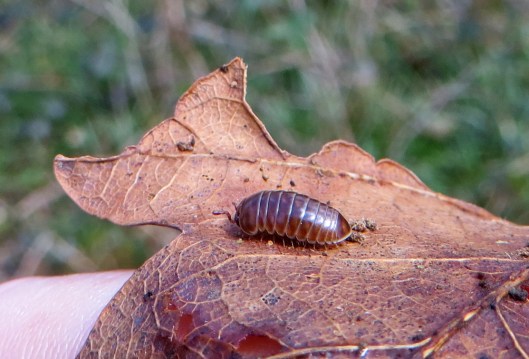
Pill millipede (Glomeris marginata). Like the pill woodlouse, these little creatures can roll into a ball when threatened, and live in damp places below stones and logs or in leaf litter.

The White-legged snake millipede (Tachypodoiulus niger) also prefers a moist habitat, under rocks or logs or the bark of trees, and curls up when feeling vulnerable.
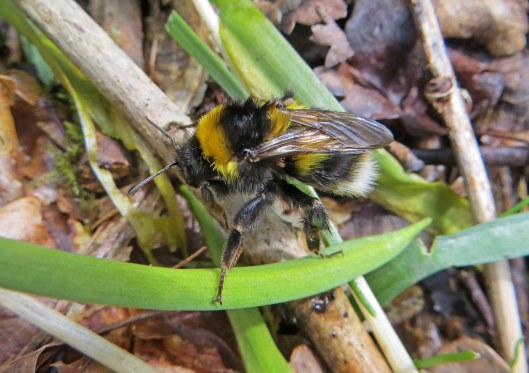
Garden bumblebee queen (Bombus hortorum), newly emerged from hibernation. She has the distinction of having the longest tongue of all British bumblebee species, which means she’s essential for agriculture, for pollinating flowers of the pea, bean and clover families.

Gymnochaeta viridis, a bright metallic-green fly with prominent bristles on its thorax and abdomen that is mostly seen in woodlands in the springtime.
 earthstar
Haha, I get carried away by my own enthusiasm sometimes!
LikeLiked by 1 person
I completely understand. I had an indepth discussion with someone about caterpillar poo yesterday – as you do! 😉
LikeLiked by 1 person
Lovely bugs and great photographs, particularly of the tachinid fly. Greenbottles are the ones you see clustered on dead things or doggie deposits as well as flowers! Eggs & larvae also looked for in autopsies as indicators of how long a person has been dead. Lovely.
LikeLike
Thank you, Theresa, though you were beginning to sound like an episode of CSI there for a minute! 😉
LikeLike
There’s something very primeval about those millipedes. Great photos!
LikeLiked by 1 person
Thanks, and I agree with you. I find them a little bit creepy, perhaps because they can move so fast. And there’s one species that gives a nasty nip.
LikeLiked by 1 person
I’d never have known that was a millipede and not a woodlouse! Thank you for showing that photo! (I know woodlice as I was friends with many when I was a child. 🙂 )
Is that fly the type we call a ‘green bottle’, or something else?
LikeLiked by 1 person
The pill woodlouse and pill millipede are very similar, Val – it all comes down to legs and some anatomical features.
And, though it looks like a green bottle, this isn’t one – the green bottles don’t have all those bristles. 🙂
LikeLiked by 1 person