
Tags
ants, ants nectaring on EFNs, Brimstone, Common vetch, EFNs, extrafloral nectaries, Grass vetchling, nectar sources on plants, Vetches, Vicia species
Two for the price of one today: a lovely female Brimstone butterfly, which I was really happy to catch feeding on Common vetch.
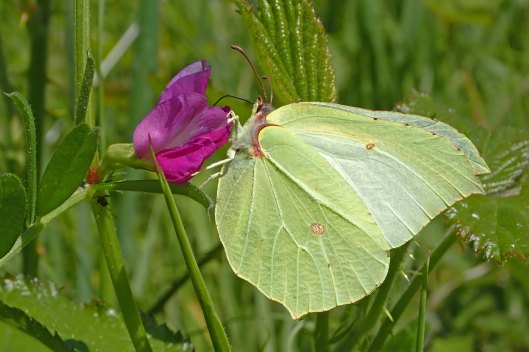
But, lurking beneath the flower, you may be able to spot a small creature. It’s an ant and, if you’ve ever looked closely at the flowers of any of the vetch family (Common, Bush, Tufted, and the vetchlings), you may have noticed they all prove attractive to ants.

I’ve only recently discovered the reason for this: these plants all have extrafloral nectaries (EFNs), tiny glands on the stems and other areas of a plant, where nectar is secreted. The vetches aren’t the only plants to have these EFNs – according to a report on the University of Florida website (and there are many other scientific papers online, if this subject intrigues you), EFNs have been found in over 2000 plant species. Scientists don’t seem completely sure why plants ‘feed’ ants in this way, though it may be a means of rewarding ant species for their protection against the plant-munching larvae of other insect species.
 earthstar
I did a blog on this association as well!😁
LikeLiked by 1 person
I wasn’t following you back then, Ray, but thanks for sharing. I’ve just been over for a read.
And for any of my followers reading this, you should definitely be following Ray’s blog. 🙂
LikeLiked by 1 person