
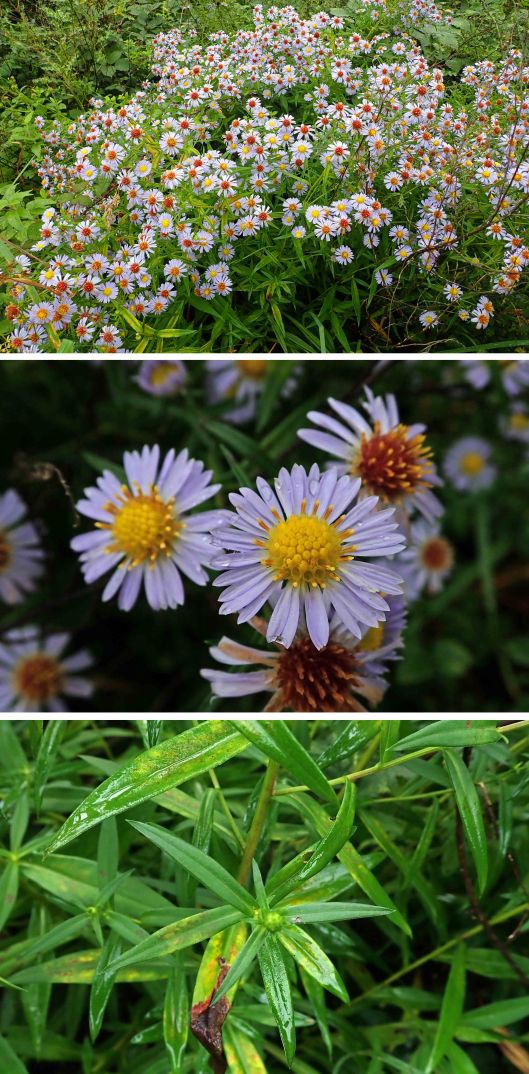
When I spotted these plants during a walk to a new place last week, I thought perhaps they were Sea asters (Tripolium pannonicum) and, indeed, they might be, but I’ve since heard how frequently other species of Aster self-seed on waste ground, which has cast doubt on my identification. These were growing in rough ground near a very busy road but quite close to the banks of a tidal creek. I’m going to have to ‘phone a friend’ but, in the meantime, if you’re familiar with Sea aster, please do venture an opinion in the comments.
 earthstar
Sorry to be so slow to comment. This is something that puzzles me too. I see some patches of aster near the sea locally but came to the conclusion that it was a garden throw out. I have pnly ever seen these types of aster growing near the strandline in Sussex but wasnt really sure then either. They are supposed to be much fleshier to withstand the conditions but I have read that the degree of fleshiness can vary according to conditions.
LikeLiked by 1 person
You were the person I was hoping would comment, Philip, as I know you’ve written about Sea aster bees, so thanks very much for your insight. I’m a bit inclined to think now that these are Michaelmas daisies but I can’t be sure. The trouble with comparisons like fleshiness is that you really need to see the two species together to spot the differences. I’ll keep checking though. 🙂
LikeLike