
Tags
British flies, British leafmines, Cerodontha, fly pupa, leaf-mining flies, leafmines on Carex flacca, leafmines on Glaucous sedge
While checking Glaucous sedge (Carex flacca) for the leaf-mining moth larva I featured in last Monday’s post (Leafmines: Elachista cinereopunctella), this time at a different location, I found an altogether different leafminer. This larva had also munched a linear gallery inside the leaf but I knew when I saw the tiny black speck within the mine that this miner was a fly and the black speck was likely to be a pupa. I also guessed that it would be difficult to identify as fly miners often are so I brought home two of several pupae I found.

When I got home, I opened up one of the leaves to get a look at the pupa, took a few photos then popped the two snippets of sedge in a jar on my kitchen window sill to see what might emerge. Rob, from the British Leafminers website was able to confirm from my photo of the pupa that this was indeed a fly, likely belonging to the genus Cerodontha.

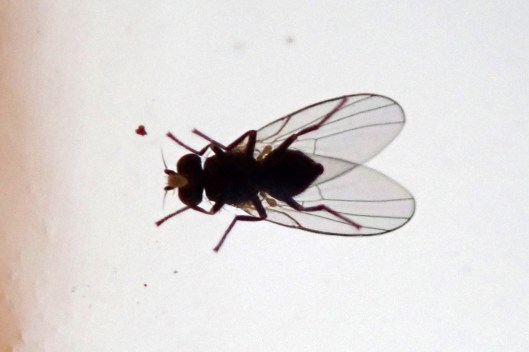
Twelve days later I was making my morning cup of tea when I noticed movement in the jar: a fly had emerged from the pupa I had photographed. Once again I took some photos and checked in with Rob – it was definitely a Cerodontha but a female, which are not as easy to pin to exact species as a male specimen (something to do with the genitalia, I suspect). Still, when I emailed Barry of the National Agromyzidae Recording Scheme, he thought an ID might be possible and volunteered to take a closer look. I’m waiting a few days to see if the second pupa hatches, then will send my specimens to him for further examination. If an exact identification results from that, I’ll update this post.
 earthstar
You must be logged in to post a comment.