
Tags
British coleophora, British moths, case-bearing moth larva, case-bearing moth larva on Knapweed, Coleophora, Coleophora paripennella, leaf-mining moth larvae, moth larva on Knapweed
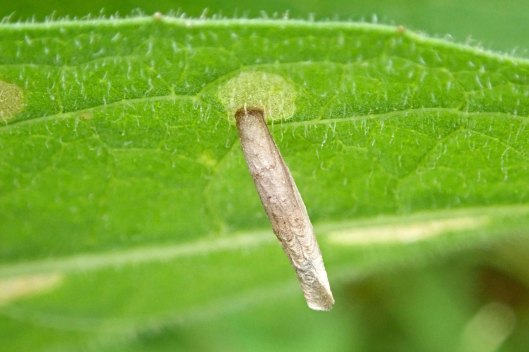
When I got home and checked my photos of this Coleophora, much head scratching ensued. From the British Leafminers website, I could see that there are only three species of case-bearing moth larvae known to feed on Knapweed (Centaurea nigra) and this case didn’t look like any of them. The case of Coleophora conspicuella is described as black and glossy, and has a peculiar almost keel-like shape. Coleophora peribenanderi mostly mines thistle species, is only occasionally seen on Knapweed, and the larvae is active from August to October. Coleophora paripennella‘s case looked the most likely, but is also usually much darker, almost black. So, I ‘phoned a friend’.

And my friendly expert from British Leafminers also ‘phoned a friend’, checking with another moth larvae expert. Their opinions concurred: this was Coleophora paripennella, just with a much lighter-coloured case than usual. Like C. peribenanderi, C. paripennella uses both thistles and Knapweed as larval plants, but in this case, those larvae that use thistle are fully grown by the autumn, whereas those that munch on Knapweed, top up their larval development by feeding again from April to May/June. You can see the sleek and glossy adult moth that eventually results from all this leaf munching on the UK Moths website here.
 earthstar
You must be logged in to post a comment.