
Tags
Blue chaser, British chasers, British dragonflies, dragonflies at Radipole, dragonfly, Libellula fulva, RSPB Radipole, Scarce chaser
Here they are, the extremely confiding dragonflies mentioned in yesterday’s blog, the Scarce chasers (Libellula fulva) (also known as the Blue chaser). They were everything you could want in a photographer’s model, perching this way and that to show their best sides; not flying off at the slightest hint of movement behind the camera; the consummate professionals!
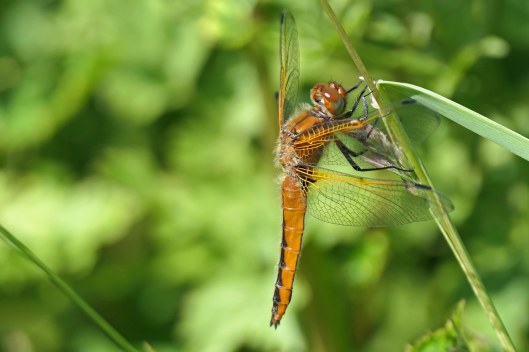
So, I managed to get photos of a male, female and the two together in cop. The female (above) is described in my guide book as having an olive-brown thorax and ochre-brown abdomen but, as you can see, she was much more vibrant than those descriptions suggest.
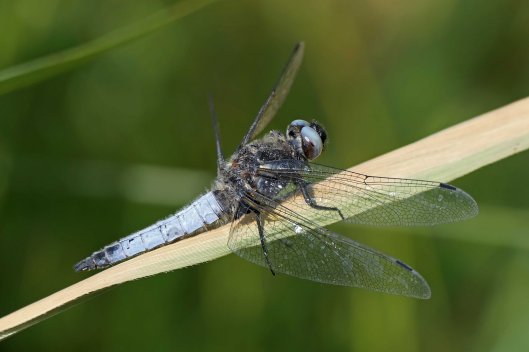
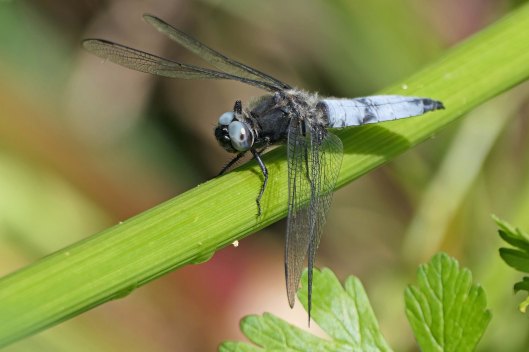
The males have a black thorax and blue abdomen with a dark tip. At a glance, with those colours, they could be mistaken for other dragonflies with similar colouration, until you see their eyes, which are the most amazing shade of blue. (In fact, I’ve just decided to add in a second photo of the male so you can get a better look at those eyes.)
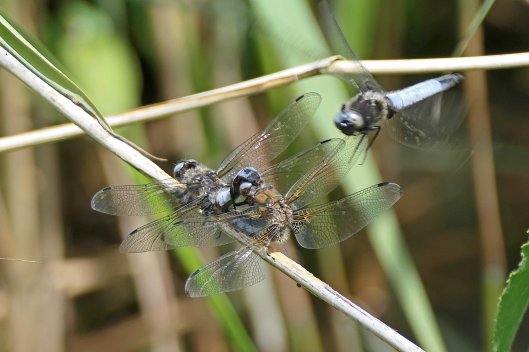
I saw several of these dragons at RSPB Radipole Lakes in Weymouth, which left me wondering why they are called ‘Scarce’ chasers. It seems that, where they are found (in isolated spots in the east and south of England) their populations are relatively small, so they are officially designated as rare. Indeed, in the 2008 British Odonata Red List they were officially listed as ‘near threatened’, so I feel very privileged to have enjoyed such excellent views of these stunning creatures.
 earthstar
You must be logged in to post a comment.