
Tags
autumn migration, birding, birdwatching, British birds, female Ruff, Philomachus pugnax, Reeve, RSPB Lodmoor, Ruff
I’ve just returned from another few days on England’s south coast, in Weymouth and on the Isle of Portland, this time, due to its being migration season and the often inclement weather, mostly birding. And, despite the blasting westerly winds and the frequent heavy rain, it was wonderful!

After arriving mid afternoon on Monday, I took myself on a walk – to stretch my old body after five hours’ train travel and to get some fresh air in my lungs – to RSPB Lodmoor. It’s such a convenient distance from Weymouth town centre and always has something to delight my birding senses. And Monday’s visit did not disappoint, providing my first sighting this year of Ruff (Philomachus pugnax).
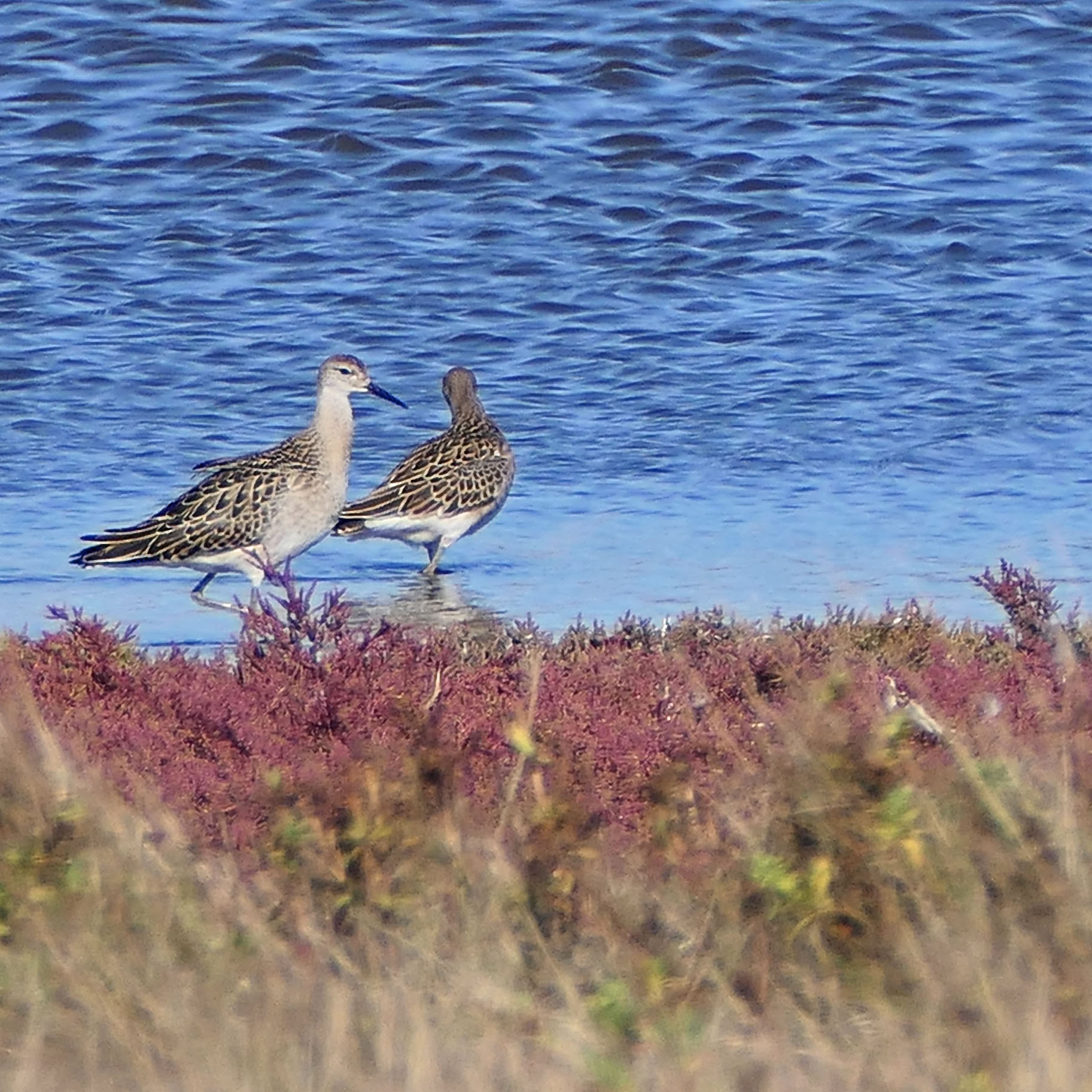
The story of the Ruff in Britain is a sad one. My guide book recounts that Ruff became extinct as a breeding bird in Britain around 1850, though it managed to re-establish itself in East Anglia for a time in the 1960s. Now, few if any young are raised in Britain, with the bird’s main breeding grounds ranging from Scandinavia as far east as Siberia, and south as far as the Netherlands. Though some Ruff are present throughout the year in Britain, and several hundred over-winter here, most are seen during autumn migration when the birds pass through on their way to Africa, some flying as far as South Africa.

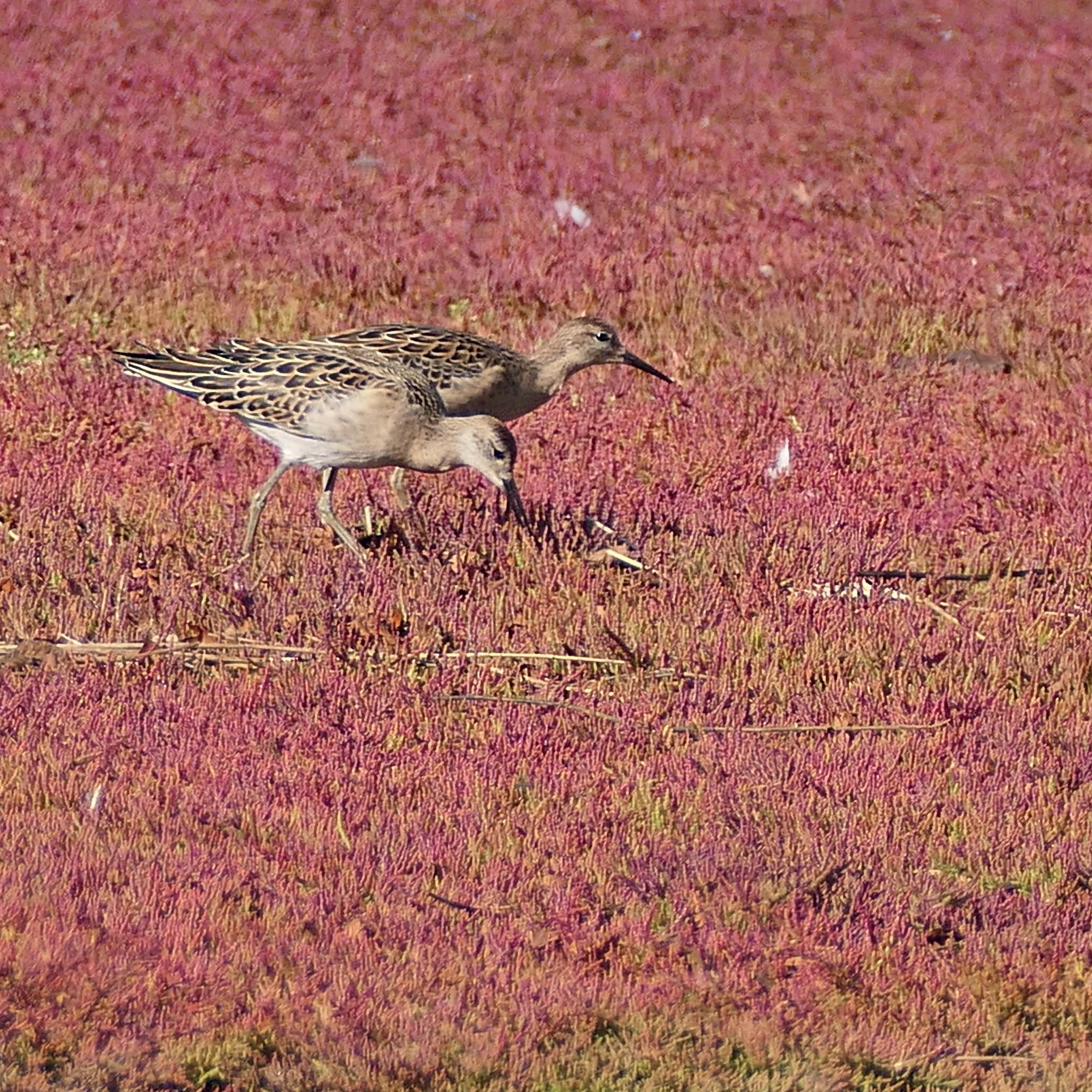
The Ruff is red-listed in Britain and is globally threatened, as its population has declined dramatically and its breeding and non-breeding ranges have also declined. The two birds I saw are female (though the species name is Ruff, the male bird is known as Ruff due to its extraordinary breeding plumage, while the female is known as Reeve). I felt very privileged to enjoy reasonably close sightings of these large waders and spent quite a lot of time watching them feeding up for their long journey south.
 earthstar
You must be logged in to post a comment.