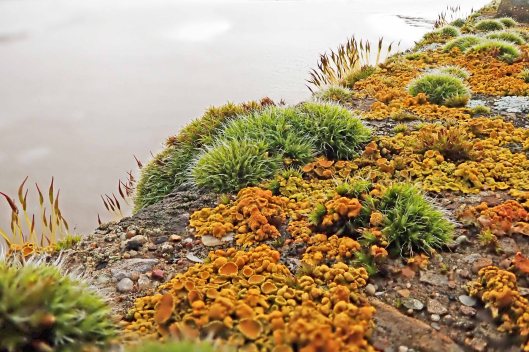
I love this miniature landscape of lichens and mosses, all growing on a thick concrete wall, so rich and diverse and vibrant!

10 Friday Mar 2023
I love this miniature landscape of lichens and mosses, all growing on a thick concrete wall, so rich and diverse and vibrant!
09 Thursday Mar 2023
Posted in birds
Despite almost constant rain, I trekked down to Cardiff Bay today to see for myself an example of what’s called ‘cold weather movement’ in bird populations. As you can see from this photo, the hills behind Cardiff are still white with the snow that fell across much of Britain yesterday, though none remains here at sea level.

And it’s that snowfall that caused a large number of Skylarks to leave their usual hilly pastures and head down to the Bay to feed on the grassy areas of the Barrage. One local birder counted 88 Skylarks there yesterday. Today, in a fenced off area, protected from the returning dogs and their humans, just a dozen birds remained, but it was still worth getting soaked to see such a phenomenon.

08 Wednesday Mar 2023
Posted in birds
Tags
bird tracks in mud, birding, birdwatching, Black-headed gull, British birds, gulls searching for food, mud
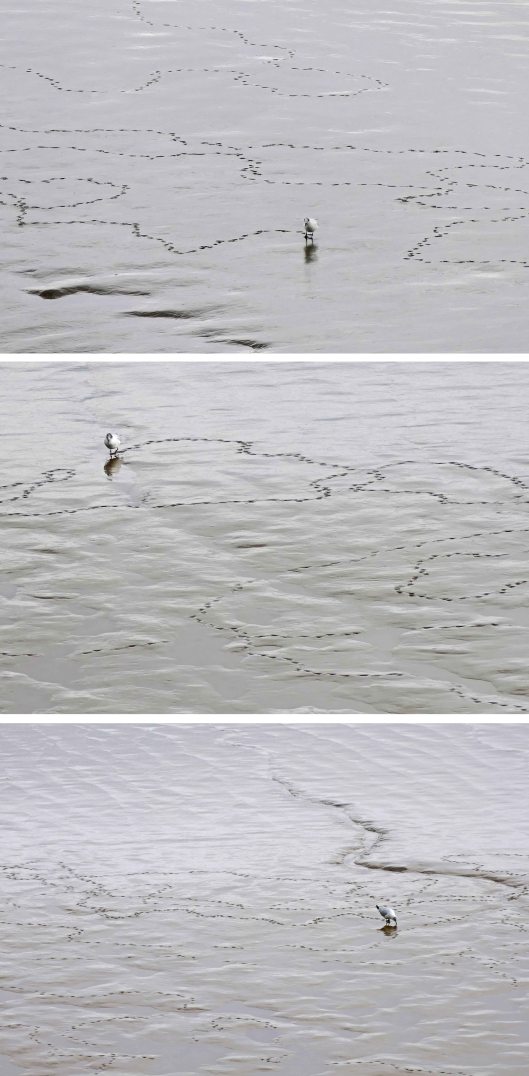
After a morning’s rain, yesterday remained very dull and grey. Rather than let that put me off taking photos, I decided to use the conditions to my advantage, looking at scenes with a black-and-white eye rather than colour, focussing on shapes and textures. The huge banks of mud outside Cardiff Barrage are always interesting but my eye was caught in particular by the tracks being made across the flat areas of mud by Black-headed gulls searching for food. Their meandering twists and turns reminded me of a drunk returning home after a heavy night at the pub!
07 Tuesday Mar 2023
Posted in birds
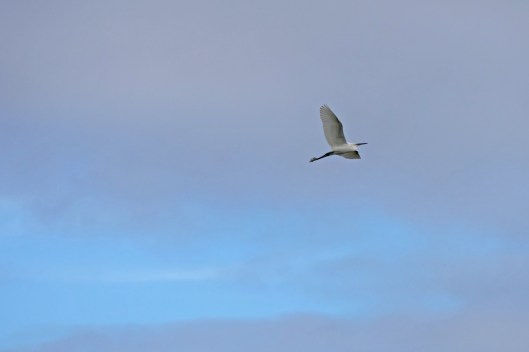
Once upon a time the Little egret (Egretta garzetta) was a common bird in Britain, then became extinct (probably due to hunting and climate change), and is now becoming common again, though we don’t usually see them very often in my bit of south Wales. So, imagine my delight yesterday when I saw my second of the year at my local country park. I spotted a distinctive white blob from the opposite side of one of the lakes and hightailed it around to where the Little egret was sitting in a tree. Unfortunately, the bird was almost invisible amongst the dense trees and impossible to photograph clearly. So, today’s photograph is of Little egret number one, seen flying over one of the park’s outer fields back on 26 January. Here’s hoping we see more of these gorgeous birds as their numbers continue to increase.
06 Monday Mar 2023
Posted in birds
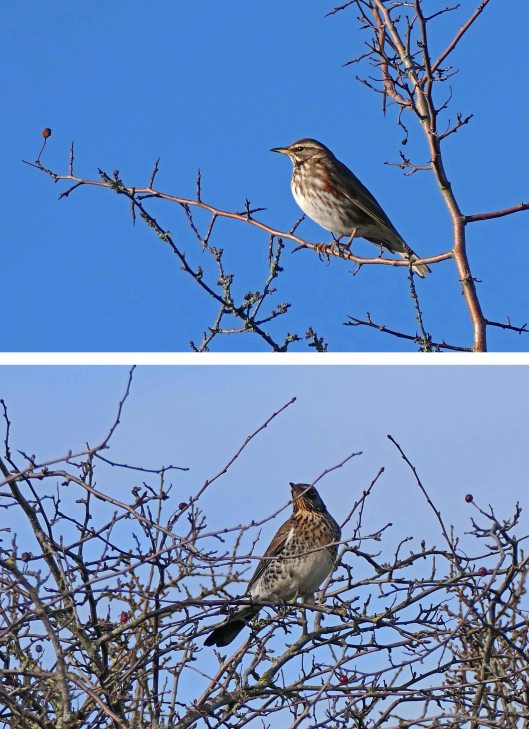
It’s now been over a week since I’ve seen any of the dazzling thrushes that brighten the local trees and fields during the darkest months of winter so I assume they are on their way back to their breeding rounds in Scandinavia. Farewell, and safe journey, to all the beautiful Redwings and Fieldfares. I’m already looking forward to seeing you again later in the year.
05 Sunday Mar 2023
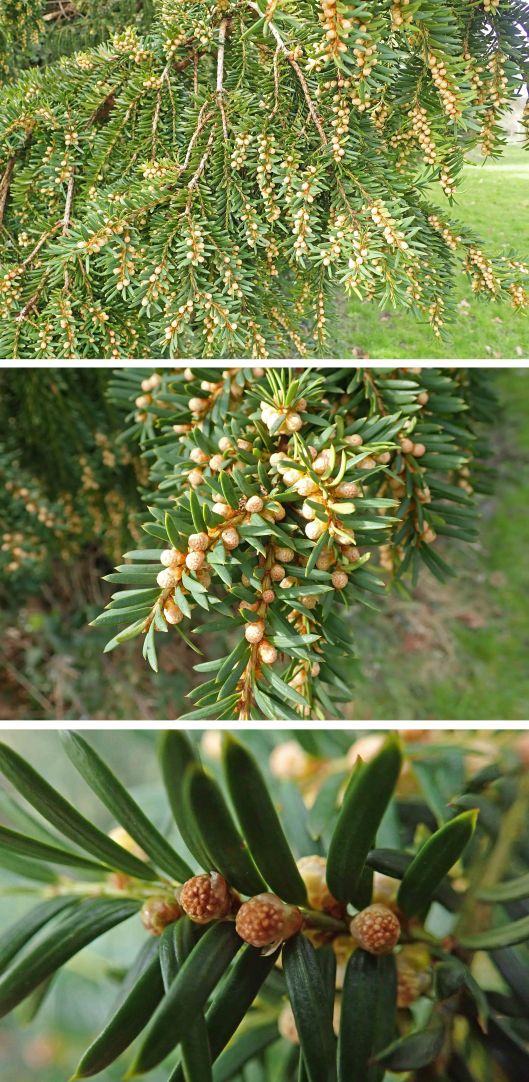
I was checking this Yew tree for galls – found none – but it was absolutely covered in flower buds that were almost literally about to burst open. A few more days and this male tree will be spreading a sea of yellow pollen all around anytime the wind blows or someone brushes against its branches. How do I know it’s a male tree? Well, in a previous post, Flowering Yew trees from way back in March 2016, I blogged about Yew flowers so, if you want to know more about these fascinating trees, just click on that link.
04 Saturday Mar 2023
Posted in birds
Tags
birding, birdwatching, British birds, British fish, Cardiff Bay birding, Great crested grebe chicks, Perch
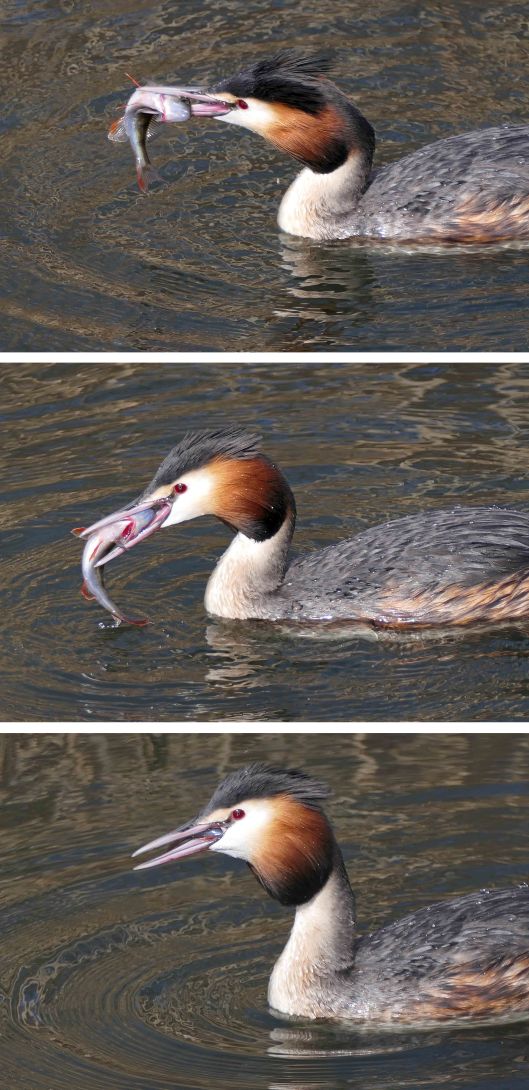
Just a Great crested grebe downing its main course at lunchtime….
It had already enjoyed an appetiser, a smaller fish that slithered down its gullet much more easily. This Perch, with its pesky wide fins, took a bit more manoeuvring.
03 Friday Mar 2023
Posted in fungi
I was hesitant with my identification of this fungus at first as previous examples I’ve seen have been yellow and jelly-like – poke them and they wobble.
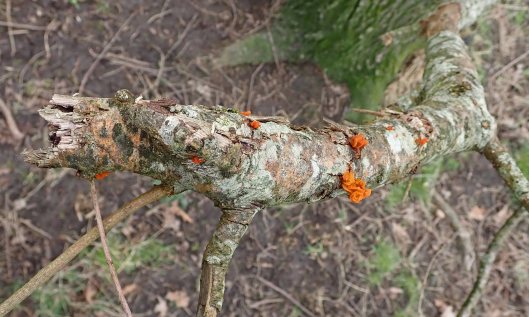
Then I read, on the First Nature website, that ‘in dry weather this fungus becomes a hard orange bracket’. Also, this particular fungus feeds on other fungi, crusts in the Peniophora genus, and I couldn’t see any crusts on this branch. First Nature explains it again:
Very little or none of the Peniophora may be visible; this is because Tremella mesenterica feeds on the mycelium of the Peniophora fungus, and that can be deep inside the timber rather than on its surface. The fruiting body of the crust fungus does not even have to be present, therefore, and so it may look as though Yellow Brain is feeding directly on the host wood.
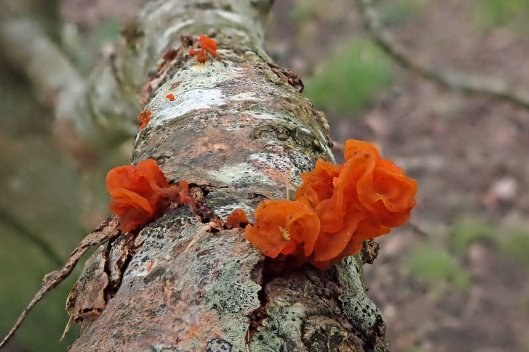
So, reassured by the website’s explanations, I believe I can confidently say this is Yellow brain fungus (Tremella mesenterica). Happy Fungi Friday!
02 Thursday Mar 2023
Tags
British snails, British sprngtails, Clausilia bidentata, life on a seepage, Monobella grassei, snail, springtail, stone seepage, Two-toothed door snail
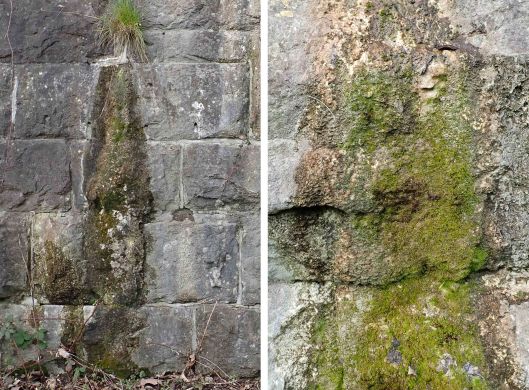
On one side of a local railway station there is a huge stone embankment, perhaps 50 feet tall, that was probably constructed in the 1880s (the platforms were opened in 1888). I walked along the path next to this embankment a couple of days ago and couldn’t help but notice several areas where moisture was seeping from between the stone blocks. When I looked more closely at these seepages, I was amazed by how much life they were supporting – an intriguing habitat in miniature.
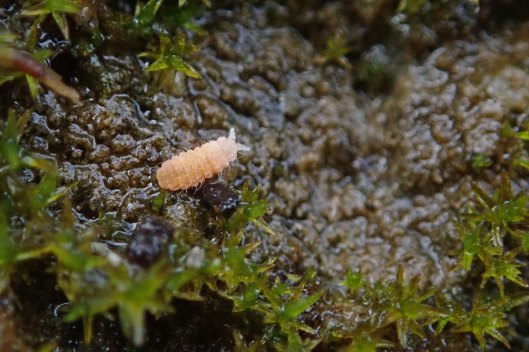
As well as a variety of mosses and lichens, I found four miniscule springtails, which I think are Monobella grassei, a new species for me, though my identification hasn’t yet been validated.
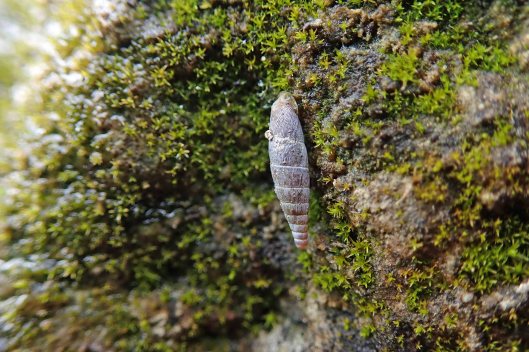
There was also a stunning little snail, covered in grooves that are actually growth lines. Again, its identity has yet to be confirmed, but I think this is probably a Two-toothed door snail (Clausilia bidentata). The Naturespot website reports that it can often be found hiding in cracks in rocks and that it ’emerges in damp weather and at night and climbs high up on bare surfaces to graze on algae and lichens’, which is exactly what this one was doing.
01 Wednesday Mar 2023
Posted in birds
I enjoyed a fabulous walk along Sully beach on Monday, seeing 2 Curlew, a Grey plover, 4 Dunlin and at least 6 Ringed plover, which is a good number and variety for a beach that is, these days, often empty of birds due to disturbance by walkers and dogs off their leads. Sadly, those birds were all quite distant for photographs but this gorgeous little Pied wagtail was much more obliging, walking jauntily along the top of a nearby stone wall, chissicking all the while.

 earthstar
You must be logged in to post a comment.