• ABOUT
  • BIRDING 2018
  • Birding 2019
  • BLOG POSTS
  • Butterflies 2018
  • Resources

earthstar

~ a celebration of nature

earthstar

Category Archives: animals

Hallo, Rabbit

19 Monday Feb 2018

Posted by sconzani in animals, mammal, nature

≈ 2 Comments

Tags

British fauna, British mammals, Cosmeston, Oryctolagus cuniculus, rabbit

180219 rabbit

“Hallo, Rabbit,” he said, “is that you?”
“Let’s pretend it isn’t,” said Rabbit, “and see what happens.”
~ A.A. Milne, Winnie the Pooh

Like Loading...

The nose knows

19 Tuesday Dec 2017

Posted by sconzani in animals, mammal, nature

≈ Leave a comment

Tags

animal body parts, nose, nostrils

171219 nose (1)
171219 nose (2)
171219 nose (3)
171219 nose (4)

‘Don’t stick your nose where someone can pull it off and eat it.’ ~ Terry Pratchett, Men at Arms

171219 nose (5)
171219 nose (6)
171219 nose (7)
171219 nose (8)
171219 nose (9)
171219 nose (10)
Like Loading...

Eco mowers

20 Monday Nov 2017

Posted by sconzani in animals, mammal, nature

≈ 3 Comments

Tags

British fauna, Dartmoor ponies as eco-mowers, Dartmoor pony, Dawlish Warren, national nature reserve

On our Glamorgan Bird Club trip to Dawlish Warren National Nature Reserve, we came across this small group of ponies. The Teignmouth District Council website reports: ‘Helping to keep the grasslands in shape, Dartmoor ponies are used in the winter months to help produce ideal conditions for rare flowers and invertebrates. These are “working”, wild animals, so DO NOT feed them or try to stroke them.’

171120 Dawlish warren ponies (5)

Not having read this before we saw them, we did stroke them and, luckily, they were friendly enough, but they were much more concerned with doing their job as ‘eco mowers’ than basking in human attention.

171120 Dawlish warren ponies (2)
171120 Dawlish warren ponies (4)
171120 Dawlish warren ponies (3)
171120 Dawlish warren ponies (1)
Like Loading...

The eyes have it

14 Tuesday Nov 2017

Posted by sconzani in animals, mammal, nature

≈ 3 Comments

Tags

animal eyes, eye, eyes, mammal eyes

‘An animal’s eyes have the power to speak a great language.’ ~ Martin Buber

171114 1 Sheep171114 2 Child171114 3 Baboon171114 4 squirrel171114 5 Cow171114 6 Cat171114 7 Rabbit171114 8 Horse171114 9 Old woman

Like Loading...

Nut caching

06 Monday Nov 2017

Posted by sconzani in animals, autumn, birds, nature

≈ Leave a comment

Tags

burying acorns, food cache, grey squirrel, Jay, nut caching, nut hoarding, scatter hoarding, stashing nuts, storing food for winter

Winter is coming!
171106 Grey squirrel with acorn

The squirrels know it; the jays know it; and they and many other small critters are busy storing food away for the cold lean days to come. The nut is one such food, the acorn a particular favourite of many.

171106 acorns

Creatures create two different types of winter food supply. Some have just the one larder where they hide away all their precious finds of nuts and seeds, but the Grey squirrel is a scatter hoarder, secreting food in many different places. You’ve probably seen them dashing madly about the ground, burying nuts in seemingly random locations. Other creatures, like wood mice, coal tits, nuthatches and jays are also scatter hoarders, stashing their winter stores in a variety of different caches. But, I wonder, do they always remember where they’ve put their secret stashes? Somehow I doubt it.

171106 Jay with seed (1)
171106 Jay with seed (2)
Like Loading...

Arne and the Sika

26 Thursday Oct 2017

Posted by sconzani in animals, mammal, nature

≈ Leave a comment

Tags

Avocet, birding, birdwatching, Cervus nippon, Corfe Castle, Glamorgan Bird Club, RSPB Arne, Sika deer, Sika fawn, Sika hind

171028 Arne (1)

On the way back from Portland our group of Glamorgan Bird Clubbers detoured to RSPB Arne to follow up on the reported sighting of a Stilt sandpiper.

171028 Arne (2)
171028 Arne birders (7)
171028 Arne Avocets

It was down there somewhere, amidst the large numbers of waders – it was a real treat to see so many Avocets together – but I can’t definitively say I saw it.

171028 Corfe Castle from Arne

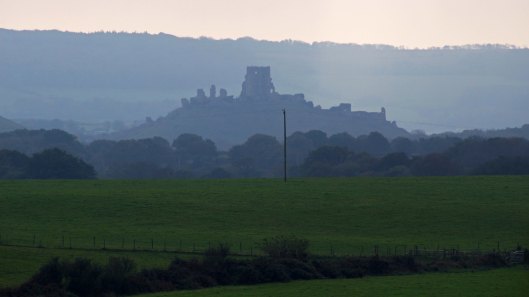
However, we did have fabulous views of the surrounding countryside and the distant Corfe Castle – another place added to my list of ‘must visits’ – and, to my delight, we also had wonderful views of a Sika deer mother and fawn, the first time I’ve seen these deer.

171028 Arne Sika deer (1)

The Sika (Cervus nippon) is about the size of a Fallow deer – this hind would’ve been between 50 and 90cm at the shoulder, her fawn, obviously, smaller – but the Sika’s coat is generally darker. They do have whitish spots in the summer but these can be very faint, almost invisible in the winter months. Fawns are usually born in May – June so this little one must’ve been 4 to 5 months old.

171028 Arne Sika deer (2)
171028 Arne Sika deer (3)
171028 Arne Sika deer (4)

The countryside at Arne is perfect for Sika as they prefer coniferous woodlands and acidic heathland, where they nibble away at grasses and heather. Although these Sika are not a native British species – three different Asian species have been kept on estates and parklands, escapees from the Japanese species (hence C. nippon) can be found through much of Britain where the habitat is right, particularly in parts of Scotland.

Like Loading...

Smell a rat?

27 Wednesday Sep 2017

Posted by sconzani in animals, mammal, nature

≈ 10 Comments

Tags

British fauna, British mammals, brown rat, Cosmeston Lakes Country Park, rat, Rattus norvegicus

If you don’t like rats, look away now!

170927 Brown rat (4)

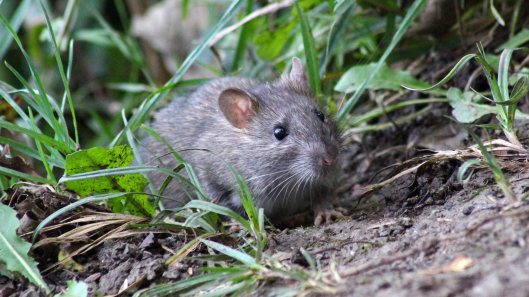
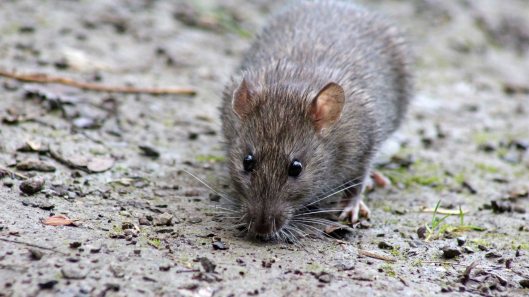
While I realise that a blog about rats might not appeal to everyone, I rarely get to see or write about mammals so, when these two rats came brazenly sniffing around for the seeds I was feeding to the birds at Cosmeston, I couldn’t resist taking photos. And once I have photos, a blog shall surely follow.

170927 Brown rat (1)
170927 Brown rat (2)
170927 Brown rat (3)

These are Brown rats (Rattus norvegicus), immigrants from central Asia that arrived in Britain around 1720. Of course, I don’t mean these two individuals arrived in 1720 – rats usually only live about a year in the wild – but their ancestors were sea-going rodents that just loved to sail the oceans wide and jumped ship wherever they docked. Nowadays, rats are more settled, and they’ll live almost anywhere – houses, gardens, parks, farmlands and farm buildings – you name it, there’s probably a rat in it somewhere.

170927 Brown rat (5)

They particularly like cereals – so, my bird seed would’ve gone down a treat – but they’ll eat pretty much anything, from small birds and their eggs to molluscs and food scraps. If you’re someone who hates these much-maligned creatures, remember that they too play an important part in the food chain, in particular as food for the owls and foxes that everyone loves.

Like Loading...

The taming of the shrew

23 Saturday Sep 2017

Posted by sconzani in animals, mammal, nature

≈ Leave a comment

Tags

British mammals, mammal, Pygmy shrew, rodent, shrew, Sorex minutus

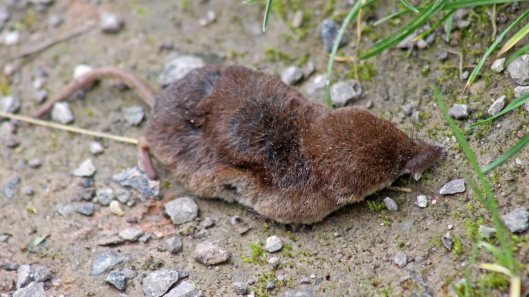
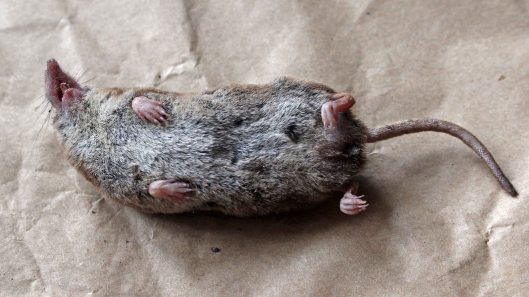
I have only ever seen two shrews, both sadly deceased. Britain has two species of shrew, the Common (Sorex araneus) and the Pygmy (Sorex minutus), but I believe the ones I have seen have been Pygmy shrews. Though both species have brown fur on their backs and silvery grey fur on their bellies, and they are of a similar size, the Pygmy shrew has a tail that is two-thirds the length of its body, whereas the Common shrew’s is half the length. It’s a small distinction and I’m sure experts could point to more scientific methods of distinguishing one from the other but, for me, the tail has to be the telling point.

170923 Pygmy shrew (1)

Pygmy shrews lead short but frantic lives. In their twelve to eighteen months of life the females can give birth to two, sometimes three litters of between 5 and 7 young. Though very few people ever see them, they are common in much of Britain, ferreting about frantically, in grasslands, woodlands, the fringes of arable fields and in the urban garden, for the small insects they like to eat. As you can see, they have tiny eyes but that relatively large snout gives them a keen sense of smell to help find their prey.

170923 Pygmy shrew (2)

In case you’re wondering how I managed to get such detailed photos of this little Pygmy shrew, I brought it home with me. This wasn’t just to get photos – through someone I know who is doing a PhD in biosciences at Cardiff University, this little creature has been donated to science. Its details will help in the study of these often elusive small mammals, and it will be preserved and used as a teaching aid. I was sad to find such a gorgeous wee beastie dead but at least its death has not been in vain.

170923 Pygmy shrew (3)
170923 Pygmy shrew (4)
170923 Pygmy shrew (5)
Like Loading...

Ratty!

05 Saturday Aug 2017

Posted by sconzani in animals, nature

≈ 6 Comments

Tags

Arvicola amphibius, British mammals, Ratty, Water vole, Wind in the Willows

Of course, the ‘Ratty’ in Kenneth Grahame’s much-loved tale The Wind in the Willows is not, in fact, a rat, it’s a Water vole (Arvicola amphibius), as are the gorgeous little creatures in my photographs.

170805 Water vole (2)

Water vole numbers have declined hugely in recent years, partly, it seems, due to predation by American minks and partly due to loss of habitat. Luckily for me, one hundred Ratties were recently reintroduced at one of my local country parks, and a few of them have made themselves at home in a location where they are easily visible.

170805 Water vole (1)

You have only to be quiet and watchful to see them swim out from their hiding places amongst the reeds at the edge of a pond, nip off a leaf from the floating water lilies, swim back to the pond edge, and sit contentedly nibbling away. They are the cutest wee creatures!

170805 Water vole (3)

Like Loading...

‘A Natural History of the Hedgerow’

08 Saturday Jul 2017

Posted by sconzani in animals, birds, fungi, nature, plants, trees, wildflowers

≈ 8 Comments

Tags

British countryside, British hedgerows, field boundaries, hedge, hedgerow, hedgerow trees

170708 hedgerows (1)

Reading John Wright’s excellent book A Natural History of the Hedgerow and ditches, dykes and dry stone walls (Profile Books, London, 2016) has led me to look at the countryside with slightly more knowledgeable eyes, at least when it comes to field boundaries.

170708 hedgerows (6)

Not only does Wright’s book provide a superbly researched history of the hedges, dykes, ditches and dry stone walls that divide up the countryside, it also provides detailed information on the plants, birds, invertebrates and animals that inhabit Britain’s hedgerows, as well as including practical details on how the various boundaries are constructed and maintained.

170708 hedgerows (2)
170708 hedgerows (3)
170708 hedgerows (5)

Now, when I go out on my rural rambles or I’m being transported through the countryside by train, car or bus, I can recognise where hedges must once have grown by the broken line of mature trees marching across a field, I shake my head at the neglect of the hedgerows on so many farms (though I can appreciate the sculptural beauty of ancient hedgerow trees), I can spot where farmers have removed existing boundaries to create huge open fields, and I can appreciate how well-maintained hedges add an extra dimension to the landscape.

170708 hedgerows (4)

Wales and England now have legislation in place to protect hedgerows that meet certain criteria but it would be good if all hedgerows were protected and if more was done to ensure existing hedges were also properly nurtured and maintained.

Like Loading...
← Older posts
Newer posts →

About me

sconzani

sconzani

I'm a writer and photographer; researcher and blogger; birder and nature lover; countryside rambler and city strider; volunteer and biodiversity recorder.

View Full Profile →

Follow earthstar on WordPress.com

Enter your email address to follow this blog and receive notifications of new posts by email.

Recent blog posts

  • Blackthorn in bloom January 11, 2026
  • Weevil: Mecinus pyraster January 10, 2026
  • Red in beak and claw January 9, 2026
  • Who’s watching who? January 8, 2026
  • Springtail: Orchesella cincta January 7, 2026

From the archives

COPYRIGHT

Unless otherwise acknowledged, the text and photographs on this blog are my own and are subject to international copyright. Nothing may be downloaded or copied without my permission.

Fellow Earth Stars!

  • Unknown's avatar
  • Unknown's avatar
  • Unknown's avatar
  • Unknown's avatar
  • Unknown's avatar
  • Unknown's avatar
  • Unknown's avatar
  • Unknown's avatar
  • Unknown's avatar
  • Unknown's avatar
  • Unknown's avatar
  • Unknown's avatar
  • Unknown's avatar
  • Unknown's avatar
  • Unknown's avatar
  • Unknown's avatar
  • Unknown's avatar
  • Unknown's avatar
  • Unknown's avatar
  • Unknown's avatar
  • Unknown's avatar
  • Unknown's avatar
  • Unknown's avatar
  • Unknown's avatar
  • Unknown's avatar
  • Unknown's avatar
  • Unknown's avatar
  • Unknown's avatar
  • Unknown's avatar
  • Unknown's avatar
  • Unknown's avatar
  • Unknown's avatar
  • Unknown's avatar
  • Unknown's avatar
  • Unknown's avatar
  • Unknown's avatar
  • Unknown's avatar
  • Unknown's avatar
  • Unknown's avatar
  • Unknown's avatar
  • Unknown's avatar
  • Unknown's avatar
  • Unknown's avatar
  • Unknown's avatar
  • Unknown's avatar
  • Unknown's avatar
  • Unknown's avatar
  • Unknown's avatar
  • Unknown's avatar
  • Unknown's avatar

Blog at WordPress.com.

Privacy & Cookies: This site uses cookies. By continuing to use this website, you agree to their use.
To find out more, including how to control cookies, see here: Cookie Policy
  • Subscribe Subscribed
    • earthstar
    • Join 669 other subscribers
    • Already have a WordPress.com account? Log in now.
    • earthstar
    • Subscribe Subscribed
    • Sign up
    • Log in
    • Report this content
    • View site in Reader
    • Manage subscriptions
    • Collapse this bar
 

Loading Comments...
 

You must be logged in to post a comment.

    %d