• ABOUT
  • BIRDING 2018
  • Birding 2019
  • BLOG POSTS
  • Butterflies 2018
  • Resources

earthstar

~ a celebration of nature

earthstar

Category Archives: flowers

Mignonette

31 Sunday Aug 2025

Posted by sconzani in flowers, wildflowers

≈ Leave a comment

Tags

British wildflowers, Mignonette, Reseda lutea, Reseda odorata, Wild mignonette, wildflowers

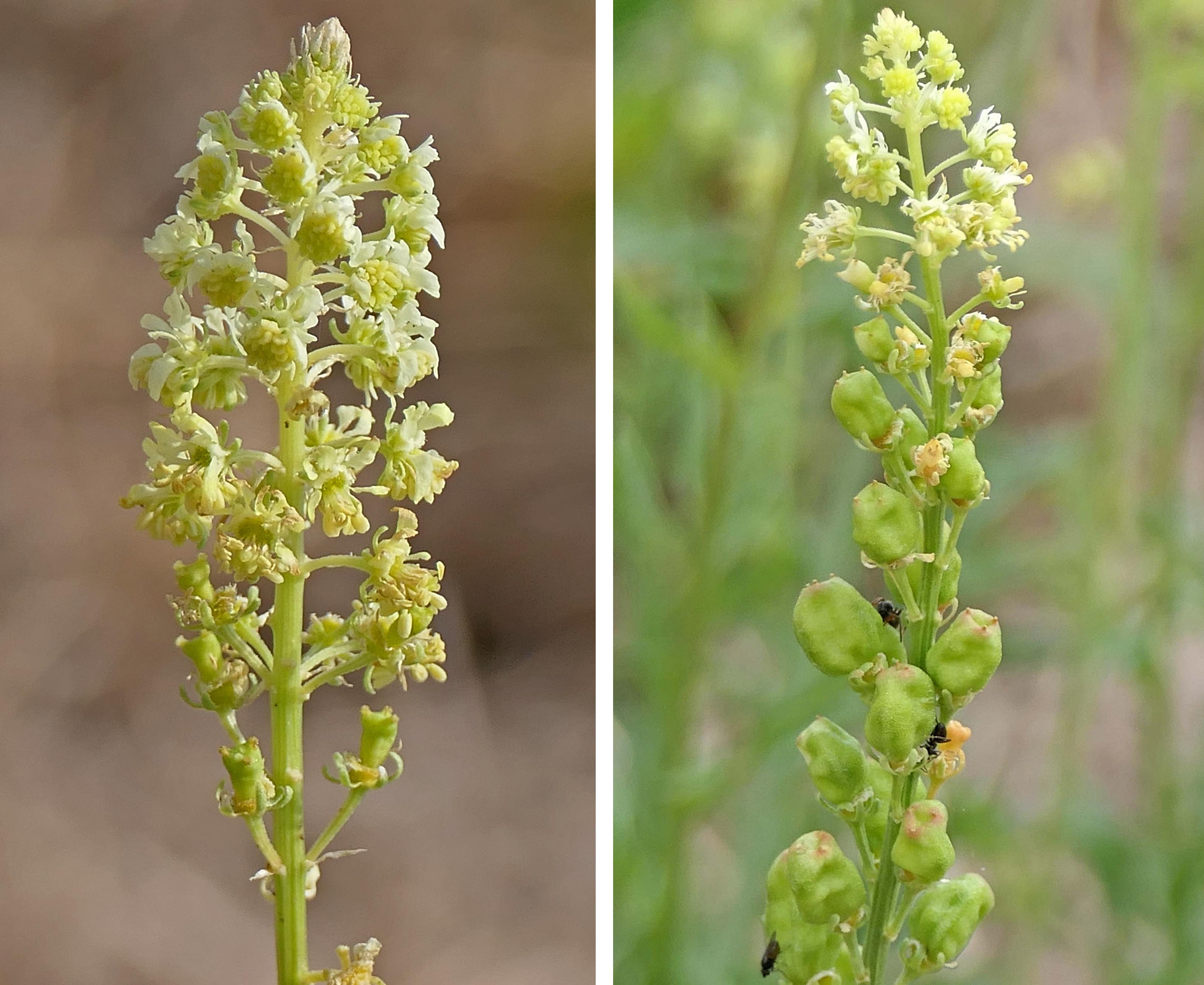
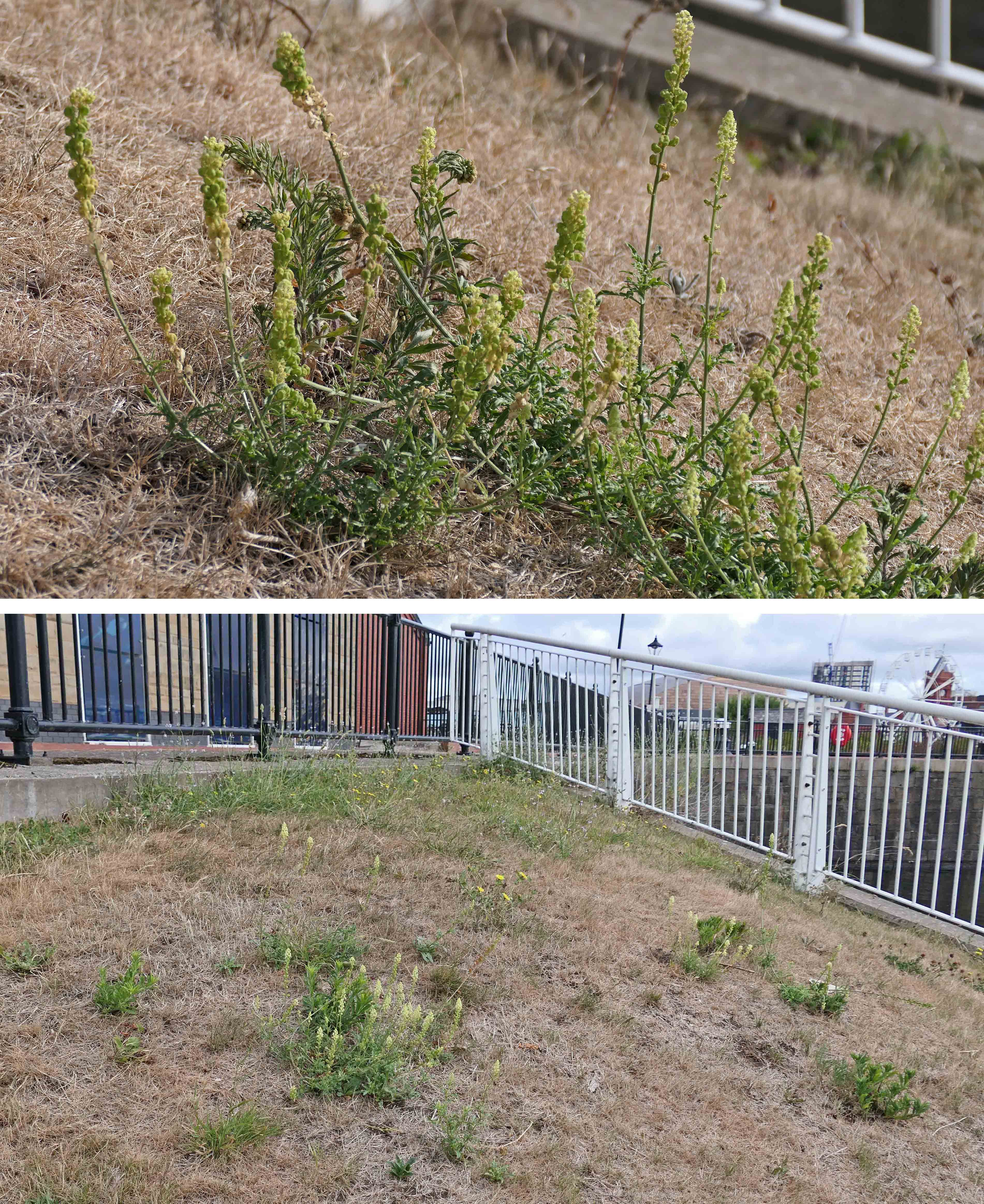
As I’ve never sniffed their flowers, I’m not sure whether the Mignonette plants I see in various locations around Cardiff Bay are Wild Mignonette (Reseda lutea) or the escaped and naturalised garden variety Reseda odorata (the latter, a plant that’s more at home in Mediterranean countries, has a musky scent apparently).

Both species are common throughout the UK, in a wide variety of locations – along the edges of railway lines, on areas of waste ground, bordering car parks and garbage tips, around arable fields – in general, anywhere the ground has been disturbed and is mostly dry. You can see in the photos below how well the Mignonette plants are coping with the current drought conditions here in south Wales, compared to most other plants that are shrivelled, crispy and dying.

Like Loading...

Soapwort and smut

24 Sunday Aug 2025

Posted by sconzani in flowers, fungi, plants, wildflowers

≈ Leave a comment

Tags

anther smut, anther smut on Soapwort, archaeophyte, British wildflowers, fungus on Soapwort flowers, Microbotryum saponariae, Saponaria officinalis, Soapwort

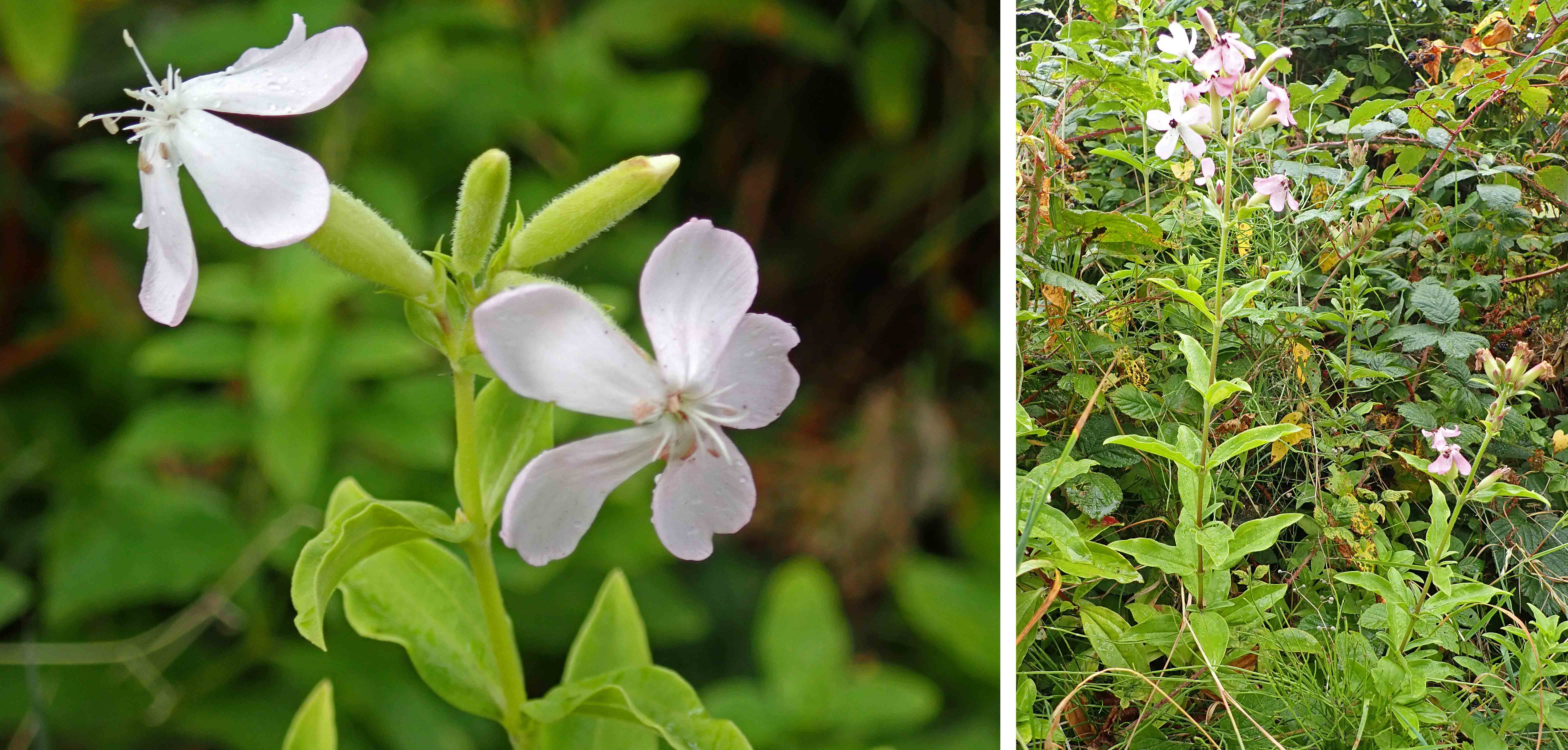
During a walk around Cardiff’s Bute Park last week, I spotted a wildflower growing alongside my path that I couldn’t ever recall seeing before. It had pink flowers and looked a lot like Red campion so I wondered if it might be a cultivated variety of campion that had escaped from someone’s garden.

A look through the appropriate section of my wildflower guide when I got home proved me half right and half wrong. It was definitely a member of the campion family but this was Soapwort (Saponaria officinalis), no garden escape but not native either. It’s classified as an archaeophyte, which means this extremely useful detergent-plant was introduced to Britain in ancient times, prior to 1500 AD.

A few snippets from Flora Britannica:

Simply rubbing a leaf between the fingers will produce a slight, slippery froth. Boiled in water, the plant produces a green lather with the power to lift grease and dirt, especially from fabrics. … due to the presence of saponins – chemicals which, like inorganic soaps, appear to ‘lubricate’ and absorb dirt particles.
… cultivated for laundering woollens in Syria … and in Britain employed as a soaping agent by medieval fullers … because vegetable saponins are so much gentler than soaps, Saponaria has been used much more recently for washing ancient tapestries … Victoria &Albert Museum it was last used for cleaning fragile fabrics in the 1970s. The National Trust have also used it, for bringing up the colours in antique curtains.

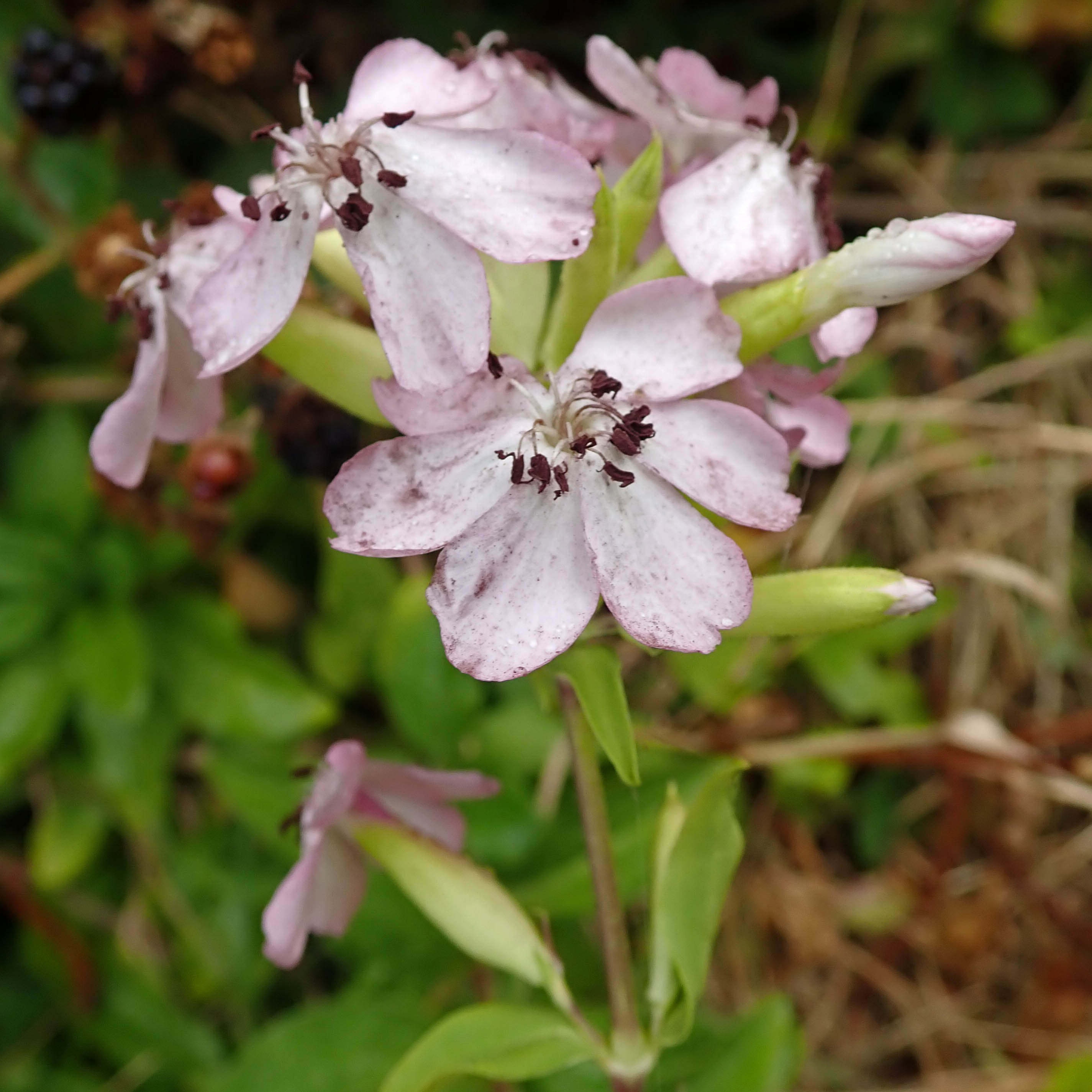
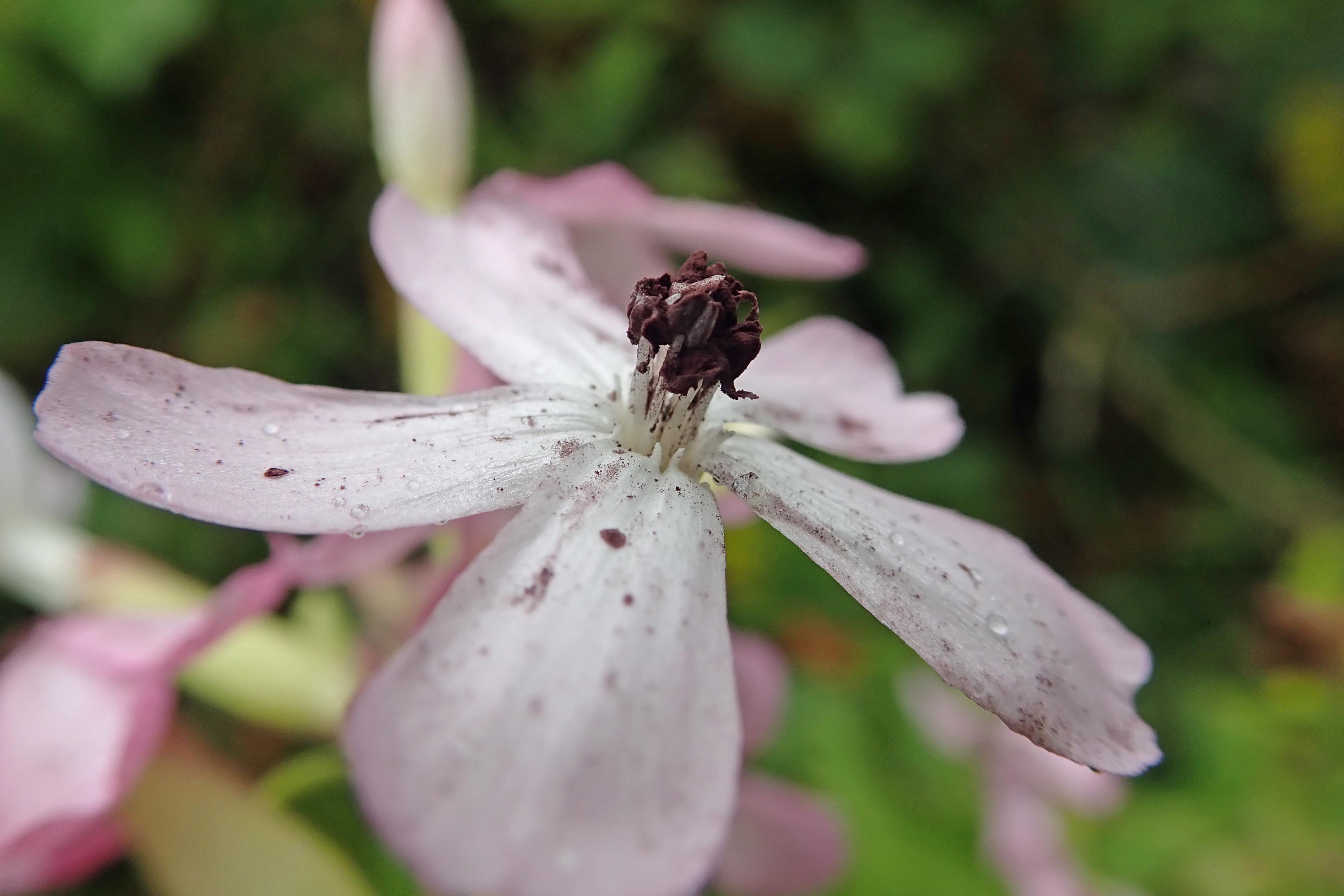
Now, the keen-eyed amongst you may have noticed something a little odd about the flowers in some of my photos; the centres of the flower heads look black. This is because many of the plants I found were suffering from anther smut, in this case caused by the fungus Microbotryum saponariae. The pollen in the flowers’ anthers has been replaced with fungal spores, meaning the plant is unable to reproduce. This may be a recent infestation as I found plenty of plants growing along the path as I walked further. I often see something similar on Red campion flowers, though that is caused by a different fungal species, Microbotryum silenes-dioicae. So, two for the price of one today: a fascinating plant and an equally fascinating fungus.

Like Loading...

White melilot

17 Sunday Aug 2025

Posted by sconzani in flowers, plants, wildflowers

≈ Leave a comment

Tags

alien flora, alien plants, British wildflowers, Melilotus albus, White melilot

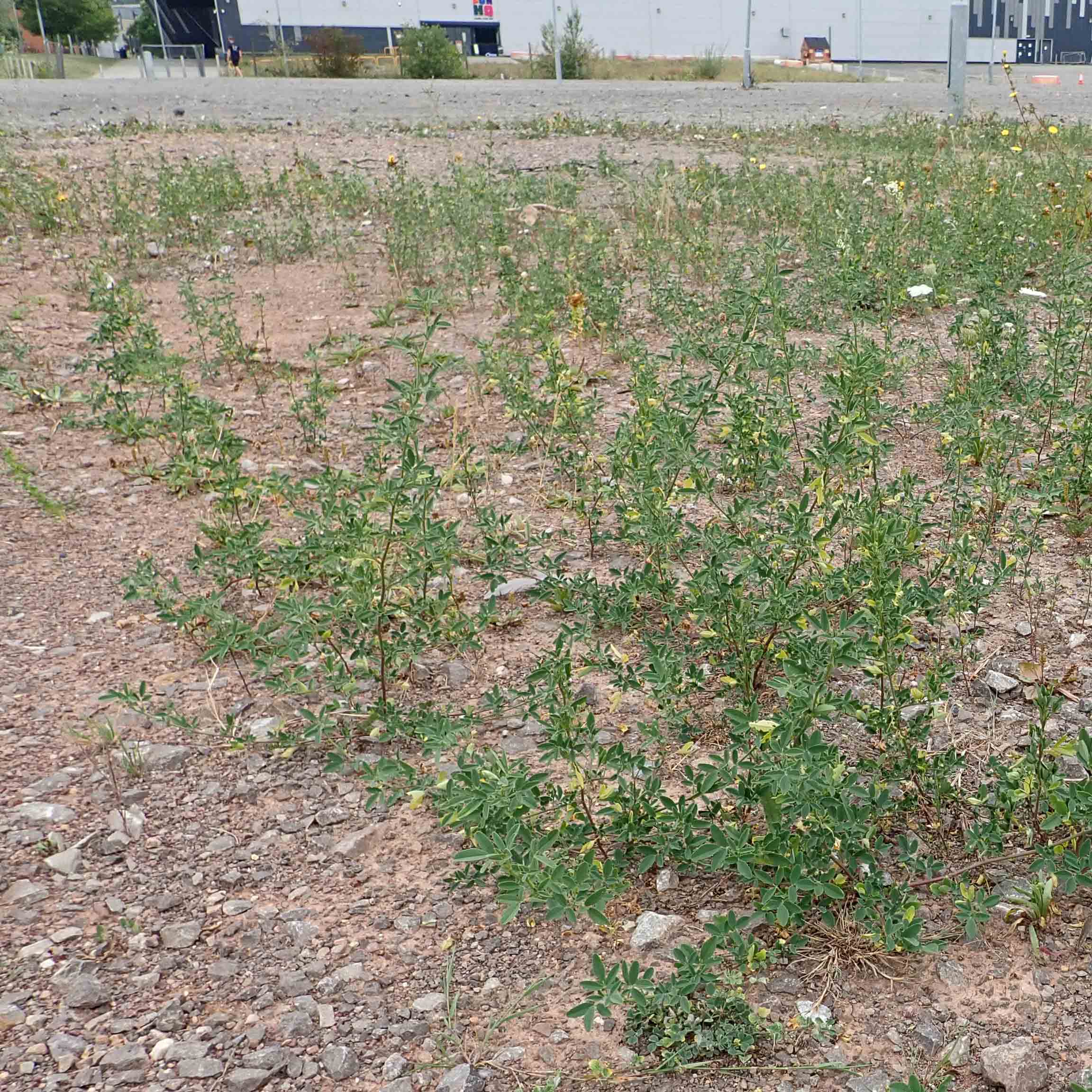
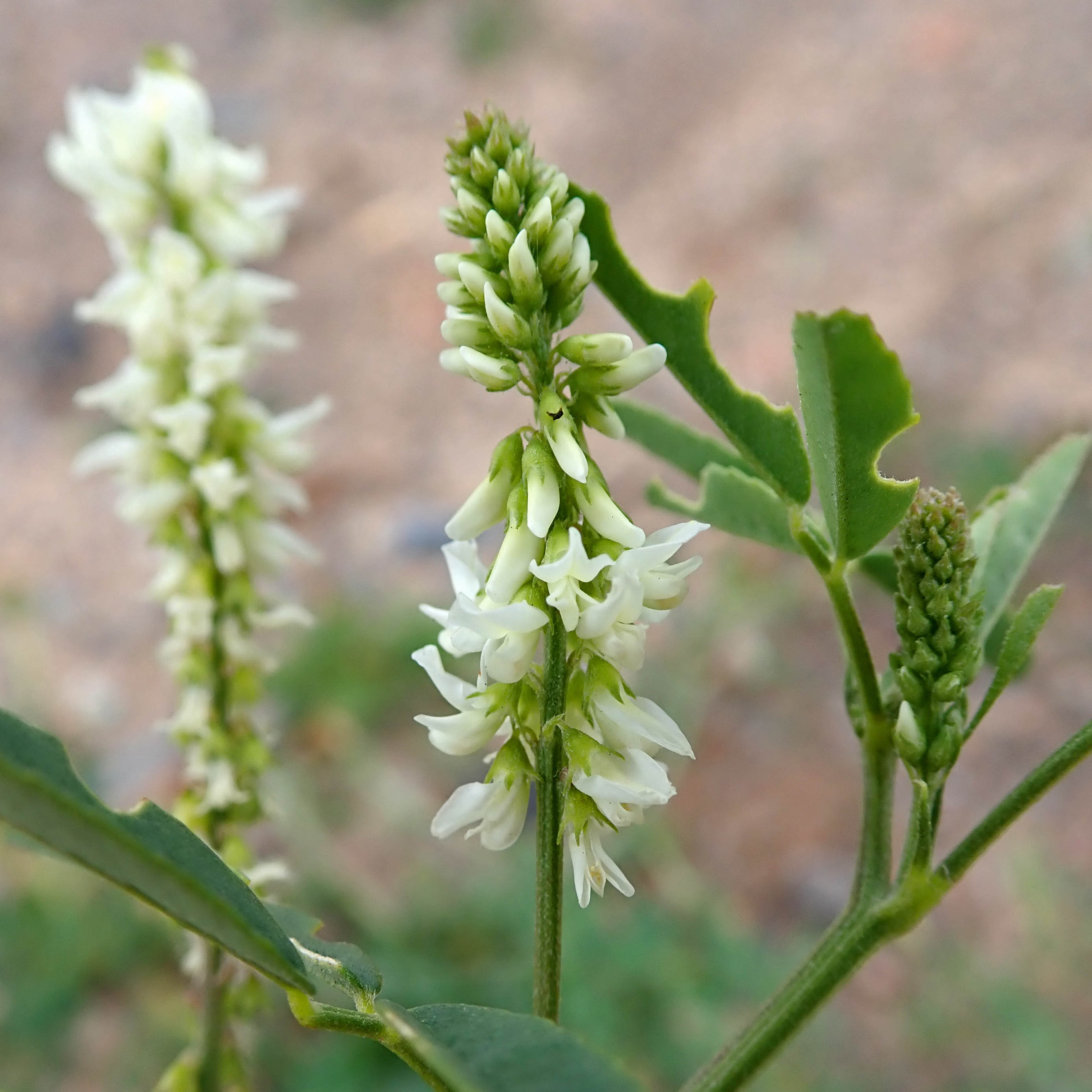
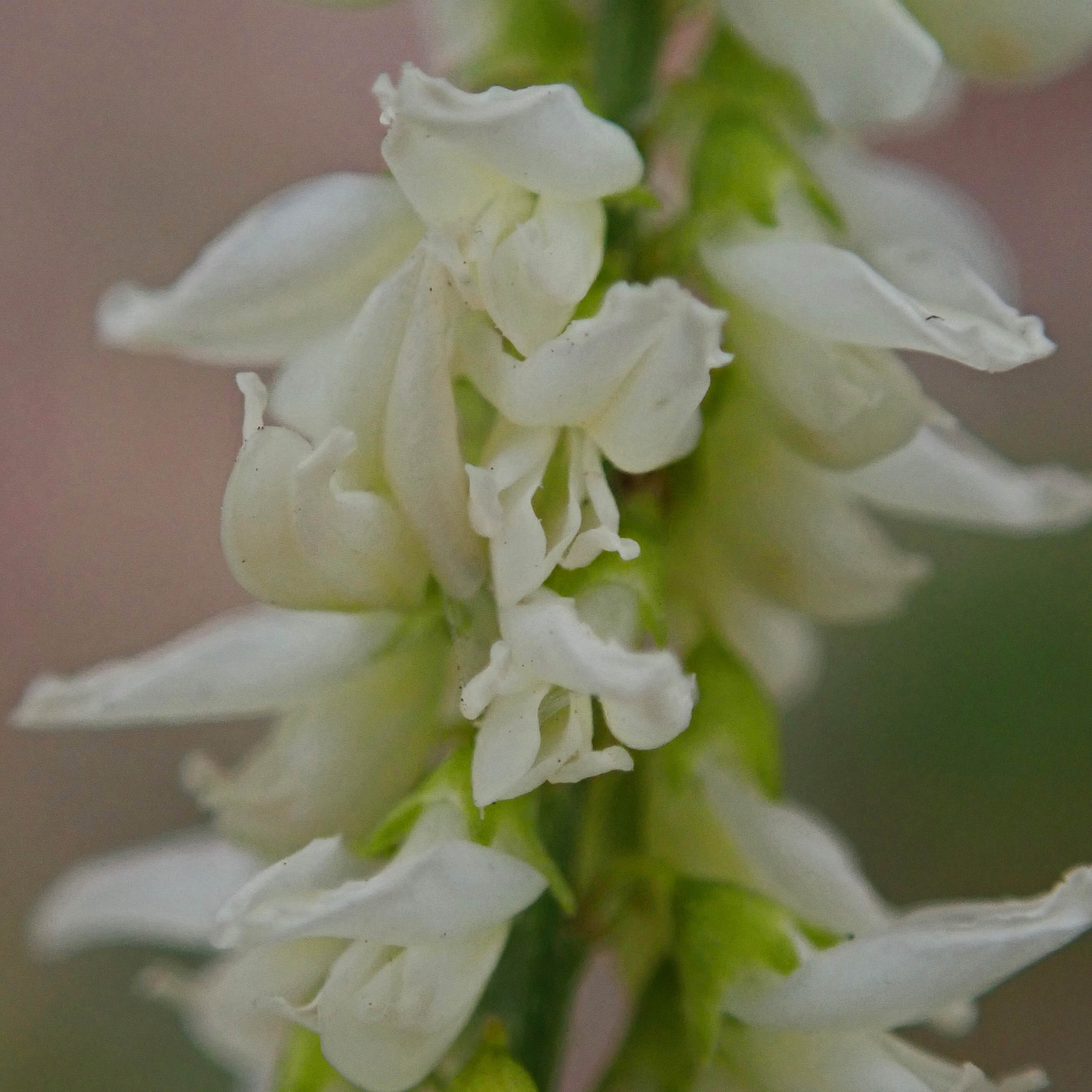
When I first saw this plant, I thought it was some weird variation on a vetch. I was wrong – I frequently am! – but I did have the correct family. This is White melilot (Melilotus albus), a member of the pea family, the Fabaceae (or Leguminosae).

I’ve only ever seen it growing in this one location, an area of waste ground on the western side of Cardiff Bay, which leads me to wonder how it arrived there. In Flora Britannica, Richard Mabey writes that it was ‘originally introduced to this country from Europe as fodder plants’ and is ‘now well naturalised at the edges of arable fields, on roadsides and in waste places’. That’s certainly one explanation but I wonder if this particular colony has a different origin.

I know from my time volunteering on the Mary Gilham Archive Project that, in the days of sail and the once very active docks that flourished around the Bay, ships often used sand as ballast. When they arrived at Cardiff, the ships offloaded their sand before loading up with a cargo of coal, and the sand was often dumped or used to reclaim land. That sand contained a huge variety of dormant seeds, which is why the land around Cardiff Bay – and the ports of other cities – often contain alien plant species. Whatever the truth of its arrival, White melilot is an attractive, if straggly little plant, which, I think, deserves to grow more widely.

Like Loading...

A confusion of Comfreys

10 Sunday Aug 2025

Posted by sconzani in flowers, wildflowers

≈ Leave a comment

Tags

British wildflowers, Comfrey, Comfrey as healing plant, herbal medicine, RSPB Radipole, Symphytum species, Wildflowers at RSPB Radipole

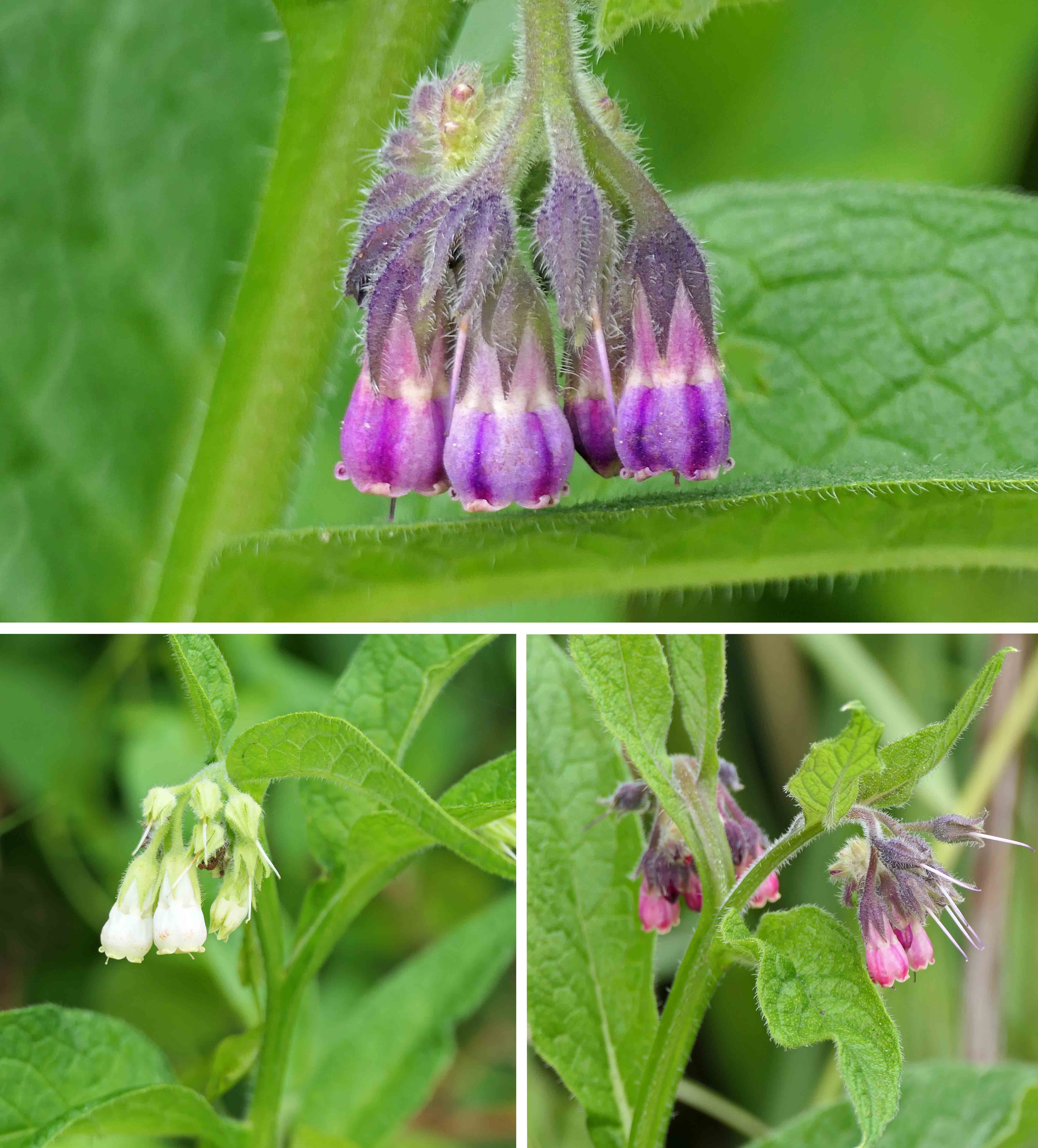
In Flora Britannica, author Richard Mabey explains that Common comfrey (Symphytum officinale) hybridises freely with Russian comfrey (S. x uplandicum) and Rough comfrey (S. asperum), so I make no apology for not being able to be precise about today’s wildflower species. To further confuse the picture, White comfrey (S. orientale), an introduction from west Russia and Turkey, has become naturalised, and is commonly found in hedgerows and on waste ground in southern England. The combination of species certainly provides a wonderful mix of white, blues, lilacs and purples in the Comfrey flowers, which I noticed the bumblebees were particularly enjoying (the flower nectar, not the colours).

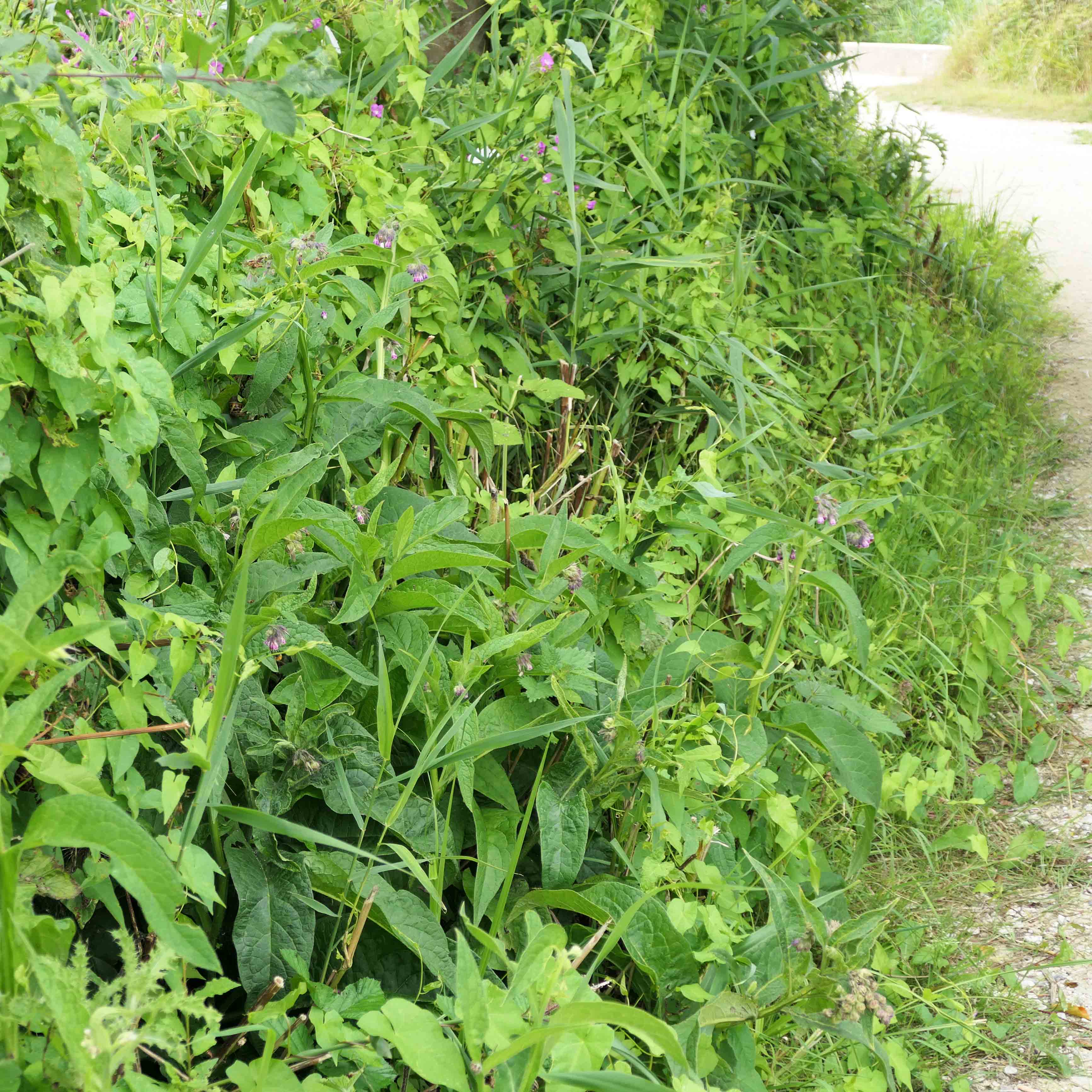
The Comfrey plants shown here was at RSPB Radipole in Weymouth, thriving in the reserve’s damp environment, growing beside the footpaths and along the edges of the reed beds.

You probably know that Comfrey is very commonly used in herbal medicine, especially in connection with healing open wounds, broken bones and severe bruising, hence its common names of Knitbone and Nip-bone. It contains Allantoin, a substance that encourages the healing of connective tissue, and Flora Britannica lists many reports from contributors of poultices being used to heal severe cuts, ease the severely bruised knees of miners, and assist with the knitting of broken bones. One of my grandmothers always grew Comfrey in her garden and would drink an infusion of the leaves to ease her sore back and aching limbs, though Mabey warns that Comfrey contains alkaloids that can cause liver damage, so infusions and tablets are now discouraged.

Like Loading...

Skullcap

03 Sunday Aug 2025

Posted by sconzani in flowers, wildflowers

≈ Leave a comment

Tags

blue flowers, blue wildflowers, blue-flowered wildflowers, British wildflowers, flowers of damp places, Scutellaria galericulata, Skullcap

I don’t know how I’ve missed this pretty little plant during my summertime walks around Cardiff’s Roath Lake; I think it’s likely that it had been strimmed in previous years, as, for no good reason, that’s what usually happens to the wildflowers around the lake’s edge.

This is Skullcap (Scutellaria galericulata), a plant with delicate blue flowers that is most often found growing, as at Roath Lake, on the banks of lakes, ponds, marshes, and areas of slow-flowing water.

The very strange common name apparently refers to the shape of the flowers, which reminded those responsible for naming the plant of the helmet worn by soldiers in the Roman armies. I’ve seen references to a helmet called galerum (from galerus, meaning a cap made of leather or skin) and also a metal helmet named galea; neither cap nor helmet look like the tube-shaped flower to my eye, but Skullcap is certainly a memorable name for a plant!

Like Loading...

Tansy

27 Sunday Jul 2025

Posted by sconzani in flowers, wildflowers

≈ 2 Comments

Tags

British wildflowers, summer colour, Tanacetum vulgare, Tansy, yellow flowers

This is the only Tansy (Tanacetum vulgare) plant I know of and it’s in an odd location, growing as it does on a grassy slope on the Cardiff Bay Barrage. Who knows how it got there but it seems to be thriving and its golden-yellow button-like flowers make for a stunning display of summertime colour.

Those flowers also provide welcome food for insects at a time when many other plants are shrivelling due to the heat and lack of rain. (In case you’re wondering, the bee is a Colletes species but cannot be positively identified without closer examination – I did try asking an expert.)

I always enjoy reading the interesting snippets of information my copy of Flora Britannica provides about our various wildflowers. This is what Richard Mabey writes about Tansy:

Tansy’s leaves are pungent and bitter, and at one time they were eaten at Eastertide, to kill off the ‘phlegm and worms’ which the Lenten fish diet gave rise to. They were mixed with eggs, milk and flour, presumably to make them more palatable, and from the fifteenth to nineteenth centuries, a ‘tansye’ was a generic term for any omelette or pancake-like dish flavoured with bitter herbs.

Like Loading...

Harebells

13 Sunday Jul 2025

Posted by sconzani in flowers, wildflowers

≈ Leave a comment

Tags

blue wildflowers, British wildflowers, Campanula rotundifolia, Harebell, Rodborough Common, wildflowers on Rodborough Common

Though my Flora Britannica tells me the Harebell (Campanula rotundifolia) is ‘one of the most catholic in its choice of habitats’, growing on almost ‘any kind of dry, open and relatively undisturbed ground, from mountain-tops to sand-dunes’, it does not grow in my part of coastal south Wales.

So, for me, it was a delight to see the delicate blue bell-shaped flowers of this lovely wildflower nodding in the breeze on Rodborough Common during my recent visit to Gloucestershire. (In fact, I really must plan an earlier visit up that way as the Common is known for its wonderful wildflowers, especially several species of orchid, but everything was looking rather frazzled in the summer heat.)

It’s probably no surprise that the Scots often call Harebells ‘bluebells’ – the name fits well their flower’s colour and shape, though the Harebell blooms later, between July and September. The Wildlife Trusts website says Harebells have other vernacular names that allude to their magical associations: ‘witches’ thimbles’ and ‘fairy bells’, but I haven’t found any more detail about why that is.

Like Loading...

Unbranched bur-reed

29 Sunday Jun 2025

Posted by sconzani in flowers, wildflowers

≈ Leave a comment

Tags

aquatic plants, British wildflowers, Bur-reed family, plants growing in water, Sparganium, Sparganium emersum, Unbranched bur-reed

When I popped down to the edge of the River Ely during last Monday’s walk, I was hoping for dragons and damsels. Instead, I saw flowers I’d not seen before; these plants with the rather lovely towers of globular spiky white blooms are members of the Bur-reed or Sparganium family of aquatic plants that grow both in moving and still fresh water.

There are four species of Bur-reed in Britain: Branched, Unbranched, Least and Floating. From the fact that there is a single unbranched flower spike (raceme), with just one group of the smaller, more compact male flowers at the top means that the species I found was Unbranched bur-reed (Sparganium emersum).

Like Loading...

Coteries of orchids

08 Sunday Jun 2025

Posted by sconzani in flowers, wildflowers

≈ Leave a comment

Tags

Anacamptis pyramidalis, Bee orchid, British orchids, Dactylorhiza maculata, Dactylorhiza praetermissa, Heath spotted-orchid, native orchids, Ophrys apifera, orchids, Pyramidal orchid, Southern marsh orchid, Spring colour, spring orchids

I was searching for adjectives to describe the many native orchids I’ve been seeing during my recent meanders, then decided that you didn’t really need my blathering to see how sublime they are.

Bee orchids (Ophrys apifera), at Cardiff’s Grangemoor Park. Note the unusual markings on the ‘face’ of the orchid on the right – it looks to me to be crying.

Also from Grangemoor Park, a feast of Pyramidal orchids (Anacamptis pyramidalis)

Heath spotted-orchids (Dactylorhiza maculata) from last Wednesday’s visit to Aberbargoed Grasslands NNR

One of just a few Southern marsh orchids (Dactylorhiza praetermissa) growing on the coal spoil tip at Aberbargoed

Like Loading...

Orchids already?

25 Sunday May 2025

Posted by sconzani in flowers, wildflowers

≈ Leave a comment

Tags

British orchids, Common spotted-orchid, Dactylorhiza fuchsii, native orchids, orchids

This year seems to be flying by. I mean, how can the Common spotted-orchids be flowering already?

Maybe it’s just me, and the house move, and everything associated with that that’s made this year seem to be passing so quickly. Or maybe it’s just old age – when I was young, time often seemed to drag; now it zips by too quickly.

Anyhoo, whether or not I was ready for them, the orchids are out and looking as gorgeous as they always do. I hope you get to enjoy them too.

Like Loading...
← Older posts
Newer posts →

About me

sconzani

sconzani

I'm a writer and photographer; researcher and blogger; birder and nature lover; countryside rambler and city strider; volunteer and biodiversity recorder.

View Full Profile →

Follow earthstar on WordPress.com

Enter your email address to follow this blog and receive notifications of new posts by email.

Recent blog posts

  • Scallop shells February 22, 2026
  • Avocet February 21, 2026
  • First large spider February 20, 2026
  • Our celebrity Redshank February 19, 2026
  • My first moth of the year February 18, 2026

From the archives

COPYRIGHT

Unless otherwise acknowledged, the text and photographs on this blog are my own and are subject to international copyright. Nothing may be downloaded or copied without my permission.

Fellow Earth Stars!

  • Unknown's avatar
  • Unknown's avatar
  • Unknown's avatar
  • Unknown's avatar
  • Unknown's avatar
  • Unknown's avatar
  • Unknown's avatar
  • Unknown's avatar
  • Unknown's avatar
  • Unknown's avatar
  • Unknown's avatar
  • Unknown's avatar
  • Unknown's avatar
  • Unknown's avatar
  • Unknown's avatar
  • Unknown's avatar
  • Unknown's avatar
  • Unknown's avatar
  • Unknown's avatar
  • Unknown's avatar
  • Unknown's avatar
  • Unknown's avatar
  • Unknown's avatar
  • Unknown's avatar
  • Unknown's avatar
  • Unknown's avatar
  • Unknown's avatar
  • Unknown's avatar
  • Unknown's avatar
  • Unknown's avatar
  • Unknown's avatar
  • Unknown's avatar
  • Unknown's avatar
  • Unknown's avatar
  • Unknown's avatar
  • Unknown's avatar
  • Unknown's avatar
  • Unknown's avatar
  • Unknown's avatar
  • Unknown's avatar
  • Unknown's avatar
  • Unknown's avatar
  • Unknown's avatar
  • Unknown's avatar
  • Unknown's avatar
  • Unknown's avatar
  • Unknown's avatar
  • Unknown's avatar
  • Unknown's avatar
  • Unknown's avatar

Blog at WordPress.com.

Privacy & Cookies: This site uses cookies. By continuing to use this website, you agree to their use.
To find out more, including how to control cookies, see here: Cookie Policy
  • Subscribe Subscribed
    • earthstar
    • Join 670 other subscribers
    • Already have a WordPress.com account? Log in now.
    • earthstar
    • Subscribe Subscribed
    • Sign up
    • Log in
    • Report this content
    • View site in Reader
    • Manage subscriptions
    • Collapse this bar
 

Loading Comments...
 

You must be logged in to post a comment.

    %d