• ABOUT
  • BIRDING 2018
  • Birding 2019
  • BLOG POSTS
  • Butterflies 2018
  • Resources

earthstar

~ a celebration of nature

earthstar

Category Archives: flowers

The pretty Lenten rose

17 Thursday Mar 2016

Posted by sconzani in flowers, nature

≈ 4 Comments

Tags

hellebore, Helleborus orientalis, Lenten rose, poisonous plant

160317 hellebore (1)

On Tuesday I featured the Stinking hellebore I had found in a local woodland. Today, we have Helleborus orientalis, the Lenten rose, which is currently flowering profusely in the gardens of Roath Park here in Cardiff. The flowers are very beautiful, though, as with all the hellebores, this plant is poisonous so please do take care when handling it.

160317 hellebore (2)

I particularly liked one piece of folklore related on The Poison Garden website. It seems if you ‘spread the powdered root onto the floor … when you step on the powder you become invisible’, though the report continues:

That story about invisibility seems to originate with the ever unreliable Mrs Grieve. In ‘A Modern Herbal’ she says ‘In an old French romance, the sorcerer, to make himself invisible when passing through the enemy’s camp, scatters powdered Hellebore in the air, as he goes.’ The change from scattering in the air to spreading on the ground illustrates how folklore mutates.

Given the plant’s toxicity, I’m very reluctant to try the trick, though I admit it might sometimes come in very handy!

160317 hellebore (6)
160317 hellebore (5)

160317 hellebore (4)

Like Loading...

Stinking hellebore

15 Tuesday Mar 2016

Posted by sconzani in flowers, nature

≈ 2 Comments

Tags

Foetid hellebore, hellebore, Helleborus foetidus, poisonous plant, Stinking helebore, Stinkwort, wildflowers

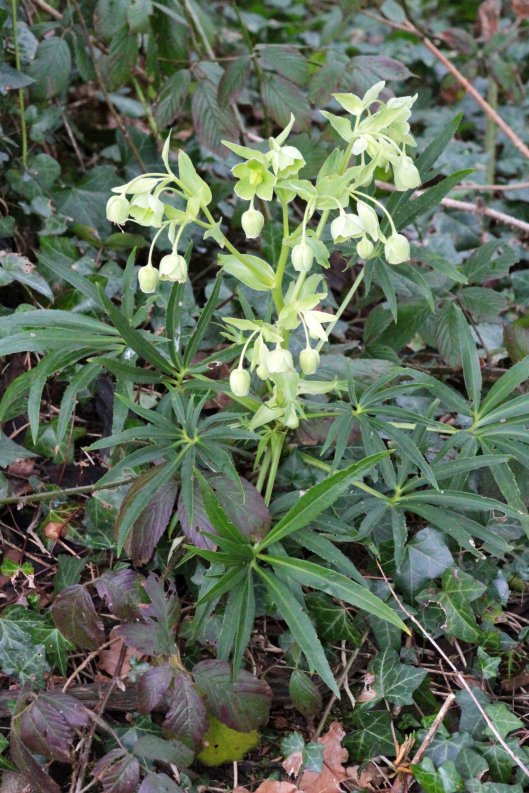
With a scientific name of Helleborus foetidus and common names of Stinking hellebore, Foetid hellebore and Stinkwort, you might well assume that this wildflower has a bad smell. Well, I didn’t smell a thing when I took a close look at it and I’ve since read that you need to crush the leaves to release a smell described as ‘beefy’. However, I’m actually very glad I didn’t crush the leaves, or even touch the plant, because every part of this native wildflower is poisonous. Though it was used in times gone by as a remedy for intestinal worms, it did, on occasion, kill the patient as well as the worms! At the very least, if ingested, it will cause vomiting and nausea, delirium and diarrhoea, and some of its poisons can also be absorbed through the skin, so best look but don’t touch.

160315 Stinking Hellebore Helleborus foetidus (1)

In the wild, the Stinking hellebore grows in scrub and woodlands (which is where I found it) but, perhaps surprisingly, people do grow it in their gardens. Though it has a very pretty flower, I think its hazardous properties would be enough to put me off.

160315 Stinking Hellebore Helleborus foetidus (2)

Like Loading...

‘Camellias shining bright’

20 Saturday Feb 2016

Posted by sconzani in flowers, nature, nature photography

≈ 4 Comments

Tags

Bute Park, camellia, Honoré de Balzac, The Camellia

160220 camellia (4)

‘The Camellia’ by Honoré de Balzac
~ from an English translation of his novel Eugénie Grandet

In Nature’s poem flowers have each their word
The rose of love and beauty sings alone;
The violet’s soul exhales in tenderest tone;
The lily’s one pure simple note is heard.
The cold Camellia only, stiff and white,
Rose without perfume, lily without grace,
When chilling winter shows his icy face,
Blooms for a world that vainly seeks delight.
Yet, in a theatre, or ball-room light,
With alabaster petals opening fair,
I gladly see Camellias shining bright
Above some stately woman’s raven hair,
Whose noble form fulfils the heart’s desire,
Like Grecian marbles warmed by Phidian fire.

160220 camellia (3)

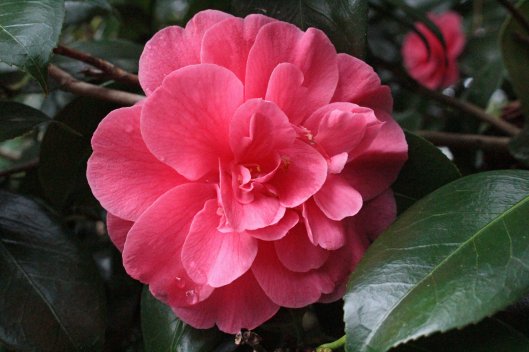
These are just a small selection of the many lovely varieties of camellia blooming in Bute Park here in Cardiff. Unlike the ‘stiff and white’ camellia of de Balzac’s poem, their wonderfully delicate hues range from the purest white through to a deep blushing pink. They have such beautiful flowers that it’s easy to see why the camellia is considered a symbol of good luck and used as an offering to the gods during Chinese New Year celebrations.

160220 camellia (2)160220 camellia (5)160220 camellia (1)

Like Loading...

Sweet early Flower

10 Wednesday Feb 2016

Posted by sconzani in flowers, nature, spring, wildflowers

≈ 3 Comments

Tags

primrose, spring flowers

From Samuel Taylor Coleridge’s poem, ‘To a Primrose’

Thy smiles I note, sweet early Flower,
That peeping from thy rustic bower
The festive news to earth dost bring,
A fragrant messenger of Spring.

160210 primrose (1)

As Coleridge noted, the primrose (Primula vulgaris) is one of the first spring flowers, blooming as early as December when the weather is as mild as it has been so far this winter, and continuing on until May. The primrose was the favourite flower of British Prime Minster Benjamin Disraeli (1804-81) and so was used as the emblem for the Primrose League, an organisation founded a couple of years after Disraeli’s death and active until the 1990s, whose purpose was to promote the ideals of the Conservative Party throughout Britain.

160210 primrose (2)

In the language of flowers, the primrose has several somewhat conflicting meanings: it’s symbolic of timidity but also of fickleness, it can refer to young love but can also convey the message ‘I can’t live without you’. In Norse mythology, the primrose was sacred to Freya, the goddess of love, and in England there is a superstition that you must always bring 13 primrose flowers into the home – any more or any less means bad luck.

Like Loading...

The Daffy and the Taffy

04 Thursday Feb 2016

Posted by sconzani in flowers, nature, nature photography

≈ 6 Comments

Tags

daffodil, Welsh national emblem, Welsh symbol

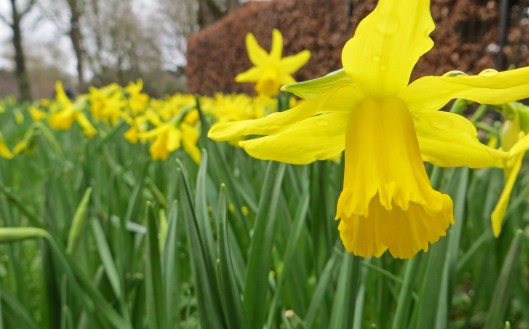
As the daffodil is one of the national symbols of Wales, I naturally expect to see a lot of daffodils here and, though it is still very early in the season, so far I have not been disappointed. As I couldn’t help but wonder why the daffodil is an official Welsh emblem, I’ve been investigating.

160204 daffodil (1)

It seems the origins are somewhat obscure. It could be because the daffodil was the favourite flower of the only Welshman to have been Prime Minister of Britain, David Lloyd George, who apparently wore the flower each year on St David’s Day and supposedly ordered its use in the celebration of Edward’s investiture as Prince of Wales in 1911 (though that event was in July and photographs show no daffodils present).

160204 daffodil (2)

one of the more unusual Welsh varieties of daffodil

It could perhaps be because the flower usually blooms in early spring which usually coincides with the celebration of the Welsh patron Saint David’s Day on 1 March (not late January, like this year). Or it could be a confusion of words: that other national Welsh emblem, the leek, is cenhinen in the Welsh language, whereas the Welsh for daffodil is cenhinen pedr. Did the two terms just get confused over time? The truth may never be known.

160204 daffodil (3)

Like Loading...

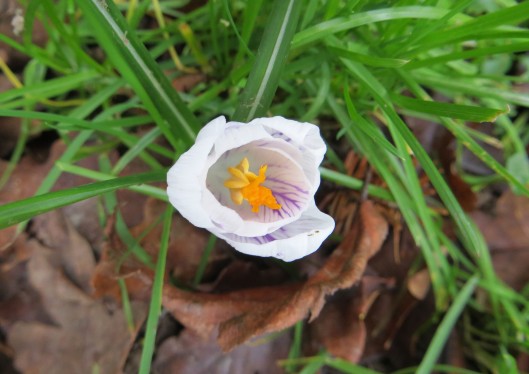
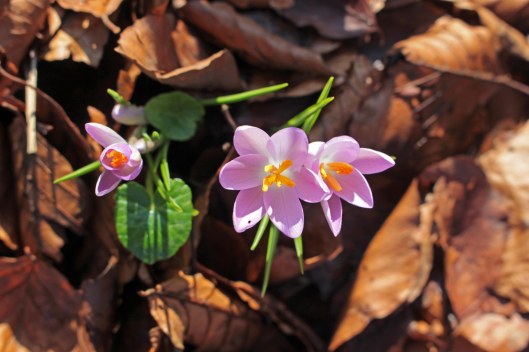
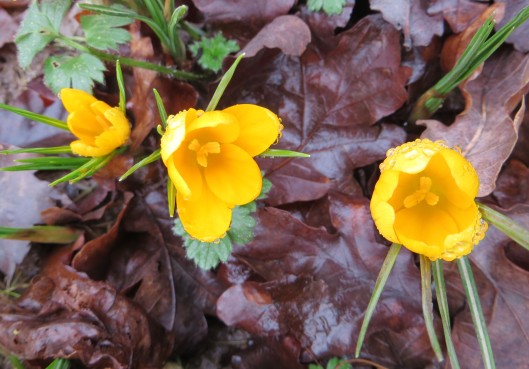
‘The Crocus’s Soliloquy’

26 Tuesday Jan 2016

Posted by sconzani in flowers, nature, nature photography, spring, wildflowers

≈ 4 Comments

Tags

crocus, spring flowers, wildflowers

160126 crocus (1)

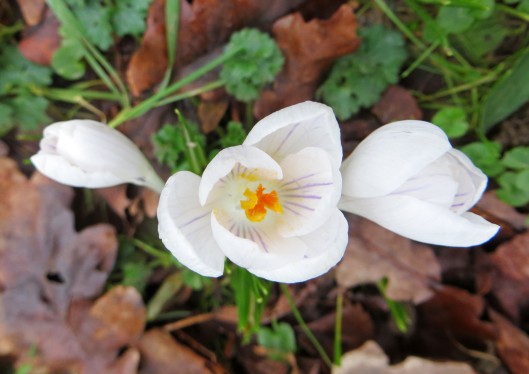
‘Soon as the frost will get out of my bed,
From this cold dungeon to free me,
I will peer up with my little bright head;
And all will be joyful to see me.

Then from my heart will young petals diverge,
As rays of the sun from their focus;
I from the darkness of earth shall emerge
A happy and beautiful Crocus!’

From the poem ‘The Crocus’s Soliloquy’ by Miss H. F. Gould in The Poetry of Flowers and Flower of Poetry, ed. Frances Sargent Locke Osgood, J. B. Lippincott & Co, Philadelphia, 1863.

160126 crocus (2)160126 crocus (3)160126 crocus (4)160126 crocus (5)160126 crocus (6)160126 crocus (7)160126 crocus (8)

Like Loading...
Newer posts →

About me

sconzani

sconzani

I'm a writer and photographer; researcher and blogger; birder and nature lover; countryside rambler and city strider; volunteer and biodiversity recorder.

View Full Profile →

Follow earthstar on WordPress.com

Enter your email address to follow this blog and receive notifications of new posts by email.

Recent blog posts

  • The day of the Wheatears March 28, 2026
  • Cetti’s warblers March 27, 2026
  • Goose barnacles March 26, 2026
  • Black-tailed godwits fighting March 25, 2026
  • Singing from every tree top March 24, 2026

From the archives

COPYRIGHT

Unless otherwise acknowledged, the text and photographs on this blog are my own and are subject to international copyright. Nothing may be downloaded or copied without my permission.

Fellow Earth Stars!

  • Unknown's avatar
  • Unknown's avatar
  • Unknown's avatar
  • Unknown's avatar
  • Unknown's avatar
  • Unknown's avatar
  • Unknown's avatar
  • Unknown's avatar
  • Unknown's avatar
  • Unknown's avatar
  • Unknown's avatar
  • Unknown's avatar
  • Unknown's avatar
  • Unknown's avatar
  • Unknown's avatar
  • Unknown's avatar
  • Unknown's avatar
  • Unknown's avatar
  • Unknown's avatar
  • Unknown's avatar
  • Unknown's avatar
  • Unknown's avatar
  • Unknown's avatar
  • Unknown's avatar
  • Unknown's avatar
  • Unknown's avatar
  • Unknown's avatar
  • Unknown's avatar
  • Unknown's avatar
  • Unknown's avatar
  • Unknown's avatar
  • Unknown's avatar
  • Unknown's avatar
  • Unknown's avatar
  • Unknown's avatar
  • Unknown's avatar
  • Unknown's avatar
  • Unknown's avatar
  • Unknown's avatar
  • Unknown's avatar
  • Unknown's avatar
  • Unknown's avatar
  • Unknown's avatar
  • Unknown's avatar
  • Unknown's avatar
  • Unknown's avatar
  • Unknown's avatar
  • Unknown's avatar
  • Unknown's avatar
  • Unknown's avatar

Blog at WordPress.com.

Privacy & Cookies: This site uses cookies. By continuing to use this website, you agree to their use.
To find out more, including how to control cookies, see here: Cookie Policy
  • Subscribe Subscribed
    • earthstar
    • Join 642 other subscribers
    • Already have a WordPress.com account? Log in now.
    • earthstar
    • Subscribe Subscribed
    • Sign up
    • Log in
    • Report this content
    • View site in Reader
    • Manage subscriptions
    • Collapse this bar
 

Loading Comments...
 

You must be logged in to post a comment.

    %d