• ABOUT
  • BIRDING 2018
  • Birding 2019
  • BLOG POSTS
  • Butterflies 2018
  • Resources

earthstar

~ a celebration of nature

earthstar

Category Archives: fungi

Q is for Quercus

22 Monday Dec 2025

Posted by sconzani in fungi, insects, trees

≈ 2 Comments

Tags

bugs on Oak trees, fungi on Oak tree, insects on Oak trees, Oak, Quercus species

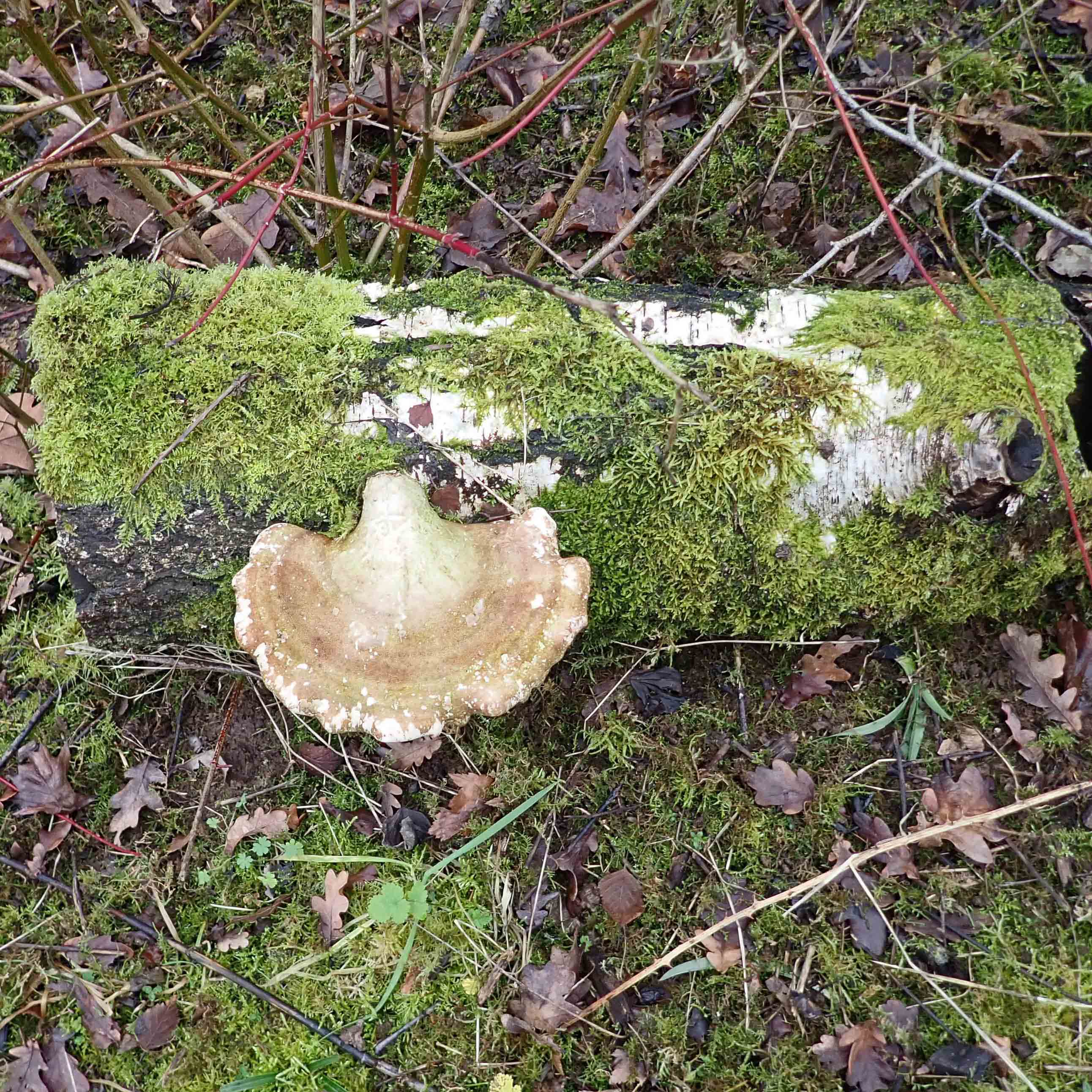
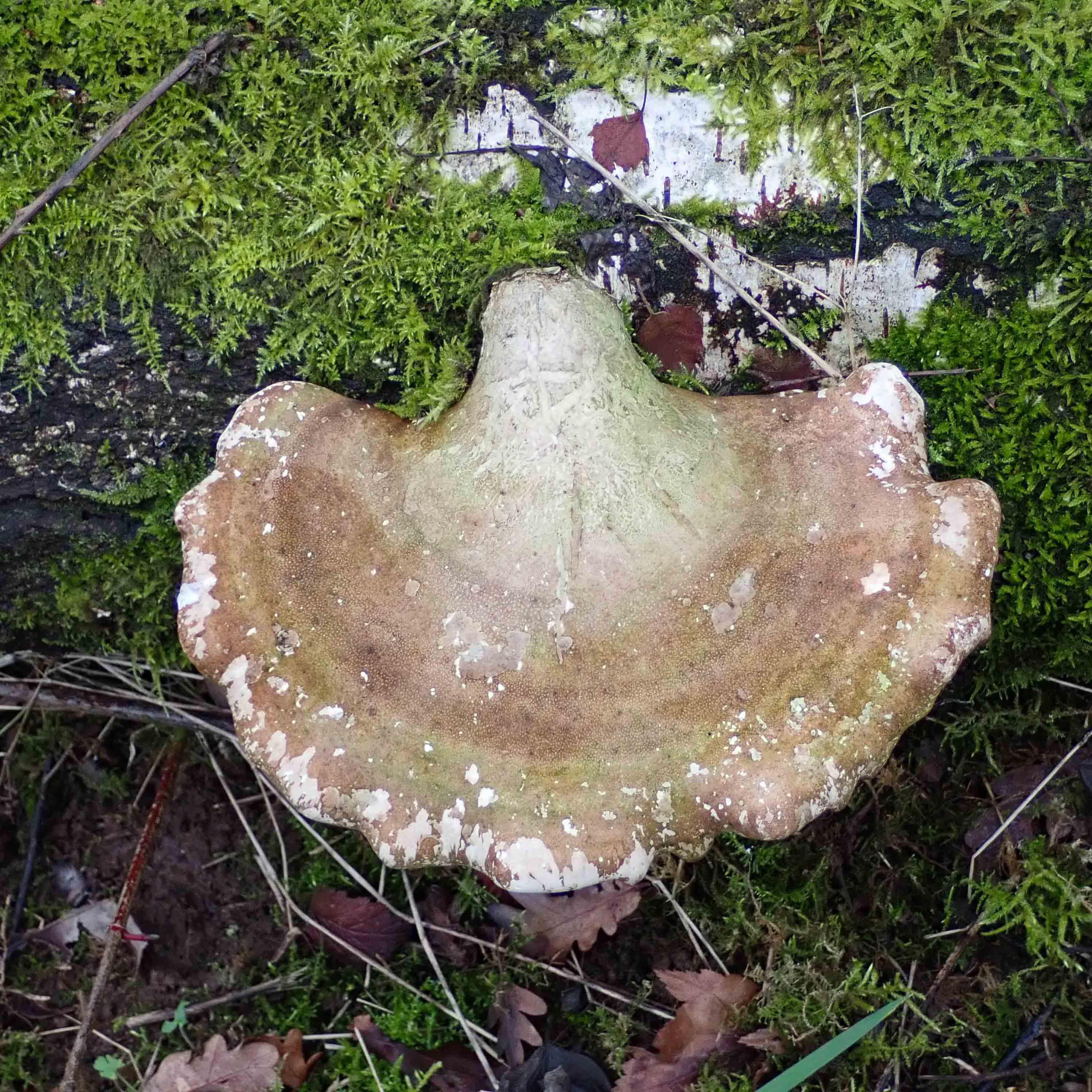
As I know I’ve stated on this blog many times before, the various species of Oak tree (Quercus species) play host to a huge number of organisms of many types, forms, and colours. These are some I’ve been lucky to see this year: two species of fungus, the Oak mazegill (21 November) and Black bulgur (Fungi: Black bulgar, 24 October); several species of bug that have all featured in this update already (B is for bugs and beetles) but are worth another mention as they spend all or most of their lives on Oak trees: Cyllecoris histrionius, adult and nymph (12 May), Rhabdomiris striatellus (10 June), and Bug: Megacoelum infusum (12 September).

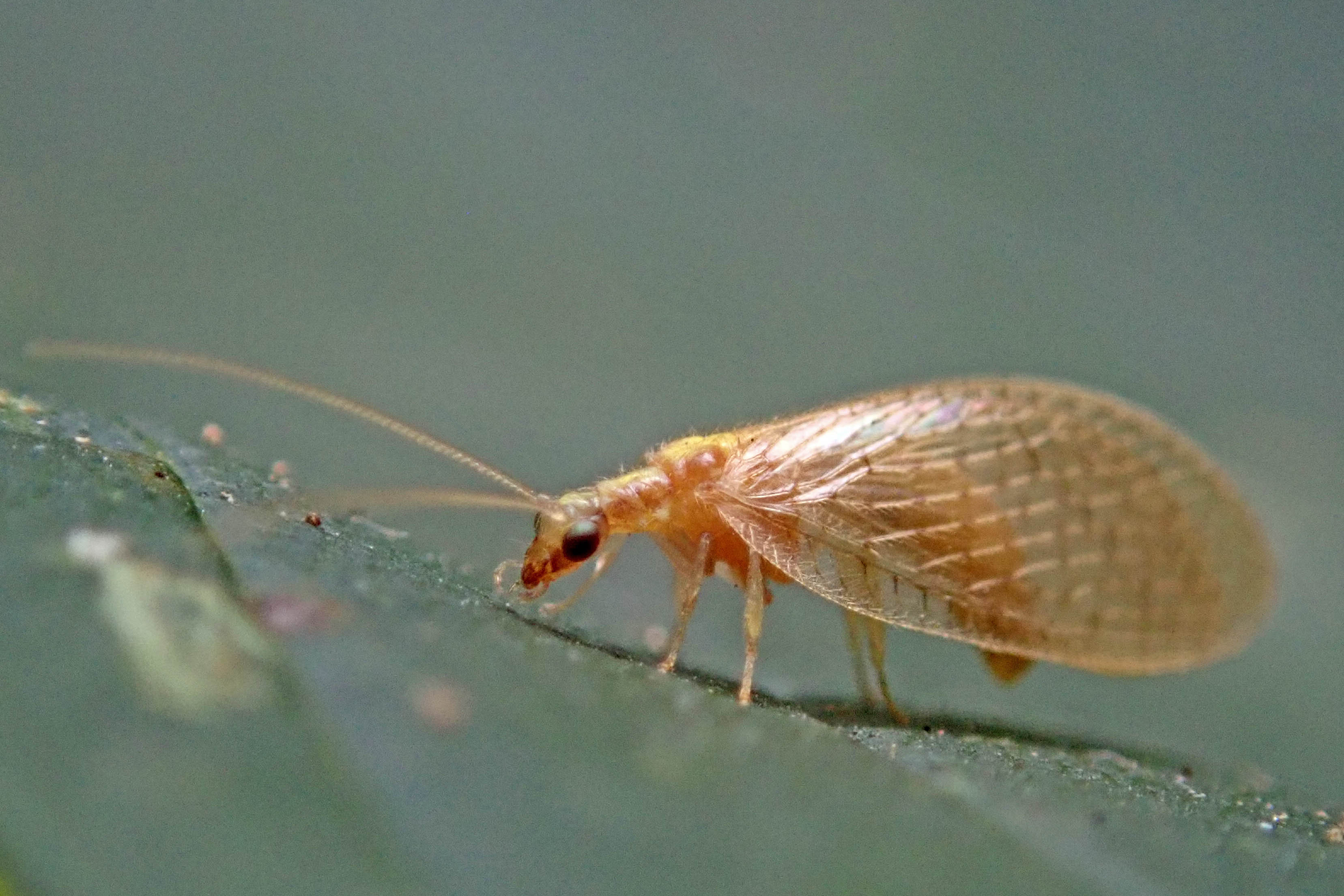
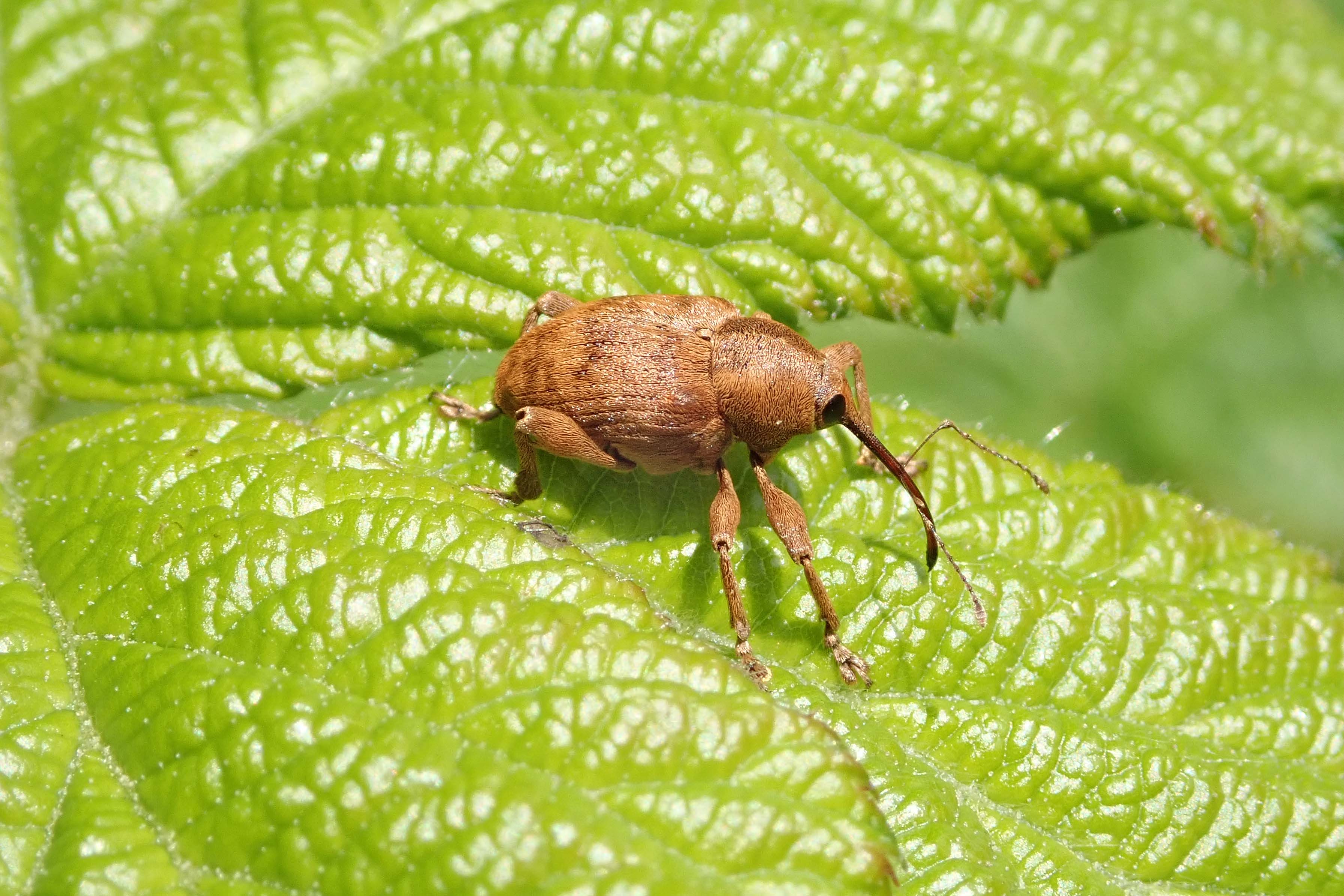
I also managed to find several Common quaker (Orthosia cerasi) caterpillars on a single Oak (included in Cool cats, 2, 5 June); the gorgeous lacewing shown above that has since been verified as Hemerobius micans and is found especially on mature oaks (Two lacewings, 4 September); the folded-over Oak leaf lobes created by a gall midge (Galls: Macrodiplosis pustularis, 2 June); and the stunning little Acorn weevil, shown below, that lives in Oak trees and lays its eggs inside acorns (Weevil: Curculio glandium, 1 August).

Like Loading...

N is for nest

19 Friday Dec 2025

Posted by sconzani in birds, fungi

≈ Leave a comment

Tags

Bird's nest fungi, birds' nests, nest, nuthatch, rookery, Rooks' nests

Nest: noun; a structure built by birds or insects to leave their eggs in to develop, and by some other animals to give birth or live in (Cambridge Dictionary).

In January, I spotted a Nuthatch excavating a hole in a tree in which to make its nest (Nest excavation, 25 January), though on subsequent visits the hole seemed to have been abandoned.

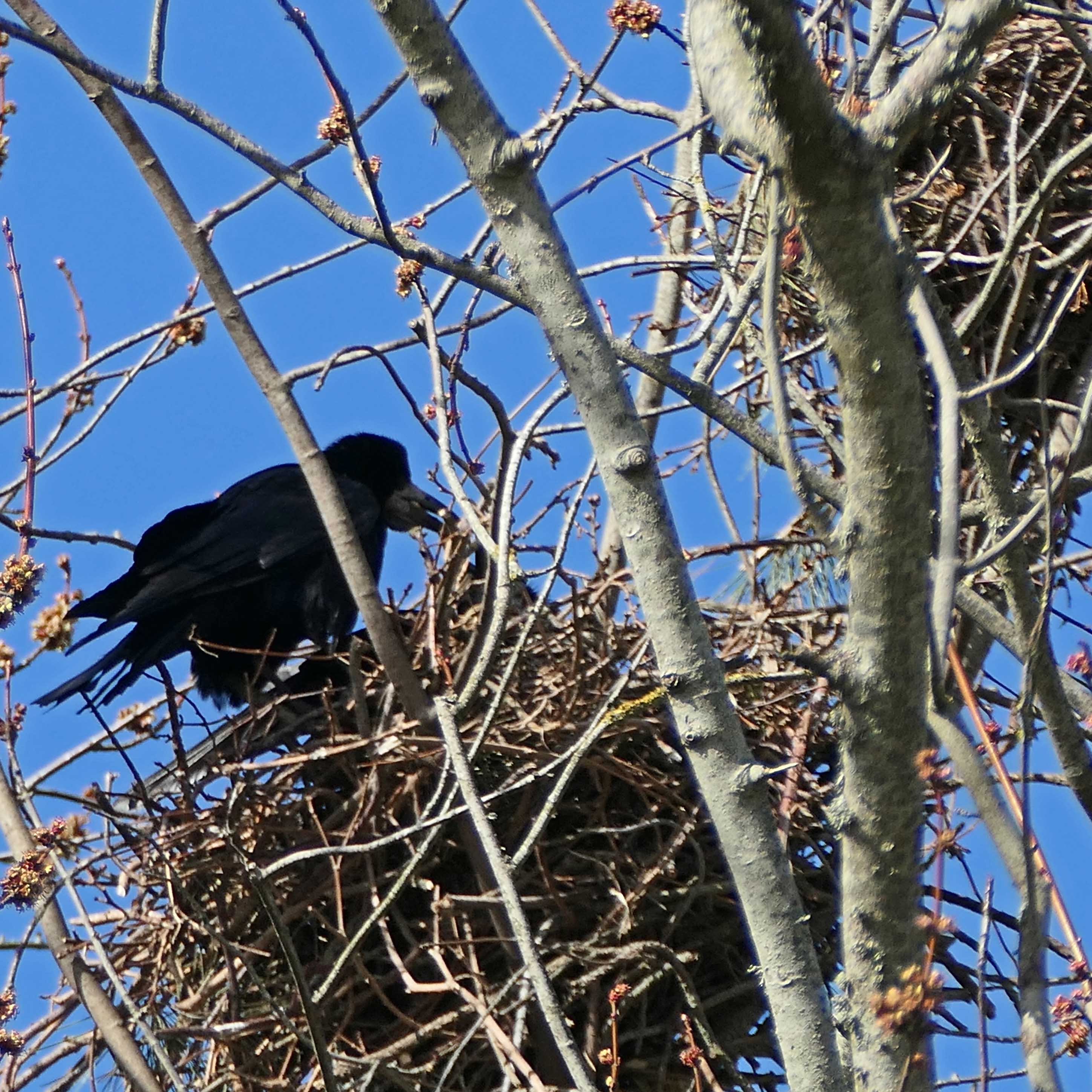
At the end of March, during one of my local meanders, the screeching of several Rooks drew my eyes upwards to discover several nests, with adults feeding well grown but ever hungry chicks (A new rookery, 2 April).

When is a nest not a nest? Check out the Cyathus striatus fungi I wrote about at the end of January (Fluted bird’s nest fungi, 31 January).

Like Loading...

E is for earthstar, the eponymous fungus

10 Wednesday Dec 2025

Posted by sconzani in fungi

≈ Leave a comment

Tags

British fungi, collared earthstar, earthstar, Earthstar fungi, fungi, Geastrum triplex

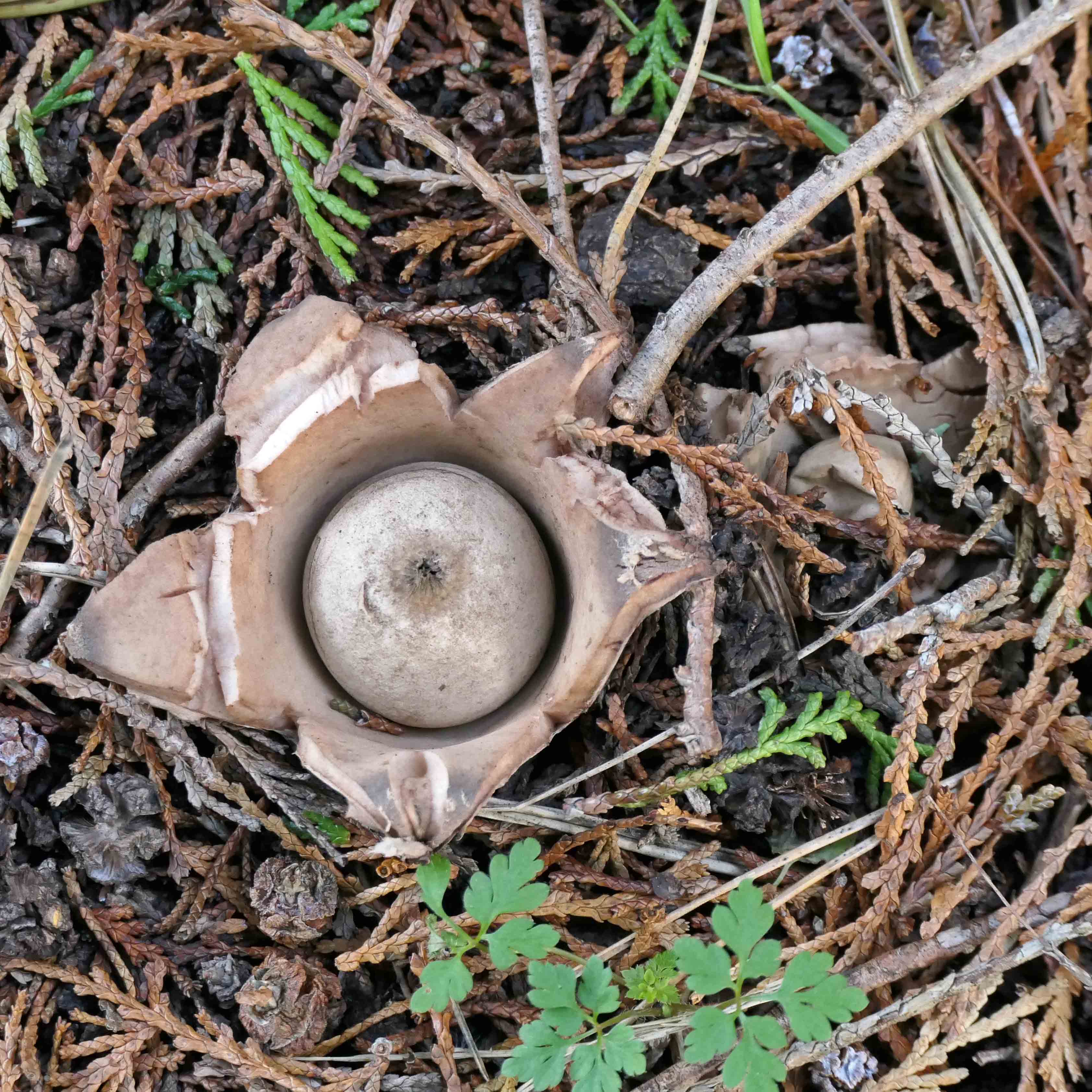
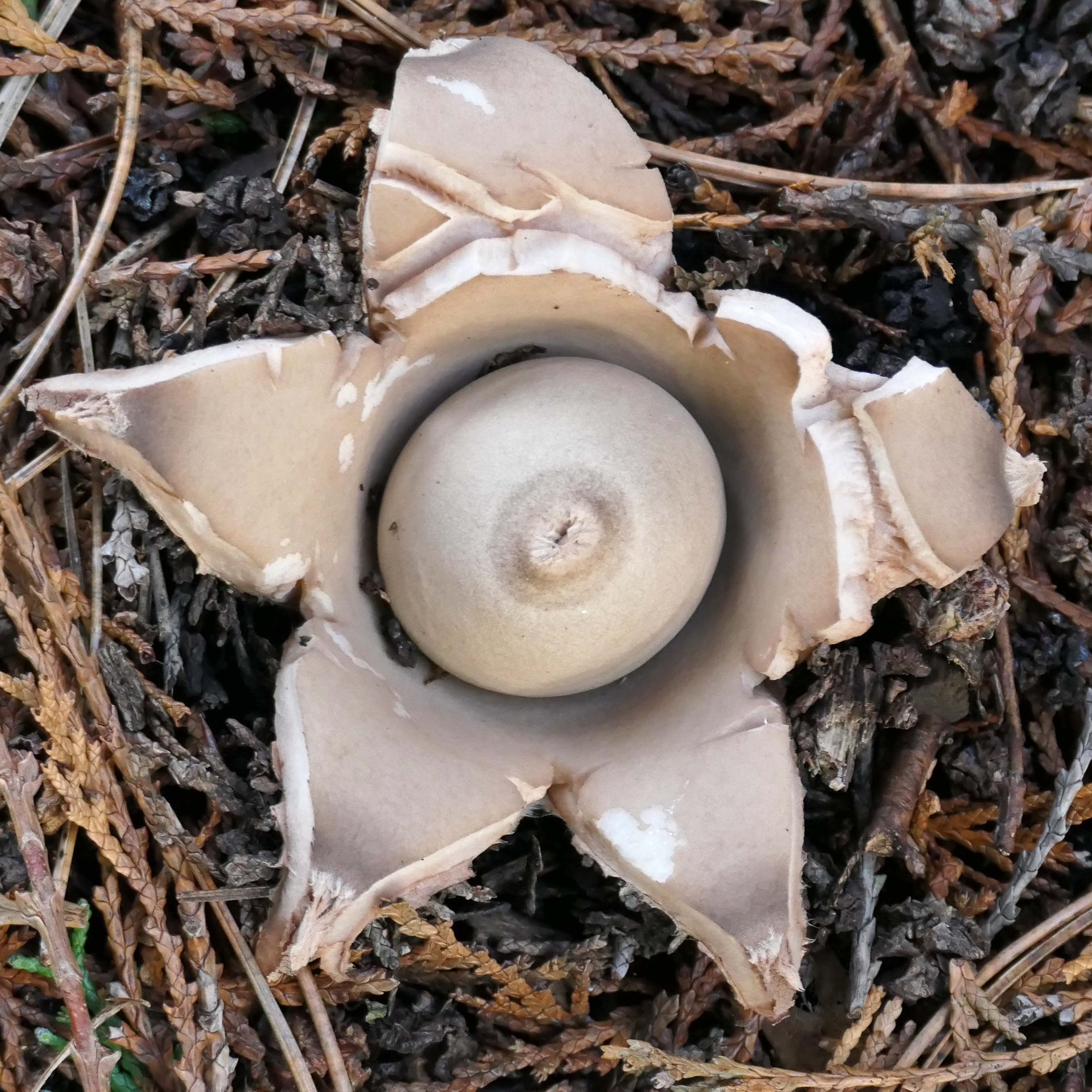
I just checked – I haven’t posted any photos of earthstars since December 2023. As they were the inspiration for the name of this blog (though the name is also meant to encompass all the flora and fauna that are the environmental stars on this amazing Earth), I really think they should feature here at least once a year.

These particular Collared earthstars (Geastrum triplex) were photographed in both the old and new sections of Cardiff’s Cathays Cemetery last week.

Like Loading...

D is for Date waxcaps

09 Tuesday Dec 2025

Posted by sconzani in fungi

≈ Leave a comment

Tags

British fungi, British waxcaps, Date waxcap, fungus, Hygrocybe spadicea, waxcap

Finding Date waxcaps fruiting on a local road verge on 15 October was, without a doubt, the highlight of 2025 as far as fungi finds go. What a treat they were, and, as with yesterday’s Choughs, completely unexpected, particularly in such an urban setting.

Like Loading...

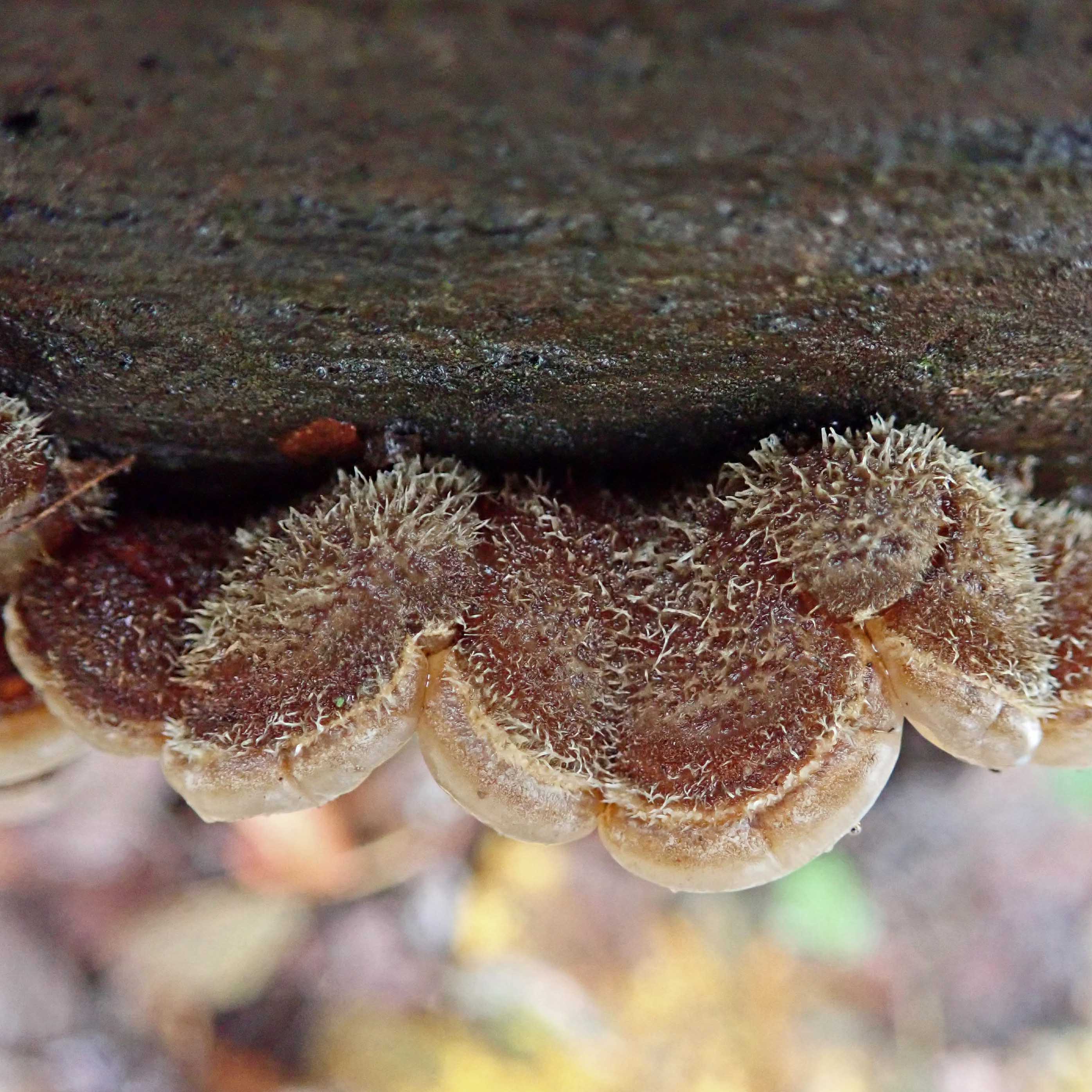
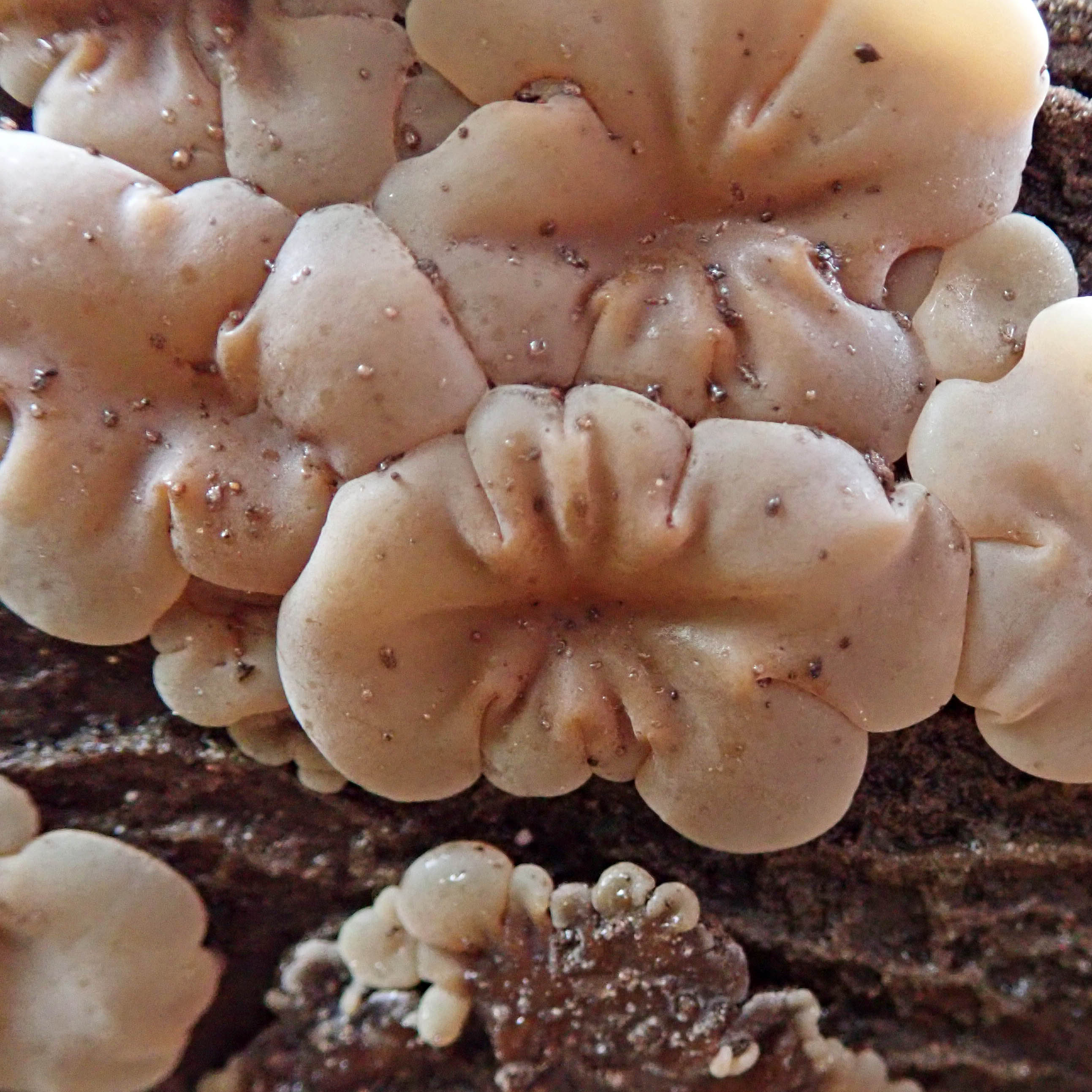
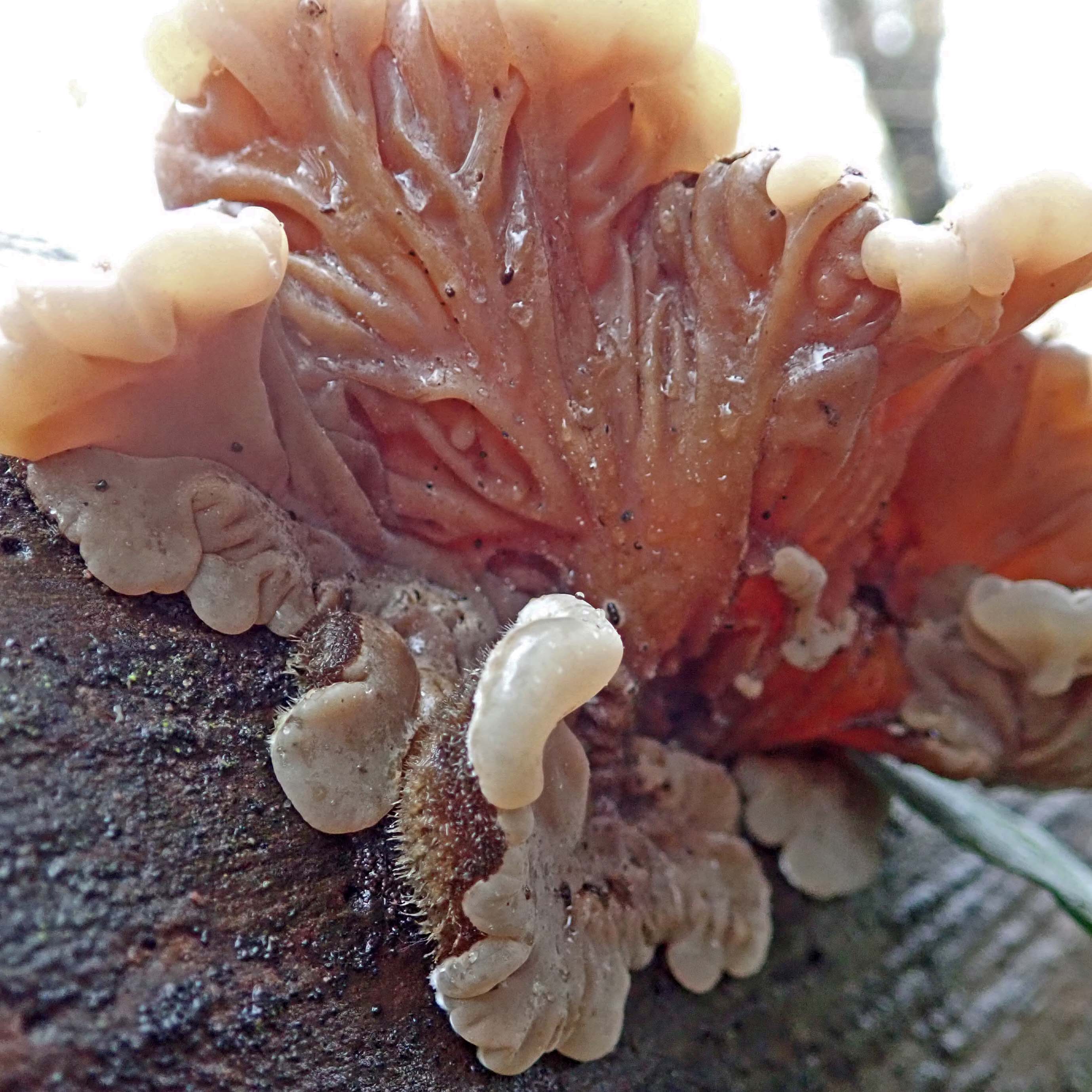
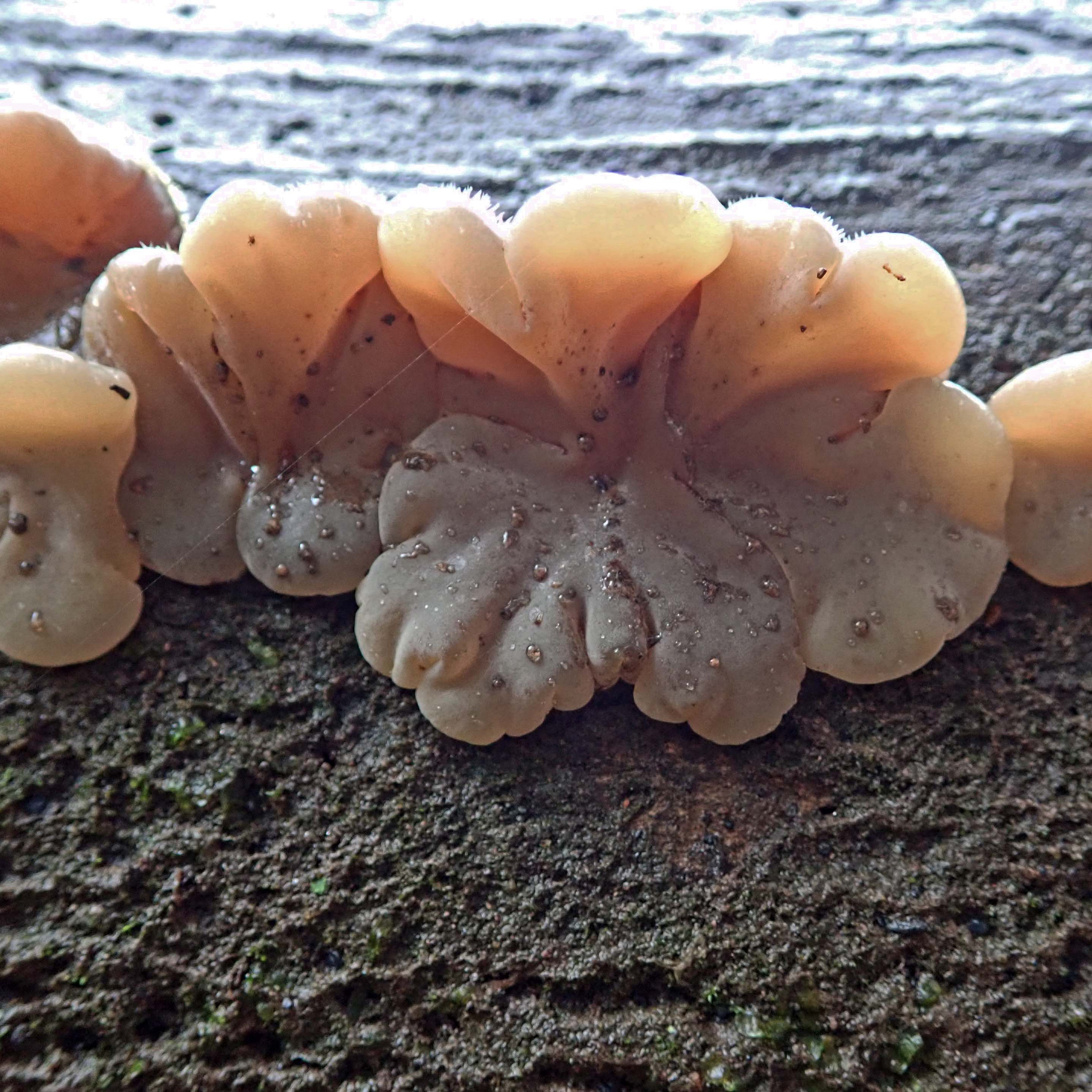
Tripe, but you wouldn’t want to eat it

05 Friday Dec 2025

Posted by sconzani in fungi

≈ 2 Comments

Tags

Auricularia mesenterica, British fungi, fungus, Tripe, Tripe fungus

In fact, you probably wouldn’t want to eat the other form of tripe, the stomach lining of cows, pigs and sheep, either, unless you were desperate, and definitely not if, like me, you’re a vegetarian.

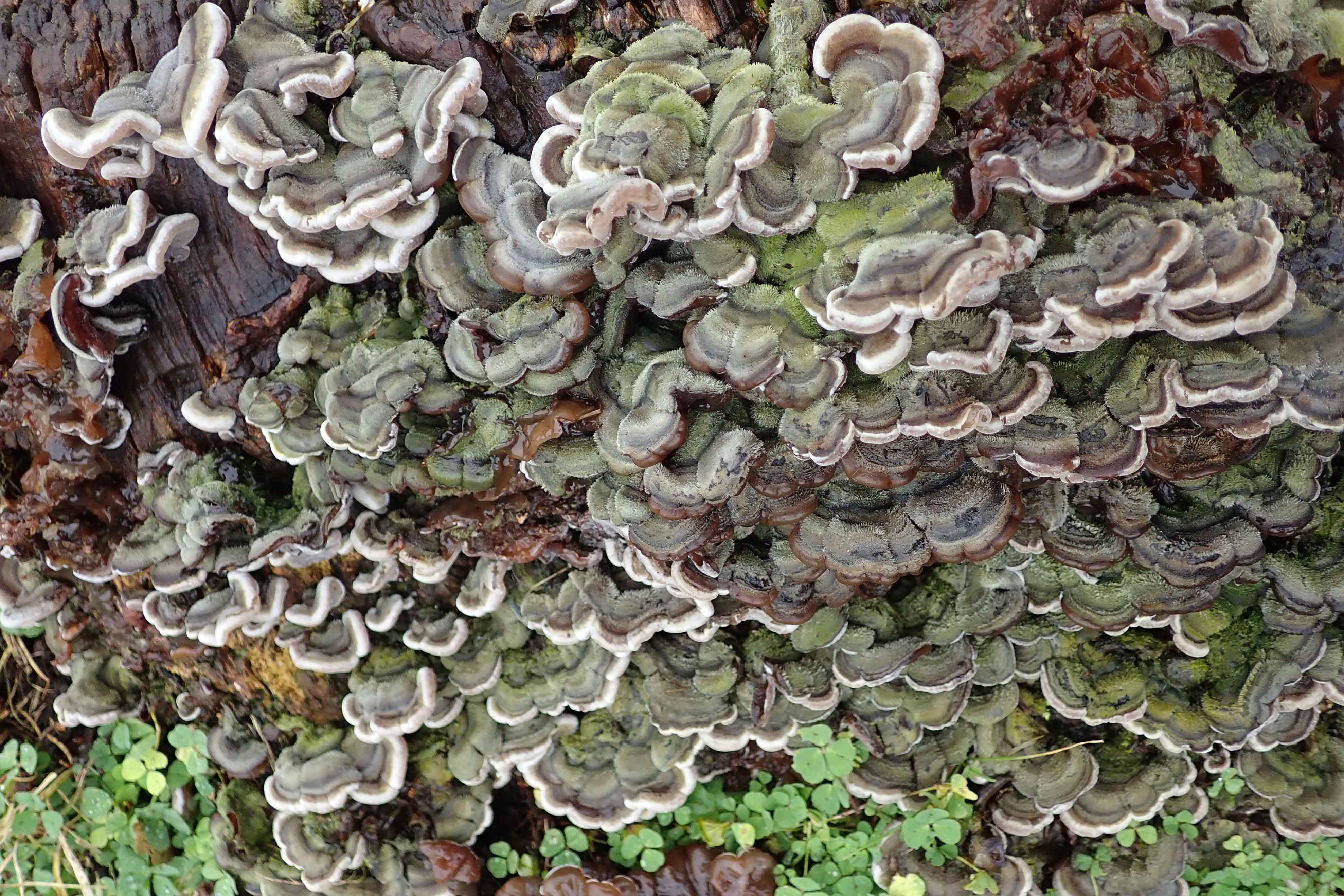
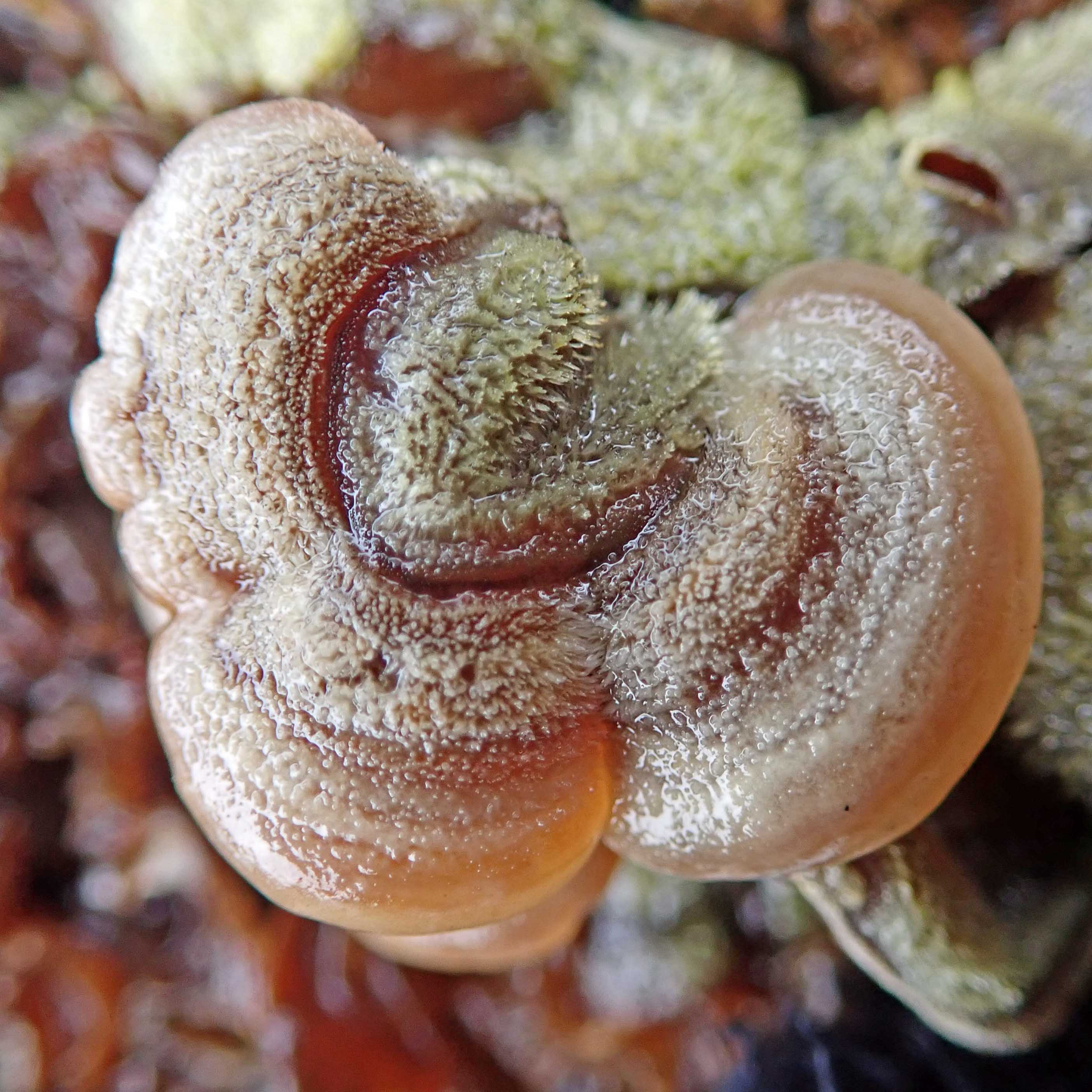
I’ve only ever seen Tripe fungus (Auricularia mesenterica) in a couple of different places before today, so it was good to add a new site to my list.

There’s one particular location I know, where the fungus can be seen year round on the stump of a long dead Elm tree, in summer looking just like a grouping of dried, shrivelled brackets but, in winter, when they’ve rehydrated, plump and hairy like these ones I found today.

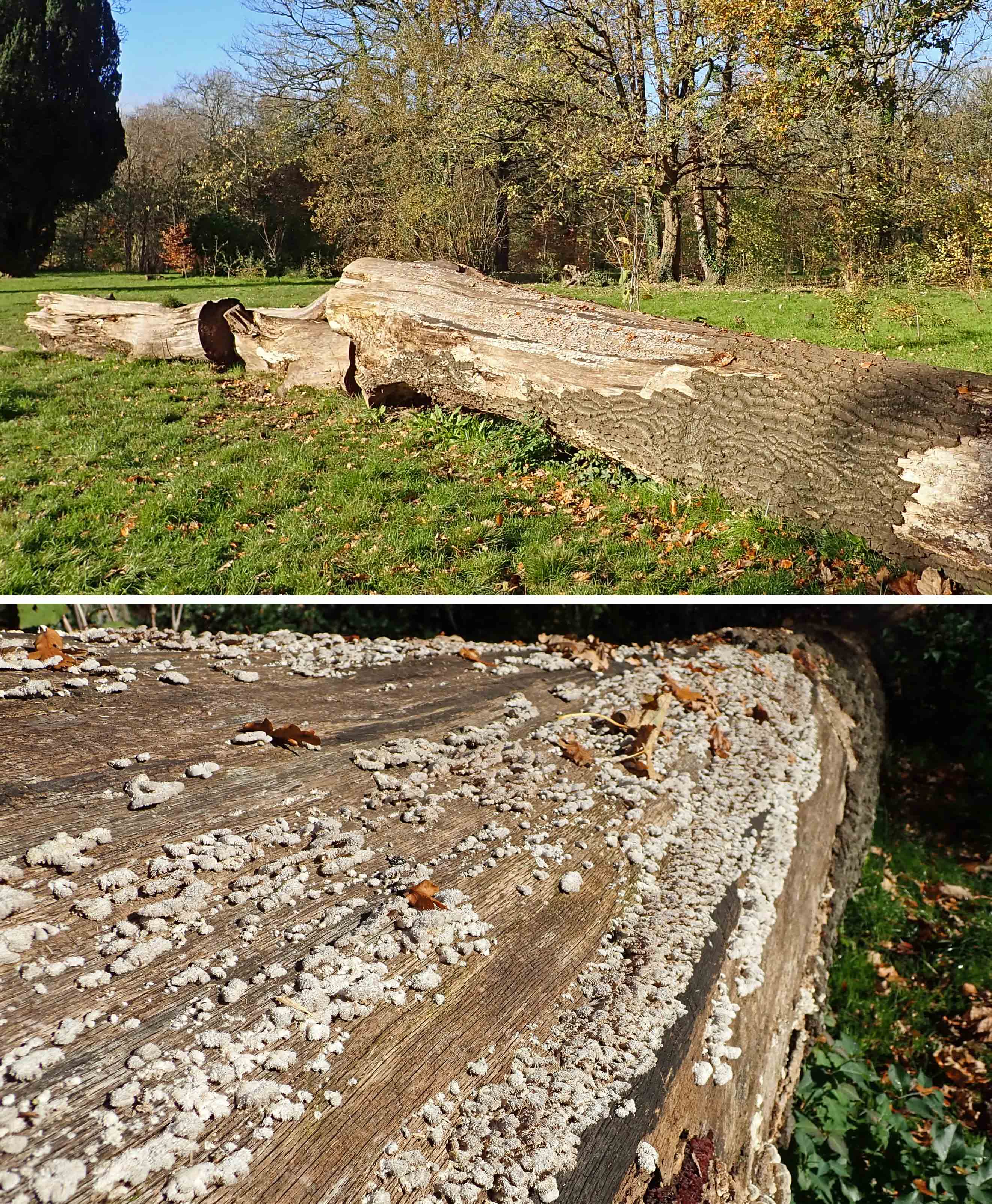
The various species of Elm are where Tripe grows most commonly and, though today’s new location was a large fallen tree trunk that could have been any species of tree, I had previously found Wrinkled peach growing on it, another Elm-specific fungus.

Like Loading...

Oak mazegill

21 Friday Nov 2025

Posted by sconzani in autumn, fungi

≈ 2 Comments

Tags

bracket fungi, British fungi, Daedalea quercina, fungi on Oak, mazegill fungi, mazegills, Oak mazegill

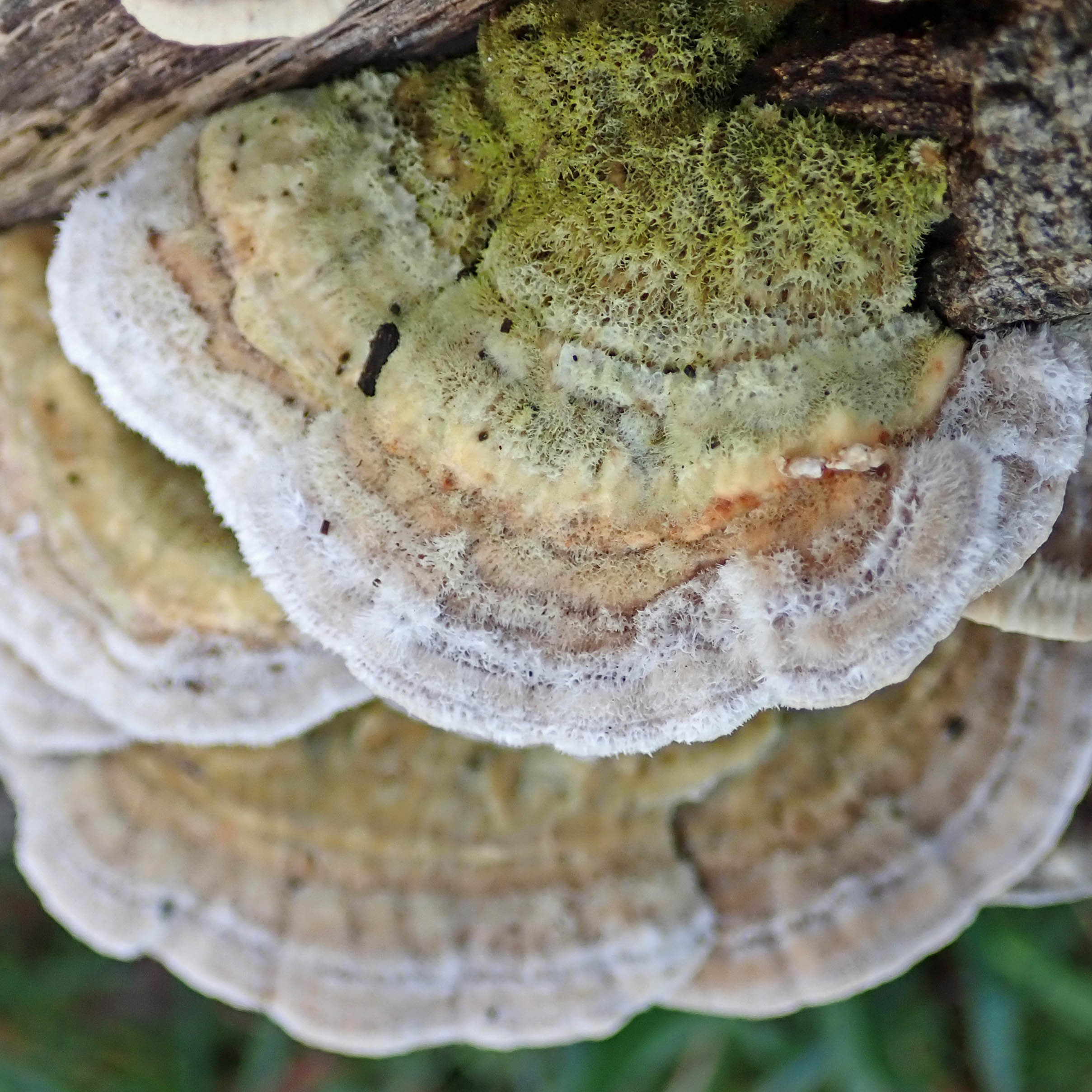
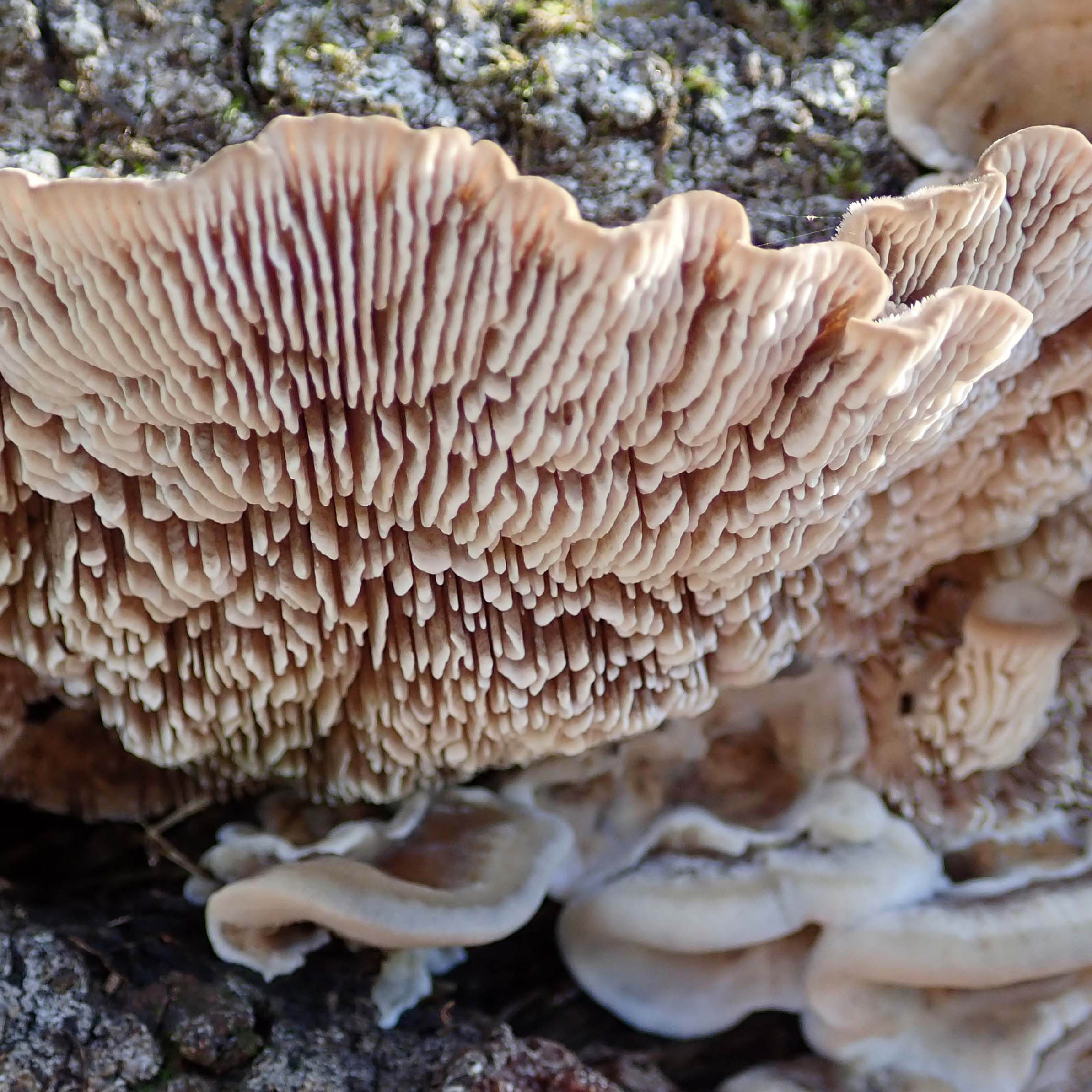
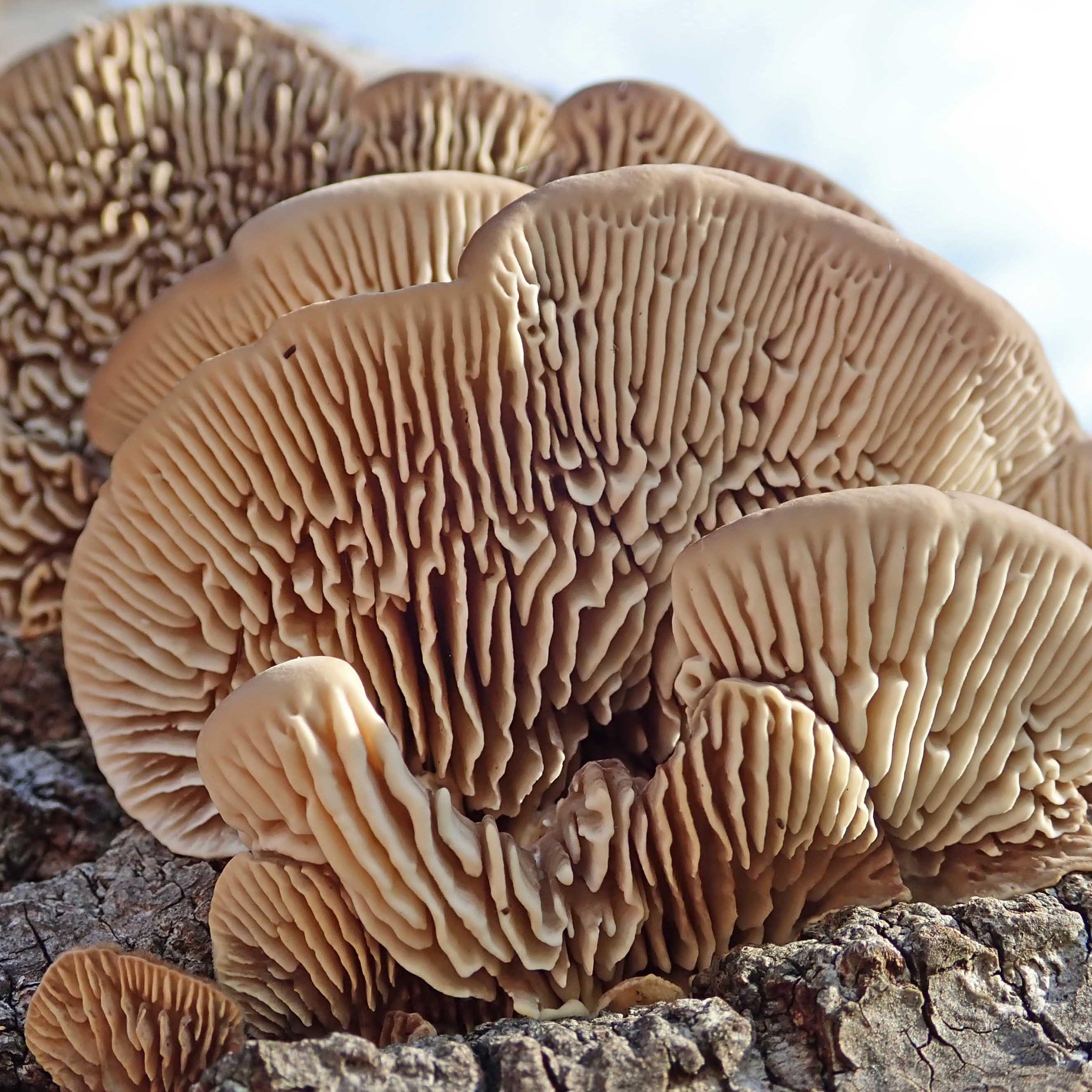
I’m sure I must have seen these stunning bracket fungi, Oak mazegill (Daedalea quercina), before this week but I have no images of them on my laptop. Growing on a huge old fallen Oak – they always grow on Oak (i.e. Quercus species), hence the quercina epithet, consuming dead fallen and still standing trees and large branches, these brackets grow annually, eventually reaching a thickness of 10cm and a diameter of 20cm. And, as you can see from my photos, the fertile surface (i.e. the underside of the bracket, from which the spores are released) has maze-like channels, which explains the mazegill name.
Pat O’Reilly, in his book Fascinated by Fungi, explains that its generic name (Daedalea) refers to Daedalus, the legendary figure who supposedly designed the maze on ancient Crete, in which Pasiphaë, wife of King Minos, hid her offspring the Minotaur, half man and half bull.
O’Reilly’s book also includes a couple of other fascinating facts about Oak mazegill:

This fungus was valued by beekeepers who used the smoke from smouldering fruitbodies to anaesthetise bees. Once the bees had been calmed by the dense smoke, the beekeeper could open a hive and work on it without triggering painful panic reactions by the occupants.

The deep, hard-wearing channels make these tough and durable brackets very handy as combs for grooming horses – one of their traditional uses.

Like Loading...

Bountiful Ground-ivy

15 Saturday Nov 2025

Posted by sconzani in fungi, insects, leaves, plants

≈ Leave a comment

Tags

case-bearing moth larva on Ground-ivy, Coleophora albitarsella, galls on Ground-ivy, Ground-ivy, Puccinia glechomatis, Rondaniola bursaria, rust on Ground-ivy

When the weather’s wet, which it often has been of late, I tend to focus more on looking for small things when out walking. This is partly because the larger creatures, like birds, tend to prefer taking shelter as much as we humans do but also because I don’t want to get my good camera wet and my small camera, the one I use for close-up shots, is waterproof. Monday was one such day and, when I stooped to pat a random black cat that appeared out of nowhere, I noticed how marked and mottled were the leaves of the Ground-ivy the cat was sitting next to. So, I investigated.

And what a bountiful patch of Ground-ivy it was. Firstly, I couldn’t help but notice how many of the leaves were covered with the pustules of the rust fungus Puccinia glechomatis.

Then I discovered that many of the leaves also had small bumps on them, galls caused by the miniscule mite Rondaniola bursaria.

And, perhaps best of all, while investigating the rust and the galls, I also spotted a single tiny dark case sticking up from one leaf, the self-constructed home of a larva of the moth Coleophora albitarsella. And, with that, the rain starting coming down a little too heavily for comfort so both the cat and I headed for home.

Like Loading...

Orange peel fungus

14 Friday Nov 2025

Posted by sconzani in autumn, fungi

≈ 2 Comments

Tags

Aleuria aurantia, autumn colour, British fungi, cup fungi, Orange peel, Orange peel fungus

Orange peel (Aleuria aurantia) is a fungus I’ve not seen very often, despite it being officially classified as common. So, when, on a very grey, often drizzly day, I spotted a scattering of something bright orange on the ground in front of me, I initially thought some litter bug had thrown away the remains of their fruit. But no, this was the real thing, and there was more of it than I’d ever seen before.

My guide book says this fungus grows alongside paths and disturbed forest tracks, which is exactly where I found it, alongside a meandering path at the edge of the woodland in one of Cardiff’s parks.

Though it doesn’t look much like it in these photos, Orange peel is a cup fungus. The exterior of the cup is a paler shade of orange-beige and covered with fine down, whereas the interior is, as you can see, a vibrant orange.

The Orange peel I found had become wavy and twisted with age, and had been munched around the edges, probably by snails and slugs, but it was still a stunning sight.

Like Loading...

Coral in the grass

07 Friday Nov 2025

Posted by sconzani in autumn, fungi

≈ 4 Comments

Tags

British fungi, CHEG fungi groups, CHEGD fungi groups, Clavulinopsis corniculata, coral fungi, grassland fungi, Meadow coral

The clubs and corals, properly known as the Clavariacae, come in many shapes and colours; some are small, simple and singular, resembling worms standing upright in the grass, while others form in multi-branching clumps that really do resemble the corals you can find growing under the sea.

Today’s offerings slot somewhere in between the two, sometimes growing as individual stems but mostly in loose clumps of multi-branched stems that divide, like antlers, near the stem tops. Standing between 4 and 8cm tall, these lovely little yellow fungi are Meadow coral (Clavulinopsis corniculata).

Clavarioid fungi are usually found growing in unimproved grasslands and are one of the 4 (or 5) groups used to assess the conservation value of grasslands; the CHEG (or CHEGD) system assigns a value to the number of species of each of the fungal groups found at particular location (see this page on Wikipedia for a more detailed, though still simple explanation).

I found these examples of Meadow coral growing on a road verge that, presumably, was once grassland before houses and roads, a supermarket, a petrol station and a restaurant, and, of course, the ubiquitous car parks were built in the area.

When I spotted them, I was actually looking for the Hairy earthtongue fungi (Trichoglossum hirsutum, another of the CHEG/CHEGD fungi) I’ve found previously at this location. My disappointment at not finding any of those turned quickly to delight when I spotted the Meadow coral, which I don’t often find in my local area.

Like Loading...

Ghostly fungi

31 Friday Oct 2025

Posted by sconzani in autumn, fungi

≈ 2 Comments

Tags

British fungi, Helvella crispa, saddle fungi, White saddle

‘Tis All Hallows’ Eve and all round the globe
the spirits are rising to roam and to probe,
to spook and to scare,
while you wonder ‘Who’s there?’

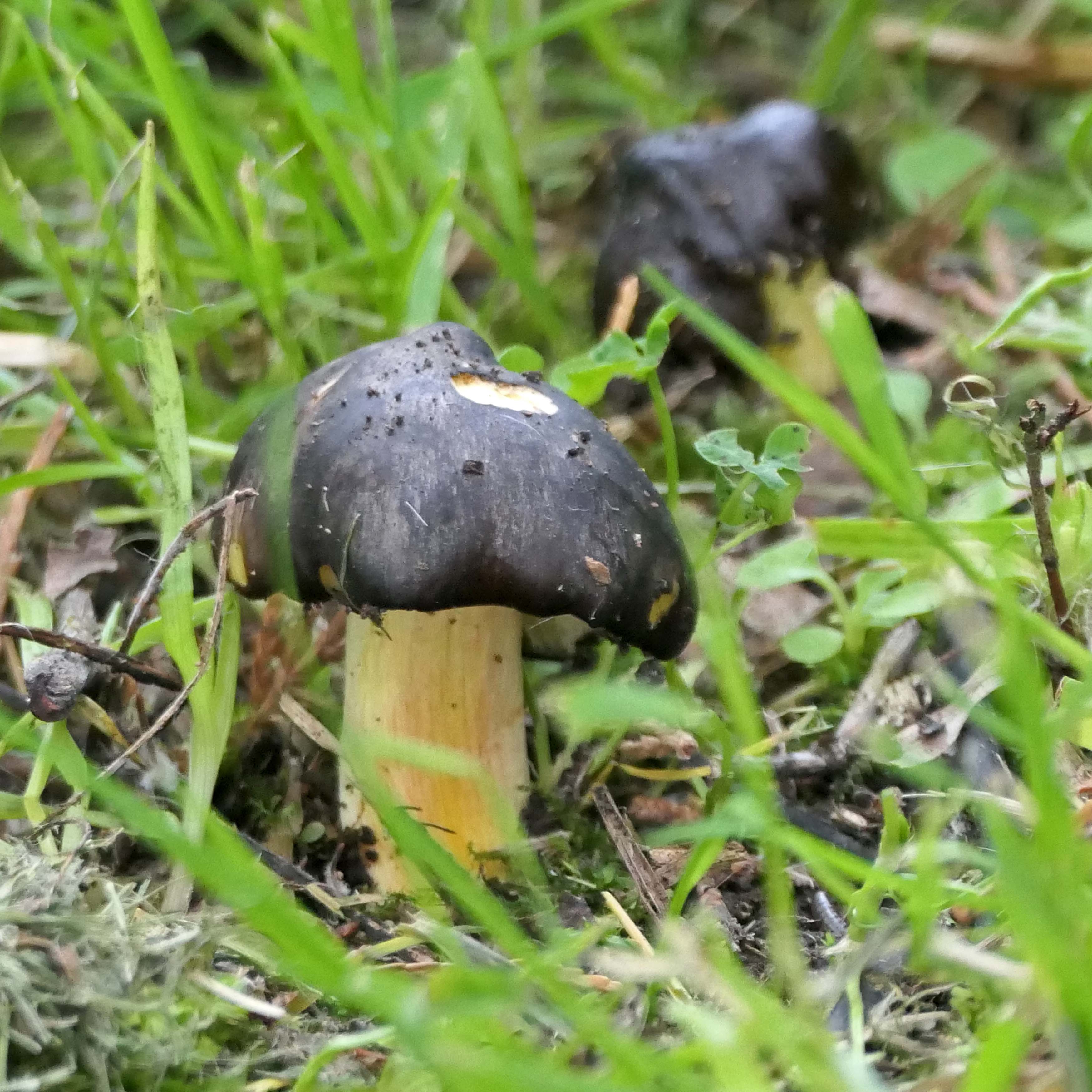
With their white colour and partial resemblance to the classic ‘white sheet over the head with holes for eyes’ ghost imitation, these fungi I found on Wednesday in a local park seem particularly appropriate for Halloween. These are White saddle (Helvella crispa), fungi that grow at this time of year in damp soil in deciduous woodland, often alongside paths, which is exactly where I found these.

Like Loading...
← Older posts

About me

sconzani

sconzani

I'm a writer and photographer; researcher and blogger; birder and nature lover; countryside rambler and city strider; volunteer and biodiversity recorder.

View Full Profile →

Follow earthstar on WordPress.com

Enter your email address to follow this blog and receive notifications of new posts by email.

Recent blog posts

  • Who’s watching who? January 8, 2026
  • Springtail: Orchesella cincta January 7, 2026
  • A good year for Redwings January 6, 2026
  • Bug: Anthocoris nemorum January 5, 2026
  • First birds January 4, 2026

From the archives

COPYRIGHT

Unless otherwise acknowledged, the text and photographs on this blog are my own and are subject to international copyright. Nothing may be downloaded or copied without my permission.

Fellow Earth Stars!

  • Unknown's avatar
  • Unknown's avatar
  • Unknown's avatar
  • Unknown's avatar
  • Unknown's avatar
  • Unknown's avatar
  • Unknown's avatar
  • Unknown's avatar
  • Unknown's avatar
  • Unknown's avatar
  • Unknown's avatar
  • Unknown's avatar
  • Unknown's avatar
  • Unknown's avatar
  • Unknown's avatar
  • Unknown's avatar
  • Unknown's avatar
  • Unknown's avatar
  • Unknown's avatar
  • Unknown's avatar
  • Unknown's avatar
  • Unknown's avatar
  • Unknown's avatar
  • Unknown's avatar
  • Unknown's avatar
  • Unknown's avatar
  • Unknown's avatar
  • Unknown's avatar
  • Unknown's avatar
  • Unknown's avatar
  • Unknown's avatar
  • Unknown's avatar
  • Unknown's avatar
  • Unknown's avatar
  • Unknown's avatar
  • Unknown's avatar
  • Unknown's avatar
  • Unknown's avatar
  • Unknown's avatar
  • Unknown's avatar
  • Unknown's avatar
  • Unknown's avatar
  • Unknown's avatar
  • Unknown's avatar
  • Unknown's avatar
  • Unknown's avatar
  • Unknown's avatar
  • Unknown's avatar
  • Unknown's avatar
  • Unknown's avatar

Blog at WordPress.com.

Privacy & Cookies: This site uses cookies. By continuing to use this website, you agree to their use.
To find out more, including how to control cookies, see here: Cookie Policy
  • Subscribe Subscribed
    • earthstar
    • Join 668 other subscribers
    • Already have a WordPress.com account? Log in now.
    • earthstar
    • Subscribe Subscribed
    • Sign up
    • Log in
    • Report this content
    • View site in Reader
    • Manage subscriptions
    • Collapse this bar
 

Loading Comments...
 

You must be logged in to post a comment.

    %d