• ABOUT
  • BIRDING 2018
  • Birding 2019
  • BLOG POSTS
  • Butterflies 2018
  • Resources

earthstar

~ a celebration of nature

earthstar

Category Archives: insects

Chalkhill blues

08 Friday Aug 2025

Posted by sconzani in insects

≈ 2 Comments

Tags

British butterflies, Butterflies in King Barrow Quarry, butterflies in Tout Quarry, butterfly, butterflying on Portland, Chalkhill blue, King Barrow Quarry, Portland butterflies, Portland's quarries, Tout Quarry

It was six years since I’d last seen a Chalkhill blue so it probably comes as no surprise that I took rather a lot of photographs of these gorgeous butterflies during my two visits to Tout and King Barrow Quarries on the Isle of Portland, in Dorset, last week.

I decided it would be easier to share the best of these in the form of a video slideshow, and I’ve also included a few photos of the quarries to provide context and give an indication of the habitat in which these butterflies thrive. Tout Quarry has the added benefit of being an open air sculpture park, so it’s very easy to spend many hours there, delighting in both the natural beauty of the butterflies and the creativity of the sculptors.

Like Loading...

Wall butterfly

06 Wednesday Aug 2025

Posted by sconzani in insects

≈ Leave a comment

Tags

British butterflies, butterfly, Dorset butterflies, King Barrow Quarry, Portland butterflies, Tout Quarry, Wall, Wall brown, Wall butterfly

Wall seems such a bland name for this stunning butterfly, though the name does describe where it’s often to be found, sitting on a stone wall – or just a large boulder, soaking in the sunshine.

The UK Butterflies website gives a list of all the different names our butterflies have been given over the years; the Wall started out as the ‘Golden Marbled Butterfly, with Black Eyes’ – a bit of a mouthful but wonderfully descriptive, has been the ‘Great Argus’ and the ‘Orange Argus’, and also ‘Wall Brown’, a name many people still use.

I found my first Walls in six years in the quarries on the Isle of Portland last week, at Broadcroft Quarry Butterfly Reserve (which was actually quite a disappointing location as it is very overgrown and so not the ideal habitat for most butterflies), at King Barrow and Tout Quarries (both excellent).

Though it was once found at sites throughout Britain, the Wall has suffered a severe decline in population in recent decades, and is now restricted mostly to coastal locations. In Life Cycles of British & Irish Butterflies, author Peter Eeles explains that this seems to be due to the changing climate. The warmer summer and autumn temperatures can encourage the butterfly to attempt to breed a third generation, which subsequently fails to mature before the weather turns colder.

Like Loading...

Sunshine in a butterfly

04 Monday Aug 2025

Posted by sconzani in insects

≈ Leave a comment

Tags

British butterflies, butterfly, Clouded yellow, Colias croceus, Dorset butterflies, migrating butterflies, RSPB Lodmoor

I’ve been away for another mini break, staying once again in Weymouth, on Dorset’s south coast, for four nights, spending my three and a half days surrounded by birds and butterflies (also crowds of summertime beach visitors, though, fortunately for me, most of them weren’t in Weymouth for the same kind of wildlife as I was). With cool winds and lengthy spells of drizzle, the weather wasn’t as good as during my visit in early June, but I saw lots of lovely creatures that I will share with you over the coming week.

First up today is the first of four new-for-2025 butterfly species I saw, this gorgeous Clouded yellow (Colias croceus), a butterfly I don’t see in south Wales every year as they’re migrants from Europe and their appearance on our shores depends a lot on weather and wind direction and how their population is faring. This sighting was particularly welcome, as I had spent Tuesday morning wandering around the RSPB’s Radipole reserve in almost constant drizzle, then headed for an afternoon wander around RSPB Lodmoor. This little drop of sunshine fluttered up right in front of me when I got to Lodmoor, a sign of the lovely afternoon to follow.

Like Loading...

Beetle: Four-banded longhorn

02 Saturday Aug 2025

Posted by sconzani in insects

≈ Leave a comment

Tags

British beetles, British insects, British longhorn beetles, Four-banded beetle, Leptura quadrifasciata, Longhorn beetle, yellow-and-black longhorn beetle

This is my second recent new longhorn beetle find, Leptura quadrifasciata, also known as the Four-banded longhorn – the reason for that name will be immediately obvious, I’m sure.

Interestingly, these beetles are associated with old woodland, though I found this one feeding on a Wild carrot flower (they feed on umbellifers) on the edge of Cardiff’s Grangemoor Park, a former landfill site. The nearest old woodland would probably be about a mile away in a direct line, quite a long flight for a beetle.

At first glance, Leptura quadrifasciata looks quite similar to the other yellow-and-black longhorn beetle, the Spotted longhorn Rutpela maculata, but the four bands on the former’s abdomen are quite regular and precise whereas the markings on the latter are more random and splotchy. My immediate impression of Leptura quadrifasciata was of a darker-looking beetle than Rutpela maculata, which always looks quite bright to my eye, and that’s actually what made me look closer; one of my ‘Oh, what are you?’ moments!

Like Loading...

Weevil: Curculio glandium

01 Friday Aug 2025

Posted by sconzani in insects

≈ Leave a comment

Tags

acorn weevil, British weevils, Curculio glandium, weevil, weevil larvae in acorns, weevil on Oak tree

How cute is this little weevil?

This is Curculio glandium, also known as the Acorn weevil because it lives in Oak trees and the female of the species uses her long snout, her rostrum, to drill a hole in to the middle of an acorn, in which she then lays her egg using her ovipositor. It seems a difficult place in which to live but the weevil larva (sometime there’s more than one larva in each acorn) feeds happily inside the acorn through the cold months of the winter. I’m always a little dubious about information from Wikipedia but the entry there (scientific papers are referenced) says the ‘larvae are freeze avoidant, preventing their internal body fluids from freezing during the winter’. Presumably that means they have their own version of anti-freeze. The larvae emerge in the Spring to pupate, and the life cycle begins all over again.

Like Loading...

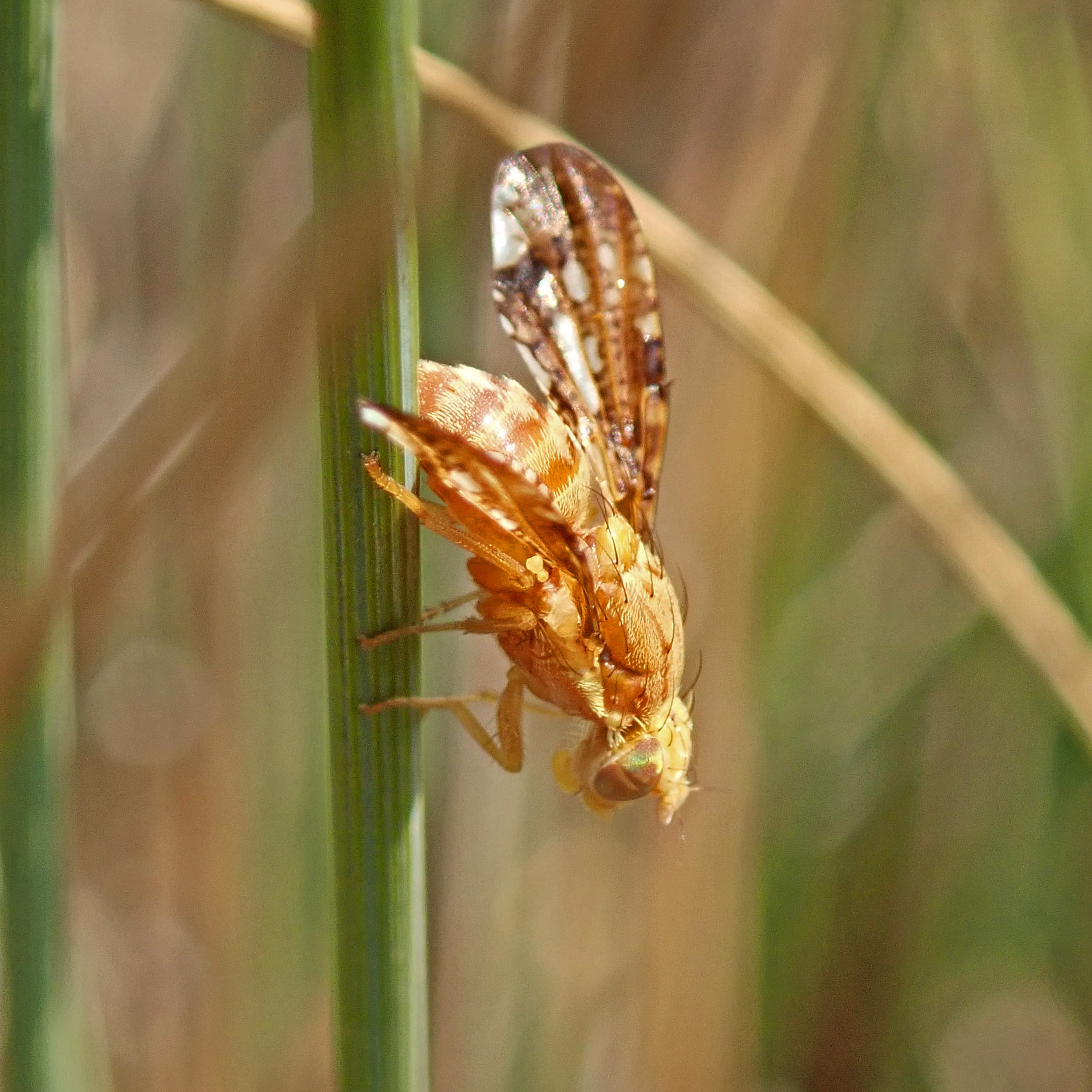
Fly: Xyphosia miliaria

31 Thursday Jul 2025

Posted by sconzani in insects

≈ Leave a comment

Tags

British flies, fruit flies, gall flies, gall-causing flies, thistle gall flies, Xyphosia miliaria

Isn’t this a lovely looking little creature? Meet the fruit fly, Xyphosia miliaria, which seems to have a couple of common names: Mottled thistle fly (presumably because of its patterned wings) and Orange thistle picturewing. The adult flies can be seen on or around thistles any time from May through to September. Like Urophora cardui (see More galls, part 2, October 2017) and Urophora stylata (Urophora stylata gall flies, only recently published, on 2 July), Xyphosia miliaria causes galls to form on its host plant, though this little fly pierces and lays its eggs within the plant’s flower head not its stems. Also, unlike the Urophora species, which specialise in a single thistle species, this little fruit fly isn’t fussy about which thistle species it uses as a larval host.

Like Loading...

Beetle: Grammoptera ruficornis

30 Wednesday Jul 2025

Posted by sconzani in insects

≈ Leave a comment

Tags

beetle, British beetles, British insects, British longhorn beetles, Grammoptera ruficornis, Longhorn beetle

This is one of two new longhorn beetles I’ve found recently, not because I was specifically searching for them, just pure happenstance. (The second species will appear here on Saturday.)

This first is quite small for a longhorn beetle, is a dull brown and has wing cases covered in silken hairs, which, as you can see, make it look quite shiny. Adult longhorn beetles feed on the pollen and nectar of flowers, in the case of Grammoptera ruficornis, the flowers of Hogweed and Hawthorn in particular. The Naturespot website entry for this beetle warns that there are three similar-looking longhorns but, fortunately, the other two species are rarely seen and there are particular features of their antennae that can be used to separate the species.

Like Loading...

Galls: Aceria fraxinivora

29 Tuesday Jul 2025

Posted by sconzani in insects, trees

≈ Leave a comment

Tags

Aceria fraxinivora, Ash key galls, British galls, Cauliflower galls, galls caused by mites, galls on Ash keys

Over the years I must have looked at hundreds of bunches of Ash keys (so named because the clusters of seeds on Ash trees look like bunches of old-fashioned metal keys hanging together) yet this was the first time I had noticed these odd woody growths on any of them. The growths, which start off green but later turn brown, are known by the common name of Cauliflower galls – I think you can see why. The galls are caused by the mite Aceria fraxinivora, a mite so small you can’t even see it with the naked eye.

Despite their diminutive stature, by piercing the Ash’s cells to feed, the mite causes the surrounding plant cells to expand and multiply, thus forming the galls you can see in these photos. According to the Plant Parasites of Europe website, the galls sometimes occur on the stems and leaves of the Ash tree (the website has photos of these) but they are most often found on the flower heads, presumably because those cells are easier to access for the hungry mites.

Like Loading...

Leafmines: Phyllonocnistis unipunctella

28 Monday Jul 2025

Posted by sconzani in insects, nature, trees

≈ Leave a comment

Tags

British leafmines, leaf-mining moth larvae, leaf-mining moths, leafmines on Poplar trees, Phyllonocnistis unipunctella

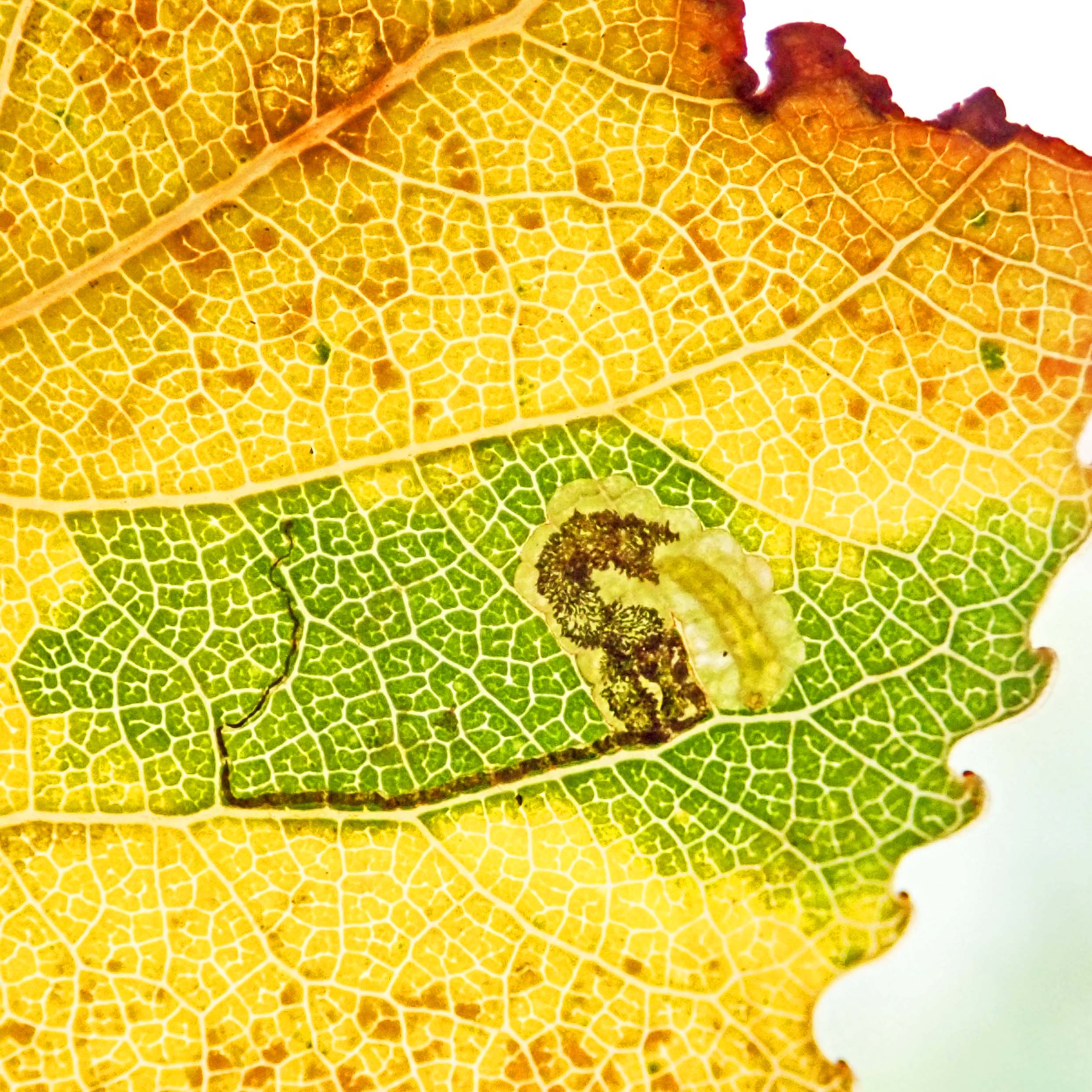
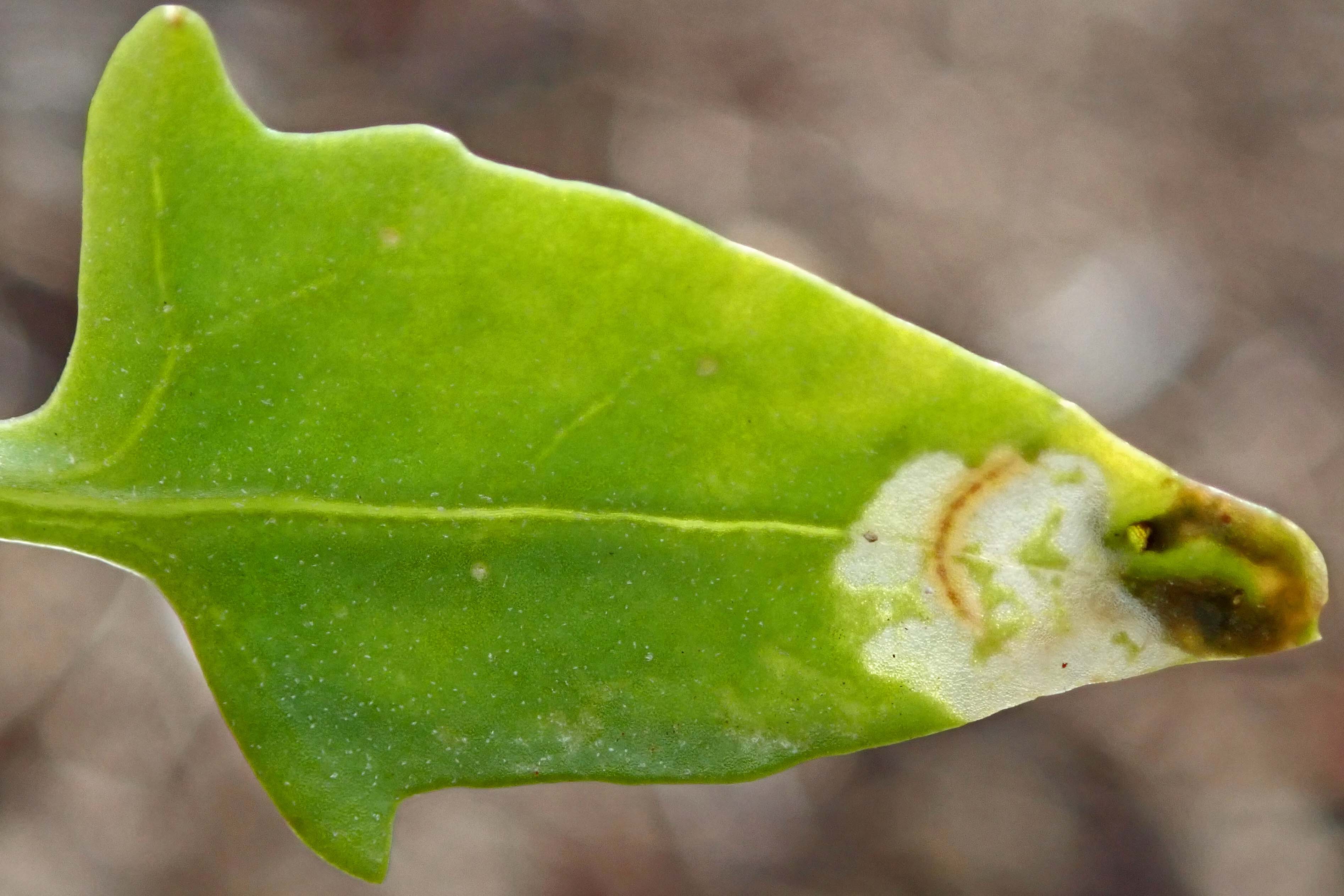
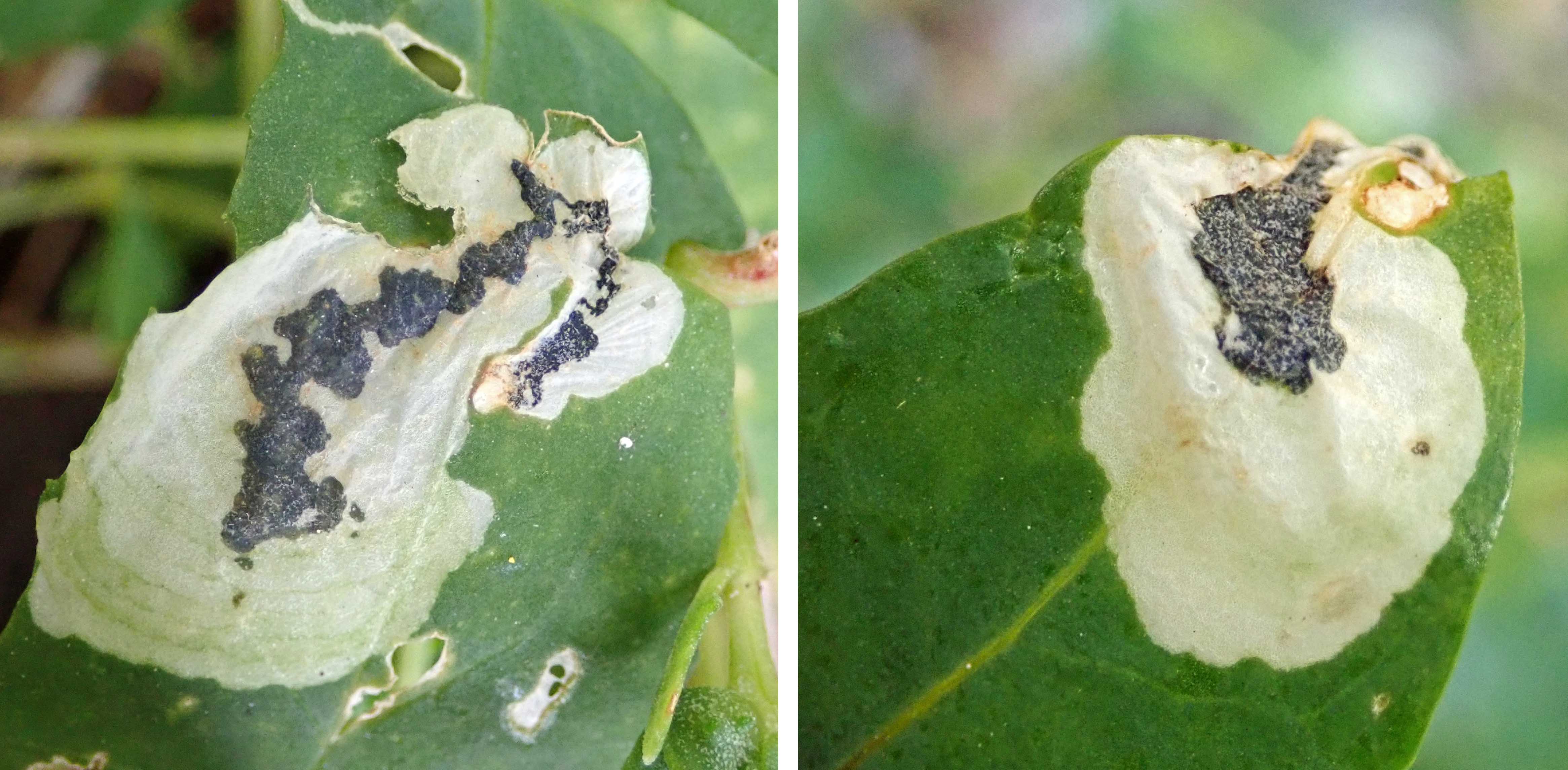
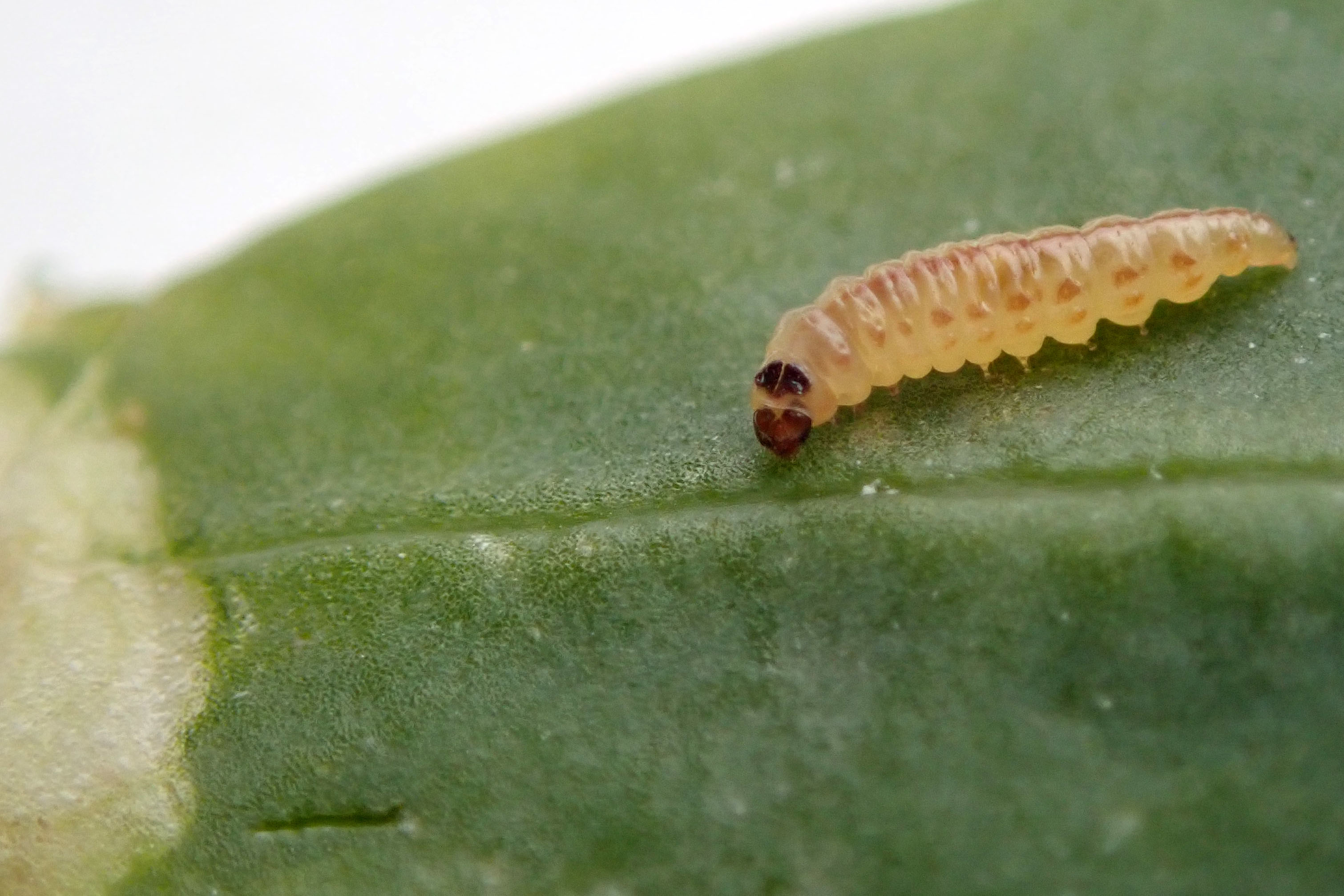
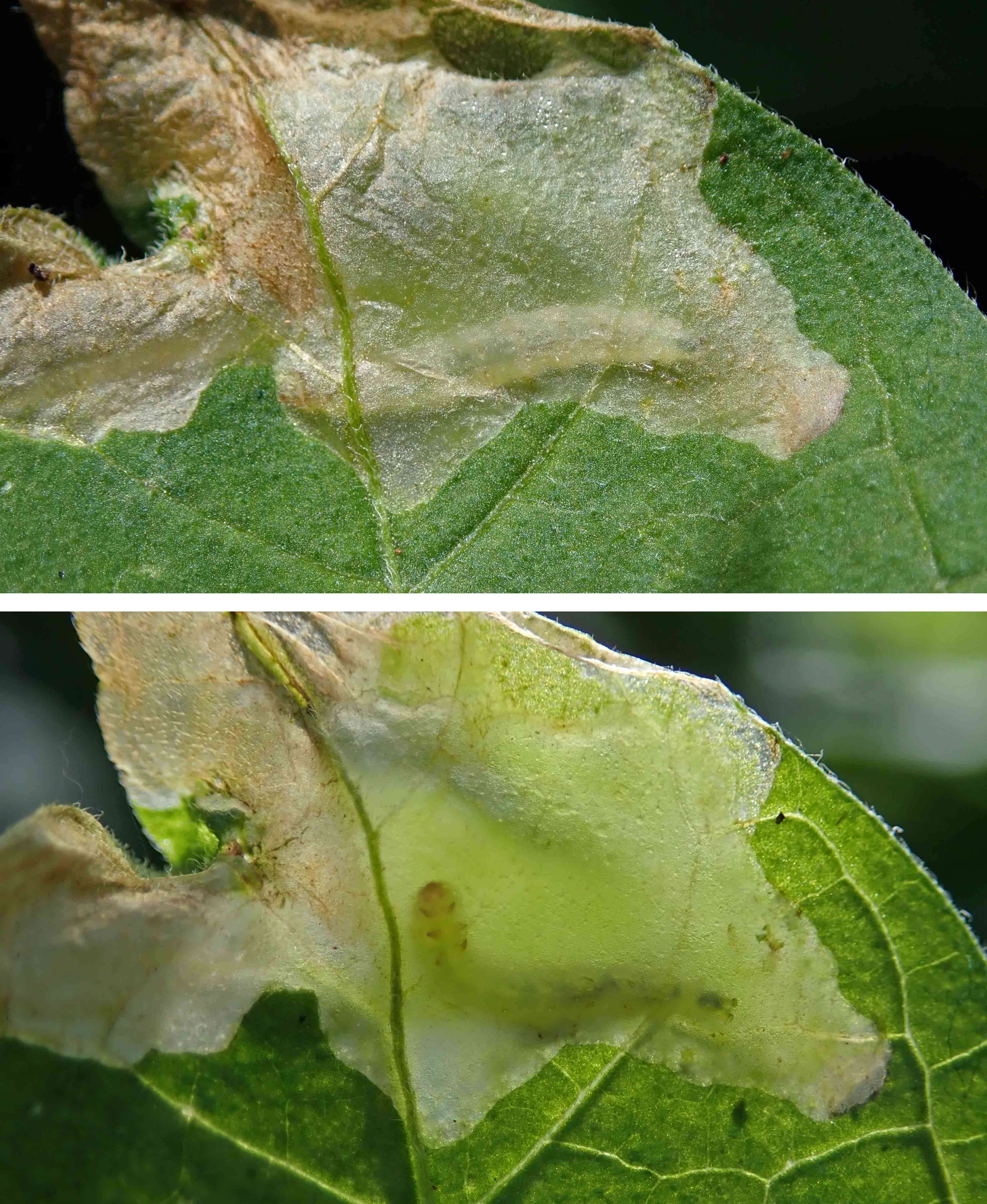
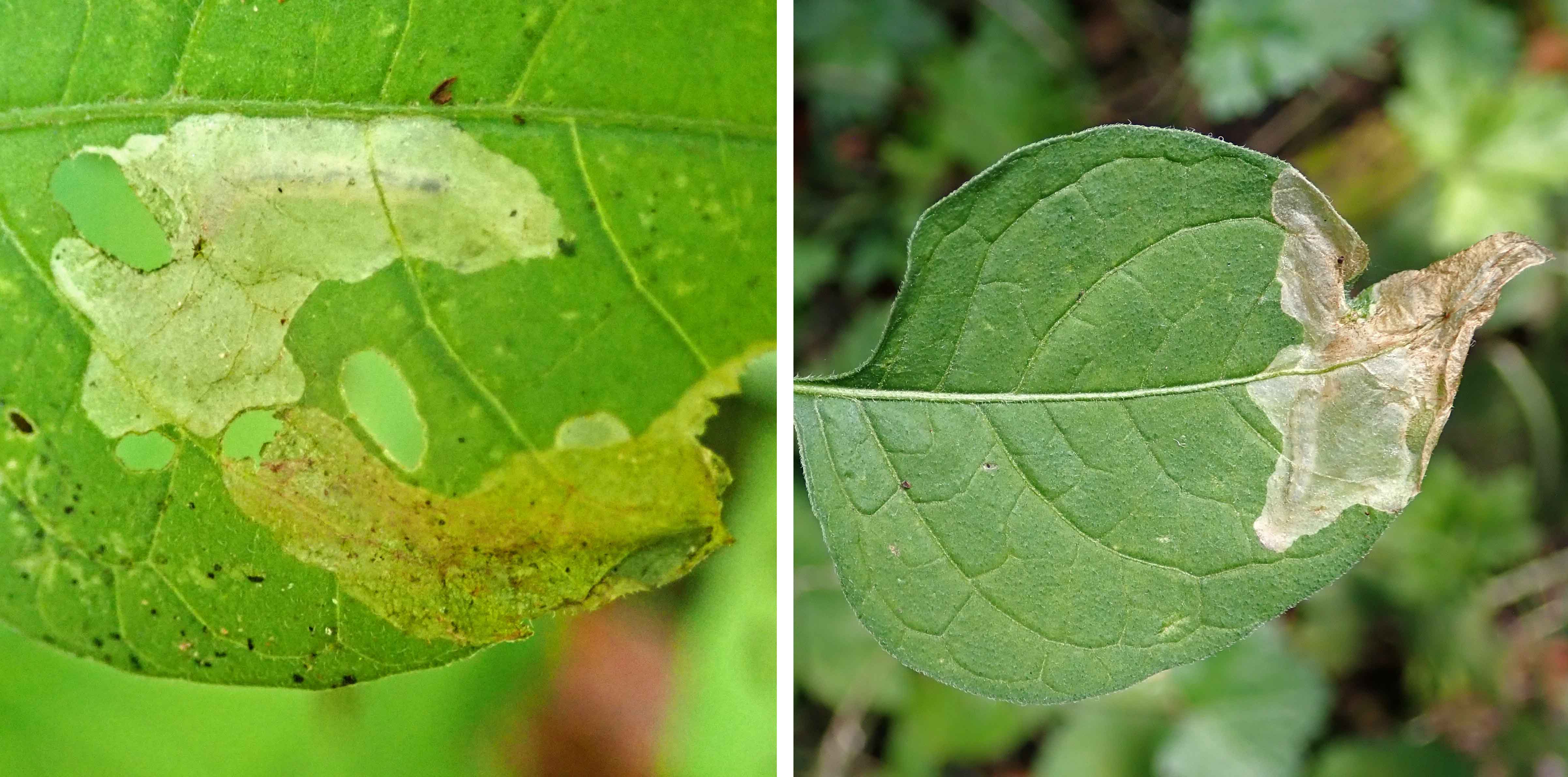
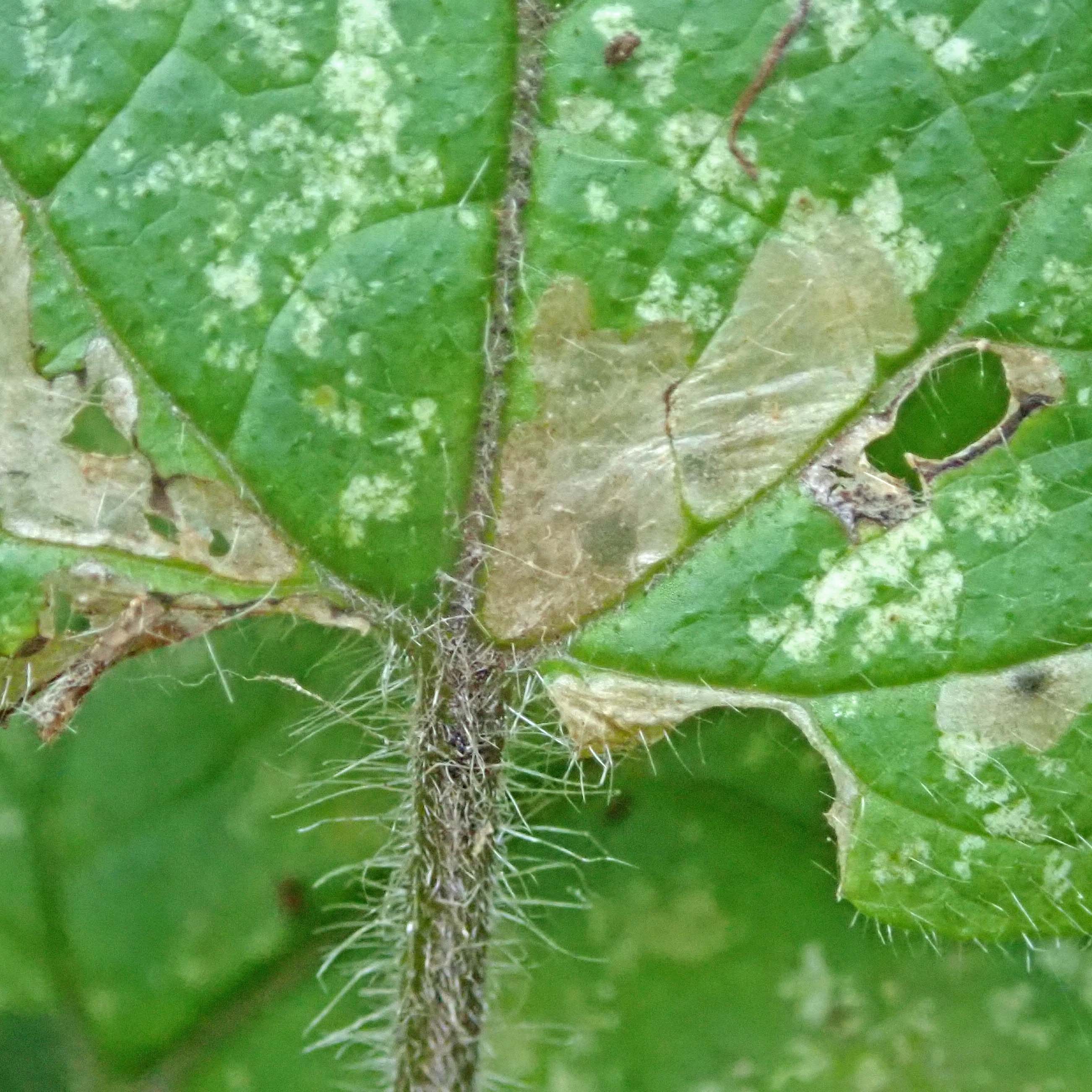
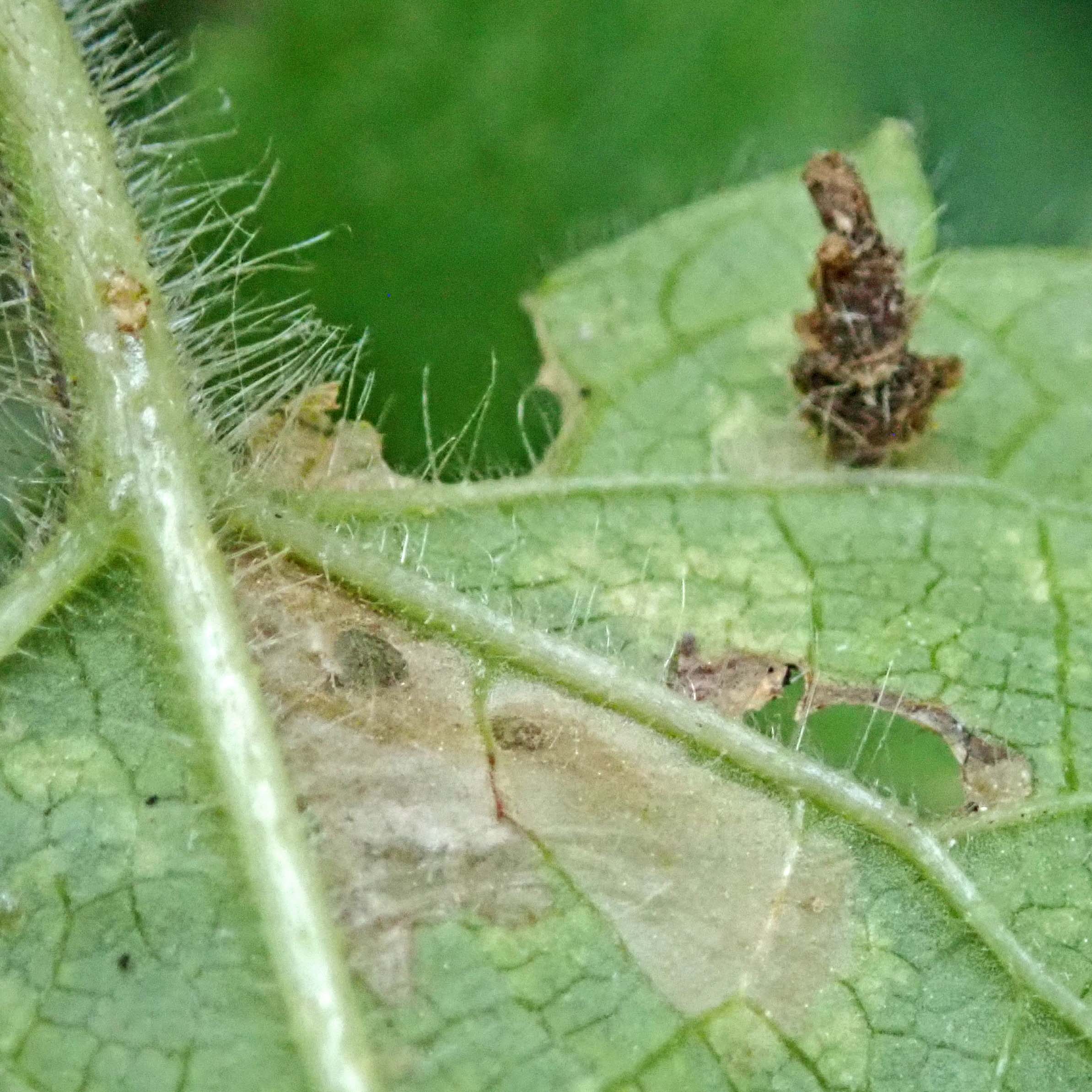
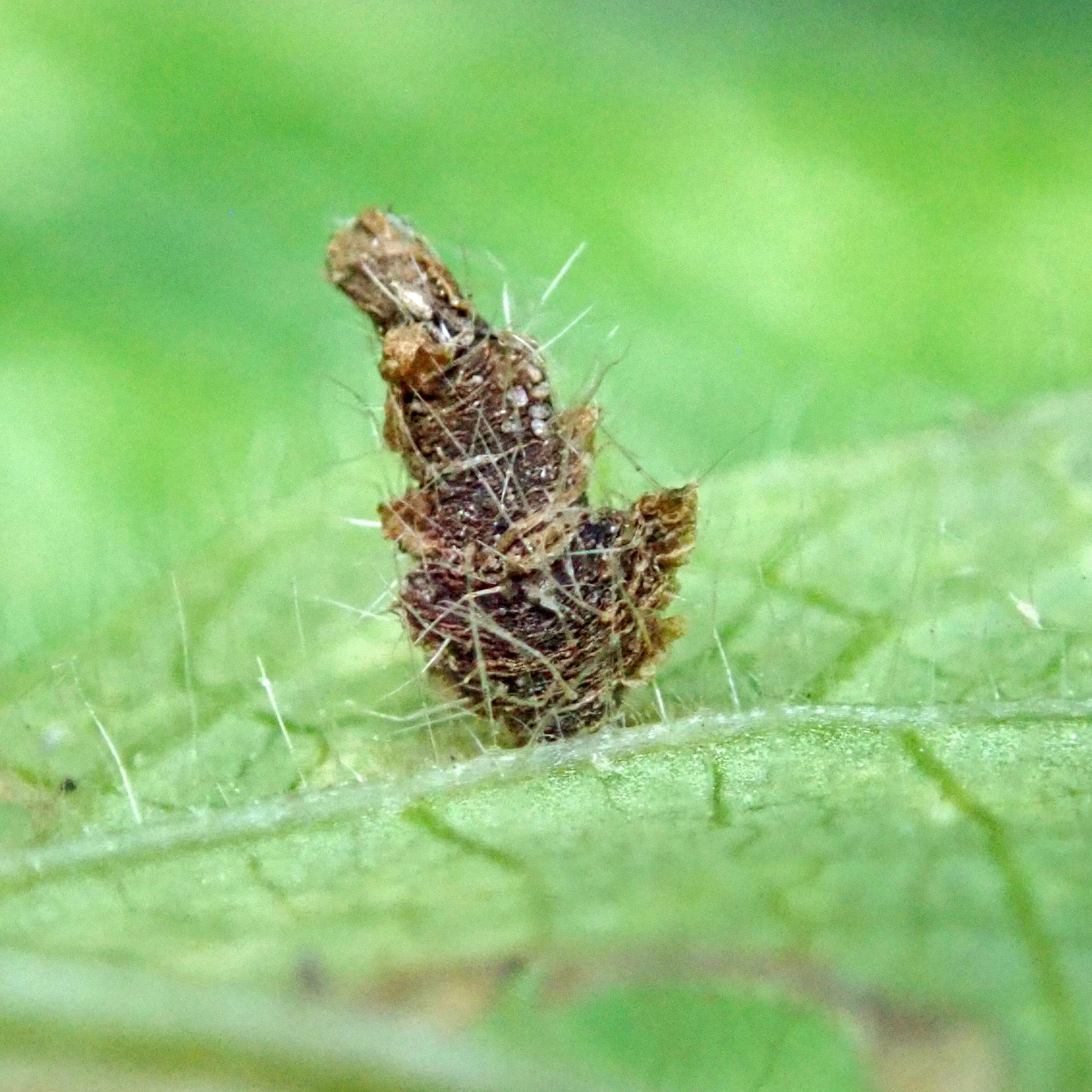
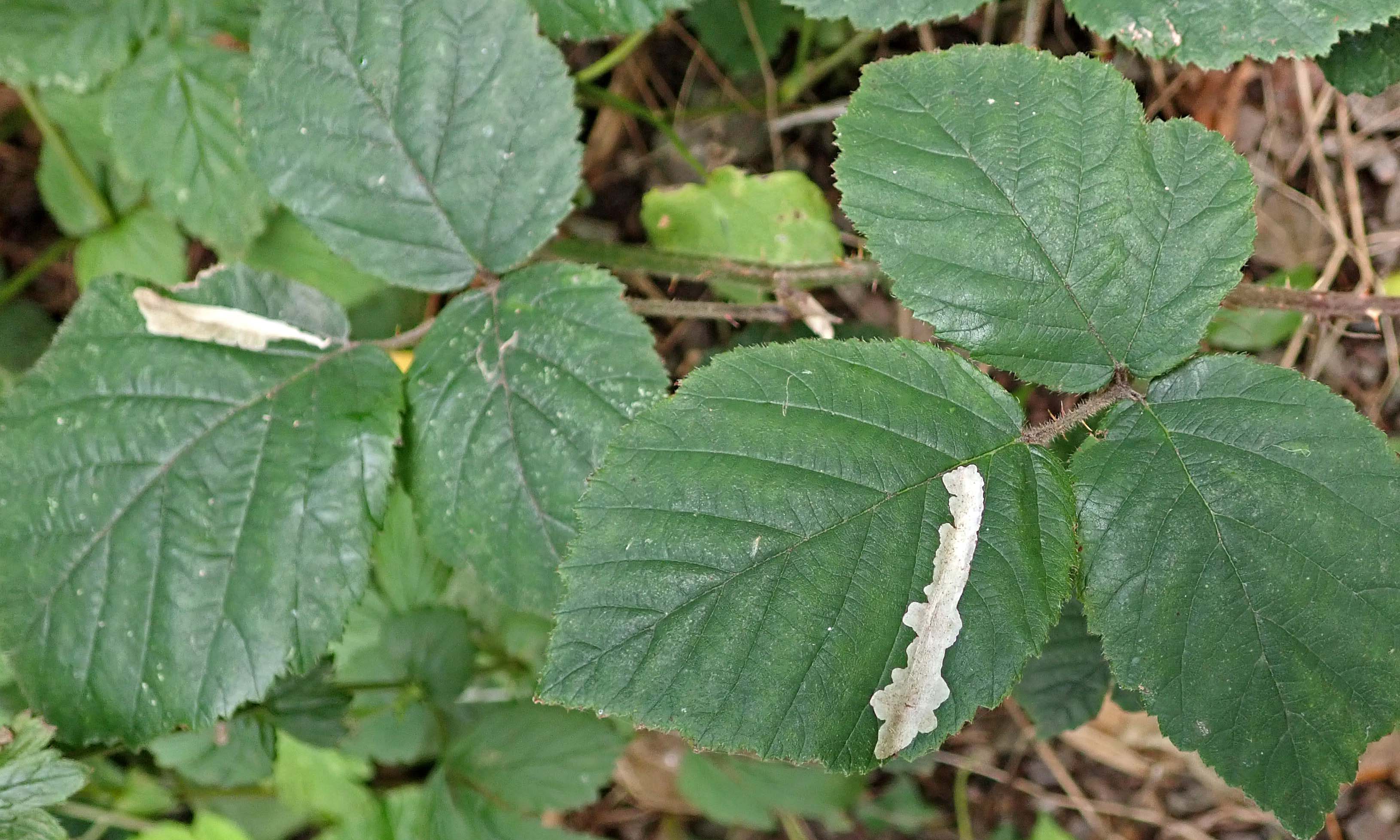
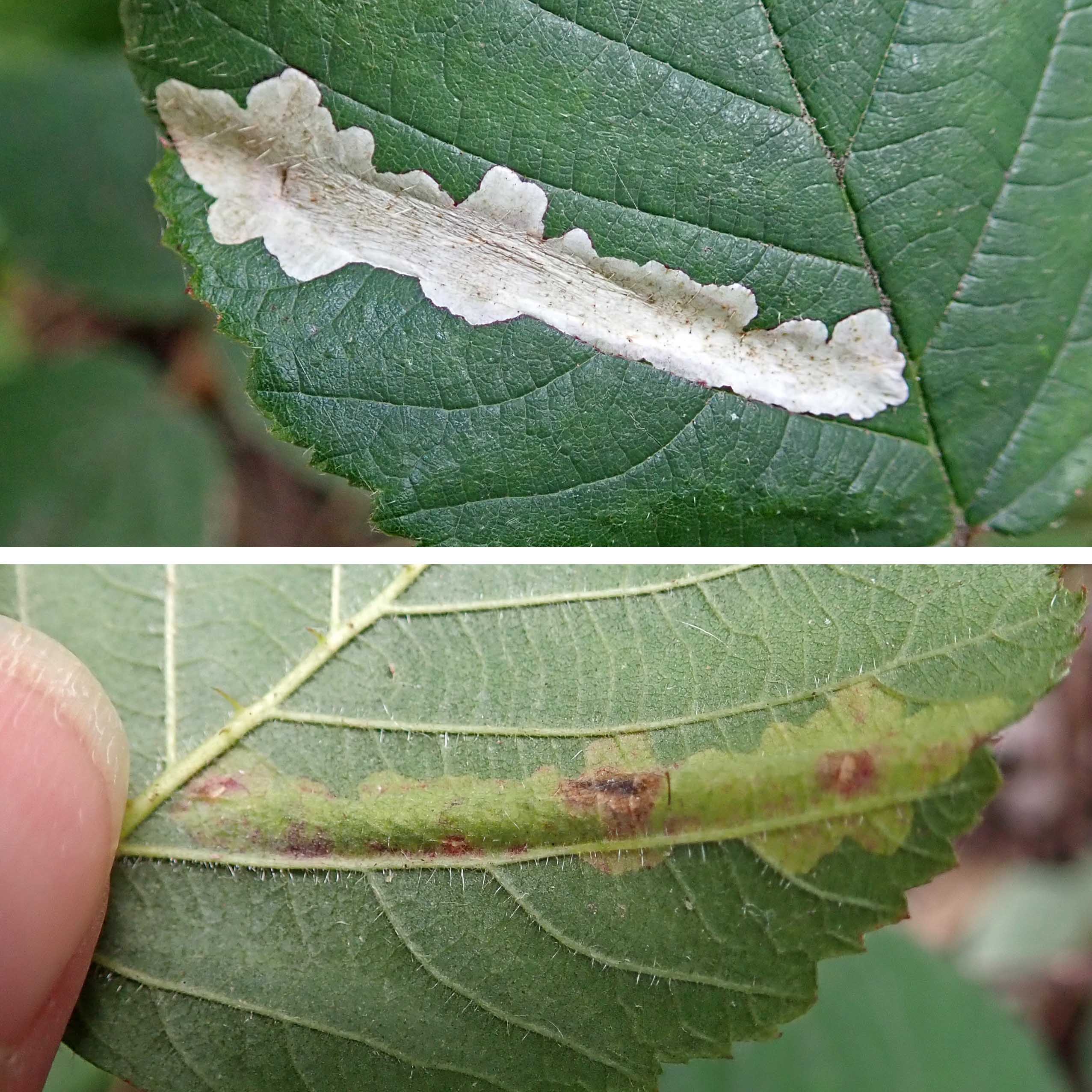
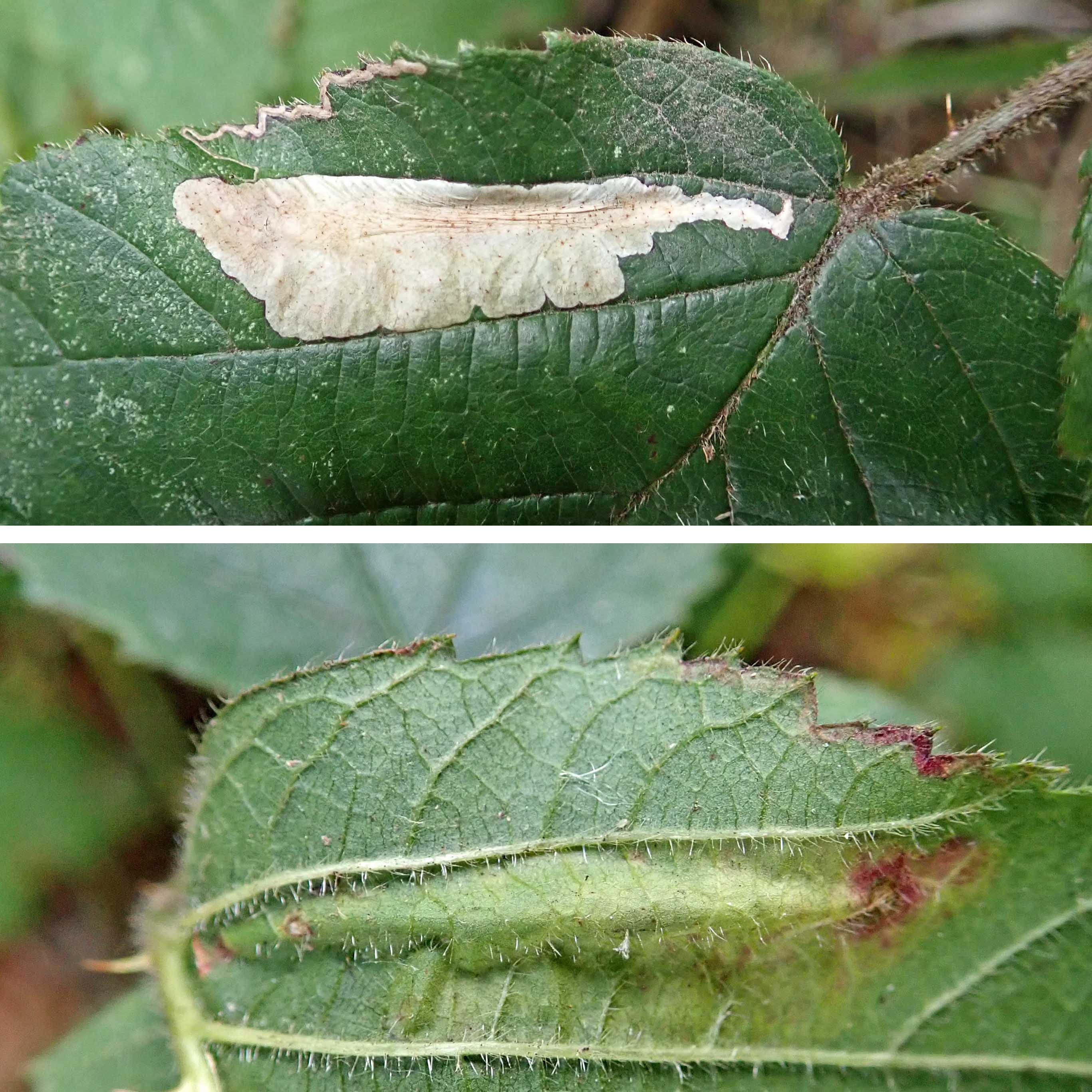
You could easily mistake the leafmines of the tiny moth Phyllonocnistis unipunctella for the dried trails of a snail after it had meandered around a leaf’s surface. This is due to the moth’s larvae mining just underneath the upper epidermis rather than more deeply within the leaf structure (and that can occur on the upper or lower surface of the leaf, though I’ve only found upper surface mines so far). The larvae also do not leave a trail of frass in the mine; I’ve not found any explanation for where that disappears to!

The fact that they mine so close to the leaf surface means the larvae are clearly visible within their mines, as you can see in my photos here. And, once they’ve munched as much leaf matter as necessary, they pupate in a silken membrane they create under the rolled down edge of the leaf, which you can also see in my images.

According to the British Leafminers website, Phyllonocnistis unipunctella uses three species of Populus as its larval plant: Black poplar (Populus nigra), Lombardy poplar (Populus x italica) and Black cottonwood (Populus trichocarpa). The mines shown here are from Black and Lombardy poplars found in a local park. You can see the adult moth, a pale silvery creature with a single dot near its tail end (hence the epithet unipunctella), on the UK Moths website.

Like Loading...

Galls on grapevines

26 Saturday Jul 2025

Posted by sconzani in insects, plants

≈ Leave a comment

Tags

British galls, Colomerus vitis, gall mites, gall-causing mites, galls, galls on grape leaves, galls on grapevines

After last Sunday’s local meander I wrote on social media:

A lesson for me in the importance of recording: I’ve walked past this grapevine many times recently & noticed the galls on its leaves. Today I finally took photos, figured it’s caused by the mite Colomerus vitis & found there are NO Welsh records, tho’ it must be out there somewhere.

I’ve since checked the only other publicly accessible grapevine I know of locally and found that it, too, has these galls on its leaves so I was right to assume that this is something that has simply been overlooked and not recorded by anyone who’s noticed it. As well as there having been no previous Welsh records, there are very few records from elsewhere in the UK, which I assume is also under-recording, not scarcity.

The galls, which appear as lumps and bumps on the upper side of the leaves, are caused by the miniscule mite Colomerus vitis. These mites inhabit the felt-like surface of the galls on the underside of the leaves, a surface that starts out white but gradually browns over time. The vines I’ve looked at are covered in bunches of grapes and the plants themselves look very healthy so, presumably, the galls are having little affect on the plants’ productivity.

Like Loading...
← Older posts
Newer posts →

About me

sconzani

sconzani

I'm a writer and photographer; researcher and blogger; birder and nature lover; countryside rambler and city strider; volunteer and biodiversity recorder.

View Full Profile →

Follow earthstar on WordPress.com

Enter your email address to follow this blog and receive notifications of new posts by email.

Recent blog posts

  • O is for Odonata December 20, 2025
  • N is for nest December 19, 2025
  • M is for mite December 18, 2025
  • L is for lepidopteran lifers December 17, 2025
  • K is for Keeled skimmers December 16, 2025

From the archives

COPYRIGHT

Unless otherwise acknowledged, the text and photographs on this blog are my own and are subject to international copyright. Nothing may be downloaded or copied without my permission.

Fellow Earth Stars!

  • Unknown's avatar
  • Unknown's avatar
  • Unknown's avatar
  • Unknown's avatar
  • Unknown's avatar
  • Unknown's avatar
  • Unknown's avatar
  • Unknown's avatar
  • Unknown's avatar
  • Unknown's avatar
  • Unknown's avatar
  • Unknown's avatar
  • Unknown's avatar
  • Unknown's avatar
  • Unknown's avatar
  • Unknown's avatar
  • Unknown's avatar
  • Unknown's avatar
  • Unknown's avatar
  • Unknown's avatar
  • Unknown's avatar
  • Unknown's avatar
  • Unknown's avatar
  • Unknown's avatar
  • Unknown's avatar
  • Unknown's avatar
  • Unknown's avatar
  • Unknown's avatar
  • Unknown's avatar
  • Unknown's avatar
  • Unknown's avatar
  • Unknown's avatar
  • Unknown's avatar
  • Unknown's avatar
  • Unknown's avatar
  • Unknown's avatar
  • Unknown's avatar
  • Unknown's avatar
  • Unknown's avatar
  • Unknown's avatar
  • Unknown's avatar
  • Unknown's avatar
  • Unknown's avatar
  • Unknown's avatar
  • Unknown's avatar
  • Unknown's avatar
  • Unknown's avatar
  • Unknown's avatar
  • Unknown's avatar
  • Unknown's avatar

Blog at WordPress.com.

Privacy & Cookies: This site uses cookies. By continuing to use this website, you agree to their use.
To find out more, including how to control cookies, see here: Cookie Policy
  • Subscribe Subscribed
    • earthstar
    • Join 667 other subscribers
    • Already have a WordPress.com account? Log in now.
    • earthstar
    • Subscribe Subscribed
    • Sign up
    • Log in
    • Report this content
    • View site in Reader
    • Manage subscriptions
    • Collapse this bar
 

Loading Comments...
 

You must be logged in to post a comment.

    %d