• ABOUT
  • BIRDING 2018
  • Birding 2019
  • BLOG POSTS
  • Butterflies 2018
  • Resources

earthstar

~ a celebration of nature

earthstar

Category Archives: leaves

Autumn trees: Whitebeam

30 Sunday Nov 2025

Posted by sconzani in autumn, leaves, trees

≈ 2 Comments

Tags

autumn colour, autumn leaves, British trees, Sorbus aria, Whitebeam, Whitebeam bark, whitebeam berries, Whitebeam leaves

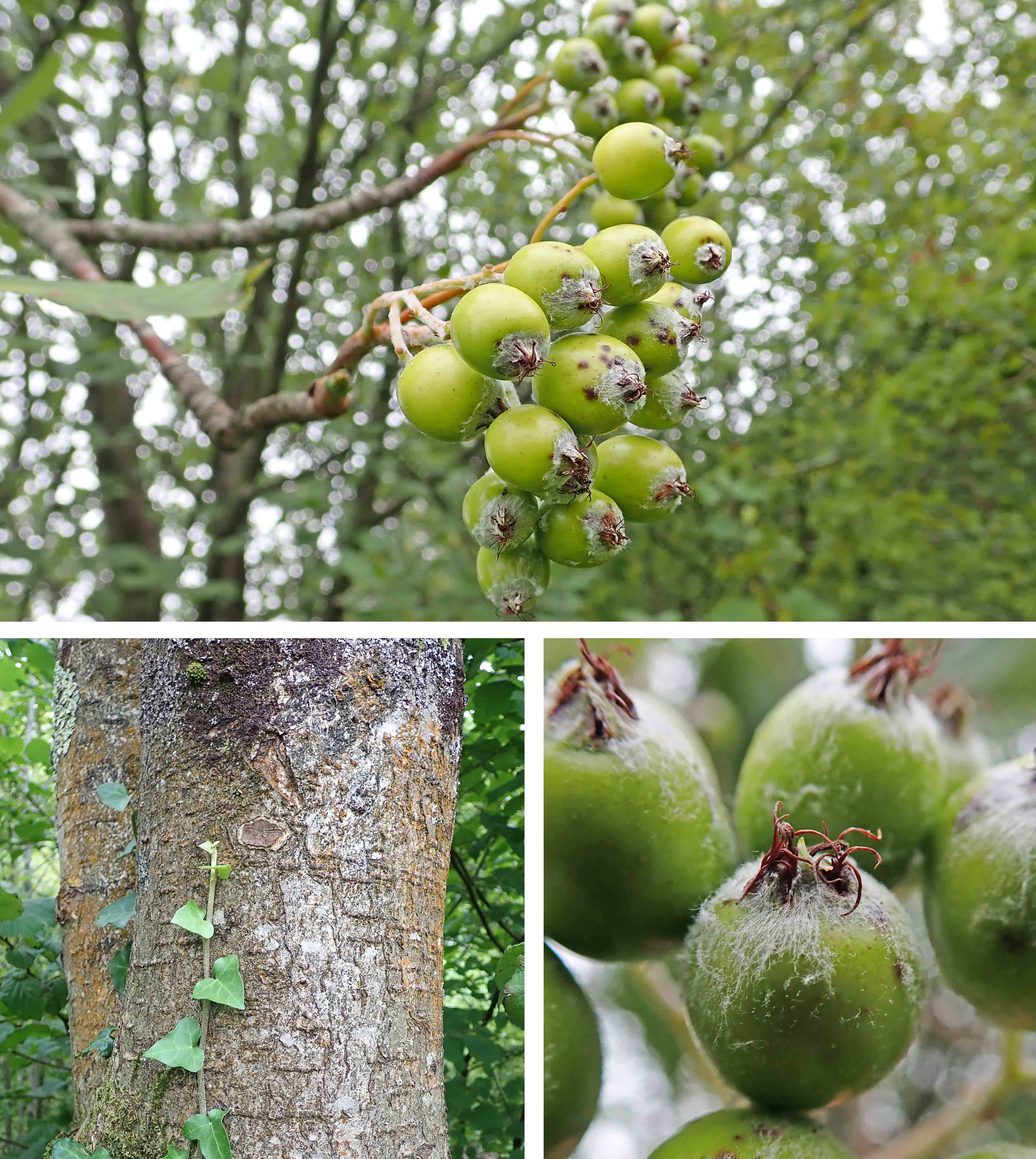
Whitebeam (Sorbus aria) is a tree I’ve overlooked until now, though I did take a few photos earlier in the year, of its smooth grey bark and its berries, before they ripened. (According to the Woodland Trust website, the berries ‘are known as chess apples in north-west England and are edible when nearly rotten’, which doesn’t make them sound very appetizing to me.)
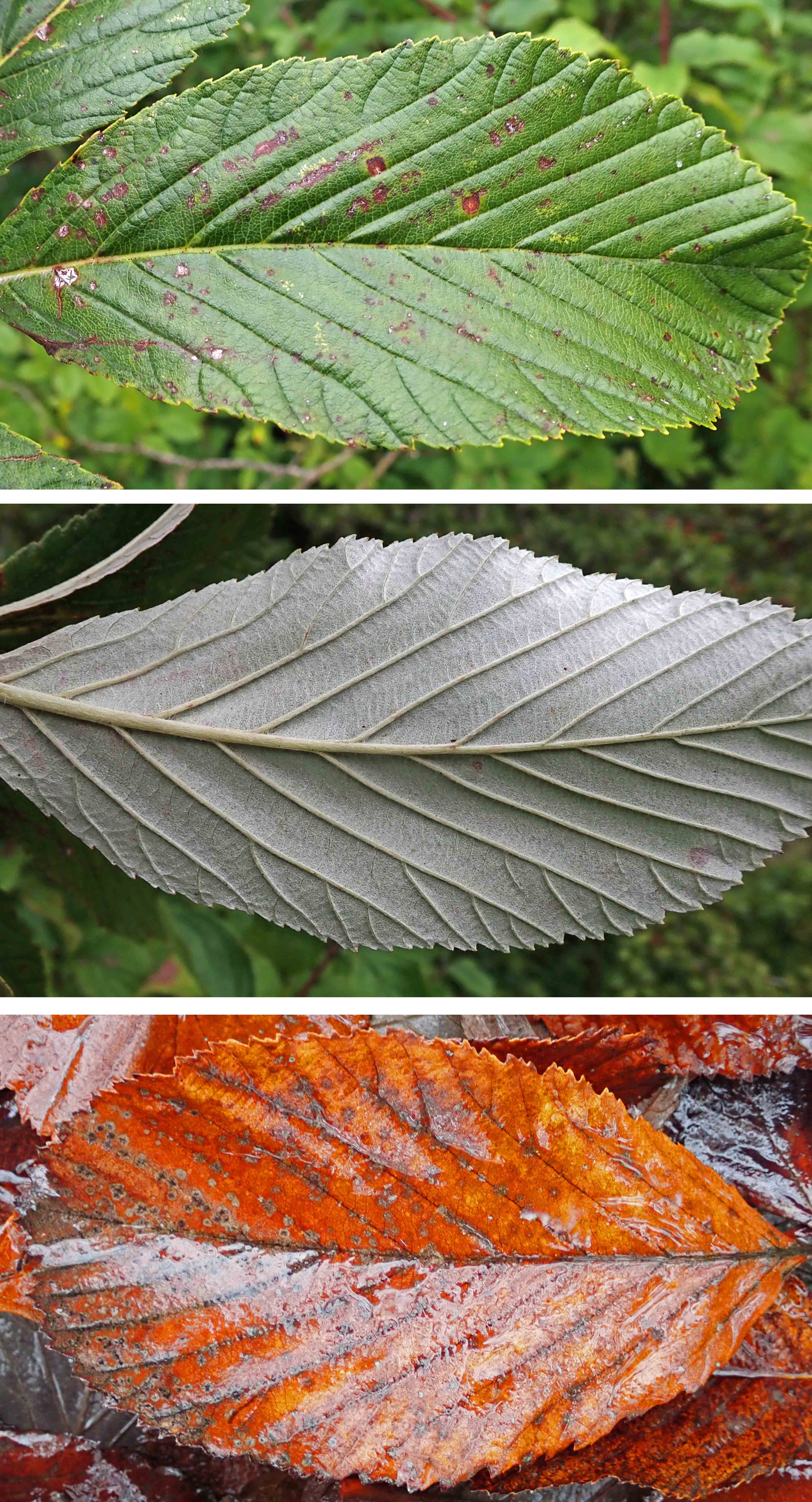
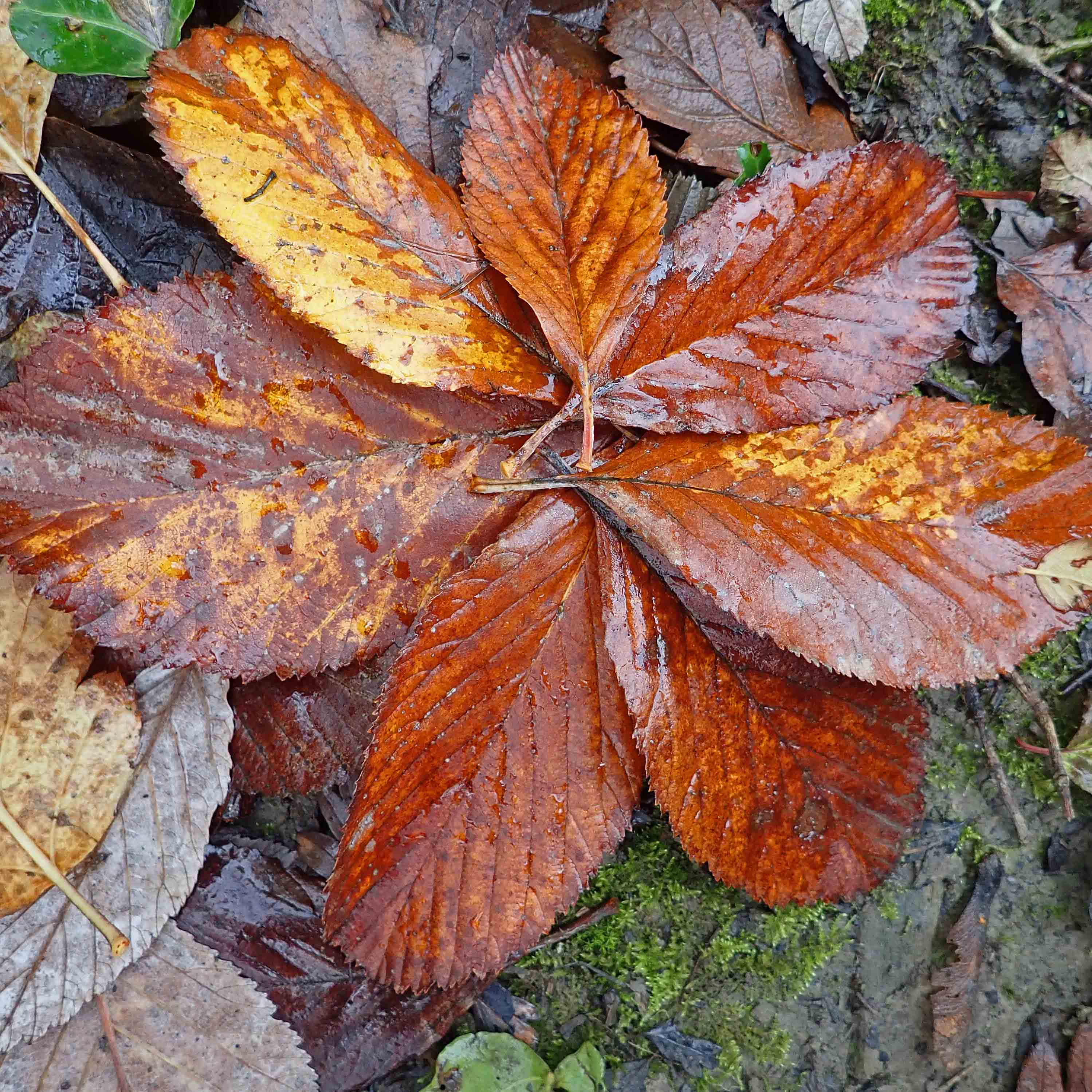
Whitebeam’s leaves are quite distinctive: elliptical in shape with serrated edges, the upper sides a shiny dark green, the under sides light grey and hairy. In the autumn, they aren’t particularly spectacular, simply changing to yellow, orange, and brown as they lose their chlorophyll.
The Woodland Trust site has some interesting facts about this handsome tree:

Whitebeam timber is fine-grained, hard and white. Traditional uses included wood turning and fine joinery, including chairs, beams, cogs and wheels in machinery.

And

Whitebeam is native to southern England, though widely planted in the north of the UK. It is common in parks and gardens, but is quite rare in the wild.

And

The leaves are eaten by caterpillars of a number of moths, including Parornix scoticella, Phyllonorycter corylifoliella and Phyllonorycter sorbi.

All three of those moths have leaf-mining larvae, none of which I’ve yet seen, so I must keep an eye out next year.
Like Loading...

Autumn trees: Ash

23 Sunday Nov 2025

Posted by sconzani in autumn, leaves, trees

≈ Leave a comment

Tags

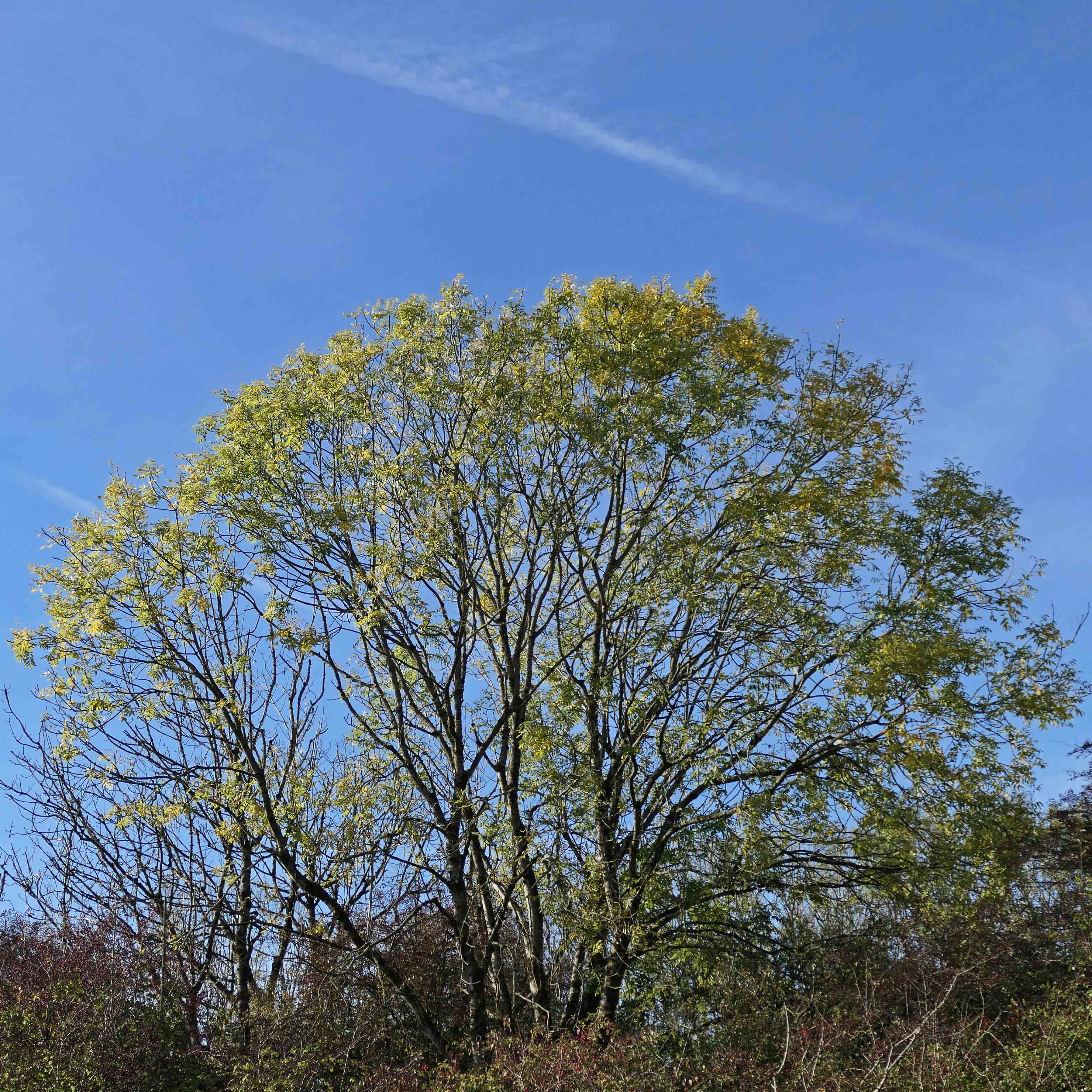
Ash, Ash keys, Ash tree, autumn colour, British trees, Fraxinus excelsior

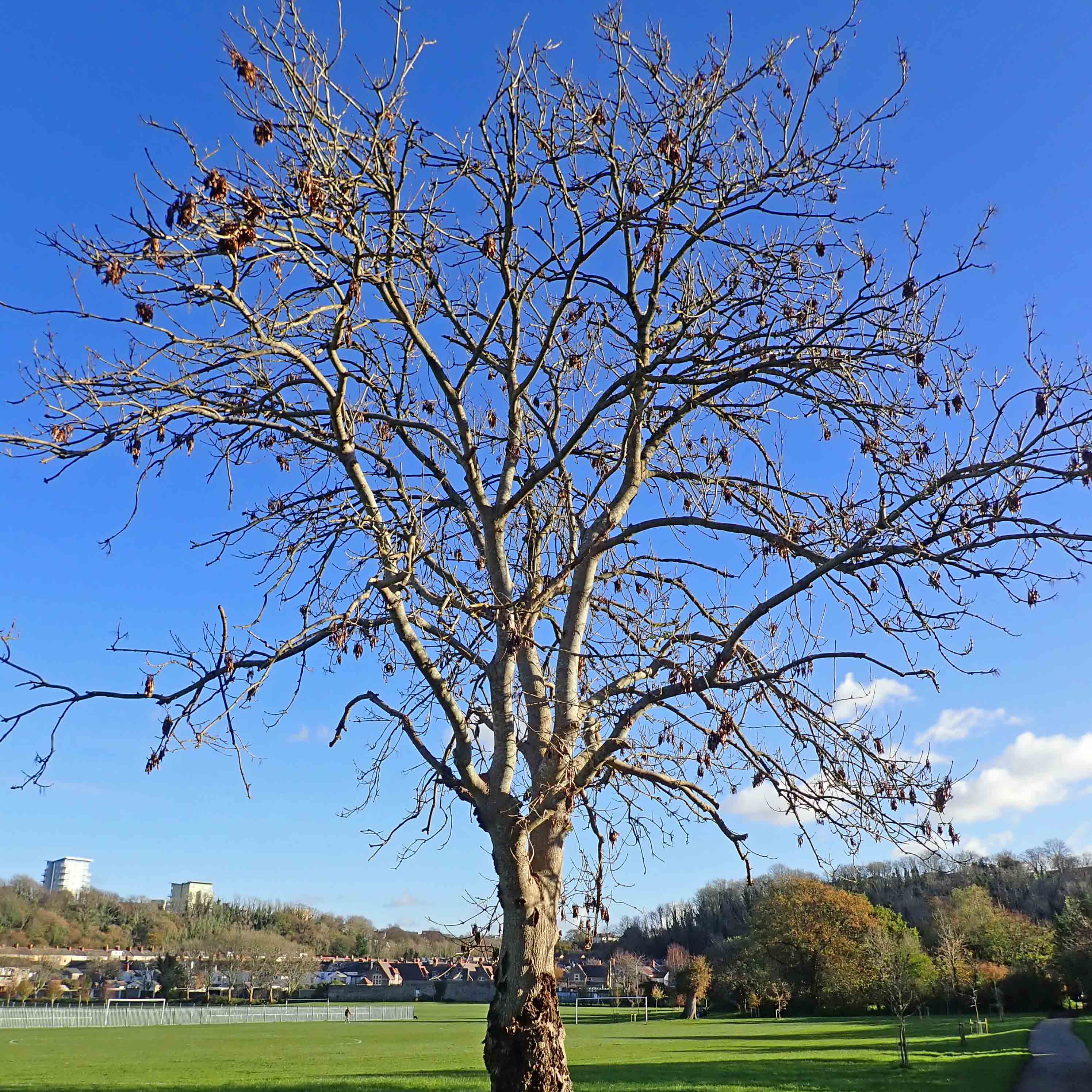
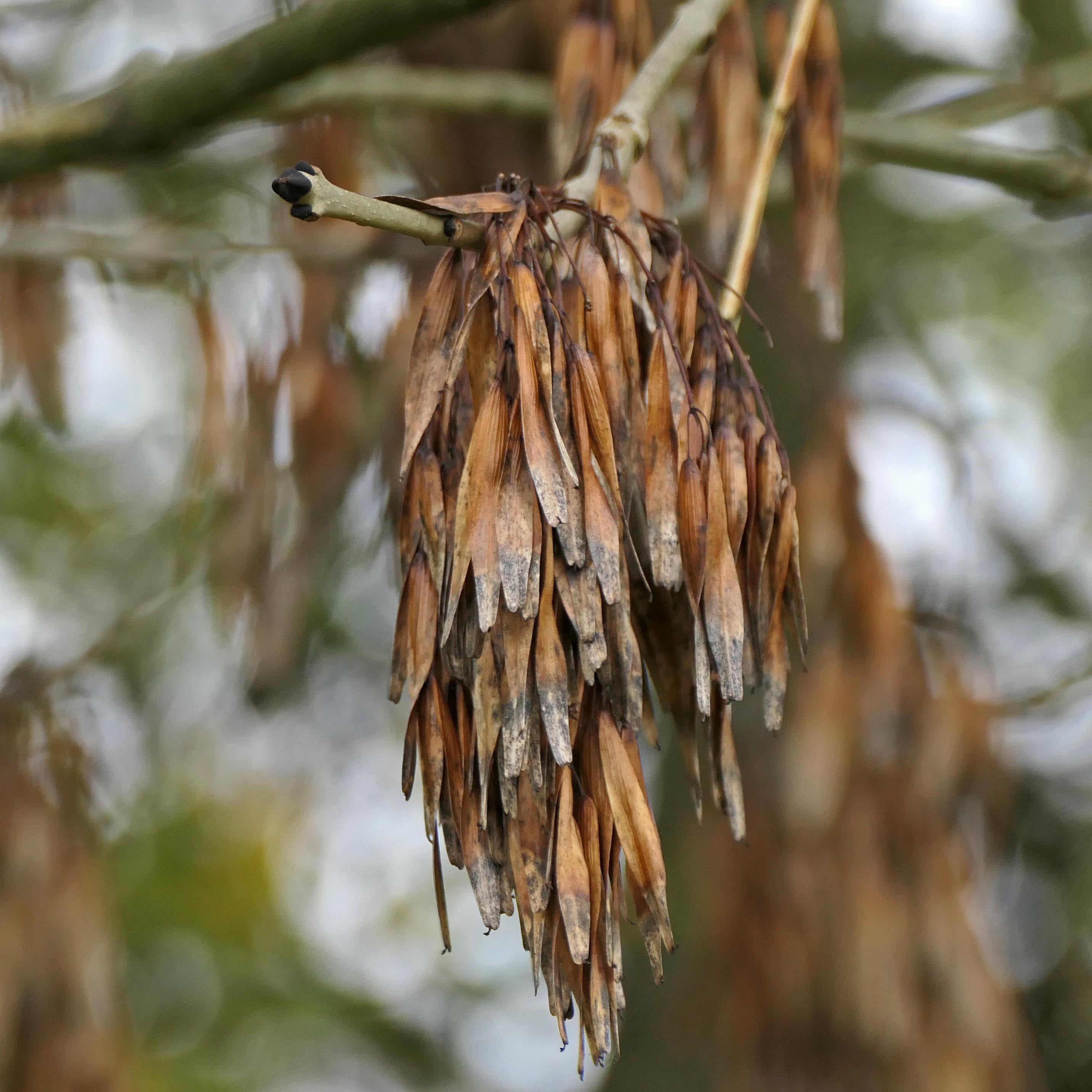
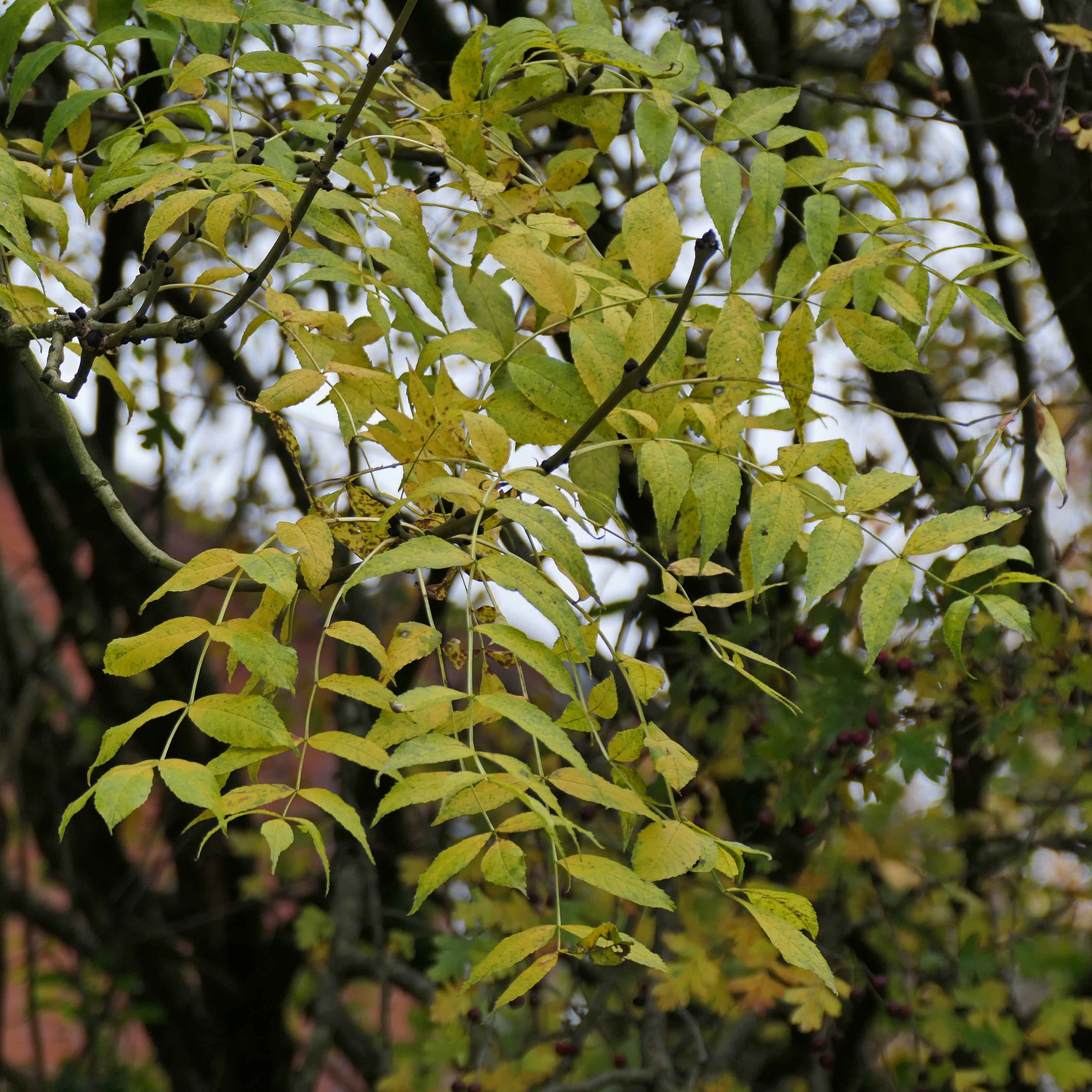
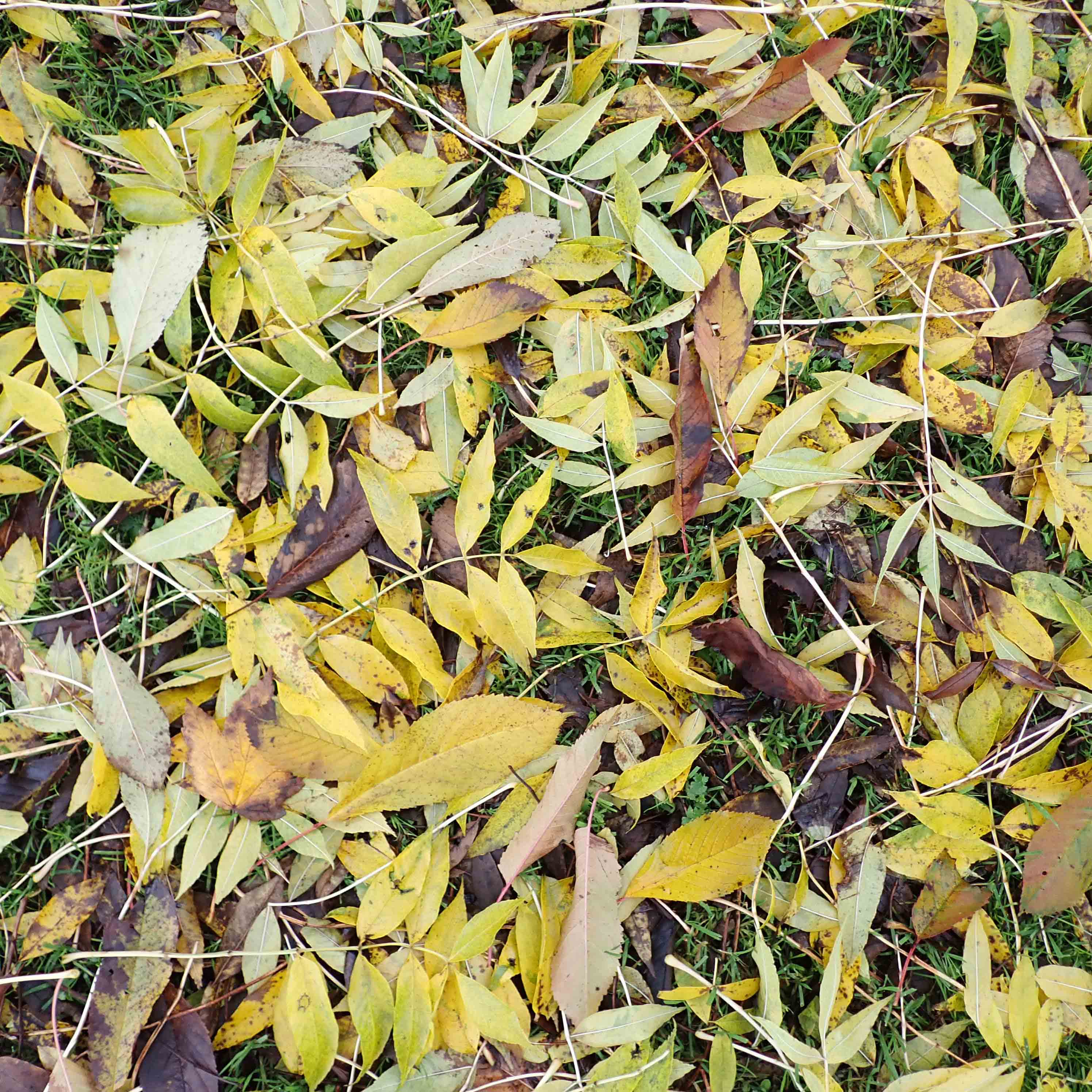
My Flora Britannica contains a myriad of fascinating information about the Ash tree (Fraxinus excelsior) but nothing that specifically relates to the tree in autumn. So, I googled “Ash keys”, thinking that might turn up some interesting facts. The AI overview produced this rather bizarre result:

“Ash keys” can refer to the winged seeds of an ash tree, which are used in poetry collections, or a caravan park in Yorkshire, UK. The ash tree seeds are a common sight in autumn and are also used to make pickles.

Yes, I was expecting the ‘winged seeds of an ash tree’ but ‘used in poetry collections’? (Turns out, there’s a book of poetry called Ash keys.) And, yes, ‘ash tree seeds are a common sight in autumn’ but are they really used to make pickles? (Turns out, this can be done but is an incredibly long-winded process, using a lot of electricity for multiple cooking stages and spices to create flavour, and is surely neither environmentally friendly nor worth the effort.) You may have guessed I’m no fan of AI!

So, here’s one of the much more interesting pieces from Flora Britannica instead:

In Britain, up until the end of the eighteenth century, it was regarded as a healing tree, and Gilbert White knew Hampshire villagers who, as children, had been through an Ash ritual as a ritual as a treatment for rupture or weak limbs. It was an extraordinary ceremony, a relic of pre-Christian sympathetic magic. A young Ash was split and held open by wedges, while the afflicted child was passed, stark naked, through the gap. The split was then ‘plastered with loam, and carefully swathed up. If the parts coalesced and soldered together … the party was cured; but, where the cleft continued to gape, the operation, it was supposed, would prove ineffectual.

Like Loading...

Bountiful Ground-ivy

15 Saturday Nov 2025

Posted by sconzani in fungi, insects, leaves, plants

≈ Leave a comment

Tags

case-bearing moth larva on Ground-ivy, Coleophora albitarsella, galls on Ground-ivy, Ground-ivy, Puccinia glechomatis, Rondaniola bursaria, rust on Ground-ivy

When the weather’s wet, which it often has been of late, I tend to focus more on looking for small things when out walking. This is partly because the larger creatures, like birds, tend to prefer taking shelter as much as we humans do but also because I don’t want to get my good camera wet and my small camera, the one I use for close-up shots, is waterproof. Monday was one such day and, when I stooped to pat a random black cat that appeared out of nowhere, I noticed how marked and mottled were the leaves of the Ground-ivy the cat was sitting next to. So, I investigated.

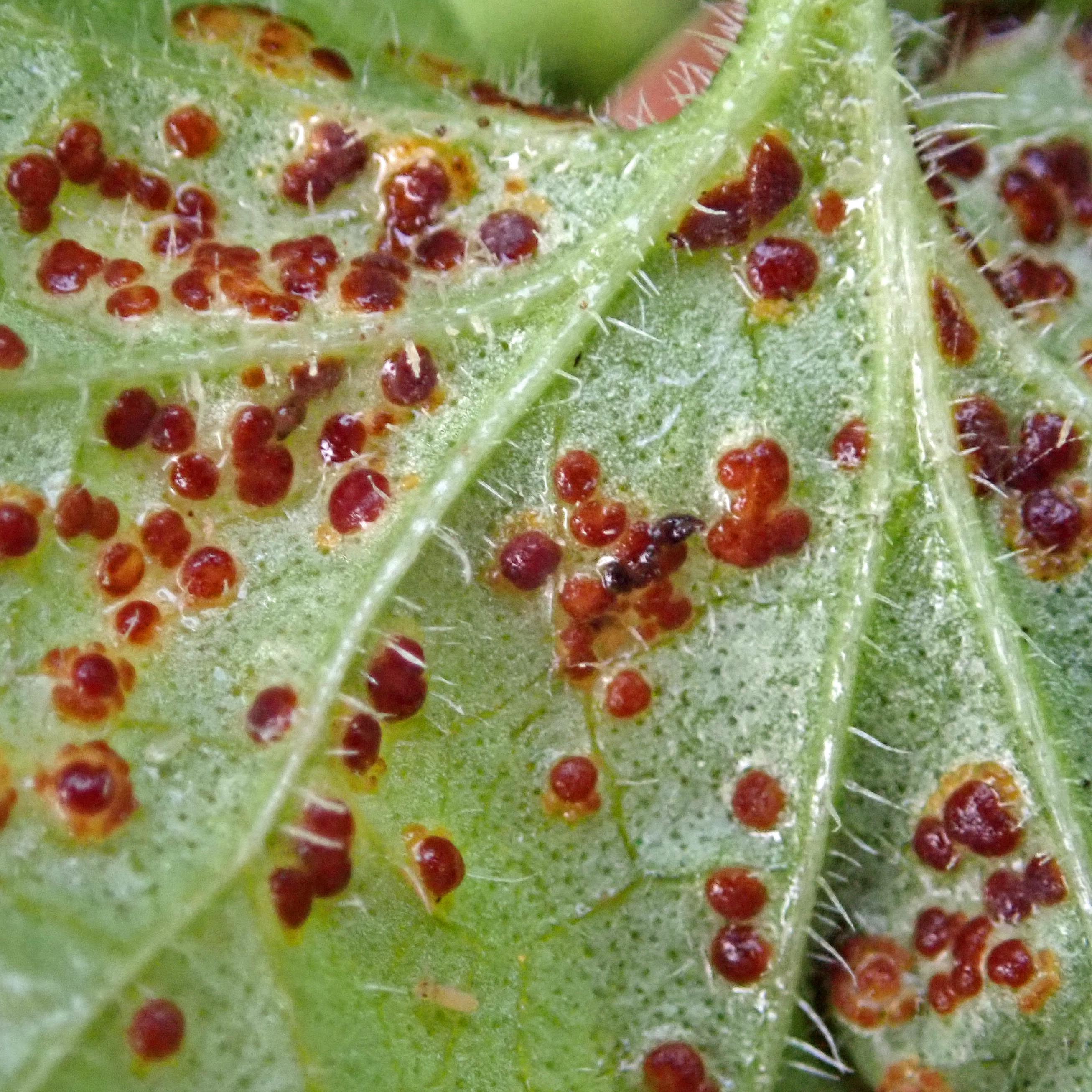
And what a bountiful patch of Ground-ivy it was. Firstly, I couldn’t help but notice how many of the leaves were covered with the pustules of the rust fungus Puccinia glechomatis.

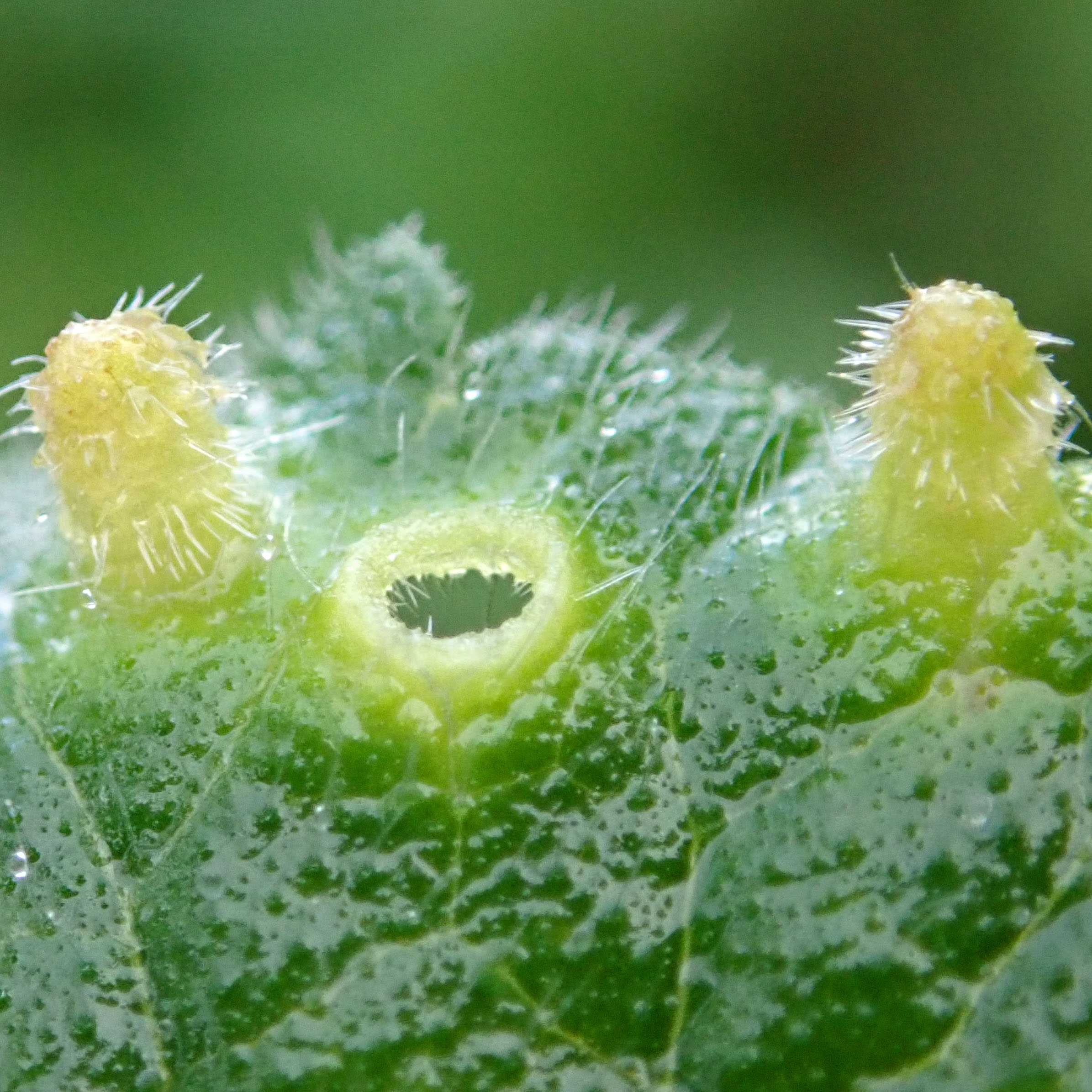
Then I discovered that many of the leaves also had small bumps on them, galls caused by the miniscule mite Rondaniola bursaria.

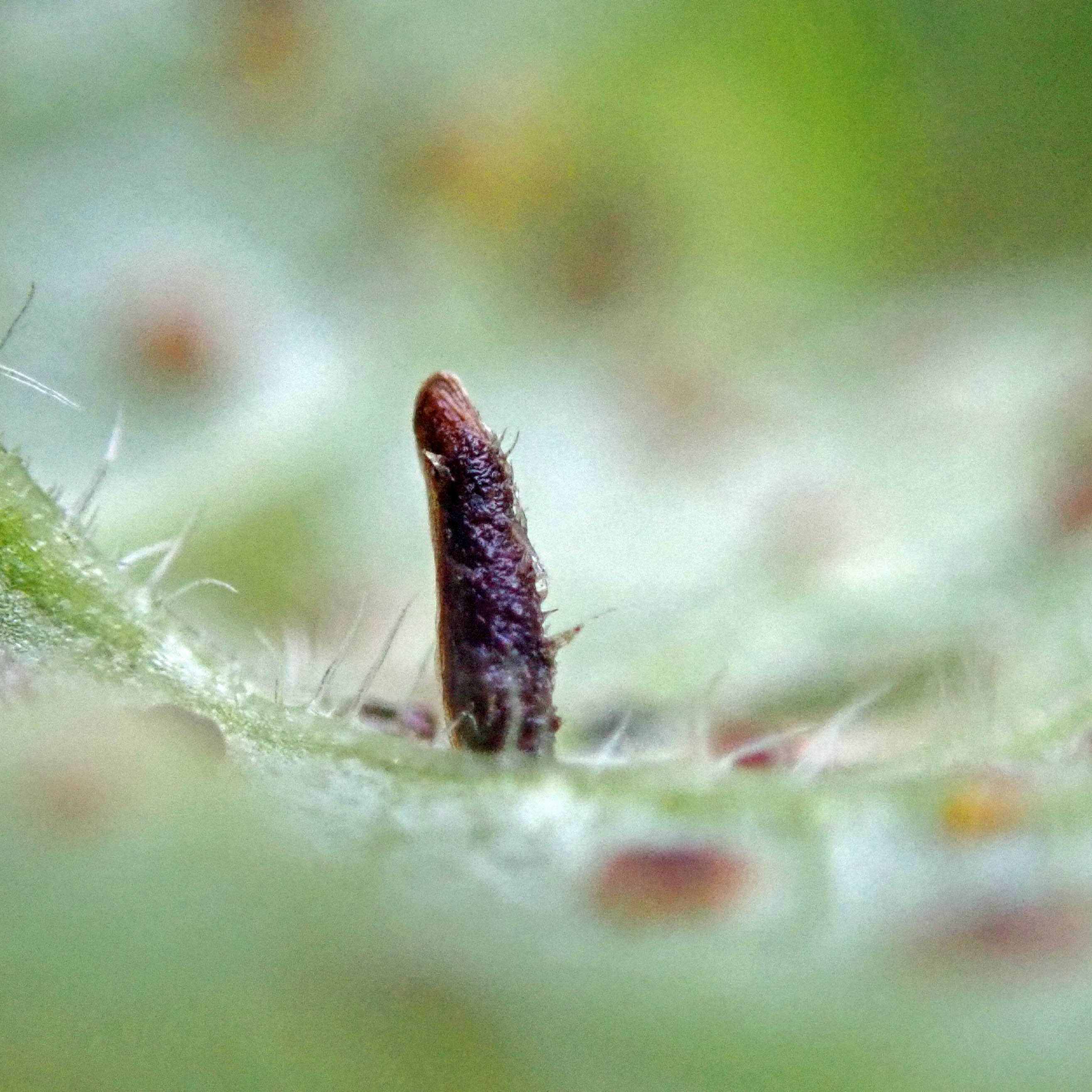
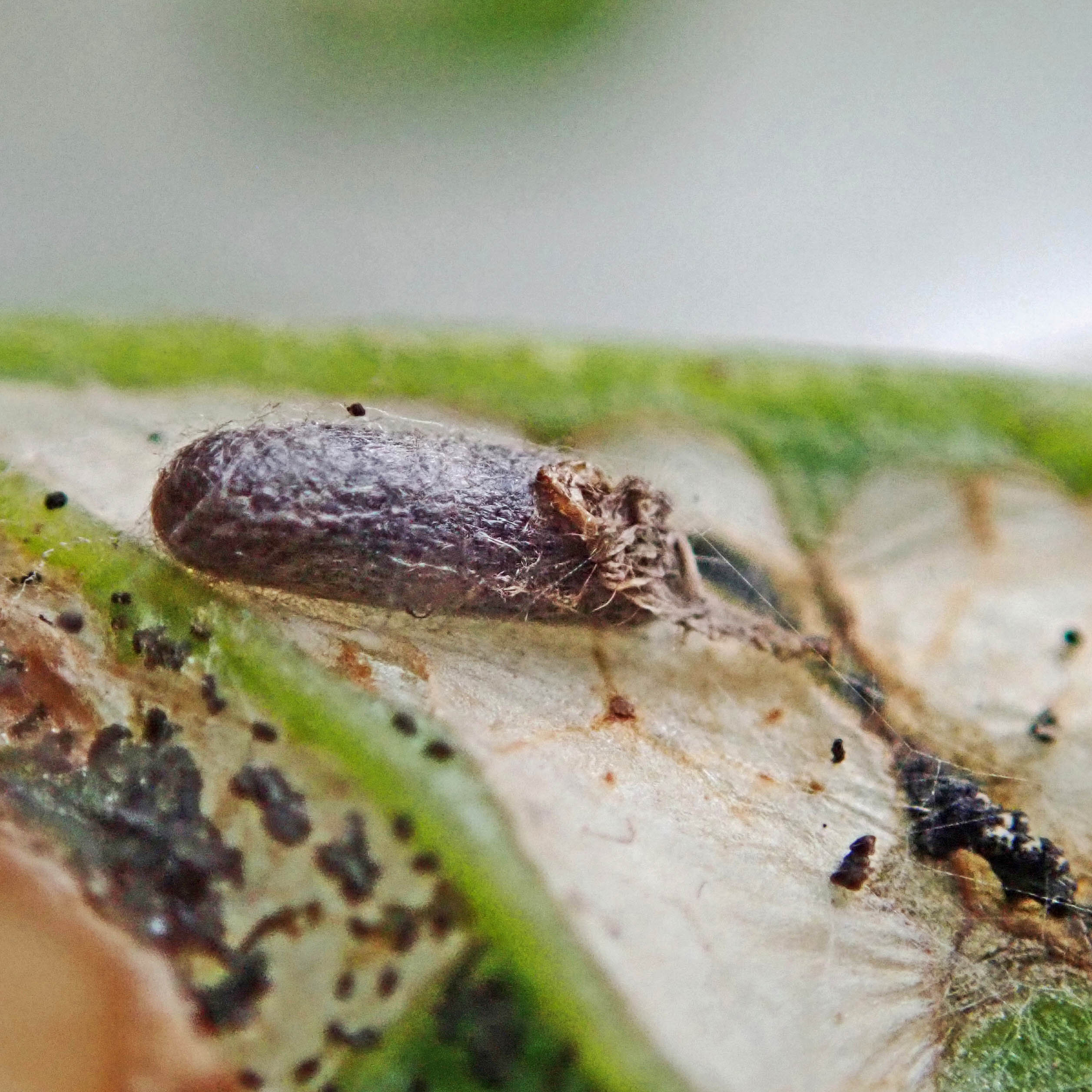
And, perhaps best of all, while investigating the rust and the galls, I also spotted a single tiny dark case sticking up from one leaf, the self-constructed home of a larva of the moth Coleophora albitarsella. And, with that, the rain starting coming down a little too heavily for comfort so both the cat and I headed for home.

Like Loading...

Autumn trees: Aspen

09 Sunday Nov 2025

Posted by sconzani in autumn, leaves, trees

≈ Leave a comment

Tags

Aspen, Aspen in autumn, autumn colour, autumn leaves, autumn trees, Populus tremula

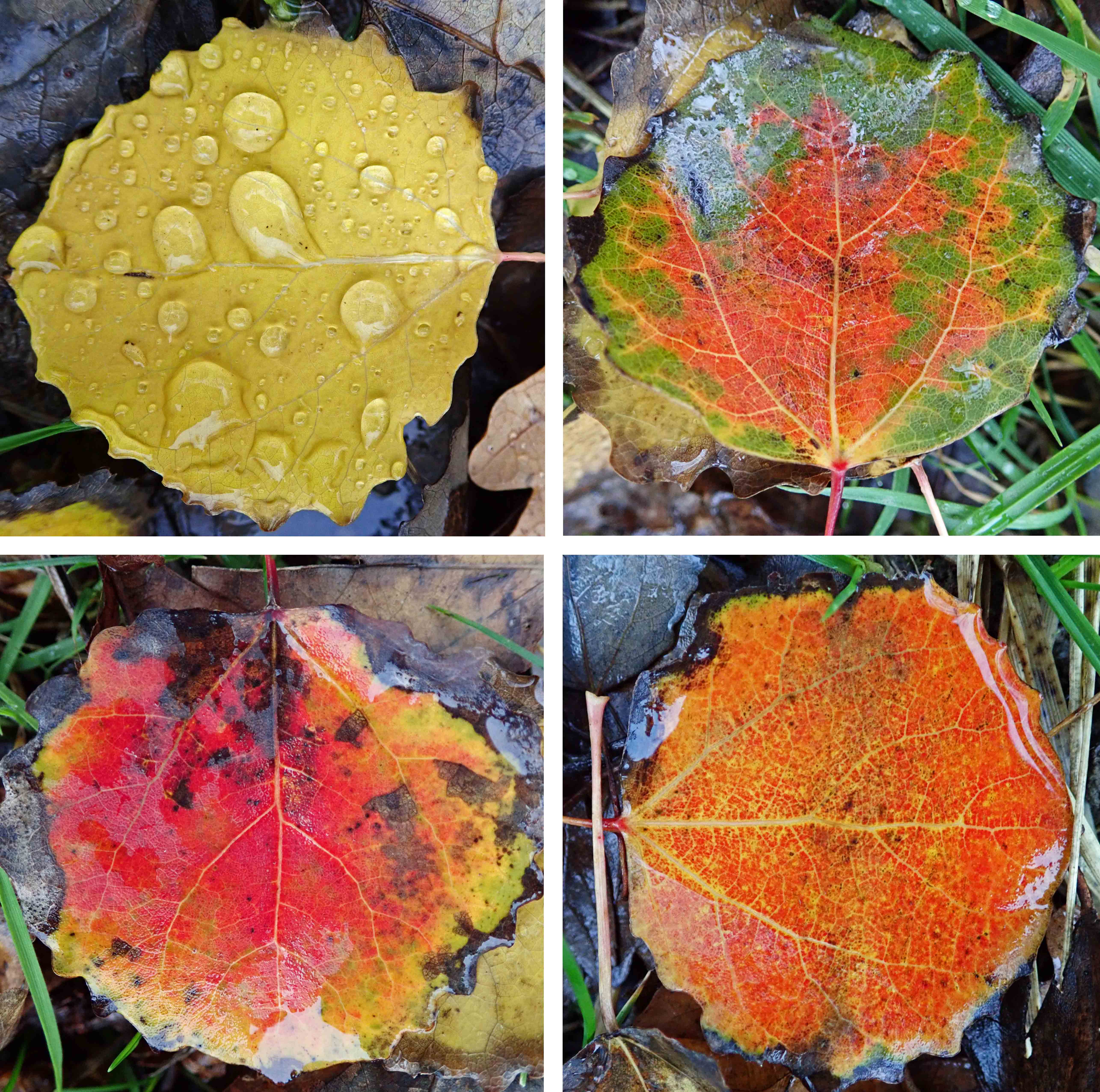
The leaves of the Aspen (Populus tremula) are some of the most stunning autumn leaves, their summer green changing to yellow and orange and red and every combination of those colours, sometimes all in one leaf. Those colours, together with the way the leaves of the Aspen seem to quiver and rustle (tremula is Latin for trembling or quaking) at the merest hint of a breeze, make this tree a favourite of mine – and I’m sure with many of you, as well.

Aspen are usually associated with cold places, growing best in mountains near rivers – they prefer moist but well-drained soil, so coastal south Wales is not their preferred habitat but, for some reason, they seem often to be used in ornamental plantings in parks and alongside roads, in the landscaping around business and housing developments, so these are the Aspens I’m most familiar with. Some day I’d like to make an autumn trip to a place where Aspen are at their most spectacular – I’ve read the trees in the north west of Scotland put on a particularly fine autumn display.

Like Loading...

Autumn trees: Hawthorn

02 Sunday Nov 2025

Posted by sconzani in autumn, leaves, trees

≈ Leave a comment

Tags

autumn colour, autumn leaves, autumn trees, berries, British trees, Crataegus monogyna, Hawthorn, Hawthorn berries, Hawthorn leaves

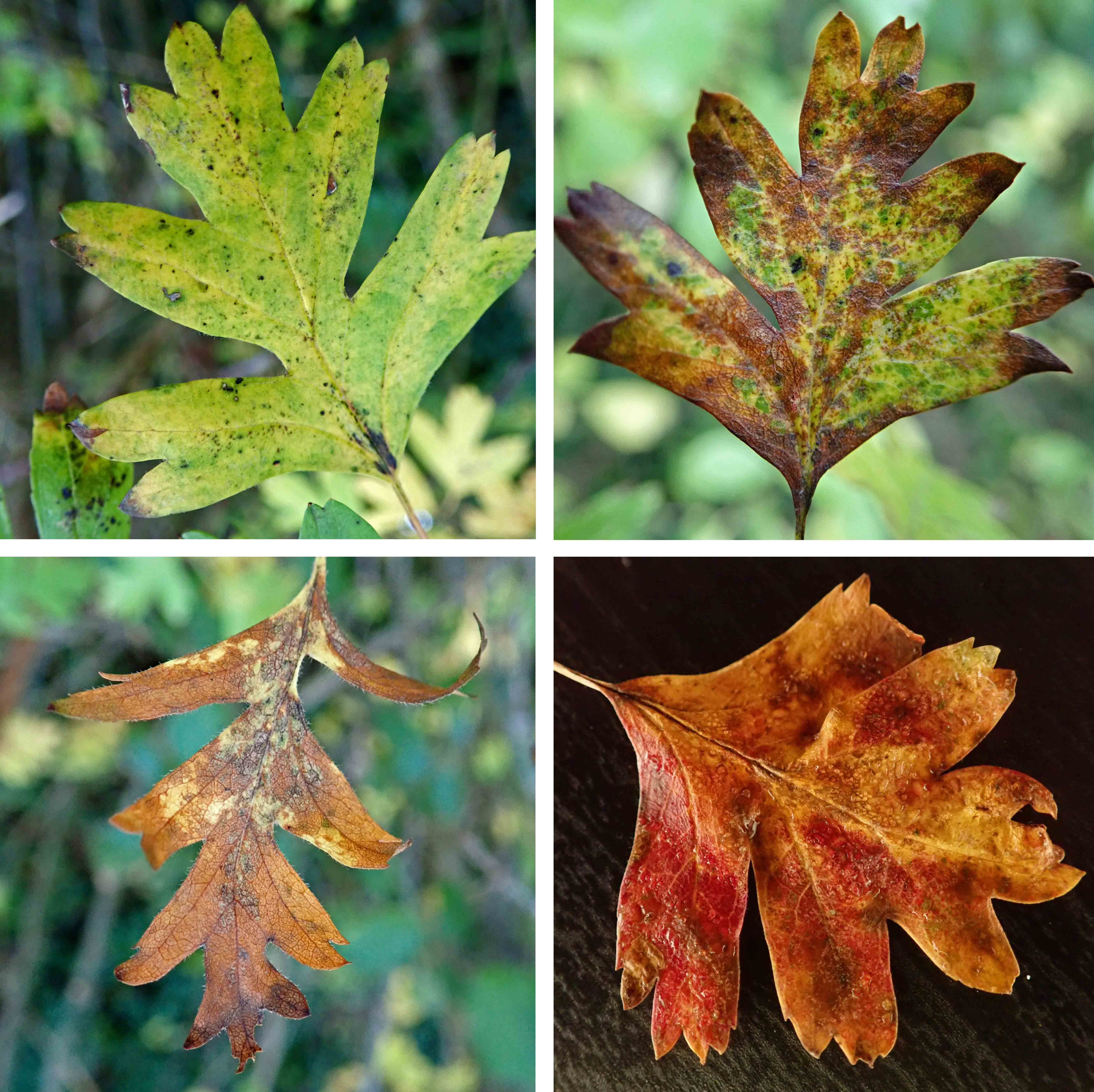
The Hawthorn (Crataegus monogyna) is not really a tree we notice for its foliage, though its leaves were, apparently, one of the models for the foliage that wreathes the faces of Green Men seen in carvings in churches.

And, according to Richard Mabey’s Flora Britannica, Bread-and-cheese is a vernacular name given to the leaves of the Hawthorn in some places around Britain. He says: ‘This is usually explained as referring to their rudimentary culinary qualities’ but then quotes a correspondent who writes:

We would pick the red berries and green leaves in the autumn. These were known as “bread and cheese” – the leaf the bread, the berry the cheese.

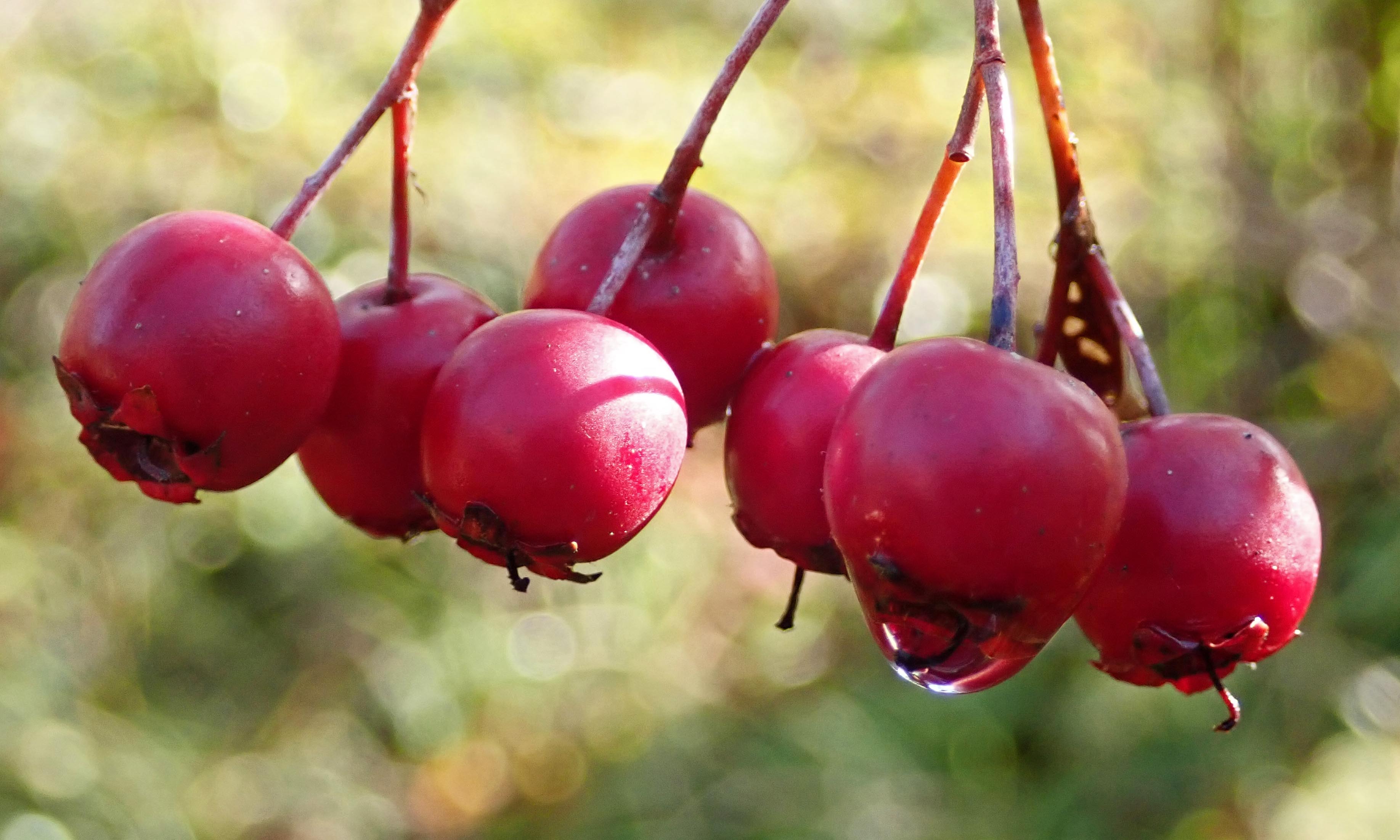
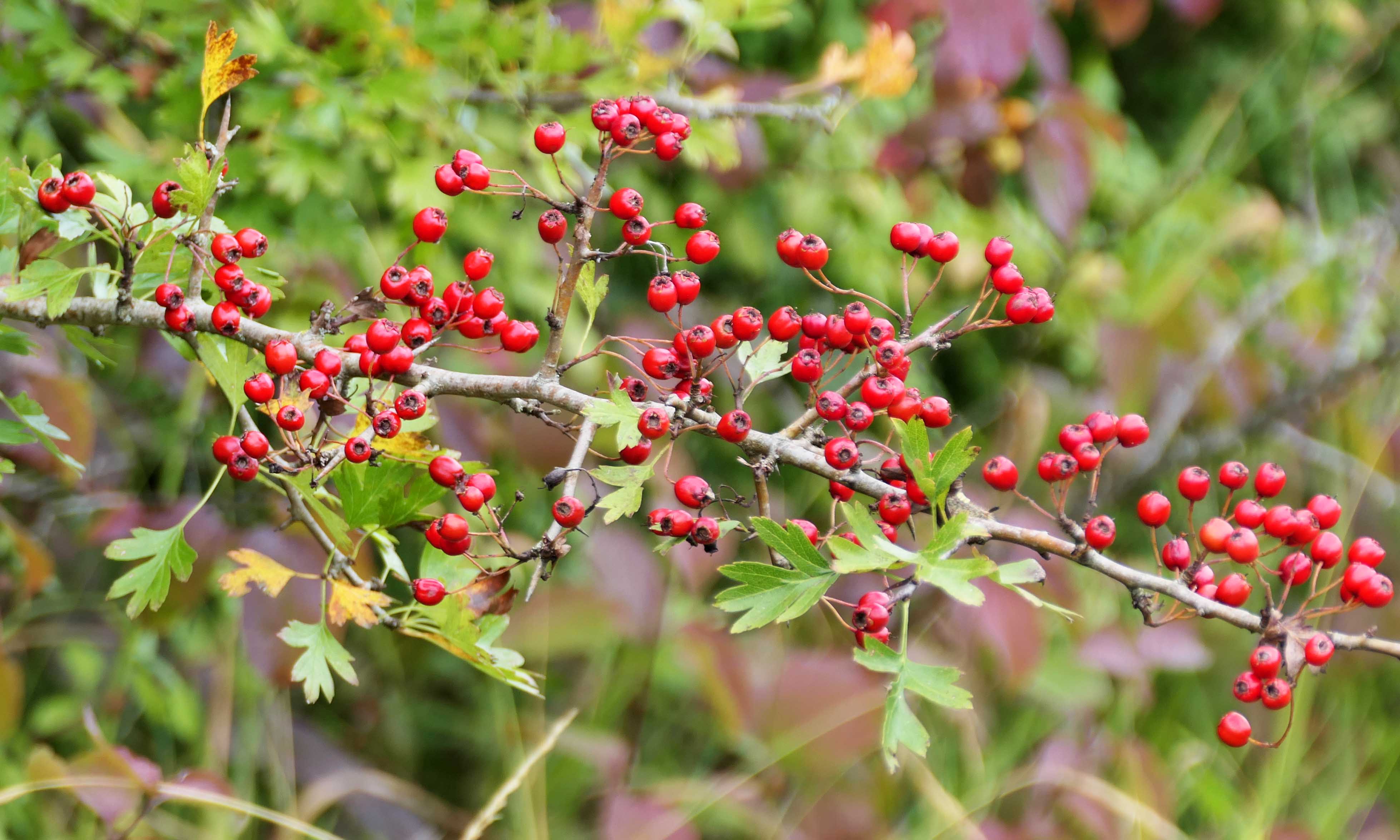
In the autumn, though the leaves of the Hawthorn do, of course, change colour, the hues are mostly yellow and brown, with just the merest hint of red. So it’s the stunning red berries rather than the tree’s leaves that makes the Hawthorn stand out in the autumnal landscape. I’ve never tried eating the berries but Mabey notes that the ‘flesh is a little like overripe avocado pear or, more fancifully, a whey cheese.’ That doesn’t sounds very appetising to me so I think I’ll continue to admire, not to eat them.

Like Loading...

Parasite of Bedellia somnulentella

27 Monday Oct 2025

Posted by sconzani in insects, leaves, plants

≈ 4 Comments

Tags

Bedellia somnulentella larva, British moths, British parasitic wasps, parasite of Bedellia somnulentella, parasitic wasp, wasp that parasitises Bedellia somnulentella, wasp that parasitises moth larvae

The two Field bindweed leaves I brought home from my coastal walk nearly two weeks ago, on the 14th, are the leaves that just keep on giving. As well as the three moth pupae I found on them – the reason I brought them home in the first place (see my blog Bedellia somnulentella revisited, 20 October), there was another pupa that looked to me to be that of a wasp, probably one that had parasitised another B. somnulentella larva.

That tiny wasp has now hatched. As is often the case with these miniscule creatures, I have no way of determining which exact species of parasitic wasp it is, and I do realise that the whole concept of a wasp larva eating a moth larva from the inside while it’s still alive is a bit gory (perhaps I should’ve posted this on Halloween!), but I find it fascinating, both the process of parasitism and also bringing the occasional things home to see what emerges. The little wasp, a male, has been released to live its best life.

Like Loading...

A wasp but which

18 Saturday Oct 2025

Posted by sconzani in insects, leaves

≈ Leave a comment

Tags

Adelius species, British parasitic wasps, moth larva parasite, parasite of Stigmella trimaculella, parasitic wasp, Stigmella trimaculella, wasp that parasitises leaf-mining moth larvae

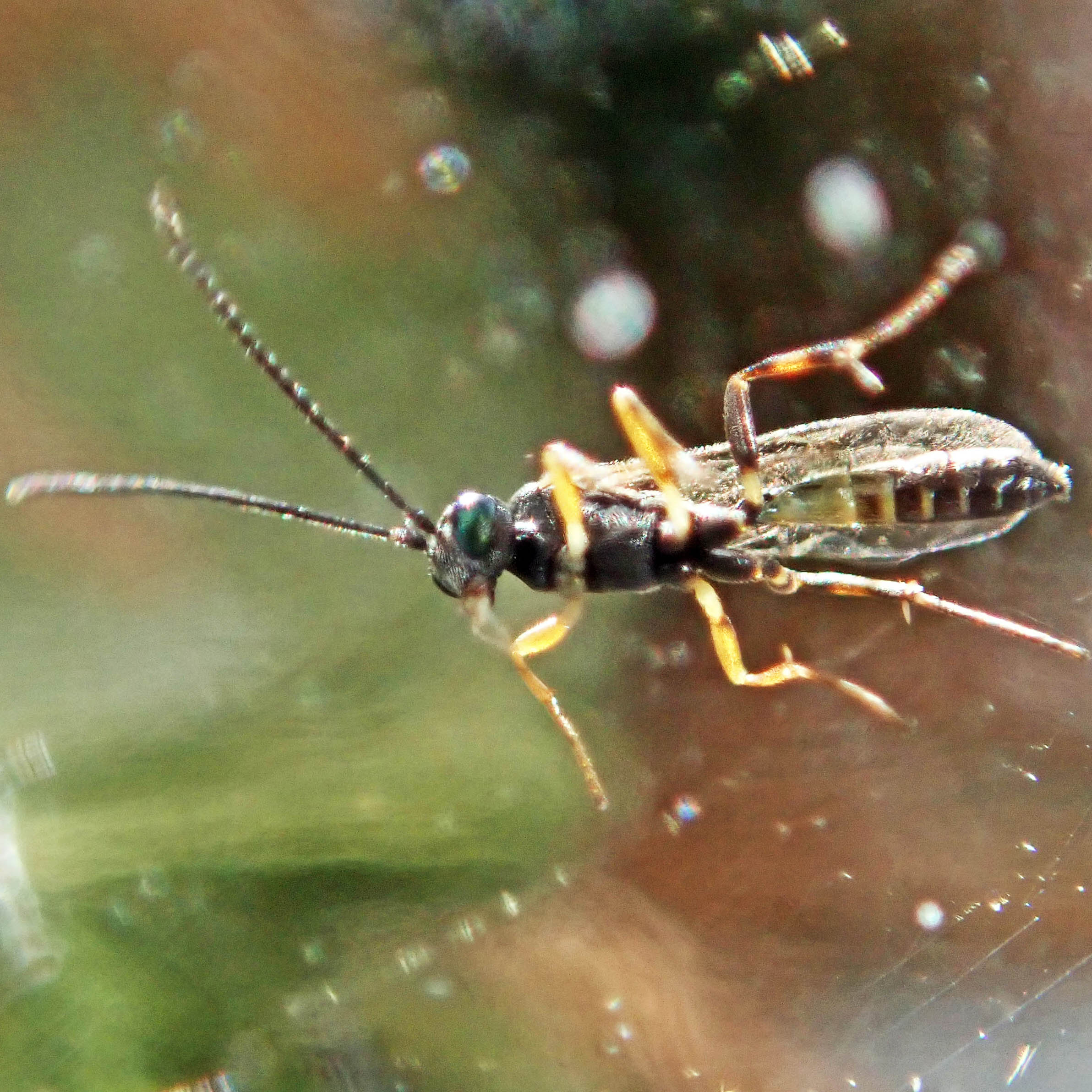
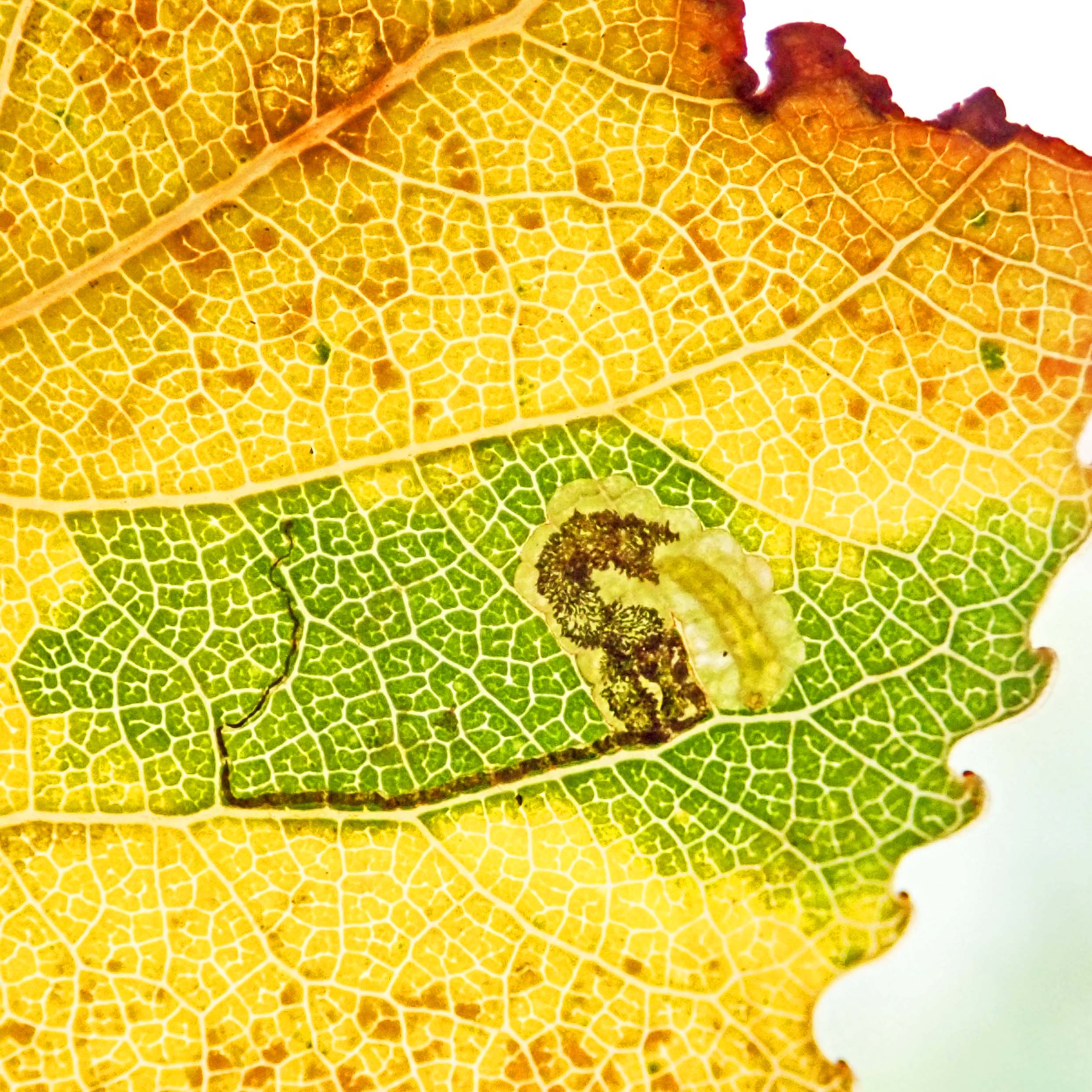
Back in July, when the leaves were falling early from the trees due to the hot dry conditions, I noticed several ‘green islands’ in the Poplar leaves at a local park and, as I didn’t have my macro camera with me, brought a few home to photograph.

Once home I realised that two of the leaves still had live larvae in them, larvae of the moth Stigmella trimaculella, happily munching away within their green island homes (see Leafmines: Stigmella trimaculella, 21 October 2024).

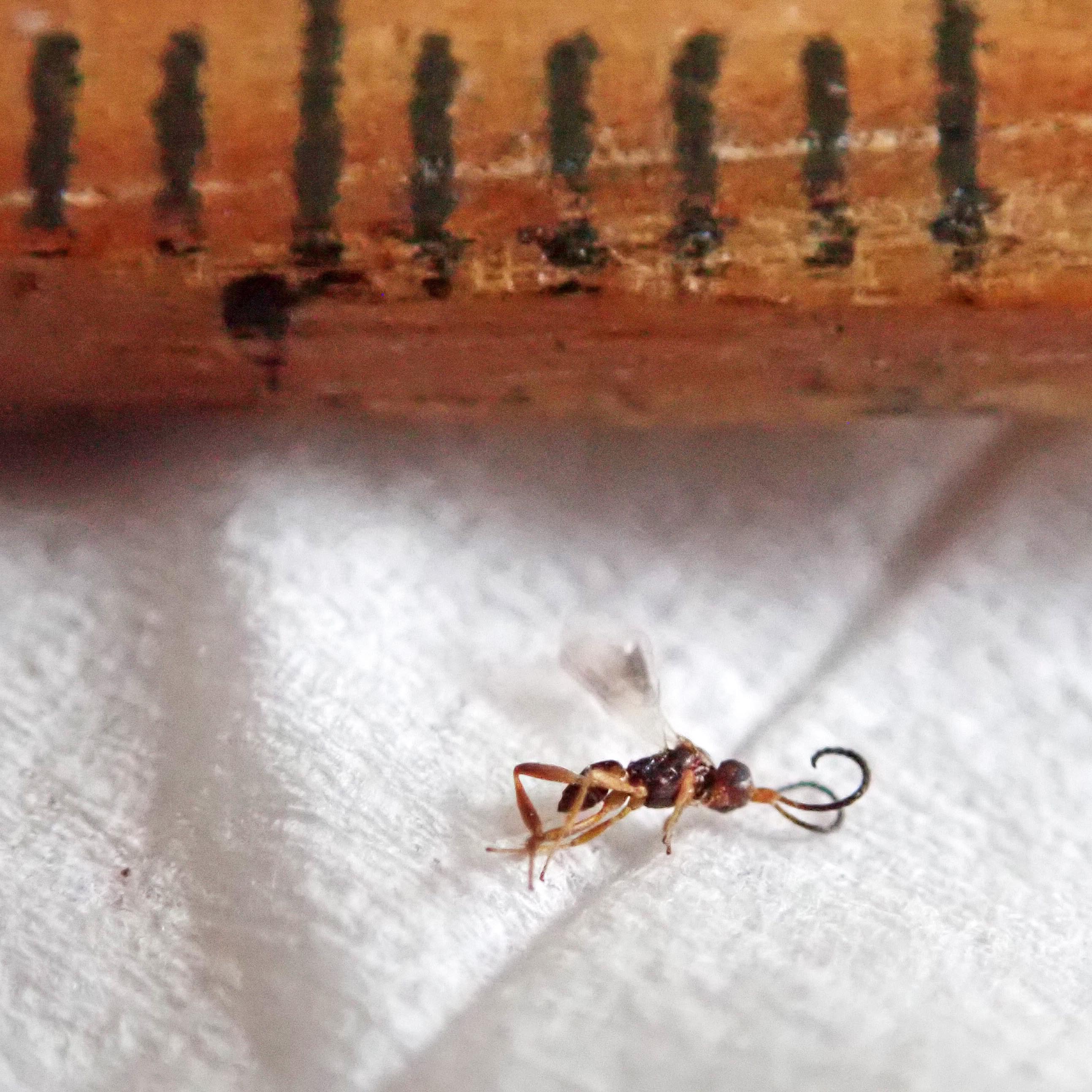
Rather than return them to the park, I put the leaves in a jar to see whether the larvae would go on to pupate and hatch as adult moths. Though I checked the jar regularly, nothing seemed to be happening. The leaves had dried up as expected but, as the larvae usually pupate in leaf debris on the ground, I didn’t think that would be a problem. This week I decided to empty the jar so tipped everything out on to a sheet of white paper … and found this.

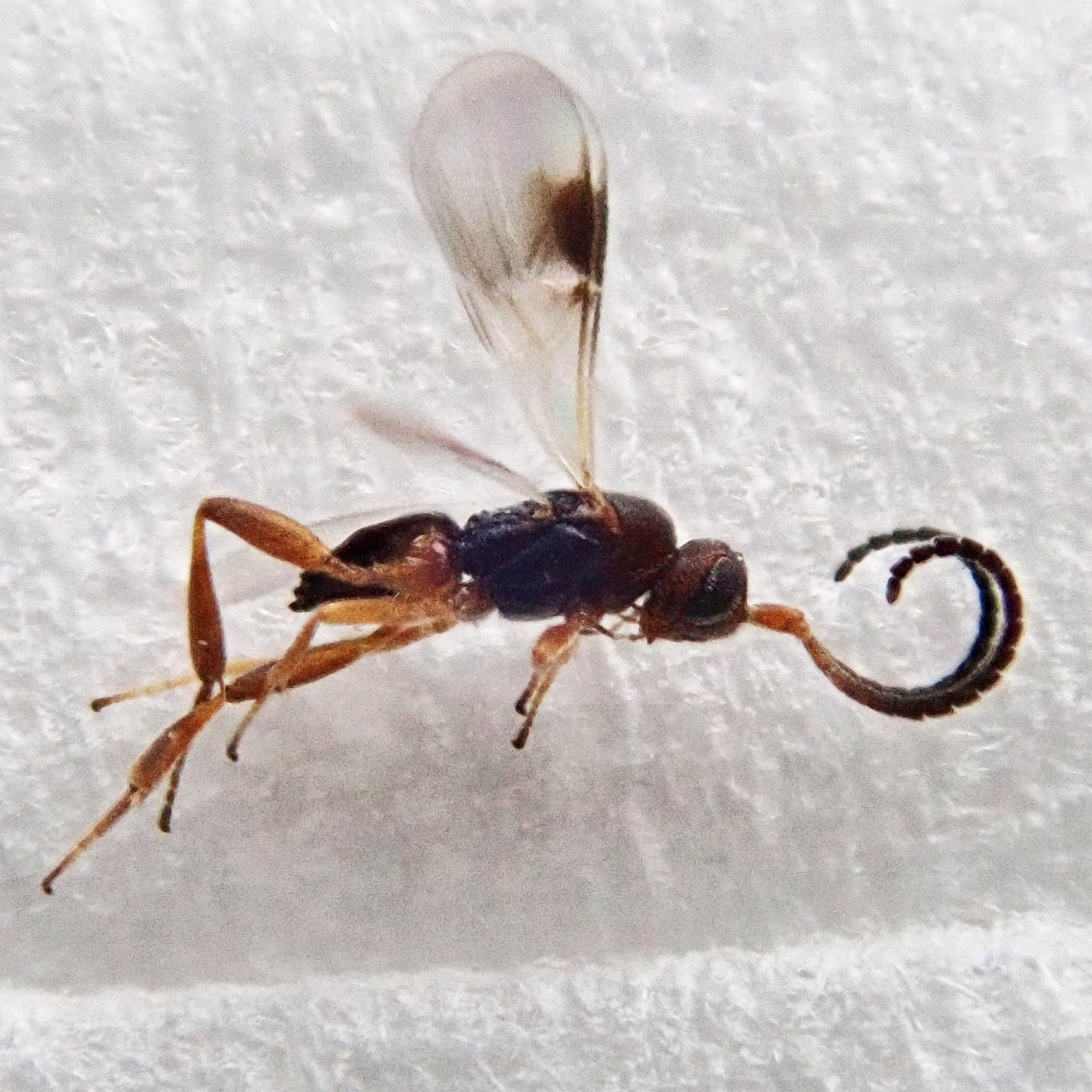
It appears that, although the two larvae seemed to be acting and eating as normal, at least one of them had been parasitised by a wasp, and this adult had emerged. It was miniscule, less than 2mms long, more like a speck of dust than a creature. I didn’t expect to get a decisive answer as to what it was but I took some photos and posted them online. Luckily for me, the wasp person I knew was able to connect me with a national parasitic wasp expert. He gave me a tentative identification based on what he could see and referred me to a document I could follow to try to key the wasp to species. The problem is that the key was very specific and, without a microscope, I simply couldn’t see the features clearly enough. So, this little creature would appear to belong to the family Braconidae, the subtribe Adeliinae, one of the Adelius species of parasitic wasp, but I can’t be 100% sure.

Like Loading...

Leafmines: Coptotriche marginea

15 Monday Sep 2025

Posted by sconzani in insects, leaves, plants

≈ 2 Comments

Tags

British leafminers, British moths, Coptotriche marginea, leaf-mining moth larvae, leaf-mining moths, leafmines on Bramble

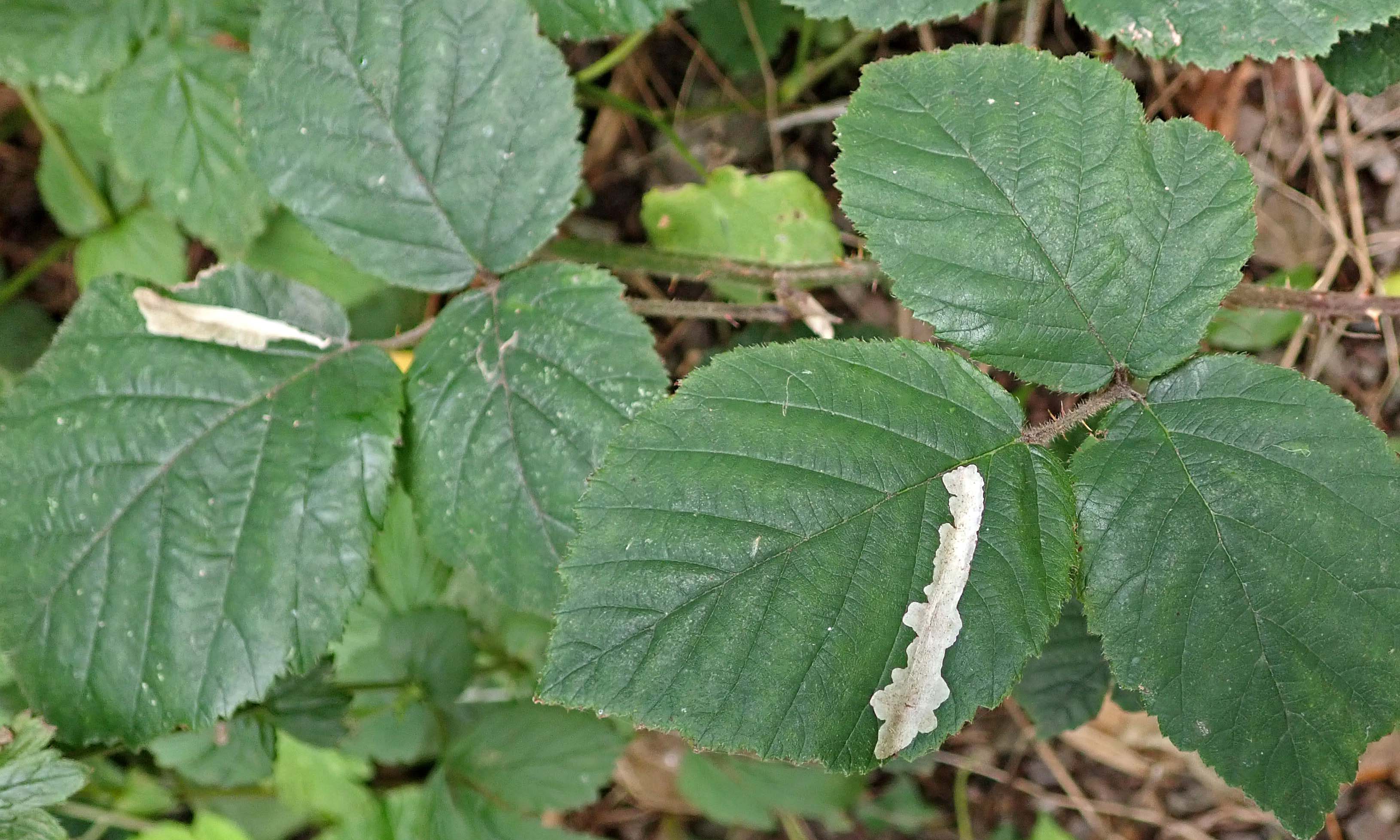
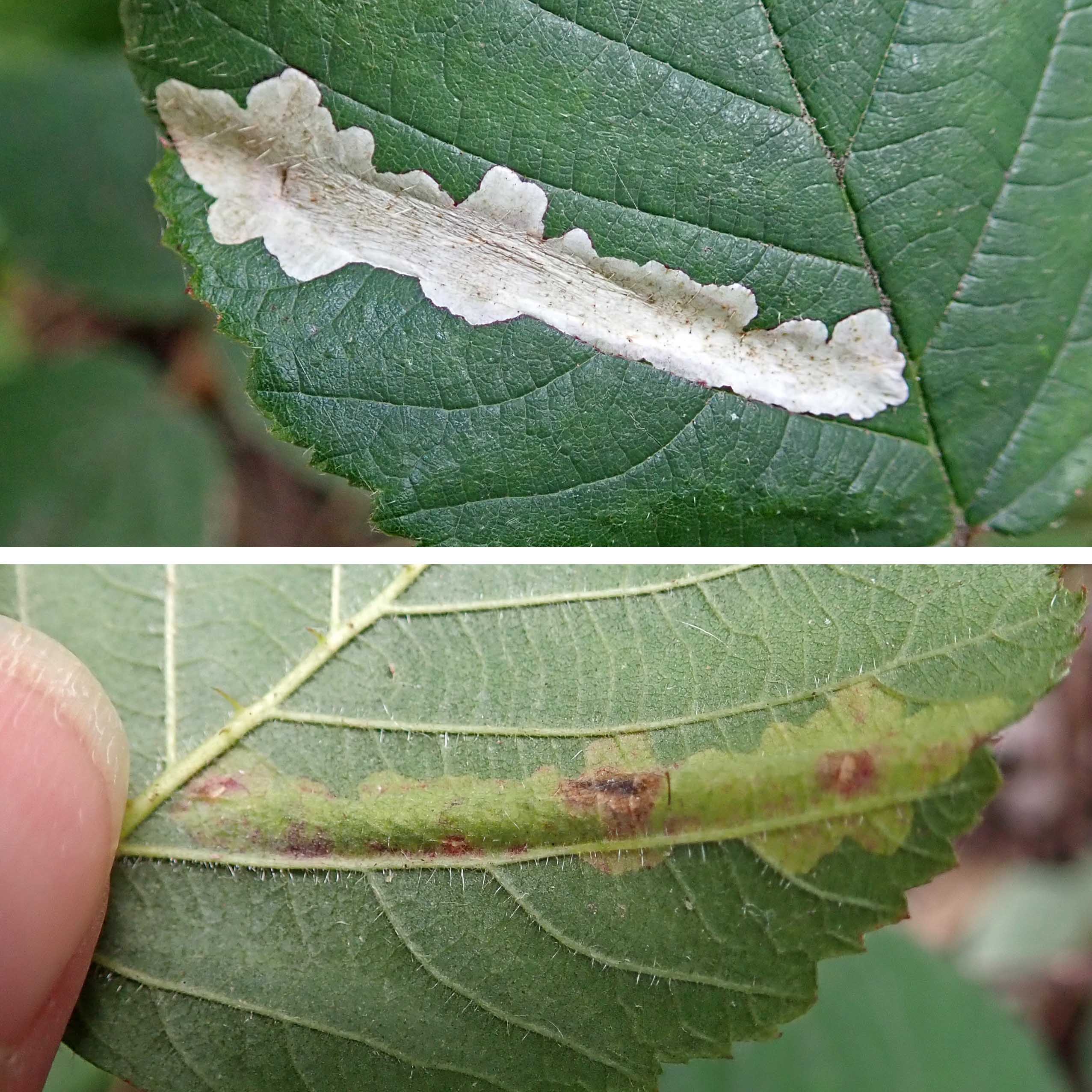
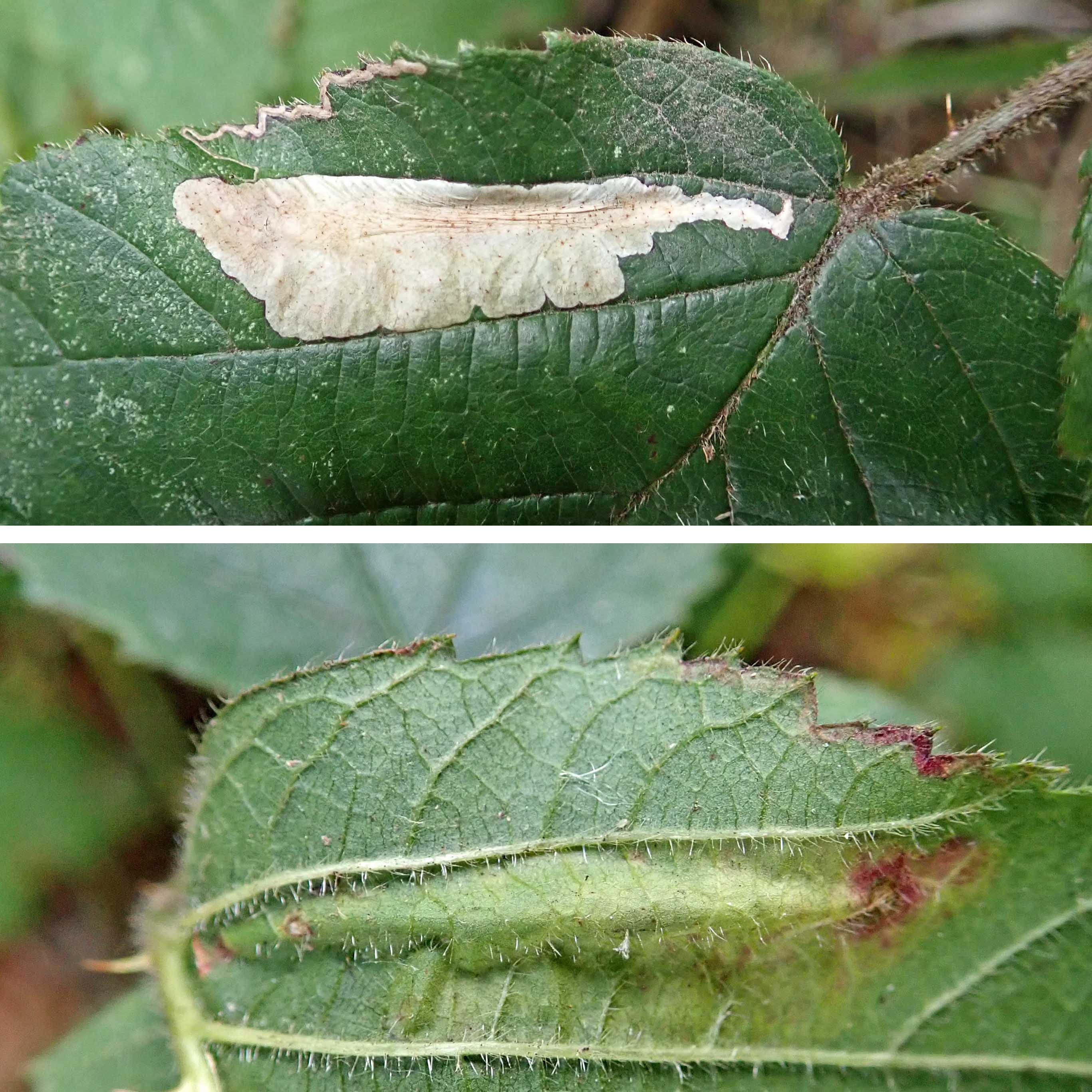
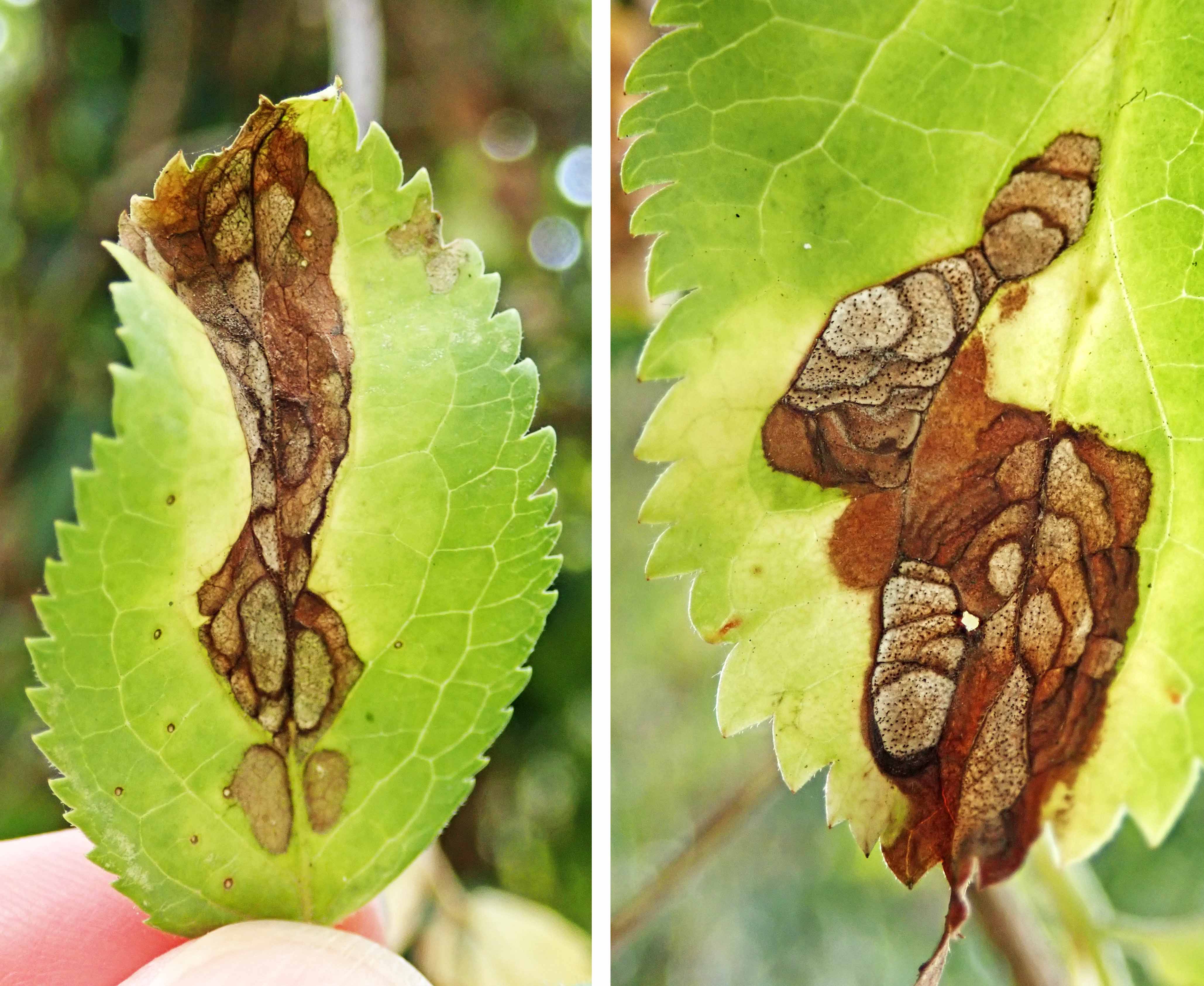
Today’s leafminer is one of two I found before I went away on my latest little mini break (I’ll feature the second in next Monday’s blog post). These bright white blotches, shown here on Bramble, but also found on other Rubus species, were made by the larvae of the moth Coptotriche marginea. Here’s a link to the UK Moth website’s entry on this moth, if you want to see what the adult looks like.

The female moth lays her egg on the upper side of a leaf, then, when the larva hatches, it chews into the leaf and initially creates a linear, gallery mine (you can see this in the third of my images, below), before the mine widens out to form a blotch. My photos below show the upper and under sides of each leaf.

This species is bivoltine; the first leafmines can be seen during July, while the second brood feed right through the winter months, from September to March. I guess staying inside a leaf is a cosy enough place to spend the winter, as long as your leaf doesn’t wither and die during the colder months.

Like Loading...

Leafmines: Bedellia somnulentella

08 Monday Sep 2025

Posted by sconzani in insects, leaves, plants

≈ Leave a comment

Tags

Bedellia somnulentella, Bedellia somnulentella larva, Bedellia somnulentella pupa, British leafminers, British moths, leaf-mining moth larvae, leaf-mining moths, leafmines on Field bindweed

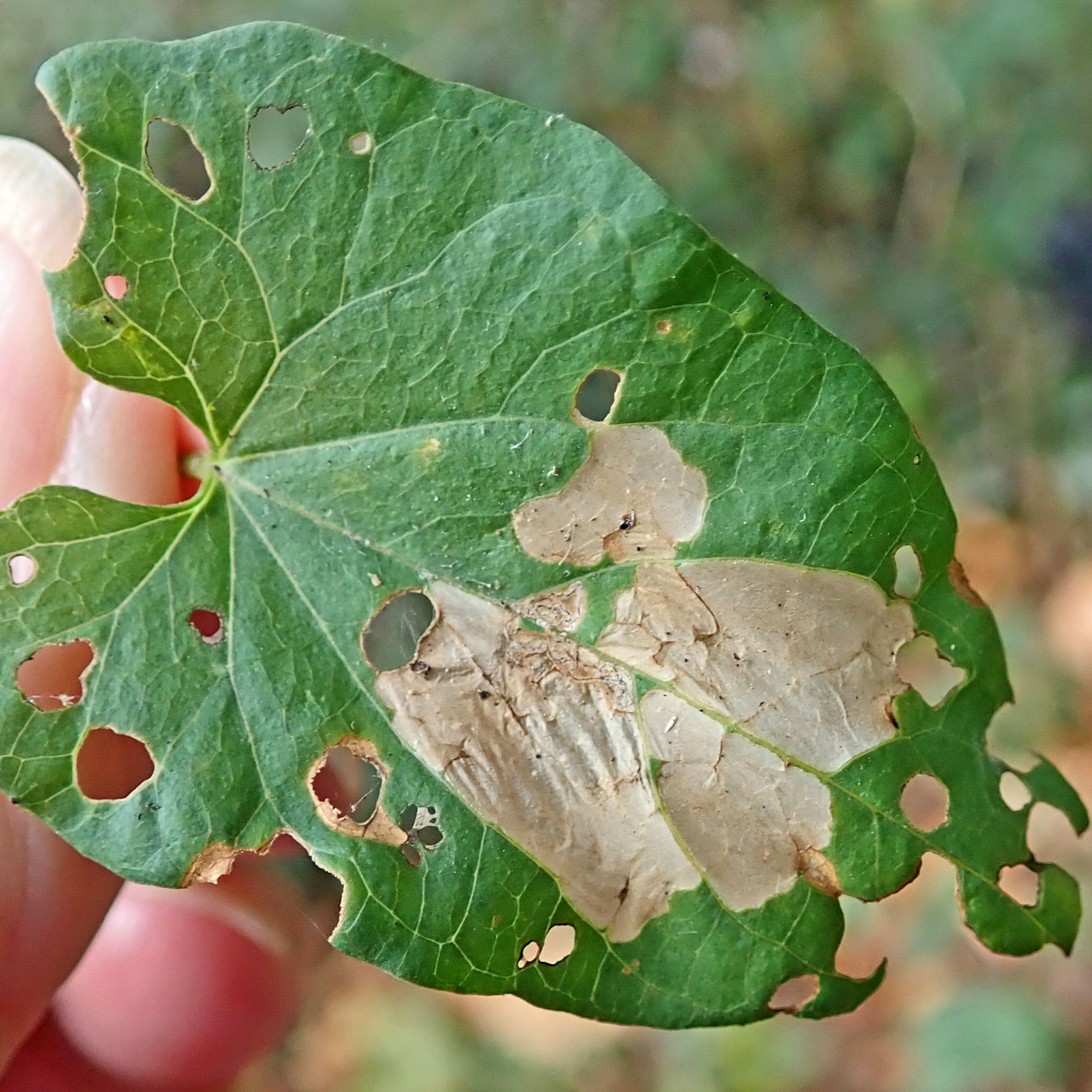
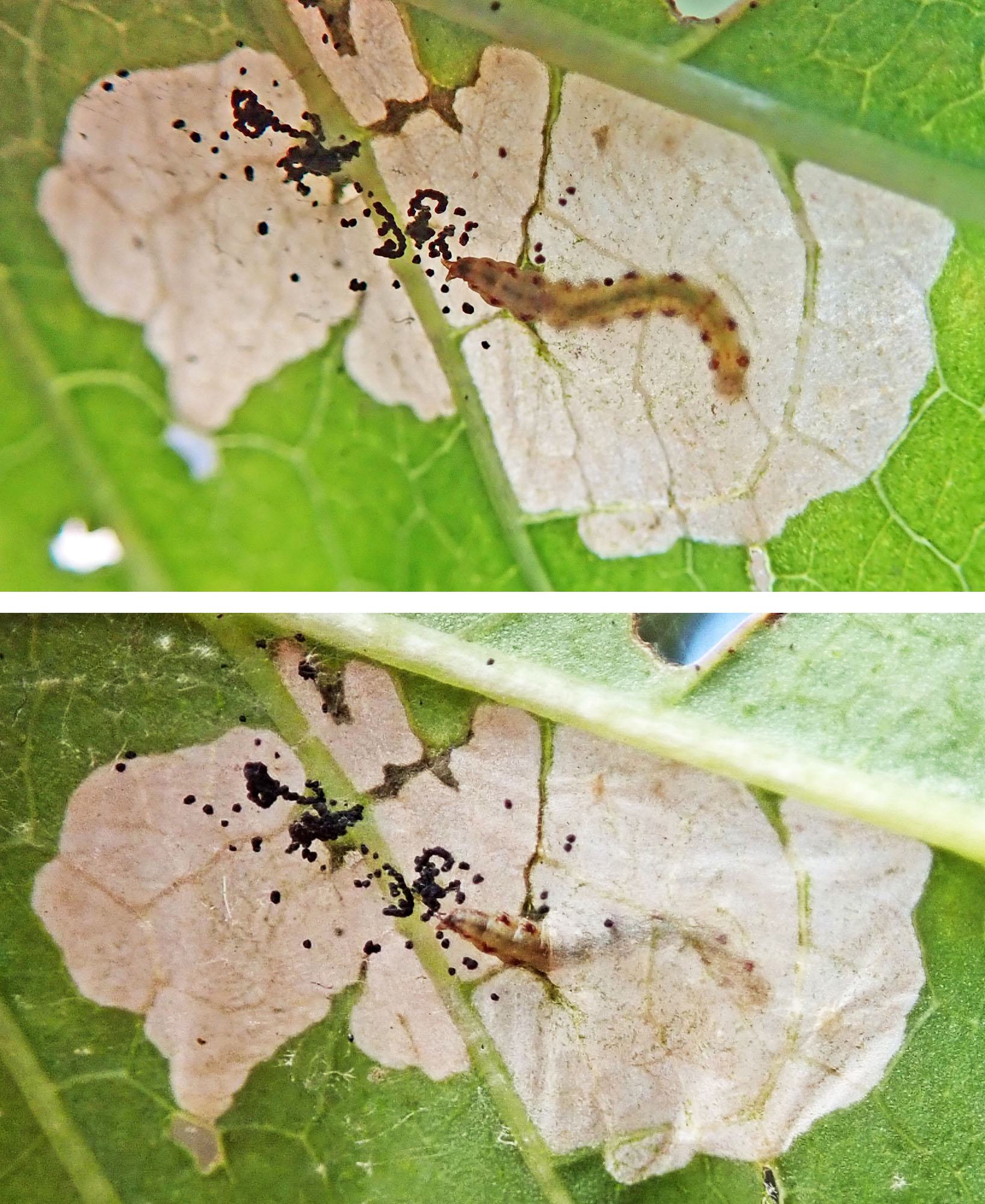
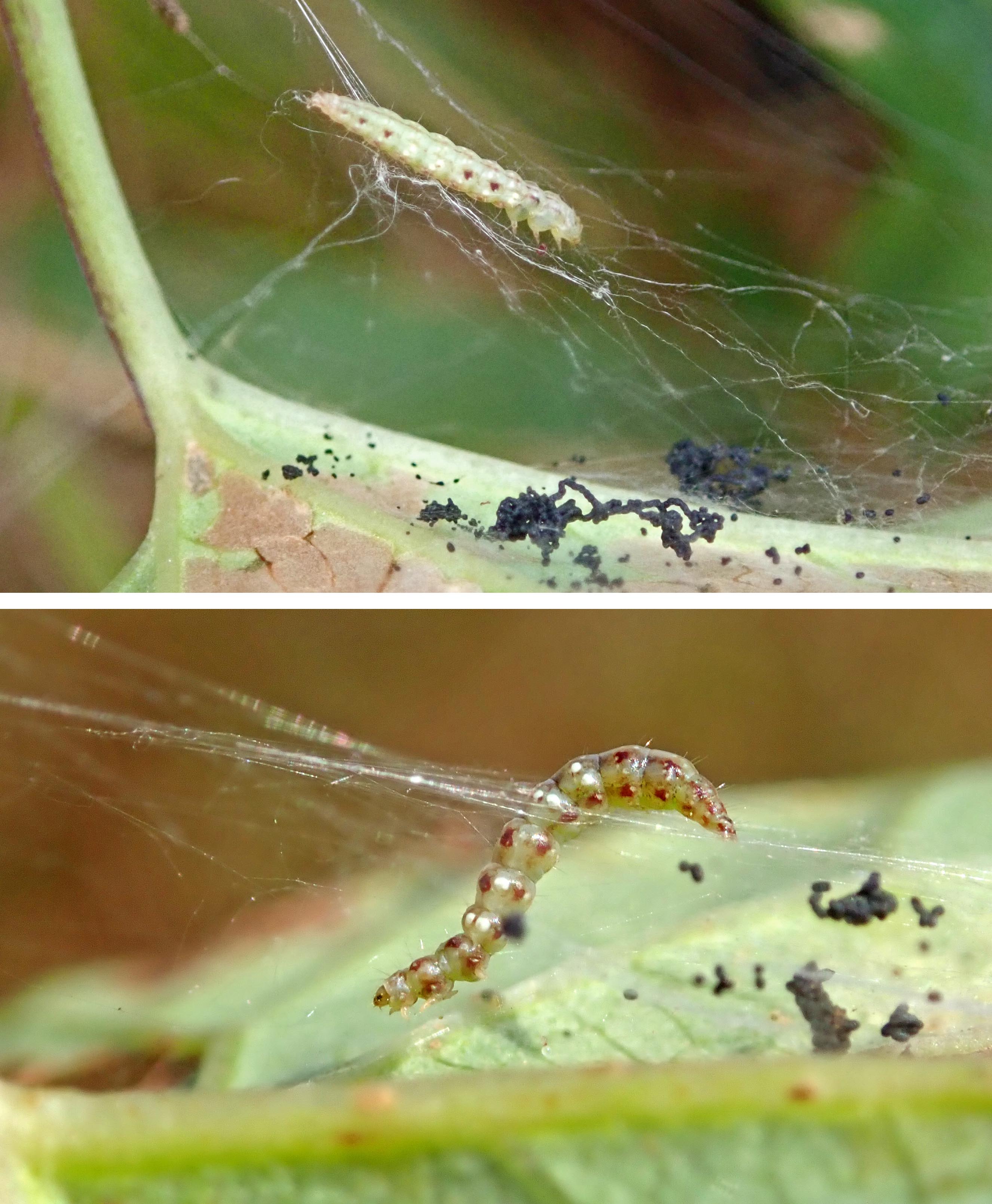
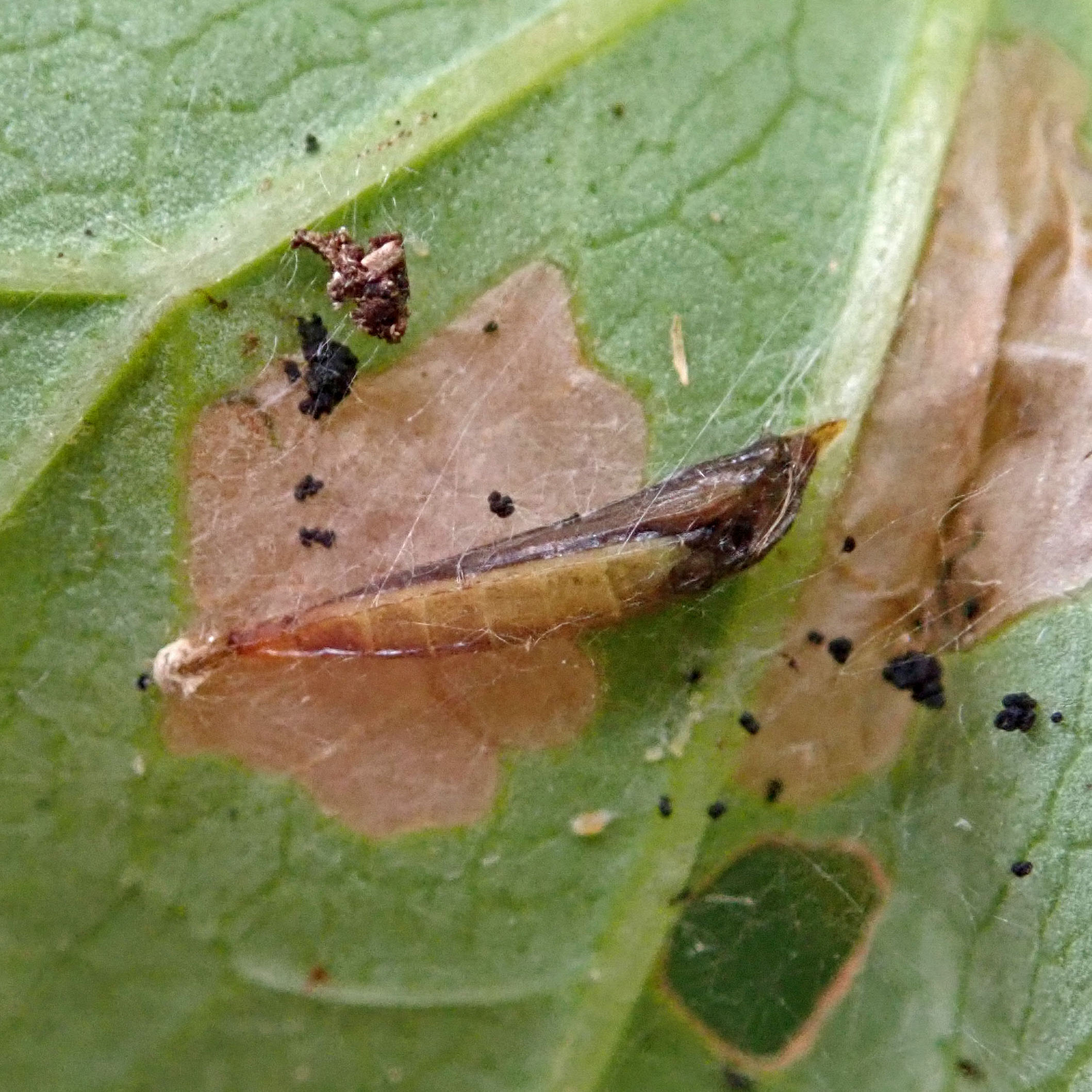
I’m particularly pleased to share this new leafminer as it’s not often that I find the signs of the mine, a larva within said mine, larvae resting outside their mines, and also a pupa, but here they are. These were found during two walks around the edge of a local recreation ground with, perhaps surprisingly, the pupa being seen on 9 August, a couple of weeks before I found the larvae (on 27 August) on plants that were a couple of hundred metres from the initial find site.

These mines are the work of the larvae of the moth Bedellia somnulentella, the adult of which is something of a ‘little brown job’, as you can see on the UK Moths website. The larval plants include both Field bindweed (as shown here) and Hedge bindweed, as well as Morning glory, and, though the mine begins as a gallery, this appears to be subsumed by the later blotch, as blotches were all I noticed.

These larvae have some interesting habits: they weave silken threads below their mines to create resting places outside their mines (an unusual habit). The threads would not be easy to spot, except for the fact that the larvae’s frass is also caught by them and so appears as scattered clumps and strings of pooh.

When they’ve finished feeding and their development is complete, the larvae exit their blotches and pupate suspended amongst their silken threads. They’re fascinating little creatures.


Like Loading...

Fungus: Cercospora depazeoides

29 Friday Aug 2025

Posted by sconzani in fungi, leaves, trees

≈ Leave a comment

Tags

British fungi, Cercospora depazeoides, fungal pathogen, fungus on Elder leaves, fungus on Elder trees

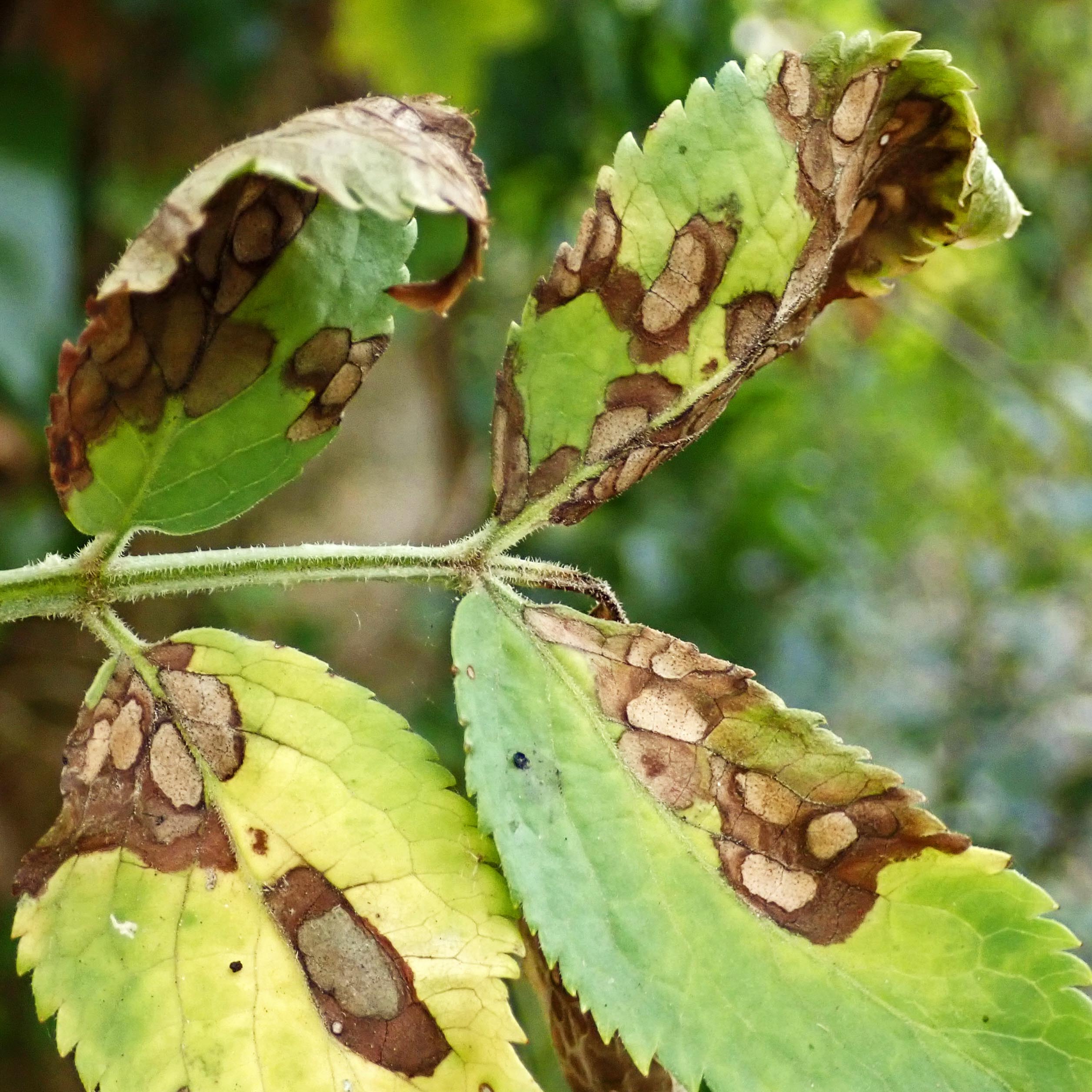
Given our recent, seemingly never-ending high temperatures, I’ve been surprised to find fungi flourishing, though they’ve not been the mushroom-shaped life forms you might expect when you read the word fungi. Take today’s fungus, for example. I didn’t immediately realise these very distinctive marks on the leaves of an Elder tree (Sambucus sp.) were caused by a fungus.

These marks are caused by Cercospora depazeoides, and it seems the fungus can be quite destructive. According to the European Forest Pests website, this fungal pathogen leads to ‘premature leaf drop and reduced photosynthesis’. When the spots merge, dominating the leaf surface, they cause defoliation, which can ‘weaken the plant, impacting its growth and fruit production’. Fortunately for those who harvest the berries to make Elderberry cordial, according to iRecord, this fungus has thus far not been recorded in many locations in the UK.

Like Loading...
← Older posts

About me

sconzani

sconzani

I'm a writer and photographer; researcher and blogger; birder and nature lover; countryside rambler and city strider; volunteer and biodiversity recorder.

View Full Profile →

Follow earthstar on WordPress.com

Enter your email address to follow this blog and receive notifications of new posts by email.

Recent blog posts

  • M is for mite December 18, 2025
  • L is for lepidopteran lifers December 17, 2025
  • K is for Keeled skimmers December 16, 2025
  • J is for Jersey tiger December 15, 2025
  • I is for Ichneumon December 14, 2025

From the archives

COPYRIGHT

Unless otherwise acknowledged, the text and photographs on this blog are my own and are subject to international copyright. Nothing may be downloaded or copied without my permission.

Fellow Earth Stars!

  • Unknown's avatar
  • Unknown's avatar
  • Unknown's avatar
  • Unknown's avatar
  • Unknown's avatar
  • Unknown's avatar
  • Unknown's avatar
  • Unknown's avatar
  • Unknown's avatar
  • Unknown's avatar
  • Unknown's avatar
  • Unknown's avatar
  • Unknown's avatar
  • Unknown's avatar
  • Unknown's avatar
  • Unknown's avatar
  • Unknown's avatar
  • Unknown's avatar
  • Unknown's avatar
  • Unknown's avatar
  • Unknown's avatar
  • Unknown's avatar
  • Unknown's avatar
  • Unknown's avatar
  • Unknown's avatar
  • Unknown's avatar
  • Unknown's avatar
  • Unknown's avatar
  • Unknown's avatar
  • Unknown's avatar
  • Unknown's avatar
  • Unknown's avatar
  • Unknown's avatar
  • Unknown's avatar
  • Unknown's avatar
  • Unknown's avatar
  • Unknown's avatar
  • Unknown's avatar
  • Unknown's avatar
  • Unknown's avatar
  • Unknown's avatar
  • Unknown's avatar
  • Unknown's avatar
  • Unknown's avatar
  • Unknown's avatar
  • Unknown's avatar
  • Unknown's avatar
  • Unknown's avatar
  • Unknown's avatar
  • Unknown's avatar

Blog at WordPress.com.

Privacy & Cookies: This site uses cookies. By continuing to use this website, you agree to their use.
To find out more, including how to control cookies, see here: Cookie Policy
  • Subscribe Subscribed
    • earthstar
    • Join 667 other subscribers
    • Already have a WordPress.com account? Log in now.
    • earthstar
    • Subscribe Subscribed
    • Sign up
    • Log in
    • Report this content
    • View site in Reader
    • Manage subscriptions
    • Collapse this bar
 

Loading Comments...
 

You must be logged in to post a comment.

    %d