Tags
birding, birds, birdwatching, British birds, proverb, Song thrush, thrush, worm
… catches the worm!



06 Wednesday Jan 2016
Posted in birds, nature, nature photography
Tags
birding, birds, birdwatching, British birds, proverb, Song thrush, thrush, worm
… catches the worm!
05 Tuesday Jan 2016
Posted in birds, insects, nature, nature photography, winter
Though its roots can creep between gaps in stonework causing severe damage to ancient ruins, stone walls, grave monuments and the like, ivy (Hedera helix, also known as English ivy, common ivy or just plain ivy) is of great importance to wildlife. Not only does it provide shelter and nesting places for insects, birds, bats and other beasties, it is also an important food source.
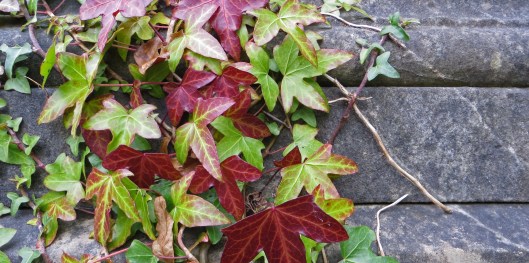
Ivy’s flowering period begins in August and continues right through to November, sometimes later, and the flowers produce plentiful quantities of nectar and pollen. Over 70 species of nectar-loving insects feast on the flowers, including wasps and bumblebees, Red admiral, Small tortoiseshell and Peacock butterflies.

Once the berries begin to ripen, they turn a deep purple-black colour, and provide an important winter source of food when most other berries are finished. At this time, the ivy becomes a favourite snacking place for lots of berry-eating birds, blackbirds and thrushes in particular, but also starlings and jays, finches and wood pigeons.

04 Monday Jan 2016
Posted in fungi, nature, nature photography
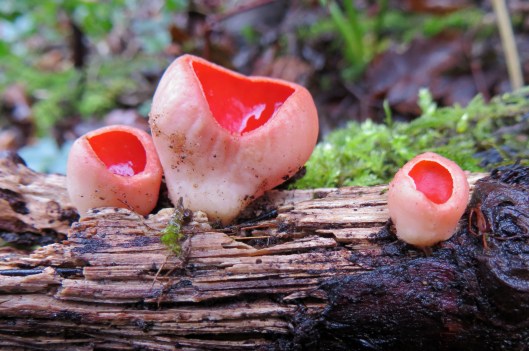
Just as the Scarlet waxcaps are the jewels of the autumn meadows so the Elfcups are the jewels of the wet winter woodlands. Though they’re tiny (no more than 7cm across) and frequently half buried in moss, their eye-catching bright red colour makes them easy to spot in the damp shady places where they live on dead wood, particularly beech, hazel, hawthorn, willow and elm.

Two Elfcups can be found in Britain – the Scarlet Elfcup (Sarcoscypha austriaca) and the Ruby Elfcup (Sarcoscypha coccinea). They are so similar in outward appearance that a microscope is required to distinguish between them and, even then, it’s not easy. With a goblet-shaped cup and short stem when young, which flattens into a cup shape as they mature, it’s not difficult to see where they got the name Elfcup, nor their other common name of Fairies’ Baths.
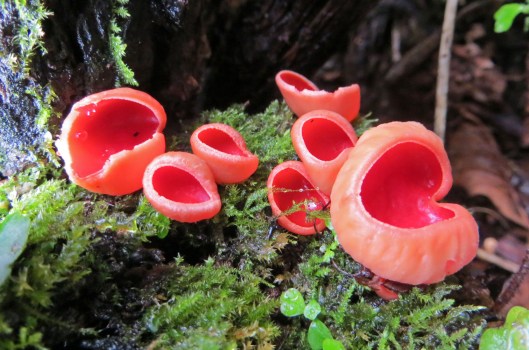
In fact, that ‘bath’ is where the spores can be found. These fungi don’t drop their spores from gills like regular mushrooms; instead, they fire spores from structures called asci, a bit like a cannon fires cannon balls and, apparently, they make a tiny puffing sound when that happens. So, listen closely next time you see them.
03 Sunday Jan 2016
Posted in birds, nature, nature photography
Tags
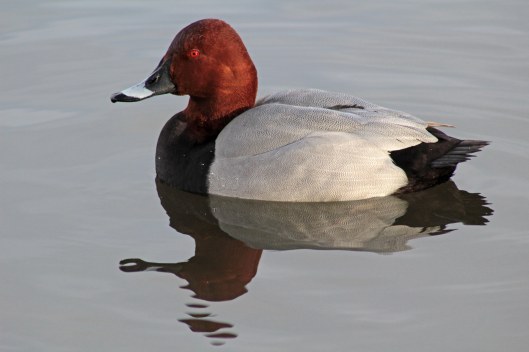
As soon as I spotted his bright chestnut-coloured head I knew this was a Pochard (Aythya ferina). Though this was a first-ever sighting for me today, on Roath Park lake in Cardiff, his colouring was unmistakable, and what a handsome chap he was. The origin of his name is, apparently, something of a mystery – and its pronunciation arguable! – though he’s attracted a very long list of common names, including doucker, dun bird, dun poker, poker, red-headed wigeon, smee duck, well plum, whinyard, and, my favourite, red-eyed poker.

The Pochard has only been a British resident for about 200 years and, even now, the majority of birds come here primarily during the winter months, to escape the bitterly cold conditions in Russia and eastern Europe.

My new friend was amusing me with diving demonstrations – he dives for food, which could include anything from submerged plant life and seeds to small fish, snails and insects. I didn’t spot any females around today but I’m a regular visitor to the lake so will certainly be looking out for Mrs Pochard and hoping to see this beautiful creature again.
01 Friday Jan 2016
Posted in fungi, nature, nature photography
Tags
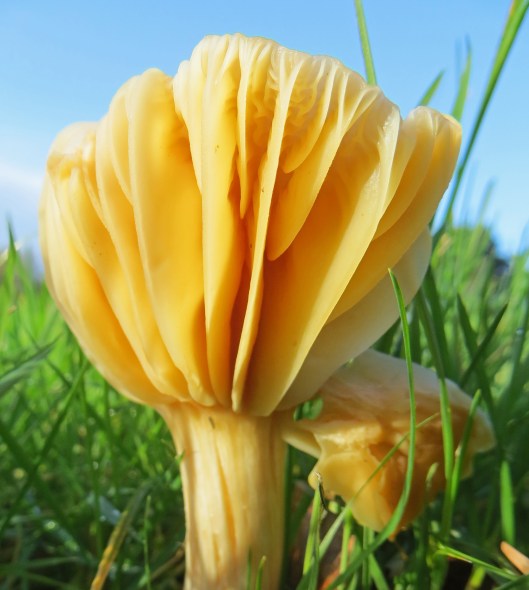
Though a very pretty and quite delicate shade of apricot, the Meadow waxcap is one of the less colourful waxcaps. Yet what it lacks in vibrancy it more than makes up for in the sculptural elegance of its shape, even more so as it ages. From a straight robust stem, its gills soar skywards, like a sharp-edged version of the fluting on a Greek temple column, and the edge of its cap undulates like the rolling of the ocean waves.
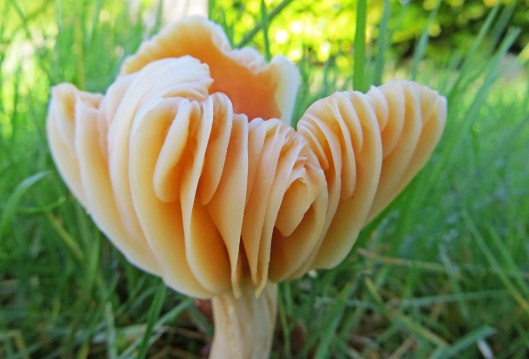
Hygrocybe (‘watery head’) pratensis (‘of meadows’) is one of the larger mushrooms in the waxcap family and is also more tolerant of fertilisers than most, so is a relatively common find in Britain and Europe on mown grassland and cropped pastures where the soil tends towards the acidic. It can also be found growing in woodland areas in northern Asia, in Australia and New Zealand, and in both South and North America – in the latter, it is more commonly known as the butter meadowcap or the salmon waxy cap.
31 Thursday Dec 2015
Posted in birds, nature, nature photography
Tags
I met these three Muscovy ducks during this morning’s walk around Roath Park lake. I’ve not seen them before so I’m not sure if they’re recent escapees from a local waterfowl collection or not-so-local farmyard, or are feral – they were certainly friendly enough, toddling over to beg for food.

The Muscovy (Cairina moschata) isn’t native to Britain, nor does it come from the area around Moscow, in Russia, which is what the word Muscovy normally means. This duck came originally from Central and South America but has been domesticated by the Native Americans since pre-Columbian times, and has long been introduced to many other countries.
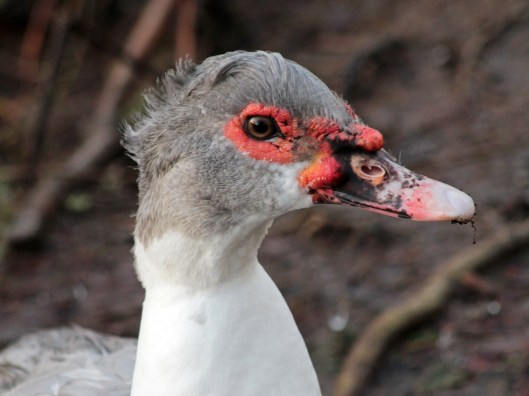
Being larger than the mallard, Muscovy are favoured for eating and apparently have a stronger flavour, which some liken to the taste of roast beef. In culinary circles, the bird is known as Barbary duck so don’t be confused when you see Barbary on the menu – you’re actually eating Muscovy. Since their introduction to Britain, many birds have escaped or been released from domestic confinement, so there is now quite a large wild population. And, in case you’re wondering, the name actually refers to the strong musk odour the bird produces from a small pouch below its beak.

30 Wednesday Dec 2015
Posted in birds, nature, nature photography
Tags
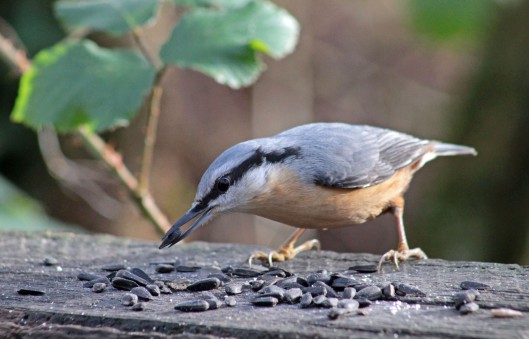
The nuthatch (Sitta europaea) can frequently be seen upside down, scrambling down a tree trunk or hanging from a bird feeder while pecking urgently to extract its favourite nuts and seeds. As its name implies, it loves nuts and, like squirrels and jays, frequently stashes nuts in chinks and crevices. This can cause problems for homeowners – I read one story of a nuthatch burying seeds in the cracks between patio pavers and in potted plants. If the bird didn’t return for all its buried food, the homeowners got its (unwanted) treasure of sprouting trees, shrubs and sunflowers.
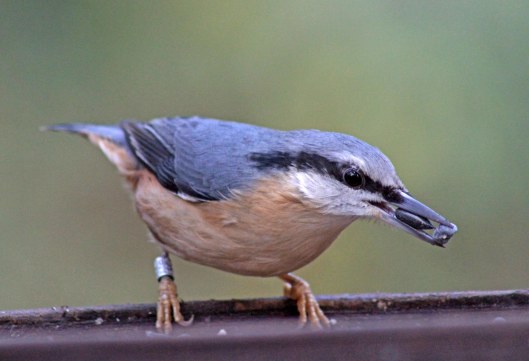
Many of the nuthatch’s vernacular names refer to its habit of wedging nuts in crevices and striking them with its ultra-sharp beak: ‘nut topper’ and ‘woodcracker’ in Surrey, ‘nutcracker’ in Shropshire, ‘nuthack’ and ‘nut jobber’ from Berkshire, and ‘jobbin’ in Northamptonshire (‘job’ is from an old English verb meaning to peck or jab). The nuthatch’s other common names refer to its mud-plastering nest-building habits: ‘mud dabber’ from Somerset, and ‘mud stopper’ in various parts of southern England.
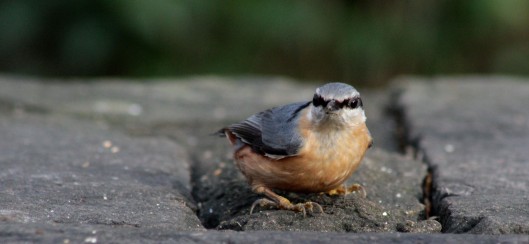
Cracking and eating nuts is a favourite human pastime at Christmas, and The Nutcracker a favourite Christmas-time ballet but I think, in terms of entertainment, Nature’s nutcracker has them both beat!
29 Tuesday Dec 2015
Posted in animals, nature, nature photography
I come from a land of sheep (New Zealand) and now I live in another (Wales). Sheep are not only important in the cultures and economies of both countries, they also figure in many aspects of our daily lives. We wear clothes made from their wool, use products made from their leather and, in the English language, we regularly use many sheep-based idioms.

If you’re feeling sheepish, you’re embarrassed because you know you’ve done something silly or wrong. You might be the black sheep of the family, the one who’s different, perhaps disreputable, maybe unloved. You should beware the wolf in sheep’s clothing, the dangerous person who’s pretending to be harmless. If you work as a manager, you might need to separate the sheep from the goats, i.e. separate those people who are competent and worth keeping from those who are not. If you fancy someone but feeling shy and a little foolish, you might make sheep’s eyes at them. And if you’re having trouble getting to sleep at night, then you could always try counting sheep!

28 Monday Dec 2015
Posted in fungi, lichen, nature, nature photography
Lichen have two methods of reproduction: one is asexual – they simply expand to cover more of the surface on which they’re living; the other is sexual but, it’s not the actual lichen that is reproducing sexually, it’s the fungus the lichen is in a symbiotic relationship with.

The saucer-shaped discs in my photos are apothecia, one of the two main types of sexual fruiting bodies of the fungi in the Ascomycota group, to which the majority of lichens belong. Spores (the correct term is propagules) are dispersed from these discs by air, water or attaching themselves to minibeasties, and must then meet up with an algal partner in order to form new lichen.

The yellow- and orange-coloured lichen in these photographs are, I believe, Xanthoria parietina, which is very common on both tree bark and stonework throughout Britain, and has a particular liking for Elder trees and coastal rocks.
27 Sunday Dec 2015
Posted in birds, nature, nature photography
Tags
The cormorant (Phalacrocorax carbo) is common around the world – the Chinese have long been known to train domesticated birds for fishing and, in 17th-century England, it was a court fashion to tame cormorants for fishing, a trend so prevalent that the royal household included a Master of the Cormorants. Though they fish by diving underwater for up to two minutes at a time, their plumage is not waterproof, which is why cormorants can often be seen with wings outstretched, drying in the wind and sunshine.

Cormorants are large and very distinctive birds – to some, quite reptilian in appearance, and can be found throughout Britain, in their preferred habitats of rocky coastlines and coastal estuaries, though in recent years the European subspecies has increasingly been populating inland lakes and waterways. For this the cormorant suffers very bad press from fishermen, who have been demanding the right to cull these superior fishers. One place where the birds are particularly well regarded, however, is Liverpool, where the Liver Bird – actually a cormorant – has long been the city’s emblem.

 earthstar
You must be logged in to post a comment.