• ABOUT
  • BIRDING 2018
  • Birding 2019
  • BLOG POSTS
  • Butterflies 2018
  • Resources

earthstar

~ a celebration of nature

earthstar

Category Archives: nature photography

Pulling itself up by the bootstraps

17 Wednesday Feb 2016

Posted by sconzani in fungi, nature, nature photography

≈ 2 Comments

Tags

Armillaria mellea, bootlace fungus, bootstrap fungus, fungus, honey fungus, rhizomorphs

I had never seen these ‘bootstraps’ or ‘bootlaces’ until my friend Mark pointed them out to me on a recent fungi foray. They are what remains of an infestation of Honey fungus (Armillaria mellea) which may sound sweet but, believe me, is anything but. Honey actually refers to its colour, not its habits, as this fungus is a parasite and a killer.
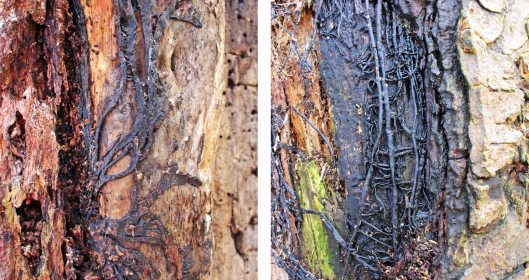
160216 Armillaria mellea (Honey fungus) bootlaces (rhizomorphs)

It lives on live wood and sends forth these extensive rhizomorphs, root-like filaments, between the affected tree’s inner core and its bark. When fresh, the bootstraps are a cream colour but they blacken over time. They cause the tree to rot and die so by the time the Honey fungus mushroom-like fruiting bodies emerge through holes in the bark, the tree is a goner.
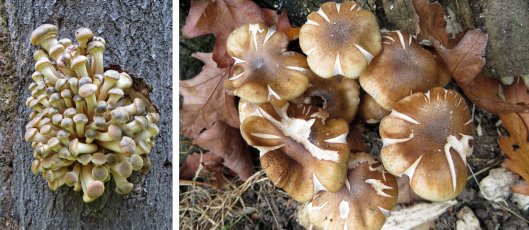
160216 Armillaria mellea Honey fungus

This fungus will attack almost any type of tree from conifer to broad-leaf, softwood and hardwood. It can cause enormous damage to forests and woodlands because those rhizomorphs have been recorded up to nine metres long and they can extend through soil from one tree to the next, invading and killing as they spread.
Like Loading...

Conversation with robins: 3

15 Monday Feb 2016

Posted by sconzani in birds, nature, nature photography

≈ 6 Comments

Tags

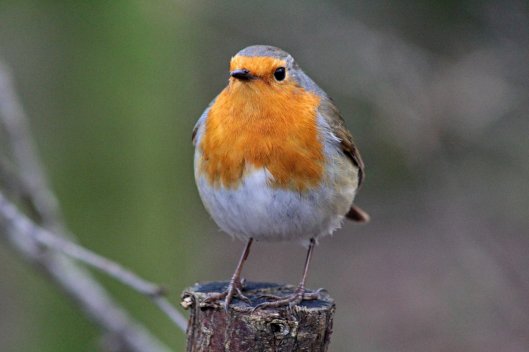
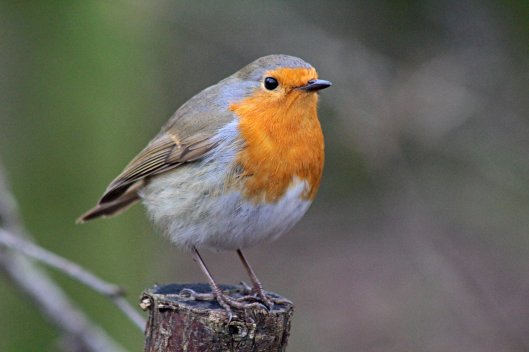
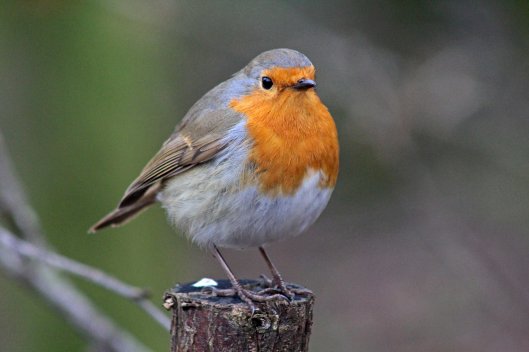
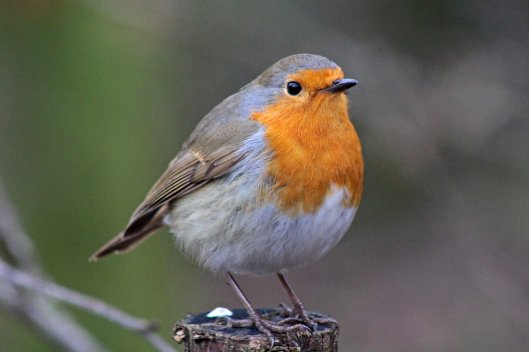
birding, birds, birdwatching, British birds, conversations with robins, robin

Forest Farm Nature Reserve, a few days ago

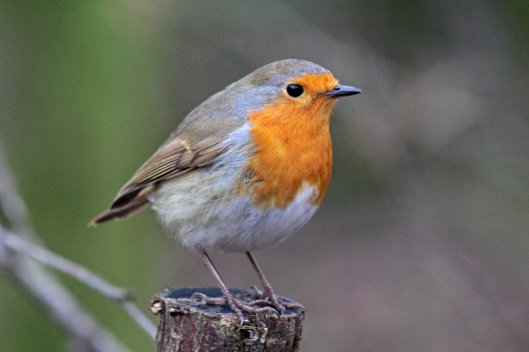
160215 robin conversation (1)

Me: ‘Hello, robin. Nice to see you again.’
Robin: ‘Hello, lady. It’s a lovely day, isn’t it?’

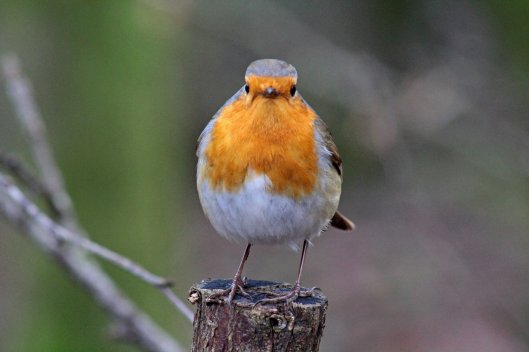
160215 robin conversation (2)

Me: ‘It sure is. And before you ask, I’ve run out of bird seed.’
Robin: ‘Whaaaaaaaaaaaaaaaaaaaaaaaaaaat???’

160215 robin conversation (3)

Me: ‘I’ve been walking for a couple of hours, and I’ve already given my seed to other birds. I’m sorry.’
Robin: ‘But it’s cold and I’m starving and I’m such a cute little robin.’

160215 robin conversation (4)

Me: ‘Yes, you are. And I’m sorry you missed out.’
Robin: ‘But I haven’t eaten anything all day.’

160215 robin conversation (5)

Me: ‘You pooped! Right in the middle of our chat, you pooped!’
Robin: ‘So? A bird’s gotta do what a bird’s gotta do!’

160215 robin conversation (6)

Me: ‘I guess you had had something to eat after all.’
Robin: ‘Oh … well … maybe something small … hours ago.’

Like Loading...

Snug as a bug

14 Sunday Feb 2016

Posted by sconzani in insects, nature, nature photography

≈ 2 Comments

Tags

carrion beetle, European carrion beetle, Phosphuga atrata, Silpha atrata

Well, these bugs were snug until I lifted up the bark they were snoozing under on a fallen tree at my local cemetery but, rest assured, I covered them back up again once I’d taken a few photos. These snug bugs are European carrion beetles (now Phosphuga atrata, originally Silpha atrata) and, yes, they do indeed feed on the decaying flesh of dead animals but are much more likely to be found chewing on snails, earthworms and insects.

160214 Carrion beetle Phosphuga atrata(1)

When disturbed, or snoozing, they retract their head so you can’t really see in my photos that the head is relatively long and perfectly adapted for reaching into snail shells. Apparently, they spray their snail prey with a digestive fluid before eating it – I guess that’s a bit like us marinating meat before we cook it, and the adult beetles also have a poisonous bite, but it doesn’t affect humans.

160214 Carrion beetle Phosphuga atrata(2)

Usually black but sometimes brown, the carrion beetle grows between 10 and 15mm long. It can be found throughout Britain and Europe but is seldom seen as it usually hunts at night and sleeps, as these were, under bark or in mossy areas during the day.

Like Loading...

Happy New Year of the Monkey!

13 Saturday Feb 2016

Posted by sconzani in animals, nature, nature photography

≈ Leave a comment

Tags

Baboon, Barbary ape, Barbary macaque, Black howler monkey, Brown capuchin monkey, Long tailed macaque, monkeys, Vervet monkey, Year of the monkey

As Asian people around the world are celebrating their New Year, the beginning of the year of the monkey, I thought I would also post a little celebration of monkeys. These are some of the beautiful creatures I have been privileged to see and photograph in the wild.

160212 argentina howlers

Black howler monkeys, at a sanctuary in Le Cumbre, Argentina

160212 cambodia long tailed macaque

In Cambodia, long-tailed macaques can be seen around the temples of Angkor Wat

160212 morocco barbary macaque

The Barbary macaque (also known as the Barbary ape) in the Atlas Mountains of Morocco

160212 peru Brown capuchin Manu

In the Peruvian Amazon, in the jungle near Manu, a brown capuchin monkey

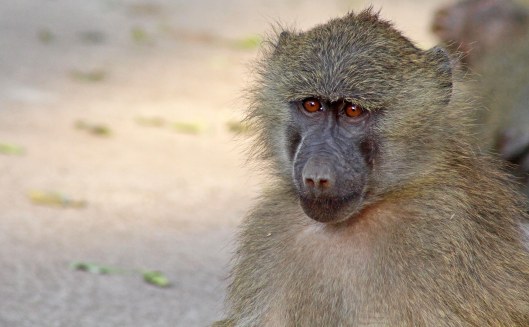
160212 tanzania baboons (1)

Baboons near the entrance to the Ngorongoro Crater, in Tanzania (above and below)

160212 tanzania baboons (3)

160212 tanzania vervet

A vervet monkey living on the Serengeti Plains in Tanzania

Like Loading...

I’m following a tree: month 1

12 Friday Feb 2016

Posted by sconzani in nature, nature photography, trees

≈ 5 Comments

Tags

Bute Park, Cardiff, Dawn redwood, I'm following a tree, Metasequoia glyptostroboides, tree following

dawn feb 2

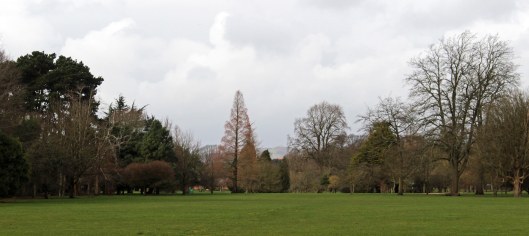
She is a statuesque beauty, tall for her 67 years, but with a very slight lean to one side – I blame the strong winds blasting inshore from the mighty Atlantic Ocean. Her name is Dawn Redwood (Metasequoia glyptostroboides, to be precise) and her kind was thought to be extinct, having only been identified in fossils until some time between 1941 and 1944 when she was rediscovered, growing in the town of Moudao, in Hubei, in south-western China. Long ago, her family and her cousins, the sequoias, could be found right across Europe, in Asia and in the Americas but all were killed off during the last ice age.

dawn feb 1

My Dawn came from the first shipment of international seeds to arrive in Britain in 1949. She grows in Bute Park, in the Welsh capital of Cardiff. She was a champion tree, the tallest of her kind in Britain, in 2005, but she has since been surpassed. Still, she has a regal air and a wonderful pyramidal shape.

dawn feb 4

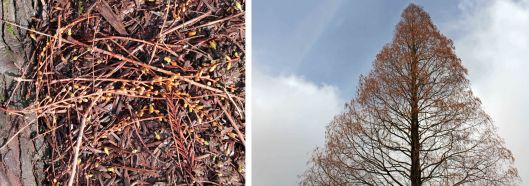
Flowers blown off during recent stormy weather

Dawn is deciduous, which is unusual for a conifer, but at the moment she is flowering, which has given her a rusty tinge – perhaps she’s blushing! In fact, she is monoecious, which means she has separate male and female flowers on the same tree. The male flowers hang in clusters at the end of her branches, while the female flowers are solitary. Over the next 12 months, I will be visiting Dawn often and will blog about her monthly.

Why not join the tree following community. You can find out more here.

dawn feb 3

Male flowers

Like Loading...

Eight interesting facts about blackbirds

11 Thursday Feb 2016

Posted by sconzani in birds, nature, nature photography

≈ 4 Comments

Tags

birding, birds, birdwatching, blackbird, British birds

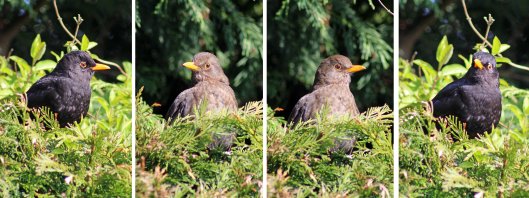
160211 blackbird (1)

1 The oldest ringed blackbird to have been recovered in Britain was more than 20 years old.

2 Blackbirds most often sing after it has rained.

3 In the Roman Catholic religion, St Kevin of Glendalough is the patron saint of blackbirds. The legend goes that a blackbird laid an egg in Kevin’s hand when his arms were outstretched in prayer and he remained in that position until the baby bird hatched.

4 Albinism and leucism are common in blackbirds, and many birds have small white patches of feathers.

160211 blackbird (2)

5 The blackbird is the national bird of Sweden.

6 The blackbird is the most numerous breeding bird in the British Isles, with a population of around 6 million pairs.

7 The song Sing a song of sixpence (a pocket full of rye, four-and-twenty blackbirds, baked in a pie) was not a coded message used to recruit crew members for the notorious 18th-century pirate Blackbeard. That was an invented urban legend that many people now believe. The true meaning of the rhyme is much debated.

8 Vernacular names for the blackbird include colly (in Gloucestershire), merle (Ireland and Scotland), Zulu (in Somerset) and ouzel.

160211 blackbird (3)

Like Loading...

Evernia prunastri

09 Tuesday Feb 2016

Posted by sconzani in lichen, nature, nature photography

≈ 2 Comments

Tags

lichen dye, Oakmoss, perfume, Staghorn lichen

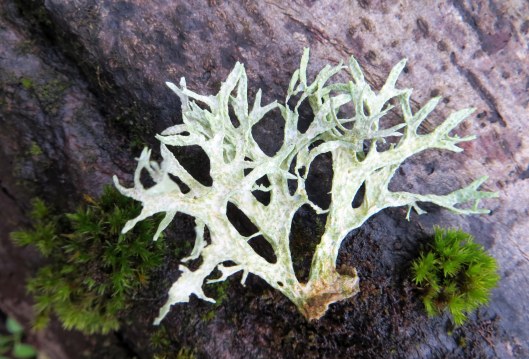
What substance produces a beautiful lilac dye and is one of the raw materials in many well-known perfumes? It’s called Oakmoss (Evernia prunastri), but it’s not a moss, it’s a lichen, and it doesn’t just grow on oak trees, it grows on the bark of other deciduous trees and conifers as well, in most of the temperate regions of the northern hemisphere. Another of its common names is Staghorn lichen because its branching shape resembles the antlers of deer.

evernia prunastri (1)

At one time, Oakmoss was one of the most common base materials used in the Chypre and Fougère categories of perfumes, and was highly valued for the rich, earthy and, apparently, very sensual aroma it added to these fragrances. Unfortunately, Oakmoss can produce severe reactions in people with sensitive skin, so the IFRA (the International Fragrance Association) has now imposed restrictions on its use though, through the prudent manipulation of their recipes, it seems Oakmoss is still to be found in many well-known perfumes, like Paloma Picasso, Chanel No. 19 and Miss Dior.

evernia prunastri (2)

And, if you’re keen to use natural products to dye wool or fabric products, soaking this lichen in a mixture of water and ammonia will produce a vibrant lilac-coloured dye.

Like Loading...

An essential piece of traveller’s kit

08 Monday Feb 2016

Posted by sconzani in fungi, nature, nature photography

≈ 2 Comments

Tags

birch polypore, fungus, Otzi the Iceman, Razor strop fungus

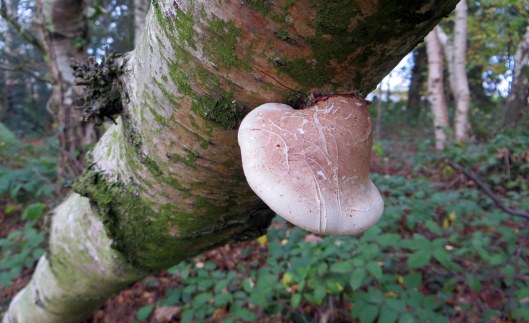
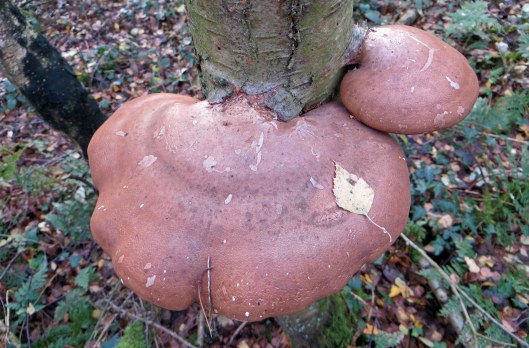
Do you remember the news about Ötzi the Iceman, the 5000-year-old mummified man found in a glacier in the Ötztal Alps in Italy in September 1991? Amongst his meagre possessions, Ötzi was carrying two types of fungi, one of which was Birch polypore (Piptoporus betulinus). It’s one of the most common bracket fungi and grows, as you might guess from the name, on birch trees.

160206 birch polypore (1)

Archaeologists speculate that Ötzi was carrying the bracket fungus for medicinal reasons – this was his first aid kit. Birch polypore is known to have both anti-inflammatory and antibacterial properties – various modern survivalist websites even advise using strips of it as plasters on wounds. Some herbalists recommend it in tea to soothe the nerves and eliminate fatigue but, be warned, it can act as a laxative!

160206 birch polypore (2)

Another of this fungus’s common names is Razor strop as barbers used to sharpen their cut-throat razors on it, and ancient people like Ötzi also used it as tinder. One spark from a flint and they could start a new campfire, and they could even carry a slowly smouldering piece of dry fungus with them as they travelled.

160206 birch polypore (3)

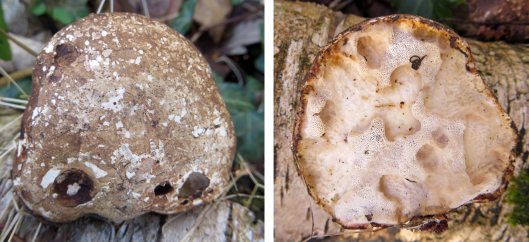
the underside, shown on the right, has been much nibbled, probably by slugs

Like Loading...

The blood spewer

07 Sunday Feb 2016

Posted by sconzani in insects, nature, nature photography

≈ 6 Comments

Tags

beetle, Blood spewer beetle, Bloody-nosed beetle, British beetle, Brynna Woods

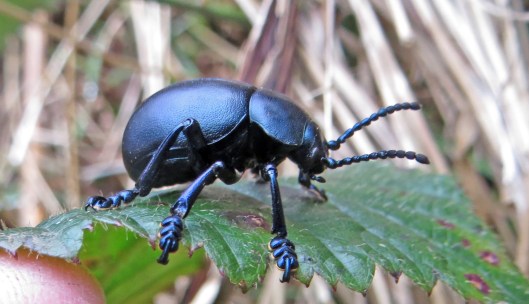
With a name like blood spewer, you might expect this post to be about some gigantic ravaging beast, but no! This is a beetle, large for a beetle at 2cm long, but nevertheless slow and bumbling and flightless and harmless, and really rather delightful, with body parts of a very pretty, slightly metallic-looking blue-purple-black. We found it amongst the bracken during a walk through Brynna Woods, in East Glamorgan, earlier this week.

160207 bloody nosed beetle (6)

Timarcha tenebricosa, or the bloody-nosed beetle, as it is more commonly known, gets its gruesome name from a defence strategy it has developed in response to predators. When threatened, it discharges small globules of unsavoury red fluid from its mouth. It seems we weren’t perceived as threatening, as this little creature didn’t perform its party trick for us.

160207 bloody nosed beetle (4)

This is a leaf beetle, most often seen during the spring and summer months in grassy areas, in hedgerows and on heathland in Britain and in southern and central Europe. It is particularly partial to nibbling on the plant Lady’s bedstraw, and has the most amazing-looking segmented antennae and lower legs, as you can see in my photos. Ours was a charming and colourful encounter on a rather grey day.

160207 bloody nosed beetle (5)

Like Loading...

The black-headed gull duo

06 Saturday Feb 2016

Posted by sconzani in birds, nature, nature photography

≈ 8 Comments

Tags

birding, birds, birdwatching, black-headed gulls, British birds, gulls, Roath Park Lake

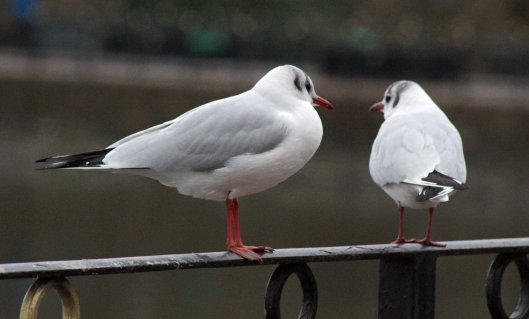
Roath Park Lake, in Cardiff, last week …

160208 black headed gull song (1)

A Gull: ‘Is she still there?’
Gull Y: ‘Yep.’
A Gull: ‘What’s she doing?’
Gull Y: ‘Just pointing that black thing at us. Why do they do that?’

160208 black headed gull song (2)

A Gull; ‘I dunno. Ignoring them doesn’t seem to work either.’
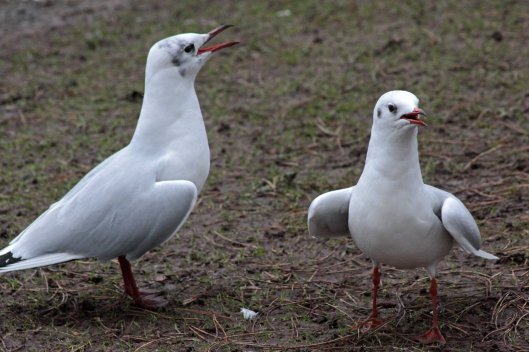
Gull Y: ‘Shall we give her something to look at then?’
A Gull: ‘Righto. We could do with some practice.’
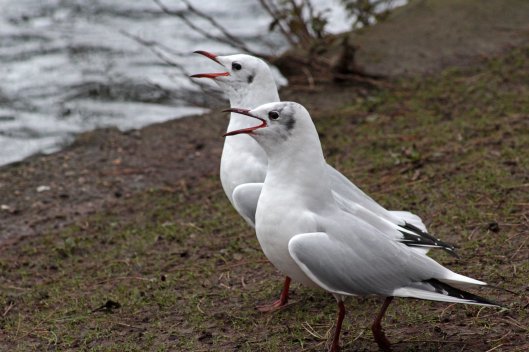
Gull Y: ‘Yeah. Let’s fly down by that tree and give her a blast of our new number.’

160208 black headed gull song (3)

A Gull: ‘The skies are alive with the sound of gull song.’
Gull Y: ‘With songs we have sung for a million years.’

160208 black headed gull song (4)

A Gull: ’The lakes fill my heart with the sound of gull song.’
Gull Y: ‘My heart wants to eat every fish it sees.’

160208 black headed gull song (5)

A Gull: ‘Well, a little appreciation would be welcome.’

Like Loading...
← Older posts
Newer posts →

About me

sconzani

sconzani

I'm a writer and photographer; researcher and blogger; birder and nature lover; countryside rambler and city strider; volunteer and biodiversity recorder.

View Full Profile →

Follow earthstar on WordPress.com

Enter your email address to follow this blog and receive notifications of new posts by email.

Recent blog posts

  • Kestrel 2026 : 86 January 31, 2026
  • Birch polypore January 30, 2026
  • The Marl Med gull January 29, 2026
  • Recording Grey squirrels January 28, 2026
  • Jimmy Wren January 27, 2026

From the archives

COPYRIGHT

Unless otherwise acknowledged, the text and photographs on this blog are my own and are subject to international copyright. Nothing may be downloaded or copied without my permission.

Fellow Earth Stars!

  • Unknown's avatar
  • Unknown's avatar
  • Unknown's avatar
  • Unknown's avatar
  • Unknown's avatar
  • Unknown's avatar
  • Unknown's avatar
  • Unknown's avatar
  • Unknown's avatar
  • Unknown's avatar
  • Unknown's avatar
  • Unknown's avatar
  • Unknown's avatar
  • Unknown's avatar
  • Unknown's avatar
  • Unknown's avatar
  • Unknown's avatar
  • Unknown's avatar
  • Unknown's avatar
  • Unknown's avatar
  • Unknown's avatar
  • Unknown's avatar
  • Unknown's avatar
  • Unknown's avatar
  • Unknown's avatar
  • Unknown's avatar
  • Unknown's avatar
  • Unknown's avatar
  • Unknown's avatar
  • Unknown's avatar
  • Unknown's avatar
  • Unknown's avatar
  • Unknown's avatar
  • Unknown's avatar
  • Unknown's avatar
  • Unknown's avatar
  • Unknown's avatar
  • Unknown's avatar
  • Unknown's avatar
  • Unknown's avatar
  • Unknown's avatar
  • Unknown's avatar
  • Unknown's avatar
  • Unknown's avatar
  • Unknown's avatar
  • Unknown's avatar
  • Unknown's avatar
  • Unknown's avatar
  • Unknown's avatar
  • Unknown's avatar

Blog at WordPress.com.

Privacy & Cookies: This site uses cookies. By continuing to use this website, you agree to their use.
To find out more, including how to control cookies, see here: Cookie Policy
  • Subscribe Subscribed
    • earthstar
    • Join 670 other subscribers
    • Already have a WordPress.com account? Log in now.
    • earthstar
    • Subscribe Subscribed
    • Sign up
    • Log in
    • Report this content
    • View site in Reader
    • Manage subscriptions
    • Collapse this bar
 

Loading Comments...
 

You must be logged in to post a comment.

    %d