• ABOUT
  • BIRDING 2018
  • Birding 2019
  • BLOG POSTS
  • Butterflies 2018
  • Resources

earthstar

~ a celebration of nature

earthstar

Category Archives: trees

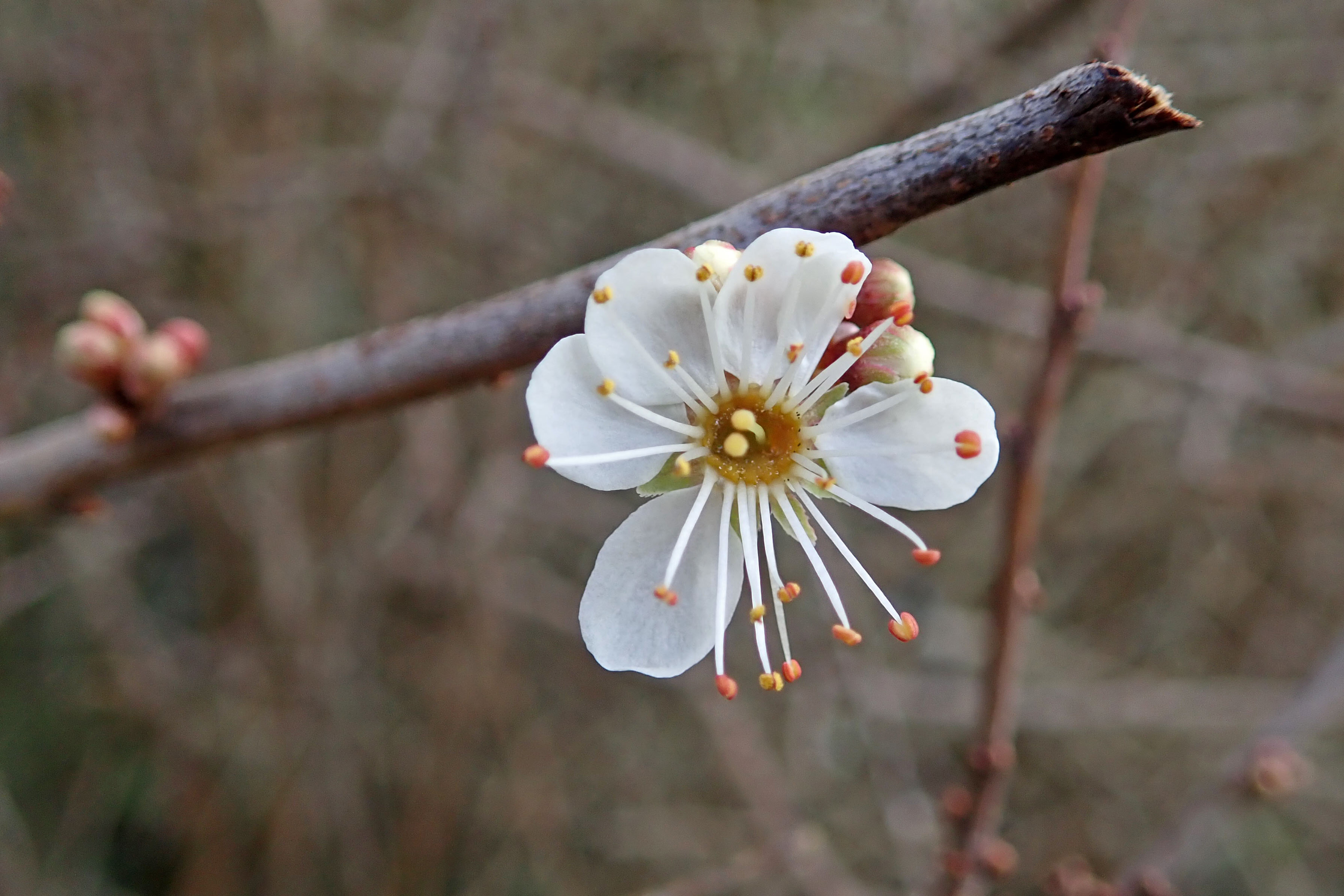
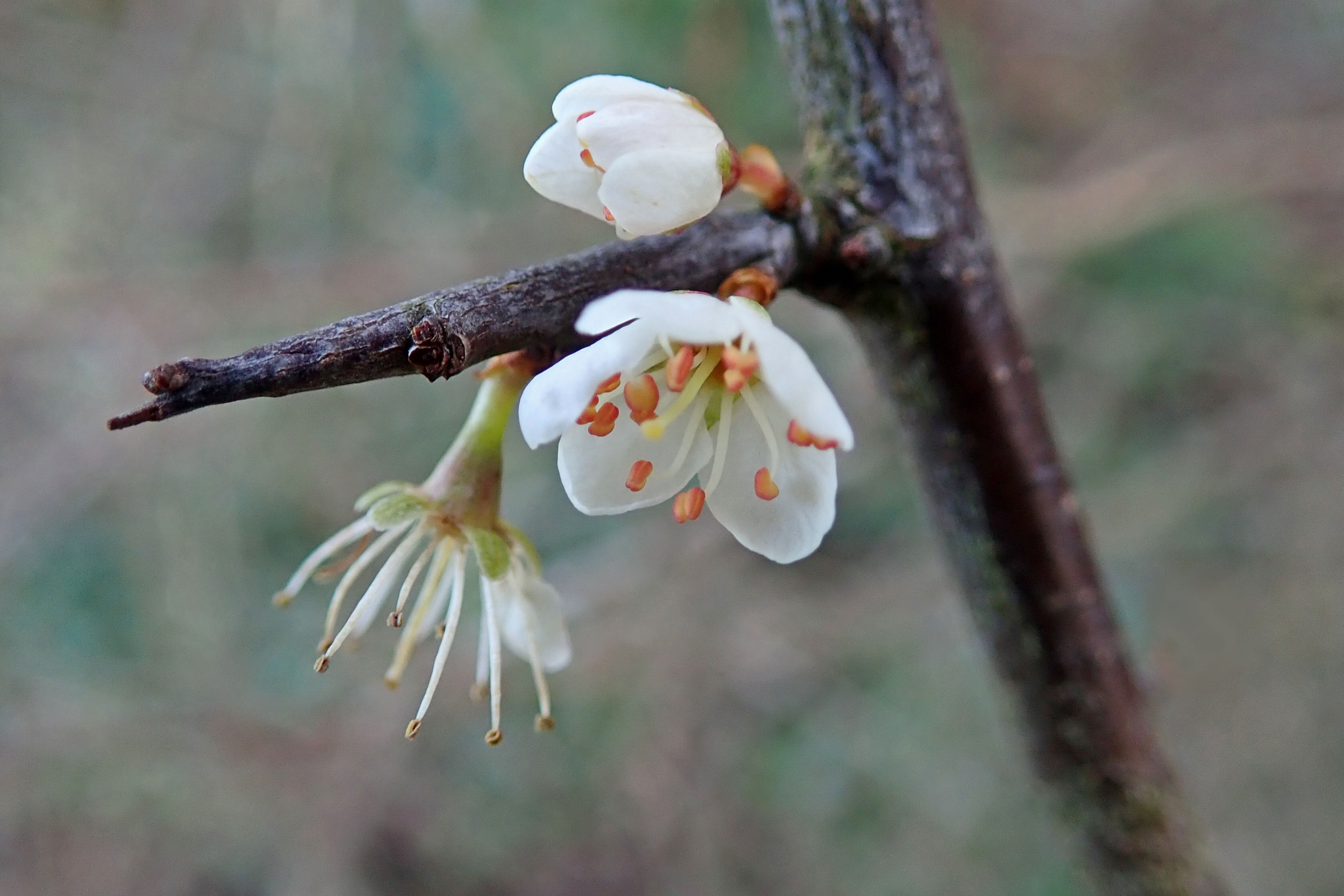
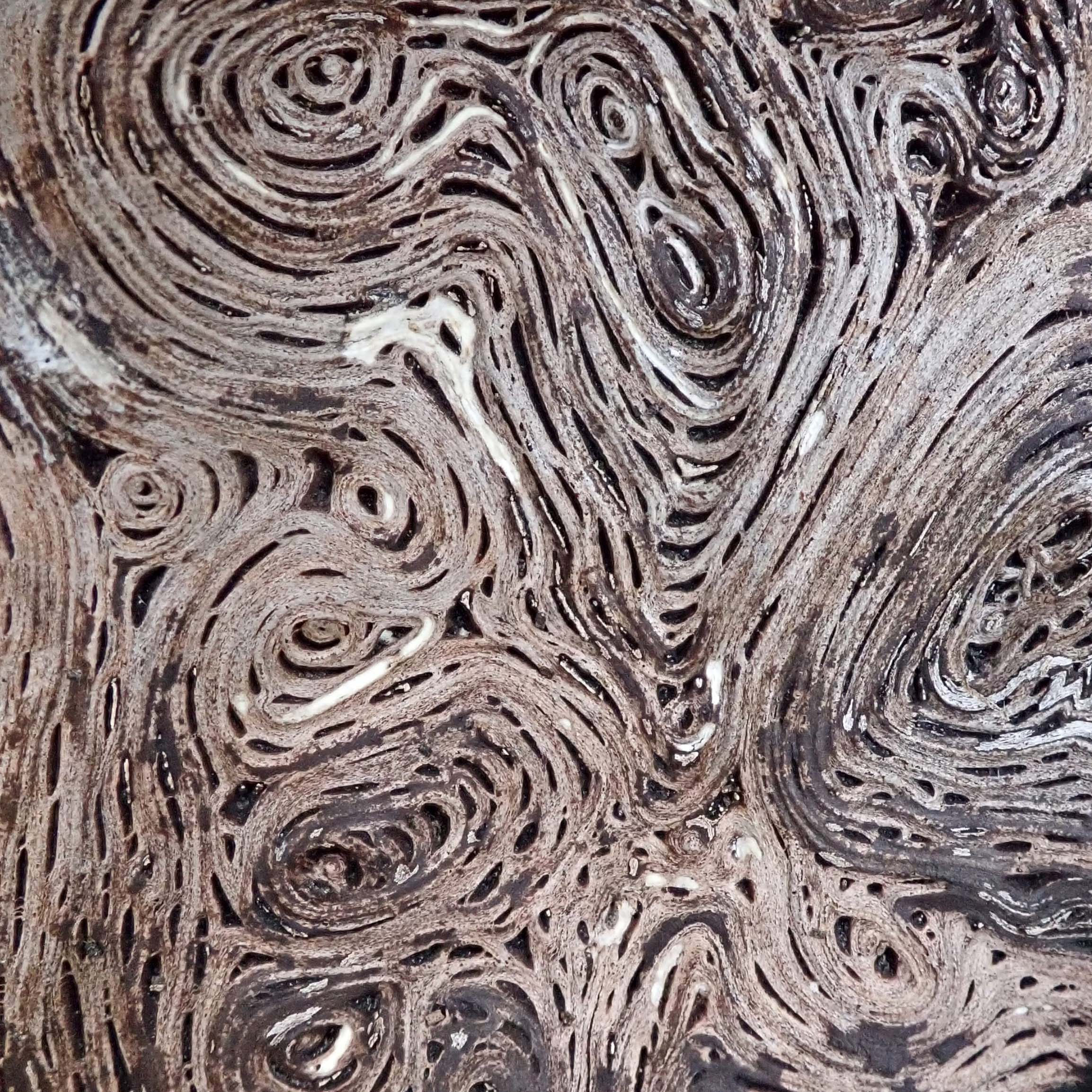
Wordless on Wednesday

03 Wednesday Dec 2025

Posted by sconzani in trees

≈ 2 Comments

Tags

#WordlessOnWednesday, #WordlessWednesday

Like Loading...

Aphid: Eriosoma lanigerum

01 Monday Dec 2025

Posted by sconzani in insects, plants, trees

≈ 2 Comments

Tags

American blight, aphid, aphids on Apple trees, aphids on Firethorn, aphids on Pyracantha, British aphids, Eriosoma lanigerum, galls on Firethorn, galls on Pyracantha, Woolly apple aphid

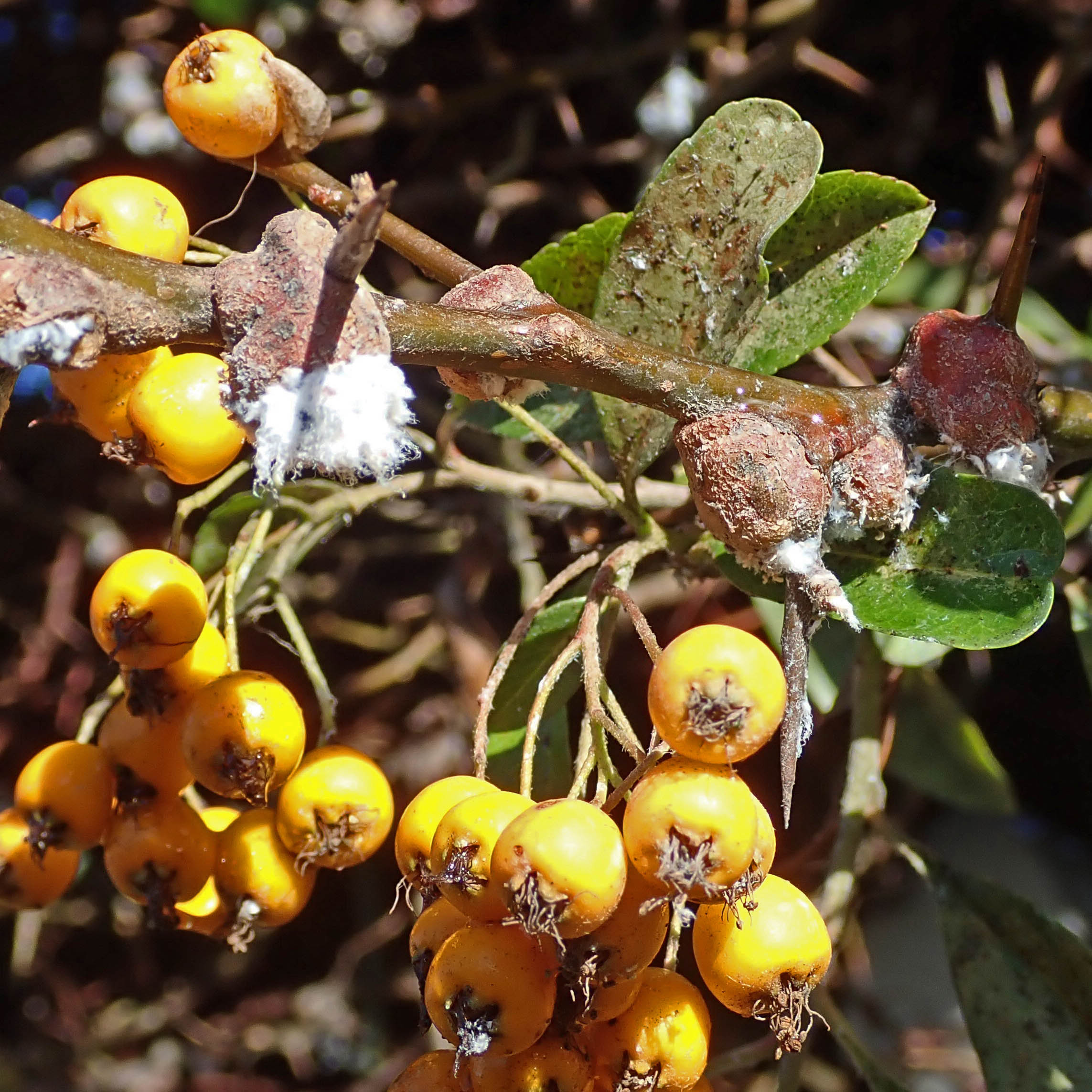
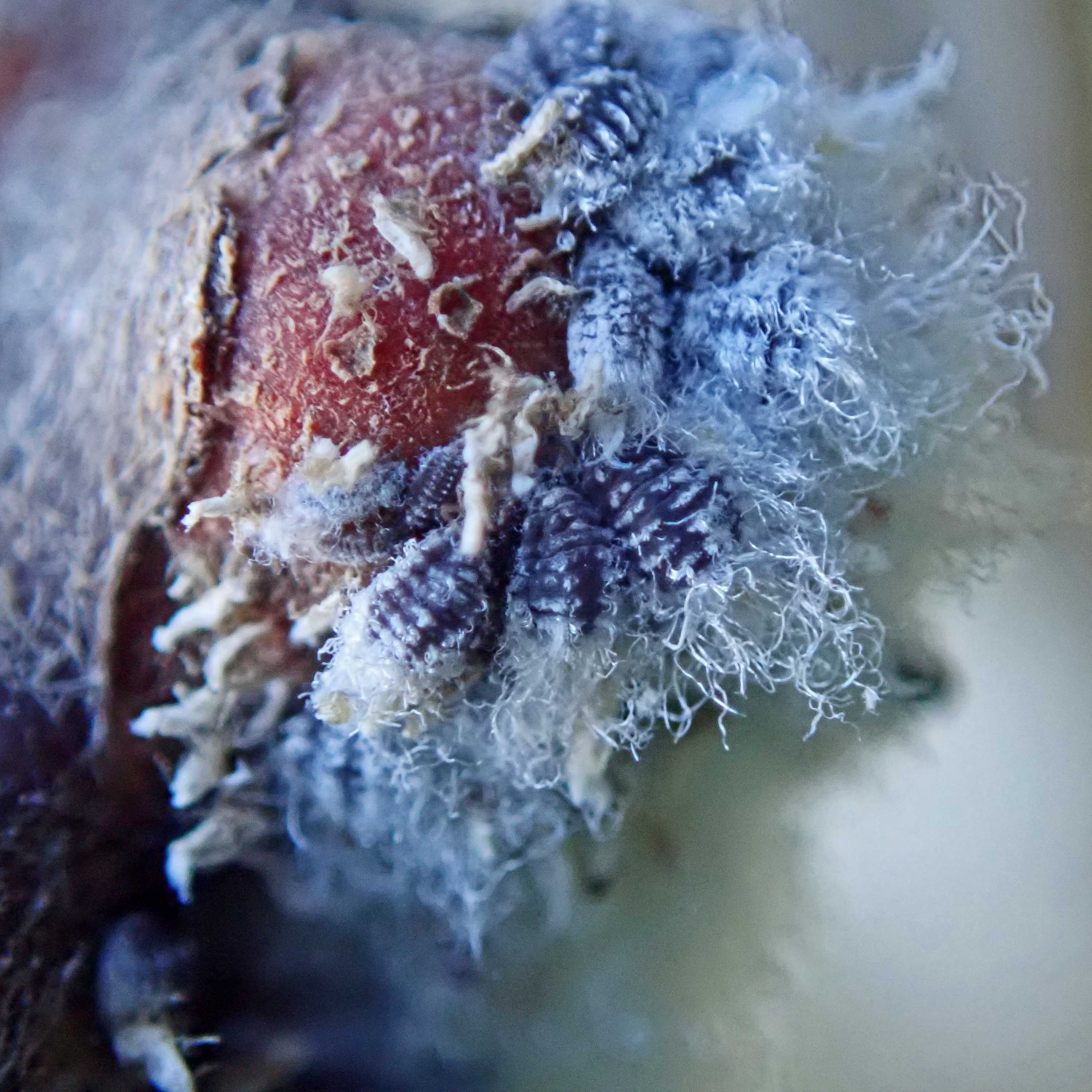
When I set out on my walk last Saturday, I wasn’t intentionally targeting aphids but up they popped. At this first location I wasn’t completely certain that what I saw was caused by aphids but, as soon as I poked one of the fuzzy white lumps on this Firethorn (Pyracantha species) and my finger came away stained red, I knew I’d just inadvertently squashed an aphid (this has happened to me before when I grabbed a willow branch without noticing the aphids perched on it).

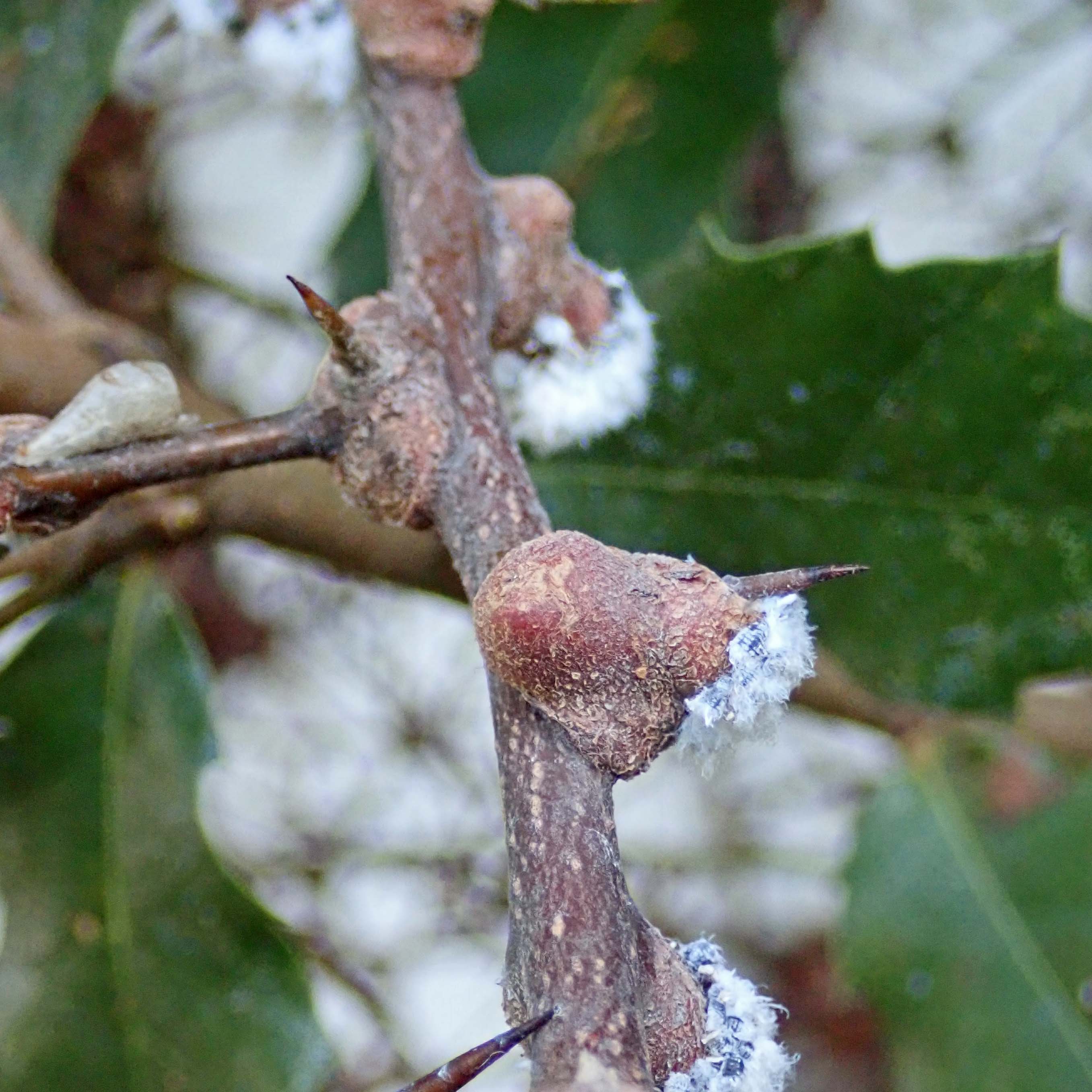
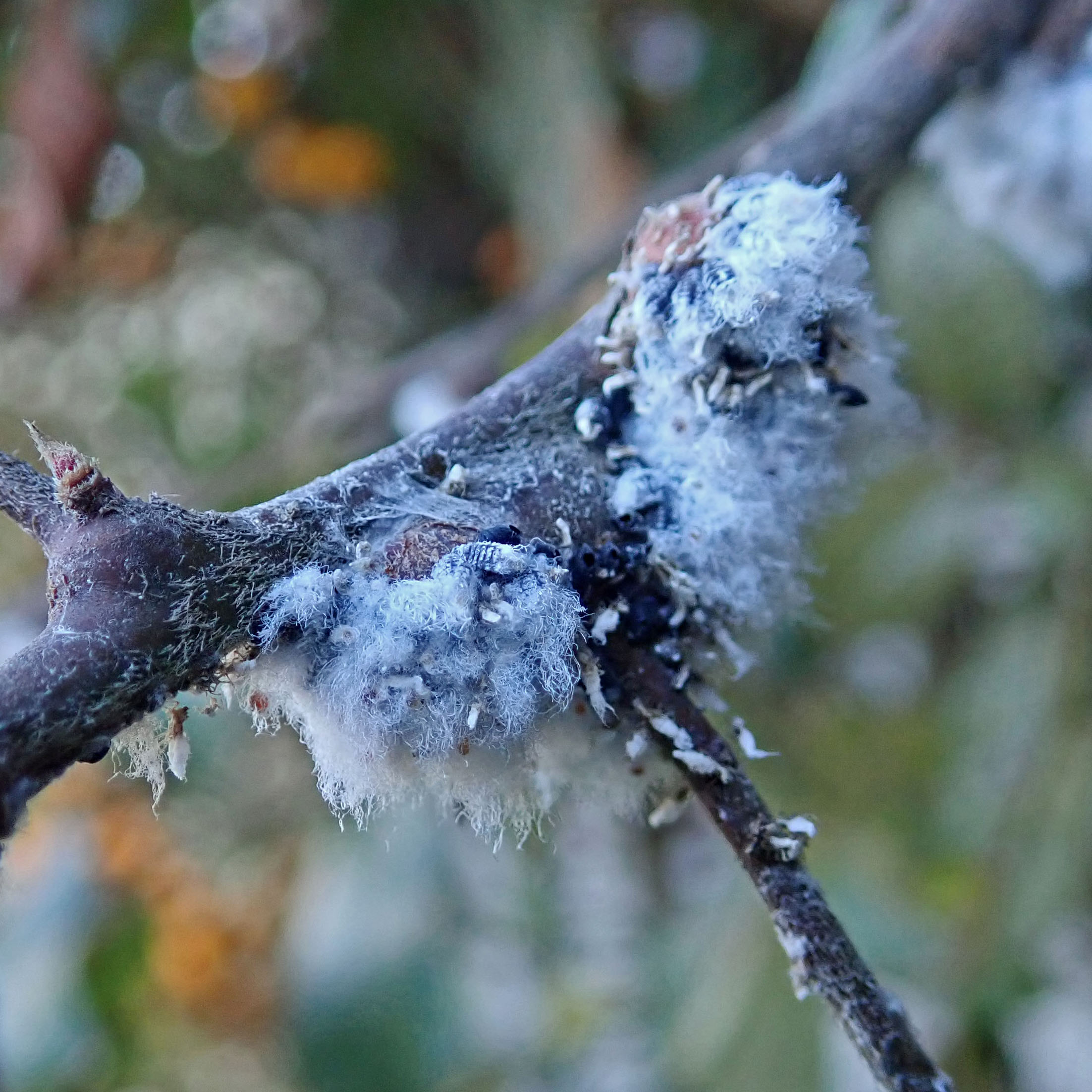
After a little research when I got home, it quickly became apparent that these were Eriosoma lanigerum, also known as Woolly apple aphids and American blight. The sap-sucking feeding of Eriosoma lanigerum causes deformation and swellings on the branches, trunks and roots of their host plants, as you can see from the lumpy growths on the branches of this Firethorn bush.

The white ‘wooliness’ is a wax substance the aphids produce in specialised glands and excrete as filaments from various parts of their bodies. The Influential Points website, which is an excellent resource for information about aphids, summarises the various reasons scientists have reached for this wax secretion:

Smith suggests that the primary role of the secreted wax is to prevent the aphids becoming contaminated by their own honeydew … and that of other members of the colony…. Other secondary roles of wax may include individual microclimate isolation, protection from fungi, parasites and predators plus waterproofing and frost protection.

Though their primary plant hosts are Pyracantha and Cotoneaster species, as the Woolly apple aphid name suggests, their secondary host is Apple and, on the various species of Apple trees, they are considered a major pest, often having a severe economic impact on Apple crops. If you’re interested in reading more about this, the Influential Points website has a long list of various scientific research papers from around the globe on the subject of these aphids, their reproduction habits, their seasonal movements, their genetics and population dynamics, as well as ways to control their infestations.

Like Loading...

Autumn trees: Whitebeam

30 Sunday Nov 2025

Posted by sconzani in autumn, leaves, trees

≈ 2 Comments

Tags

autumn colour, autumn leaves, British trees, Sorbus aria, Whitebeam, Whitebeam bark, whitebeam berries, Whitebeam leaves

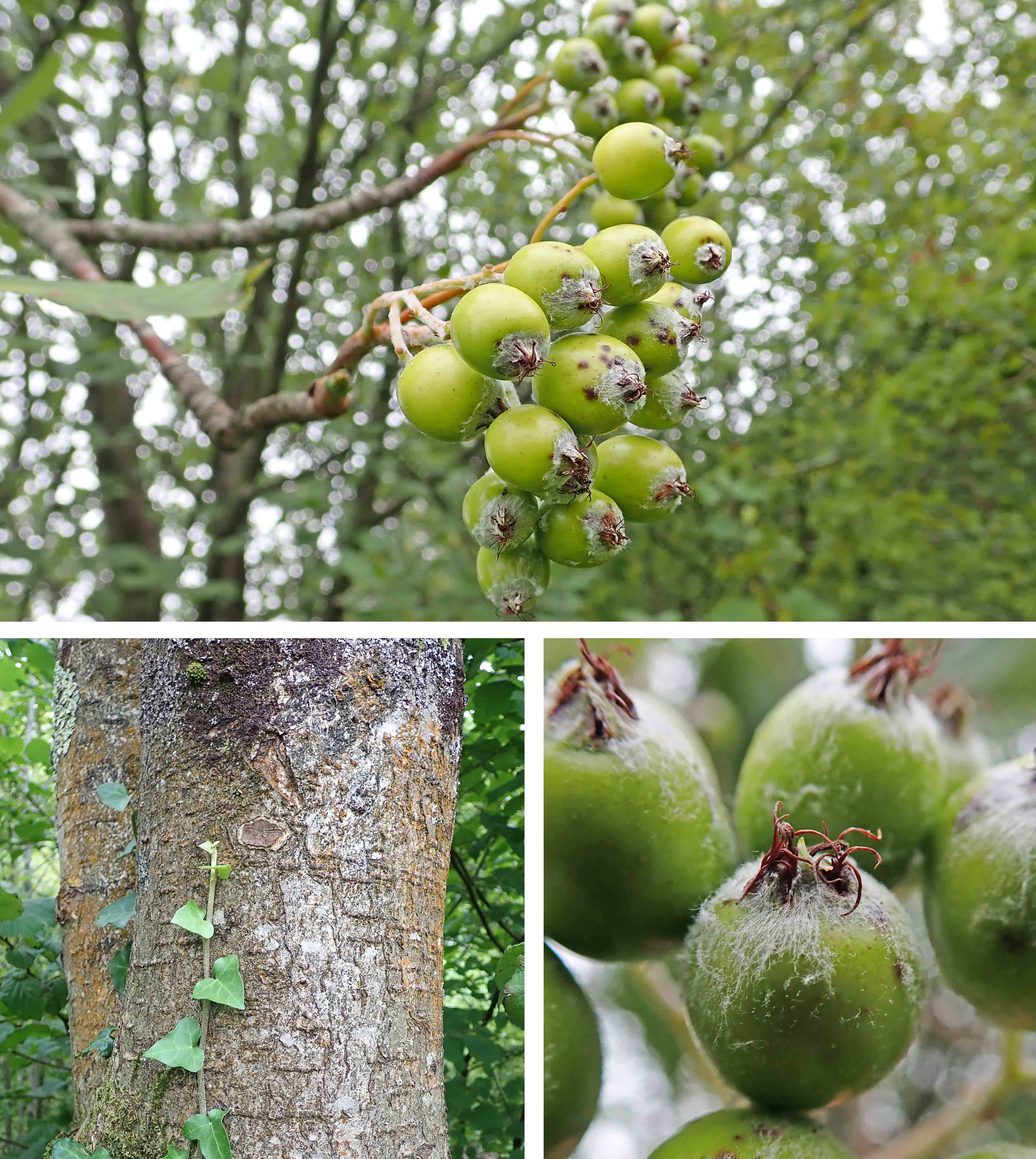
Whitebeam (Sorbus aria) is a tree I’ve overlooked until now, though I did take a few photos earlier in the year, of its smooth grey bark and its berries, before they ripened. (According to the Woodland Trust website, the berries ‘are known as chess apples in north-west England and are edible when nearly rotten’, which doesn’t make them sound very appetizing to me.)

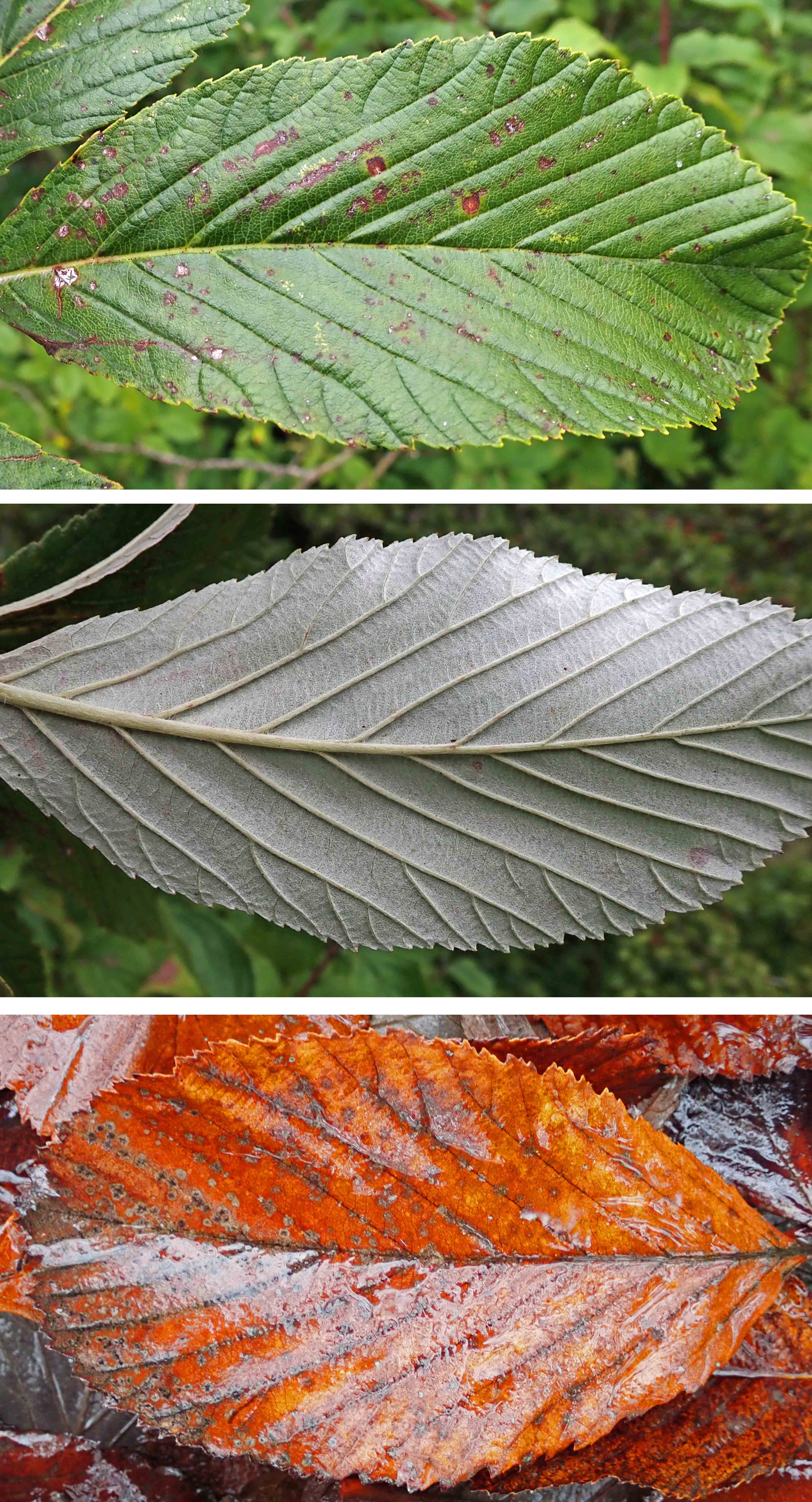
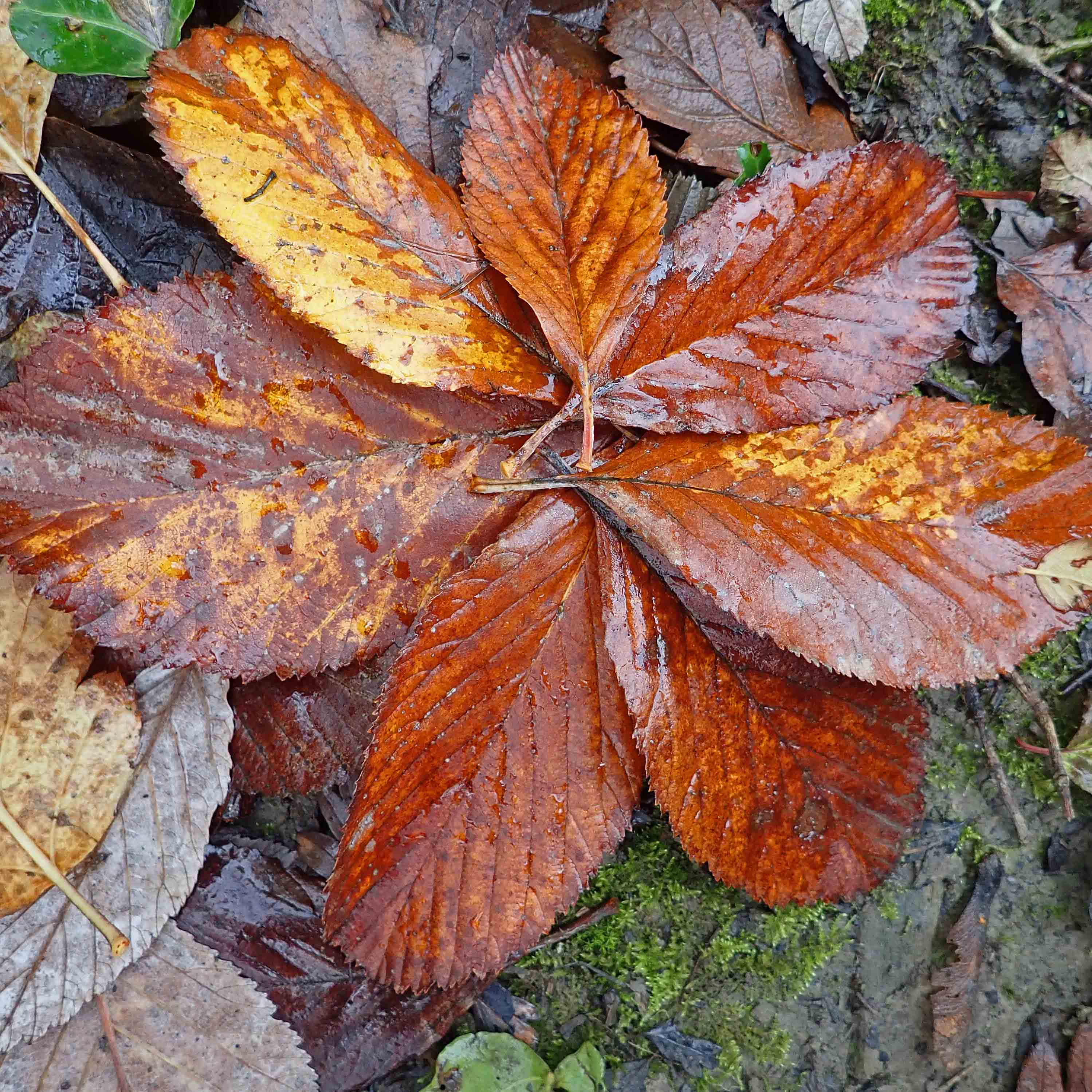
Whitebeam’s leaves are quite distinctive: elliptical in shape with serrated edges, the upper sides a shiny dark green, the under sides light grey and hairy. In the autumn, they aren’t particularly spectacular, simply changing to yellow, orange, and brown as they lose their chlorophyll.

The Woodland Trust site has some interesting facts about this handsome tree:

Whitebeam timber is fine-grained, hard and white. Traditional uses included wood turning and fine joinery, including chairs, beams, cogs and wheels in machinery.

And

Whitebeam is native to southern England, though widely planted in the north of the UK. It is common in parks and gardens, but is quite rare in the wild.

And

The leaves are eaten by caterpillars of a number of moths, including Parornix scoticella, Phyllonorycter corylifoliella and Phyllonorycter sorbi.

All three of those moths have leaf-mining larvae, none of which I’ve yet seen, so I must keep an eye out next year.

Like Loading...

Hawthorn flowering in November

26 Wednesday Nov 2025

Posted by sconzani in autumn, trees

≈ Leave a comment

Tags

climate change affecting flora, Crataegus monogyna, Hawthorn, Hawthorn blossom in November, Hawthorn in bloom in November, May-tree

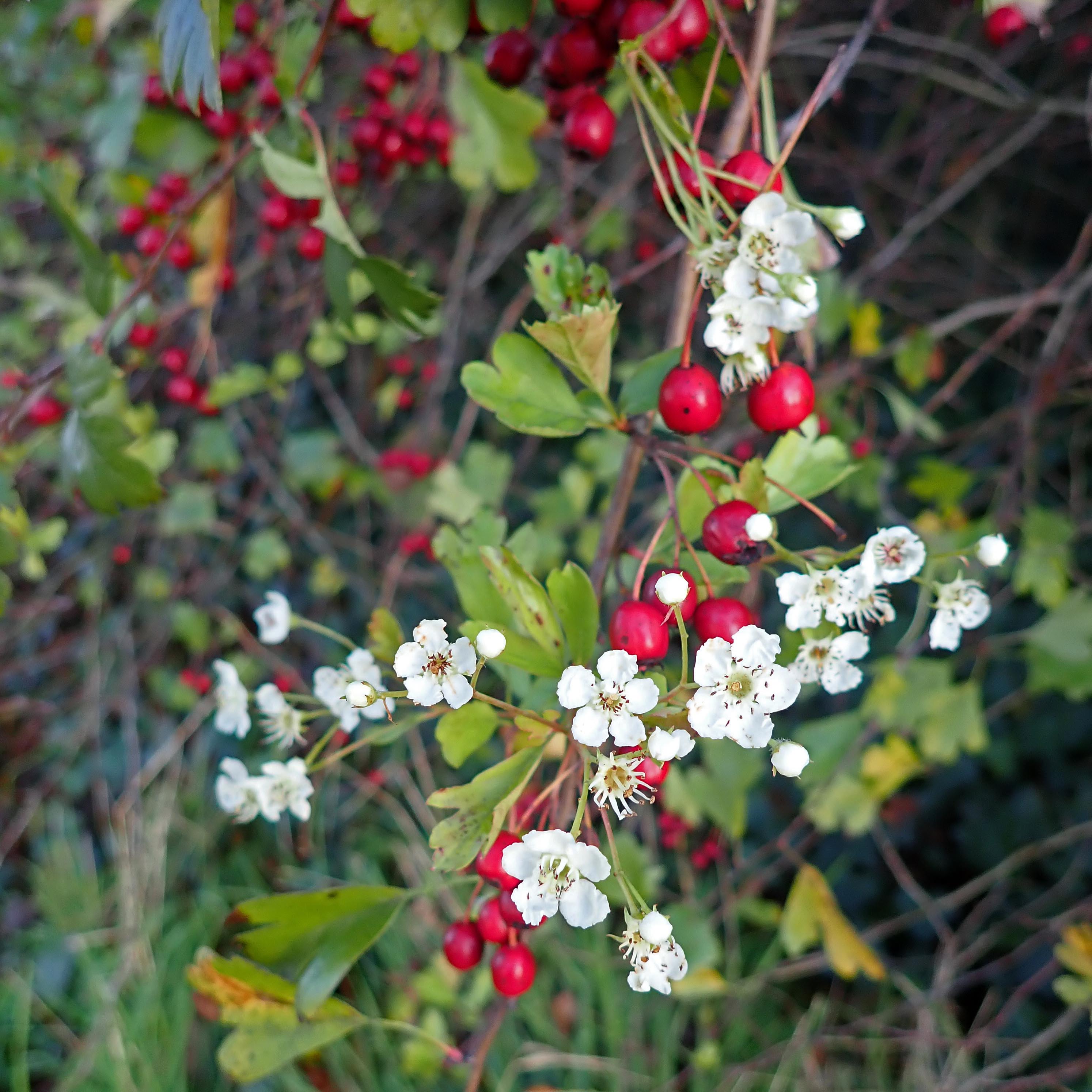
The Hawthorn (Crataegus monogyna) is also known as the May-tree, the only British tree to be named for the month in which it usually blooms. And, though its blossom does frequently appear a month or so earlier in the year, it does not normally flower in late autumn. Yet, this is what I saw on Sunday’s walk around the edge of my town, a Hawthorn in bloom and bearing berries. Mine is not the only sighting of this unusual phenomenon; when I posted a photo on social media, I was alerted to reports of at least three similar sightings across the UK, and I’m sure there must be more. If anyone ever doubts how much our climate is changing and how this will affect our natural environment, our flora and fauna, occurrences like this should be enough to banish those doubts.

Like Loading...

Autumn trees: Ash

23 Sunday Nov 2025

Posted by sconzani in autumn, leaves, trees

≈ Leave a comment

Tags

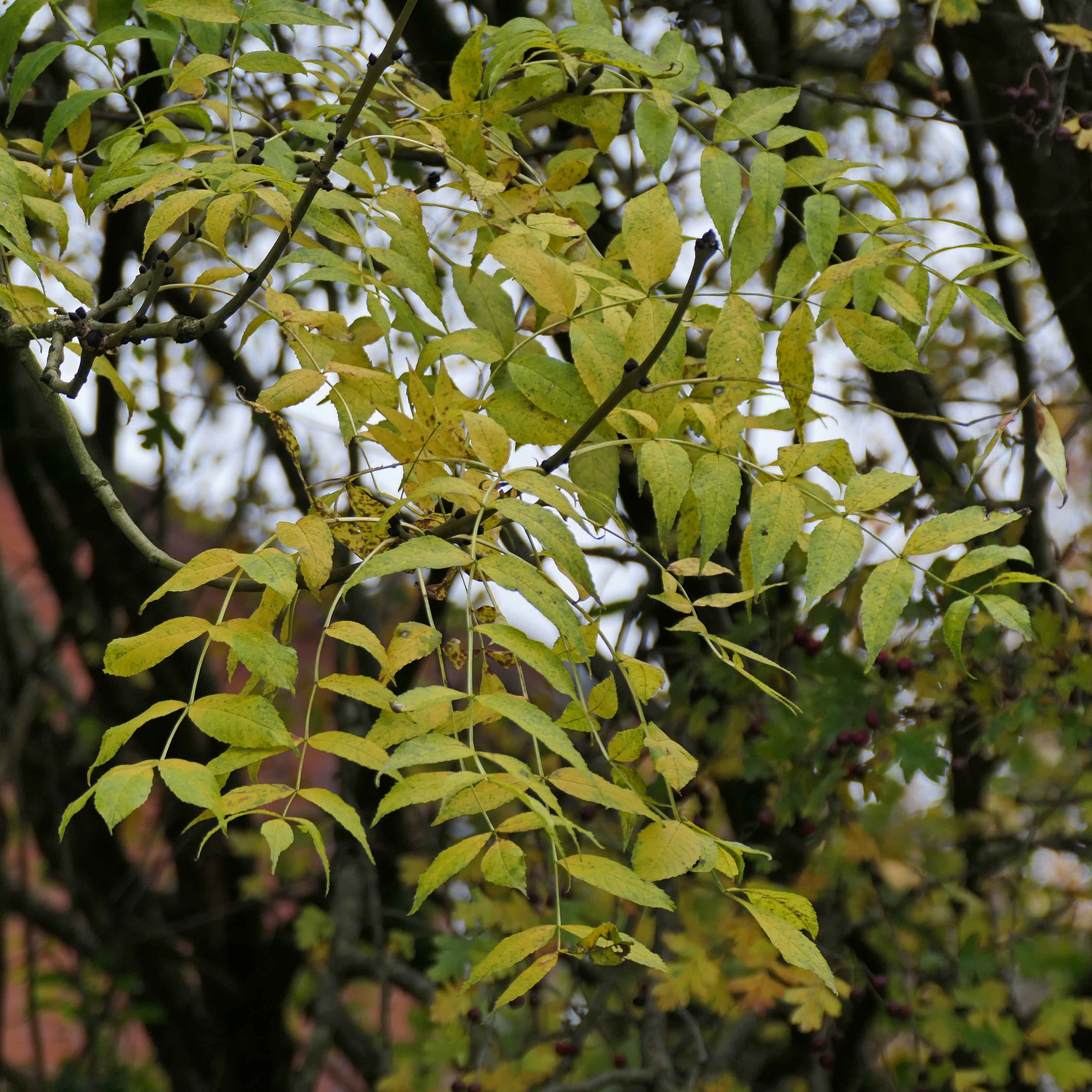
Ash, Ash keys, Ash tree, autumn colour, British trees, Fraxinus excelsior

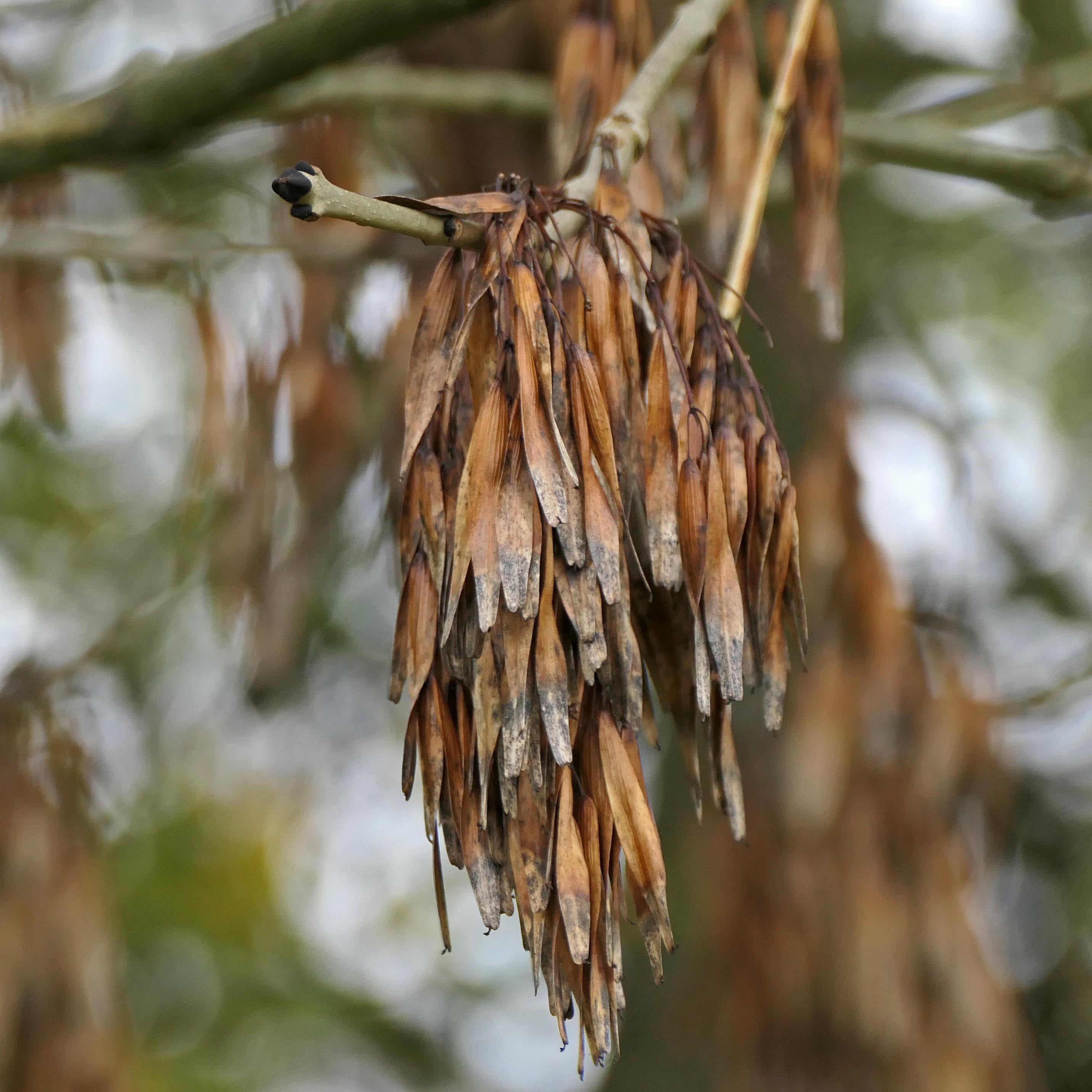
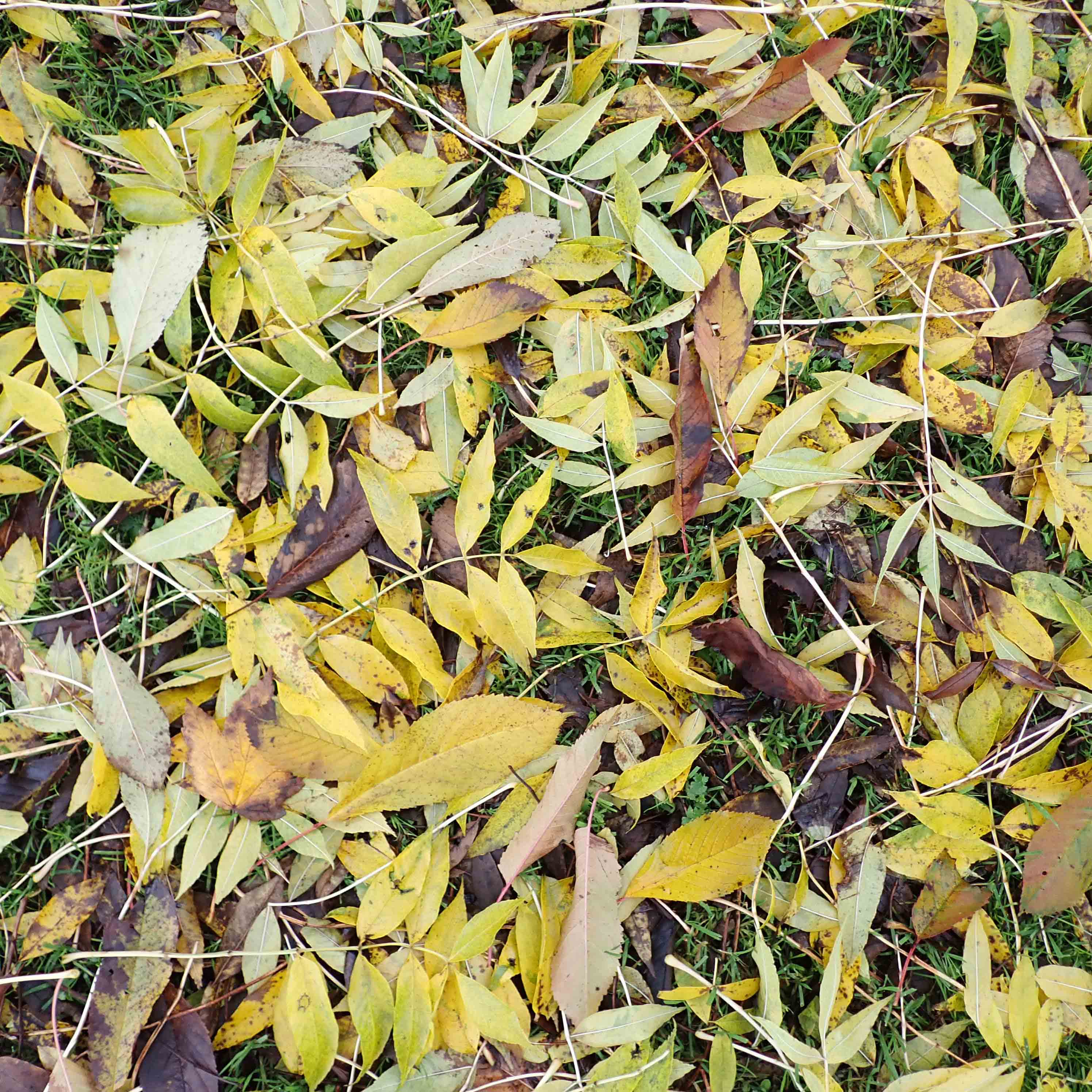
My Flora Britannica contains a myriad of fascinating information about the Ash tree (Fraxinus excelsior) but nothing that specifically relates to the tree in autumn. So, I googled “Ash keys”, thinking that might turn up some interesting facts. The AI overview produced this rather bizarre result:

“Ash keys” can refer to the winged seeds of an ash tree, which are used in poetry collections, or a caravan park in Yorkshire, UK. The ash tree seeds are a common sight in autumn and are also used to make pickles.
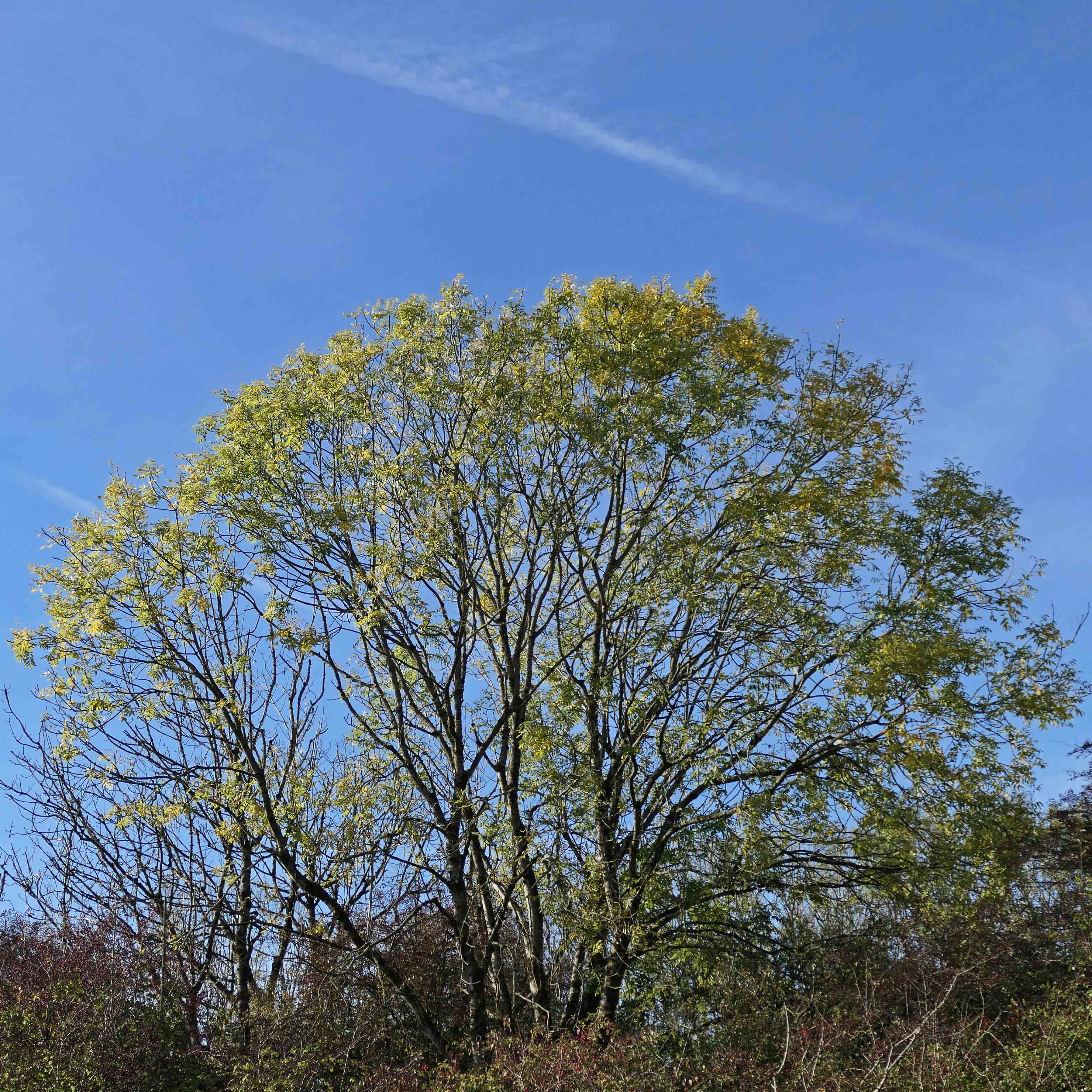
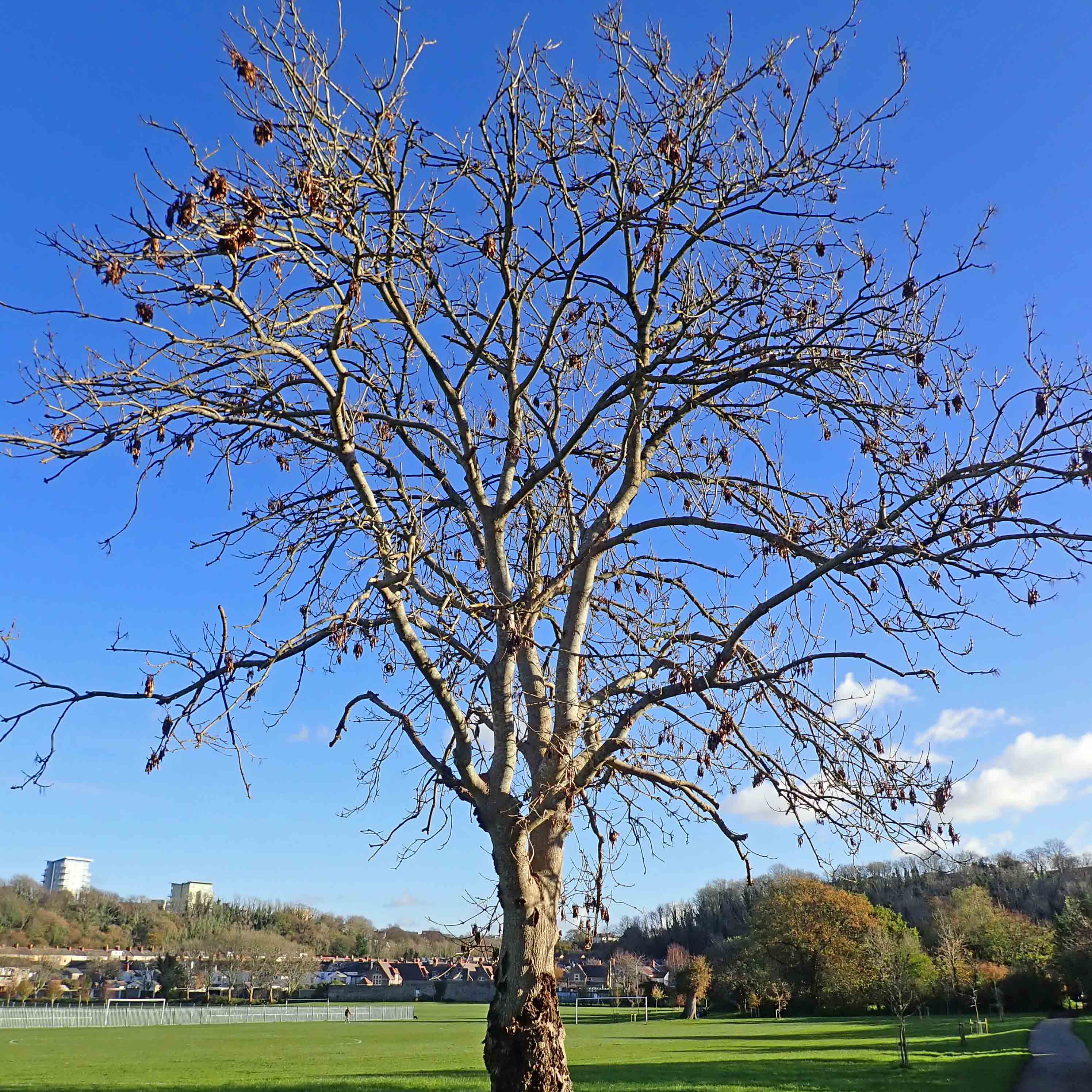
Yes, I was expecting the ‘winged seeds of an ash tree’ but ‘used in poetry collections’? (Turns out, there’s a book of poetry called Ash keys.) And, yes, ‘ash tree seeds are a common sight in autumn’ but are they really used to make pickles? (Turns out, this can be done but is an incredibly long-winded process, using a lot of electricity for multiple cooking stages and spices to create flavour, and is surely neither environmentally friendly nor worth the effort.) You may have guessed I’m no fan of AI!
So, here’s one of the much more interesting pieces from Flora Britannica instead:

In Britain, up until the end of the eighteenth century, it was regarded as a healing tree, and Gilbert White knew Hampshire villagers who, as children, had been through an Ash ritual as a ritual as a treatment for rupture or weak limbs. It was an extraordinary ceremony, a relic of pre-Christian sympathetic magic. A young Ash was split and held open by wedges, while the afflicted child was passed, stark naked, through the gap. The split was then ‘plastered with loam, and carefully swathed up. If the parts coalesced and soldered together … the party was cured; but, where the cleft continued to gape, the operation, it was supposed, would prove ineffectual.
Like Loading...

Birds and Buckthorn berries

17 Monday Nov 2025

Posted by sconzani in autumn, birds, trees

≈ Leave a comment

Tags

birding, birds eating berries, birdwatching, blackbird, British birds, Buckthorn berries, Buckthorn tree, Song thrush, Woodpigeon

Last Wednesday’s weather was dreich. (Are you familiar with that word? It’s Scottish English, a word I learnt when married to a Scotsman and from having lived for a few years in Scotland. It means bleak and dreary, and is the perfect descriptive for much of our recent weather.)

Back to last Wednesday … it was too bleak even for me to go out walking so, while sitting at my dining table/desk, deliberately placed by my living room windows for maximum external views, I had one eye on any wildlife activity happening outside.

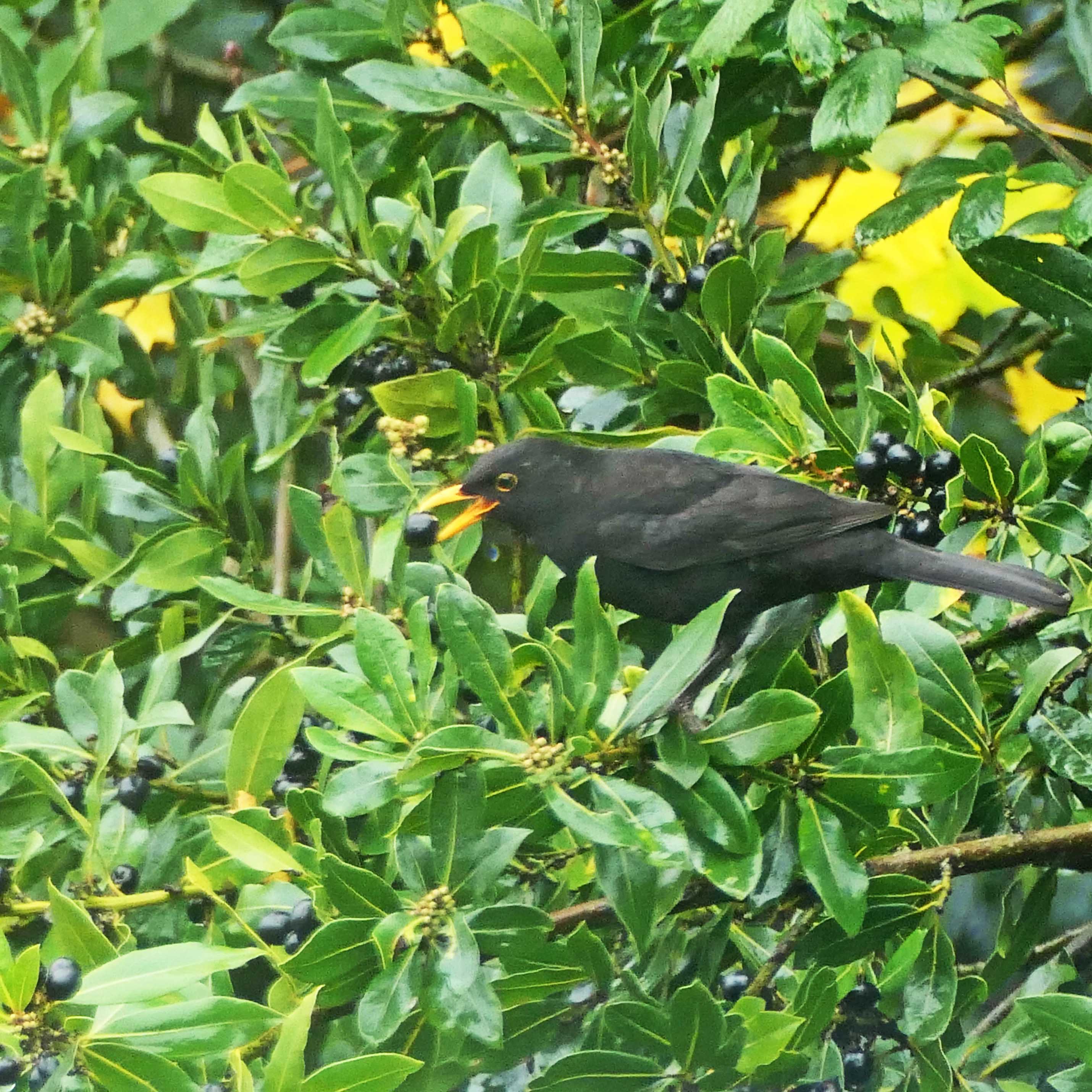
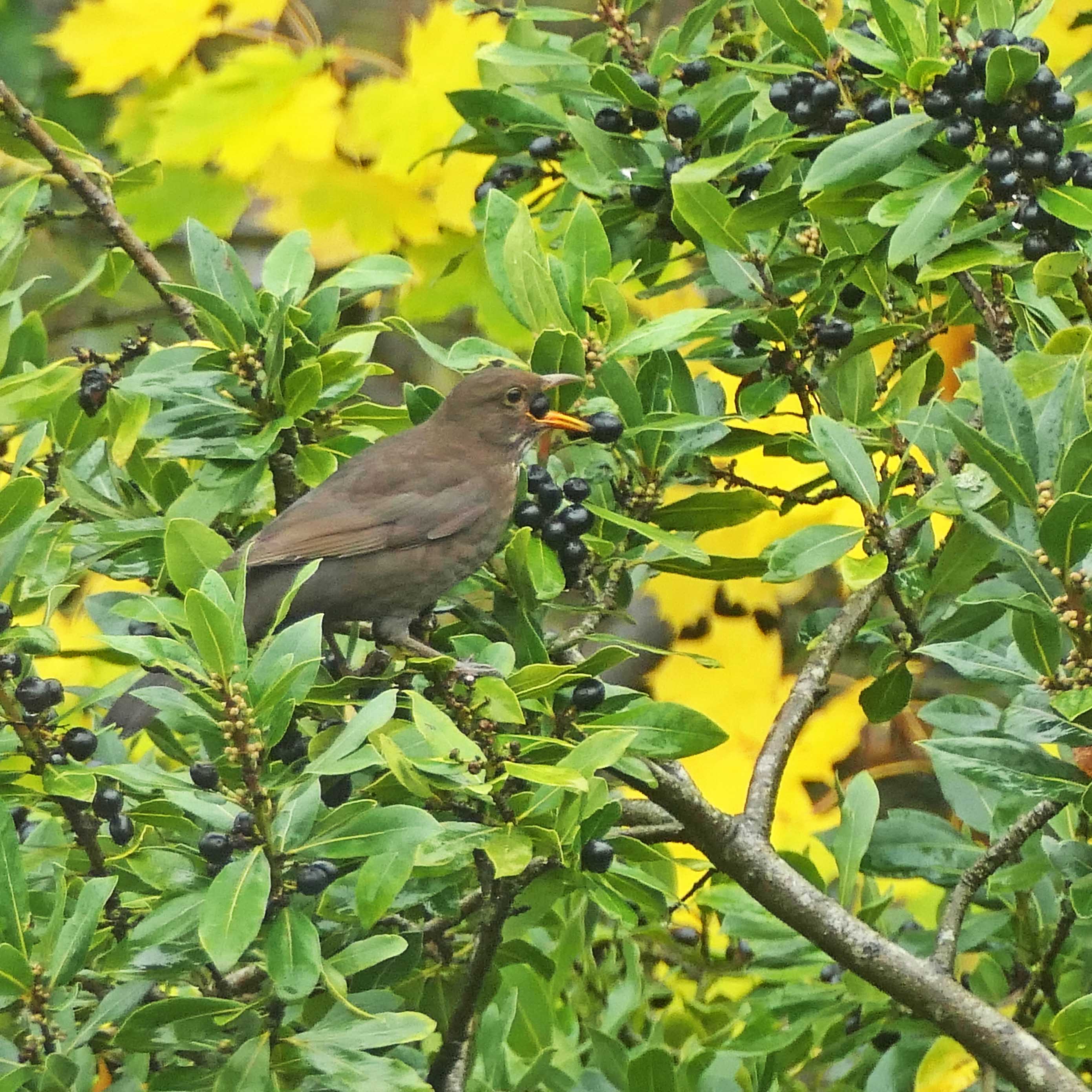
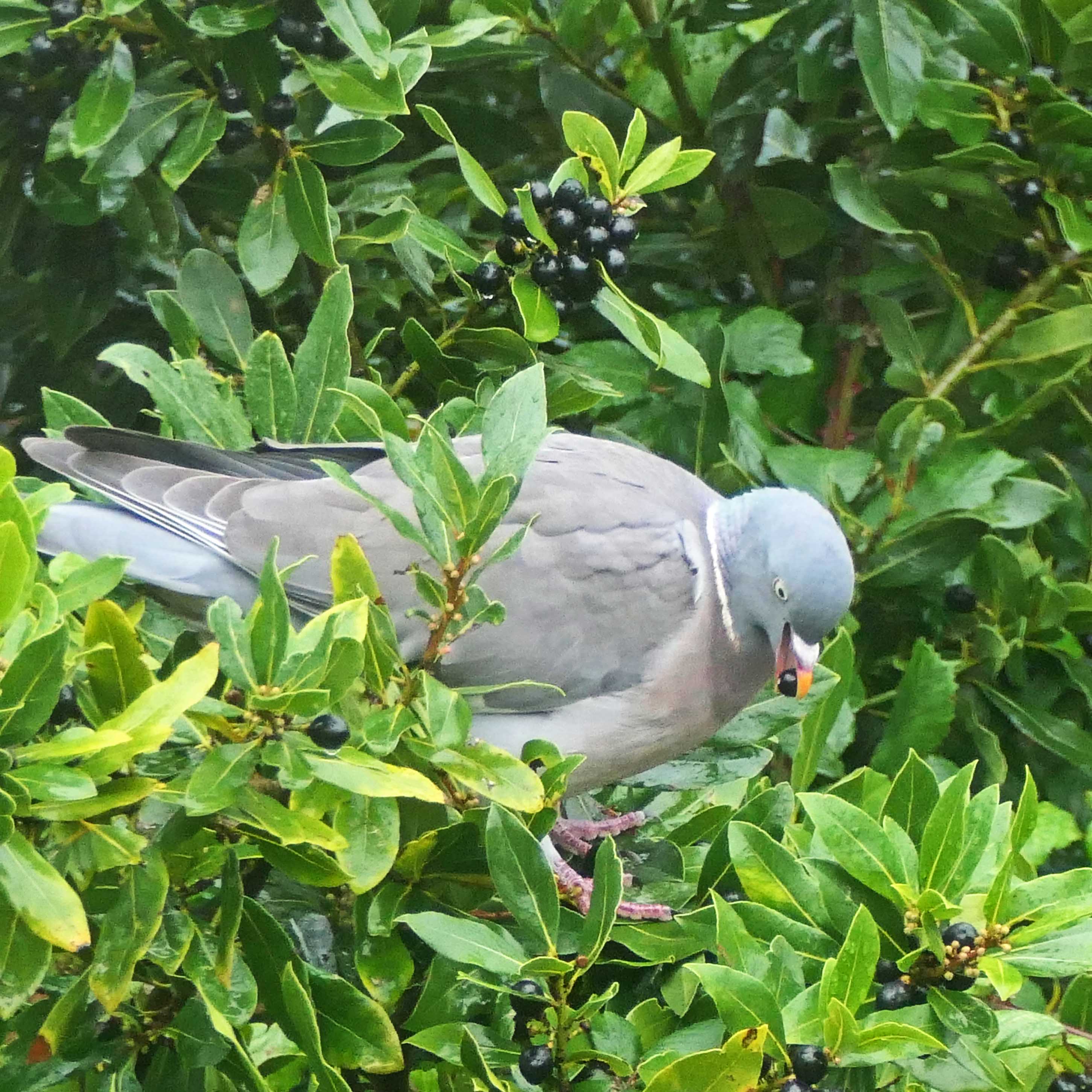
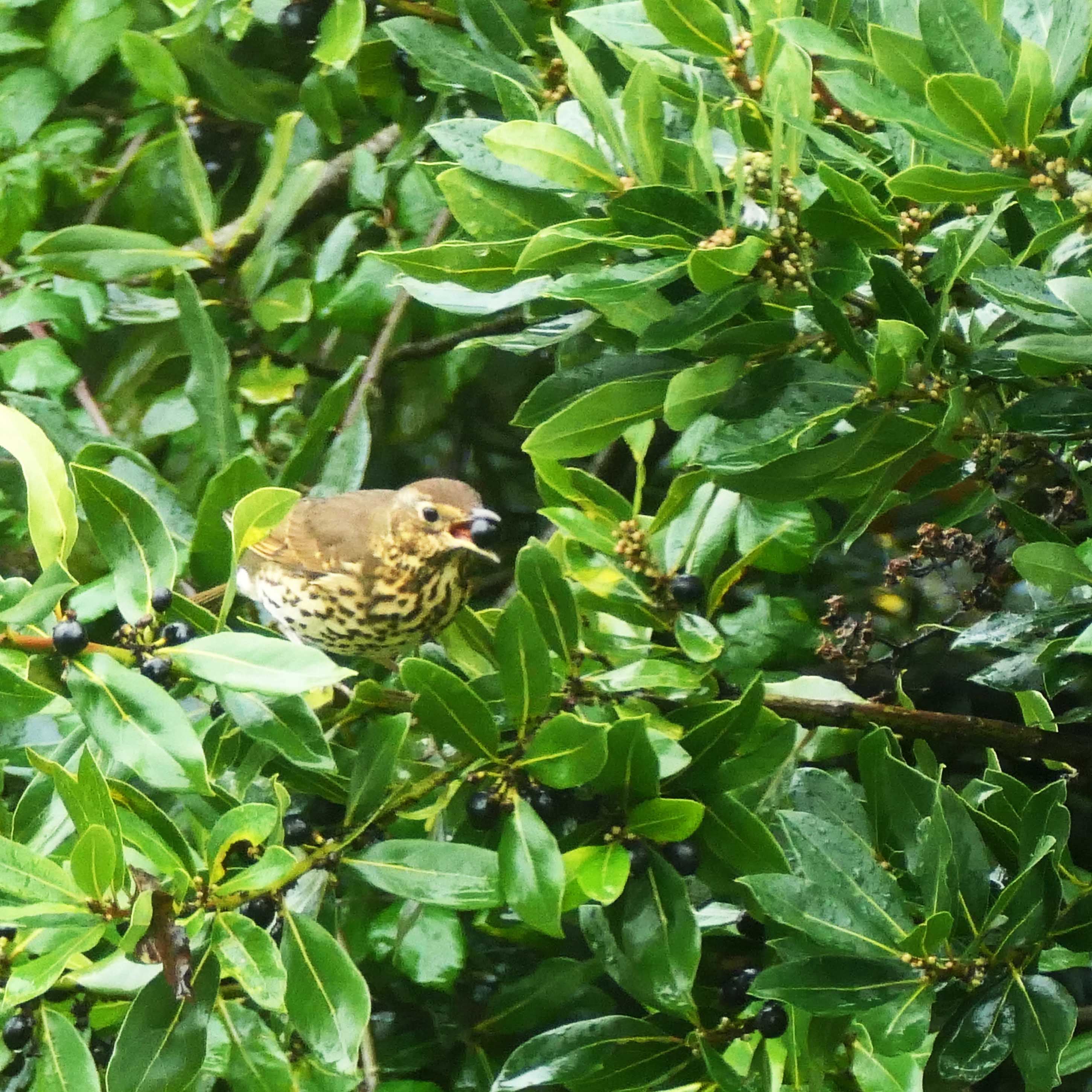
Though the berries on this Buckthorn tree had looked ripe for a week or more, the birds chose this particular day to begin selecting the most juicy plump fruit to eat. As I watched, first male and female Blackbirds flew in and began scoffing the berries. Then, the Woodpigeons turned up, the branches of the tree drooping and swaying under their weight. And, lastly, a handsome Song thrush appeared to join in the feast.

As my photos were taken through rain-covered double-glazed windows, they’re not very sharp but I thought they were still worth sharing. Watching all these beautiful birds certainly cheered a very grey day.

Like Loading...

Autumn trees: Aspen

09 Sunday Nov 2025

Posted by sconzani in autumn, leaves, trees

≈ Leave a comment

Tags

Aspen, Aspen in autumn, autumn colour, autumn leaves, autumn trees, Populus tremula

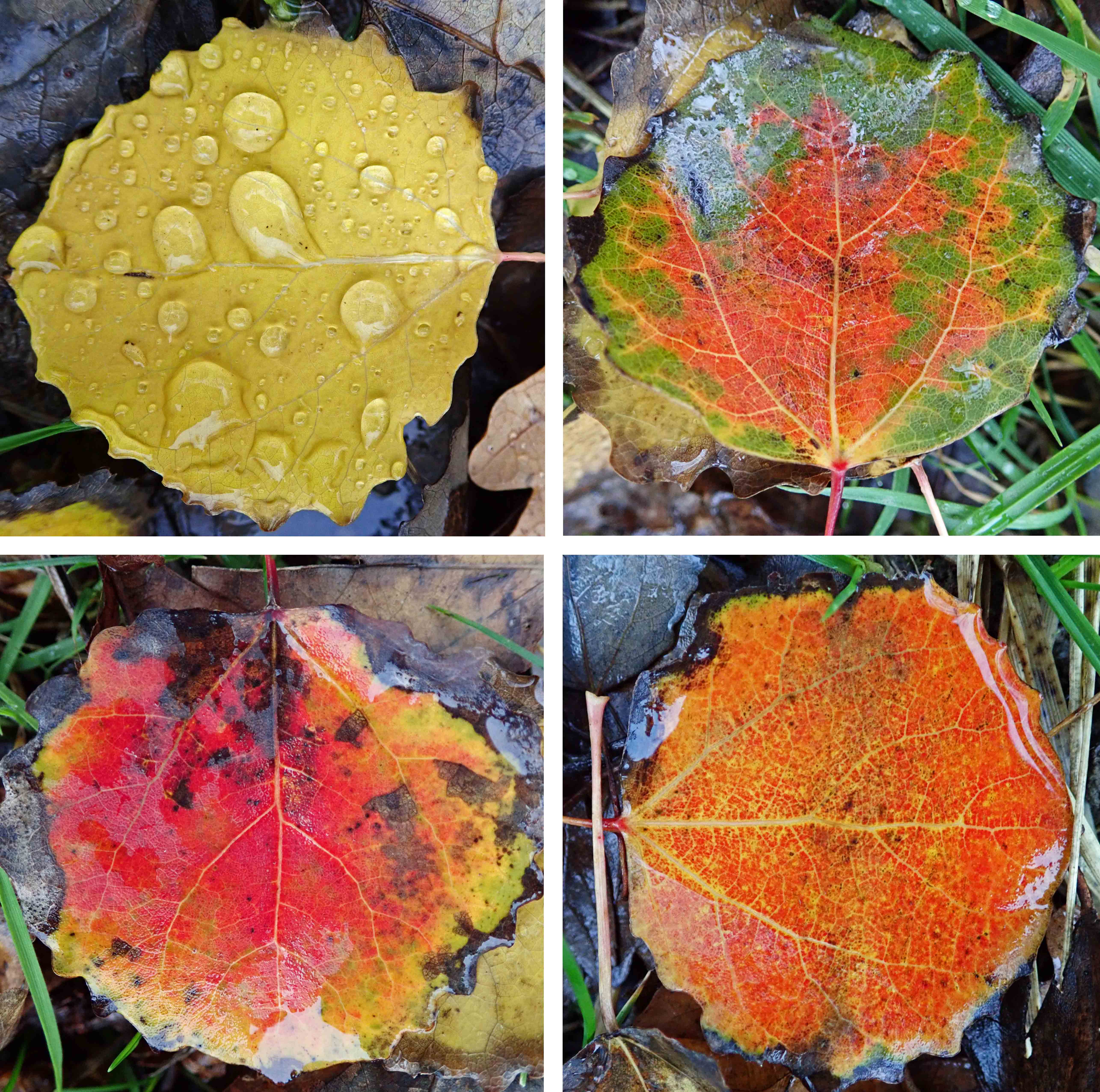
The leaves of the Aspen (Populus tremula) are some of the most stunning autumn leaves, their summer green changing to yellow and orange and red and every combination of those colours, sometimes all in one leaf. Those colours, together with the way the leaves of the Aspen seem to quiver and rustle (tremula is Latin for trembling or quaking) at the merest hint of a breeze, make this tree a favourite of mine – and I’m sure with many of you, as well.

Aspen are usually associated with cold places, growing best in mountains near rivers – they prefer moist but well-drained soil, so coastal south Wales is not their preferred habitat but, for some reason, they seem often to be used in ornamental plantings in parks and alongside roads, in the landscaping around business and housing developments, so these are the Aspens I’m most familiar with. Some day I’d like to make an autumn trip to a place where Aspen are at their most spectacular – I’ve read the trees in the north west of Scotland put on a particularly fine autumn display.

Like Loading...

Autumn trees: Hawthorn

02 Sunday Nov 2025

Posted by sconzani in autumn, leaves, trees

≈ Leave a comment

Tags

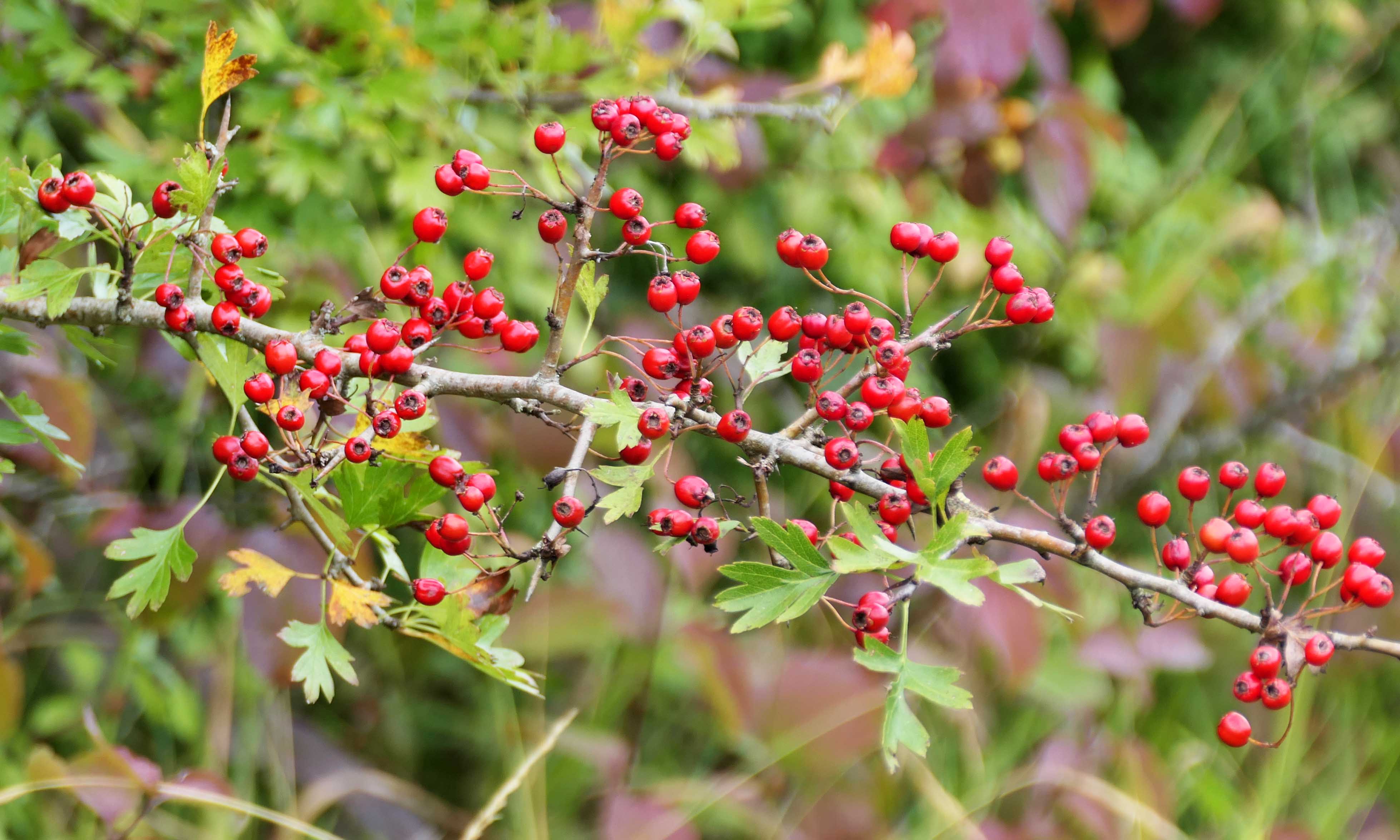
autumn colour, autumn leaves, autumn trees, berries, British trees, Crataegus monogyna, Hawthorn, Hawthorn berries, Hawthorn leaves

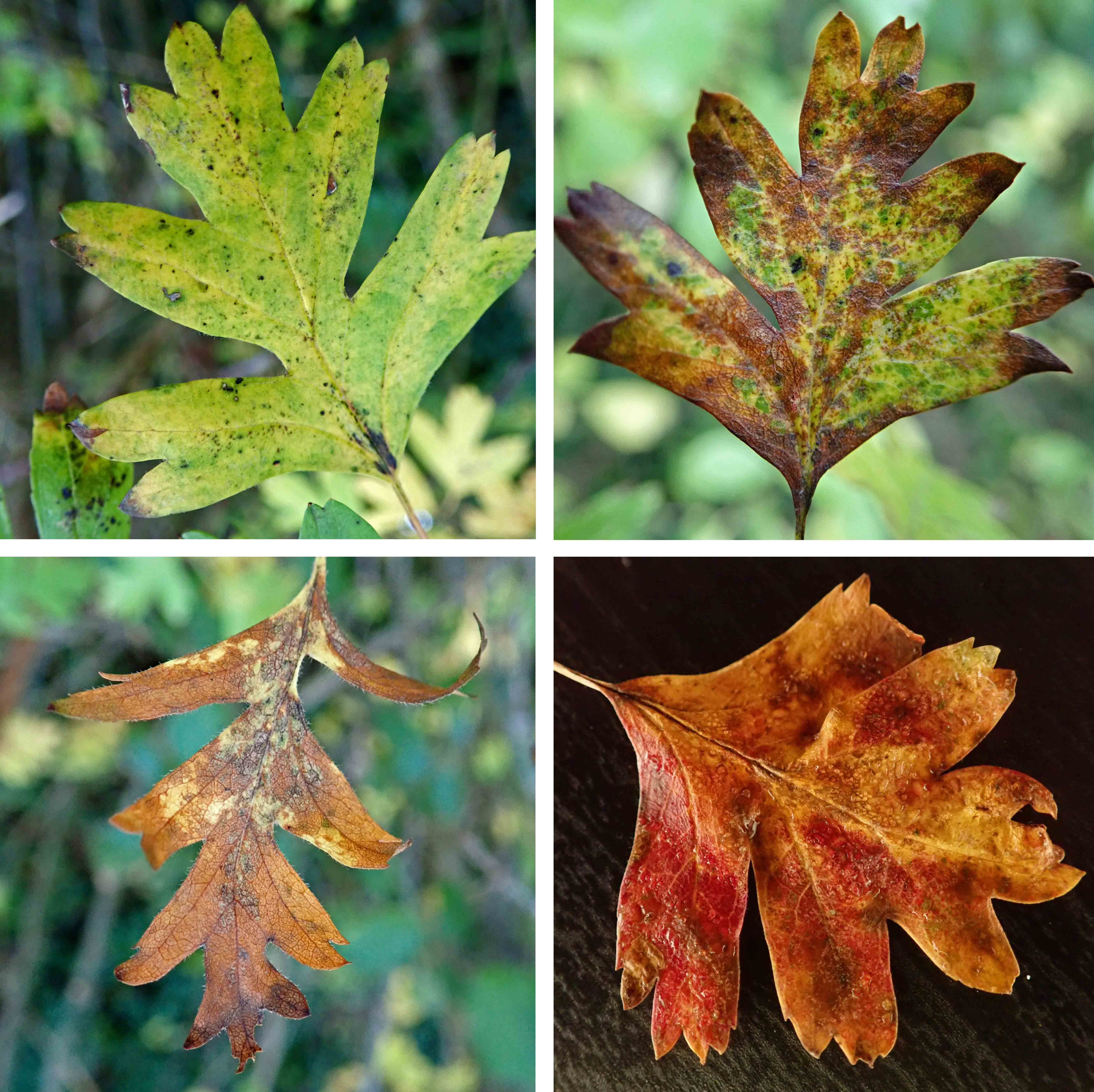
The Hawthorn (Crataegus monogyna) is not really a tree we notice for its foliage, though its leaves were, apparently, one of the models for the foliage that wreathes the faces of Green Men seen in carvings in churches.

And, according to Richard Mabey’s Flora Britannica, Bread-and-cheese is a vernacular name given to the leaves of the Hawthorn in some places around Britain. He says: ‘This is usually explained as referring to their rudimentary culinary qualities’ but then quotes a correspondent who writes:

We would pick the red berries and green leaves in the autumn. These were known as “bread and cheese” – the leaf the bread, the berry the cheese.

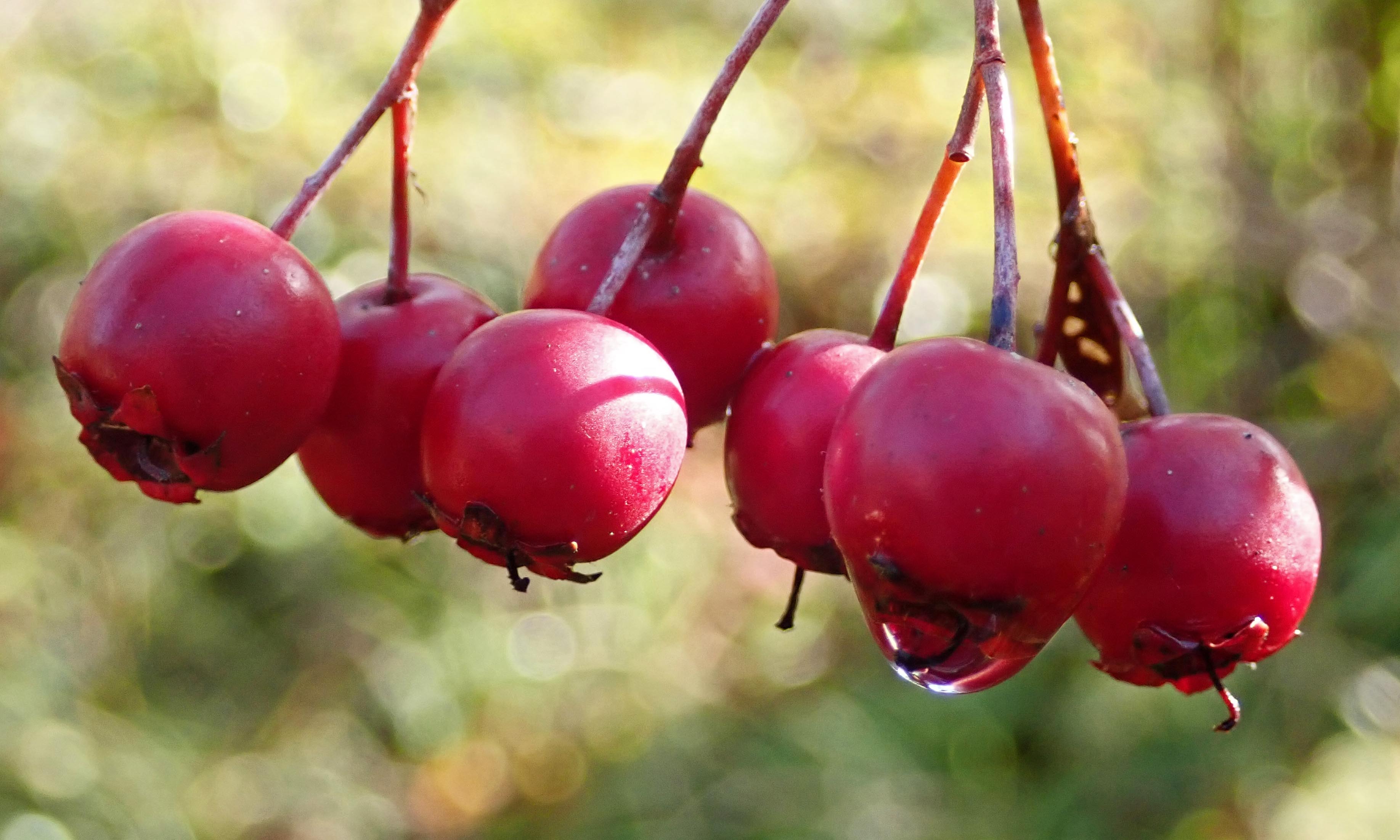
In the autumn, though the leaves of the Hawthorn do, of course, change colour, the hues are mostly yellow and brown, with just the merest hint of red. So it’s the stunning red berries rather than the tree’s leaves that makes the Hawthorn stand out in the autumnal landscape. I’ve never tried eating the berries but Mabey notes that the ‘flesh is a little like overripe avocado pear or, more fancifully, a whey cheese.’ That doesn’t sounds very appetising to me so I think I’ll continue to admire, not to eat them.

Like Loading...

Autumn trees: Norway maple

26 Sunday Oct 2025

Posted by sconzani in autumn, trees

≈ 1 Comment

Tags

autumn colour, autumn leaves, colourful autumn leaves, Norway maple, trees in autumn

Today’s tree is not a British native – it was introduced as an ornamental, has been planted throughout Britain in parks and gardens, and from there has become naturalised, seeded by the wind, birds and critters, making itself at home in hedgerows, on scrubby waste ground and even in woodlands – I can see one from my living room window, growing on the edge of a small slice of regenerating ancient woodland.

The Norway maple (Acer platanoides) is handsome at all times of the year but, for me, the highlight of this tree, as with many maples, is its leaves in autumn. Their vibrant colours range from yellow through to the deepest red, and everything in between, sometimes all in one leaf.

Like Loading...

Bug: Megacoelum infusum

12 Friday Sep 2025

Posted by sconzani in insects, trees

≈ Leave a comment

Tags

British miridae, bugs on Oak, Megacoelum infusum, mirid bugs on Oak, Miridae

Here’s another of this year’s new bug finds, a handsome little mirid bug coloured a rich brown and orange, Megacoelum infusum. I found it on a local Oak tree, which was fortunate, as there’s a very similar looking bug (Megacoelum beckeri) that lives on Scots pine (Pinus sylvestris). The British Bugs website entry for this species says it is both vegetarian and carnivorous, supping on Oak sap and tiny insects.

Like Loading...
← Older posts

About me

sconzani

sconzani

I'm a writer and photographer; researcher and blogger; birder and nature lover; countryside rambler and city strider; volunteer and biodiversity recorder.

View Full Profile →

Follow earthstar on WordPress.com

Enter your email address to follow this blog and receive notifications of new posts by email.

Recent blog posts

  • M is for mite December 18, 2025
  • L is for lepidopteran lifers December 17, 2025
  • K is for Keeled skimmers December 16, 2025
  • J is for Jersey tiger December 15, 2025
  • I is for Ichneumon December 14, 2025

From the archives

COPYRIGHT

Unless otherwise acknowledged, the text and photographs on this blog are my own and are subject to international copyright. Nothing may be downloaded or copied without my permission.

Fellow Earth Stars!

  • Unknown's avatar
  • Unknown's avatar
  • Unknown's avatar
  • Unknown's avatar
  • Unknown's avatar
  • Unknown's avatar
  • Unknown's avatar
  • Unknown's avatar
  • Unknown's avatar
  • Unknown's avatar
  • Unknown's avatar
  • Unknown's avatar
  • Unknown's avatar
  • Unknown's avatar
  • Unknown's avatar
  • Unknown's avatar
  • Unknown's avatar
  • Unknown's avatar
  • Unknown's avatar
  • Unknown's avatar
  • Unknown's avatar
  • Unknown's avatar
  • Unknown's avatar
  • Unknown's avatar
  • Unknown's avatar
  • Unknown's avatar
  • Unknown's avatar
  • Unknown's avatar
  • Unknown's avatar
  • Unknown's avatar
  • Unknown's avatar
  • Unknown's avatar
  • Unknown's avatar
  • Unknown's avatar
  • Unknown's avatar
  • Unknown's avatar
  • Unknown's avatar
  • Unknown's avatar
  • Unknown's avatar
  • Unknown's avatar
  • Unknown's avatar
  • Unknown's avatar
  • Unknown's avatar
  • Unknown's avatar
  • Unknown's avatar
  • Unknown's avatar
  • Unknown's avatar
  • Unknown's avatar
  • Unknown's avatar
  • Unknown's avatar

Blog at WordPress.com.

Privacy & Cookies: This site uses cookies. By continuing to use this website, you agree to their use.
To find out more, including how to control cookies, see here: Cookie Policy
  • Subscribe Subscribed
    • earthstar
    • Join 667 other subscribers
    • Already have a WordPress.com account? Log in now.
    • earthstar
    • Subscribe Subscribed
    • Sign up
    • Log in
    • Report this content
    • View site in Reader
    • Manage subscriptions
    • Collapse this bar
 

Loading Comments...
 

You must be logged in to post a comment.

    %d