• ABOUT
  • BIRDING 2018
  • Birding 2019
  • BLOG POSTS
  • Butterflies 2018
  • Resources

earthstar

~ a celebration of nature

earthstar

Category Archives: trees

Fungus: Cercospora depazeoides

29 Friday Aug 2025

Posted by sconzani in fungi, leaves, trees

≈ Leave a comment

Tags

British fungi, Cercospora depazeoides, fungal pathogen, fungus on Elder leaves, fungus on Elder trees

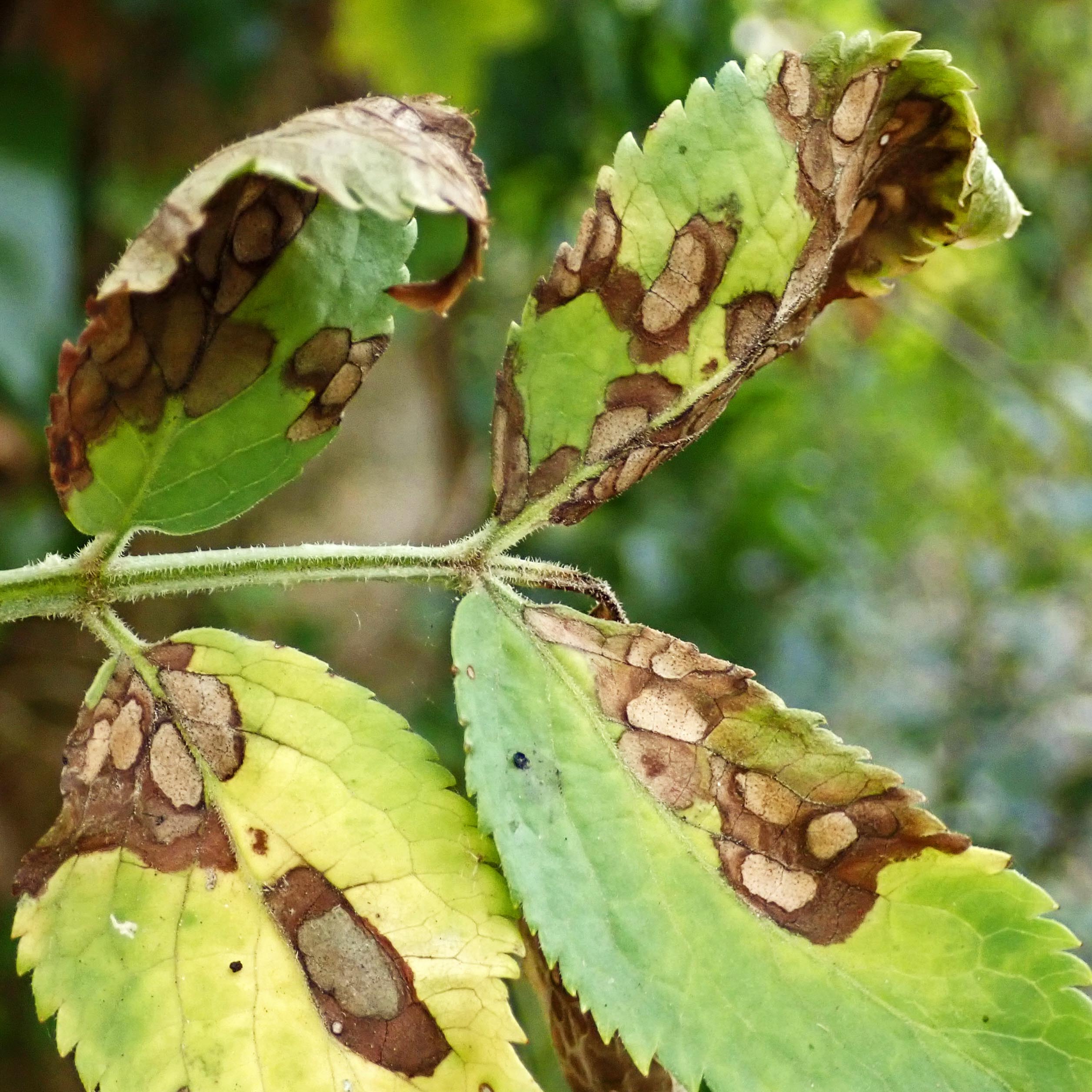
Given our recent, seemingly never-ending high temperatures, I’ve been surprised to find fungi flourishing, though they’ve not been the mushroom-shaped life forms you might expect when you read the word fungi. Take today’s fungus, for example. I didn’t immediately realise these very distinctive marks on the leaves of an Elder tree (Sambucus sp.) were caused by a fungus.

These marks are caused by Cercospora depazeoides, and it seems the fungus can be quite destructive. According to the European Forest Pests website, this fungal pathogen leads to ‘premature leaf drop and reduced photosynthesis’. When the spots merge, dominating the leaf surface, they cause defoliation, which can ‘weaken the plant, impacting its growth and fruit production’. Fortunately for those who harvest the berries to make Elderberry cordial, according to iRecord, this fungus has thus far not been recorded in many locations in the UK.

Like Loading...

Leafmines: Stigmella lemniscella

25 Monday Aug 2025

Posted by sconzani in insects, trees

≈ Leave a comment

Tags

Beautiful elm dot, British leafminers, leaf-mining moth larvae, leaf-mining moths, leafmines, leafmines on Wych elm, Stigmella lemniscella

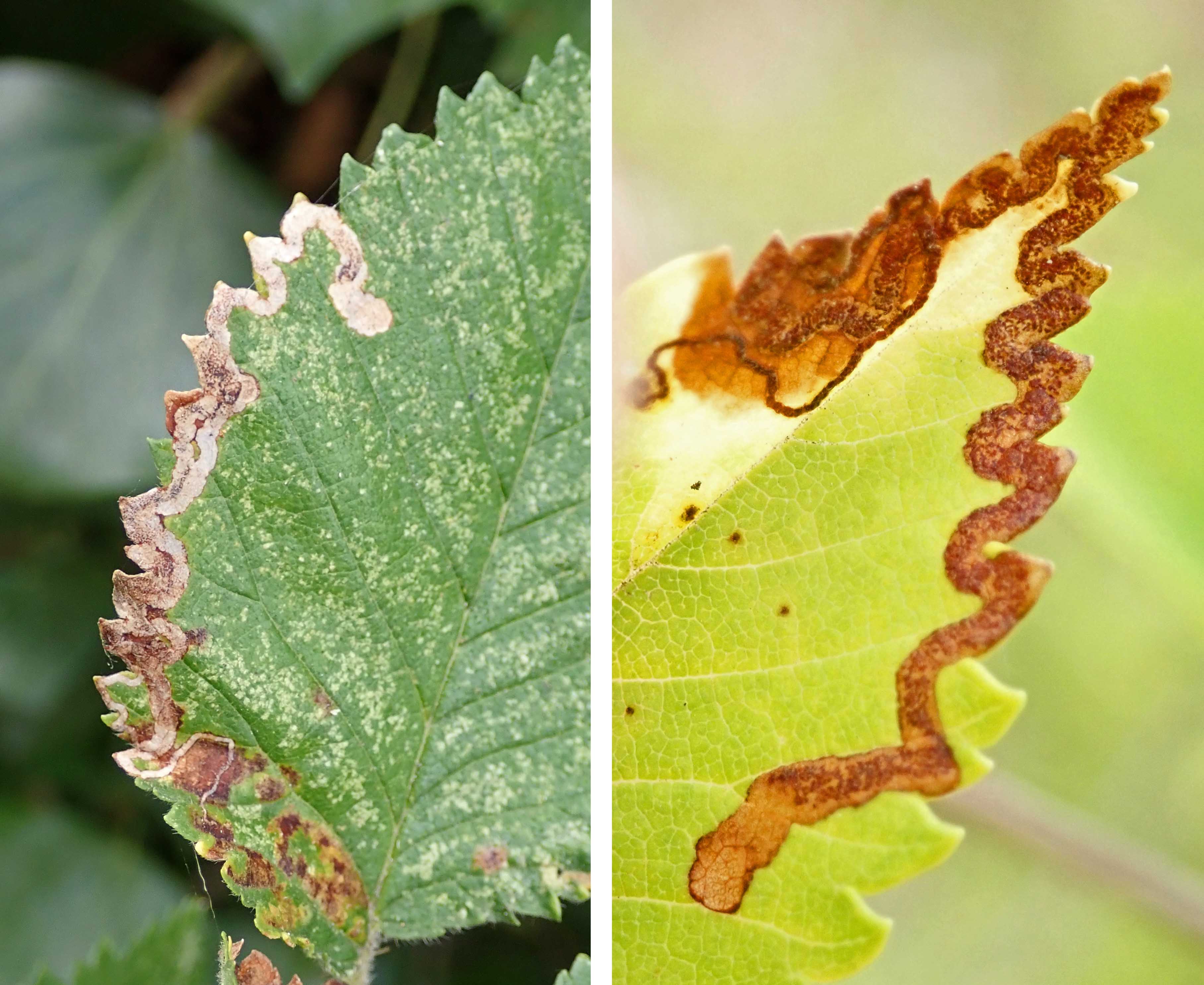
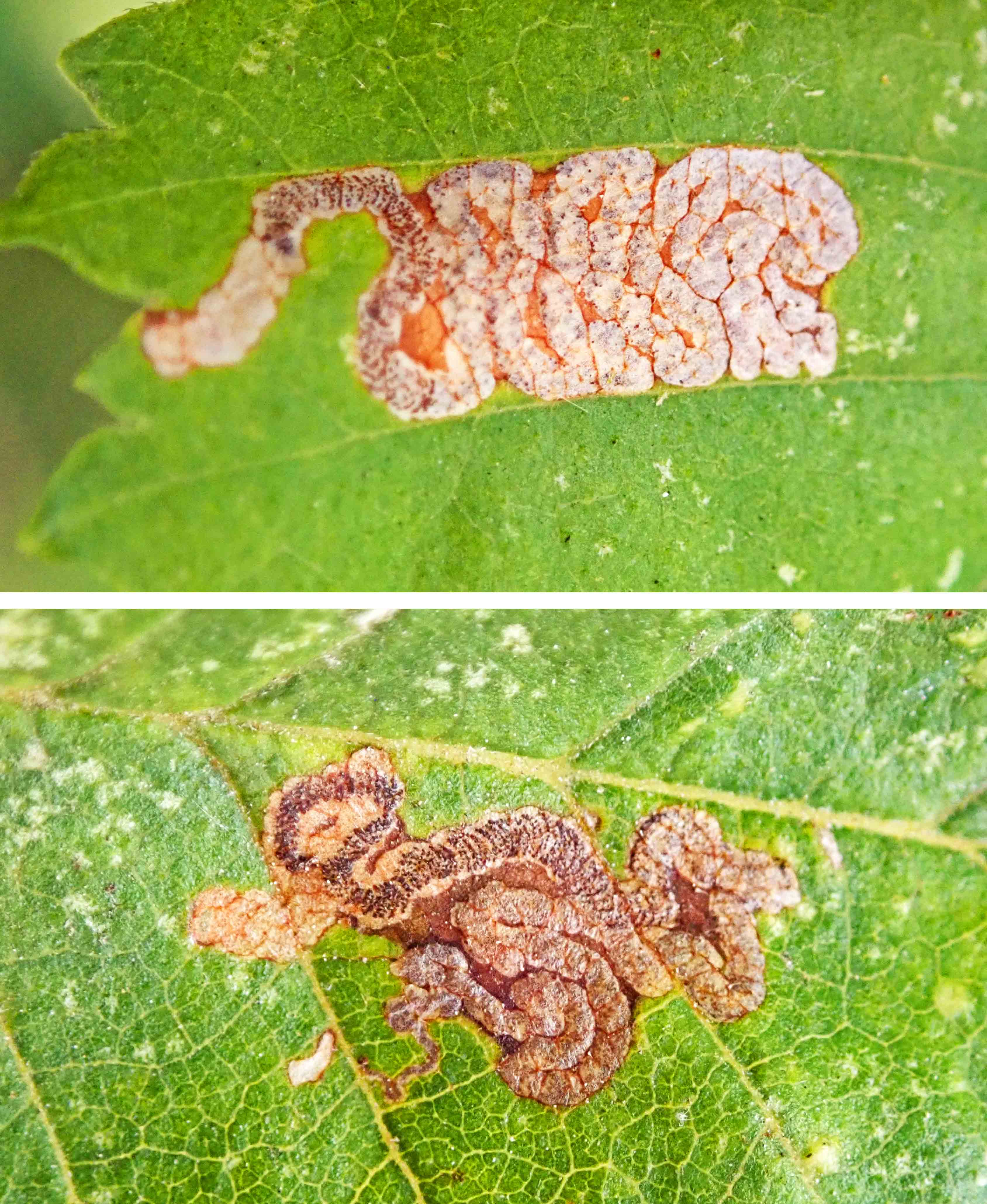
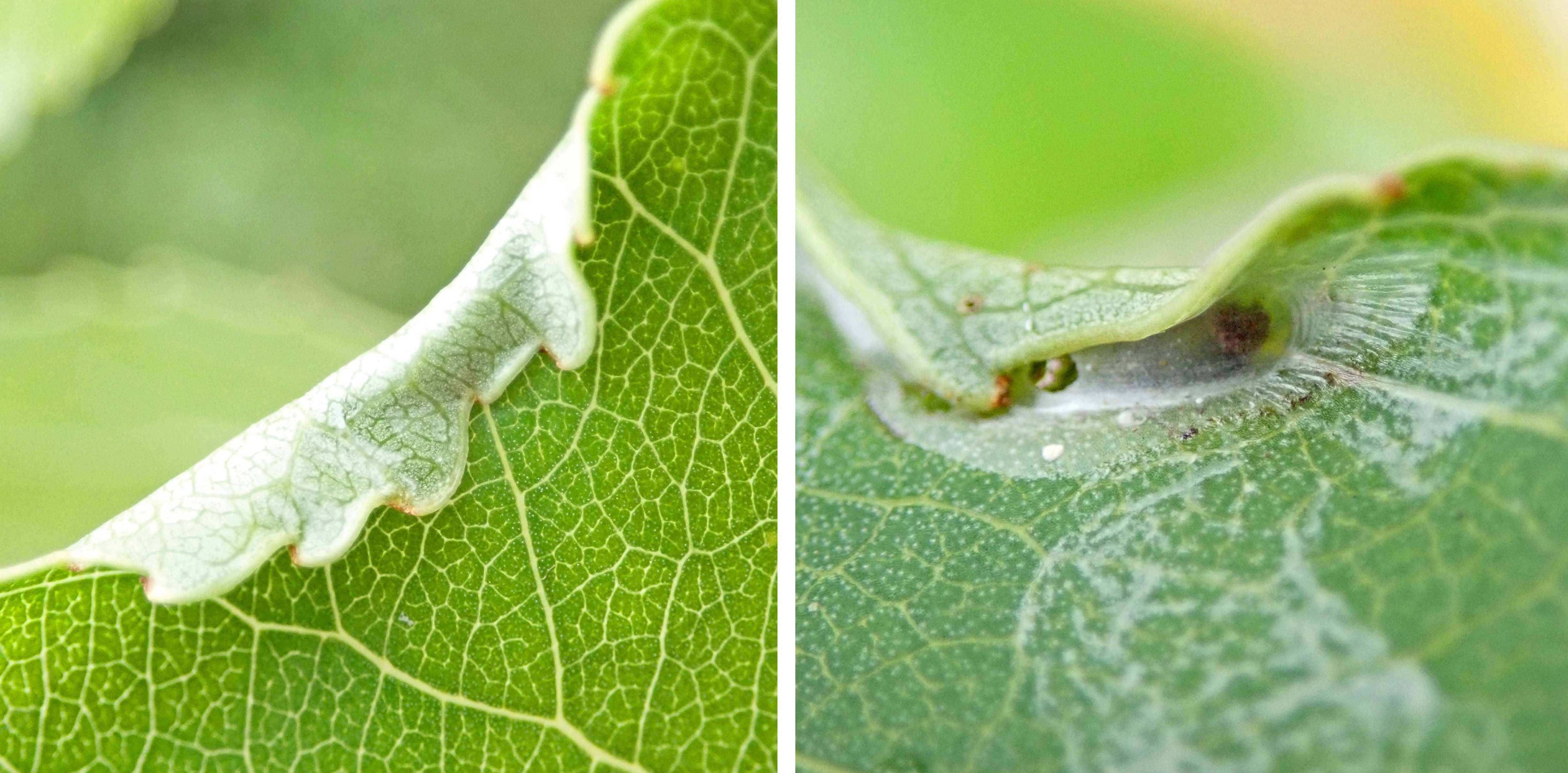
I discovered today’s new leafmines the same day as I found last week’s (Leafmines: Stigmella viscerella) and, considering how much time I spend leaf-fossicking and simply staring at trees, was also amazed I’d not noticed these very distinctive mines before.

The larvae of the moth Stigmella lemniscella munch away within the leaves of Elm trees (Ulmus species), in this case Wych elms (Ulmus glabra), and their galleries often follow the edge of the leaves, looking like a zigzag pattern. These moths are bivoltine so are active during July, and again in September – October. The adult moth is a pretty little thing – there’s a photo on the UK Moths website, which has the common name of Beautiful elm dot.

Like Loading...

Leafmines: Stigmella viscerella

18 Monday Aug 2025

Posted by sconzani in insects, trees

≈ Leave a comment

Tags

British leafmines, leaf-mining moth larvae, leaf-mining moths, leafmines on Wych elm, Stigmella viscerella, Wych elm

I’m often surprised when I find a new leafmine: how is it that I’ve not noticed this one before, and how many different leafmines can there be? The answer to the first question has to be that I haven’t been paying enough attention, and to the second that there are probably hundreds that I haven’t yet found.

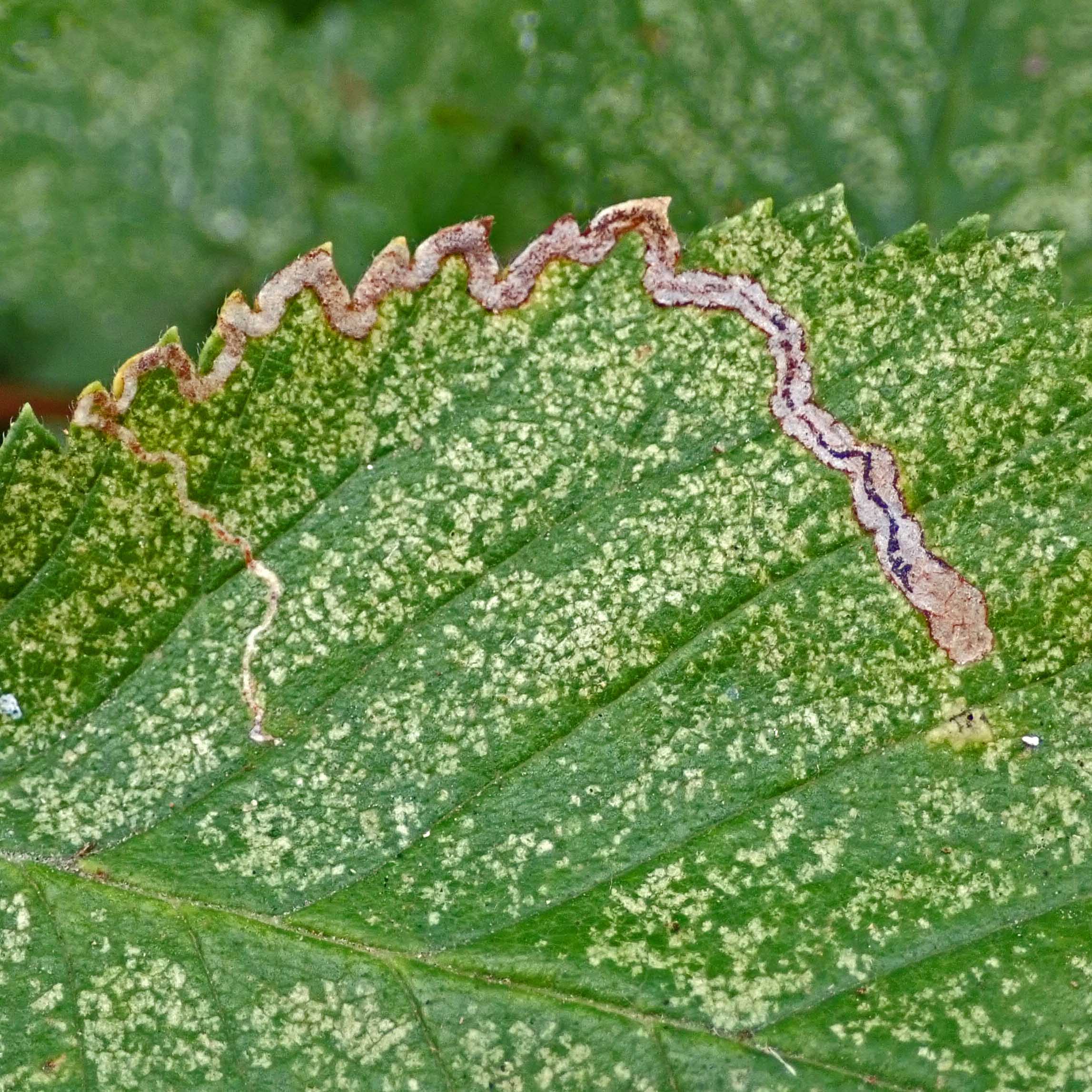
Today’s new leafmines were made by larvae of the moth Stigmella viscerella, and the mines can be found on the leaves of Elm trees, in this case Wych elm (Ulmus glabra), during August and September. Now that I’m aware of them, I’ve managed to find the mines in two different locations on two separate days, which is why the elm leaves in the two sets of images look different in colour (one day was brighter than the other).

The epithet viscerella may seem odd – it comes from the Latin viscera, plural of viscus, and refers to the human body’s internal organs – but when I look at these mines, the twisting shapes of the frass-filled galleries do, indeed, remind me of human intestines. I presume that the adult moth is not often seen as the UK Moths website doesn’t have its photo but, if you’re curious to see what emerged from these ‘intestines’, I managed to find an image on the German Lepiforum website.

Like Loading...

Galls: Aceria fraxinivora

29 Tuesday Jul 2025

Posted by sconzani in insects, trees

≈ Leave a comment

Tags

Aceria fraxinivora, Ash key galls, British galls, Cauliflower galls, galls caused by mites, galls on Ash keys

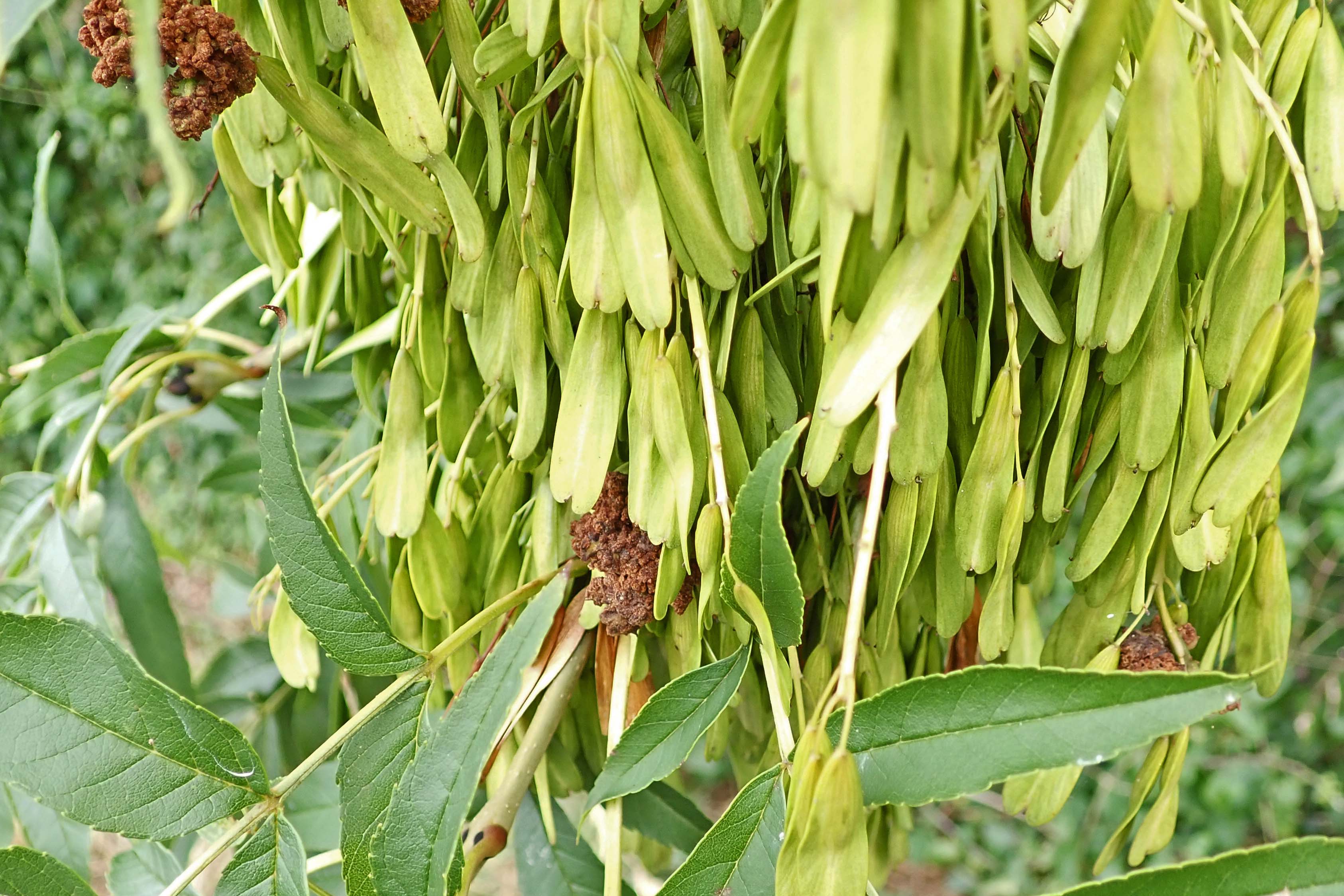
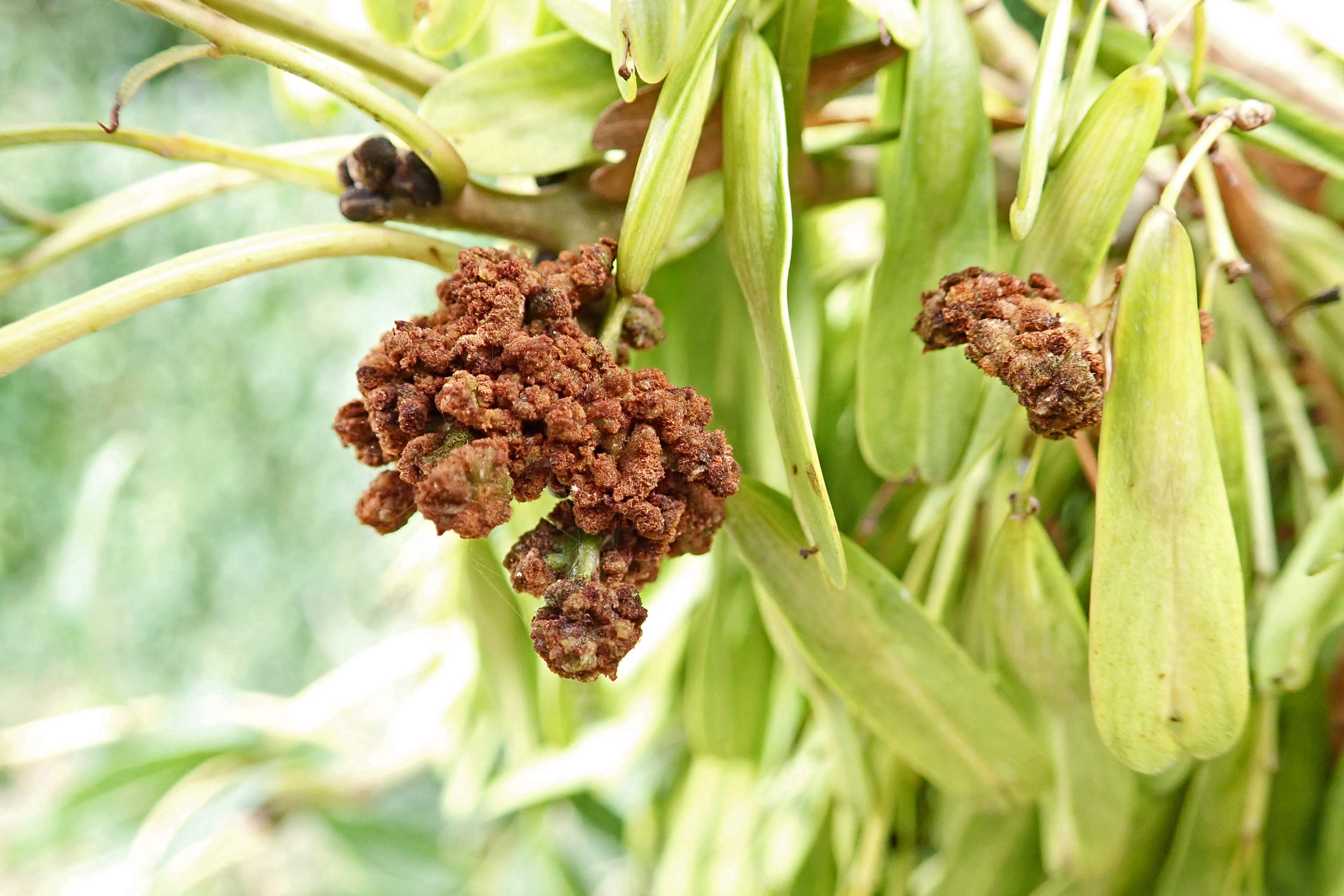
Over the years I must have looked at hundreds of bunches of Ash keys (so named because the clusters of seeds on Ash trees look like bunches of old-fashioned metal keys hanging together) yet this was the first time I had noticed these odd woody growths on any of them. The growths, which start off green but later turn brown, are known by the common name of Cauliflower galls – I think you can see why. The galls are caused by the mite Aceria fraxinivora, a mite so small you can’t even see it with the naked eye.

Despite their diminutive stature, by piercing the Ash’s cells to feed, the mite causes the surrounding plant cells to expand and multiply, thus forming the galls you can see in these photos. According to the Plant Parasites of Europe website, the galls sometimes occur on the stems and leaves of the Ash tree (the website has photos of these) but they are most often found on the flower heads, presumably because those cells are easier to access for the hungry mites.

Like Loading...

Leafmines: Phyllonocnistis unipunctella

28 Monday Jul 2025

Posted by sconzani in insects, nature, trees

≈ Leave a comment

Tags

British leafmines, leaf-mining moth larvae, leaf-mining moths, leafmines on Poplar trees, Phyllonocnistis unipunctella

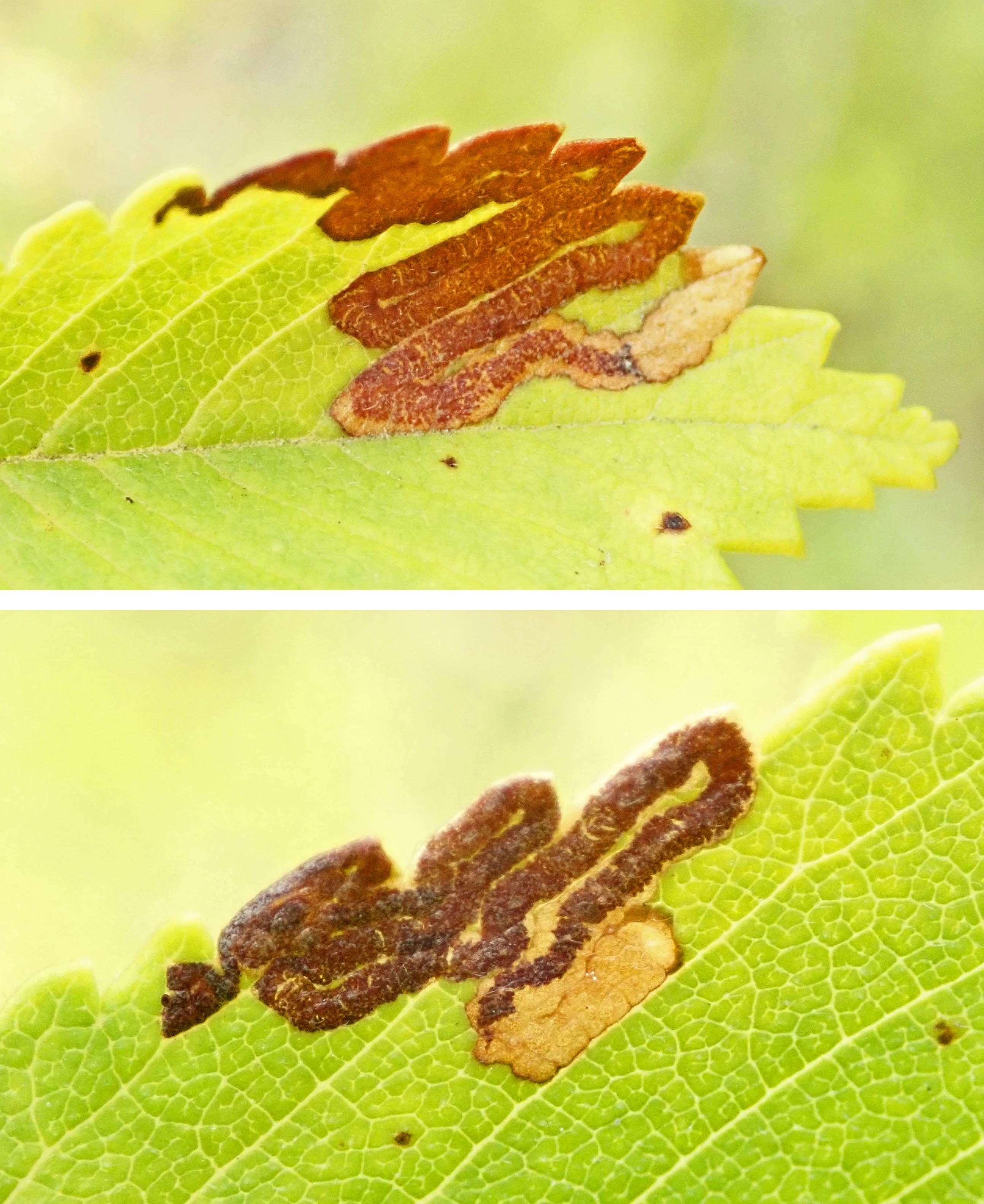
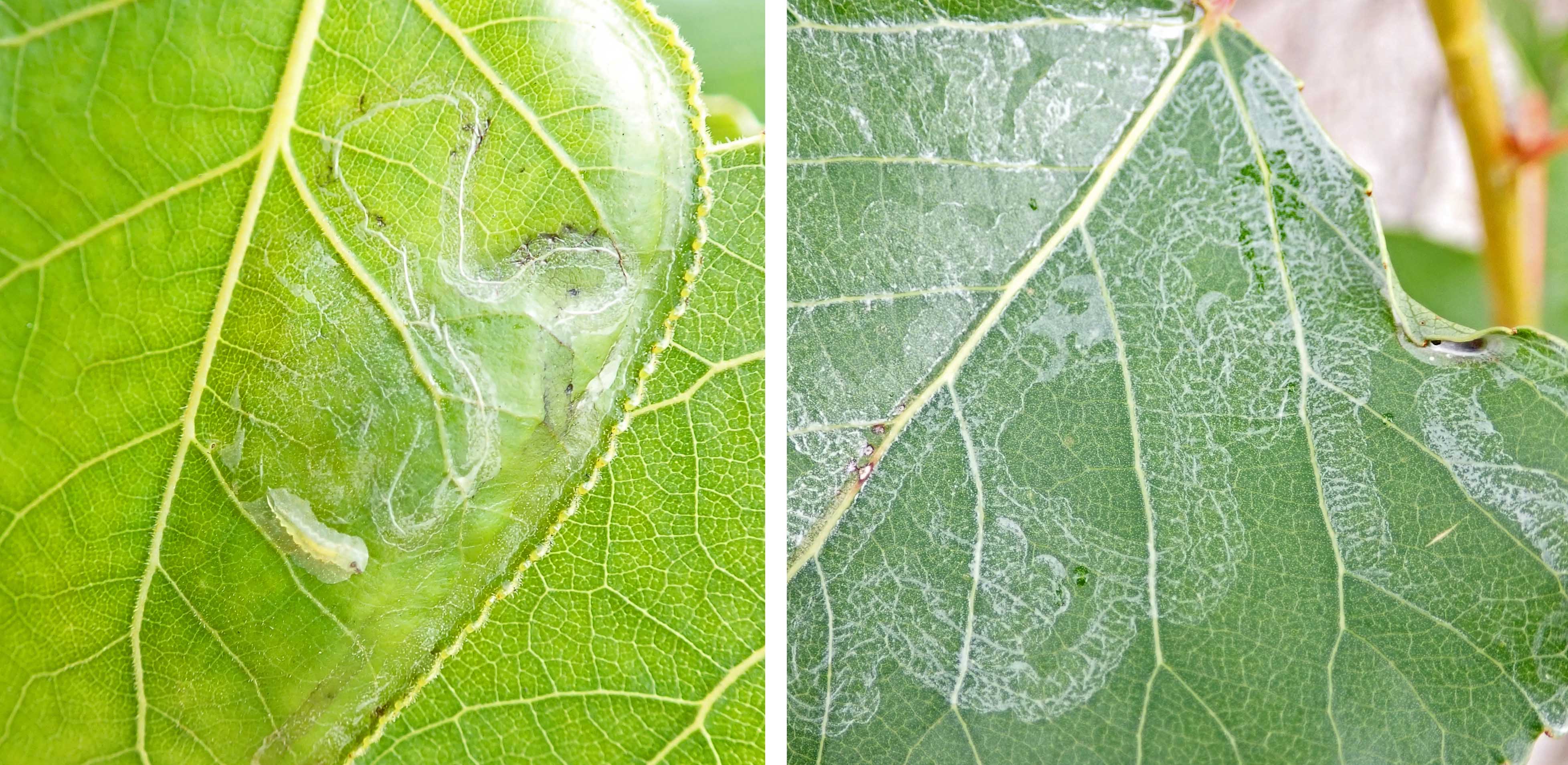
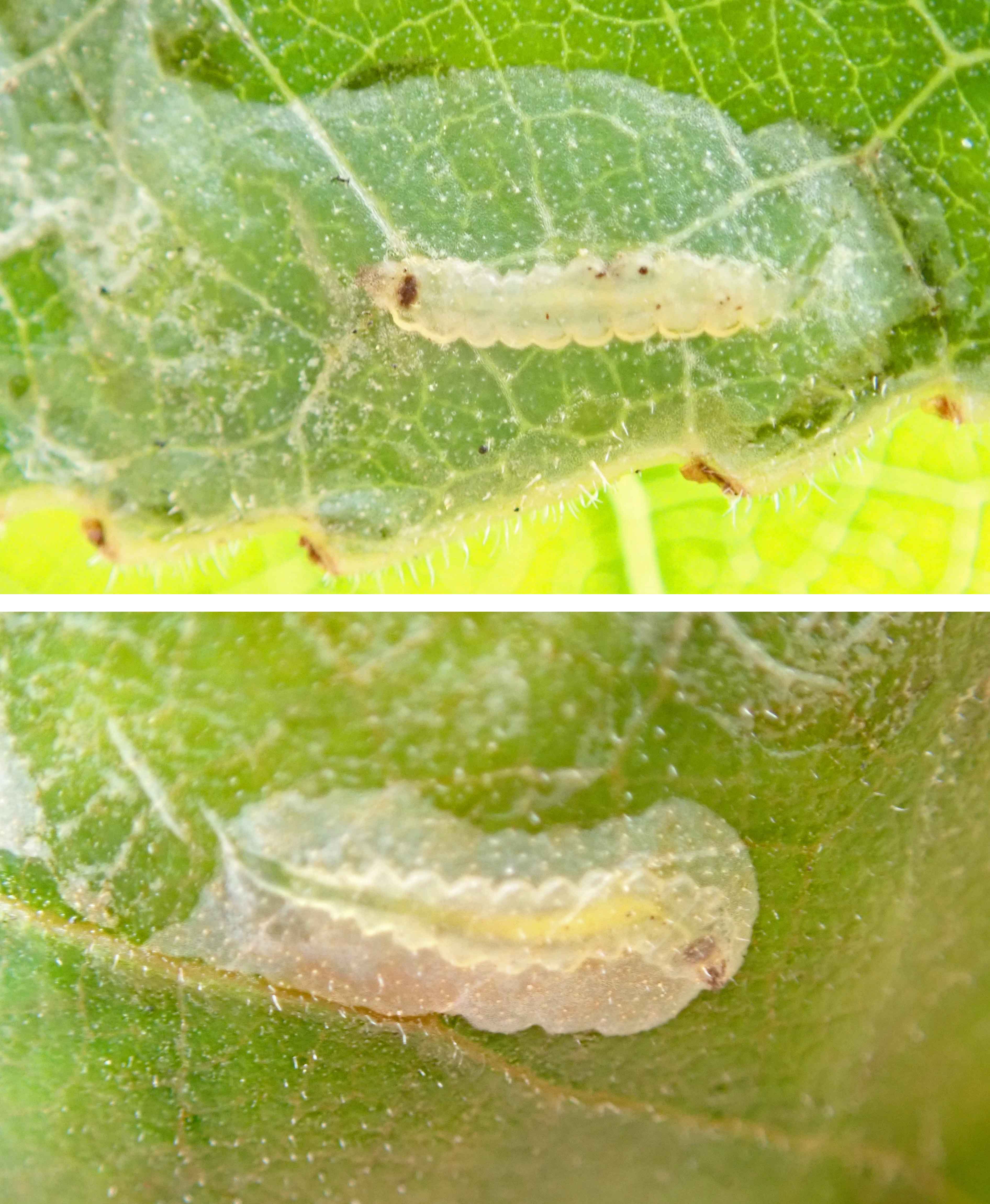
You could easily mistake the leafmines of the tiny moth Phyllonocnistis unipunctella for the dried trails of a snail after it had meandered around a leaf’s surface. This is due to the moth’s larvae mining just underneath the upper epidermis rather than more deeply within the leaf structure (and that can occur on the upper or lower surface of the leaf, though I’ve only found upper surface mines so far). The larvae also do not leave a trail of frass in the mine; I’ve not found any explanation for where that disappears to!

The fact that they mine so close to the leaf surface means the larvae are clearly visible within their mines, as you can see in my photos here. And, once they’ve munched as much leaf matter as necessary, they pupate in a silken membrane they create under the rolled down edge of the leaf, which you can also see in my images.

According to the British Leafminers website, Phyllonocnistis unipunctella uses three species of Populus as its larval plant: Black poplar (Populus nigra), Lombardy poplar (Populus x italica) and Black cottonwood (Populus trichocarpa). The mines shown here are from Black and Lombardy poplars found in a local park. You can see the adult moth, a pale silvery creature with a single dot near its tail end (hence the epithet unipunctella), on the UK Moths website.

Like Loading...

Leafhopper: Ribautiana ulmi

21 Monday Jul 2025

Posted by sconzani in insects, leaves, trees

≈ Leave a comment

Tags

British leafhoppers, Cicadellidae, leafhoppers on elm trees, leafhoppers on Wych elm, Ribautiana ulmi

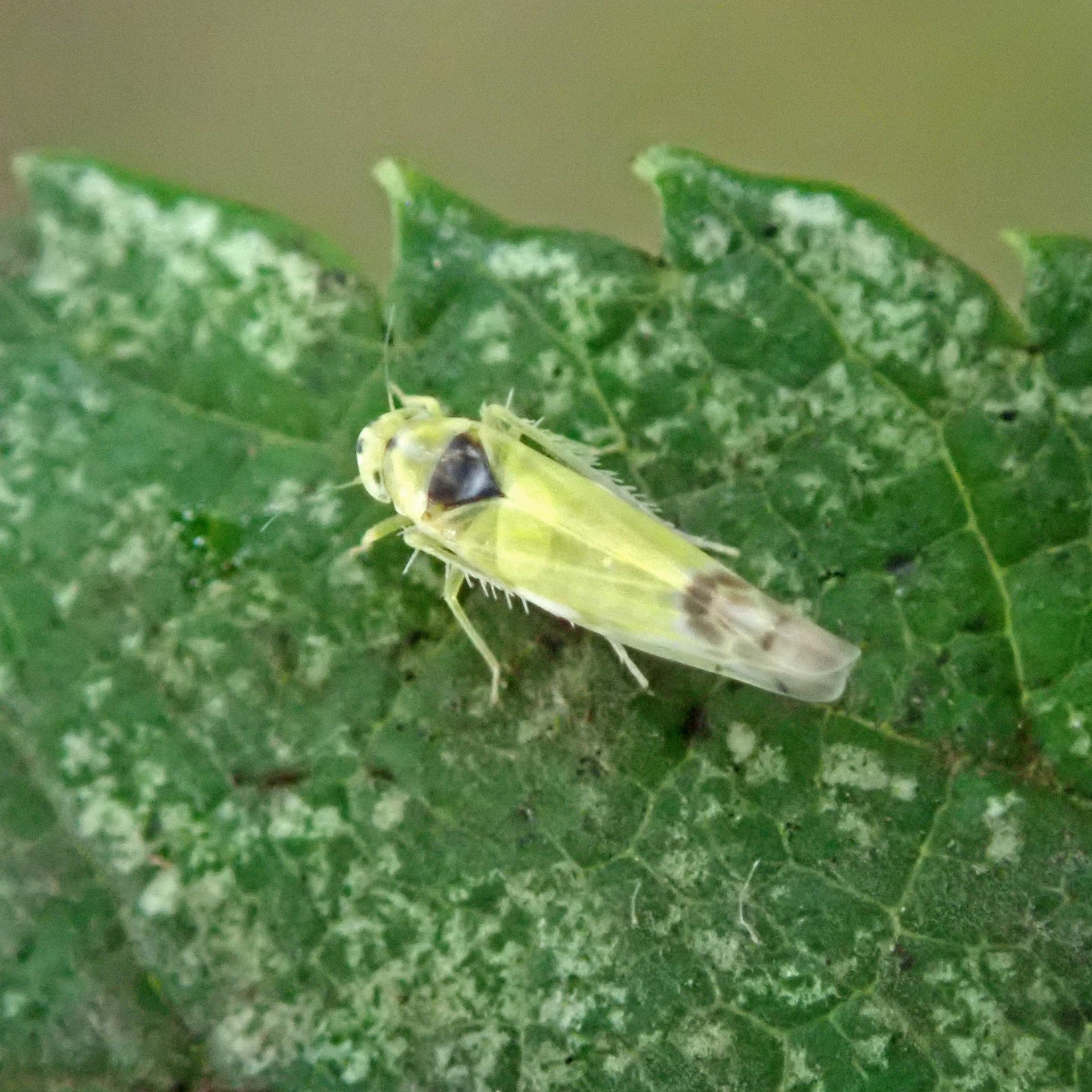
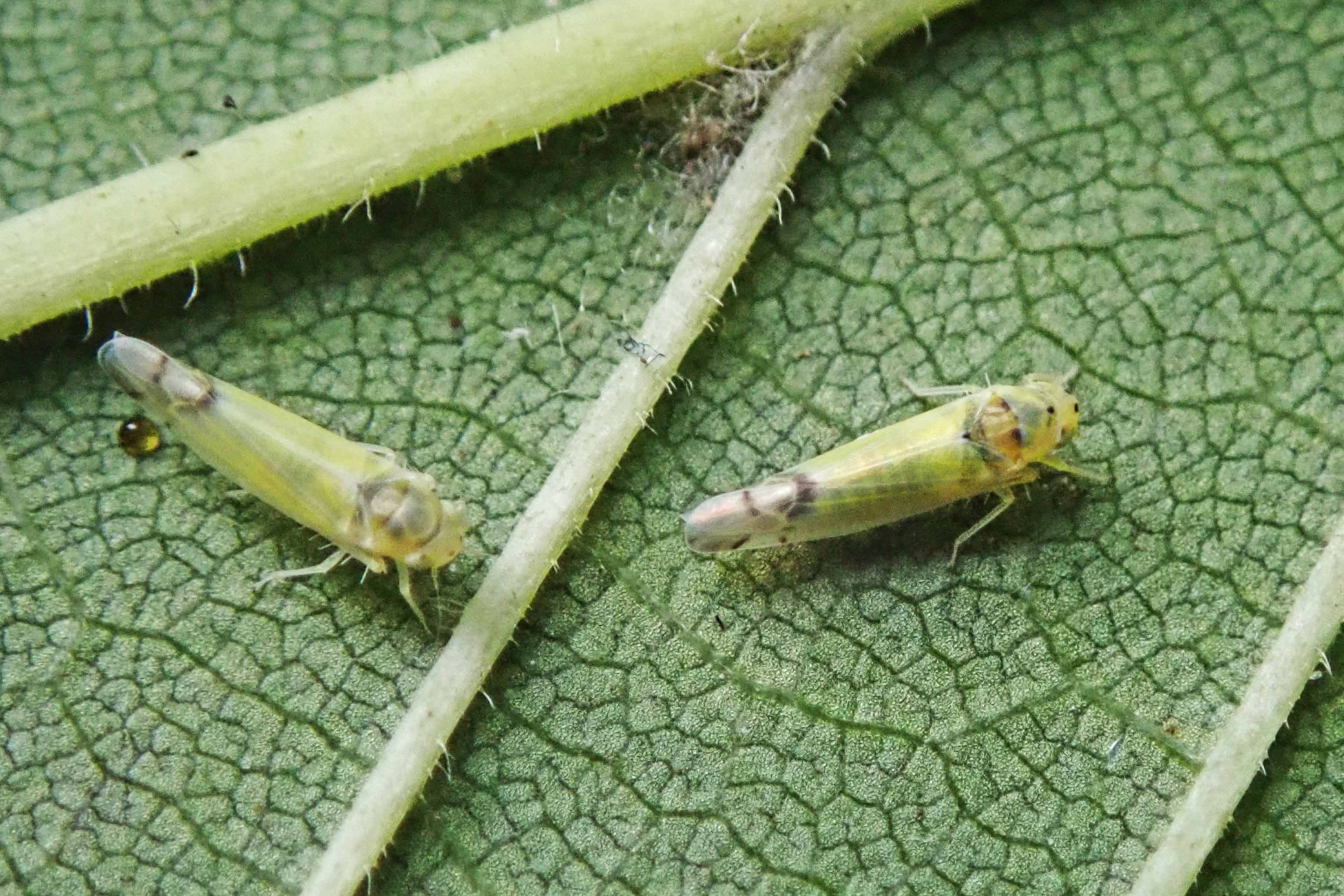
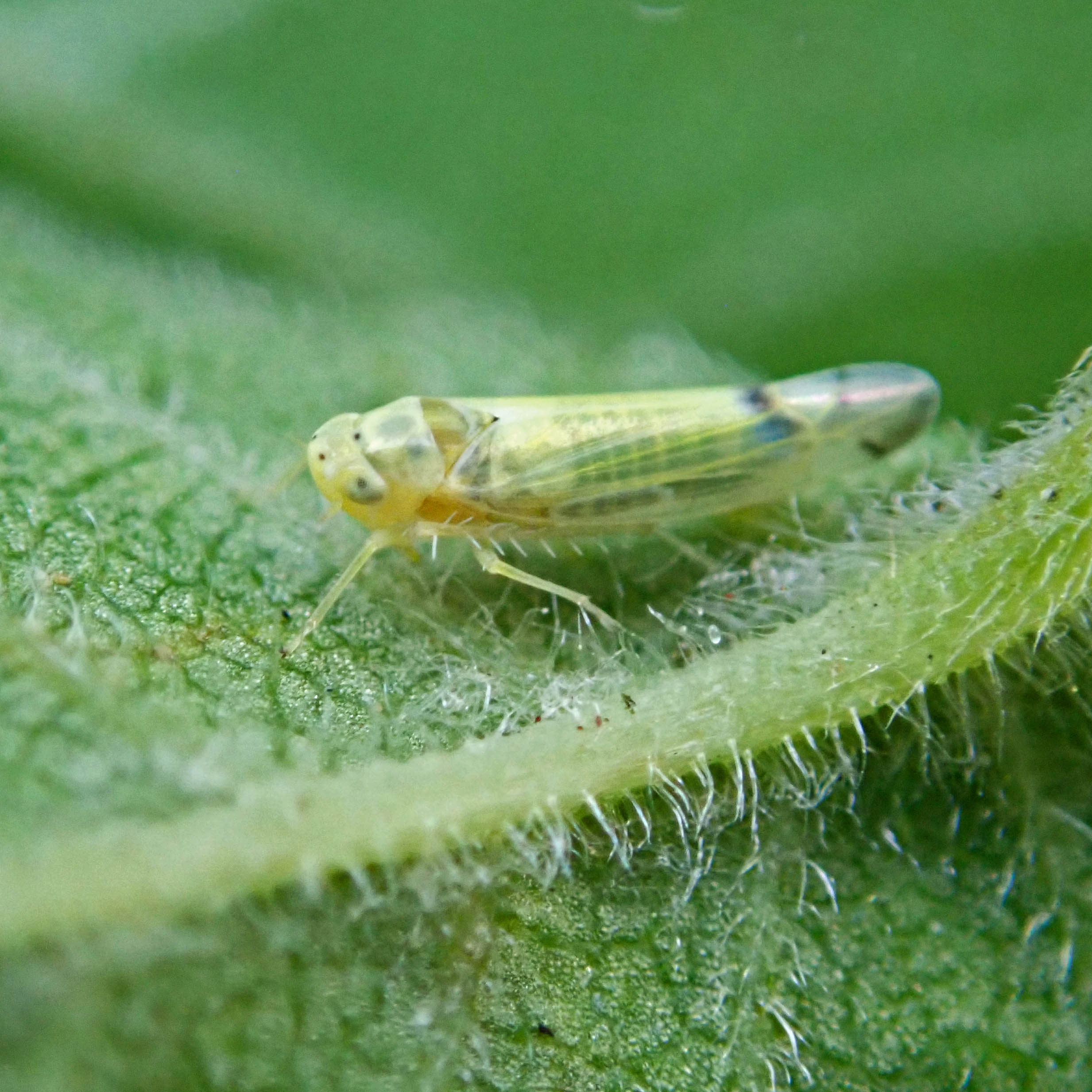
I’ve found this tiny leafhopper, between 3.5 and 4mm long, a few times now, and hope to see more this year, as the adults are out and about from May through to November.

The trouble is that, as my eyes are not the best and these hoppers are so small, I find them hard to identify in the field. My solution is to take as many photos as I can of the many small green species of leafhopper I spot, noting their location and which tree species I found them on, then I try to work out what I’ve found when I get home.

Fortunately, the five British Ribautiana species have quite distinctive markings, and this one, Ribautiana ulmi, has three black spots that are unique to the species. You might think from the ‘ulmi’ in its name that this species is only found on Elm / Wych elm trees but it has been recorded on several other trees, which can be confusing. It’s a little cutie though, so keep your eyes peeled if you find yourself staring at leaves in the next few months (though I do realise that I may be the only of us who does that 😉 ).

Like Loading...

Leafmines: Phyllonorycters on Alder

14 Monday Jul 2025

Posted by sconzani in insects, trees

≈ Leave a comment

Tags

British leafmines, British moths, leaf-mining moth larvae, leafmines on Alder, moth larvae on Alder, Phyllonorycter rajella, Phyllonorycter stettinensis

It’s been a while since I’ve blogged about a new leaf-mining moth, and today you get two for the price of one.

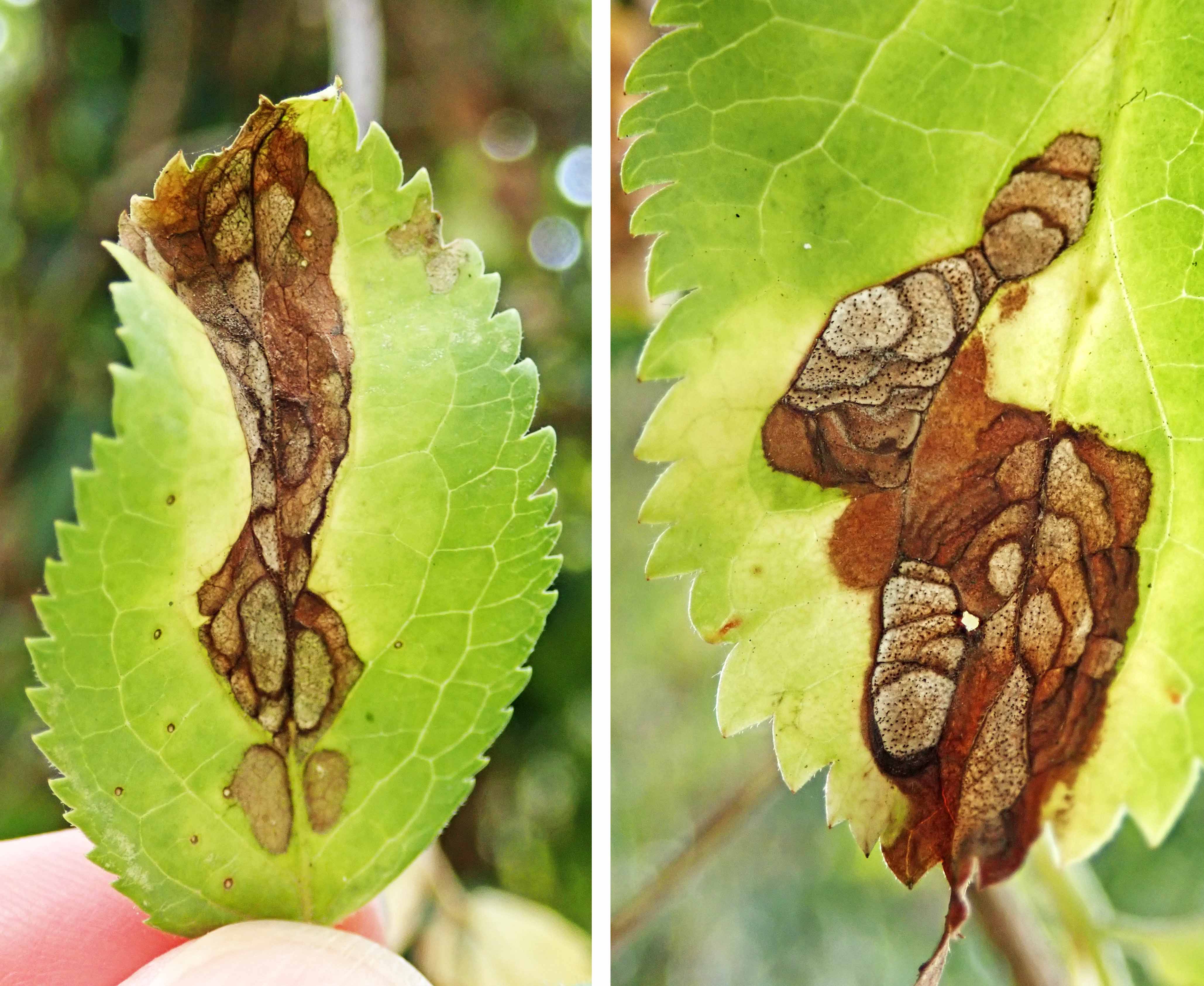
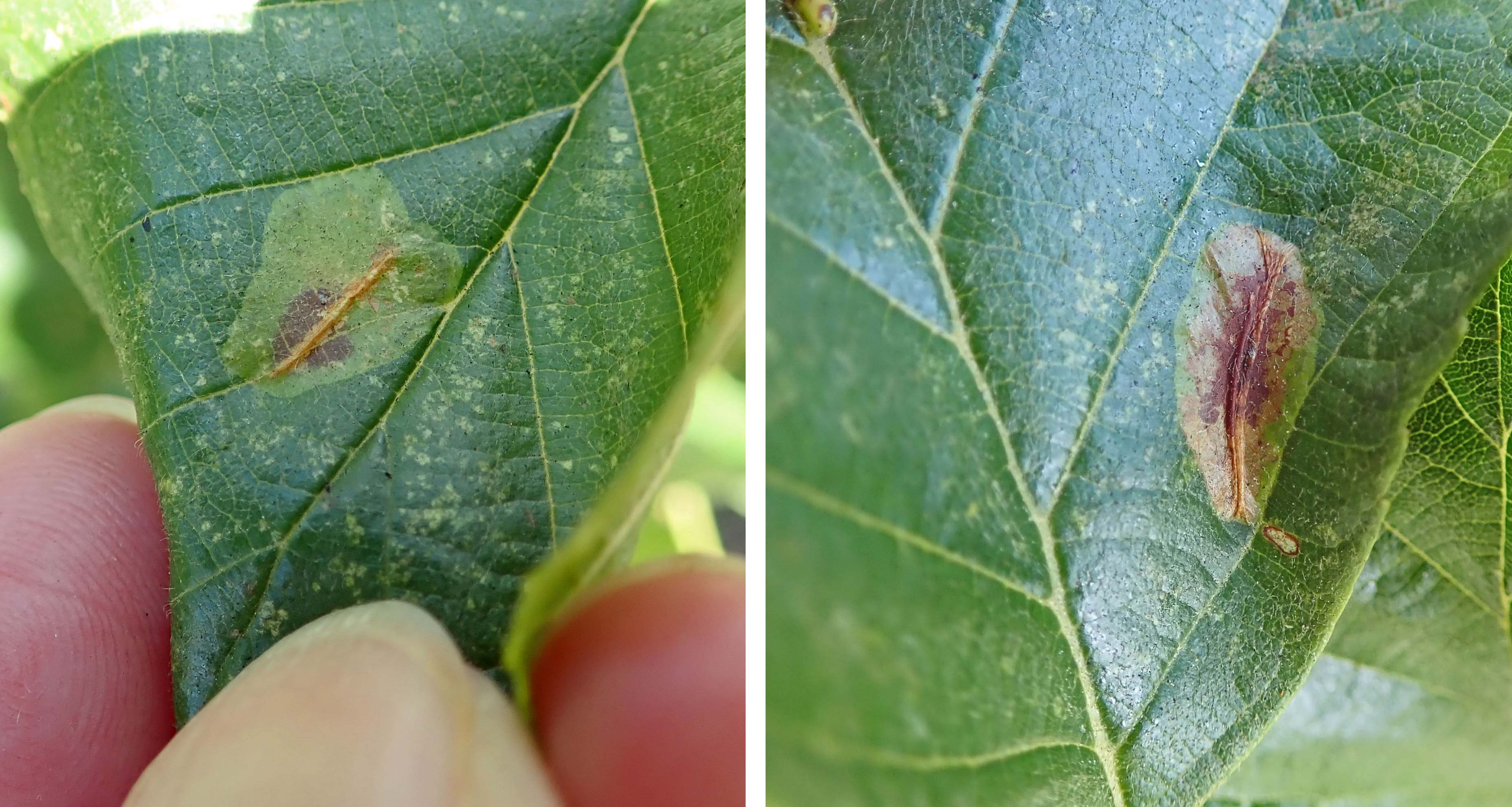
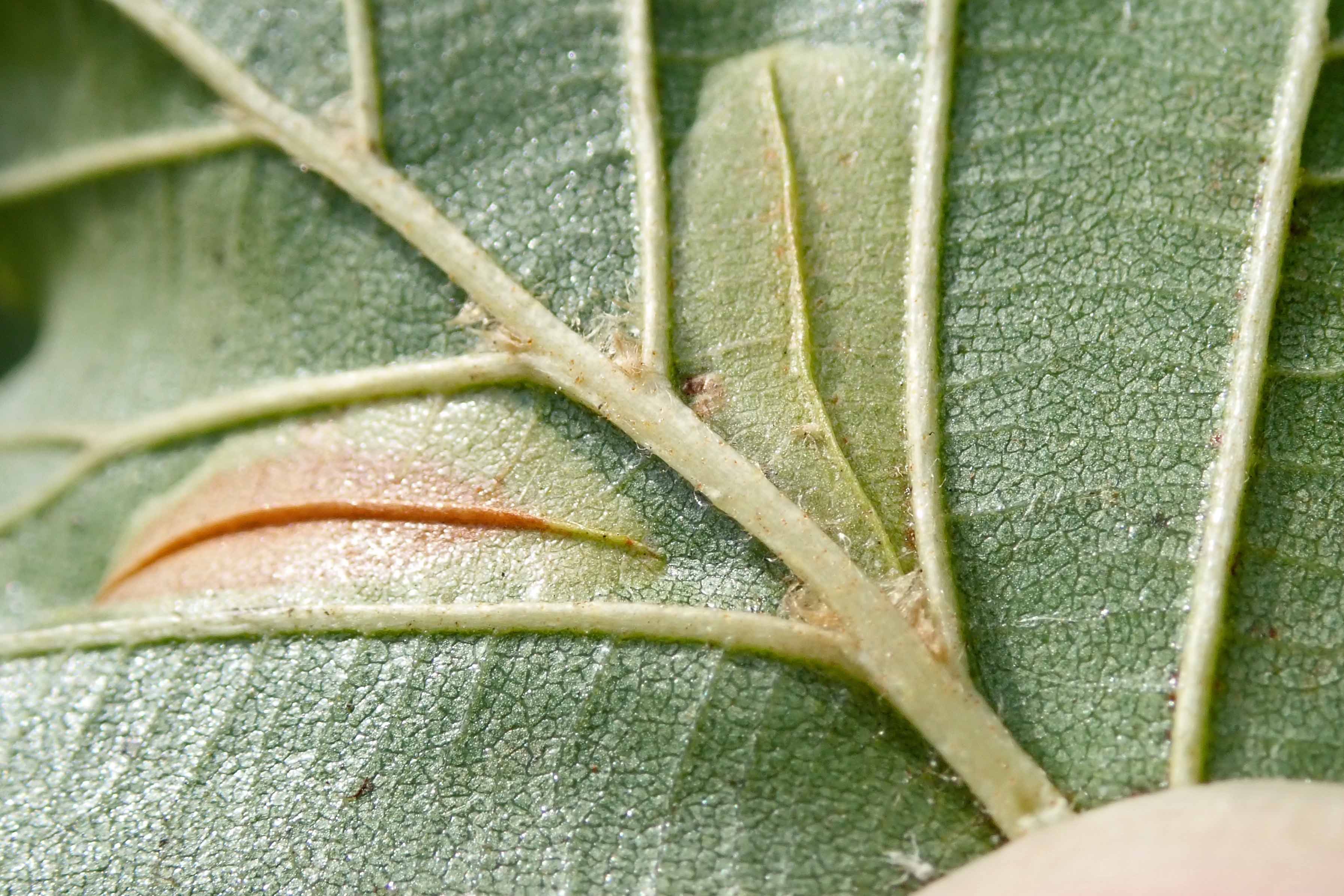
You see, the larvae of both these moths mine the leaves of Alder trees, creating a blotch with a single strong crease along the mine’s centre but, fortunately for those of us trying to identify these mines, there is one vital difference: the larval mines of Phyllonorycter rajella (below) can be found on the underside of the leaf, whereas the mines of Phyllonorycter stettinensis (above) are on the upper side of the leaf.

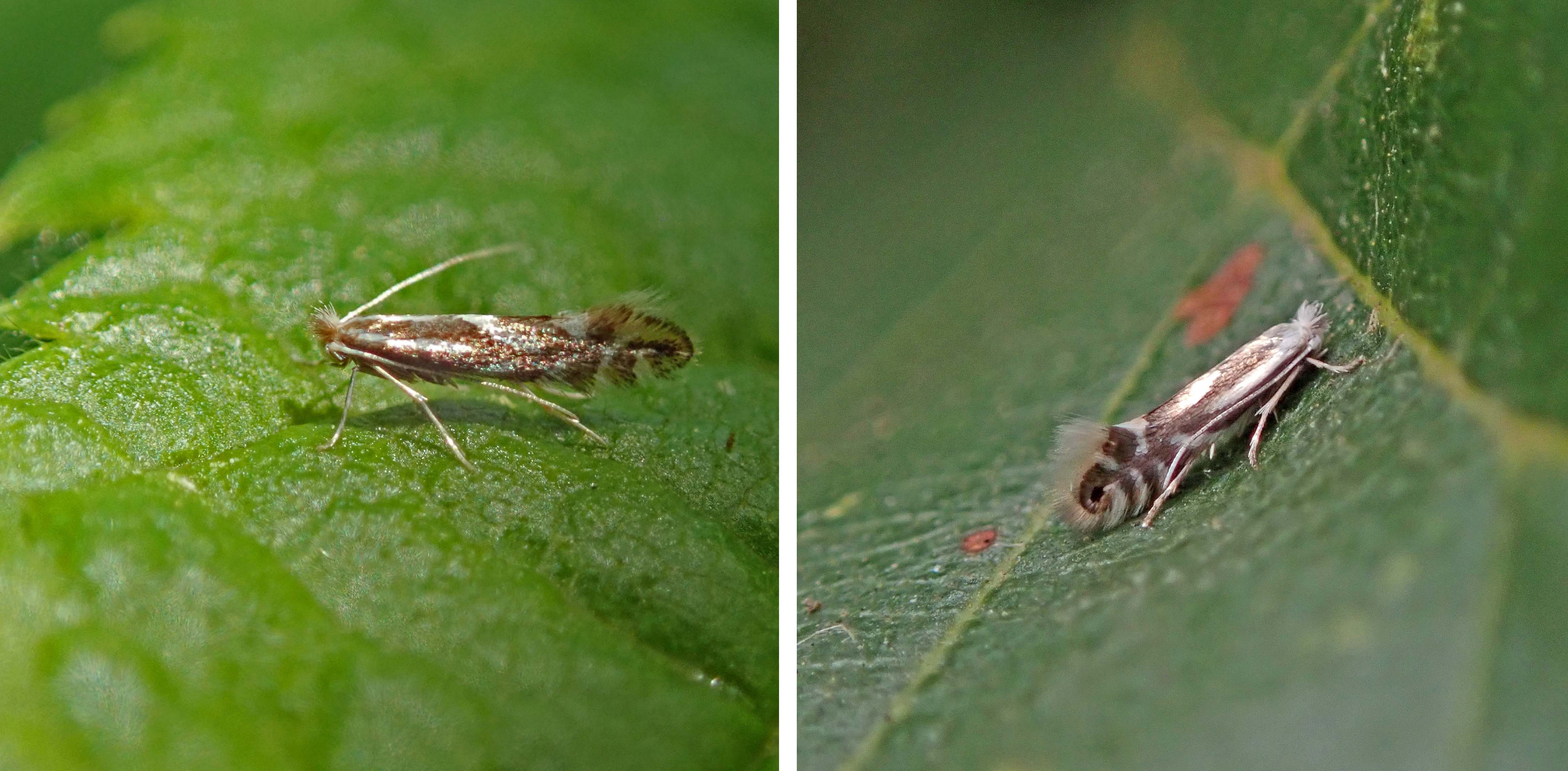
Both moths are bivoltine, i.e. they produce two generations each year; in both cases, the adult moths are active in May and again in August, so there’s a good chance of seeing the mines right through the summer. Amazingly, I’ve actually seen the adult Phyllonorycter rajella moth several times – two instances are shown below, but you can see better images of the very pretty adult moths of both these species on the UK Moths website: click the name to see Phyllonorycter rajella here, and Phyllonorycter stettinensis here.

Like Loading...

Bug: Arocatus roeselii

12 Saturday Jul 2025

Posted by sconzani in insects, trees

≈ Leave a comment

Tags

Arocatus longiceps, Arocatus longiceps / roeselii, Arocatus roeselii, British bugs, bugs on Alder trees

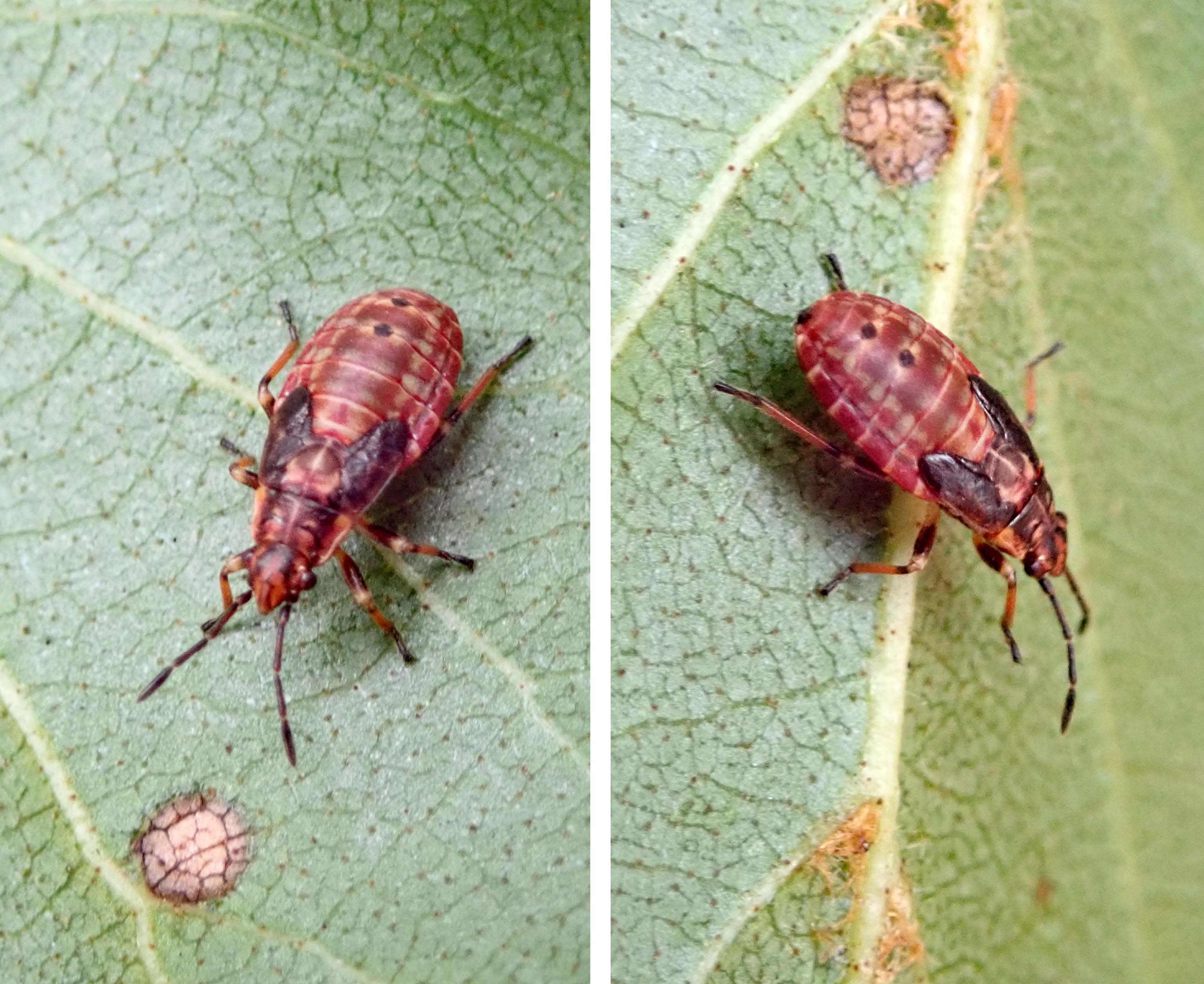
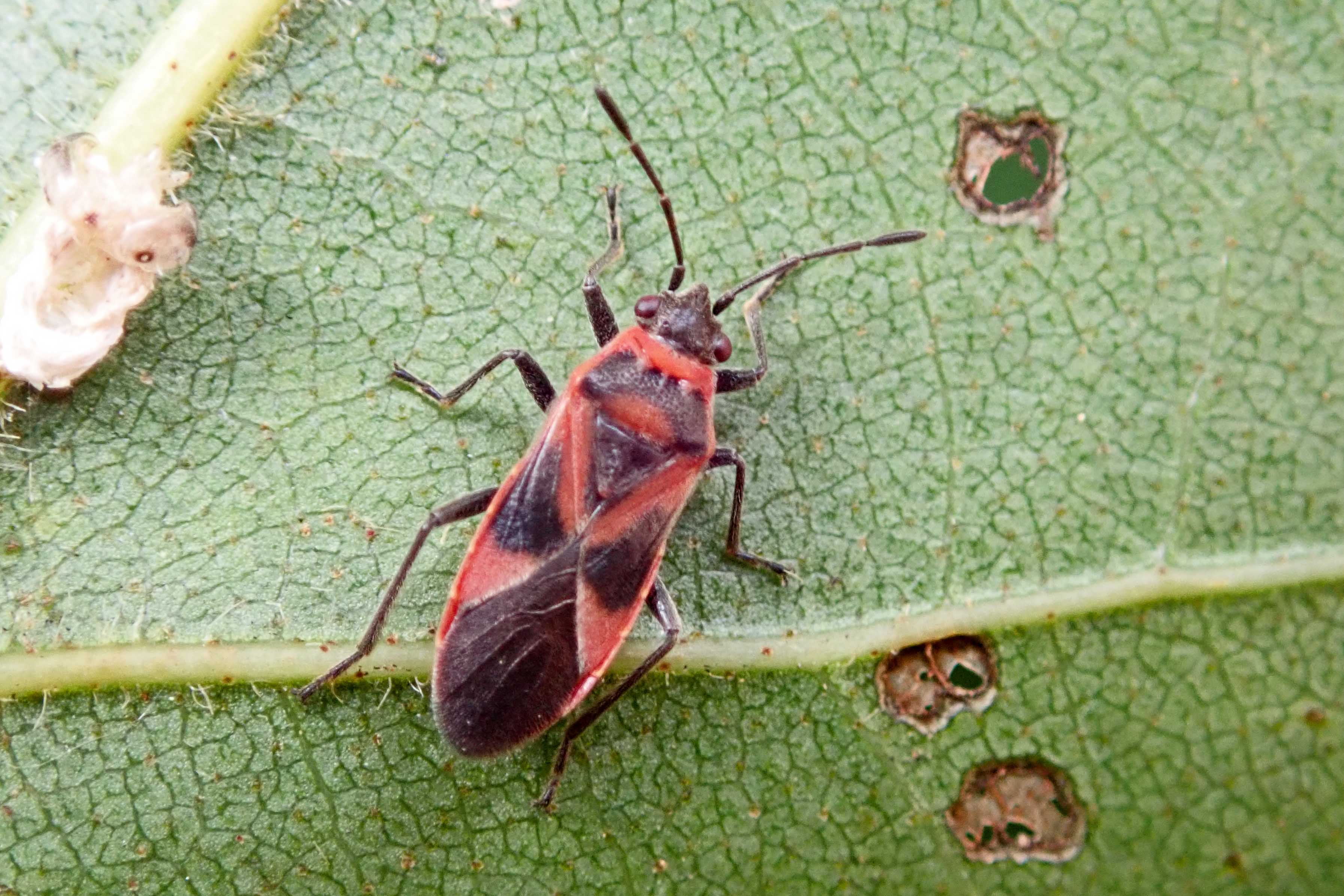
This new bug is intriguing. According to the British Bugs website, it was only found in England in 2007, and only on Plane trees in London and the southern counties. Due to that association with Plane trees, the experts decided that the bug they’d found was Arocatus longiceps, and, when an extremely similar-looking bug was found in the same locations several years later, but was found to be feeding only on the seeds of Alder trees, the consensus was that it must be Arocatus roeselii. Since that time, German scientists have checked the genes of the two species and found no difference between them; the red and black colours of the Alder seed-eaters are apparently more intense but this is likely to be due to their diet, rather than an indication that they are two separate species.

So, if you were to google or research these bugs, you might see them referred to as Arocatus longiceps / roeselii. I found my bugs, both the nymph in the photos above and the adult in the image below, on a roadside Alder tree last Sunday, so I’m going to stick with the name Arocatus roeselii until any possible species confusion is irrevocably settled. And aren’t they super looking little bugs, whatever you might want to call them?

** EDIT: I found out on 1 August that this find was the first for Wales! **

Like Loading...

Destructive Woodpigeons

13 Friday Jun 2025

Posted by sconzani in birds, trees

≈ Leave a comment

Tags

Ash trees, bird behaviour, birding, birdwatching, British birds, damage to Ash leaves, Woodpigeon, Woodpigeon eating Ash leaves

Although I am officially on the ground floor in my new home, the site slopes quite steeply so my flat is actually on the middle of three levels and, from my windows, I look out over the small slice of ancient woodland that’s adjacent to this property at the level of the tree tops. This is perfect for watching the antics of the local bird life, from the several species of tits to the larger Carrion crows and Woodpigeons, and I’m noticing behaviour that I couldn’t previously see from ground level.

The Woodpigeons, of which there are many, spend quite a lot of time in the Ash trees. Looking through my binoculars, I’ve noticed that they appear to be carefully inspecting the leaves before pecking at them. Though they are predominantly vegetarian, they are known to eat some small invertebrates so, initially, I thought they were picking off aphids from the leaves. In the process they peck off chunks of leaf matter, which actually causes quite a lot of damage to the foliage. I have now read that they are actually eating the Ash leaves, targeting, in particular the shoots and younger leaves, presumably because those have the most nutrients. This feeding behaviour is really quite destructive – you can see the leaf damage to the right of this pigeon’s head in my photos, and something I was completely unaware of until I moved.

Like Loading...

Rhabdomiris striatellus

10 Tuesday Jun 2025

Posted by sconzani in insects, trees

≈ Leave a comment

Tags

British miridae, British plant bugs, bugs on Oak, insects on Oak trees, Miridae, oak tree, plant bug on Oak, Rhabdomiris striatellus

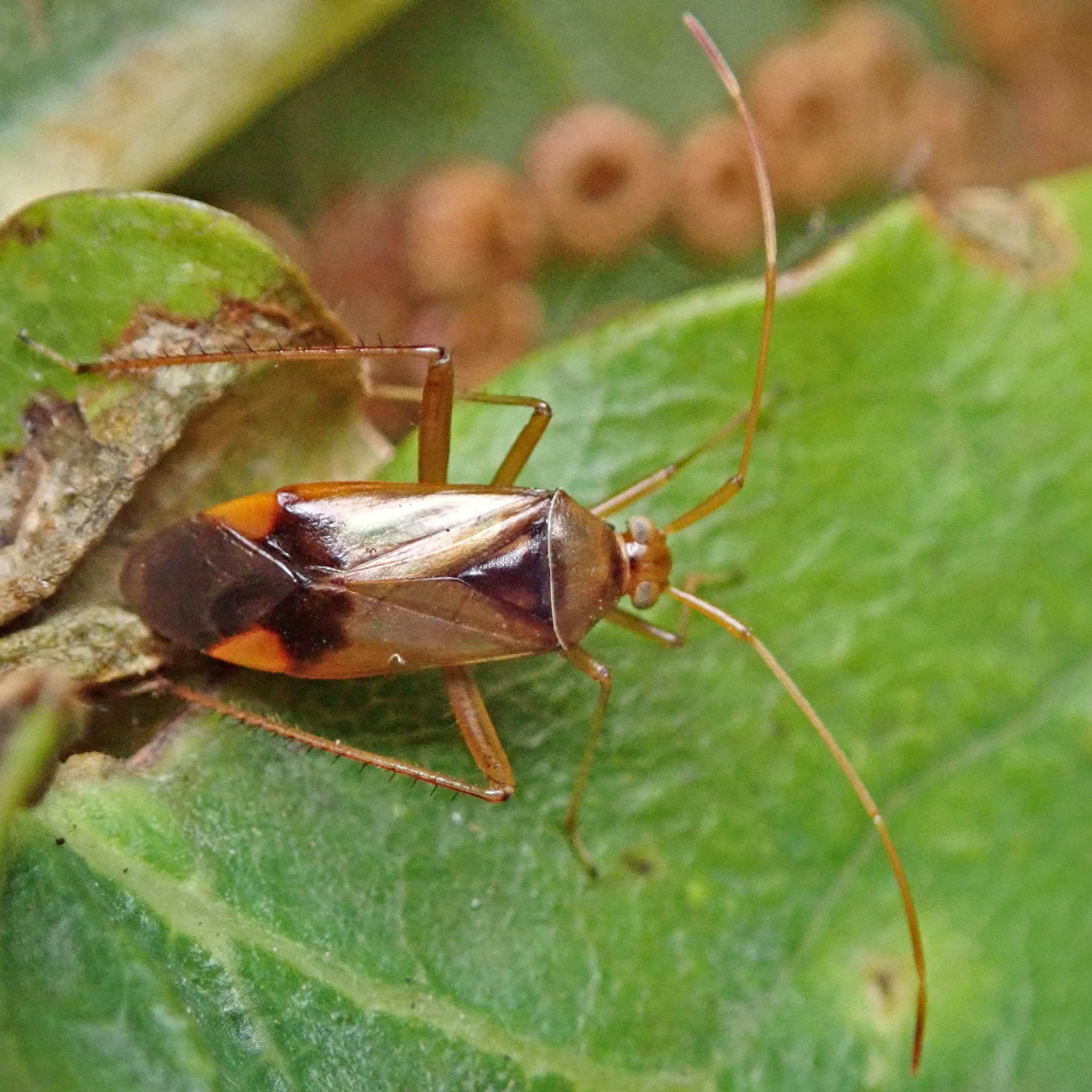
Here’s another bug that I’d never seen before this year and I’ve been lucky enough to find both a nymph and an adult. This is Rhabdomiris striatellus, one of the UK’s 200-plus species of plant bugs in the Miridae family. (I’ve probably only seen about a tenth of them so I’ve got plenty more discoveries yet to make.)

As this bug’s larvae feed on unripe catkins, it is usually found on or around Oak trees, and that’s certainly where I found the adult bug, shown below. The nymph above had probably fallen out of an Oak tree, or had decided to go walkabout to find a neighbouring Oak; I found it on the railings of my local park, where I’ve found so many invertebrates.

Rhabdomiris striatellus overwinters as an egg, hatches out in mid Spring, then passes through a series of instars until it reaches adulthood. The adults can then be seen from May through to July. Those timings certainly fit with my discoveries; I found the nymph on 25 April and the adult, in a different location, on 3 May.

Like Loading...
← Older posts
Newer posts →

About me

sconzani

sconzani

I'm a writer and photographer; researcher and blogger; birder and nature lover; countryside rambler and city strider; volunteer and biodiversity recorder.

View Full Profile →

Follow earthstar on WordPress.com

Enter your email address to follow this blog and receive notifications of new posts by email.

Recent blog posts

  • M is for mite December 18, 2025
  • L is for lepidopteran lifers December 17, 2025
  • K is for Keeled skimmers December 16, 2025
  • J is for Jersey tiger December 15, 2025
  • I is for Ichneumon December 14, 2025

From the archives

COPYRIGHT

Unless otherwise acknowledged, the text and photographs on this blog are my own and are subject to international copyright. Nothing may be downloaded or copied without my permission.

Fellow Earth Stars!

  • Unknown's avatar
  • Unknown's avatar
  • Unknown's avatar
  • Unknown's avatar
  • Unknown's avatar
  • Unknown's avatar
  • Unknown's avatar
  • Unknown's avatar
  • Unknown's avatar
  • Unknown's avatar
  • Unknown's avatar
  • Unknown's avatar
  • Unknown's avatar
  • Unknown's avatar
  • Unknown's avatar
  • Unknown's avatar
  • Unknown's avatar
  • Unknown's avatar
  • Unknown's avatar
  • Unknown's avatar
  • Unknown's avatar
  • Unknown's avatar
  • Unknown's avatar
  • Unknown's avatar
  • Unknown's avatar
  • Unknown's avatar
  • Unknown's avatar
  • Unknown's avatar
  • Unknown's avatar
  • Unknown's avatar
  • Unknown's avatar
  • Unknown's avatar
  • Unknown's avatar
  • Unknown's avatar
  • Unknown's avatar
  • Unknown's avatar
  • Unknown's avatar
  • Unknown's avatar
  • Unknown's avatar
  • Unknown's avatar
  • Unknown's avatar
  • Unknown's avatar
  • Unknown's avatar
  • Unknown's avatar
  • Unknown's avatar
  • Unknown's avatar
  • Unknown's avatar
  • Unknown's avatar
  • Unknown's avatar
  • Unknown's avatar

Blog at WordPress.com.

Privacy & Cookies: This site uses cookies. By continuing to use this website, you agree to their use.
To find out more, including how to control cookies, see here: Cookie Policy
  • Subscribe Subscribed
    • earthstar
    • Join 667 other subscribers
    • Already have a WordPress.com account? Log in now.
    • earthstar
    • Subscribe Subscribed
    • Sign up
    • Log in
    • Report this content
    • View site in Reader
    • Manage subscriptions
    • Collapse this bar
 

Loading Comments...
 

You must be logged in to post a comment.

    %d