• ABOUT
  • BIRDING 2018
  • Birding 2019
  • BLOG POSTS
  • Butterflies 2018
  • Resources

earthstar

~ a celebration of nature

earthstar

Category Archives: winter

The Winter Seventeen

29 Friday Dec 2017

Posted by sconzani in flowers, nature, plants, wildflowers, winter

≈ Leave a comment

Tags

#TheWinterTen, #WildflowerHour, British wildflowers, Ham Hill, Wildflower Hour, wildflowers, winter wildflowers
171229 Ham Hill

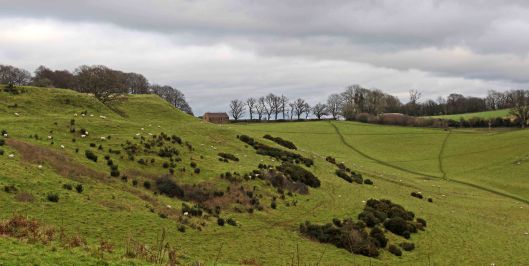
Back in early November I blogged about Wildflower Hour’s winter challenge encouraging us all to try to find ten wildflowers still in bloom each week of winter. Well, I’ve been on holiday in Somerset over Christmas and, when my friend Sarah and I were out walking at Ham Hill on Christmas Eve, we took the challenge and were amazed to find not ten but seventeen wildflowers in bloom. Here (with apologies for the blurry pics – the wind was howling – and the lack of accurate names – I didn’t take my guide book on holiday) they are: ragwort, red campion, white dead nettle, hogweed, bramble, dog’s mercury, possible one of the Hawk’s-beard family, chamomile, cow parsley, ivy, a species of thistle and another of grass, wild parsnip, a variety of speedwell, the ever-reliable daisy, yarrow, and the equally reliable gorse.

p.s. Ham Hill is a fascinating place to explore if you’re ever in that vicinity and I’m already planning another walk there when I visit Sarah again in the summer.

171229 Ham Hill wildflowers (1)
171229 Ham Hill wildflowers (2)
171229 Ham Hill wildflowers (3)
171229 Ham Hill wildflowers (4)
171229 Ham Hill wildflowers (5)
171229 Ham Hill wildflowers (6)
171229 Ham Hill wildflowers (7)
171229 Ham Hill wildflowers (8)
171229 Ham Hill wildflowers (9)
171229 Ham Hill wildflowers (10)
171229 Ham Hill wildflowers (11)
171229 Ham Hill wildflowers (12)
171229 Ham Hill wildflowers (13)
171229 Ham Hill wildflowers (14)
171229 Ham Hill wildflowers (15)
171229 Ham Hill wildflowers (16)

171229 Ham Hill wildflowers (17)

Like Loading...

December at Cosmeston

28 Thursday Dec 2017

Posted by sconzani in birds, mammal, nature, parks, winter

≈ 2 Comments

Tags

birding, birdwatching, British birds, brown rat, bullfinch, Cosmeston, Cosmeston Lakes Country Park, Fieldfare, Great spotted woodpecker, long-tailed tit, Marsh tit, nuthatch, Stonechat, Tufted duck

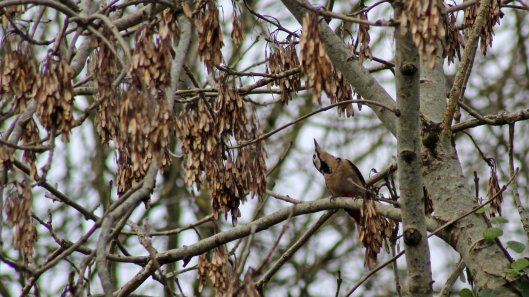
It was fairly quiet bird-wise on my first monthly visit to Cosmeston Lakes Country Park on 2 December, though there were still good numbers of the various thrushes (Mistle, Song, Redwing and Blackbird) around. A Great spotted woodpecker in the west paddock was a nice surprise – I initially thought it a Jay when I saw that peachy belly. The Tufted ducks amused, as always, and, while I sat watching them, the Brown rat I’d seen before at that particular spot came snuffling around for food. There were two more rats foraging by the boardwalk near the café.

171228 Cosmeston (1)

171228 Cosmeston (2)
171228 Cosmeston (3)

It’s a thrush takeover! On 6 December, I’d scarcely left the house to walk to Cosmeston than I was spotting Redwings, Song thrushes, and a Mistle thrush, plus Goldfinches and Chaffinches, in the trees just across the road. And when I got to Cosmeston it was more – much more – of the same, plus the first Fieldfares I’ve seen there. In Cogan Wood, the little birds were hungry so I shared my flapjack with them – there were even two Nuthatches and a half dozen Long-tailed tits picking up the crumbs on the ground. And the prize for the most colourful birds goes to the pair of Bullfinch that were munching on hogweed seeds.

171228 Cosmeston (5)
171228 Cosmeston (6)
171228 Cosmeston (7)
171228 Cosmeston (4)

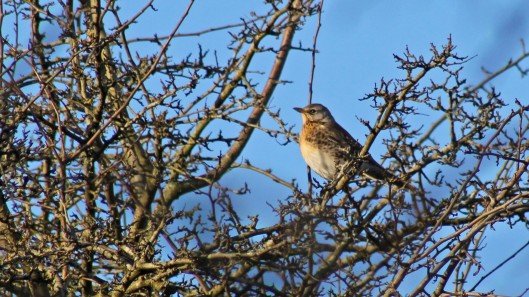
On 15 December, I finally got a reasonable, though not brilliant photo of a Fieldfare – they are very skittish so it’s hard to get close to them. I finally found a spot behind the berry trees they were feasting in, then just had to be patient and wait for one to pop up to the top of a tree.

171228 Cosmeston (8)

In Cogan Wood, one of the resident Marsh tits popped out to say hello – first sighting I’ve had since earlier in the year as they seem to disappear during the breeding season. And there was a Stonechat at the top end of the west paddock. There had been a pair of Stonechats in that area in the autumn but they seemed to have disappeared when the park staff mowed that field, so it was good to see one there again.

171228 Cosmeston (9)
171228 Cosmeston (10)

Something else happened at Cossie during this visit, something that’s never happened to me before. A squirrel climbed up my leg, not once but four times – the first time it grabbed my finger, the second time it touched my camera. I didn’t have food but it obviously thought I did. It certainly made me laugh.

Like Loading...

Wild words: brumous

27 Wednesday Dec 2017

Posted by sconzani in nature, weather, winter

≈ Leave a comment

Tags

#WildWords, brumous, foggy, winter weather, wintry

171227 brumous (1)

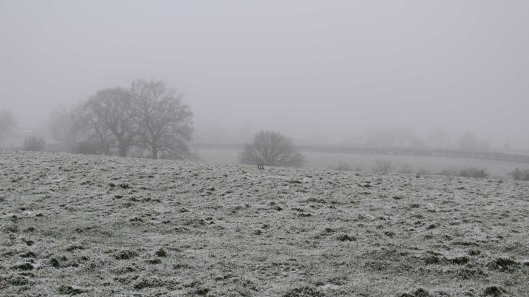
brumous: adjective; meaning foggy and wintry; dating from the mid-19th century; from the French brumeux, meaning misty, from late Latin bruma meaning winter and also the winter solstice (I should have posted this blog last week!). The Merriam-Webster Dictionary gives the following list of synonyms for brumous: beclouded, befogged, hazy, clouded, cloudy, foggy, gauzy, misty, murky, smoggy, soupy. I think you get the idea.

171227 brumous (2)

Like Loading...

Hebe and bumble

22 Friday Dec 2017

Posted by sconzani in flowers, nature, plants, winter

≈ Leave a comment

Tags

Buff-tailed bumblebee, bumblebee, Goddess Hebe, Hebe, Hebe plants

I always have a little smile to myself when I see a Hebe because, of course, it’s a New Zealand native plant and reminds me of my homeland (though I was surprised to read today that they’re also native to South America, the Falkland Islands and one island in French Polynesia).

171222 Hebe (2)
171222 Hebe (1)

They’re tough plants. The two species shown here were photographed in 0° Celsius, in between hail showers, yet they show no signs of being affected by the Welsh winter and, in fact, are providing much-needed food for the few bees (that’s a Buff-tailed bumblebee in my photo) and other insects that are still out and about. As well as the cold, they’re also very tolerant of salty sea air so they’re a good plant for coastal gardens like those here in Penarth.

171222 Hebe (6)
171222 Hebe (7)
171222 Hebe (8)

In case you didn’t know, the plant is named after the Greek goddess Hebe, daughter of chief god Zeus and his wife Hera. Hebe was barista on Mt Olympus, serving ambrosia and nectar to all the other gods and goddesses, until she married Heracles and became a stay-at-home mum to their two kids.

171222 Hebe (4)
171222 Hebe (5)
171222 Hebe (3)
Like Loading...

A walk in Nant Fawr

12 Tuesday Dec 2017

Posted by sconzani in birds, nature, walks, winter

≈ 6 Comments

Tags

birding, birdwatching, blackbird, Brambling, British birds, Carrion crow, dunnock, Great spotted woodpecker, house sparrow, Nant Fawr, Nant Fawr Woodlands, Song thrush, walk in the woods

There was snow on the hills north of Cardiff on Saturday morning so I thought I’d try to get closer to take some photos but also combine that with a good walk. So, I jumped on a train and went a’stomping. Unfortunately, by the time I got closer, the snow had mostly melted away, which wasn’t helped by the fact that the footpath I had intended to follow, along the eastern side of the Llanishen and Lisvane reservoirs, was closed. So, I contented myself with a wander through the Nant Fawr woodlands and, afterwards, a circuit of Roath Park Lake.

171212 Nant Fawr (1)

I was rewarded with the sight, albeit distant, of my very first Brambling – my shots are heavily cropped so you’ll just have to take my word for it!

171212 Nant Fawr (2) Brambling
171212 Nant Fawr (3) Brambling

A small group of House sparrows was dotting about in bushes at the woodland edge.

171212 Nant Fawr (4) Sparrow
171212 Nant Fawr (5) Sparrow
171212 Nant Fawr (6) Sparrow
171212 Nant Fawr (7) Sparrow

I always thought Carrion crows were mostly solitary birds but this flock of about 20 proved me wrong.

171212 Nant Fawr (8) Crow171212 Nant Fawr (9) Crow

The wood-tapping of this Great spotted woodpecker helped direct my lens in its direction, as did the singing of this little Dunnock.

171212 Nant Fawr (10) Great spotted woodpecker
171212 Nant Fawr (11) Dunnock

And Song thrushes and Blackbirds were enjoying a hearty lunch of berries along the hedgerows.

171212 Nant Fawr (12) Blackbird
171212 Nant Fawr (13) Song thrush
Like Loading...

Bryophytes and lichens

11 Monday Dec 2017

Posted by sconzani in lichen, nature, parks, trees, winter

≈ 2 Comments

Tags

bryophytes, Cosmeston, Cosmeston Lakes Country Park, lichen on trees, lichens, mosses, mosses on trees

Over the summer months my eye has been distracted by all the little creatures that move – butterflies and moths, dragonflies and beetles, and all manner of other insects – but now that it’s winter and those creatures have mostly disappeared (you’ll notice one crept in to one of my photos!), my eye is again drawn to the more static beauty that surrounds me. Take, for example, this small grove of trees at Cosmeston Lakes Country Park.

171211 lichens and bryophytes (1)

I spent perhaps an hour here the other day, looking in wonder at the incredible variety of tiny lichens and bryophytes to be found on the tree trunks. I haven’t tried to identify these but I’m determined to return to them over the coming months to see which I can put names to and find out more about. For now, I just want to share their beauty.

171211 lichens and bryophytes (2)
171211 lichens and bryophytes (3)
171211 lichens and bryophytes (4)
171211 lichens and bryophytes (5)
171211 lichens and bryophytes (6)
171211 lichens and bryophytes (7)
171211 lichens and bryophytes (8)
171211 lichens and bryophytes (9)
171211 lichens and bryophytes (10)


Like Loading...

Wild words: Psithurism

06 Wednesday Dec 2017

Posted by sconzani in autumn, leaves, nature, trees, winter

≈ Leave a comment

Tags

#WildWords, autumn leaves, Psithurism, rustling leaves, sound of rustling leaves, words about Nature

Here’s a word that’s not in the Oxford Dictionary because it’s now considered obsolete but, as Oxford University Press has a habit of somewhat arbitrarily removing words from its dictionaries (since 2007 it was deleted words like ‘buttercup’ and acorn’ from its Junior Dictionary) and replacing them with modern lingo (like ‘cut-and-paste’ and ‘analogue’), I’m doing my bit to revive words before they’re forgotten.

171203 Psithurism (1)

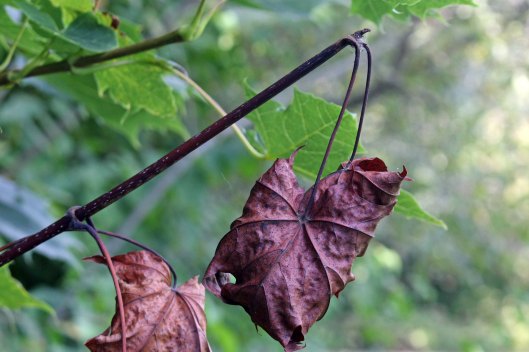
Psithurism, then, is a noun used to describe the sound of rustling leaves. It is, apparently, an adaptation of the Ancient Greek ψιθύρισµα (psithurisma) or ψιθυρισµός (psithurismos), which are derived from ψιθυρίζω (psithurizō, meaning ‘I whisper’) and from ψίθυρος (psithuros, meaning ‘whispering’ or ‘slanderous’). Can you hear them rustling? And, here’s a little test: what’s the word for leaves like these that wither but stay attached to the stem?

171203 Psithurism (2)

Like Loading...

Happy Floral Friday!

01 Friday Dec 2017

Posted by sconzani in flowers, nature, winter

≈ 2 Comments

Tags

#FloralFriday, purple flowers, winter colour, winter flowers

171201 Floral Friday (1)

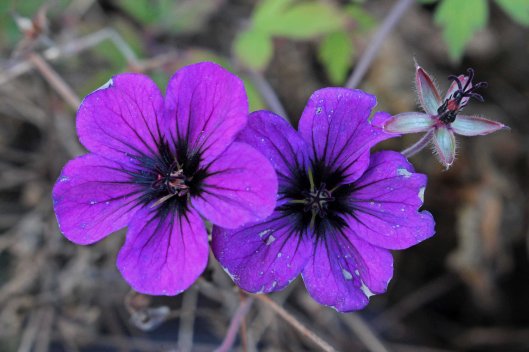
A pinch and a punch for the first of the month, and hello winter!

171201 Floral Friday (2)

Like Loading...

Berries full to bursting

26 Sunday Nov 2017

Posted by sconzani in autumn, nature, plants, wildflowers, winter

≈ Leave a comment

Tags

autumn colour, Black bryony, British flora, bryony, poisonous berries, red berries, Tamus communis, winter colour

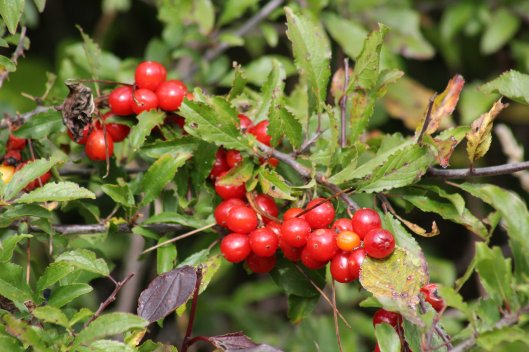
The name ‘bryony’ is entirely appropriate for this plant as it comes from the Greek word bruein which, apparently, means ‘to be full to bursting’. However, though the berries of Black bryony (Tamus communis) are cherry-red and luscious-looking, please don’t be tempted to eat them as they are deadly poisonous.

171126 Black bryony berries (2)

There are, in fact, two plants with the bryony name in Britain, White bryony and Black, but they are not part of the same plant family. Rather surprisingly, Black bryony is the only member of the yam family to grow here but, again, don’t be tempted to eat its roots. In spring and summer, Black bryony’s long tangling vines can be found rambling over, under and through the shrubs and bushes of hedgerows and scrub-lands, and in autumn and winter, though the heart-shaped leaves brown and drop, the masses of red berries brighten up the countryside for many months.

171126 Black bryony berries (3)
171126 Black bryony berries (1)
Like Loading...

Wild words: marcescent

18 Wednesday Oct 2017

Posted by sconzani in autumn, fungi, leaves, nature, trees, winter

≈ 1 Comment

Tags

botanical words, marcescent, wild words

Thanks in part to following favourite author Robert Macfarlane (@RobGMacfarlane) on Twitter (he tweets a daily word) and in part to working through naturalist extraordinaire Dr Mary Gillham’s archives, I’ve been learning a lot of new words so I thought I would share the occasional one here. To start the stone rolling, we have marcescent, an adjective, which the Oxford Dictionary defines as ‘withering but remaining attached to the stem’. This is particularly noticeable during autumn and winter, as the leaves of some trees wilt and fade but remained attached to their branches. Some palms continuously retain a marcescent ‘skirt’ of dried fronds, and the term is, apparently, also used to refer to those species of fungi that can dry out but subsequently be rehydrated and continue to shed spores.

171018 marcescent

Like Loading...
← Older posts
Newer posts →

About me

sconzani

sconzani

I'm a writer and photographer; researcher and blogger; birder and nature lover; countryside rambler and city strider; volunteer and biodiversity recorder.

View Full Profile →

Follow earthstar on WordPress.com

Enter your email address to follow this blog and receive notifications of new posts by email.

Recent blog posts

  • A surprise Slow-worm April 11, 2026
  • My first Holly blue April 10, 2026
  • Alder flies April 9, 2026
  • Lily beetle April 8, 2026
  • First bee-flies April 7, 2026

From the archives

COPYRIGHT

Unless otherwise acknowledged, the text and photographs on this blog are my own and are subject to international copyright. Nothing may be downloaded or copied without my permission.

Fellow Earth Stars!

  • Unknown's avatar
  • Unknown's avatar
  • Unknown's avatar
  • Unknown's avatar
  • Unknown's avatar
  • Unknown's avatar
  • Unknown's avatar
  • Unknown's avatar
  • Unknown's avatar
  • Unknown's avatar
  • Unknown's avatar
  • Unknown's avatar
  • Unknown's avatar
  • Unknown's avatar
  • Unknown's avatar
  • Unknown's avatar
  • Unknown's avatar
  • Unknown's avatar
  • Unknown's avatar
  • Unknown's avatar
  • Unknown's avatar
  • Unknown's avatar
  • Unknown's avatar
  • Unknown's avatar
  • Unknown's avatar
  • Unknown's avatar
  • Unknown's avatar
  • Unknown's avatar
  • Unknown's avatar
  • Unknown's avatar
  • Unknown's avatar
  • Unknown's avatar
  • Unknown's avatar
  • Unknown's avatar
  • Unknown's avatar
  • Unknown's avatar
  • Unknown's avatar
  • Unknown's avatar
  • Unknown's avatar
  • Unknown's avatar
  • Unknown's avatar
  • Unknown's avatar
  • Unknown's avatar
  • Unknown's avatar
  • Unknown's avatar
  • Unknown's avatar
  • Unknown's avatar
  • Unknown's avatar
  • Unknown's avatar
  • Unknown's avatar

Blog at WordPress.com.

Privacy & Cookies: This site uses cookies. By continuing to use this website, you agree to their use.
To find out more, including how to control cookies, see here: Cookie Policy
  • Subscribe Subscribed
    • earthstar
    • Join 642 other subscribers
    • Already have a WordPress.com account? Log in now.
    • earthstar
    • Subscribe Subscribed
    • Sign up
    • Log in
    • Report this content
    • View site in Reader
    • Manage subscriptions
    • Collapse this bar
 

Loading Comments...
 

You must be logged in to post a comment.

    %d