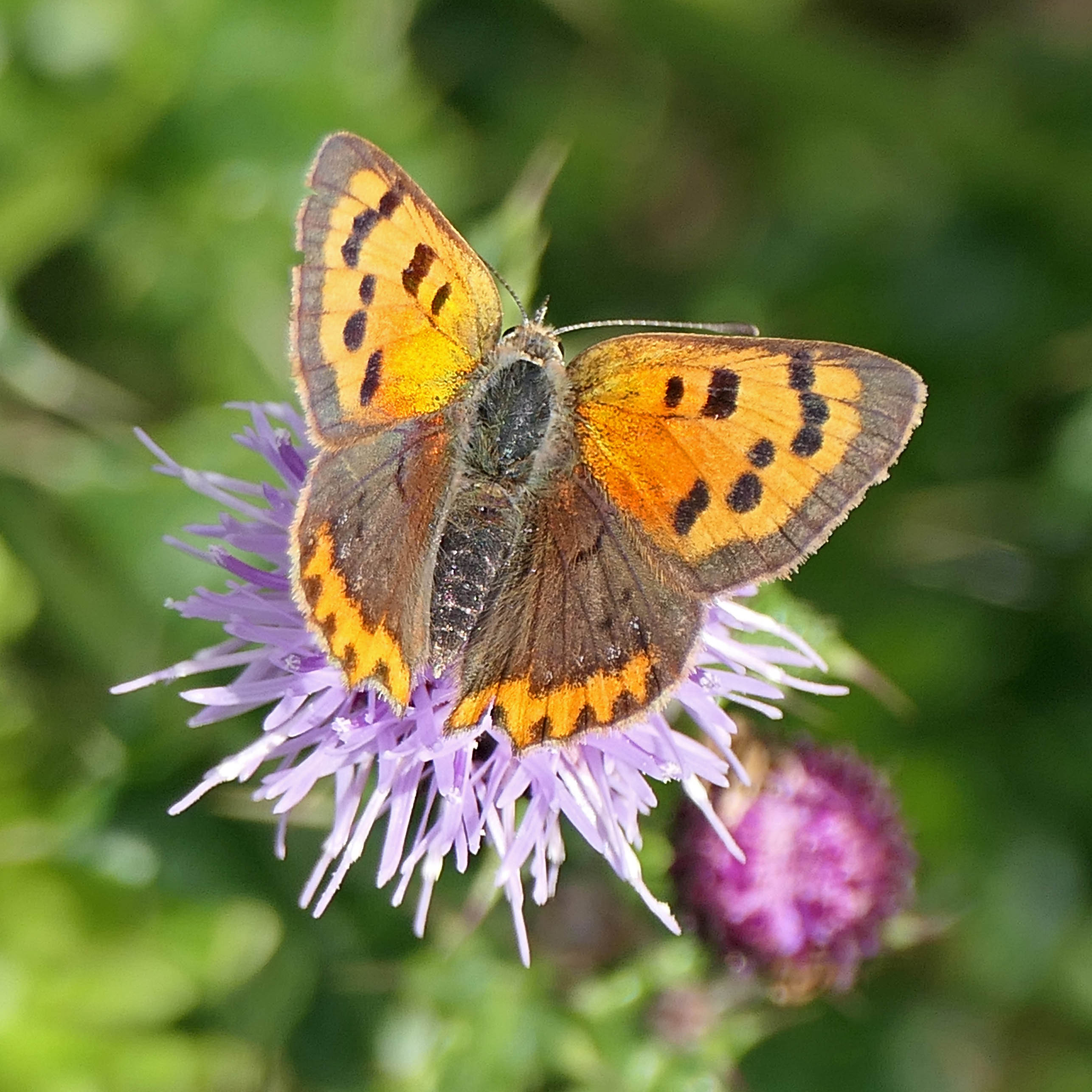
Butterflies on Creeping thistle

Tags

, , , , , , ,

Creeping thistle (Cirsium arvense) is a much maligned plant. I understand that it can be prolific and somewhat invasive given the right growth conditions but, at this time of year, when many other wildflowers are going over and the last of the summer insects are struggling to find food, it is a gift from the gods.

This is especially true this year, following a long hot and very dry summer. Though we’ve had rain on and off this past week, the remaining wildflowers have been slow to bounce back to life – and many are past recovering.

Not so the Creeping thistle, which I have seen providing much-needed nectar to thirsty flies, beetles, and butterflies, like the Small coppers and Common blues shown here.

Finally, a Grey seal

Tags

, , , , , ,

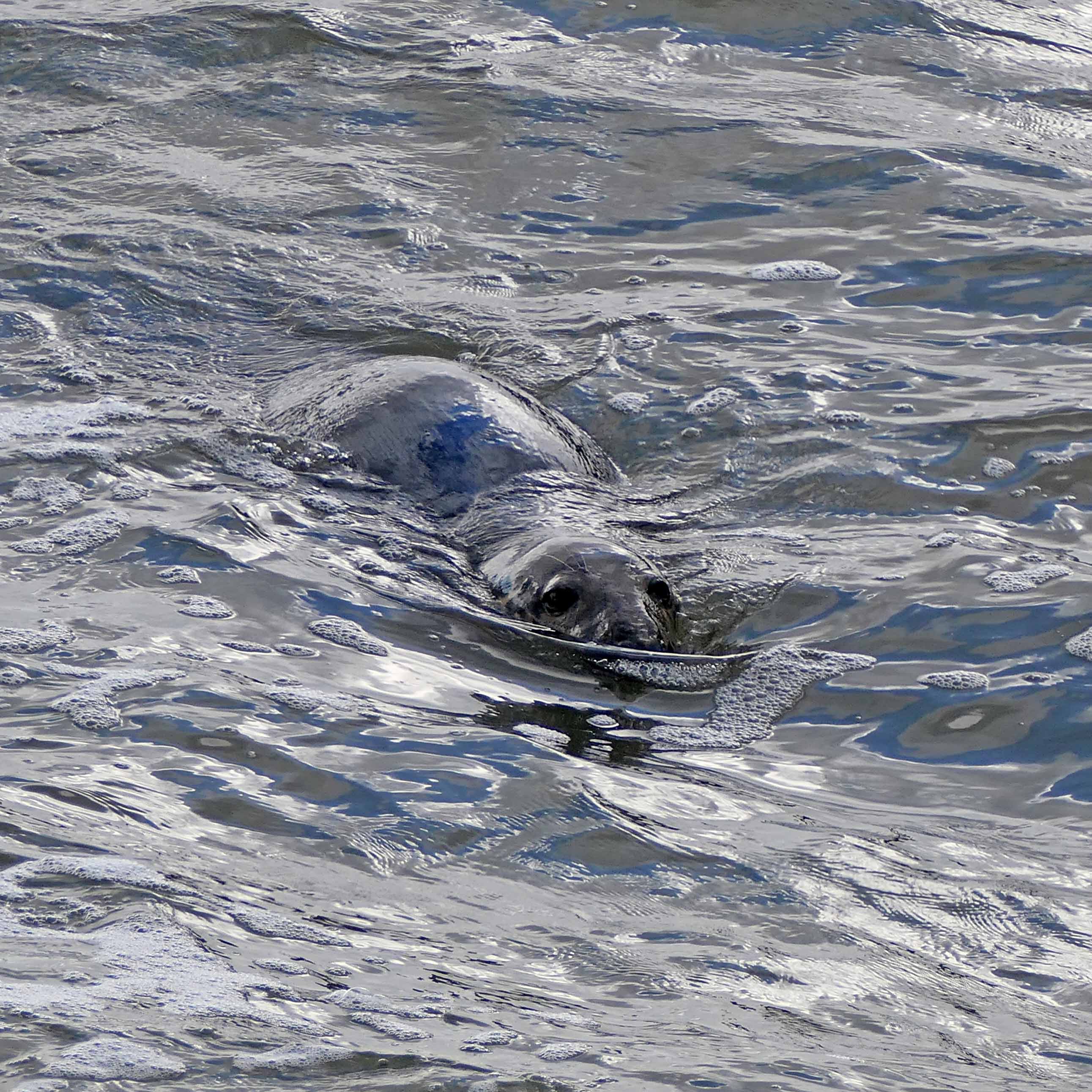
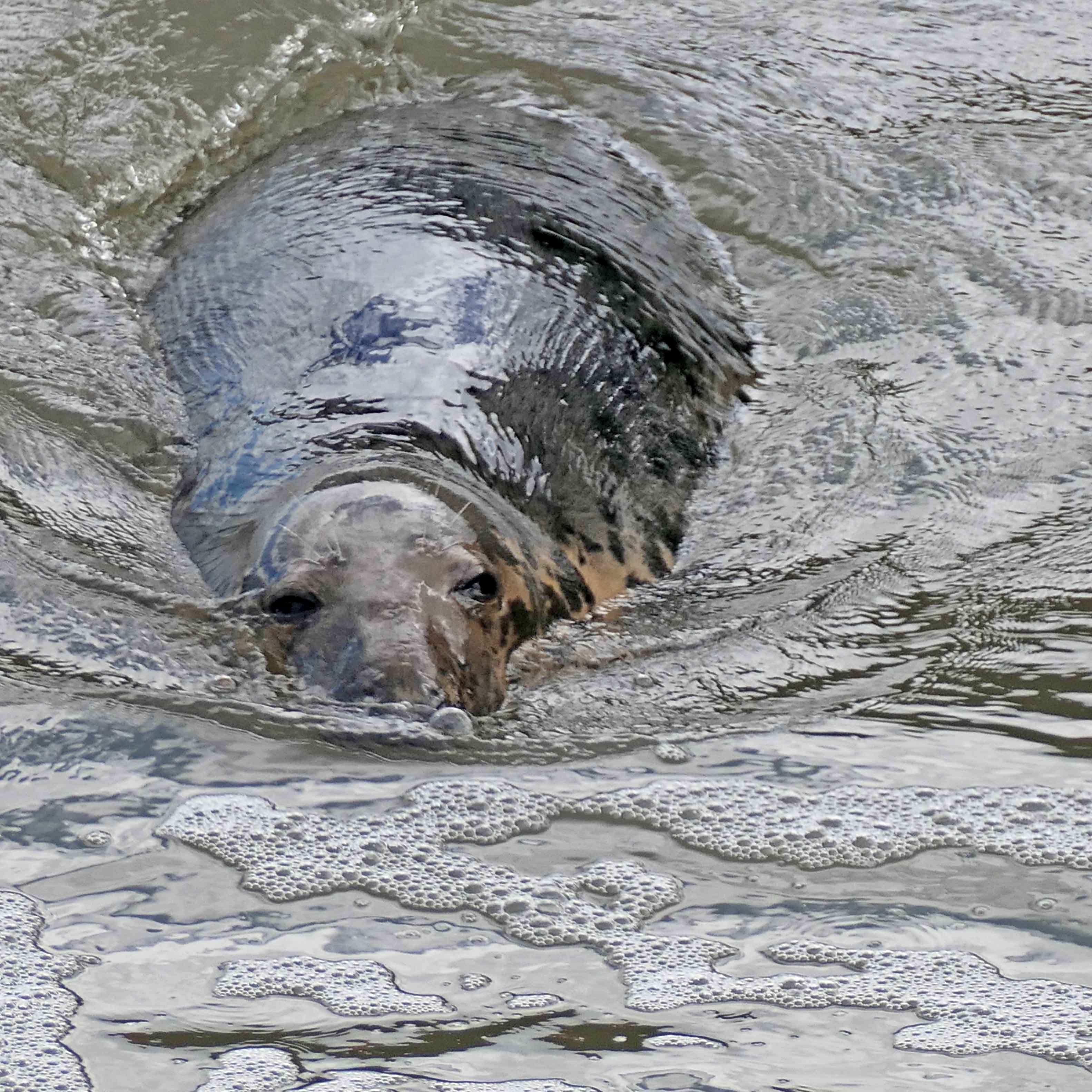
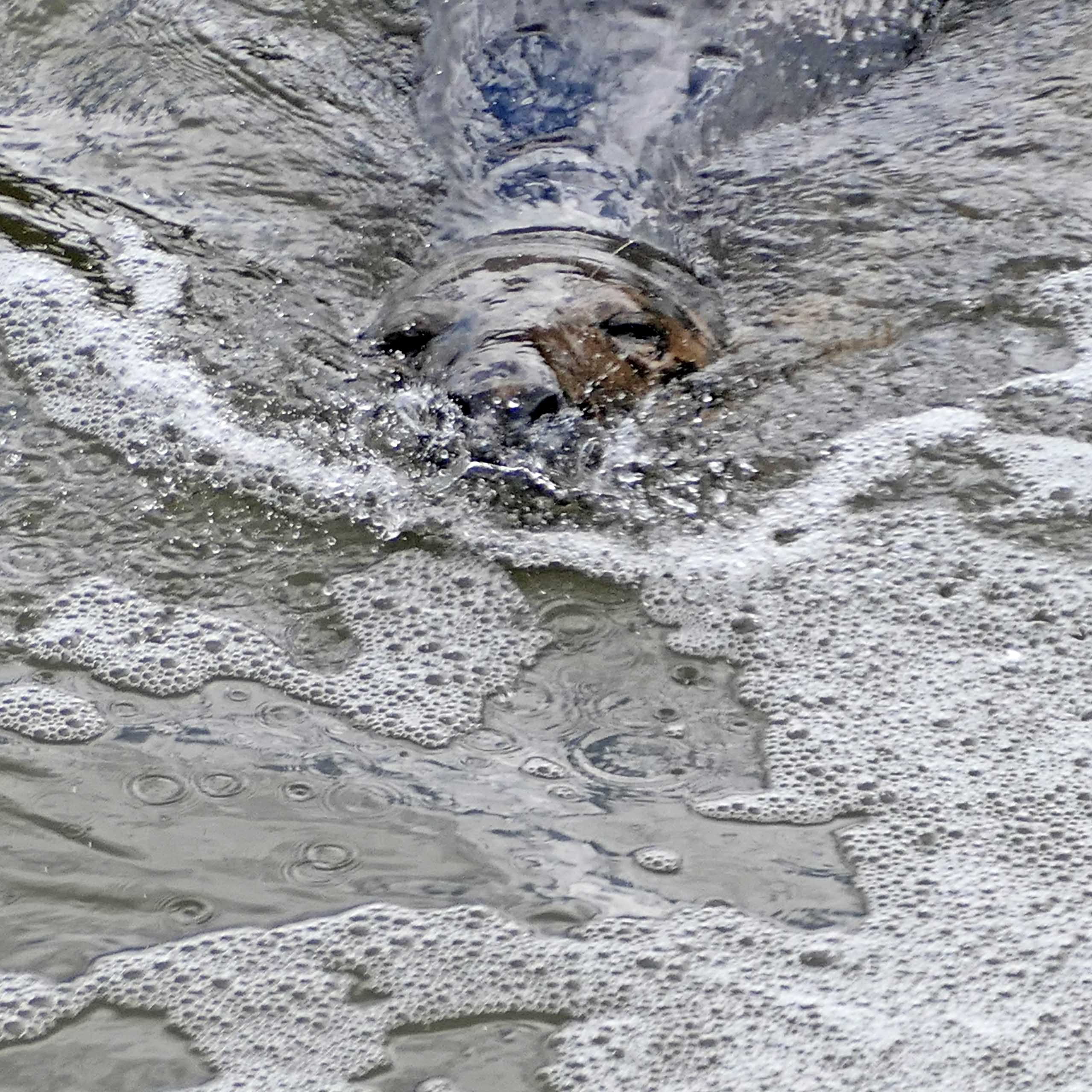
I’ve lost count of the number of times I’ve seen birding friends in my local WhatsApp group post about the seals they’ve seen while birding around the Cardiff Bay Barrage. I’ve lived in this area for 10 years and it wasn’t until the Wednesday just past that I saw my first. I’d stomped down to the Bay between squally showers to try to see the Arctic tern that had blown in – and I did see that, distantly fishing on the other side of the Bay, but I was completely mesmerised when I spotted the seal.

It was very close to the Barrage sluice gates that control the amount of water in the Bay; the gates are opened to allow water that flows in to the Bay from the rivers Taff and Ely to flow out to the Bristol Channel. The outgoing water often contains fish, hence the frequent sight of Cormorants diving near the sluices for their lunch and the occasional visit from a hungry seal.

As I don’t see them very often, I don’t know much about seals but I do know this is a Grey seal (Halichoerus grypus) and, from its large size, most likely a male/bull. There is a breeding colony of Grey seals further down the Bristol Channel on Lundy, an island owned by the National Trust. From reading the information on their website, I’ve just learned why the seal kept disappearing for long periods, when I thought it should be surfacing to breathe. It turns out they can dive for up to 20 minutes at a time when searching for fish. I didn’t see this one with a fish, though I guess it could’ve gobbled down any it caught while still underwater. It was a joy to watch, between squalls.

Fungus: Ergot

Tags

, , , , , ,

I’m sure most of you will have heard of ergot poisoning or, at the very least, some of the notable times in history when humans have felt its effects. The Salem witch trials, which took place in Massachusetts in 1692-93 and where over 200 people were accused of witchcraft and 20 were executed, are probably the most well known; the unfortunate ‘witches’ are now thought to have been suffering from a form of ergotism. Through researching this post, I’ve also learned that ‘severe ergot epidemics in France between 900 AD and 1300 AD killed between 20,000 to 50,000 people’, and that ‘Julius Caesar lost legions of soldiers to ergot poisoning during his campaigns in Gaul’. And these are just a few of the more well-known examples; ergotism has been affecting humans since our ancestors first began eating grains and cereals.

Ergot (Claviceps purpurea) is a fungal pathogen that grows on many cereal species, including wheat, rye and barley. When ingested by humans and animals, the toxins contained in the fungus cause ergotism, the effects of which can include convulsions, hallucinations, gangrenous limbs, and, in severe cases, even death. These days, cereal producers and government regulatory bodies are very much aware of the dangers of ergot, and have precautionary measures in place to reduce its presence in food and feed to an absolute minimum. This is excellent news, as 2025 seems to be a good year, in terms of climate and environmental conditions, for the growth of the ergot fungus, if my finds in local fields are anything to go by. The small dark horn-shaped masses you can see in my photos indicate that these plants are infected with ergot; the masses, which replace the grains in cereals and grasses, are called sclerotia. So, with the subject of today’s post, it’s a case of look and be fascinated but definitely don’t be tempted to consume.
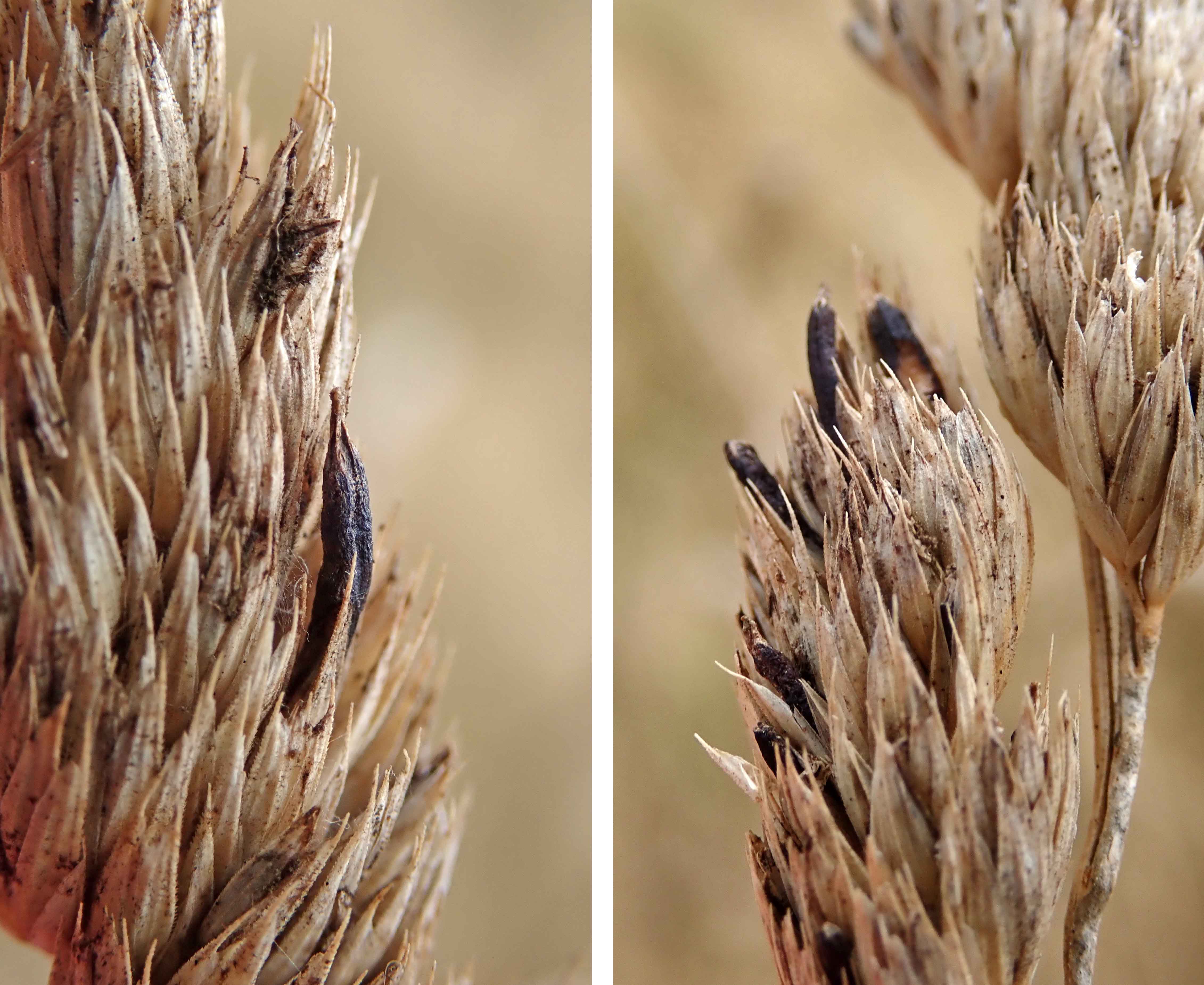
Amongst many other places, you can read more about ergot on the UK website of the Agriculture and Horticulture Development Board and, in the US, on the United States Forest Service agency website.

Two lacewings

Tags

, , , , ,

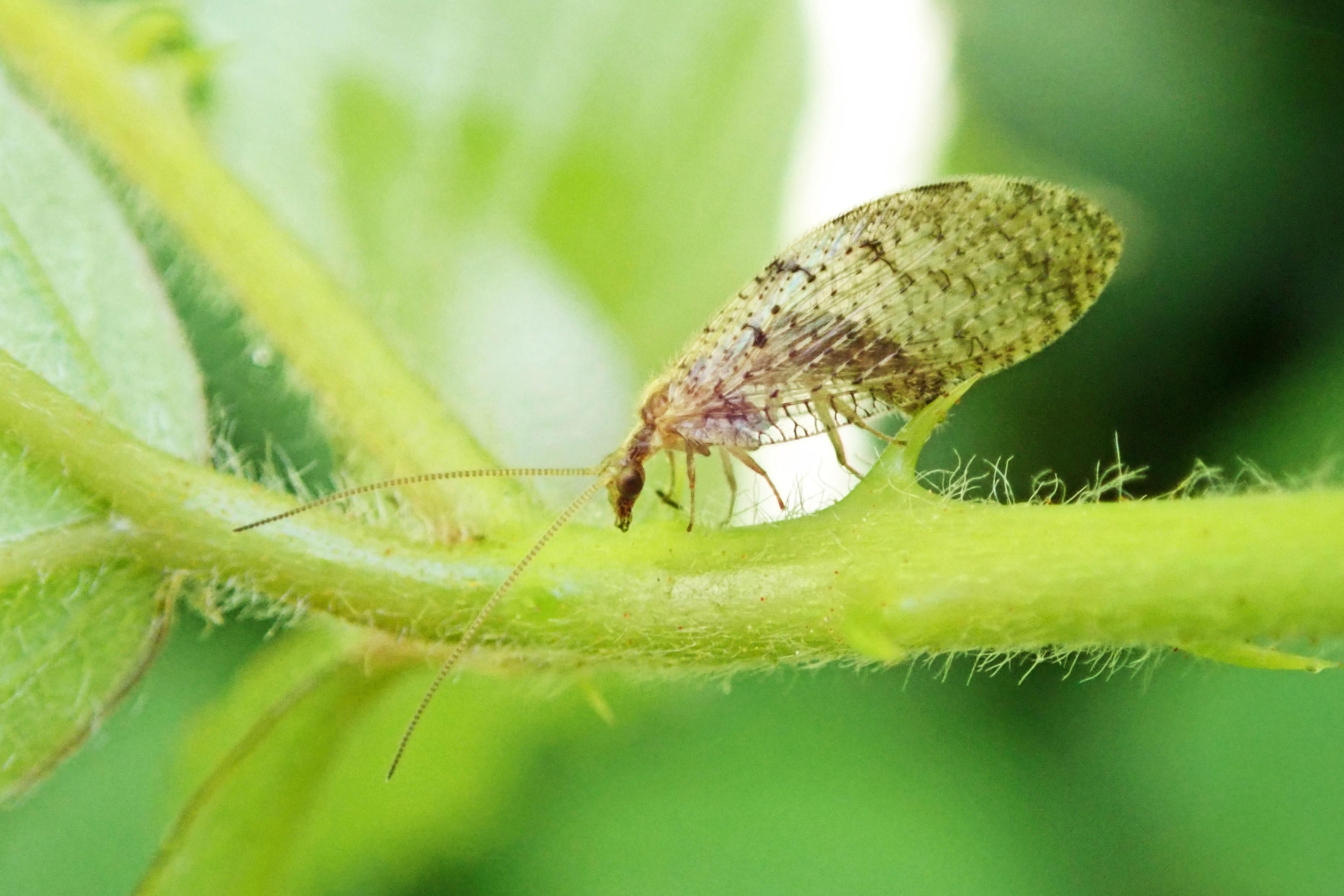
This is one of those posts where I need to add a cautionary note at the beginning: the species of these lacewings have not yet been verified. In fact, I don’t think any of my lacewing records have ever been verified, which likely means that there is no lacewing expert able to volunteer their time for this task (I must add that I am full of praise for those experts that do volunteer their time as local or national recorders/verifiers) and also that it may not be possible to definitively identify these creatures without microscopic examination. Still, they are beautiful, and I felt them worth sharing.

So, after looking closely at the markings on their wings and checking they were in habitats where they might be expected to live, I think these are both Hemerobiidae (Brown lacewing) species, and I have tentatively labelled the lacewing pictured above as Hemerobius micans. The Naturespot entry for this species states that it ‘has wings which are quite yellow in colour and which have dark dashes on some longitudinal veins, not dots as in some similar species’ and is found ‘with deciduous trees, especially mature oaks’, which is consistent with my findings for this specimen.

I am even more wary of naming this second lacewing but I wonder if it might be Hemerobius humulinus. After once again consulting the Naturespot website, I found one particular image which shows the wing venation and this appears consistent with what I can see in my photograph. Both these species were found in deciduous woodland, which also fits the species description.

Nb. I did find a Lacewings and Allies Recording Scheme website but it has thus far been populated with very little information; there is a link to a winter 2024 newsletter but many of the pages are relatively empty.

Closterotomus cousins

Tags

, , , , , ,

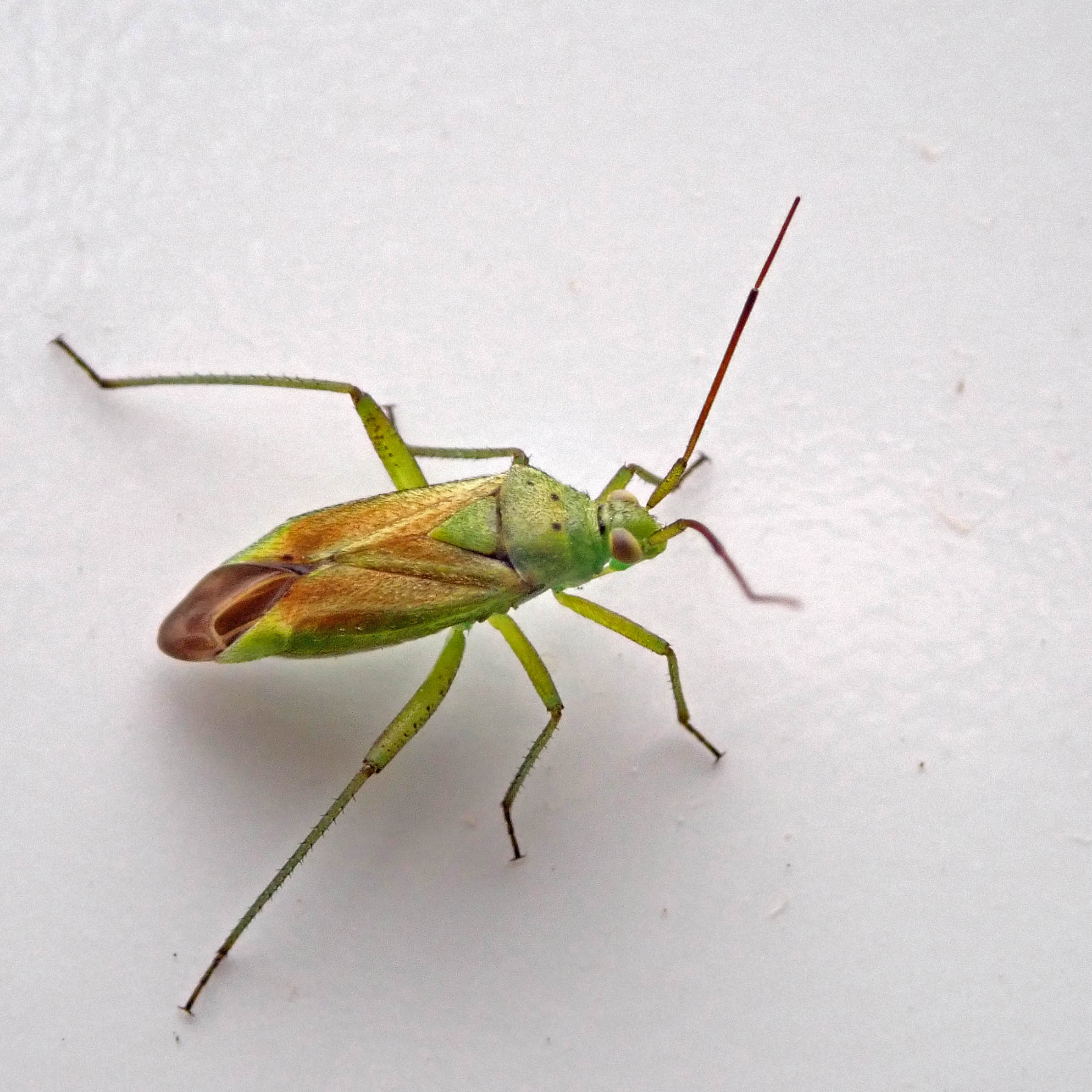
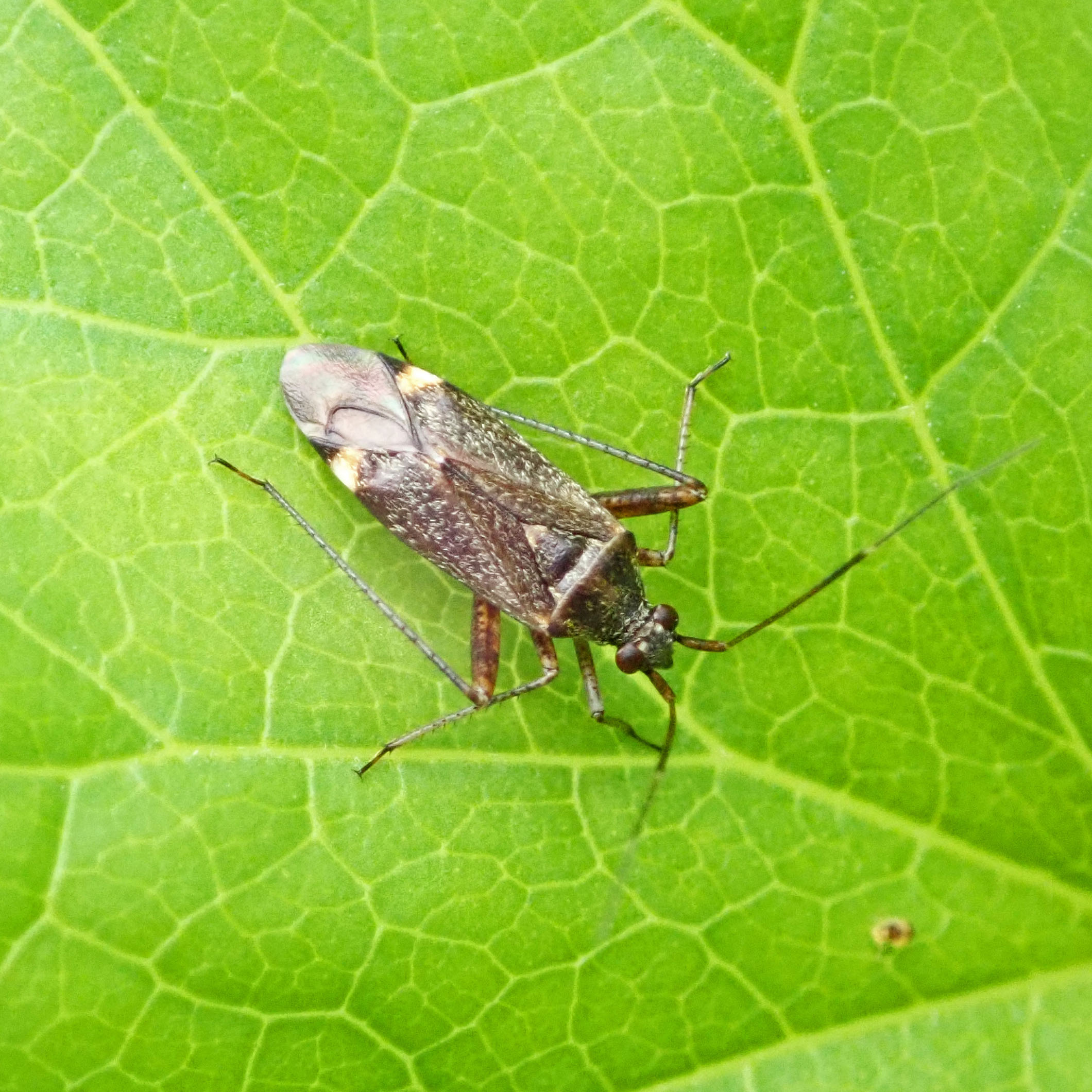
This is a tale of two Closterotomuses – Closterotomi?

The first is Closterotomus norwegicus, also known as the Potato capsid, though I’m not sure why it has that common name. The British Bugs website says it ‘feeds on a wide range of plants, especially nettles, composites and clovers’, with no mention of potatoes. It’s a handsome little bug and quite common, though can be confused with other similar mirid bugs – the British Bugs page lists some of the distinguishing features to look out for.

This second Closterotomus species is C. fulvomaculatus – no common name that I’m aware of. It can be seen between June and August, so we’re right at the end of its date range now but there may still be time to spot it on scrub and in hedgerows where it feeds on nettles and meadowsweet. Apparently, it’s also quite partial to hops, but we don’t have those in my local area. It looks like just another brown bug until you look more closely and notice the lovely golden hairs that cover its upper body.

Avian juveniles

Tags

, , , , , , , , , ,

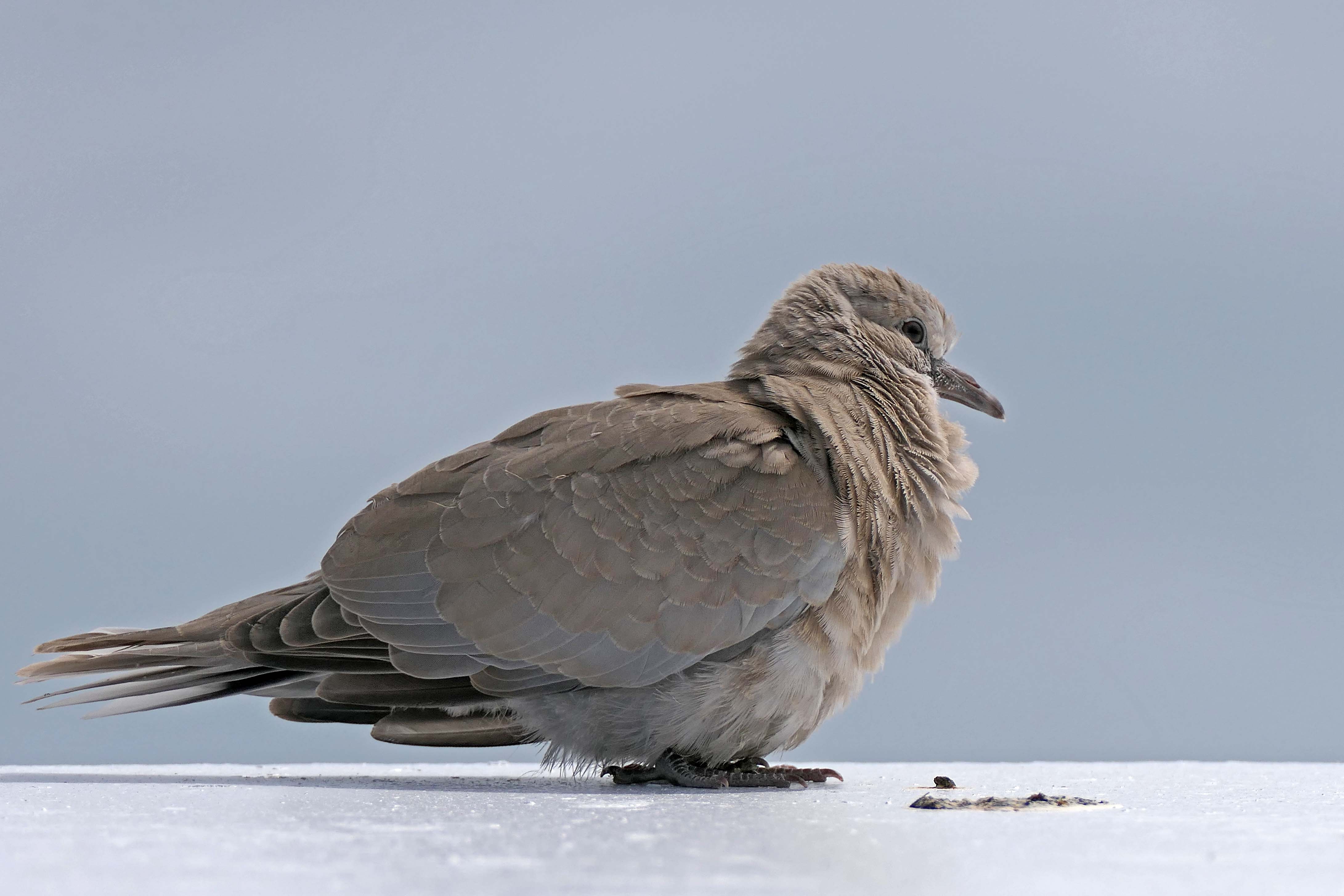
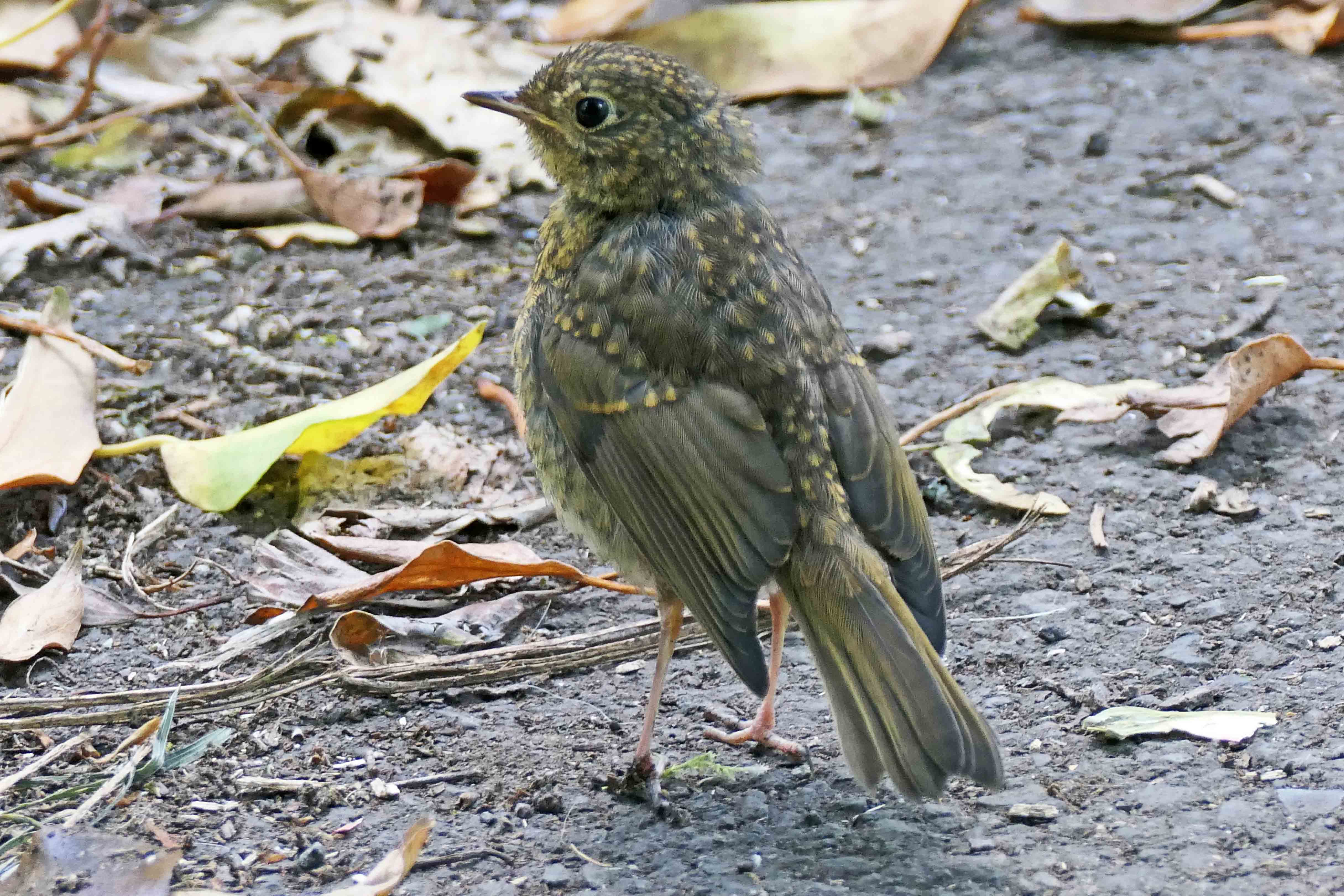
I feel like we haven’t had enough birds on here lately so let’s take a look at some of this year’s juveniles …

There are quite a lot of young Chiffchaffs flitting around the trees and bushes now, in the throes of making their first migration flights south for the winter, though, with the warming climate, many Chiffchiffs also now over-winter in southern parts of Britain.

This was the first juvenile Collared dove I’d ever seen and it was probably the fact that it was a juvenile that made it much less wary of this photographer’s lens than its parents would’ve been.

Though it hardly seems possible to be more adorable than an adult Long-tailed tit, I think the offspring outdo their parents in the cuteness department.

Likewise young Robins, which are even more endearing and much less feisty than the adult versions. And I do think their juvenile plumage is very attractive too.

This little one was my first juvenile Stonechat of the year, spotted last week at the local country park with an adult male. These birds will also be in the process of moving from their more northerly breeding grounds to warmer winter climes.

A squirrel surprise

Tags

, , ,

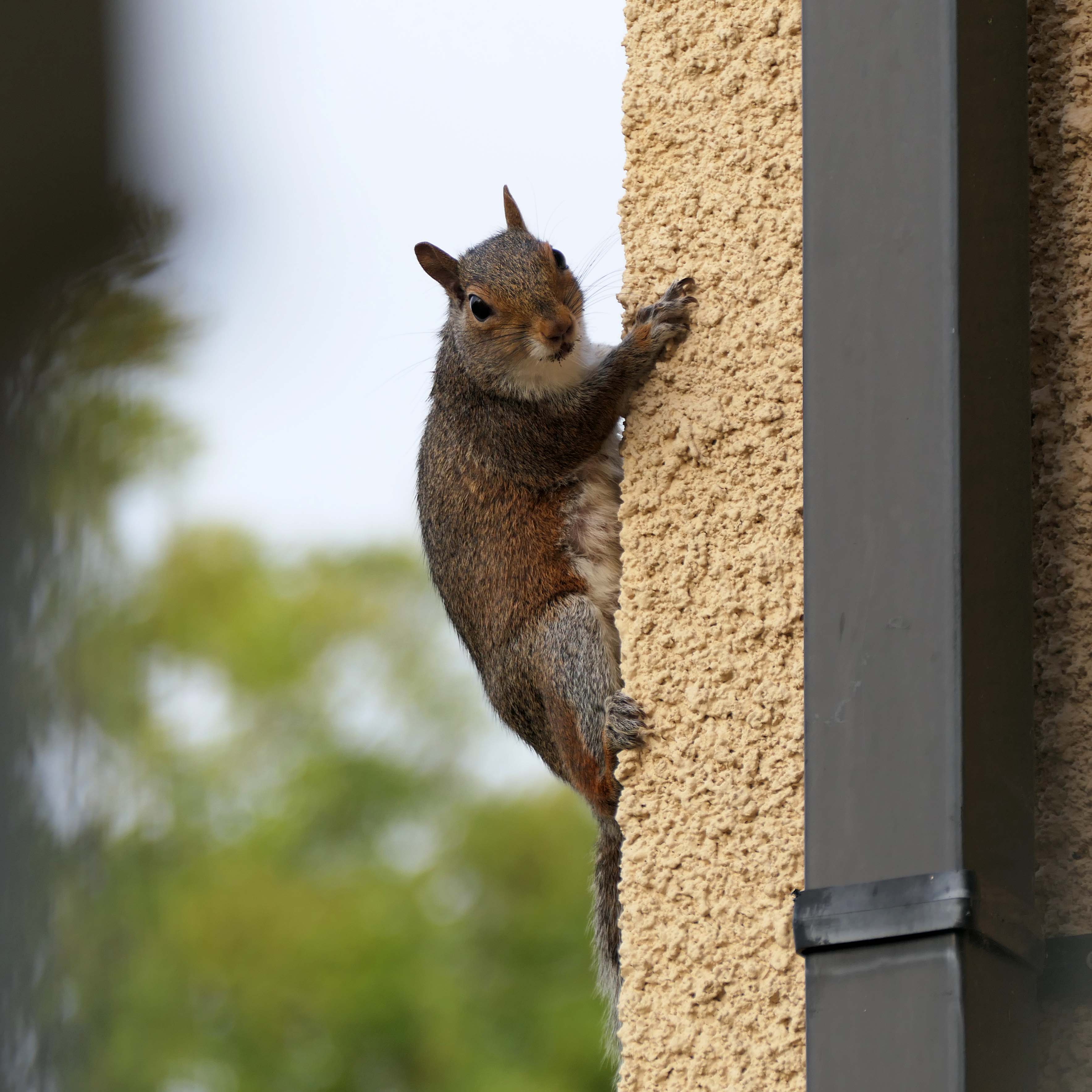
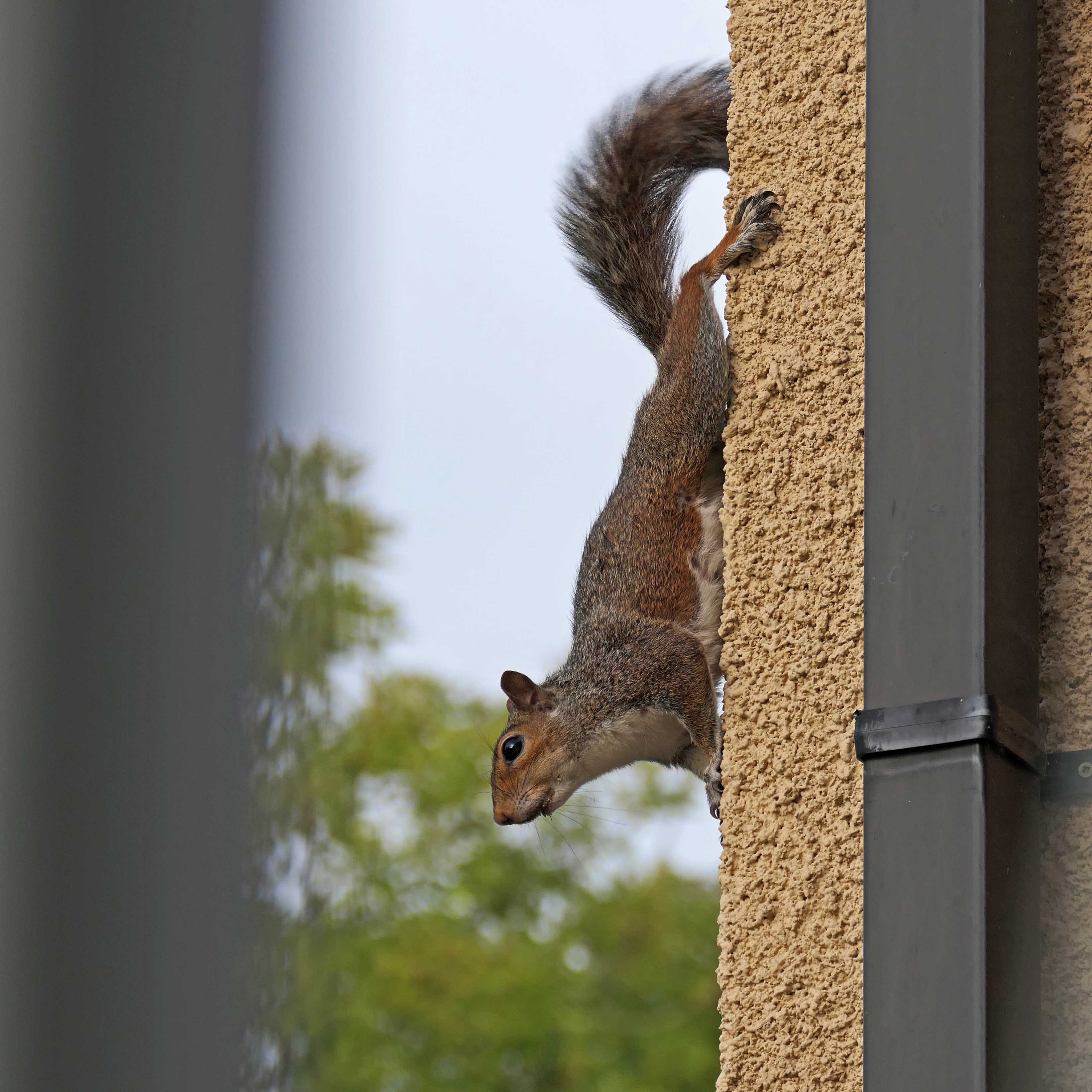
In my new flat I have my dining table-cum-desk set up in front of the living room windows so I can enjoy views of the adjacent woodland and the Bristol Channel at the bottom of the garden while I’m writing these blogs or eating my meals. On Saturday morning, when I was eating my breakfast, I heard a Grey squirrel making the strange whining / moaning / screeching sounds they sometimes utter. It sounded very close but I couldn’t see anything when looking straight out the windows, so got up to have a more thorough look all around. This is what I saw just outside the (tilted) open window.

My flat is on the middle of three floors and the site slopes quite steeply away below, so the squirrel was probably 30 feet from the ground. I suppose that’s not a great height for a squirrel that can climb tall trees – I just never expected one would climb up the side of the building, but the stucco surface seemed to be providing good purchase for its claws. I’m a bit of a fresh air fiend so, when I go out, I often leave my windows open as I’ve no concerns about potential burglars. Now, though, I’m wondering if one day I might get home and find a squirrel has come to investigate!

Mignonette

Tags

, , , , ,

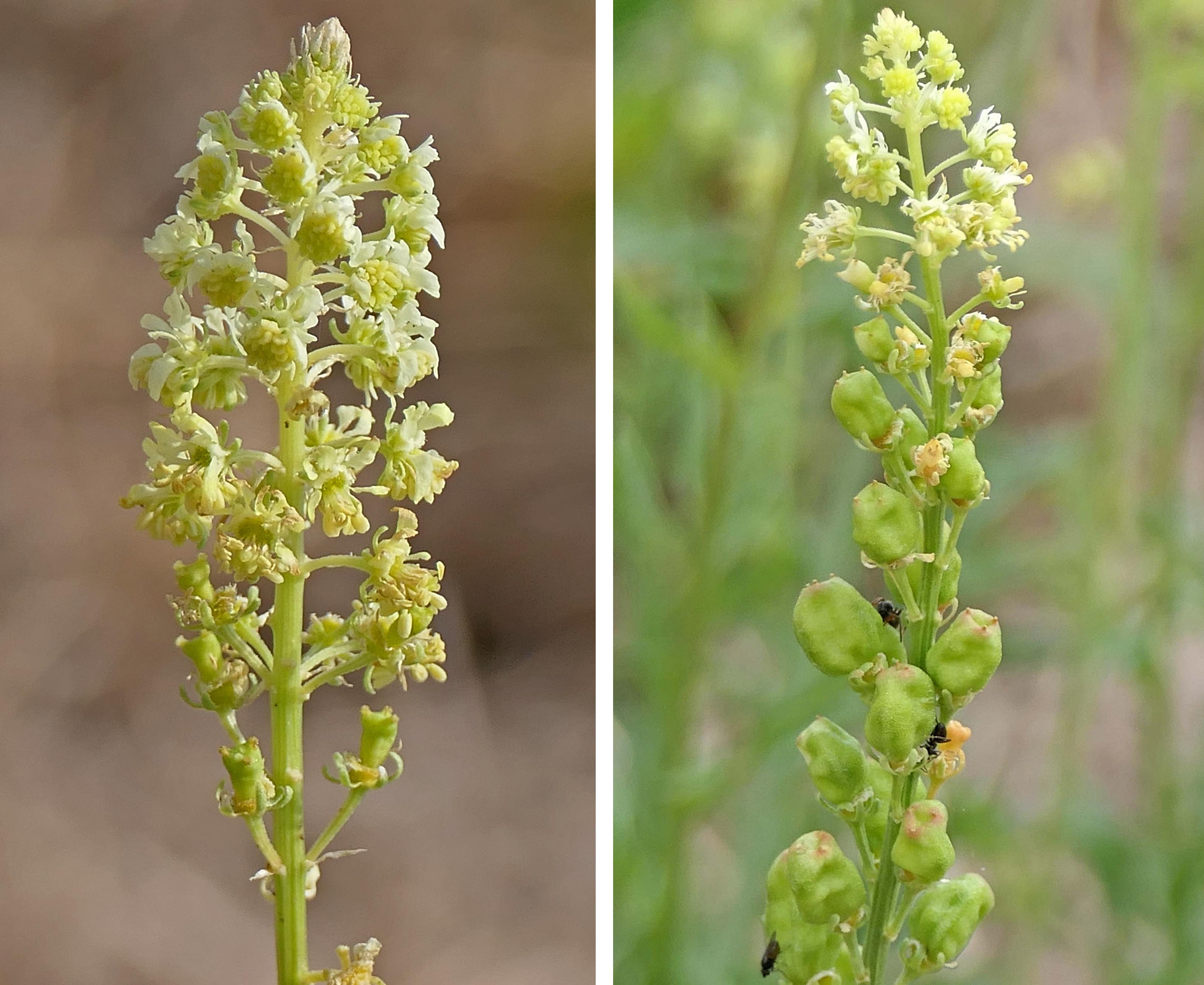
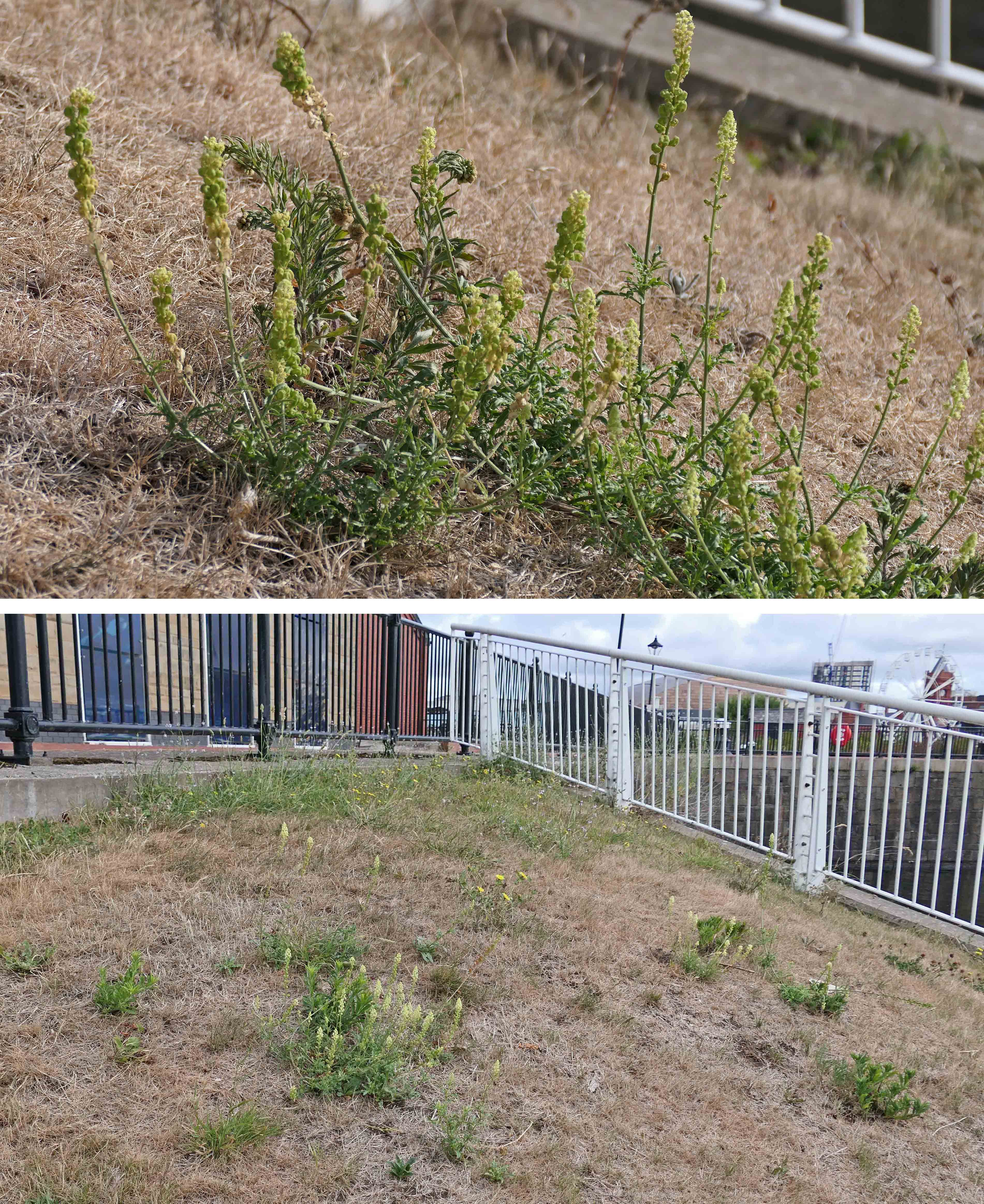
As I’ve never sniffed their flowers, I’m not sure whether the Mignonette plants I see in various locations around Cardiff Bay are Wild Mignonette (Reseda lutea) or the escaped and naturalised garden variety Reseda odorata (the latter, a plant that’s more at home in Mediterranean countries, has a musky scent apparently).

Both species are common throughout the UK, in a wide variety of locations – along the edges of railway lines, on areas of waste ground, bordering car parks and garbage tips, around arable fields – in general, anywhere the ground has been disturbed and is mostly dry. You can see in the photos below how well the Mignonette plants are coping with the current drought conditions here in south Wales, compared to most other plants that are shrivelled, crispy and dying.

A good year for Jersey tigers

Tags

, , , , ,

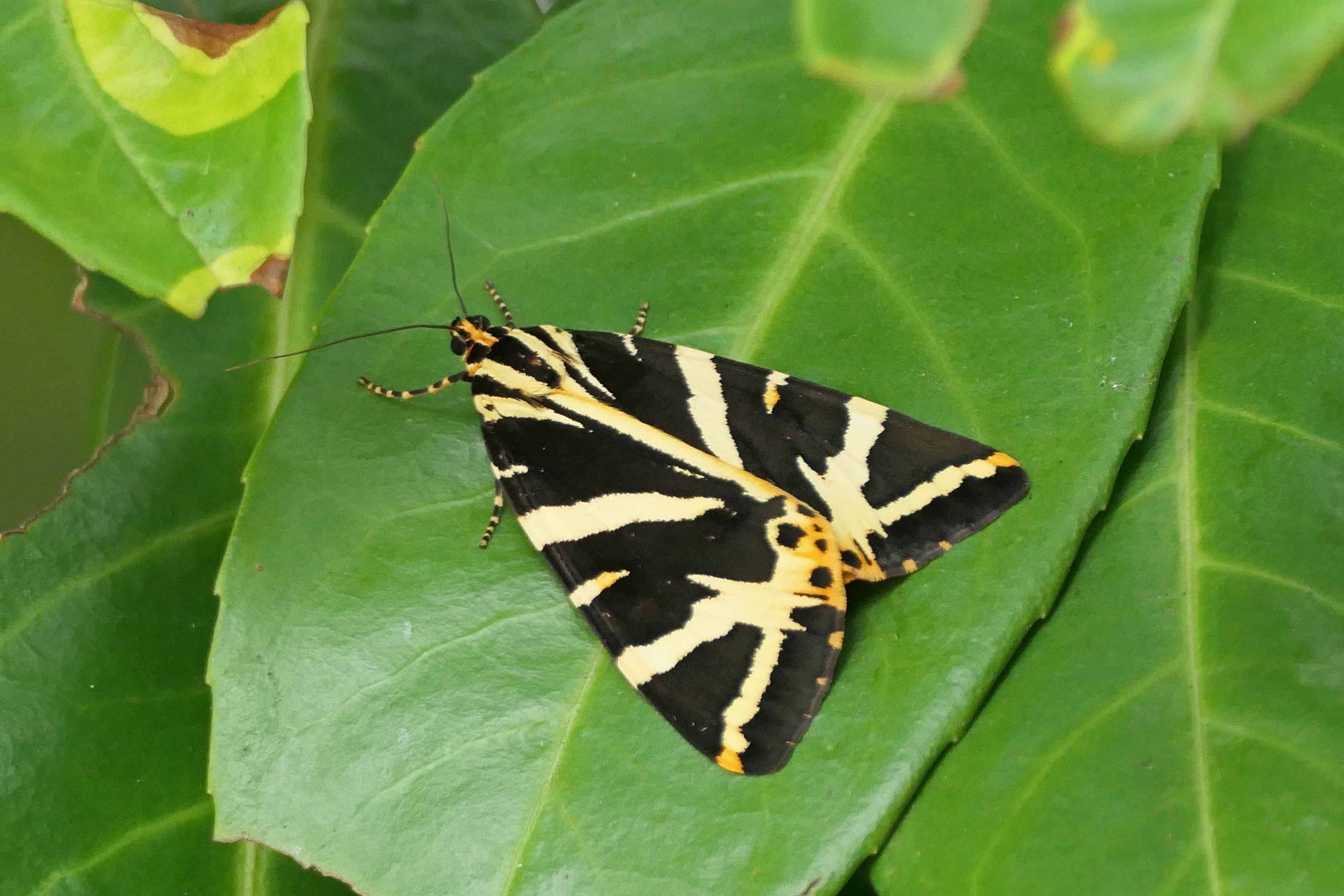
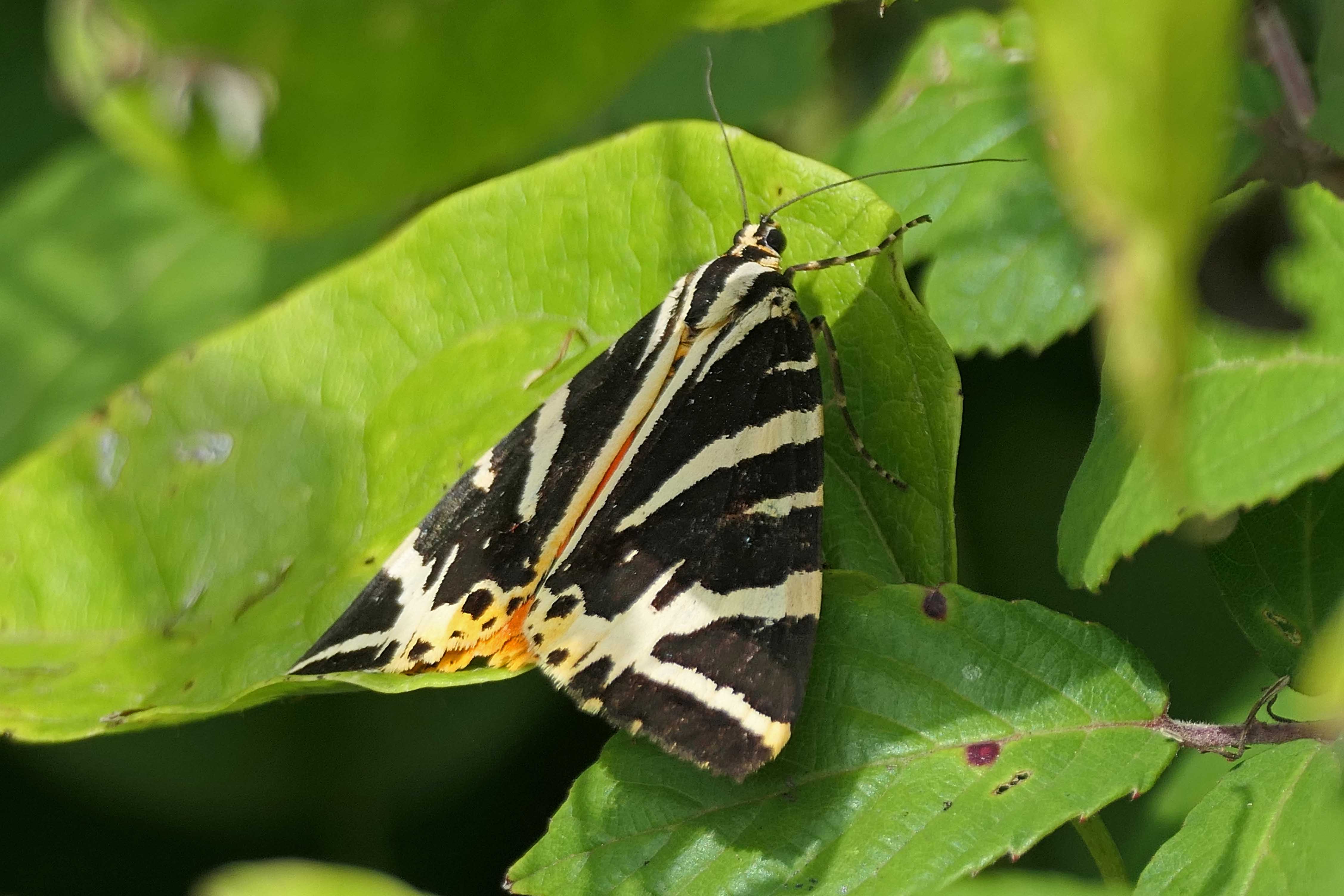
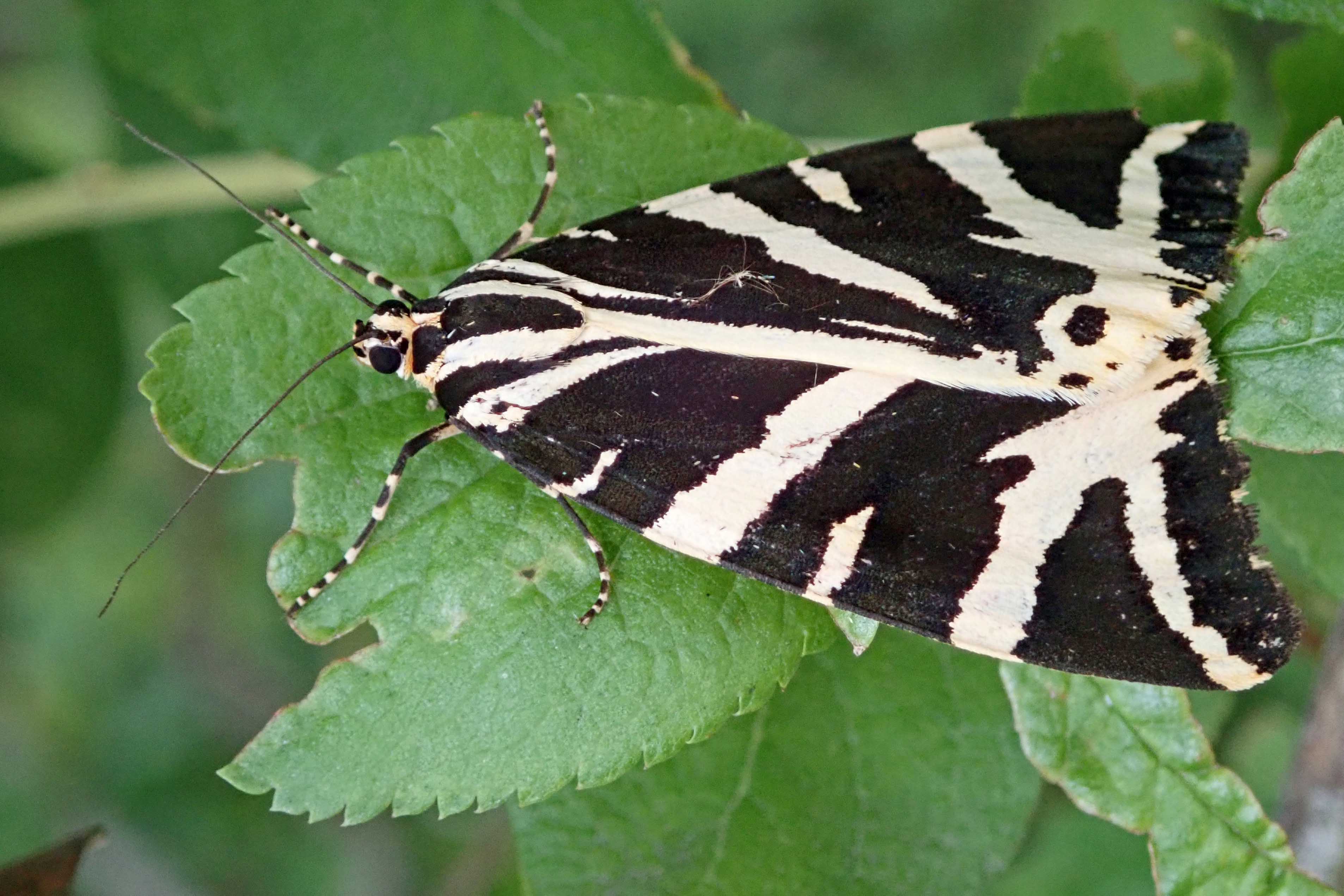
In the summers of 2018, 2019 and 2020 one of the local nature reserves near me held what seemed like a healthy population of Jersey tiger moths (Euplagia quadripunctaria), then they vanished. I don’t know why this was but several people have looked for them at the reserve in the intervening years and, though the occasional single moth has been sighted, the healthy population is no more. Away from that reserve, I would struggle to see any Jersey tigers, and saw none at all in 2021 and 2022.

So, this year, it has been an absolute delight for me to have enjoyed many, seemingly random sightings of these beautiful moths. By random, I mean that there haven’t been any large numbers concentrated in any specific location or area; instead, either I’ve spotted them lurking on trees and bushes, or my passing has disturbed them, there’s been a flash of their vibrant orange underwings as they’ve fluttered out and I’ve seen them once they’ve resettled.

And it seems my experience of seeing greater numbers of Jersey tigers this year has not been unique. This is a species that is included in Butterfly Conservation’s Big Butterfly Count, and, even before the count had ended, with 7 of the count’s 24 days remaining, that organisation had noted a ‘whopping 78%’ increase in reported Jersey tigers this year compared to last year. Butterfly Conservation’s blog post speculates that the dramatic increase was due to this summer’s record-breaking high temperatures.

As Dr Richard Fox, BC’s Head of Science is quoted as saying

The increase we’re seeing in Jersey Tiger moth sightings is a striking example of how climate change is reshaping the distribution of wildlife.
While it’s a delight to spot such a vibrant moth in gardens, parks and green spaces, it’s also a reminder of how rising temperatures are altering our natural environment.

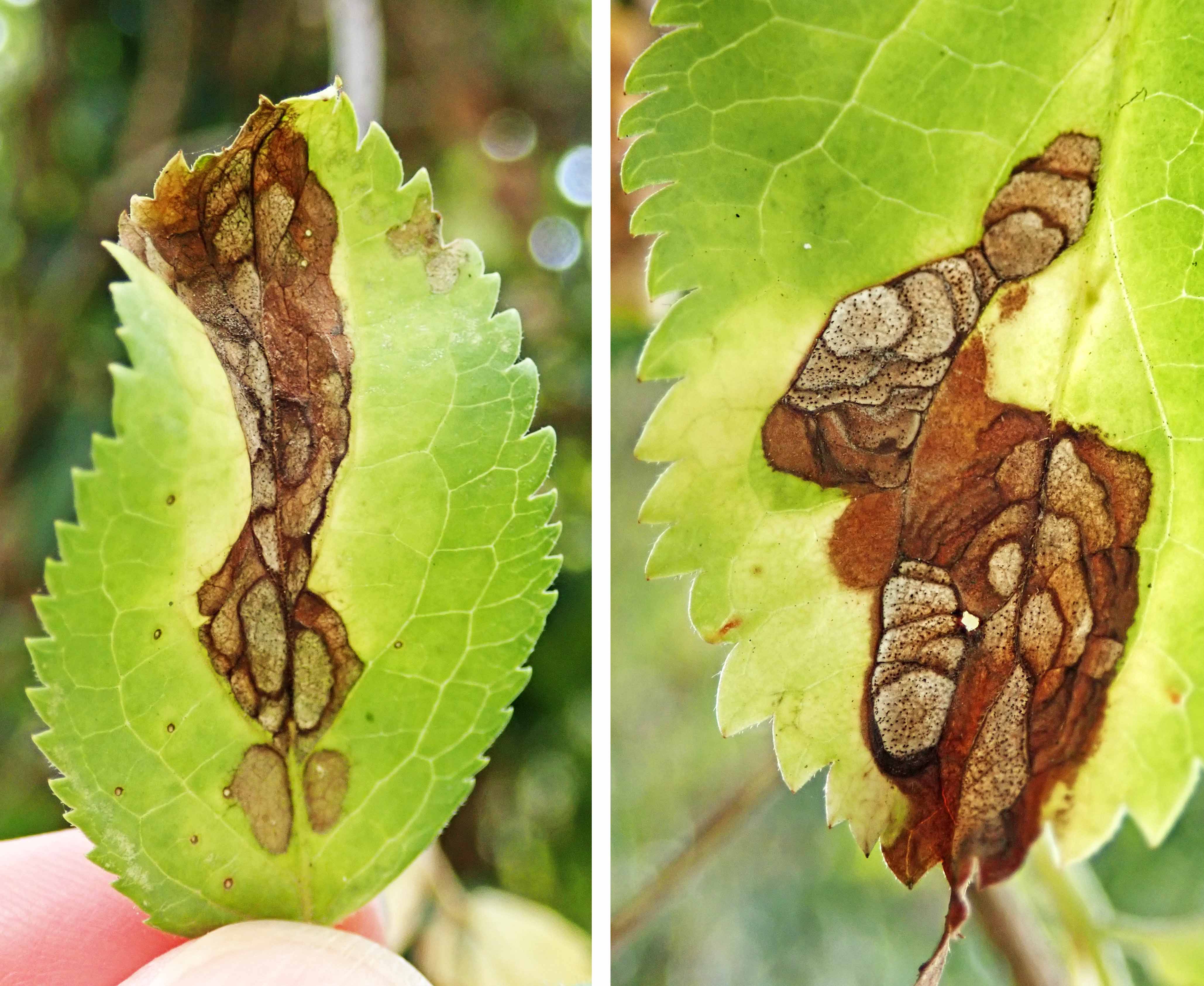
Fungus: Cercospora depazeoides

Tags

, , , ,

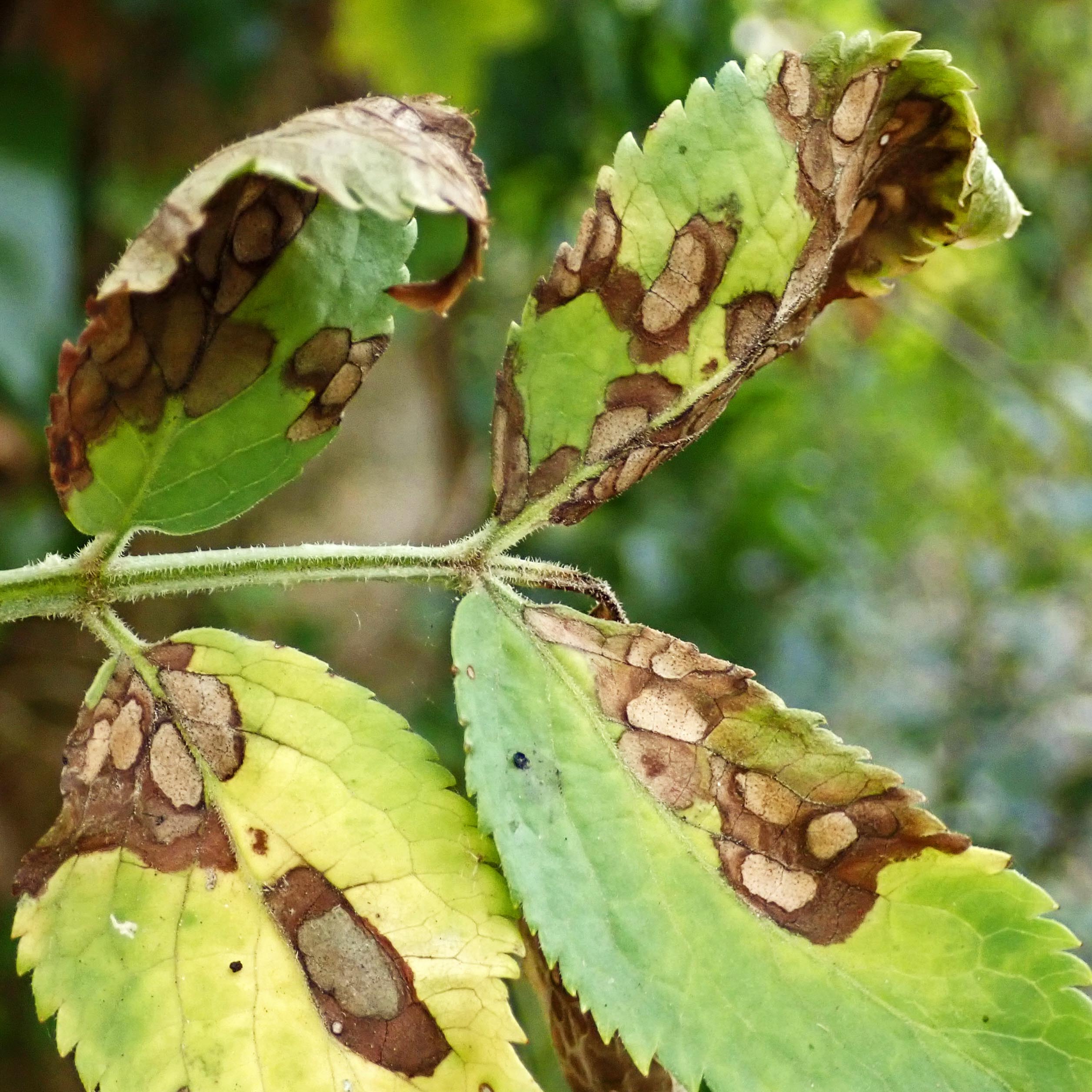
Given our recent, seemingly never-ending high temperatures, I’ve been surprised to find fungi flourishing, though they’ve not been the mushroom-shaped life forms you might expect when you read the word fungi. Take today’s fungus, for example. I didn’t immediately realise these very distinctive marks on the leaves of an Elder tree (Sambucus sp.) were caused by a fungus.

These marks are caused by Cercospora depazeoides, and it seems the fungus can be quite destructive. According to the European Forest Pests website, this fungal pathogen leads to ‘premature leaf drop and reduced photosynthesis’. When the spots merge, dominating the leaf surface, they cause defoliation, which can ‘weaken the plant, impacting its growth and fruit production’. Fortunately for those who harvest the berries to make Elderberry cordial, according to iRecord, this fungus has thus far not been recorded in many locations in the UK.