The ubiquitous Woodlouse

Tags

, , ,

I’m still struggling to find many insects, probably because we’ve had a run of freezing nor’easterly winds and low temperatures, so those insects that overwinter as adults are very sensibly tucked away somewhere sheltered or buried deep beneath thick layers of mouldering vegetation.
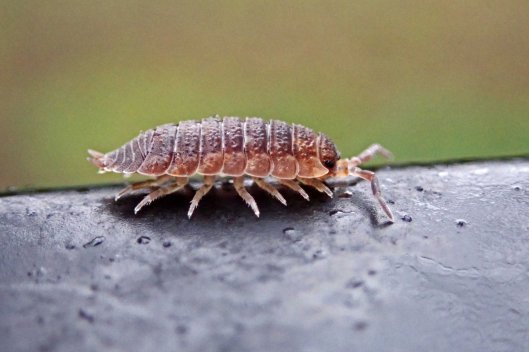
Not so this little Woodlouse that I found walking along the park railings. And this surprised me as Woodlice are Isopods, related to crabs and lobsters, so they’re cold-blooded. That means they rely on their environment to warm them up and, when it’s cold, they’re usually inactive and tucked away under a log or in a rotting branch. Still, I read somewhere that fossil ancestors of our modern Woodlice have been found dating back to the Eocene period, which was 50 million years ago, so I guess these little creatures really are built to withstand tough conditions.

Harlequins everywhere

Tags

, , , ,

I admit to feeling a few pangs of envy when, a couple of days ago, one of the entomologists I follow on social media posted photos of the eleventh species of ladybird they’d sighted this year. I’ve never seen 11 ladybird species in my entire life (my total is 8), let alone in the middle of winter. [Note to self: must try harder!]

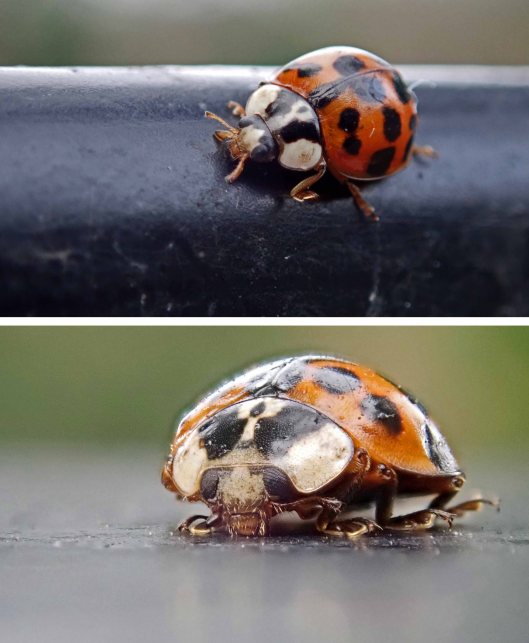
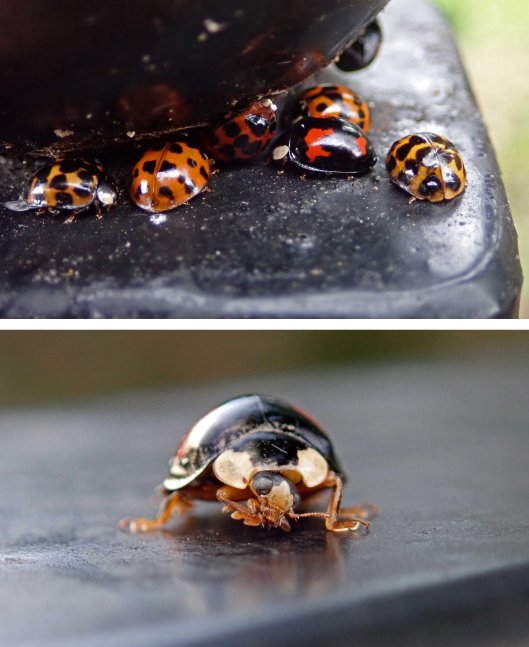
Meanwhile, in the local park (and, yes, many are on the railings), apart from a single 7-spot ladybird, the population seems overwhelmingly to be comprised of Harlequin ladybirds, those invasive interlopers that originally lived in Asia but have become one of the most invasive insect species in the world, according to the Buglife website.

One-eyed

Tags

, , , ,

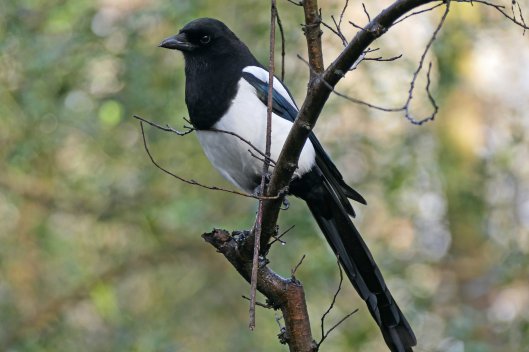
Magpies are beautiful birds and I am often guilty of overlooking them so, when this bird posed nicely on a nearby branch, I admired it and took some photos.

It was only when the bird turned its head that I realised it had somehow lost an eye, Fortunately, that didn’t seem to be affecting its ability to fly or feed and, as a second Magpie was hovering in the trees very nearby, I presume it had also been successful at finding a mate.

Greeting the vernal sun

Tags

, , , , ,

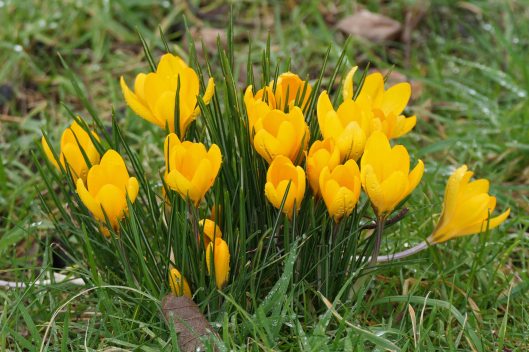
Though a tremor of the winter
Did shivering through them run;
Yet they lifted up their foreheads
To greet the vernal sun.

And the sunbeams gave them welcome,
As did the morning air—
And scattered o’er their simple robes
Rich tints of beauty rare.

Soon a host of lovely flowers
From vales and woodland burst;
But in all that fair procession
The crocuses were first.

First to weave for Earth a chaplet
To crown her dear old head;
And to beauty the pathway
Where winter still did tread.

~ four verses from the poem ‘The Crocuses’ by Frances Ellen Watkins Harper (1825-1911)

My latest bogey bird

Tags

, , , , , ,

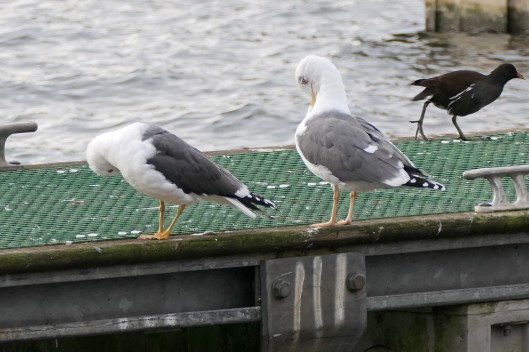
The Water rail used to be my bogey bird but, once my sightings of that beautiful skulker increased, the bogey bird title passed to the Yellow-legged gull (Larus michahellis). I’ve continued to look for one, several times thought I’ve found one, only to work out for myself or be told by birders more skilled than me that I’ve been wrong.

That same thing happened with this bird: when I posted photos online, no one stepped up to proffer an opinion and the one birder who was prompted by someone else to give his judgment decided it wasn’t a Yellow-legged gull.

So, you can imagine how very delighted I was when I received a message from our county bird recorder that he was happy to accept it as a Yellow-leg. As he wrote, the bird shows: ‘uppers mid grey (darker than Herring [gull], paler than LBBG [Lesser black-backed gull]), large size, and [in this case, quite pale] yellow legs all consistent.’ And those features are precisely why these birds can be tricky to identify – unless you have all three gull species standing side by side, the colour ‘mid-grey’ can be difficult to determine, as can the gull’s size. I was fortunate than my Yellow-legged gull was standing next to a Lesser black-backed gull as that made the comparison a little easier. Now to find another!

Fungus vs beetle

Tags

, , , ,

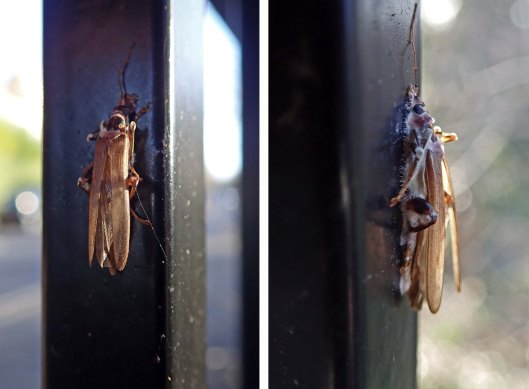
I can’t help but wonder what happened to this beetle. Did it pick up a tiny scrap of fungus during its meanders through the undergrowth, then stayed alive until the day came when the fungus had grown so extensively that the beetle could no longer move? Or did the beetle die, then fungus spores blown by the wind settled on its body and began to devour it? There’s no way to know for sure though, for the beetle’s sake, I hope it was dead before it was attacked. Oh, and as you can perhaps tell by the background, this was yet another find from my local park railings.

A new fly: Simulium species

Tags

, , , , ,

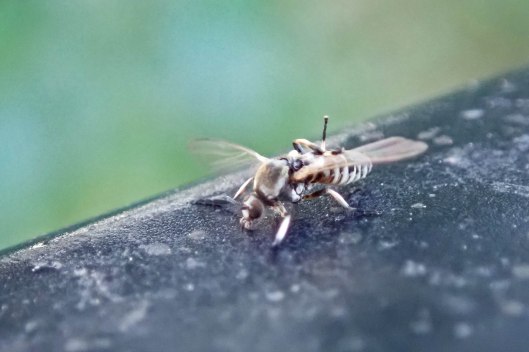
My local park railings have done it again! This time a fly I’d never seen before was sitting there, giving itself a good clean, wiping along its body with some of its many legs.

As I had no idea what this was, I threw it over to the entomologically minded people I follow on social media and within minutes had my answer: one of the Simulium species of black flies. You can read more about them on Wikipedia (not a place I would usually reference but their article is certainly interesting) and I also found a website called Blackfly (it’s flagged as not secure but is packed with information and probably okay for a quick read).

To be honest, rather than learning the name of the fly, I found the reactions to my post the most interesting. One person wrote ‘Itchiest bite ever!!!!!’, which horrified me slightly as I’d had the creature on my finger at one point, and I never react well to insect bites. Another told this story: ‘I was once in a boat nearly a mile out to sea when we spotted a black cloud on the horizon. A billion of these b*ggers landed on us and it was armageddon!’ That may read like a tall tale but people have compared the bites of these flies to those of the bloodthirsty Scottish midges and they are known to transmit diseases so should probably be avoided if at all possible.

A Jay day

Tags

, , , ,

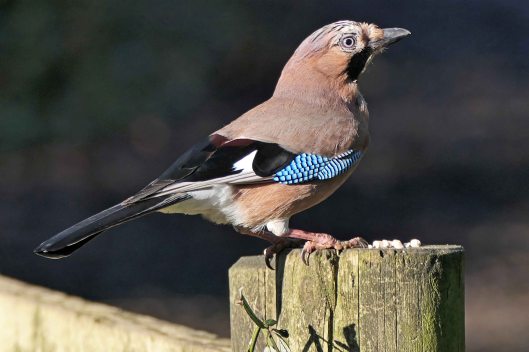
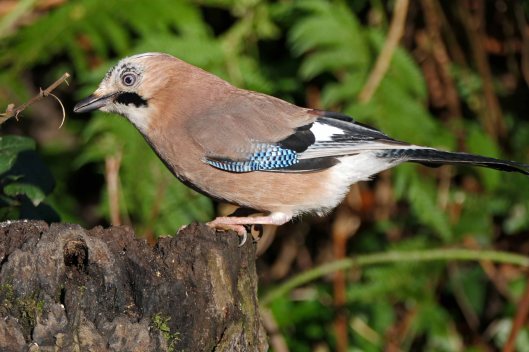
I was going to write about a different bird today but during this morning’s walk in central Cardiff I was approached by a young man who, on seeing me staring at a bush, camera in hand, very politely asked if I might know the name of the bird he’d just seen.

‘It was a bronzey pink with fluorescent blue in its wings. It looked amazing!’ The mention of bronze confused me but, when, together, we retraced his steps and spotted the bird, it was, as I’m sure you’ve already guessed, a Jay.

He had never seen one before, which surprised me, but we had a lovely conversation and I know he will be looking for more Jays during his daily walks from the student halls to the university buildings and back. And that makes me very happy!

Jays have proved very frequent, more confiding and visible during our recent cold weather, a treat I’ve thoroughly enjoyed and taken advantage of with my camera, so the photos here were taken over several days.

First hoverflies

Tags

, , , , , ,

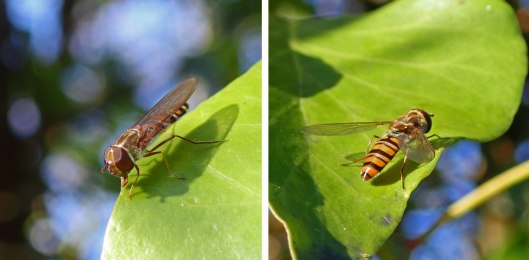
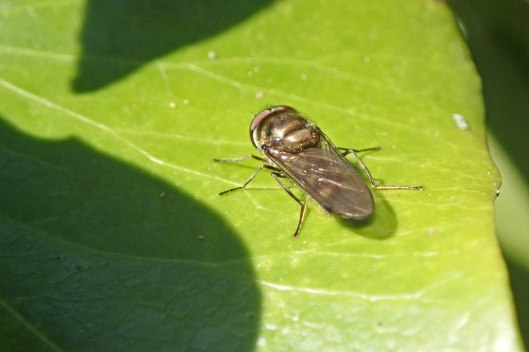
When the sun comes out, so do the insects, and, during last Friday’s walk along the coastal path, after failing to find the birds I was hoping for, I was very pleased to spot my first two hoverflies of the year basking on ivy leaves in the weak sunshine.

I wasn’t surprised that the first I saw was this Marmalade hoverfly (Episyrphus balteatus), as it’s the most common hoverfly in Britain, and, though adults are known to hibernate, they will emerge on warmer winter days.

This second hoverfly is Meliscaeva auricollis, a species that’s one of the first to emerge in the spring and then has a very long flight period, though its numbers are greatest towards the end of summer.