
Tags
American blight, aphid, aphids on Apple trees, aphids on Firethorn, aphids on Pyracantha, British aphids, Eriosoma lanigerum, galls on Firethorn, galls on Pyracantha, Woolly apple aphid
When I set out on my walk last Saturday, I wasn’t intentionally targeting aphids but up they popped. At this first location I wasn’t completely certain that what I saw was caused by aphids but, as soon as I poked one of the fuzzy white lumps on this Firethorn (Pyracantha species) and my finger came away stained red, I knew I’d just inadvertently squashed an aphid (this has happened to me before when I grabbed a willow branch without noticing the aphids perched on it).
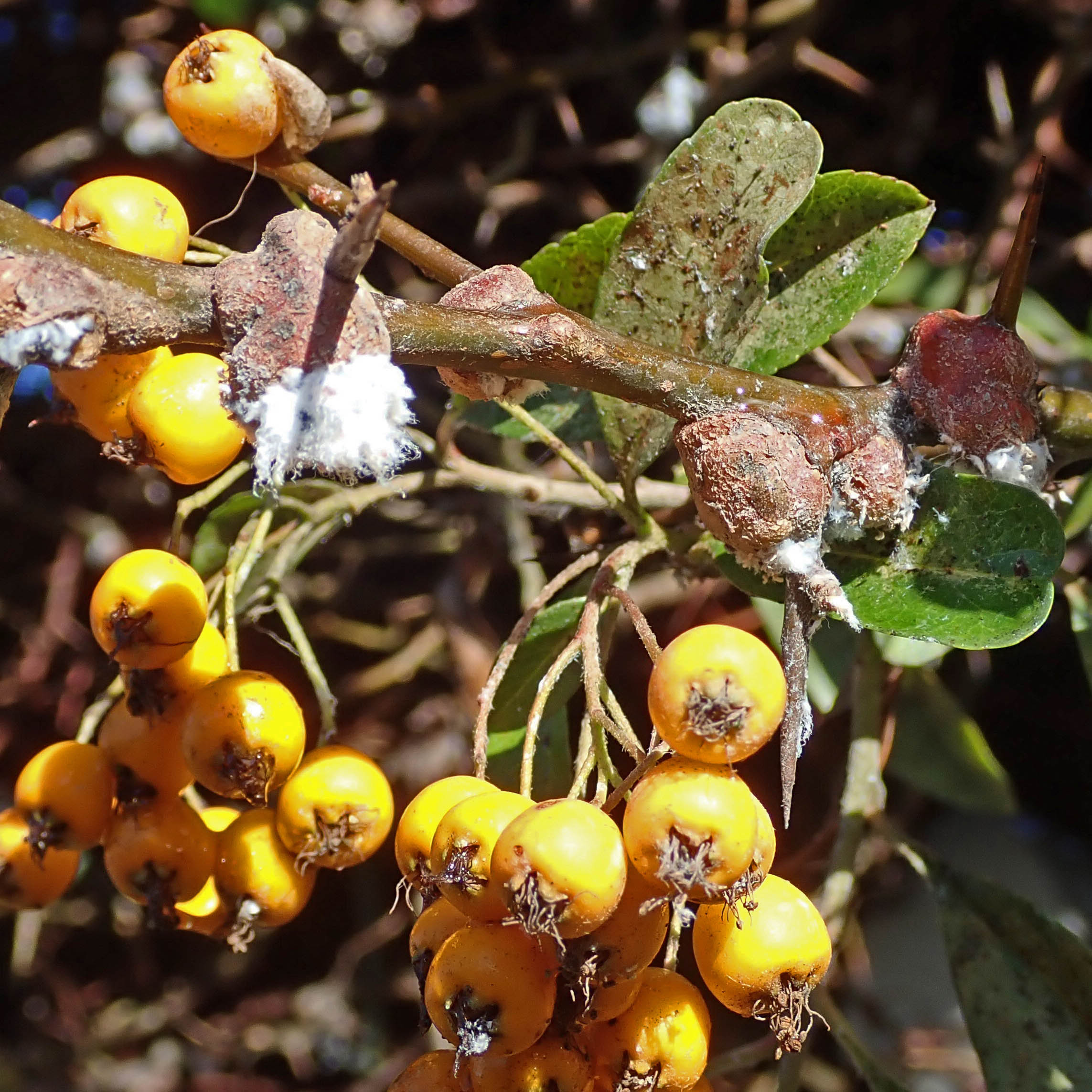
After a little research when I got home, it quickly became apparent that these were Eriosoma lanigerum, also known as Woolly apple aphids and American blight. The sap-sucking feeding of Eriosoma lanigerum causes deformation and swellings on the branches, trunks and roots of their host plants, as you can see from the lumpy growths on the branches of this Firethorn bush.
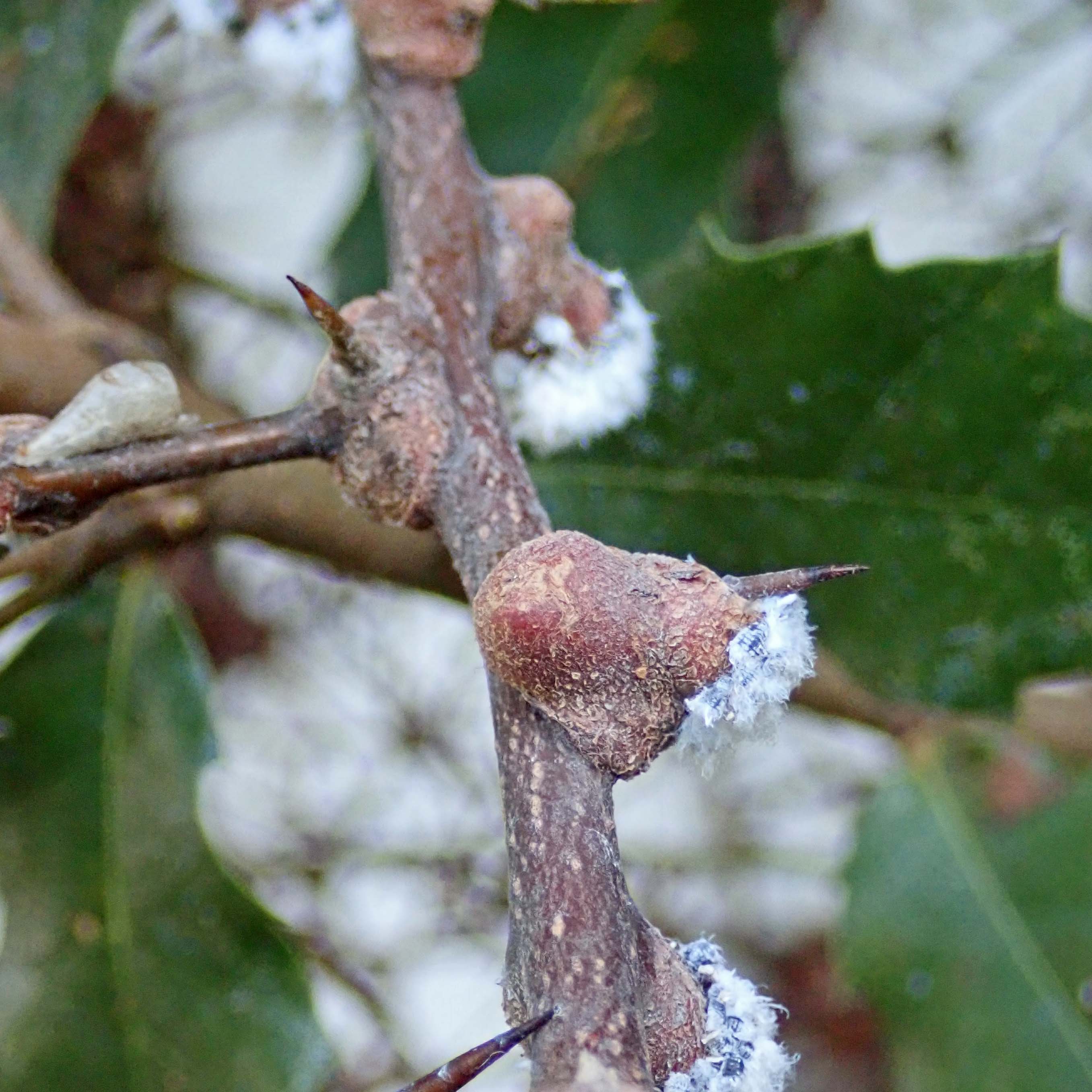
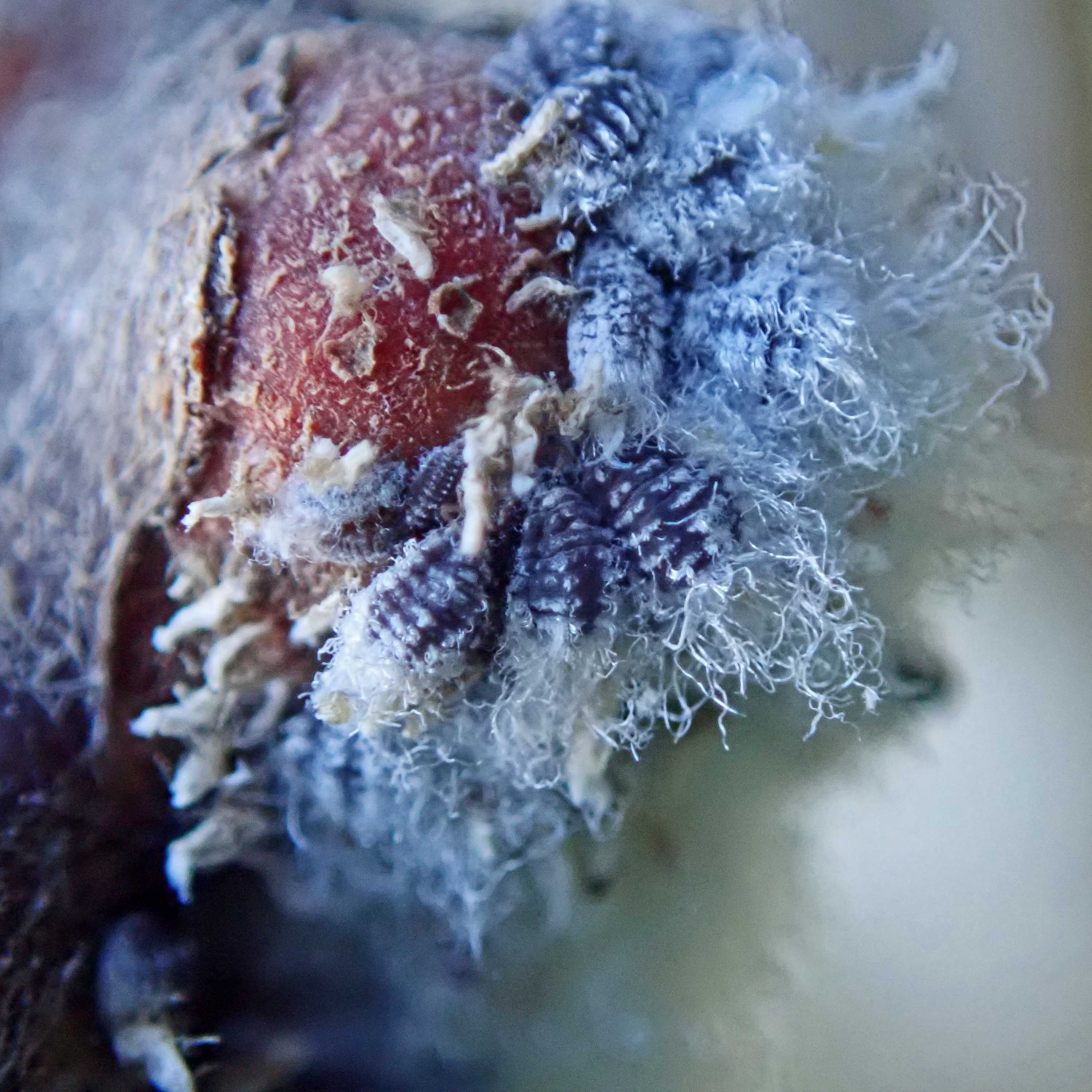
The white ‘wooliness’ is a wax substance the aphids produce in specialised glands and excrete as filaments from various parts of their bodies. The Influential Points website, which is an excellent resource for information about aphids, summarises the various reasons scientists have reached for this wax secretion:
Smith suggests that the primary role of the secreted wax is to prevent the aphids becoming contaminated by their own honeydew … and that of other members of the colony…. Other secondary roles of wax may include individual microclimate isolation, protection from fungi, parasites and predators plus waterproofing and frost protection.
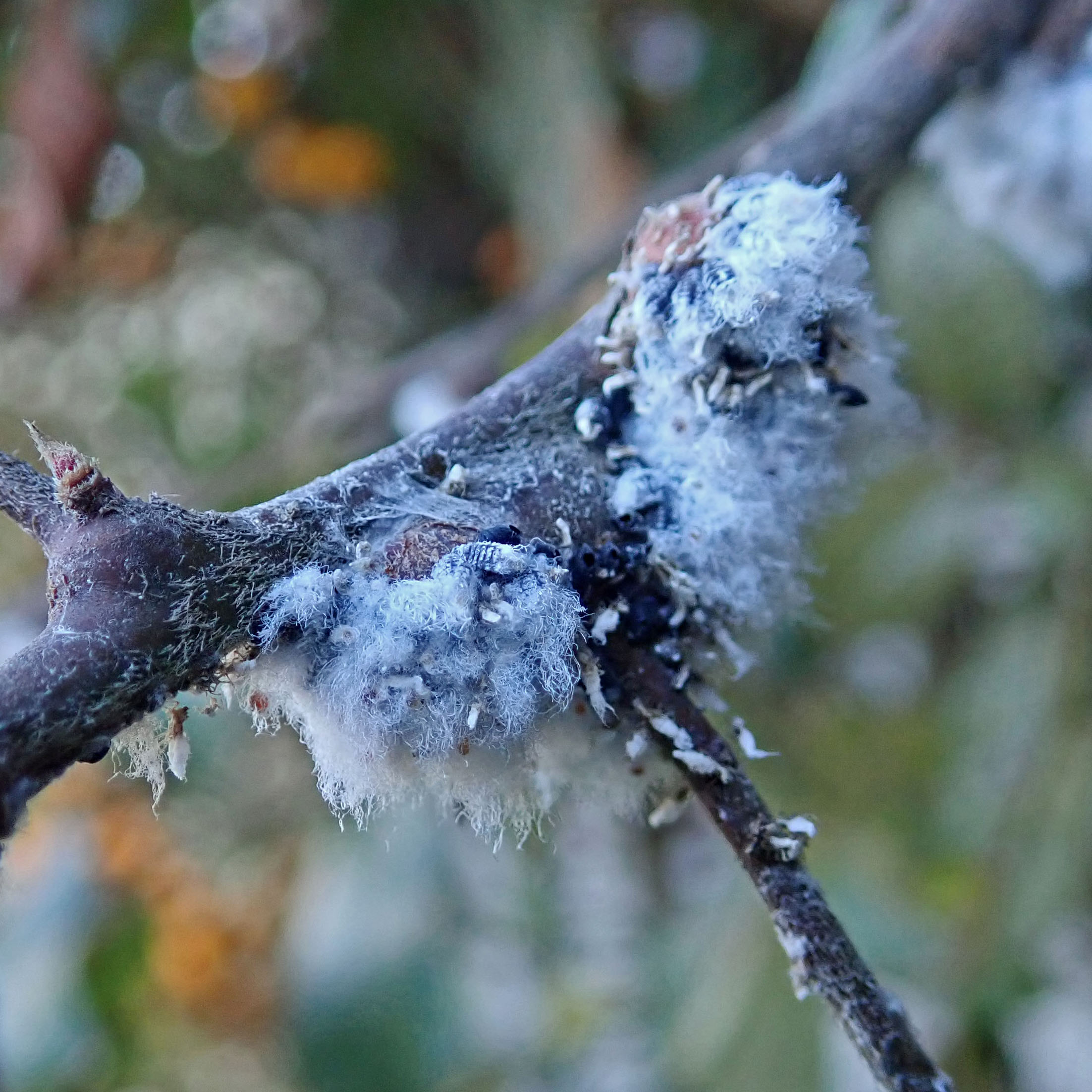
Though their primary plant hosts are Pyracantha and Cotoneaster species, as the Woolly apple aphid name suggests, their secondary host is Apple and, on the various species of Apple trees, they are considered a major pest, often having a severe economic impact on Apple crops. If you’re interested in reading more about this, the Influential Points website has a long list of various scientific research papers from around the globe on the subject of these aphids, their reproduction habits, their seasonal movements, their genetics and population dynamics, as well as ways to control their infestations.
 earthstar
You must be logged in to post a comment.