• ABOUT
  • BIRDING 2018
  • Birding 2019
  • BLOG POSTS
  • Butterflies 2018
  • Resources

earthstar

~ a celebration of nature

earthstar

Tag Archives: autumn migration

The return of the Woodpigeons

20 Thursday Nov 2025

Posted by sconzani in autumn, birds

≈ 2 Comments

Tags

autumn bird migration, autumn migration, birding, birdwatching, British birds, Woodpigeon, Woodpigeon migration

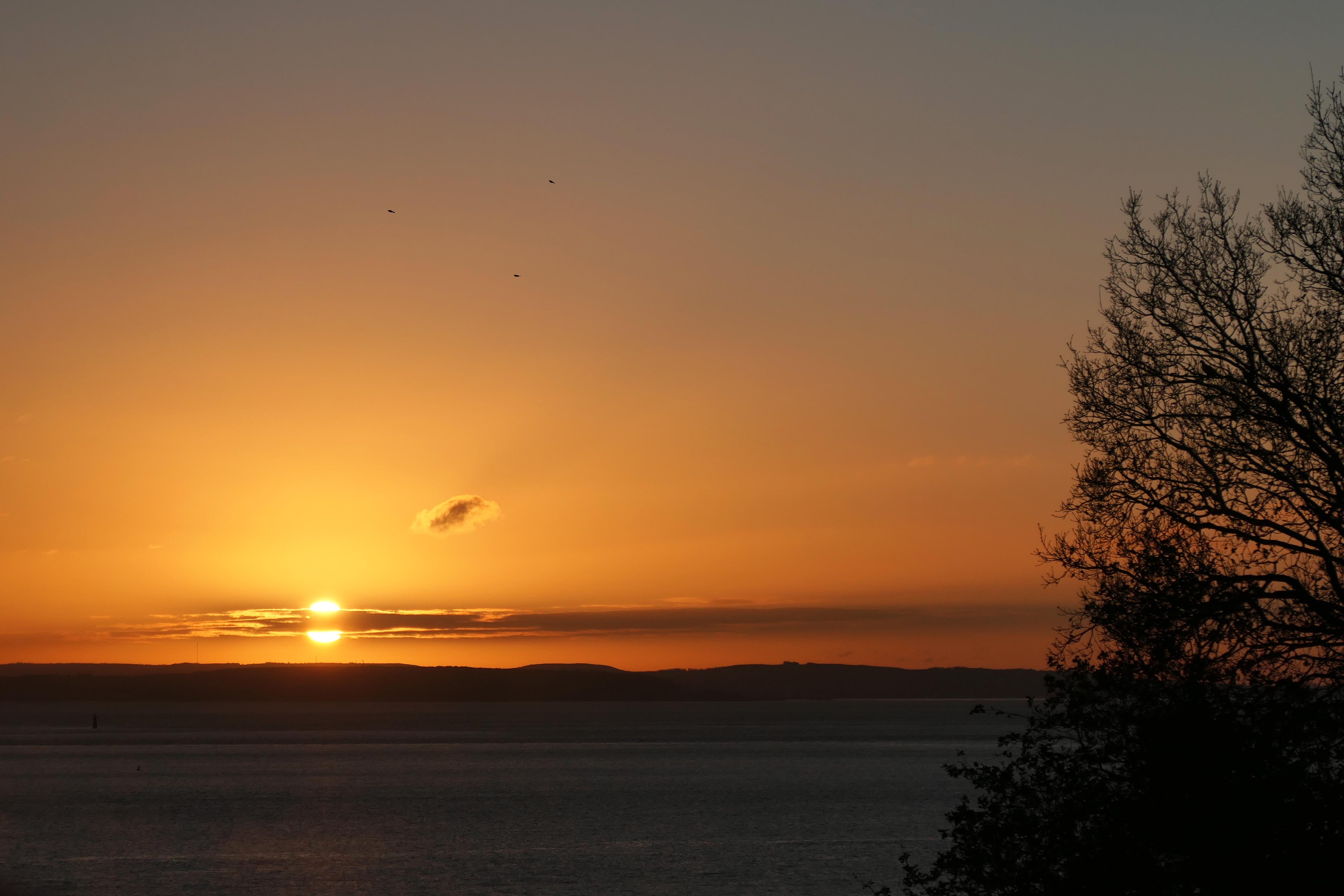
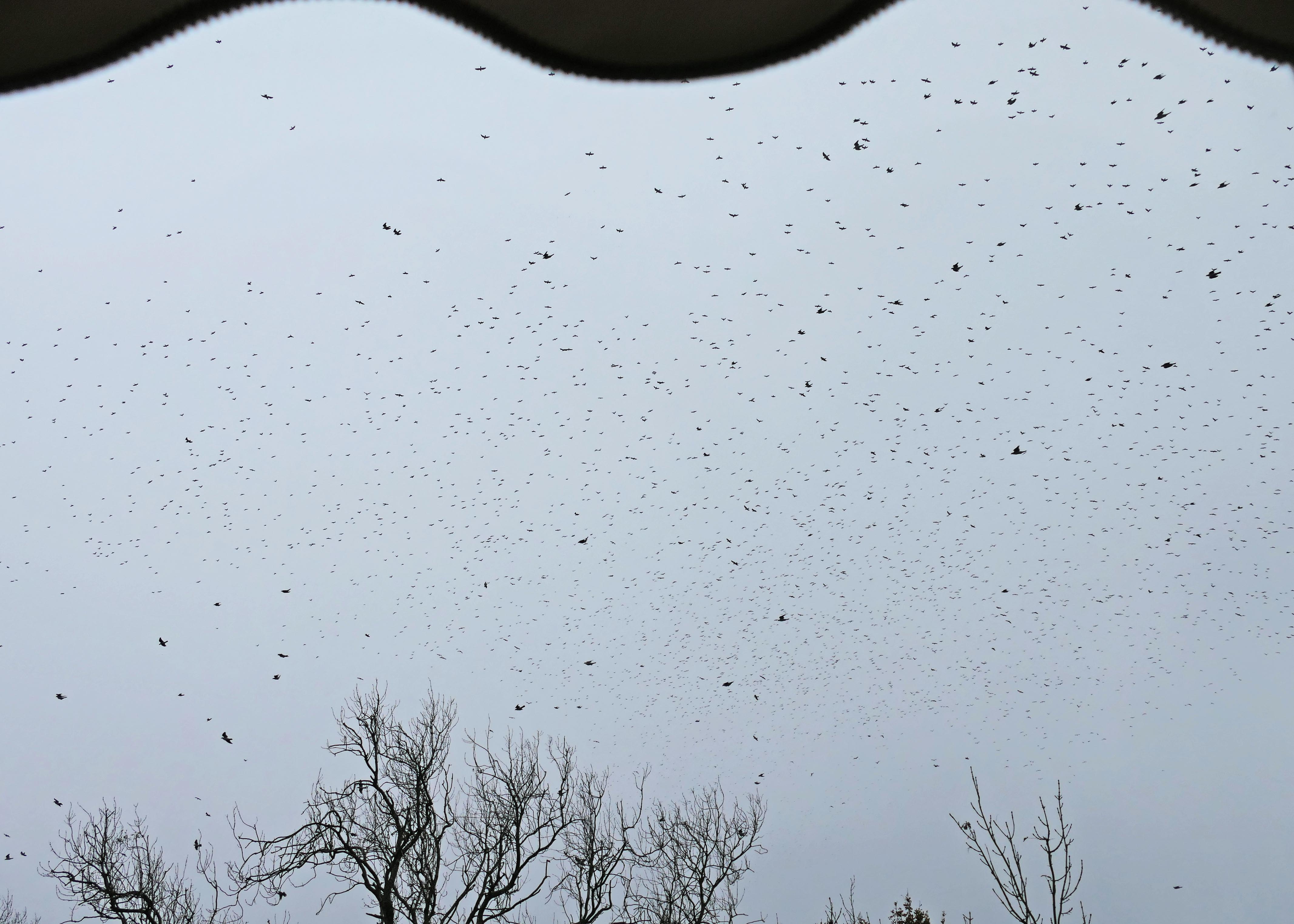
This time is 7.35am Monday morning, and the sun has just risen above the Mendip Hills, on the north Somerset coast.

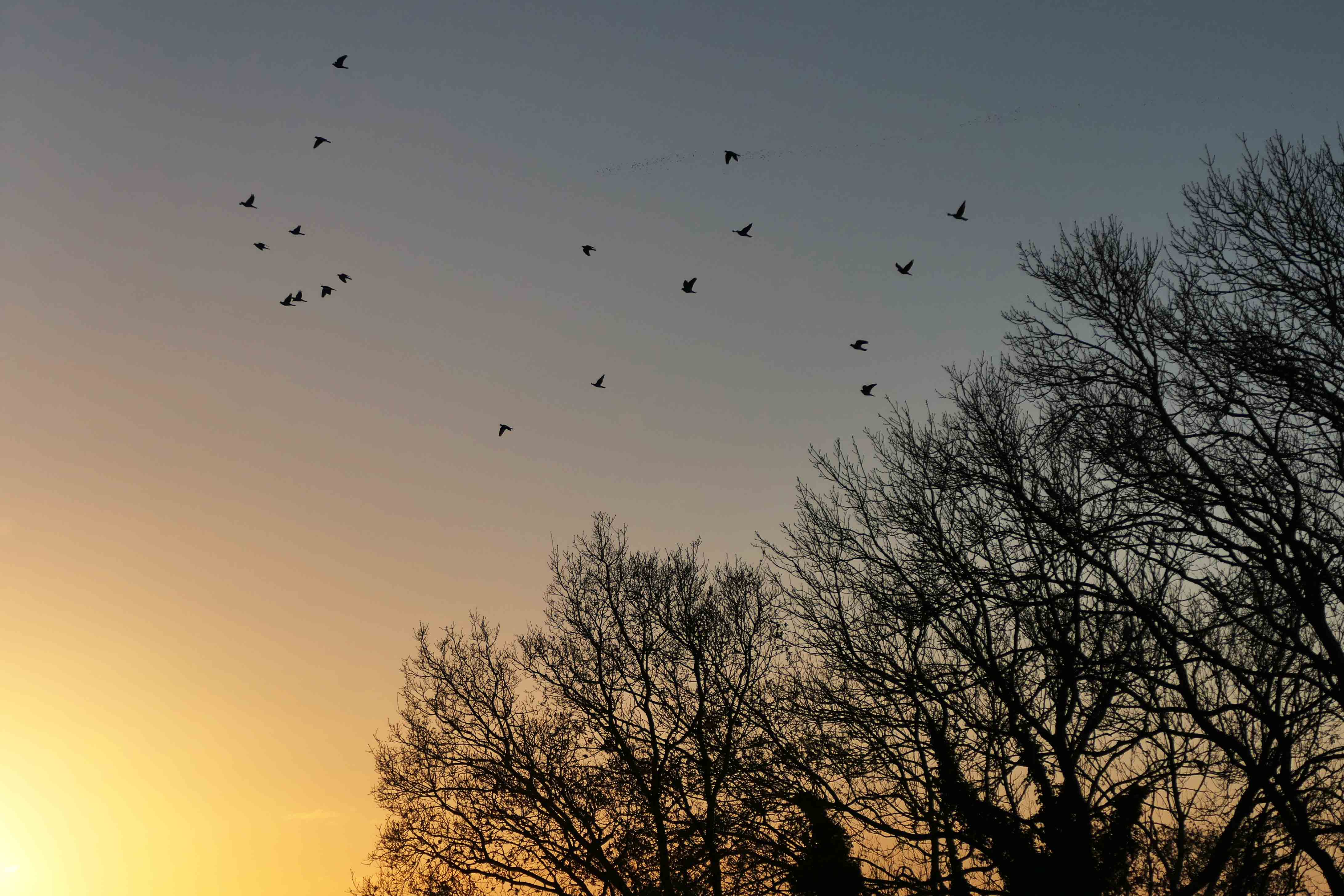
And the Woodpigeons have begun moving northwards again, along the south Wales coast, reversing the journey they made a week or so ago. Their flocks – at least, the ones I can see – are smaller, in the tens and hundreds, not the massive flocks of several thousand birds I saw moving south.

Did they get to Land’s End and think ‘You’ve gotta be kidding me?’ Do the young birds tag along for the British section of the flight as a learning exercise? Are Woodpigeons like sheep that just mindlessly follow a leader? Do they get caught up in the fun, the exhilaration, the sense of adventure but then realise their limitations when they meet the challenge of a sea crossing? Do they somehow realise the grass, and the berries, are not greener on the other side?

Just as with their migration south, so with the move of smaller numbers back north, no one knows why they do it; why some carry on with their migration while others return back the way they came, and whether they return to where their journey originated or whether they stop off to overwinter somewhere different along the way. Woodpigeons are much more mysterious than you might think!

Like Loading...

Woodpigeon migration

10 Monday Nov 2025

Posted by sconzani in autumn, birds

≈ 2 Comments

Tags

autumn migration, birding, birdwatching, British birds, Woodpigeon, Woodpigeon migration

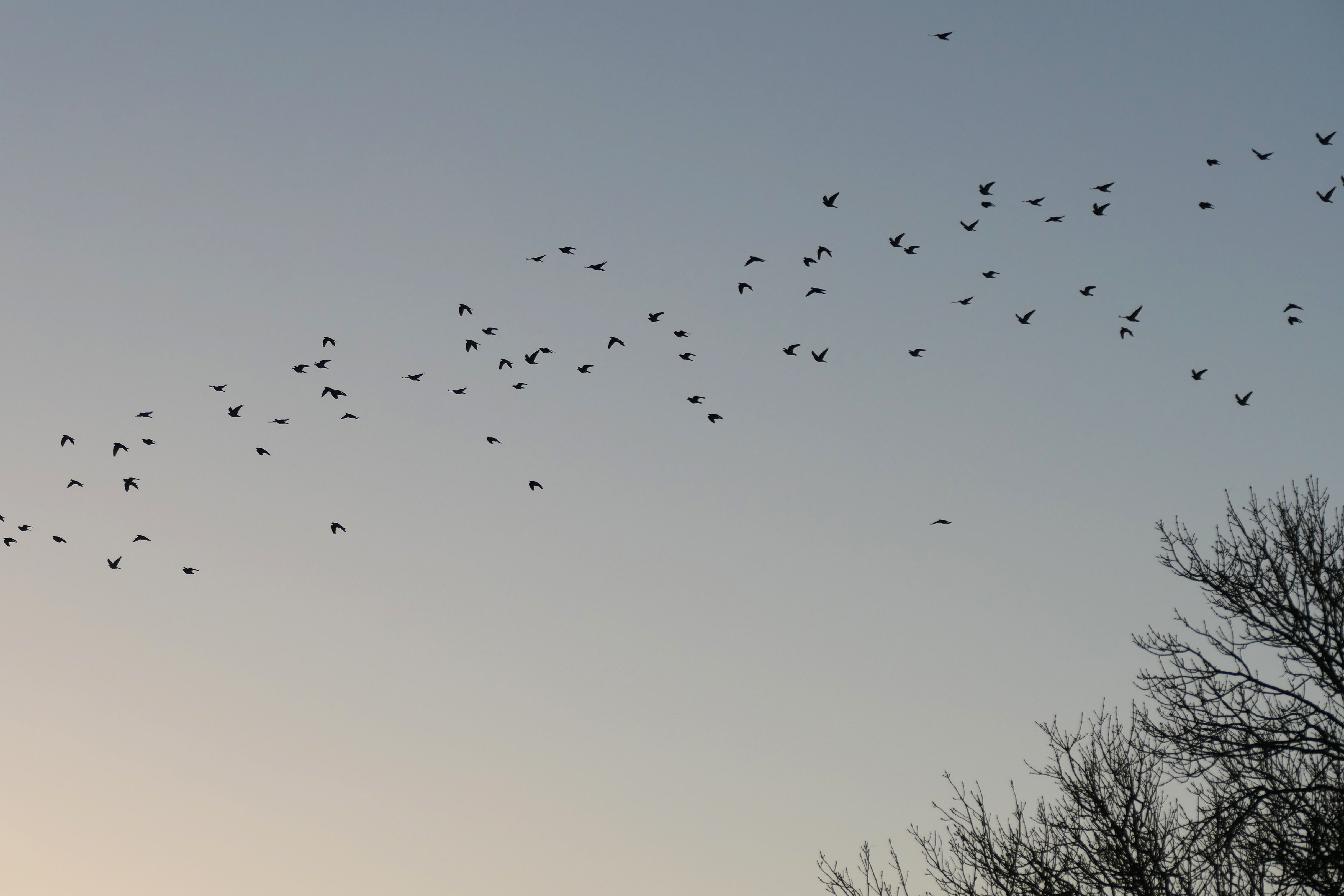
Last Friday morning, one of the autumn’s massive flocks of migrating Woodpigeons passed over my house, and what an incredible sight it was as they headed south along the coast. There were, perhaps, several thousand birds in the flock, which seemed an enormous number to me but, the very next day, there was a report on social media from a birder who’d had his second highest ever count on the Severn of 242,160 Woodpigeons, viewed from the sea wall at Goldcliff.

Despite the enormous quantities of birds that participate in these autumn migrations, they are something of a mystery in the bird world. No one truly knows where the birds originate from or where they’re going. Even expert birders have different theories; last week I read the blog of a well known ornithologist (Pigeons move in mysterious ways) who suggested ‘They may be Scandinavian birds heading for the Cork Oak forests of Iberia, as there is good evidence of migration from ringed birds but perhaps their visits through southern Britain are so rapid that no rings are recovered.’ But another birder, who seems to have a very good understanding of the autumn migration of most species of birds (see this presentation on YouTube: An Introduction to Visible Migration – Dan Webb), commented on the blog, writing that the Woodpigeons are

Almost certainly not Scandinavian birds. Most likely to be British birds moving to the Continent and south western Britain in search of acorns and mast backed up by observers recording departing flocks from Start Point in Devon and further evidenced by a spring return passage along the English side of the Severn in early spring. Scandinavian woodpigeon movement through the Continent peaks several weeks before ours.

Some, perhaps 100, of the Woodpigeons that flew over my house stopped off briefly in the local trees, until the local crows made a fuss and sent them packing.

Like Loading...

Lingering Chiffchaffs

03 Monday Nov 2025

Posted by sconzani in autumn, birds

≈ 5 Comments

Tags

autumn migration, bird migration, birding, birdwatching, British birds, Cardiff Bay birding, Chiffchaff

During my most recent circuit of Cardiff Bay, one day last week, I counted at least nine Chiffchaffs, and I’m sure there were probably more.

Most of those Chiffchaffs that intended to migrate should have moved through by now so it’s likely that these remaining birds will linger a while longer, possibly right through the winter, if the weather doesn’t get too cold. It’s lovely to see and hear them still dotting about the trees.

Like Loading...

This year’s Wheatears

04 Saturday Oct 2025

Posted by sconzani in autumn, birds

≈ 4 Comments

Tags

autumn migration, birding, birdwatching, British birds, British chats, Cardiff Bay birding, Wheatear, Wheatear migration, Wheatears on passage

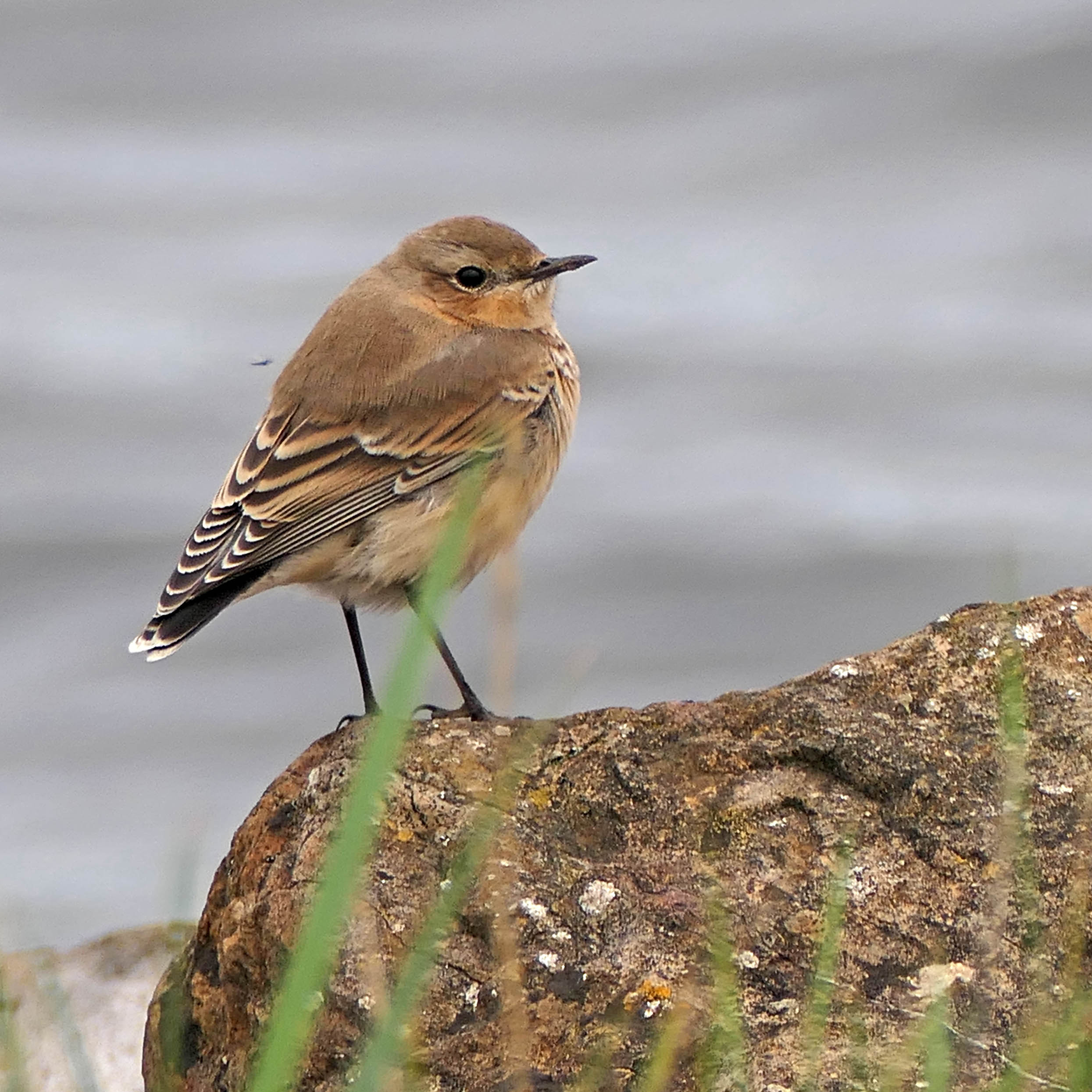
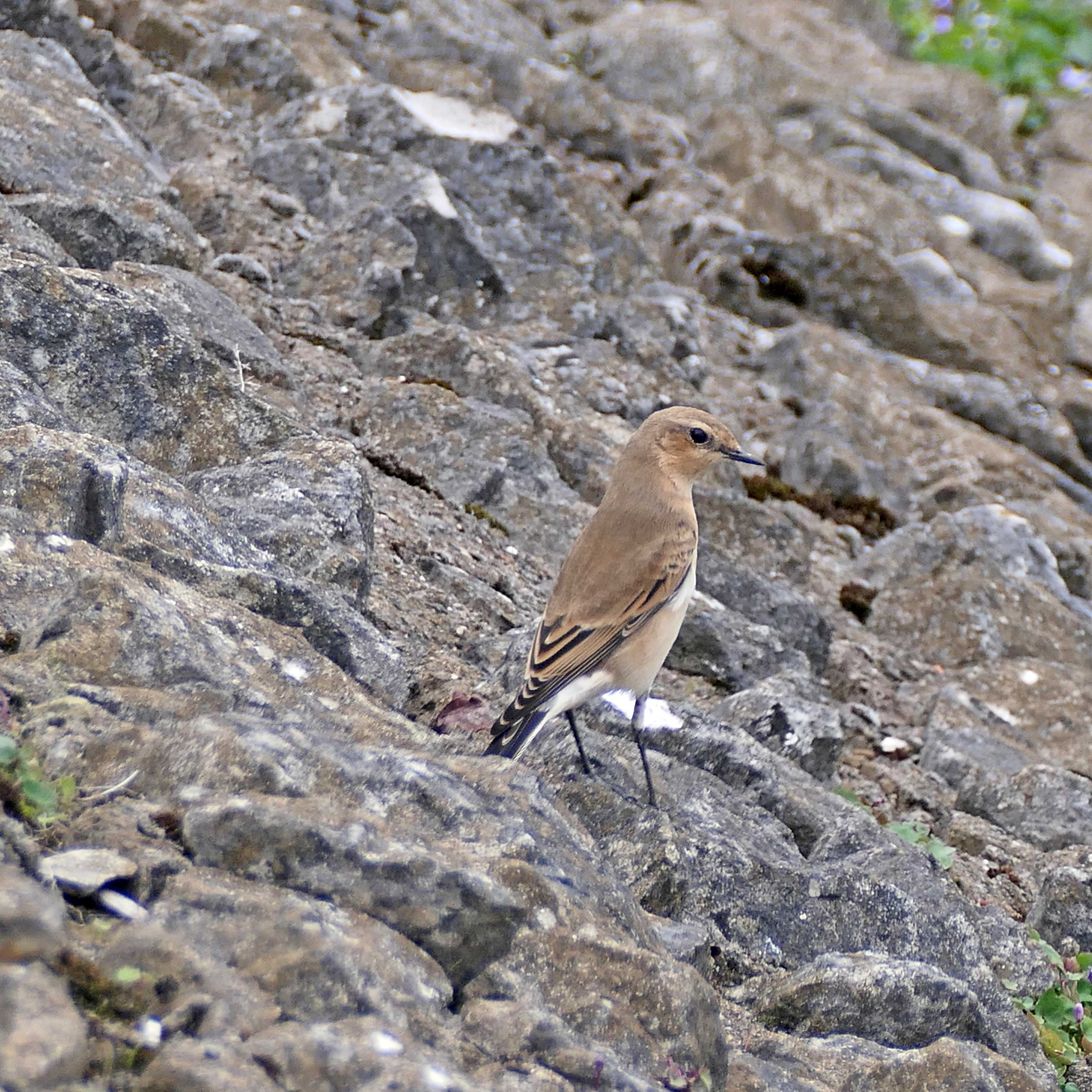
Judging by the numbers I’ve been seeing in Cardiff Bay during this autumn’s migration, Wheatears have benefitted from a good breeding season.

These birds don’t breed locally, preferring the wide open spaces and heathland in upland areas like the Brecon Beacons National Park (Bannau Brycheiniog) and the Snowdonia National Park (Eryri).

As well as northern England and parts of Scotland, Wales is a stronghold for the British population of Wheatear, together with other members of the chat family, the Whinchat and Stonechat. This was confirmed by a specialised survey conducted by volunteers across Wales in 2012-2013; the BTO website has an abridged scientific paper available on its website for anyone interested in reading further.

We are lucky to see them on passage, as they pause briefly on the south Wales coast before heading across the Bristol Channel en route to their over-wintering locations in Africa.

Did you know their name refers to their white rear end, which flashes when they fly and is one of the best ways to identify a Wheatear seen at distance? Wheat comes from the Old English for ‘white’ and ear comes from the word for ‘arse’.

Like Loading...

A juvenile Garganey

25 Thursday Sep 2025

Posted by sconzani in autumn, birds

≈ Leave a comment

Tags

Anas querquedula, autumn migration, birding, birdwatching, British birds, Cardiff birding, Garganey, juvenile Garganey, Llanishen Reservoir

It’s all about the birds at the moment, with autumn migration in full swing and with my local area fortunate to be enjoying visits by some stunning birds, like this one.

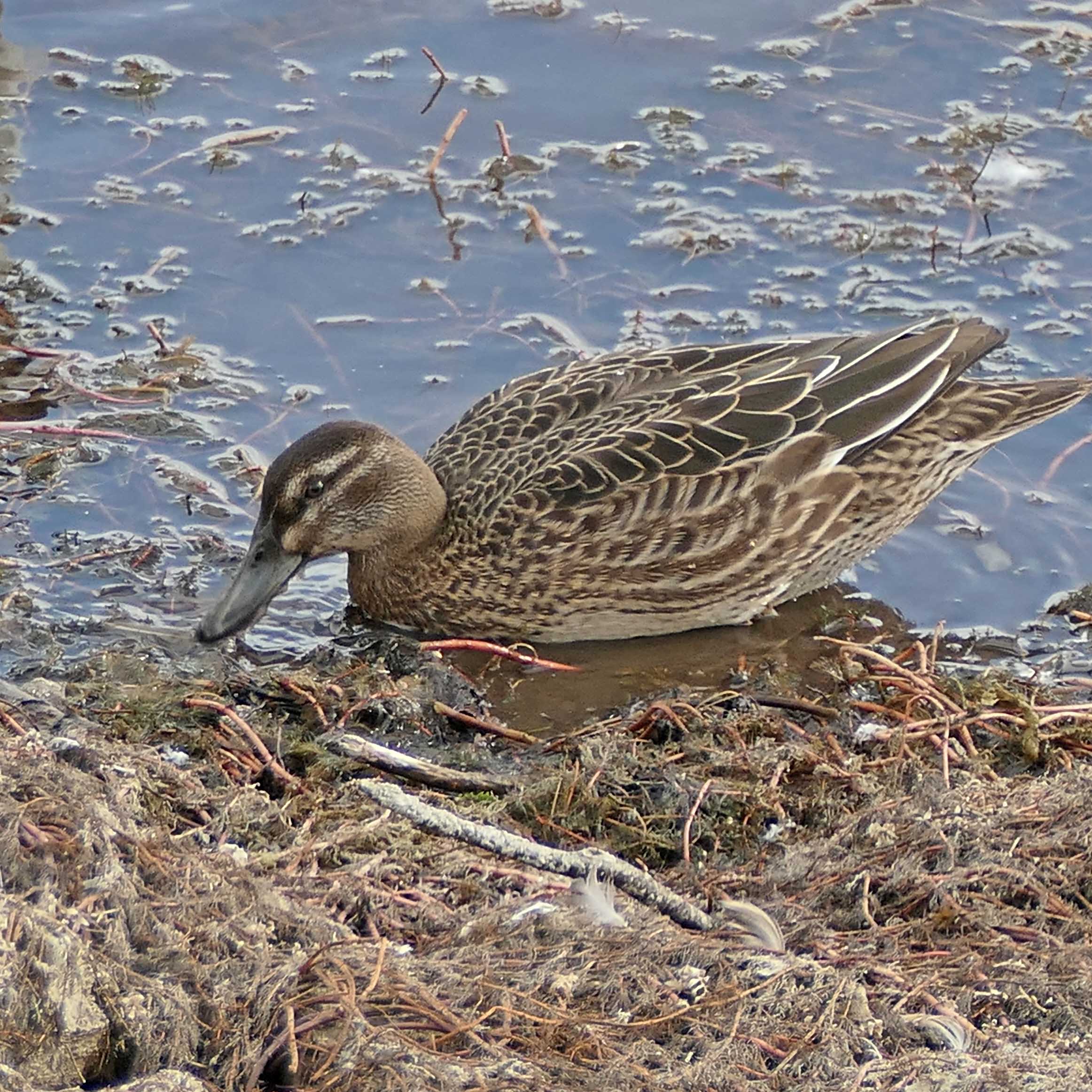
The day I saw the three phalaropes there was another cracking bird at Cardiff’s northern reservoirs but it was a bit overshadowed by the three rarities, and I doubt many birders bothered to walk to the far end of the adjacent Llanishen Reservoir to see this one, a beautiful juvenile Garganey (Anas querquedula).

An explanation is necessary here; I actually visited the reservoirs the day before I saw the Grey and Red-necked phalaropes, as one Grey phalarope had been reported that day. But it was literally blowing a gale so I had difficulty staying upright, let alone trying to scan the choppy waters with my binoculars to find a small grey bird. In fact, it was so windy that a marquee, which had been pegged close to the visitor centre, had come loose from its pegs and blown across the path to the reservoir where the phalarope had been reported, so the path had been closed off for safety reasons. Seeing that, I gave up looking but, enjoying the fresh air and wanting the exercise, I stomped briskly around Llanishen Reservoir. And, during that walk, I spotted the Garganey (the photo below was taken that first day) but, as I’m a bit hopeless with female/eclipse/juvenile ducks, I didn’t initially trust my identification skills. Amazingly, I’d got it right this time.

Like Loading...

Two Grey phalaropes

24 Wednesday Sep 2025

Posted by sconzani in autumn, birds

≈ 3 Comments

Tags

autumn migration, birding, birdwatching, British birds, Cardiff birding, Grey phalarope, Lisvane Reservoir

This is a follow up to yesterday’s blog about the amazing sighting of three phalaropes on Cardiff’s Lisvane Reservoir last Tuesday – in fact, the birds stayed at the site for several days, giving happy birders from miles around the chance to see them, though, incredibly, there has been a much larger number of Grey phalaropes than normal in the waters around south Wales over the past ten days, driven inland by stormy seas.

North Wales birder, journalist and author Julian Hughes reported on social media on Sunday: ‘With several sites in Wales hosting multiple Grey Phalaropes over the weekend, 2025 is now the best year this century, with 112.’ Surprisingly, this is not the highest number on record; it seems 1960 ‘will take some beating, however. 227 were seen from The Smalls lighthouse alone in just 12 days, during 18-29 September’.

As I mentioned in yesterday’s blog about the Red-necked phalarope, the Grey phalarope is slightly larger than its cousin, and its bill is slightly thicker. The photo below shows all three phalaropes together, the Red-necked is the bird in between the two Greys.

Although these three birds were mostly foraging along the edge of the reservoir, phalaropes usually feed while sitting on the water and their feeding style is quite unique for wading birds: they often swim round in circles, which disturbs the water, stirring up insects, midges or other water-loving invertebrates. Amazingly, since seeing the three phalaropes on Lisvane Reservoir last week, we’ve had another local sighting, a single Grey phalarope on the River Taff near central Cardiff. This bird was a little more distant but I took a few short video clips of it feeding – not spinning right round due to the force of the water, but actively, constantly weaving from side to side as it picked at tasty titbits.

Like Loading...

Lifer: Red-necked phalarope

23 Tuesday Sep 2025

Posted by sconzani in autumn, birds

≈ Leave a comment

Tags

autumn migration, birding, birdwatching, British birds, Cardiff birding, Grey phalarope, Lisvane Reservoir, phalarope species, Phalaropus lobatus, Red-necked phalarope

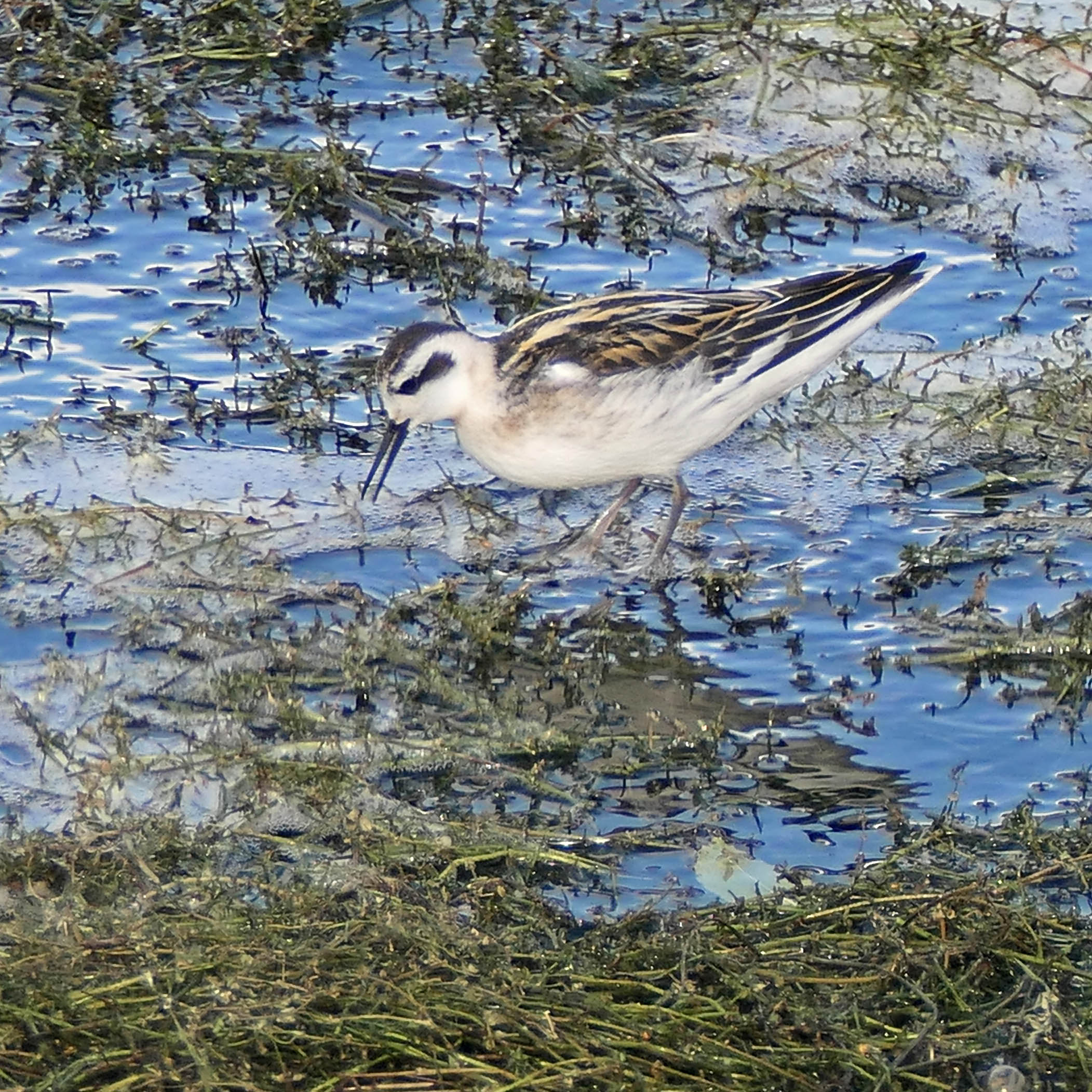
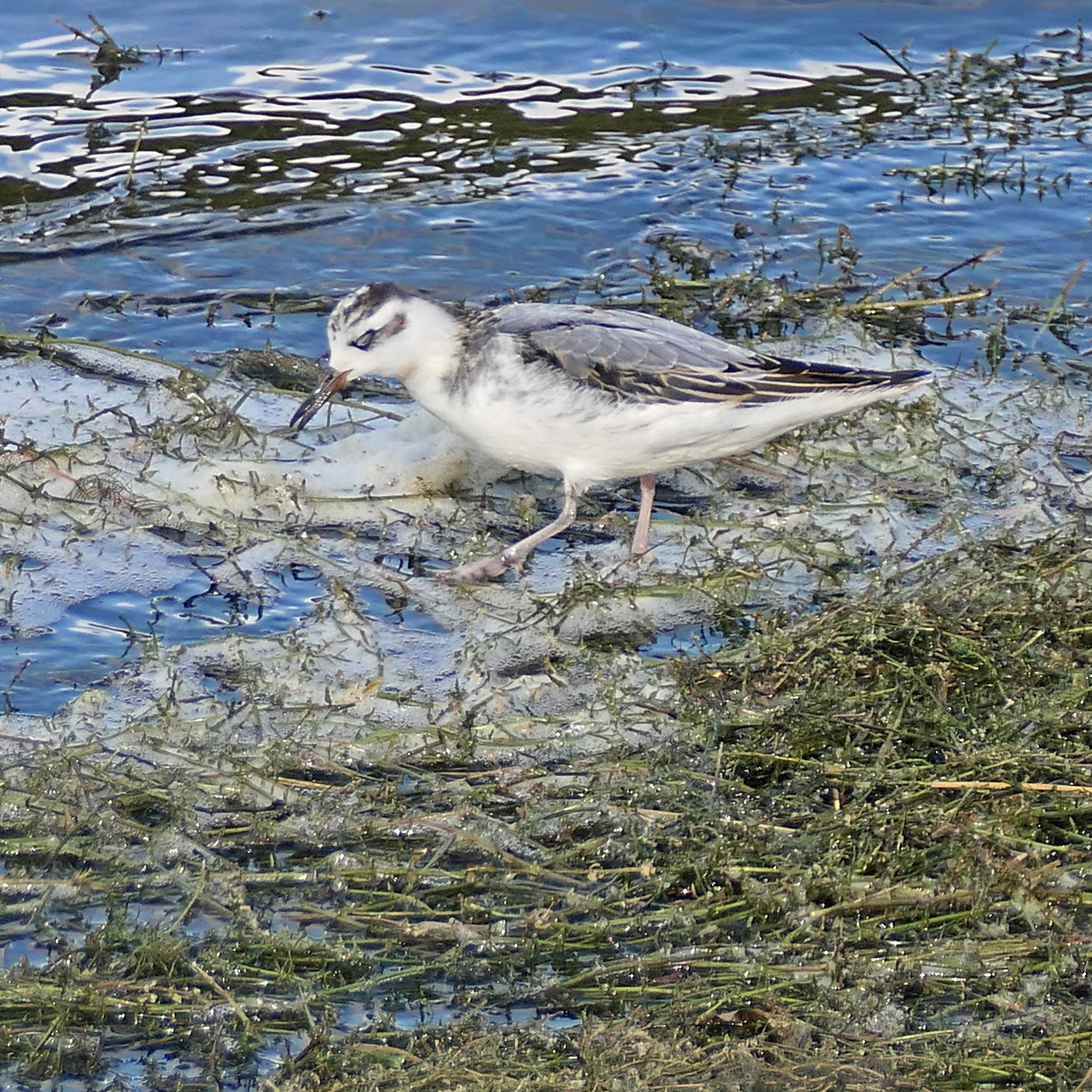
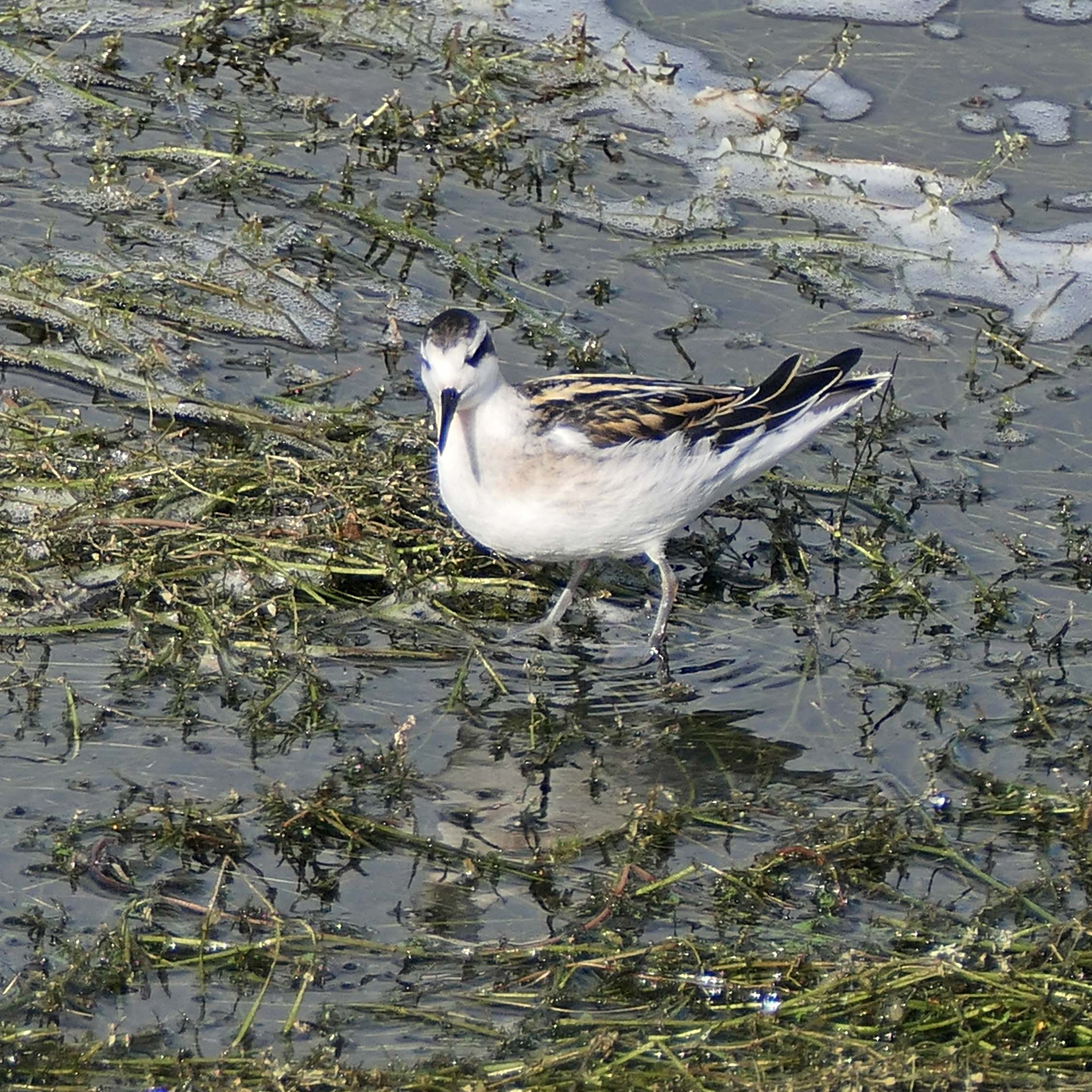
Last week was a red-letter week for Glamorgan birds. I didn’t get to see all the rare birds on offer but I did spend several wonderful hours at the Lisvane and Llanishen reservoirs in north Cardiff last Tuesday, in the company of smiling birders and interested locals, as we feasted our eyes on the three visiting phalaropes, two Grey (more on them tomorrow) and my first ever Red-necked.

The Red-necked phalarope (Phalaropus lobatus) is a bird of contradictions: it’s a wader that prefers to swim; the female is the more brightly coloured gender; she fights other females for the most desirable males to mate with; she lays her eggs then leaves the male to raise their young, sometimes even finding another male to breed with.

You may notice that this bird has no sign of the red neck it is named for; the characteristic rusty coloured neck band can only be seen on female birds during the breeding season. The presence of yellow stripes on this bird’s back marked it as a juvenile; in fact, looking at the illustrations in my guide book, this looks like a juvenile bird moulting to first winter colouring.

It can be difficult to tell Red-necked and Grey phalaropes apart so it was particularly informative, especially for folks like me who had not seen both species before, to see both species together. The Red-necked phalarope was noticeably smaller than the Grey, and it had a thinner, sharper bill. (There will be a photo of the two species side by side in tomorrow’s blog.)

Due to a significant decline in its breeding population in Britain, where it nests in very small numbers in northern Scotland and on the western isles, the Red-necked phalarope is red-listed. The bird also breeds in Siberia, Scandinavia, Iceland and North America, and the very rare sightings we’re lucky enough to see in southern Britain are birds on migration; apparently, European breeding birds winter in the Arabian Sea. What a wonderful treat it was to enjoy very close views of this rare bird!

Like Loading...

King Canut’s favourite bird?

17 Wednesday Sep 2025

Posted by sconzani in autumn, birds

≈ Leave a comment

Tags

autumn migration, birding, birdwatching, British birds, Calidris canutus, Ferrybridge birding, Knot

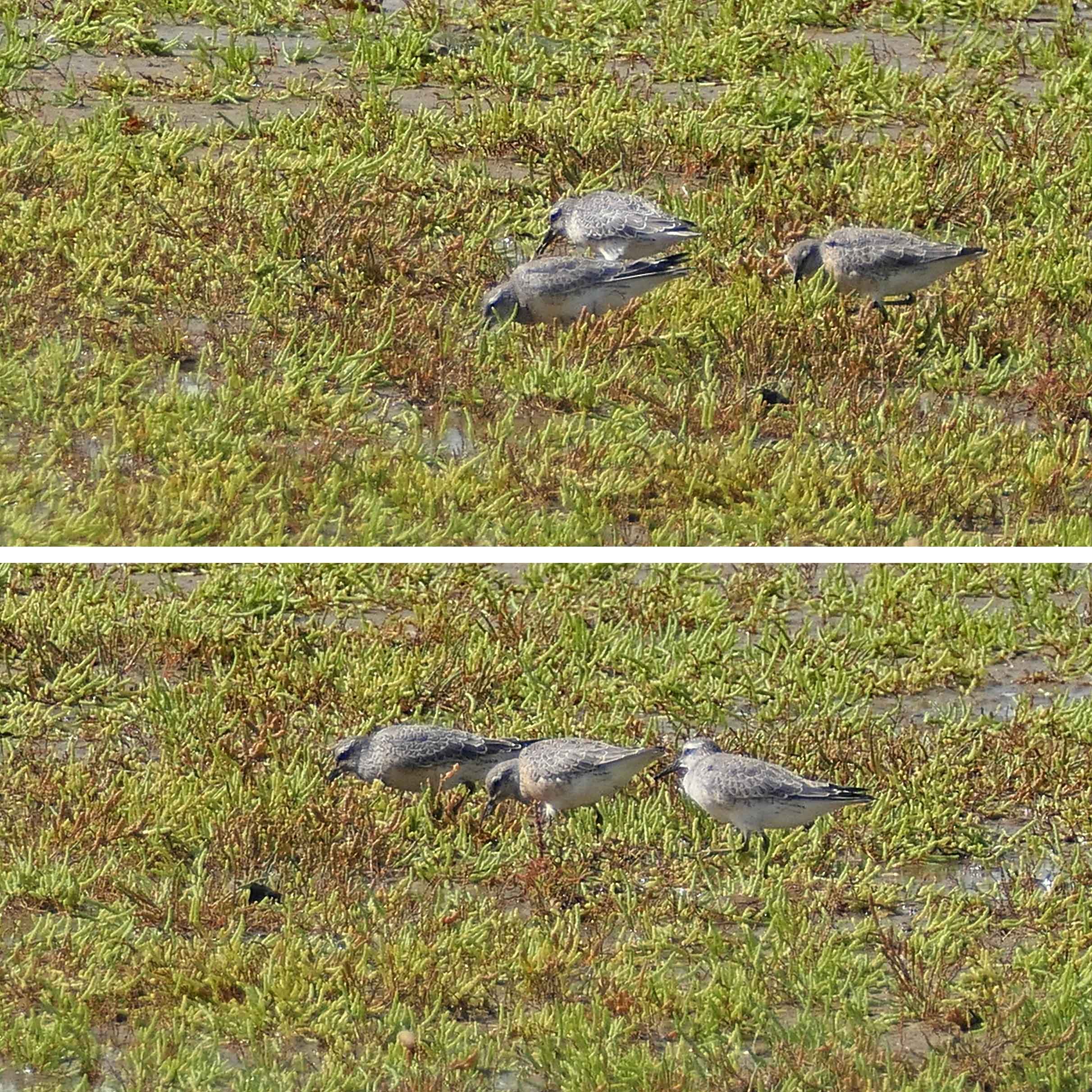
My afternoon being battered by the strong winds at Ferrybridge also provided several other nice bird sightings, including these Knot (Calidris canutus).

I was intrigued by the epithet canutus in the bird’s scientific name; fortunately, Stefan Buczacki provides the answer in Fauna Britannica:

The name ‘Knot’ imitates the rather low, grunt-like call and dates back to the fifteenth century … there is a poorly founded belief that the name ‘Knot’ has some connection with King Canut and that the Knots were his favourite birds (hence Calidris canutus), presumably on the basis that they behave much as he did, foolishly playing around the tide-line.

The Knot is a relatively large wading bird – you can see a size comparison with a Dunlin in my first photograph. Both birds belong to the genus Calidris, a long list of waders that look rather alike and all breed in the high Arctic. We are fortunate to enjoy their presence during the winter months, when large flocks often form around parts of the British coastline. You can read more about the Knot on the BTO website.

Like Loading...

Sanderlings, sand runners

16 Tuesday Sep 2025

Posted by sconzani in birds

≈ Leave a comment

Tags

autumn migration, birding, birdwatching, British birds, Calidris alba, Ferrybridge birding, Sanderling, Wild Chesil Centre

My plans for my days in and around Weymouth last week didn’t quite go as I expected due to the weather: we had a lot of heavy rain showers, and the westerly winds, especially on Thursday, were gale-force and relentless. Luckily, I had gone prepared, with full wet weather gear – I wasn’t going to let rain spoil my birding plans.

I knew from previous visits that the area in front of the Wild Chesil Centre, at Ferrybridge, on the causeway between Weymouth and the Isle of Portland, was a good place to look for birds, especially as autumn migration is well underway now in Britain. I checked that area on Tuesday afternoon, but the tide was already well out so the birds were too distant for me to see with binoculars.

So, on Thursday, after spending the morning at RSPB Lodmoor, I caught the bus to Ferrybridge around noon. Though I could barely stand up in the wind, my tide timing was perfect; as I walked from the bus stop to the Wild Chesil Centre, water was just starting to recede from the mud flats below the footpath, and already a little flock of 12 Turnstones and 2 Sanderling were foraging for any tiny sea creatures that were being exposed by the receding waters.

I admit to being a big fan of waders, which I seldom see in my local area, and I find the Sanderling (Calidris alba) especially attractive, both in looks and in habits; they forage by scurrying rapidly back and forth across the sand and mud. Though photographing these birds was a challenge – I had to wrap my arms around the railing adjacent to the footpath for stability, I managed to get some reasonably decent images of this pair and, though I was very close to them and they were certainly aware of my presence, they were intent on feeding and my photography didn’t disturb them. I clung to those railings for a good 15 minutes, watching their antics, their interaction with the Turnstones and each other, their feeding methods. It was quite magical!

Like Loading...

Ruffing it

13 Saturday Sep 2025

Posted by sconzani in autumn, birds

≈ Leave a comment

Tags

autumn migration, birding, birdwatching, British birds, female Ruff, Philomachus pugnax, Reeve, RSPB Lodmoor, Ruff

I’ve just returned from another few days on England’s south coast, in Weymouth and on the Isle of Portland, this time, due to its being migration season and the often inclement weather, mostly birding. And, despite the blasting westerly winds and the frequent heavy rain, it was wonderful!

After arriving mid afternoon on Monday, I took myself on a walk – to stretch my old body after five hours’ train travel and to get some fresh air in my lungs – to RSPB Lodmoor. It’s such a convenient distance from Weymouth town centre and always has something to delight my birding senses. And Monday’s visit did not disappoint, providing my first sighting this year of Ruff (Philomachus pugnax).

The story of the Ruff in Britain is a sad one. My guide book recounts that Ruff became extinct as a breeding bird in Britain around 1850, though it managed to re-establish itself in East Anglia for a time in the 1960s. Now, few if any young are raised in Britain, with the bird’s main breeding grounds ranging from Scandinavia as far east as Siberia, and south as far as the Netherlands. Though some Ruff are present throughout the year in Britain, and several hundred over-winter here, most are seen during autumn migration when the birds pass through on their way to Africa, some flying as far as South Africa.

The Ruff is red-listed in Britain and is globally threatened, as its population has declined dramatically and its breeding and non-breeding ranges have also declined. The two birds I saw are female (though the species name is Ruff, the male bird is known as Ruff due to its extraordinary breeding plumage, while the female is known as Reeve). I felt very privileged to enjoy reasonably close sightings of these large waders and spent quite a lot of time watching them feeding up for their long journey south.

Like Loading...
← Older posts

About me

sconzani

sconzani

I'm a writer and photographer; researcher and blogger; birder and nature lover; countryside rambler and city strider; volunteer and biodiversity recorder.

View Full Profile →

Follow earthstar on WordPress.com

Enter your email address to follow this blog and receive notifications of new posts by email.

Recent blog posts

  • M is for mite December 18, 2025
  • L is for lepidopteran lifers December 17, 2025
  • K is for Keeled skimmers December 16, 2025
  • J is for Jersey tiger December 15, 2025
  • I is for Ichneumon December 14, 2025

From the archives

COPYRIGHT

Unless otherwise acknowledged, the text and photographs on this blog are my own and are subject to international copyright. Nothing may be downloaded or copied without my permission.

Fellow Earth Stars!

  • Unknown's avatar
  • Unknown's avatar
  • Unknown's avatar
  • Unknown's avatar
  • Unknown's avatar
  • Unknown's avatar
  • Unknown's avatar
  • Unknown's avatar
  • Unknown's avatar
  • Unknown's avatar
  • Unknown's avatar
  • Unknown's avatar
  • Unknown's avatar
  • Unknown's avatar
  • Unknown's avatar
  • Unknown's avatar
  • Unknown's avatar
  • Unknown's avatar
  • Unknown's avatar
  • Unknown's avatar
  • Unknown's avatar
  • Unknown's avatar
  • Unknown's avatar
  • Unknown's avatar
  • Unknown's avatar
  • Unknown's avatar
  • Unknown's avatar
  • Unknown's avatar
  • Unknown's avatar
  • Unknown's avatar
  • Unknown's avatar
  • Unknown's avatar
  • Unknown's avatar
  • Unknown's avatar
  • Unknown's avatar
  • Unknown's avatar
  • Unknown's avatar
  • Unknown's avatar
  • Unknown's avatar
  • Unknown's avatar
  • Unknown's avatar
  • Unknown's avatar
  • Unknown's avatar
  • Unknown's avatar
  • Unknown's avatar
  • Unknown's avatar
  • Unknown's avatar
  • Unknown's avatar
  • Unknown's avatar
  • Unknown's avatar

Blog at WordPress.com.

Privacy & Cookies: This site uses cookies. By continuing to use this website, you agree to their use.
To find out more, including how to control cookies, see here: Cookie Policy
  • Subscribe Subscribed
    • earthstar
    • Join 667 other subscribers
    • Already have a WordPress.com account? Log in now.
    • earthstar
    • Subscribe Subscribed
    • Sign up
    • Log in
    • Report this content
    • View site in Reader
    • Manage subscriptions
    • Collapse this bar
 

Loading Comments...
 

You must be logged in to post a comment.

    %d