There must have been something in the air today as all the Grey wagtails I saw were bathing. These are two of the five, enjoying some splashing good fun.
321/365 Bath time fun
17 Sunday Nov 2019

17 Sunday Nov 2019
There must have been something in the air today as all the Grey wagtails I saw were bathing. These are two of the five, enjoying some splashing good fun.
15 Friday Nov 2019
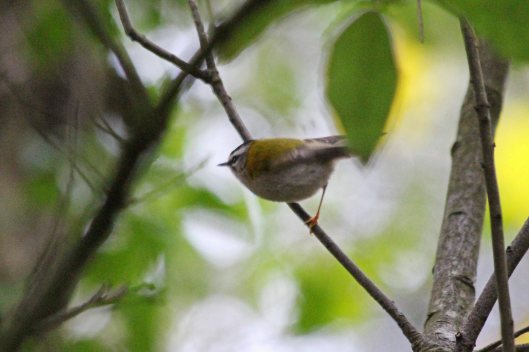
This Firecrest has been spotted by a few birders in St Mary’s Well Bay since late October but, twice previously, I’d failed to spot it when I’d walked back to Penarth from Sully. As that’s one of my favourite local walks, I went that way again today … and, this time, success! I only managed this one blurry photo before the tiny bird headed up in to the treetops in the company of two equally tiny Goldcrests and I lost sight of it. I will keep trying for more sightings though, whenever I walk this way again.
14 Thursday Nov 2019
Tags
birding, birdwatching, British birds, English idioms, Mallard, rain, reflections in water, wet weather
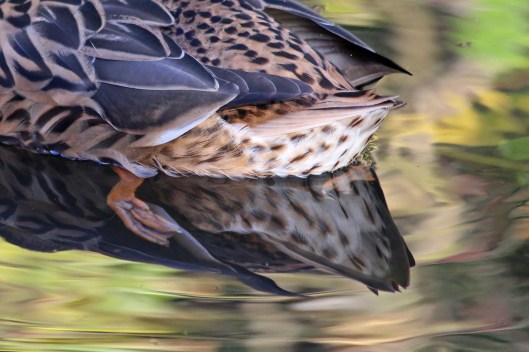
I always thought the expression ‘It’s good weather for ducks’ referred to wet weather: persistent rain leading to the formation of large pools of water that a duck might enjoy swimming in. Turns out I may have been wrong, and it may well have come from comments by the shooters of waterfowl, who find wet weather better for their hunting.

I certainly hope this gorgeous female Mallard doesn’t meet that fate. How could anyone shoot such a beautiful bottom … er, creature?
13 Wednesday Nov 2019
When I was looking for the Snow bunting at The Knap in Barry yesterday, I also spotted this hybrid duck. It’s probably the same hybrid that’s been seen in The Knap lake and at Cosmeston, both this winter and last, always in the company of Tufted ducks. But what is it?
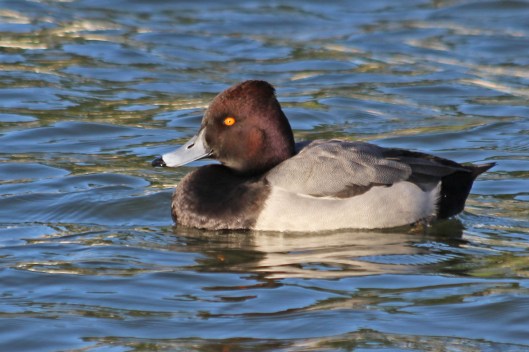
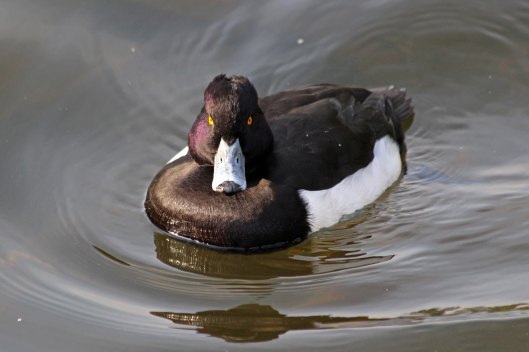
Well, the fact that it associates with the Tufted ducks may mean one of its parents was a Tufty. Here’s a photo of a male Tufted duck (Aythya fuligula). As you can see, the hybrid doesn’t have the dark back or the head tuft of this bird.

The lighter back feathers of the hybrid resemble those of a Scaup (Aythya marila) and the occasional Scaup has been seen associating with the local Tufties, so maybe…. Here’s a male Scaup for comparison.

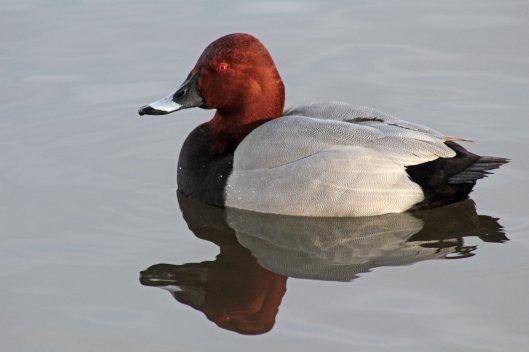
There’s still the issue of the hybrid’s head shape and colour, which to my inexperienced eyes look rather like a male Pochard (Aythya ferina), a duck that also has light grey back plumage (photo below). So, maybe we have a Tufted duck – Pochard hybrid?
The reality is that no one can be 100% sure of the hybrid’s parentage without a DNA test, but it’s always interesting to see birds like this and speculate. What do you think?
12 Tuesday Nov 2019
On 3 November a Snow bunting was found at Porthcawl on the south Wales coast. Yesterday a Snow bunting, almost certainly the same bird, was found at Barry, another seaside town but about 25 miles further east and much closer to where I live. So, first thing this morning I caught the train to Barry to try and see my first ever Snow bunting.

Not long after I arrived at the spot where it was last seen, I met up with a birding friend, Graham, who was also looking for the bird. It had obviously moved off but where? Graham headed one way, I headed another, and not long afterwards I spotted Graham waving to me from the other end of the lake. He’d found it!
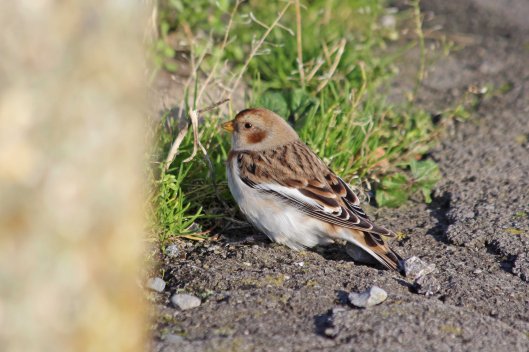
We spent the next 30 minutes watching as it scurried along the edge of a tarmac path, around some bollards, across a roundabout, up and down the long concrete steps leading to the old harbour, on to rocks on the shore, and then back up to the path again.
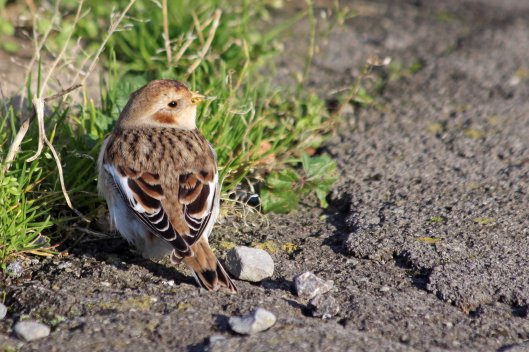
It appeared fearless and quite tame, approaching to within a couple of feet of where we stood or sat, though the reality is that, because Snow buntings breed in the Arctic, this little bird might have had no previous exposure to humans or an urban environment and simply didn’t realise it should be afraid of (some) humans and wary of cars, bikes or dogs.

Fortunately, it was finding plenty of food so, although these birds are quite rare in south Wales, there’s no reason why it couldn’t survive its Welsh adventure and either make its way to join other over-wintering Snow buntings on England’s east coast or spend the winter alone and head back to the Arctic next spring. It was a great privilege to spend time with this lovely creature today and I certainly hope it manages to live long and prosper!

11 Monday Nov 2019
This Sparrowhawk was hunting over the west paddock at Cosmeston Lakes Country Park this afternoon. Three times I spotted it flying past, landing to check out potential prey and then moving on again empty-clawed.

Sparrowhawks always look smaller than I expect but they are incredibly aerobatic and agile in the air. I watched this one swerving at speed between branches that were swaying in the strong breeze. Once it landed, it was rather ungainly, struggling to maintain its balance on bushes as it peered down for the bird it had been chasing.


What a pleasure it was to watch such a magnificent creature! I’m only sorry the photos don’t do it justice – it was a little too distant.

08 Friday Nov 2019
Tags
birding, birdwatching, British birds, Forest Farm, Forest Farm Nature Reserve, jackdaw, Jay, Moorhen
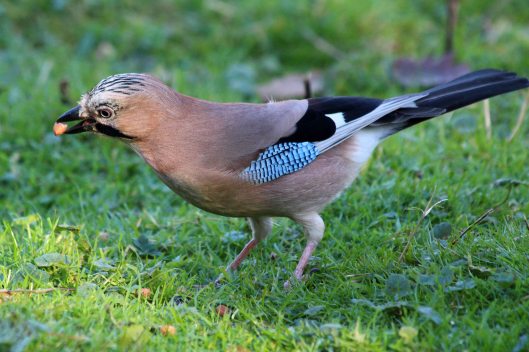
Today was a glorious autumn day so I took myself to Forest Farm Nature Reserve for a long walk. I popped in to the hide to see what birds were around but it was very quiet.

Apart from a couple of Moorhens in the pond, the only feathered creatures I saw were these, a Jackdaw and a Jay that had been enticed down on to the grass in front of the hide by the peanuts another birder had thrown out for them.

05 Tuesday Nov 2019
I know I blogged about Starlings just last week but I simply can’t resist giving them more air time. This is partly because the Starlings I encountered in London’s St James’s Park last week allowed close views and I managed to get some reasonable photos of their stunning plumage.
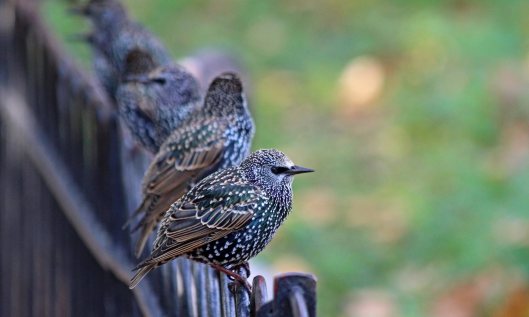


But it’s also because when I was on a Glamorgan Bird Club field trip to Rhossili last Sunday, we were treated to some small murmurations and one of these gatherings looks to my eye just like a seal – did I mention I have a vivid imagination?!

04 Monday Nov 2019
Tags
Bahama pintail, birding, birding in London, birds in St James's Park London, birdwatching, Black swan, Canada goose, Coot, Egyptian Goose, Greylag goose, Moorhen, Ring-necked parakeet, Shelduck, St James's Park London, Tufted duck
I’ve just returned from three days with two friends in London. We were doing touristy things as our Australian friend hadn’t been to London before but I did manage some birding during our walk through St James’s Park. Though abundant and obviously breeding locally, most of these cannot really be classed as wild birds but they’re lovely just the same.

The birds we saw included Mute swan and Black swan, Black-headed gull, Moorhen, Egyptian and Greylag and Canada goose, Feral pigeon, Shelduck and some species of white duck that I don’t recognise, Grey heron, Ring-necked parakeet, Bahama pintail, Tufted duck and more. Unfortunately, the resident Pelicans were hiding on their island so we saw them not.


03 Sunday Nov 2019
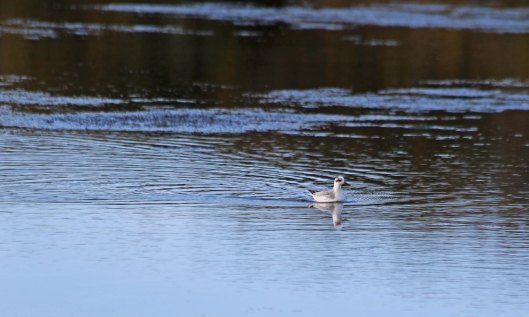
A week ago today, during a short break in East Sussex, I enjoyed a superb long walk with two good friends at Cuckmere Haven, and there was a wonderful birding bonus, a Grey phalarope (Phalaropus fulicarius).

I knew the bird had been seen in the vicinity but Cuckmere is a huge area and was then much submerged after recent heavy rains so I didn’t expect to spot one small bird amongst the many enjoying all the water. My luck was in though, as this lovely creature was swimming about on a pool of water quite close to the main path down to the beach.

This was only my second ever sighting of a Grey phalarope, as these are birds that breed in the Arctic, spend most of their lives far out at sea, and only usually turn up around the British coast after bad weather.

 earthstar
You must be logged in to post a comment.