• ABOUT
  • BIRDING 2018
  • Birding 2019
  • BLOG POSTS
  • Butterflies 2018
  • Resources

earthstar

~ a celebration of nature

earthstar

Tag Archives: birding

Watching me, watching you

21 Thursday Dec 2017

Posted by sconzani in birds, nature

≈ Leave a comment

Tags

birding, birdwatching, British birds, Canada goose

171221 Canada goose

Watching me, watching you (ah-haa)
There is nothing you can do
Watching me, watching you (ah-haa)
You just have to face it, it’s time you flew
Waking up is never easy, I know, but you have to go
Watching me, watching you
It’s really time you flew.
(with apologies to Benny, Björn, Stig and Abba)

Like Loading...

Oyks, for short

18 Monday Dec 2017

Posted by sconzani in birds, nature

≈ Leave a comment

Tags

birding, birdwatching, British birds, Dickie bird, Gilliebride, Oyks, Oystercatchers, Sea nanpie, Seapie

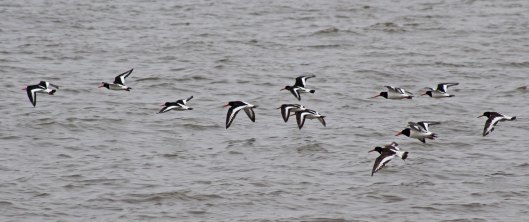
The Oystercatcher is one of the few British waders that I knew well, and whose call I could already easily recognise, before I came to live in this country because we also have Oystercatchers in New Zealand and, indeed, they can be found on coastlines around much of the world. They are not all the same species though – the most common New Zealand species is Haematopus unicolor and the British bird is Haematopus ostralegus.

171218 oystercatchers (3)
171218 oystercatchers (2)

Those Latin names are a bit of a mouthful so let’s stick with Oystercatcher, though whoever gave them that name wasn’t very observant – they don’t actually ‘catch’ anything and, while I’m sure they enjoy breaking open the odd oyster when they find one, they eat all types of shellfish.

171218 oystercatchers (4)

I particularly like some of their vernacular names (listed in Stefan Buczacki’s Fauna Britannica): in Norfolk they’re known as Dickie birds; in Scotland Gilliebrides (the word ‘bride’ is a reference to St Bridget of Ireland who was said to be the patron saint of birds and carried an Oystercatcher in each hand); in Yorkshire they’re known as Sea nanpies; and as Seapies (‘pie’, meaning black and white, just as in the name Magpie), in Lancashire, Norfolk, Gloucestershire and Cornwall; and in northern England, appropriately enough, they’re called Mussel crackers. But, if all those names are too much to remember, we could just call them Oyks, for short.

171218 oystercatchers (1)

Like Loading...

Off on holiday

17 Sunday Dec 2017

Posted by sconzani in birds, nature

≈ Leave a comment

Tags

birding, birdwatching, British birds, Cormorant

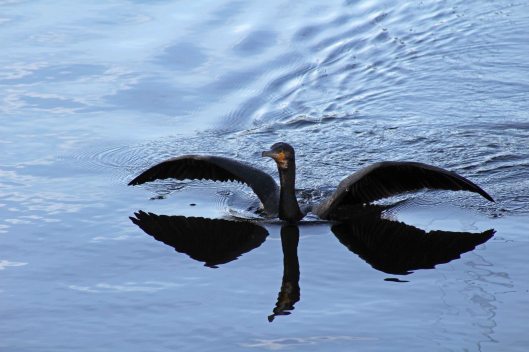
Going …

171217 Cormorant (1)

Going …

171217 Cormorant (2)

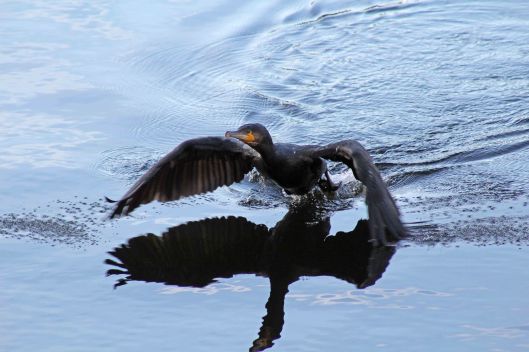
Gone!
Like the Cormorant in these photos, I’m off. I’ll be away from now until late December, staying with a friend for the Christmas holidays. My blog posts will continue but I won’t be replying to comments until I return. See you soon and happy holidays!

Like Loading...

A bird’s eye view

16 Saturday Dec 2017

Posted by sconzani in birds, nature

≈ 4 Comments

Tags

bird vision, bird's eye, birding, birds' eyes, birdwatching, British birds, eyes, eyes of birds

171216 birds' eyes (1)
171216 birds' eyes (2)
171216 birds' eyes (3)

When I was searching out photos for my post on animals’ eyes back in November,  I became fascinated with the variety of eye shapes and colours. Then I began to look more closely at birds’ eyes. Did you know …

171216 birds' eyes (4)
171216 birds' eyes (5)
171216 birds' eyes (6)

Birds have the largest eyes relative to their size in the animal kingdom.

171216 birds' eyes (7)
171216 birds' eyes (8)
171216 birds' eyes (9)

Excellent vision is essential to birds so that they can avoid collisions and capture their prey.

171216 birds' eyes (10)
171216 birds' eyes (11)
171216 birds' eyes (12)

Birds don’t have as many eye muscles as humans so they can’t roll their eyes around as much as we can. That, plus the fact that the eyes of many birds are set at the sides of their heads, means they have to turn their heads to one side or the other, or bob their heads up and down, to see close things better.

171216 birds' eyes (13)
171216 birds' eyes (14)
171216 birds' eyes (15)

Birds have an extra set of photo receptors within their eyes, called double cones, which, scientists speculate, probably means they have much better colour vision that most animals.

171216 birds' eyes (16)
171216 birds' eyes (17)
171216 birds' eyes (18)

Birds have three eyelids: the third eyelid is a nictitating membrane that moves horizontally across the eye both to lubricate it and to protect it from injury.

171216 birds' eyes (19)
171216 birds' eyes (20)
171216 birds' eyes (21)
171216 birds' eyes (22)
171216 birds' eyes (23)
171216 birds' eyes (24)
171216 birds' eyes (25)
171216 birds' eyes (26)
171216 birds' eyes (27)
Like Loading...

A murder of crows

14 Thursday Dec 2017

Posted by sconzani in birds, nature

≈ Leave a comment

Tags

birding, birdwatching, Carrion crow, crow, crows and death, crows as weather forecasters, murder of crows, sayings about crows, superstitions about crows

I wonder if school children still get taught the weird and wonderful collective nouns for the various groupings of birds, animals and fishes. No one really knows the origins of some of these nouns but it’s easy to speculate about how a murder of crows came about. Humans have always been wary and suspicious of scavenging black birds like ravens and crows, thinking them harbingers of death and associating them with battlefields and cemeteries. Even the Ancient Greeks painted black birds in their pottery scenes, an inclusion that indicated someone was going to die, or had already died.

171214 black bird on pottery
171214 crow (3)

There are old folk tales and superstitions saying that crows will appear in large numbers in places where people or animals are expected soon to die. And just as there are rhymes associated with magpies, there is also one covering the number of crows seen together at one time: ‘One’s unlucky / Two’s lucky / Three is health / Four is wealth / Five is sickness / And six is death’.

171214 crow (1)

I’ve also read that crows make good weather forecasters. In Fauna Britannica, Buczacki writes that ‘In Wales, an indication of strong winds is given by ravens and crows flapping their wings and flying at a great height, while sunshine will follow if they are seen flying towards the sun.’ I’ll be interested to find out whether any of my Welsh friends have heard of this and, indeed, to know whether this forecasting method works! And I wonder if a crow standing in water means it’s going to rain.

171214 crow (4)

Like Loading...

A walk in Nant Fawr

12 Tuesday Dec 2017

Posted by sconzani in birds, nature, walks, winter

≈ 6 Comments

Tags

birding, birdwatching, blackbird, Brambling, British birds, Carrion crow, dunnock, Great spotted woodpecker, house sparrow, Nant Fawr, Nant Fawr Woodlands, Song thrush, walk in the woods

There was snow on the hills north of Cardiff on Saturday morning so I thought I’d try to get closer to take some photos but also combine that with a good walk. So, I jumped on a train and went a’stomping. Unfortunately, by the time I got closer, the snow had mostly melted away, which wasn’t helped by the fact that the footpath I had intended to follow, along the eastern side of the Llanishen and Lisvane reservoirs, was closed. So, I contented myself with a wander through the Nant Fawr woodlands and, afterwards, a circuit of Roath Park Lake.

171212 Nant Fawr (1)

I was rewarded with the sight, albeit distant, of my very first Brambling – my shots are heavily cropped so you’ll just have to take my word for it!

171212 Nant Fawr (2) Brambling
171212 Nant Fawr (3) Brambling

A small group of House sparrows was dotting about in bushes at the woodland edge.

171212 Nant Fawr (4) Sparrow
171212 Nant Fawr (5) Sparrow
171212 Nant Fawr (6) Sparrow
171212 Nant Fawr (7) Sparrow

I always thought Carrion crows were mostly solitary birds but this flock of about 20 proved me wrong.

171212 Nant Fawr (8) Crow171212 Nant Fawr (9) Crow

The wood-tapping of this Great spotted woodpecker helped direct my lens in its direction, as did the singing of this little Dunnock.

171212 Nant Fawr (10) Great spotted woodpecker
171212 Nant Fawr (11) Dunnock

And Song thrushes and Blackbirds were enjoying a hearty lunch of berries along the hedgerows.

171212 Nant Fawr (12) Blackbird
171212 Nant Fawr (13) Song thrush
Like Loading...

Mr and Mrs Sprawk

09 Saturday Dec 2017

Posted by sconzani in birds, nature

≈ 2 Comments

Tags

Accipiter nissus, bird of prey, birding, birdwatching, British birds, Forest Farm, Forest Farm Nature Reserve, Sparrowhawk

On Thursday I showed you many of the lovely birds I had seen at Forest Farm Nature Reserve the previous week but I left out two of them, the male and female Sparrowhawk I saw several times during my meanderings.

171209 sparrowhawk (3)

The Sparrowhawk (Accipiter nissus) is a bird of prey and it was easy to tell when this pair was near by as all the other birds froze, no movement, no sound. A hawker of sparrows it may be but, as Buczacki points out in Fauna Britannica, they could just as easily be called finchhawk, larkhawk or tithawk ‘because this bird really is a scourge of small feathered things’. That sounds like bad news for the smaller birds but, interestingly, the RSPB reports that ‘long term scientific studies have shown that sparrowhawks generally have no or little impact on songbird populations’. (Read more here.)

171209 sparrowhawk (1)
171209 sparrowhawk (2)

I only managed to get distant fuzzy photos (above) of the male bird, with his distinctive blue-grey back and wings, but my shots of the female are a little better. I’ve seen Sparrowhawks many times before but have not had views as close as these, and they were magnificent to watch as they flew at high speed through the thick spreading branches in the woodland by the canal.

171209 sparrowhawk (4)

Like Loading...

Birds of Forest Farm

07 Thursday Dec 2017

Posted by sconzani in birds, nature, walks

≈ 7 Comments

Tags

birding, birdwatching, British birds, bullfinch, dunnock, Forest Farm, Forest Farm Nature Reserve, Great spotted woodpecker, Great tit, Kingfisher, long-tailed tit, Moorhen, robin, treecreeper

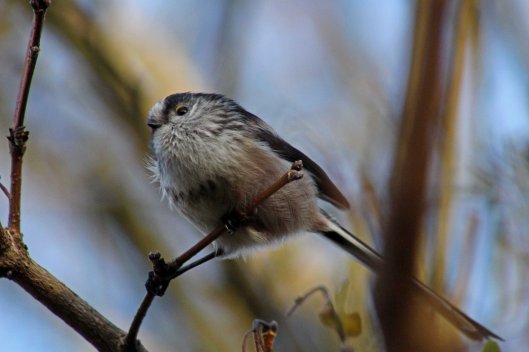
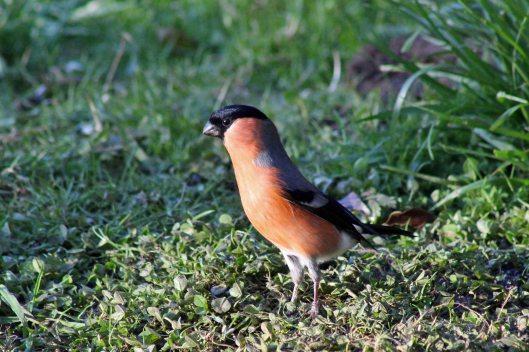
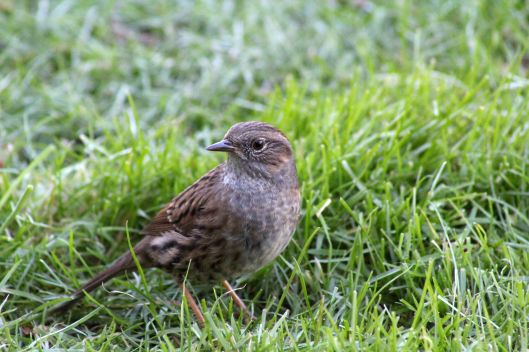
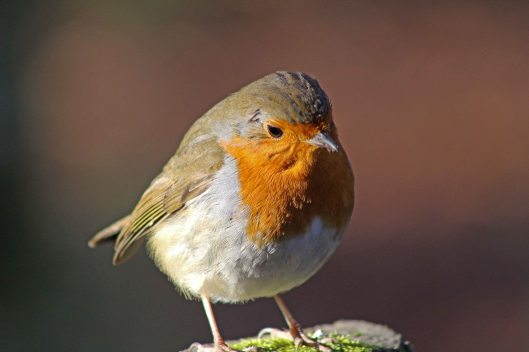
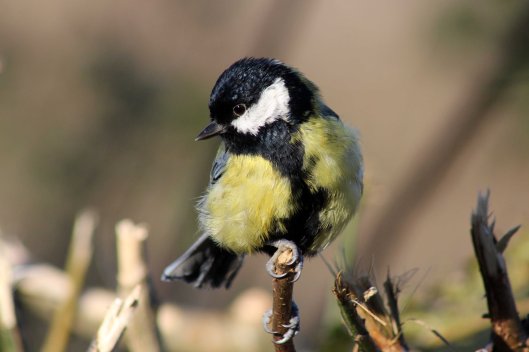
I had a meeting at Forest Farm last Friday so, of course, I took the opportunity while I was there to have a wander around the trails and along the Glamorganshire Canal. And it was wonderful, though I did come away feeling a little guilty. We’d had a week of low temperatures, with overnight frosts, and there was a bitterly cold wind blowing. It was obvious the wee birds were cold and hungry but I hadn’t taken any seed with me. Here are a Long-tailed tit, a male Bullfinch, a Dunnock, a Robin and a Great tit.

171207 Forest farm birds (1)171207 Forest farm birds (2)171207 Forest farm birds (3)171207 Forest farm birds (4)171207 Forest farm birds (5)

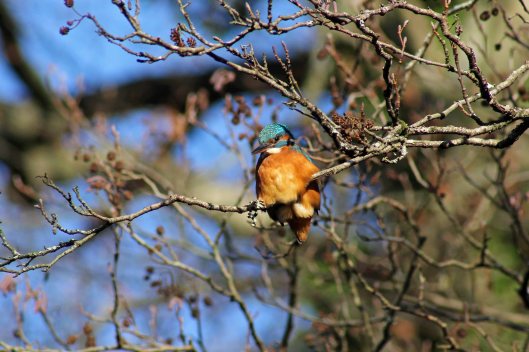
The water of the canal was sheltered from the breeze and very still, making for some stunning reflections (thank you little Moorhen). And I was treated to excellent views of a female Kingfisher, who sat for at least 15 minutes on her branch. From the way her feathers were fluffed up and she was hunched over her ‘toes’, I figure she was feeling the cold as well.

171207 Forest farm birds (8)171207 Forest farm birds (7)

The Great spotted woodpecker was a treat, as were the Treecreepers – at least four of them, perhaps a family group, were actively scuttling up the branches in one small area by the canal. It was a grand day – my meeting went well and the birding was even better than expected!

171207 Forest farm birds (9)171207 Forest farm birds (6)

Like Loading...

Birding at Rhaslas Pond

05 Tuesday Dec 2017

Posted by sconzani in autumn, birds, nature

≈ 4 Comments

Tags

birding, birdwatching, Fieldfare, Glamorgan Bird Club, Mute swan, Rhaslas Pond, Stonechat, Tufted duck, Wigeon

Following on from yesterday’s blog about our Glamorgan Bird Club outing to Parc Cwm Darran, we also ventured a little further north to Rhaslas Pond. I presume the pond is artificial as it has a grassed-over dam running along the north side and concrete to the south. And, as it has a large black drainage tube running into it, I further presume that is, or was, a reservoir or drainage pond for the huge ugly blight on the nearby landscape that is the Dowlais opencast coal mine.

171205 Rhaslas Pond (7)

171205 Rhaslas Pond (4)

Despite its industrial connections, the pond is very well frequented by both local and passage-migrating birds, and it provides a crucial breeding site for endangered birds like Lapwing and Curlew, amongst many others. As soon as we arrived, we saw birds – a friendly little Stonechat was dotting around in the long grass, a Pied wagtail was ‘chissicking’ merrily along the old roadway, and I saw my first-ever Fieldfares grazing on the grass nearby.

171205 Rhaslas Pond (1)
171205 Rhaslas Pond (2)

On the pond itself, there were lots of Wigeon, Tufted ducks, Mallards, Great crested grebes, my first-ever Goldeneyes, Lesser Black-backed and Herring Gulls, Goosander and a single Mute swan. We also saw Red kites flying overhead.

171205 Rhaslas Pond (5)171205 Rhaslas Pond (6)

Though this was another stunning location and the birds were sublime, there was a bitterly cold wind blowing so we didn’t linger too long. There are plans afoot to destroy this pond and the surrounding landscape to excavate another huge opencast mine. Let’s hope local authorities realise the madness of allowing such a mine and, rather than destroy the pond and surrounding land, recognise its environmental value and turn it into a local nature reserve for all to enjoy.

171205 Rhaslas Pond (3)

Like Loading...

Birding at Parc Cwm Darran

04 Monday Dec 2017

Posted by sconzani in birds, nature, parks, trees

≈ Leave a comment

Tags

birding, birdwatching, Crossbill, Glamorgan Bird Club, Indian runner, Parc Cwm Darran, Siskin, Welsh valleys

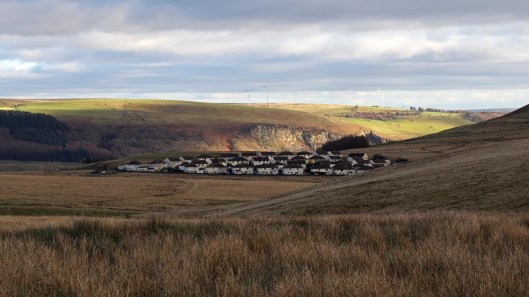
With temperatures hovering around zero and a brisk wind making it feel even colder, our eleven intrepid Glamorgan Bird Club members were well wrapped up for last Wednesday’s birding at Parc Cwm Darran (and Rhaslas Pond, but more on that tomorrow).
171204 Parc Cwm Darran (1)

171204 Parc Cwm Darran (2)
171204 Parc Cwm Darran (3)

171204 Parc Cwm Darran (4)

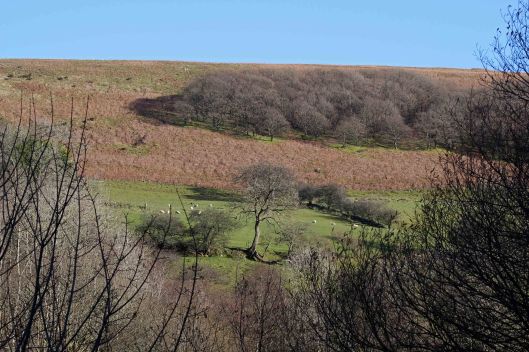
The park sits on the site of the old Ogilvie Colliery, which was active from the early 1900s through to 1975, and various buildings and pieces of mining equipment can still be seen around the park. The scenery was stunning, with glorious old trees dotting the landscape, as well as areas of more modern plantings. One of our party was a local and showed us one particularly beautiful hidden gem, a waterfall cascading over the edge of an old quarry into a pool below.

171204 Parc Cwm Darran (5)171204 Parc Cwm Darran (6)

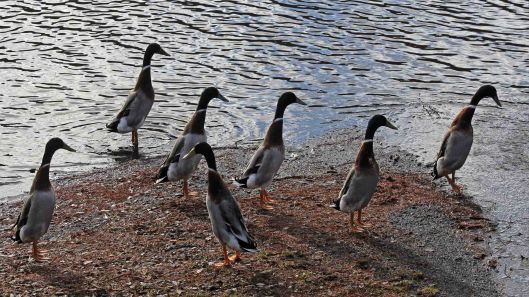
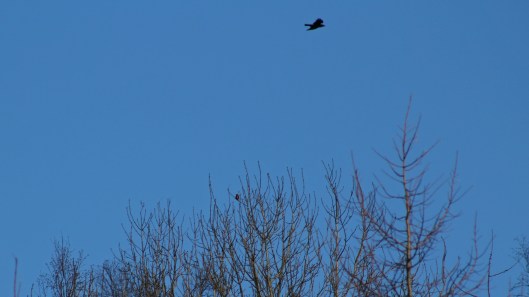
The birds were also stunning. We had good ’scope views of a male Crossbill, who sat very obligingly atop a tree for at least 15 minutes; we enjoyed sightings of several birds of prey, including four Buzzards, one of which came flying low straight towards us out of the quarry; and I saw my first Siskins of the year. The prize for the most entertaining birds, however, must go to the seven Indian runners, who looked to have Mallard in their genes and who were convinced we had food for them, running out of the water towards us and following us as we walked along the lake edge. 
171204 Parc Cwm Darran (7)

You’ll have to take my word about the dot in the tree being a Crossbill!

171204 Parc Cwm Darran (8)171204 Parc Cwm Darran (9)

The full list of the 44 species seen (these include those seen at Rhaslas Pond) is: Mute Swan, Canada Goose, Wigeon, Mallard, Tufted Duck, Goldeneye, Goosander, Great Crested Grebe, Red Kite, Sparrowhawk, Buzzard, Kestrel, Coot, Lesser Black-backed Gull, Herring Gull, Green Woodpecker, Magpie, Jay, Rook, Carrion Crow, Raven, Blue Tit, Great Tit, Coal Tit, Long-tailed Tit, Goldcrest, Wren, Nuthatch, Treecreeper, Starling, Blackbird, Fieldfare, Song Thrush, Mistle Thrush, Robin, Stonechat, Dunnock, House Sparrow, Pied Wagtail, Chaffinch, Goldfinch, Siskin, Common Crossbill and Bullfinch, though somehow I missed the Green woodpecker and Mistle thrushes.

Like Loading...
← Older posts
Newer posts →

About me

sconzani

sconzani

I'm a writer and photographer; researcher and blogger; birder and nature lover; countryside rambler and city strider; volunteer and biodiversity recorder.

View Full Profile →

Follow earthstar on WordPress.com

Enter your email address to follow this blog and receive notifications of new posts by email.

Recent blog posts

  • Little owl March 31, 2026
  • Distant seabirds March 30, 2026
  • Thrift March 29, 2026
  • The day of the Wheatears March 28, 2026
  • Cetti’s warblers March 27, 2026

From the archives

COPYRIGHT

Unless otherwise acknowledged, the text and photographs on this blog are my own and are subject to international copyright. Nothing may be downloaded or copied without my permission.

Fellow Earth Stars!

  • Unknown's avatar
  • Unknown's avatar
  • Unknown's avatar
  • Unknown's avatar
  • Unknown's avatar
  • Unknown's avatar
  • Unknown's avatar
  • Unknown's avatar
  • Unknown's avatar
  • Unknown's avatar
  • Unknown's avatar
  • Unknown's avatar
  • Unknown's avatar
  • Unknown's avatar
  • Unknown's avatar
  • Unknown's avatar
  • Unknown's avatar
  • Unknown's avatar
  • Unknown's avatar
  • Unknown's avatar
  • Unknown's avatar
  • Unknown's avatar
  • Unknown's avatar
  • Unknown's avatar
  • Unknown's avatar
  • Unknown's avatar
  • Unknown's avatar
  • Unknown's avatar
  • Unknown's avatar
  • Unknown's avatar
  • Unknown's avatar
  • Unknown's avatar
  • Unknown's avatar
  • Unknown's avatar
  • Unknown's avatar
  • Unknown's avatar
  • Unknown's avatar
  • Unknown's avatar
  • Unknown's avatar
  • Unknown's avatar
  • Unknown's avatar
  • Unknown's avatar
  • Unknown's avatar
  • Unknown's avatar
  • Unknown's avatar
  • Unknown's avatar
  • Unknown's avatar
  • Unknown's avatar
  • Unknown's avatar
  • Unknown's avatar

Blog at WordPress.com.

Privacy & Cookies: This site uses cookies. By continuing to use this website, you agree to their use.
To find out more, including how to control cookies, see here: Cookie Policy
  • Subscribe Subscribed
    • earthstar
    • Join 642 other subscribers
    • Already have a WordPress.com account? Log in now.
    • earthstar
    • Subscribe Subscribed
    • Sign up
    • Log in
    • Report this content
    • View site in Reader
    • Manage subscriptions
    • Collapse this bar
 

Loading Comments...
 

You must be logged in to post a comment.

    %d