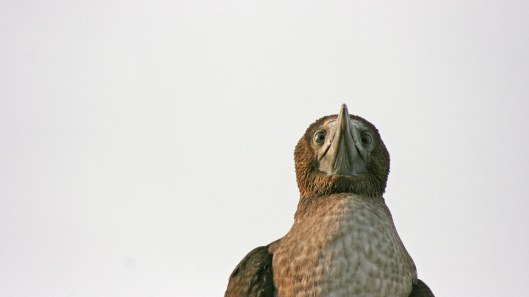
Cootlets, cootlings or cooties?
27 Tuesday Jun 2017
27 Tuesday Jun 2017
25 Sunday Jun 2017
Tags
birding, birdwatching, Bog pimpernel, Foxgloves, Glamorgan Bird Club, Grey wagtail, Lliw Reservoirs, Red kite, slow-worm, Tormentil, Victorian dam, Victorian ironwork, Whitethroat

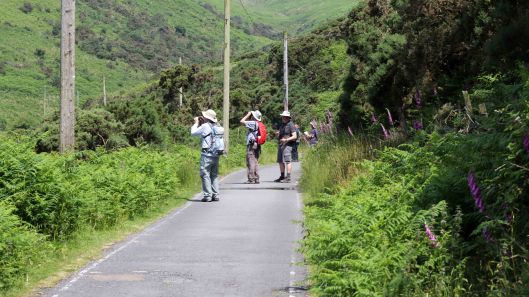
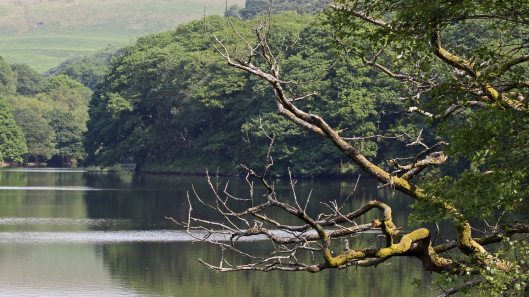
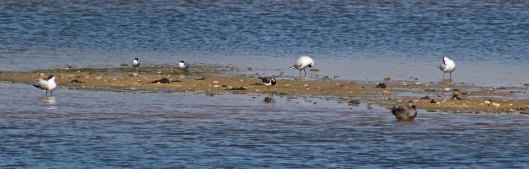
I celebrated the solstice with an outing with my Glamorgan Bird Club buddies to Lliw Reservoirs north of Swansea or, perhaps that should read, I sweated through the solstice – it was one of the hottest days of the year and the middle of a mini heatwave. Still, you know what they say about mad dogs and Englishmen (and Welshmen and a Kiwi) …

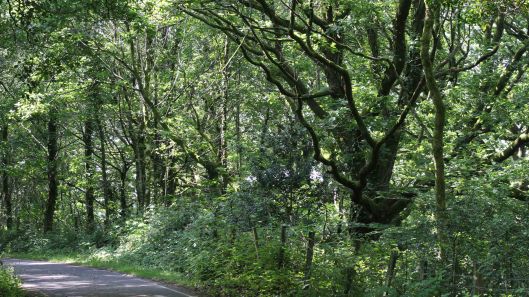
It’s a superb location. The two reservoirs were built in the second half of the 19th century, and still supply water to communities throughout south Wales. We only walked up one side of both reservoirs, through broadleaf woodland and then out onto open areas of grass and scrub and moorland, but there’s an 8-mile circular walk, which would be brilliant in cooler weather and includes large open commons of heath moorland on the hilltops.

We heard more small birds than we saw (but that’s helping me learn their songs); buzzards and magnificent red kites were soaring overhead; we heard then saw the elusive grasshopper warbler in flight; dragonflies and damsels and the odd butterfly flitted about; and there were lots of lovely wildflowers (my particular favourites were the foxgloves, tormentil and bog pimpernel). Oh and, most importantly, the locals were friendly and the cafe serves delicious ice cream!
21 Wednesday Jun 2017
Okay, it’s probably more of a toddler than a baby but ’tis the season for young fledglings to be out and about, learning the ways of the world from their parents, so I thought I’d share some shots of one of four young Blackcaps (Sylvia atricapilla) that were harassing their parents most vociferously at Cosmeston recently.
This little one wasn’t quite sure what to make of the human with the camera pointed in its direction. I feel it was giving me a rather angry look in the photo above right and the caption for the image below might well read, ‘Are you still there?’

19 Monday Jun 2017
Let me introduce you to Mr and Mrs Robin and their two children. They live at Cosmeston Lakes Country Park. Mr (or Mrs – I can’t actually tell male and female robins apart) came to greet me when I was standing by one the lakes yesterday, watching the ducks. He (or she) hopped over to within inches of where my hand was resting on a railing and looked at me with something akin to desperation. “Do you happen to have any food, lady?” Then, Mrs (or Mr) Robin popped up on to the closest fence post and also gave me a pleading look, “Please!”.
Luckily, I did have some seed in my bag so spread a little on top of another fence post. They were there immediately, picking up two or three seeds and flitting into a nearby tree. And then I saw the reason for their desperation – two ravenous fledglings were nagging them for food. Truth be told, the fledglings were probably old enough to feed themselves and did, in fact, pop down and peck around a bit. But Mum and Dad obviously still felt obliged to feed their youngsters if they could. I was very pleased to help out.
18 Sunday Jun 2017
Tags
birding, birdwatching, Black-crowned night heron, Cosmeston Lakes Country Park, Night heron, Nycticorax nycticorax, rare bird, rare bird sighting
We’re having a heatwave here in south Wales at the moment and, as I really don’t like the heat or the burning sun, I almost didn’t bother getting up early and going for a walk this morning. But I’m SO glad I did because, by sheer good luck, I spotted a relatively rare bird at Cosmeston Lakes Country Park.

Typical me – at the time I didn’t realise it was rare. In fact, I couldn’t work out what it was. It was across the other side of the lake and, even with my 300mm lens, I couldn’t get a close-up (see above). Was it a juvenile cormorant? The shape looked wrong. Was it a juvenile heron (there were three other Grey herons on the water near by)? The colour looked cream, rather than light grey, and the eye looked wrong.
So, I took 7 photos and continued my walk. Once home and showered and cooled down, I went through my pics, cropped them hard and posted them on my bird group page on Facebook. Result! It’s a Night heron (Nycticorax nycticorax) and is a fairly uncommon migrant in Britain, with usually less than twenty records per annum. It’s caused a bit of excitement amongst local birders though, unfortunately, those who’ve looked for it this afternoon haven’t managed to see it. Needless to say, I’m rather chuffed at my sighting!
Oh, and sorry about my rubbish photos. Luckily this is a bird I’ve seen before, overseas, so you can see some better images here.
12 Monday Jun 2017
Tags
birding, birdwatching, Bittern, Black-tailed godwits, Blackcap, British birds, Glossy ibis, Great Crested Grebe, Great white egret, Little egret, Marsh harrier, Mute swan, RSPB Ham Wall, Shapwick Heath
Yesterday was an absolutely fabulous birding day, an outing with my friends from the Glamorgan Bird Club to the RSPB’s Ham Wall Nature Reserve near Glastonbury in Somerset. We also ventured briefly into the neighbouring National Nature Reserve of Shapwick Heath but I reckon you’d need a week at least to explore both places thoroughly and at all times of the day.
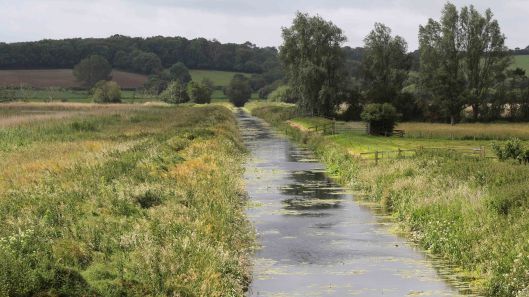
Most of the birds were rather distant so you’ll have to excuse my poor photos but I was able to see the birds clearly as many of the bird club members have good ’scopes and were happy to share. Some birding highlights were:
* three species of Egret: Cattle, Little and lots of Great whites.
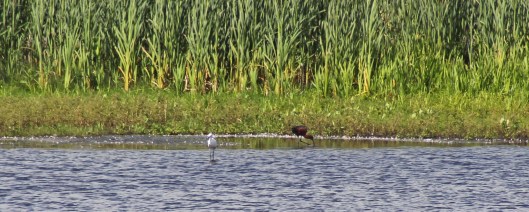
* my first sightings of a Glossy ibis (seen here with a Little egret) and a Red-footed falcon
* more Bitterns than you could point a lens at and several beautiful Marsh harriers, gliding seemingly effortlessly over the reed beds. These two birds came into conflict at one point (fuzzy photo above right), with the Bittern presumably trying to defend its young against harrier predation.

* lots of babies, including those of Great crested and Little grebes, Mute swan, Tufted duck, Coot and Blackcap.
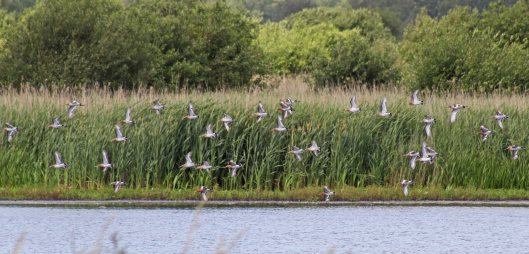
* the Black-tailed godwits flying over the waters at Shapwick Heath.
On the way home, with the help of my car mates, I came up with an as-yet-unconfirmed list of 57 species seen on the day, and that was only the birds – more on the other creatures in tomorrow’s blog.

25 Thursday May 2017
Posted in birds, coastal fauna, nature, walks
Tags
birding, birdwatching, Black-headed gull, Common tern, Gadwall, Lapwing, Marsh harrier, Oystercatchers, Ringed plover, Rye Harbour Nature Reserve, sheep, Shelduck, Skylark, Sussex Wildlife Trust guided walk
I celebrated my birthday, with my friend Jill, with a quick morning romp around the bird hides at Rye Harbour Nature Reserve, followed by an afternoon Sussex Wildlife Trust guided walk around the inland part of the reserve, including a peek inside the normally locked Camber Castle. And what a superb day it was!

I’ve already blogged about one of the highlights, the gorgeous Avocets and their chicks; another was hearing, and catching a fleeting glimpse of my very first Cuckoo. Here are a few more (not so crisp) photos of the wonderful (but mostly distant) wildlife we saw: Common terns, Skylark, Oystercatchers and Dunlin, Black-headed gull, Ringed plover, Gadwall and Shelduck, Lapwing and a Pied wagtail, Marsh harrier, and a number 72; plus, not pictured, Redshank, Coot, Cormorant, Tufted duck, Mallard, Little ringed plover, Grey heron, Kestrel and Whitethroat, as well as the more common birds. A birthday to remember!
24 Wednesday May 2017
During the eighteen months I lived and worked in Peru, back in 2011-2013, I took a short trip up to see some of the amazing sights in the less-visited north of the country. Late one afternoon, after a day packed full of incredible archaeological sites, we paid a short visit to the sleepy Pacific resort of Huanchaco, twenty minutes’ drive from Trujillo. The beach ran for miles and would be perfect for long strolls, but we contented ourselves with a short walk to the end of the very Western-looking pier, where we encountered these boobies.

Though you can’t see its feet in my photos (and it was too late in the day to get better shots), this is the Blue-footed booby (Sula nebouxii), living at the southern extent of its range in northern Peru. It’s a big bird, with a wingspan of around 1.5 metres (5 feet), perfect for a creature that spends much of its life at sea, diving and swimming underwater to catch the fish it likes to eat.

20 Saturday May 2017
Posted in birds, coastal fauna, nature
Tags
Anser albifrons, birding, birdwatching, Greylag goose, Rye Harbour Nature Reserve, White-fronted goose
That title sounds like something from a James Bond movie, sorry, but the sentiment is true enough. I’m referring to the White-fronted goose (Anser albifrons) I saw hanging out with a flock of Greylags during my recent visit to Rye Harbour Nature Reserve in Sussex (on the left in the photo below).

The ‘white front’ in its name refers to the white patch on the front of its head around the beak and, as you can see, it’s quite a bit smaller than the Greylags, though its diet is similar: grass, clover, grain, wheat and potatoes.
These birds don’t breed in Britain but geese from two separate races frequently over-winter here; the birds with orange beaks breed in Greenland, and those with pink beaks, like the one I saw, breed in Siberia. The Greenland birds tend to over-winter in western Scotland and in Ireland, while the Greenland birds prefer southern England. They’re usually only seen from October through to March but the ranger said this one appeared with this flock of Greylags and has stayed on at the reserve with them. Maybe it doesn’t like the cold!

More Greylags flying in
16 Tuesday May 2017
Posted in birds, coastal fauna, nature
Tags
Avocet, Avocet chicks, Avocet in flight, birding, birdwatching, British birds, Recurvirostra avosetta, RSPB logo, Rye Harbour Nature Reserve
Awesome is a much overused word but I feel my use of it here is justified – I truly was in awe of these most beautiful birds, seen at the Rye Harbour Nature Reserve in East Sussex last Saturday.

The Avocet (Recurvirostra avosetta) is one of Britain’s conservation success stories, hence its use as a logo by the Royal Society for the Protection of Birds. After years of being killed for food and taxidermy and having its eggs robbed by collectors, the Avocet disappeared from its British breeding sites around 1842, and it wasn’t until 1947 that just four pairs were rediscovered breeding in Suffolk. Incredibly, this was, in part, due to the Second World War: damage from an exploding bomb had inadvertently recreated their ideal habitat of shallow ponds and muddy islands near the seaside at Havergate and, at Minsmere, where the coastal marshes had been flooded to prevent enemy troops invading, shallow ponds also formed when the marshes began to dry up.
Further breeding sites have now been created and protected (at Rye Harbour, with electric fences to deter predators like foxes and badgers) in suitable areas around Britain’s coastline, and the number of breeding pairs is estimated to be around 500. Long may their success continue!

You must be logged in to post a comment.