• ABOUT
  • BIRDING 2018
  • Birding 2019
  • BLOG POSTS
  • Butterflies 2018
  • Resources

earthstar

~ a celebration of nature

earthstar

Tag Archives: birdwatching

Three Common sandpipers

17 Tuesday Feb 2026

Posted by sconzani in birds, winter

≈ Leave a comment

Tags

birding, birdwatching, British birds, Cardiff Bay birding, Common sandpiper, over-wintering Common sandpipers

During the past few winters those of us who bird Cardiff Bay have been privileged to enjoy regular sightings of two Common sandpipers that are spending the winter foraging those areas around the water’s edge that might provide the tiny creatures they like to eat: insects, spiders, and small crustaceans.

This year the number of wintering Common sandpipers has increased to three.

As most Common sandpipers simply pass through the Cardiff Bay area, moving to their breeding grounds in the spring, and to over-wintering locations further south in the autumn, I like to think that this third bird is the offspring of the original two, introduced to the concept of spending the winter in our area by its parents … but this is pure speculation.

Like Loading...

Delightful doves

14 Saturday Feb 2026

Posted by sconzani in birds

≈ Leave a comment

Tags

birding, birdwatching, British birds, Collared dove, Columba oenas, Forest Farm Nature Reserve, Stock dove, Streptopelia decaocto

Britain is home to five members of the Pigeon family: Rock dove (which manifests for most of us in the form of the domesticated Feral pigeon, though there are still thought to be wild Rock dove populations in north-west Scotland and the south and west of Ireland), Stock dove, Woodpigeon, Collared dove, and Turtle dove. Though I haven’t seen wild Rock doves, I have been lucky enough to have seen all these species, including, just once, the very rare Turtle dove.

The Stock dove (Columba oenas) is not that easy to see in my area. According to my RSPB bird book, the historic expansion of their population was a benefit of the expansion of arable farming but the use of chemical seed dressings in the 1950s and 1960s led to a huge decline in the Stock dove’s population, a decline the species is still recovering from. Fortunately for those of us who want to see these handsome birds, at Forest Farm Nature Reserve in north Cardiff there are at least two Stock doves that have taken advantage of the food people leave for the local birds and are now quite confiding, if you’re careful.

Back in April 2017, I explained in my blog post, Genetic mutation leads to immigration, about the arrival in Britain in the 1950s of the Collared dove (Streptopelia decaocto). Now they’re a common sight in my local area, and, I think, a lovely addition to Britain’s avian population. They seem to have set territories, and the bird shown here is one of a pair I see quite often when I’m walking by the River Taff in Cardiff.

Like Loading...

Moorhen mimic

12 Thursday Feb 2026

Posted by sconzani in birds

≈ Leave a comment

Tags

bird behaviour, birding, birdwatching, British birds, Moorhen, Moorhen behaviour

I’m sure you all know I love birds. My passion for them is not just because they’re beautiful creatures – I also find them endlessly fascinating. Take these two Moorhens, for example.

They were poking around the grassy slope in front of one of the bird hides at Forest Farm Nature Reserve, hoping to discover a morsel or two of the seeds, nuts and assorted bird food that people had thrown through the hide’s windows to help bring in the birds. As I watched the second bird began to mimic exactly the movements of the leading bird. It resembled a kind of land-based synchronised swimming, or perhaps a dance. Was this some kind of pre-mating behaviour, a way of reinforcing their pair bond? I’d never seen this type of behaviour before, and it only lasted a few minutes but it’s experiences like this that keep me watching, and listening, and learning.

And, let’s face it, Moorhens are also very handsome birds.

Like Loading...

Firecrests galore!

10 Tuesday Feb 2026

Posted by sconzani in birds, winter

≈ Leave a comment

Tags

birding, birdwatching, British birds, Firecrest, winter birding

I’m lucky if I see one Firecrest each year, as they tend only to be seen in my area during the winter months and can be extremely elusive. So, when one of our expert local birders let me know that he’d seen five (!) in a nearby park, I was optimistic – surely, I could find at least one. Four park visits later, with zero Firecrest sightings, I was beginning to despair but I figured I’d give it just one more try before I gave up. And I’m so glad I did as that one day I saw four Firecrests, two in one area and two on the other side of the park, more than I’ve ever seen in one day before.

Getting good photographs of the Firecrests was another matter. These are tiny birds, and very active, flitting constantly through the vegetation in search of food. I did actually manage images of all four birds, most blurry, two with only partial views of the birds, but one, the one shown above, where you can actually see the whole bird and recognise it. Phew!

Like Loading...

Paddling Black-headed gull

07 Saturday Feb 2026

Posted by sconzani in birds

≈ 2 Comments

Tags

birding, birdwatching, Black-headed gull, Black-headed gull paddling for worms, British birds, gull feeding techniques, paddling for earthworms

Having written just three days ago, in my post Paddling Herring gull, that I’d not seen a Black-headed gull paddling on the grass, imitating the effect of heavy rain hitting the ground in order to encourage earthworms to rise to the ground surface, the very next day I watched this bird doing just that. The video is just 30 seconds long but I watched the bird for about 5 minutes and, though, as you’ll see, the gull has a moment of being somewhat uncoordinated, it was mostly paddling quite forcefully. I didn’t see it have any success in that time. Mind you, I didn’t see any of the surrounding flock of Black-headed gulls, foraging conventionally, find any worms either.

Like Loading...

Paddling Herring gull

04 Wednesday Feb 2026

Posted by sconzani in birds

≈ 4 Comments

Tags

bird behaviour, bird intelligence, birding, birdwatching, British birds, Herring gull, Herring gull paddling for earthworms, paddling for earthworms, paddling Herring gull

On a steep grassy bank above a children’s playground, I often see a pair of Herring gulls paddling for earthworms. It’s fascinating behaviour; sometime somewhere one very smart Herring gull realised that earthworms rise to the surface of the soil when it rains and it could fool earthworms into thinking it was raining by stamping its feet rapidly on the ground, thus imitating the sounds and vibrations caused by rain hitting the ground. Other Herring gulls saw how effective this was and learned to do the same. And I’ve also seen Lesser black-backed gulls using this technique, though not Black-headed gulls – perhaps they’re not smart enough to learn, or maybe their bodyweight isn’t sufficient to have the desired effect. And if you’re wondering whether or not the behaviour is effective, in this one-minute video you’ll see the Herring gull nabs three juicy earthworms.

Like Loading...

Wintering Blackcaps

03 Tuesday Feb 2026

Posted by sconzani in birds, winter

≈ Leave a comment

Tags

birding, birdwatching, Blackcap, British birds, migrating birds, over-wintering birds, overwintering Blackcaps

Even in my short time living here in Wales, I’ve noticed an increase in the number of Blackcaps spending the winter in our parks and gardens rather than making the relatively long flight to the south of the Iberian peninsula and northern parts of Africa.

This change in migratory behaviour is, no doubt, due in part to the changing climate, the warmer temperatures meaning locally bred birds can find enough food to survive, particularly in south-western Britain. As an article on the Bird Guides website points out, ‘since the end of the Second World War we have been creating a winter feast for Blackcaps by planting berry bushes in our parks and gardens and keeping our bird tables well stocked’.

Scientific research and ringing recoveries have also shown that many of the Blackcaps found in Britain in winter hail from parts of central Europe. (The BTO website has a pdf with a map showing the various directions of Blackcap migration and movement, to and from Britain, Europe and North Africa, and within Europe itself.)

In my local area I know of more than five Blackcaps that are spending the winter hereabouts, three of which I’ve seen and photographed (the first on 9 January, the second on the 19th and the third, the female, on the 30th) and two others that I’ve heard making their characteristic ticking sound but that I didn’t actually manage to locate in dense vegetation. I’m already looking forward to seeing more of these birds when those that did migrate further south return to our shores in the spring.

Like Loading...

Kestrel 2026 : 86

31 Saturday Jan 2026

Posted by sconzani in birds, winter

≈ 2 Comments

Tags

birding, birds of prey, birdwatching, British birds, Kestrel

Probably due to the almost constant wet weather, I’ve not seen as many new bird species this January as I did in the previous two years. I imagine the storms also have something to do with this; though three named storms have hit the UK already this year, and caused enormous damage in the locations they’ve hit hardest, those storms have mostly passed us by here in south-east Wales. And though I’m not complaining about that, it is often stormy weather that brings the more unusual birds during the winter months.

This beautiful Kestrel was my most recent find. It was a complete surprise too, which is always a bonus. I’d been for a wander around the less muddy parts of Cosmeston Lakes Country Park and was walking through the area where there’s a dipping pond when I noticed the Kestrel sitting on top of a spindly tree. As you can see, it didn’t stay long but it was a joy to see.

Like Loading...

The Marl Med gull

29 Thursday Jan 2026

Posted by sconzani in birds

≈ Leave a comment

Tags

birding, birdwatching, British birds, Cardiff birding, Med gull, Mediterranean gull, The Marl

I’ve almost certainly shown you this exact same Mediterranean gull in previous posts (Med gull on The Marl, 16 February 2022, and Mediterranean gull,13 January 2025). Though Med gulls don’t breed locally, we are lucky to have one or two overwinter hereabouts, and this individual is regularly seen with the Black-headed gull flock feeding on a Cardiff park and recreation area called The Marl.

Although it’s not ringed, so we can’t be absolutely certain we local birders are seeing the same bird each time, it seems a high probability as birds frequently stick to regular habits and locations. Also, these gulls can live between 10 and 15 years, which lends weight to the idea that the same bird is returning each winter to an area where it’s been able to find food during previous winters.

And there’s one other factor that makes me think this is the same Med gull – it is a very confiding bird, so confident, in fact, that it’s always the closest amongst the flock of other gulls to any humans and the path around the park, which means you can sit on a park bench and enjoy good views of it as it goes about its daily search for worms and other insects.

Like Loading...

Jimmy Wren

27 Tuesday Jan 2026

Posted by sconzani in birds

≈ 2 Comments

Tags

birding, birdwatching, British birds, Jenny Wren, Jimmy Wren, wren

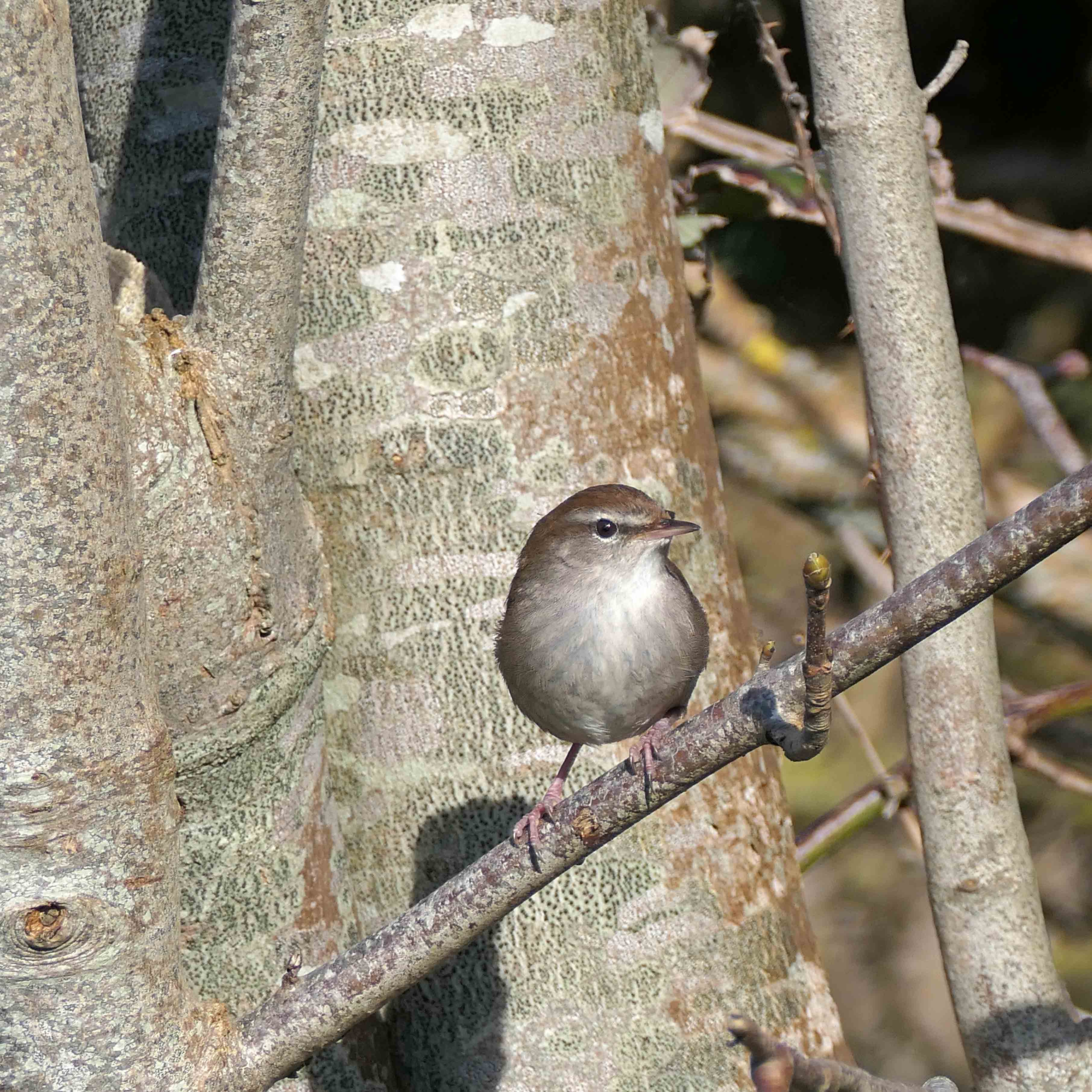
I know Wrens are mostly referred to with the female vernacular name, Jenny Wren, but, from the way this handsome chap was belting out his melody, he was definitely a male advertising his territory and his attractiveness to any passing females. Hence, my title of Jimmy, not Jenny Wren.

I heard his song from the other side of the field, before I could even see him, which is quite common with these birds; small bird, big voice!

Like Loading...
← Older posts

About me

sconzani

sconzani

I'm a writer and photographer; researcher and blogger; birder and nature lover; countryside rambler and city strider; volunteer and biodiversity recorder.

View Full Profile →

Follow earthstar on WordPress.com

Enter your email address to follow this blog and receive notifications of new posts by email.

Recent blog posts

  • Three Common sandpipers February 17, 2026
  • Beetle: Athous bicolor February 16, 2026
  • Crocus flower power February 15, 2026
  • Delightful doves February 14, 2026
  • Fan-like fungi February 13, 2026

From the archives

COPYRIGHT

Unless otherwise acknowledged, the text and photographs on this blog are my own and are subject to international copyright. Nothing may be downloaded or copied without my permission.

Fellow Earth Stars!

  • Unknown's avatar
  • Unknown's avatar
  • Unknown's avatar
  • Unknown's avatar
  • Unknown's avatar
  • Unknown's avatar
  • Unknown's avatar
  • Unknown's avatar
  • Unknown's avatar
  • Unknown's avatar
  • Unknown's avatar
  • Unknown's avatar
  • Unknown's avatar
  • Unknown's avatar
  • Unknown's avatar
  • Unknown's avatar
  • Unknown's avatar
  • Unknown's avatar
  • Unknown's avatar
  • Unknown's avatar
  • Unknown's avatar
  • Unknown's avatar
  • Unknown's avatar
  • Unknown's avatar
  • Unknown's avatar
  • Unknown's avatar
  • Unknown's avatar
  • Unknown's avatar
  • Unknown's avatar
  • Unknown's avatar
  • Unknown's avatar
  • Unknown's avatar
  • Unknown's avatar
  • Unknown's avatar
  • Unknown's avatar
  • Unknown's avatar
  • Unknown's avatar
  • Unknown's avatar
  • Unknown's avatar
  • Unknown's avatar
  • Unknown's avatar
  • Unknown's avatar
  • Unknown's avatar
  • Unknown's avatar
  • Unknown's avatar
  • Unknown's avatar
  • Unknown's avatar
  • Unknown's avatar
  • Unknown's avatar
  • Unknown's avatar

Blog at WordPress.com.

Privacy & Cookies: This site uses cookies. By continuing to use this website, you agree to their use.
To find out more, including how to control cookies, see here: Cookie Policy
  • Subscribe Subscribed
    • earthstar
    • Join 670 other subscribers
    • Already have a WordPress.com account? Log in now.
    • earthstar
    • Subscribe Subscribed
    • Sign up
    • Log in
    • Report this content
    • View site in Reader
    • Manage subscriptions
    • Collapse this bar
 

Loading Comments...
 

You must be logged in to post a comment.

    %d