• ABOUT
  • BIRDING 2018
  • Birding 2019
  • BLOG POSTS
  • Butterflies 2018
  • Resources

earthstar

~ a celebration of nature

earthstar

Tag Archives: British beetles

Alder leaf beetles

18 Thursday Jul 2024

Posted by sconzani in insects

≈ Leave a comment

Tags

Agelastica alni, Alder leaf beetles, blue beetles, British beetles, leaf beetles

Much to my surprise, my record of Alder Leaf Beetle (Agelastica alni) was the SEWBReC (South East Wales Biodiversity Records Centre) record of the week for week ending 12 July. I had thought these beetles were common so was a little surprised to read in SEWBReC’s social media post that ‘It is expanding its range, so any records help track its spread.’ So, I took a look at the NBN Atlas map, which shows there are few records so far in south Wales, and I also checked the UK Beetles website, which notes

It was formerly considered extinct in the UK; it was recorded a few times from widely scattered localities across England during the mid-20th century but following its rediscovery in 2004 in northwest England it has spread rapidly and it is now locally common and often abundant across the south of England and the midlands and it seems to be increasing in range and abundance.
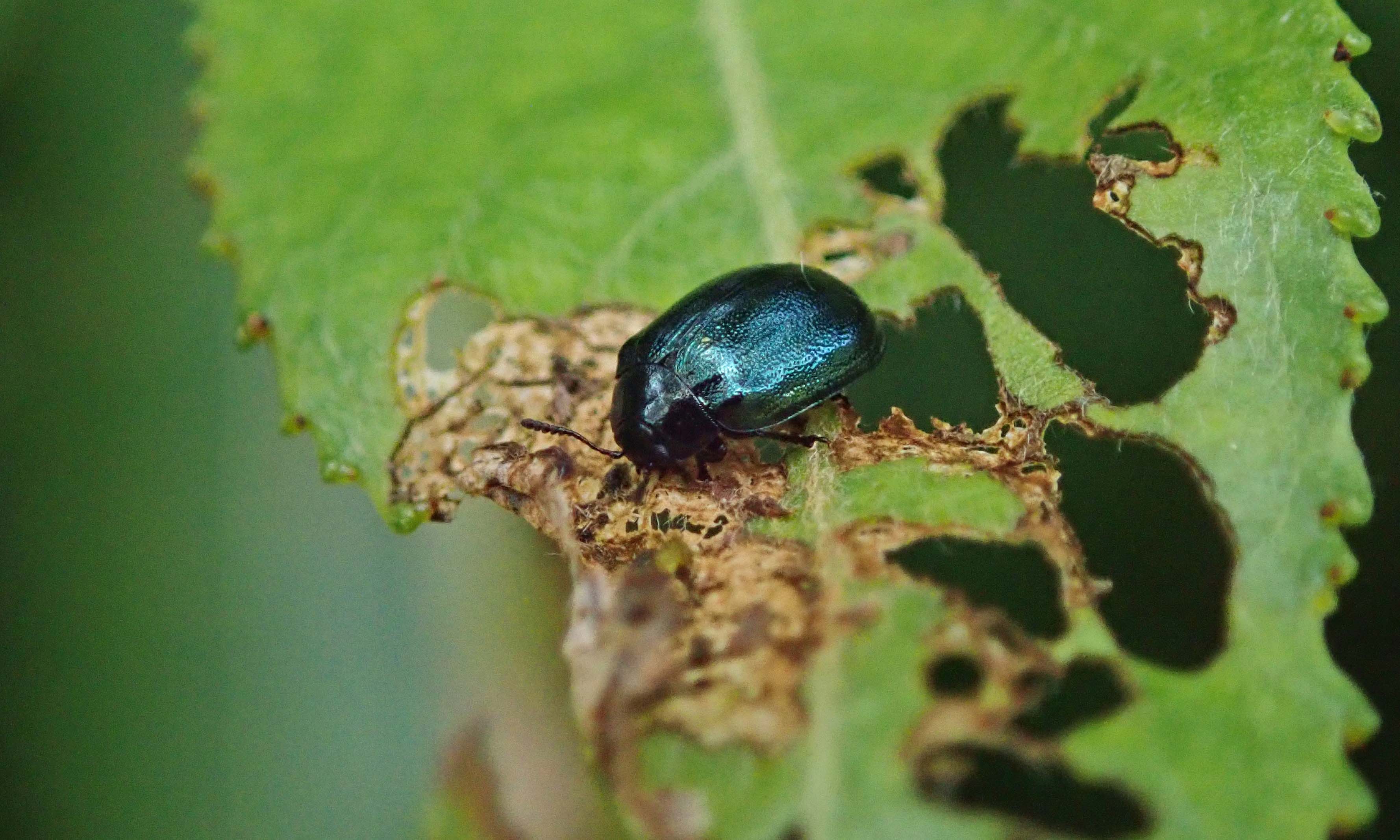
240718 alder leaf beetles (1)

As well as several of the shiny blue adult beetles, my leaf-bothering had turned up lots of larvae. The UK Beetles website also gives interesting details about these tiny creatures:

females oviposit during May and June …attach groups of eggs to the underside of host foliage, usually between 50 and 70 eggs in each batch and each will lay between 200 and 250 … Larvae emerge 10-12 days later, they pass through 3 instars and are fully grown within 25-30 days; they feed communally but in the last instar disperse throughout the host plant, they are very distinctive and easily recognized; elongate and pale grey when small and shiny black as final instars.

240718 alder leaf beetles (2)

Like Loading...

Two longhorns

16 Tuesday Jul 2024

Posted by sconzani in insects

≈ Leave a comment

Tags

British beetles, Longhorn beetles, Rutpela maculata, Spotted longhorn beetle, Stenocorus meridianus

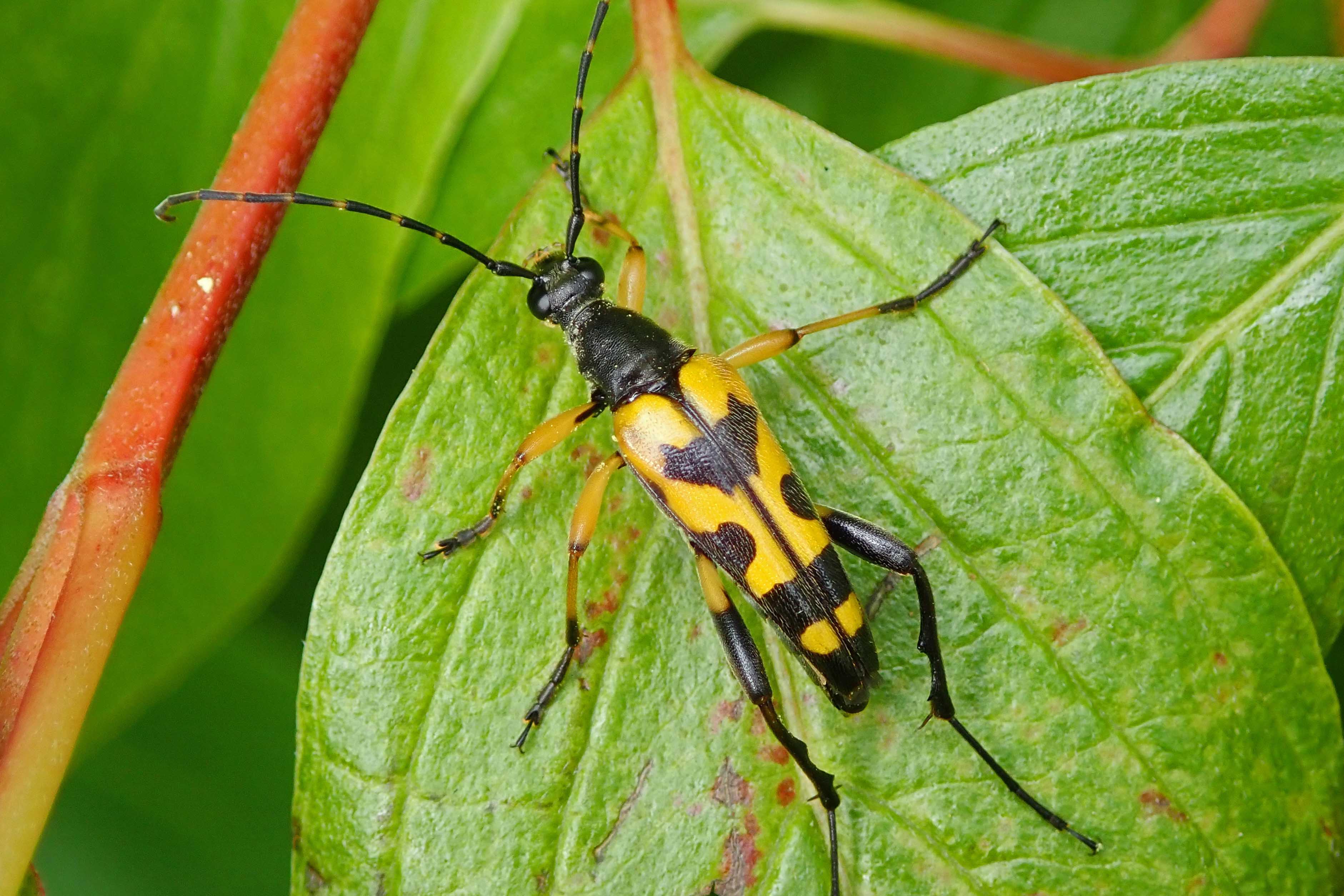
I’m sure many of you will have seen this first longhorn beetle, the Spotted longhorn (Rutpela maculata). Though the patterns may vary, its colourful yellow-and-black colouring is quite distinctive, and it is our most common longhorn beetle, though it doesn’t frequent the more northerly parts of Britain. Look for it along the edges of woodland rides and in hedgerows, particularly on the flowers of Hawthorn and various species of umbellifer, throughout the summer months.

240716 rutpela maculata

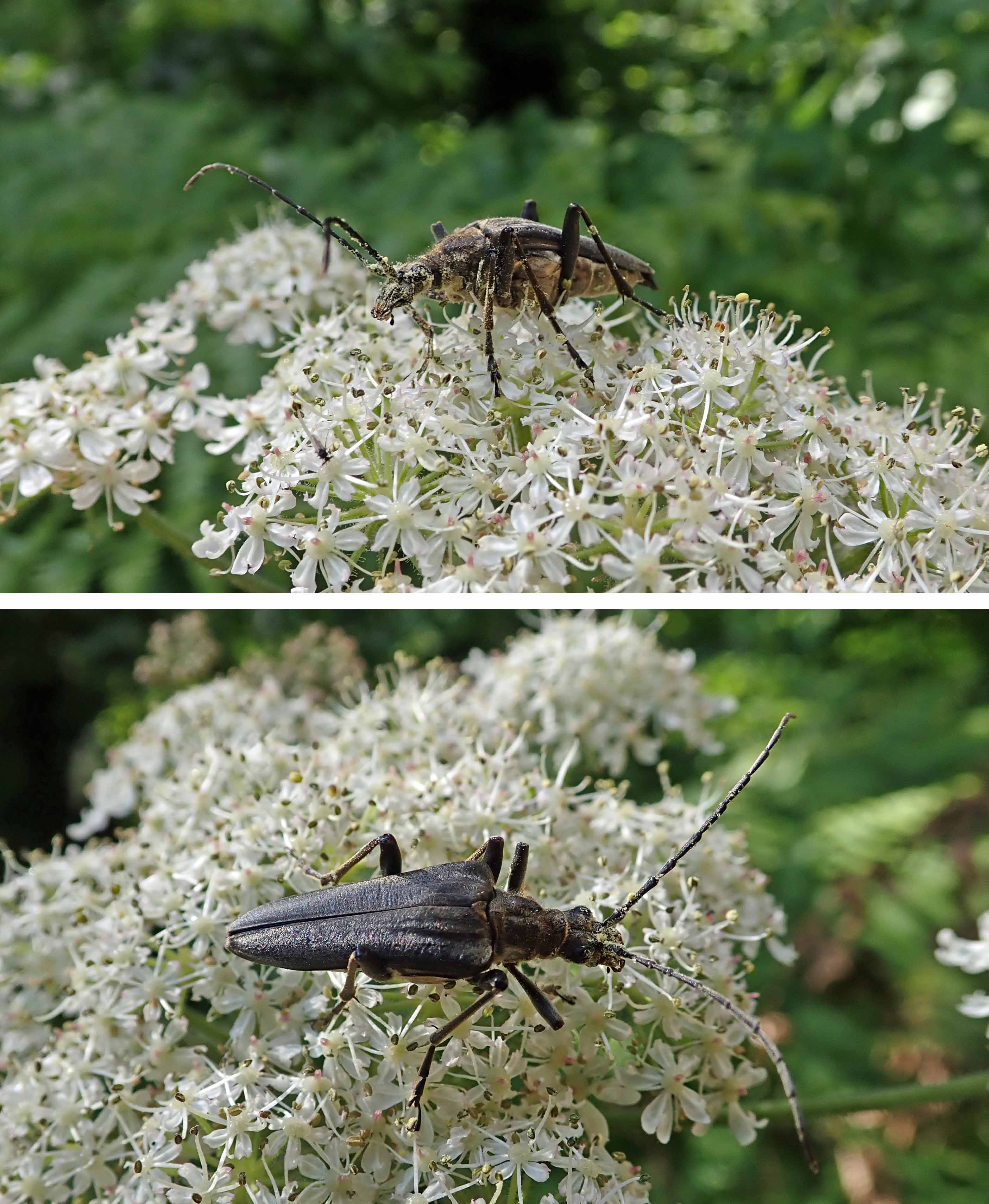
My second longhorn was a new discovery for me, once again from my recent visit to Slade Wood: this is Stenocorus meridianus (no common name). The fragmented broadleaf woodland of Slade Wood – where a lot of non-native trees have been felled in recent years to make way for native species – is the ideal habitat for this beetle, as it likes to feed on the flowers growing in sunny locations along woodland rides and on the edges of clearings. It is a large beetle, between 15 and 25mm, quite triangular in shape with its broad shoulders tapering to a more narrow apex. Its head and thorax are black (though that’s not so obvious when it’s covered in white pollen like this beastie), and the colour of its electra (wing covers) can vary from pale brown to black.

240716 Stenocorus meridianus

Like Loading...

Metallic green beetles

03 Wednesday Jul 2024

Posted by sconzani in insects

≈ Leave a comment

Tags

British beetles, British insects, Cryptocephalus aureoles, green beetles, metallic green beetles

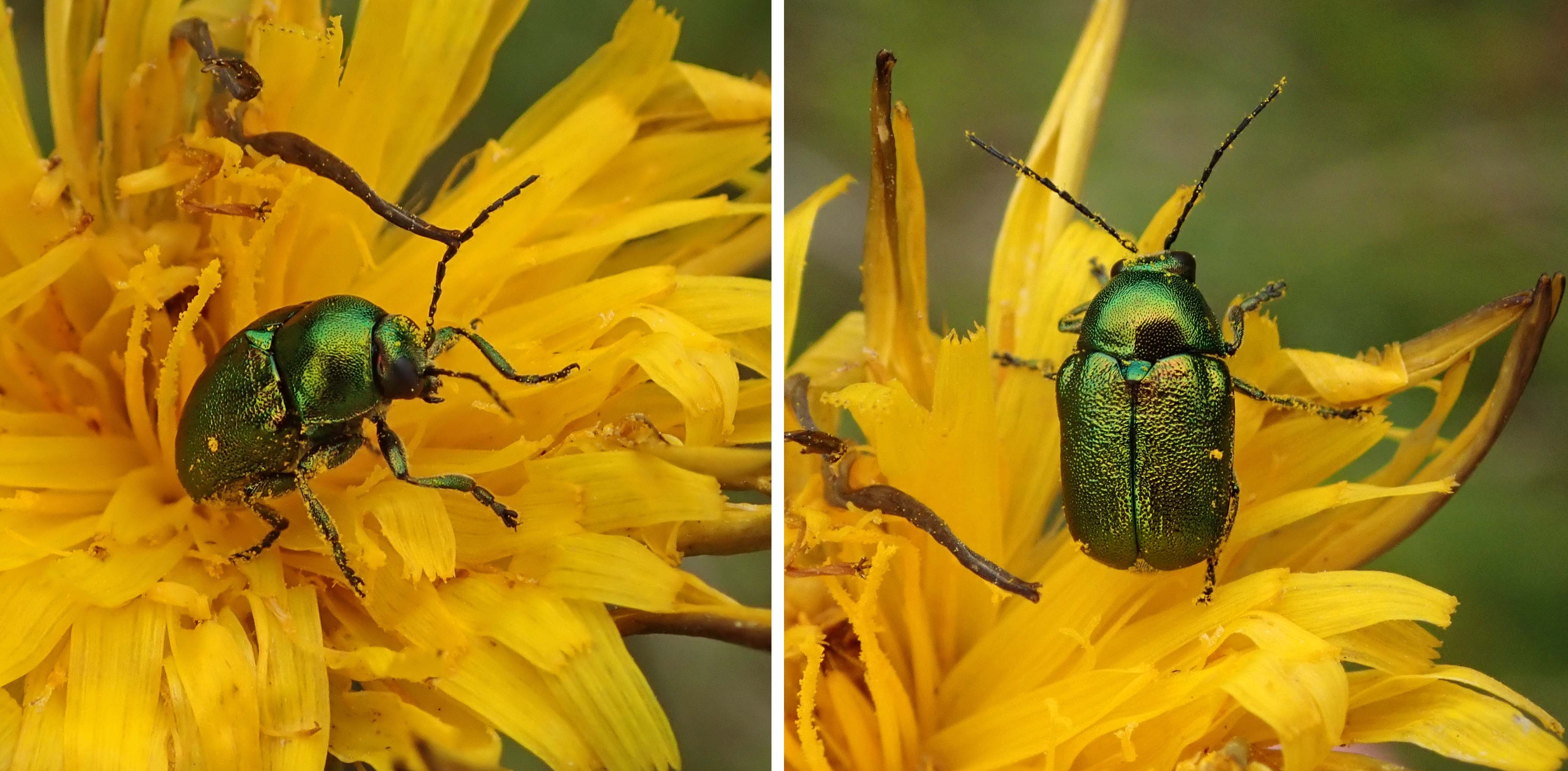
There are other species of similar metallic green beetles in Britain, but the UK Beetles website says only one (Cryptocephalus hypochaeridis) is likely to cause confusion, so I think I’ve got my identification right here. Meet Cryptocephalus aureoles, a beetle that is reasonably common in much of southern Britain, particularly in sunny, open, dry environments, like woodland and countryside footpath edges, roadsides, embankments and, in my case, the south-facing slope of a coal spoil tip.

240703 Cryptocephalus aureolus (1)

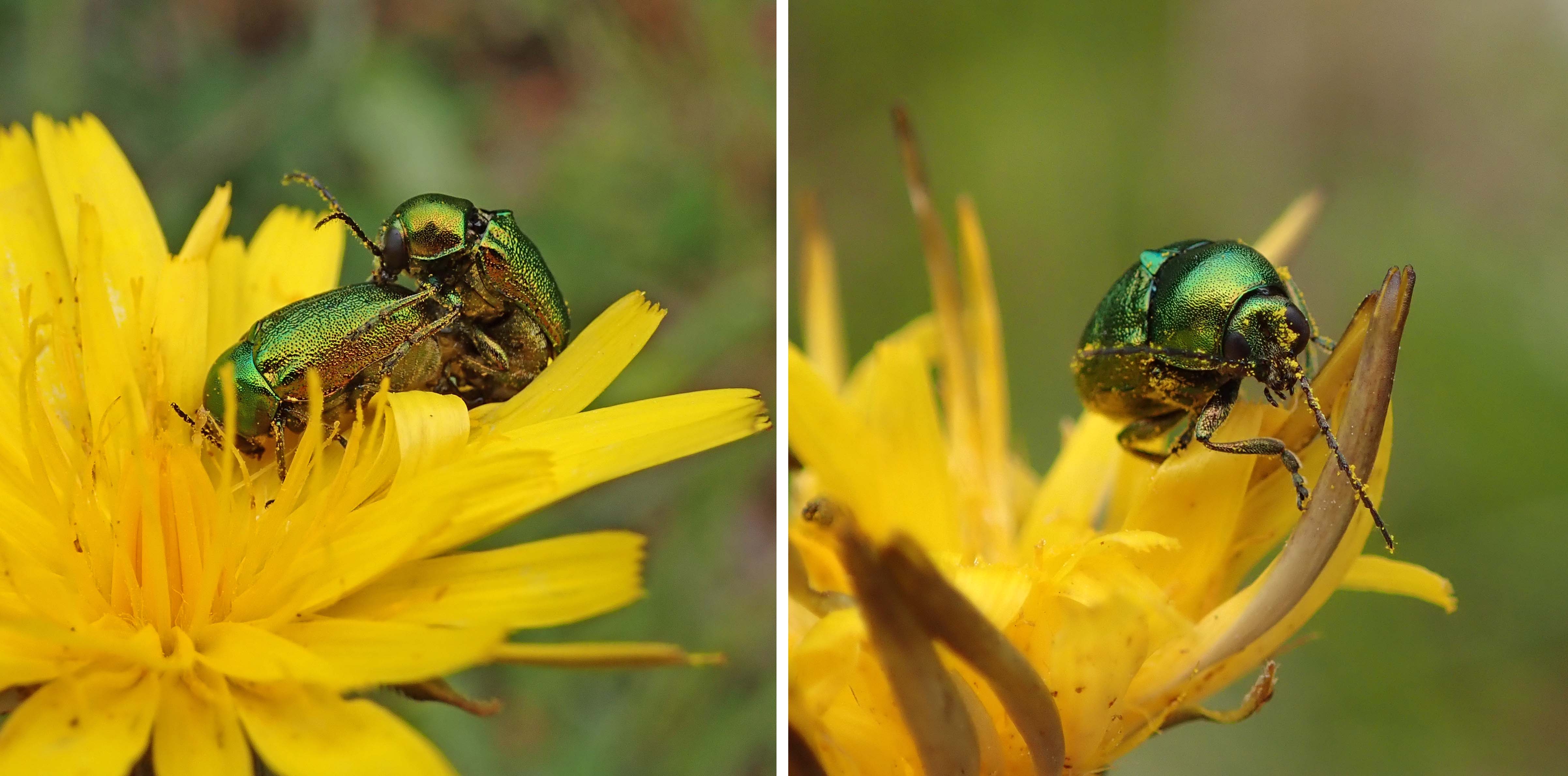
Though the adults can be seen from April through to September, they are particularly active in June and July, when they are often to be found feeding on various species of plants with yellow flowers – hawkweeds (Hieraceum sp.) and cat’s-ears (Hypochaeris sp.) are particular favourites.

240703 Cryptocephalus aureolus (2)

Somewhat surprisingly, their exact life cycle has not been confirmed. The UK Beetles website explains that, after mating,

oviposition occurs from late spring; each egg being coated with faecal matter and secretions and dropped to the ground by the female. Larvae emerge after three or four weeks, depending on the temperature, and develop through the summer, it is not known which stage overwinters but young larvae have been recorded late in the summer and so it is likely to be as larvae which complete their development and pupate in the spring

Like Loading...

Fleabane tortoise beetle larvae

08 Saturday Jun 2024

Posted by sconzani in insects, plants

≈ Leave a comment

Tags

beetles on Common fleabane, British beetles, Cassida murraea, Cassidinae, Common fleabane, Fleabane tortoise beetle, Fleabane tortoise beetle larvae, tortoise beetles

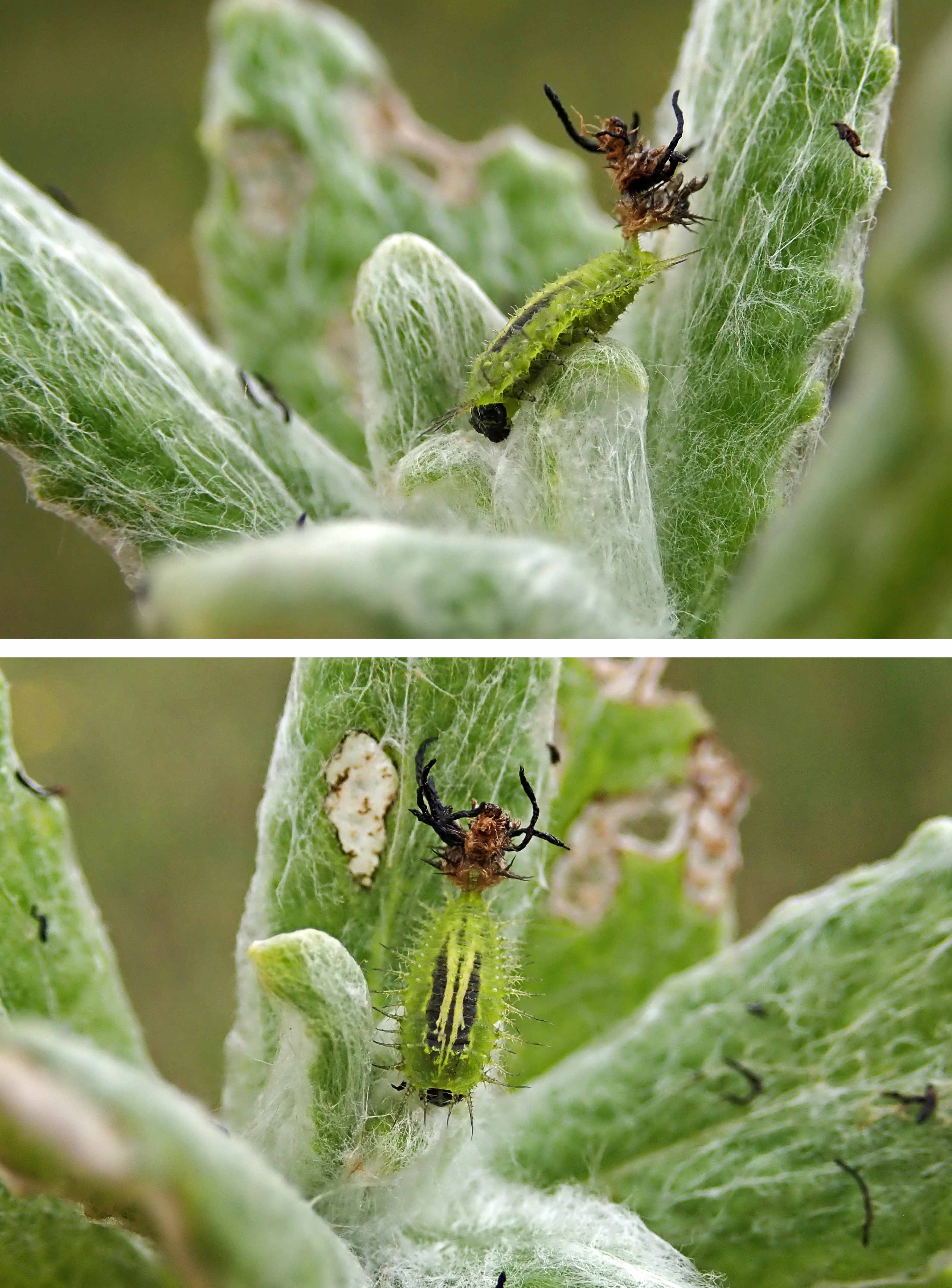
If you’ve been here a while (for which, sincere thanks!), you might remember the bizarre larvae of the Thistle tortoise beetle that employ a faecal shield as a protective device, carrying their own excretions above their backs as a disguise (Thistle tortoise beetle larvae, 7 July 2022). Well, earlier this week, while checking the leaves of Common fleabane (Pulicaria dysenterica) for leafminers, I found another example of this behaviour.

240608 fleabane tortoise beetle larva (2)

These are Fleabane tortoise beetle larvae (Cassida murraea), which, like all other members of the tortoise beetle family, the Cassidinae, use a combination of their own frass and moulted skin, secretions and plant material to create the cryptic disguises they carry around behind and above their vulnerable bodies.

240608 fleabane tortoise beetle larva (1)

This particular species has not been recorded locally before and I’ve never seen the adult beetles so I’ll be poking about in the fleabane in the coming weeks to see if I can find any.

Like Loading...

A surprising beetle find

09 Thursday May 2024

Posted by sconzani in insects

≈ Leave a comment

Tags

British beetles, Cicindela campestris, Cosmeston Lakes Country Park, Green tiger beetle

I am often amazed at how creatures manage to move long distances, especially small creatures like this Green tiger beetle (Cicindela campestris) I found at Cosmeston Lakes Country Park yesterday. At just 15mm long, this little beetle can run much faster than you might think, and it can also fly quite well for short distances, but it has never been recorded at Cosmeston before, and a check of the Welsh biodiversity database shows the nearest records were over 10 kilometres away and not recent. So, did it hitch a ride in someone’s car, catch a train and fly from the station, hop on a bus? And, if there’s one, are there more? I will be looking.

240509 green tiger beetle

Like Loading...

Beetles on dead Ash

01 Wednesday May 2024

Posted by sconzani in insects, trees

≈ Leave a comment

Tags

bark beetles, beetle burrows on Ash, beetles on Ash, British beetles, burrows of Ash bark beetles, Vincenzellus ruficollis

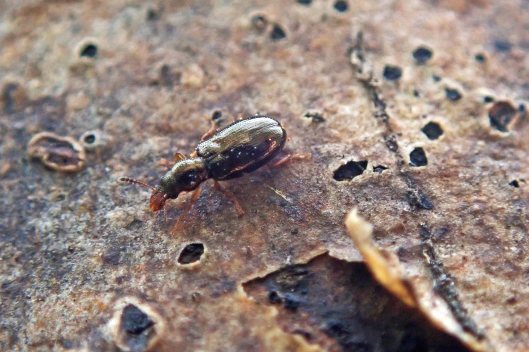
When I first spotted my mystery beetle, I thought perhaps it, and others of its kind, had been responsible for making the burrowing marks under the bark of the many dead Ash trees I saw around me.

240501 ash bark beetle (1)

But no. Those marks were likely made by the Ash bark beetle (Hylesinus varius), a small brown beetle that you can see on the NatureSpot website here. I’ve yet to find one of those destructive little creatures. And, when I got home and searched online, I struggled to find the name of the tiny metallic-green beetle I had found but, luckily, my friendly local bee expert had a couple of suggestions: ‘The beetle is either Salpingus ruficollis or Vincenzellus ruficollis’.

240501 ash bark beetle (2)

I checked both those names and decided, from the distinctive shape of the snout, that mine was likely to be Vincenzellus ruficollis, though this hasn’t yet been confirmed. It seems I was fortunate to spot this little critter as the UK Beetles website says, amongst other things, that they are ‘exclusively nocturnal and easy to spot as they crawl around on trunks and branches predating small insects and their early stages. Breeding occurs in the spring and larvae develop under bark, they are predatory and often occur near bark beetle burrows or among masses of mycelia and have been recorded from a wide range of deciduous trees….’

240501 ash bark beetle (3)

Like Loading...

A new beetle

09 Tuesday Apr 2024

Posted by sconzani in insects

≈ 2 Comments

Tags

British beetles, dung beetle, Sphaeridium beetle, Sphaeridium species

A few days ago I found this new beetle sitting on the wall of some local houses. It’s a member of the Hydrophilidae family of water scavenger beetles, though this is actually one of Sphaeridium species, which are dung beetles. The UK Beetles website reports that ‘four [of these species] occur in the UK and three are common and widespread, they are medium sized, 4-7.5 mm. oval and distinctively coloured, they live in wet dung and both adults and larvae are predatory’, and on Wikipedia I discovered that the larvae of these little beetles predate the larvae of flies that breed in dung. The particularly odd thing is the urban location where I found this beetle, as they’re usually found near cattle. Perhaps it had inadvertently hitched a ride in someone’s car or on someone’s dog.

240409 Sphaeridium sp

Like Loading...

A new beetle

28 Thursday Sep 2023

Posted by sconzani in insects

≈ Leave a comment

Tags

beetle on Hawthorn, British beetles, Cryptocephalus fulvus, Cryptocephalus pusillus

I was searching Hawthorn leaves for a particular leafmine when I spotted this tiny beetle sitting on a Hawthorn berry. It also spotted me so didn’t stay still for long and I only managed three slightly blurry photos.

230928 Cryptocephalus pusillus (1)

I think this is Cryptocephalus pusillus but there are a couple of very similar beetles (Cryptocephalus fulvus is another strong contender but seems to be more of a ground plant dweller). Although I’ve recorded this little critter, my record hasn’t yet been checked – the checking process can sometimes be lengthy / not happen at all, as there aren’t always experts available to check records, and most of those who do are volunteers so have to fit their checking in with the other demands on their time. When/if I get confirmation, or otherwise, I’ll update this post.

230928 Cryptocephalus pusillus (2)

Like Loading...

Flea beetle

01 Friday Sep 2023

Posted by sconzani in insects

≈ 2 Comments

Tags

beetle, British beetles, Flea beetle, Sphaeroderma species

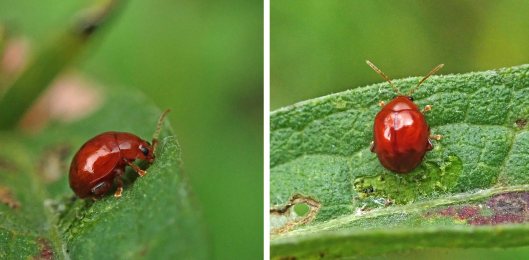
This ruddy creature is my first ever Flea beetle but, just as with my recent new leafhopper, I haven’t been able to put a specific name to it. There are two very similar species, Sphaeroderma rubidum and Sphaeroderma testaceum, and, though the UK Beetles website maintains that ‘they are easily distinguished, with a little experience, by sight; the colour and shape being unique’, I don’t have the necessary experience.

230901 flea beetle (1)

The website explains:

Body strongly rounded, often almost circular, pronotum very strongly narrowed from the base and very finely punctured. 2.3-3.5 mm.  –  S. rubidum
Body less strongly rounded, slightly but distinctly elongate, the pronotum less strongly narrowed from the base and more strongly punctured, especially towards the basal margin. 2.5-4.2 mm.  –  S. testaceum

230901 flea beetle (2)

Without seeing the two beetles side by side or, perhaps, knowing in advance specifically what to look for, I find myself unable to identify the beetle I found.

Like Loading...

Garden chafer

14 Wednesday Jun 2023

Posted by sconzani in insects

≈ Leave a comment

Tags

British beetles, Garden chafer, Phyllopertha horticola

If you’re a gardener, you might not be so pleased to see beetles like this Garden chafer (Phyllopertha horticola) anywhere near your abode as their larvae feed on plant roots. This one, though, was out in the wild, sitting on roadside plants, ‘sniffing’ the wind with those three-pronged antennae poking out from its brow.

230614 garden chafer

Like Loading...
← Older posts
Newer posts →

About me

sconzani

sconzani

I'm a writer and photographer; researcher and blogger; birder and nature lover; countryside rambler and city strider; volunteer and biodiversity recorder.

View Full Profile →

Follow earthstar on WordPress.com

Enter your email address to follow this blog and receive notifications of new posts by email.

Recent blog posts

  • Beating the gloom March 10, 2026
  • No booming Bittern but … March 9, 2026
  • Danish scurvygrass March 8, 2026
  • Four weeks early March 7, 2026
  • Three shieldbug species March 6, 2026

From the archives

COPYRIGHT

Unless otherwise acknowledged, the text and photographs on this blog are my own and are subject to international copyright. Nothing may be downloaded or copied without my permission.

Fellow Earth Stars!

  • Unknown's avatar
  • Unknown's avatar
  • Unknown's avatar
  • Unknown's avatar
  • Unknown's avatar
  • Unknown's avatar
  • Unknown's avatar
  • Unknown's avatar
  • Unknown's avatar
  • Unknown's avatar
  • Unknown's avatar
  • Unknown's avatar
  • Unknown's avatar
  • Unknown's avatar
  • Unknown's avatar
  • Unknown's avatar
  • Unknown's avatar
  • Unknown's avatar
  • Unknown's avatar
  • Unknown's avatar
  • Unknown's avatar
  • Unknown's avatar
  • Unknown's avatar
  • Unknown's avatar
  • Unknown's avatar
  • Unknown's avatar
  • Unknown's avatar
  • Unknown's avatar
  • Unknown's avatar
  • Unknown's avatar
  • Unknown's avatar
  • Unknown's avatar
  • Unknown's avatar
  • Unknown's avatar
  • Unknown's avatar
  • Unknown's avatar
  • Unknown's avatar
  • Unknown's avatar
  • Unknown's avatar
  • Unknown's avatar
  • Unknown's avatar
  • Unknown's avatar
  • Unknown's avatar
  • Unknown's avatar
  • Unknown's avatar
  • Unknown's avatar
  • Unknown's avatar
  • Unknown's avatar
  • Unknown's avatar
  • Unknown's avatar

Blog at WordPress.com.

Privacy & Cookies: This site uses cookies. By continuing to use this website, you agree to their use.
To find out more, including how to control cookies, see here: Cookie Policy
  • Subscribe Subscribed
    • earthstar
    • Join 668 other subscribers
    • Already have a WordPress.com account? Log in now.
    • earthstar
    • Subscribe Subscribed
    • Sign up
    • Log in
    • Report this content
    • View site in Reader
    • Manage subscriptions
    • Collapse this bar
 

Loading Comments...
 

You must be logged in to post a comment.

    %d