• ABOUT
  • BIRDING 2018
  • Birding 2019
  • BLOG POSTS
  • Butterflies 2018
  • Resources

earthstar

~ a celebration of nature

earthstar

Tag Archives: British birds

Home to House martins

23 Sunday Jul 2017

Posted by sconzani in birds, nature

≈ 4 Comments

Tags

birding, birdwatching, British birds, Delichon urbicum, House martin, House martin nests, mud birds' nests, nests of mud

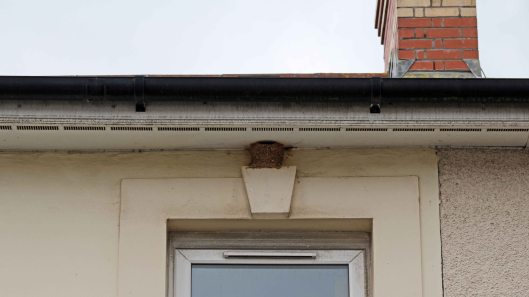
Take a blob of mud, mix with grass or straw, and build! A rounded shape works well. Add an interior lining of feathers, moss and other soft vegetable matter et voilà! You have the perfect nest in which to raise your brood of House martins.
170723 House martin nest (1)

There’s a street near my home, where the houses have the perfect architectural feature for House martin nests. Just below the eaves and above the first floor windows there are small abutments, the tops of which provide perfect little ledges where the House martins can prop their mud-pellet homes. On a recent walk past I counted twelve nests, though not all appeared to be occupied.

170723 House martin nest (2)
170723 House martin nest (3)
170723 House martin nest (4)
170723 House martin nest (5)
170723 House martin nest (6)
170723 House martin nest (7)

Of course, House martins (Delichon urbicum) would once have built their nests on cliffs – and some still do – but many have now become urban dwellers. The little colony in my local street is not uncommon as they prefer to dwell in groups, occasionally in large groups of several hundred nests though small groups of five to ten are more usual. Old nests are refurbished by returning birds, though not necessarily the original builders, and new nests are built where there’s space available, taking only one to two weeks to construct.

170723 House martin nest (8)

Though most humans live happily alongside their avian visitors, some get annoyed by their noise and the mess they create. Luckily, House martins and their nests are protected under the Wildlife and Countryside Act 1981 so it’s illegal to remove an active nest. I would feel privileged indeed to have a nest of these gorgeous little birds attached to my home.

170723 House martin nest (9)
170723 House martin nest (10)
Like Loading...

Birding at Goldcliff Lagoons

17 Monday Jul 2017

Posted by sconzani in birds, nature

≈ 6 Comments

Tags

birding, birdwatching, British birds, Buzzard, Common Gull, Glamorgan Bird Club, Goldcliff lagoons, Little egret, Newport Wetlands, waders

170717 Goldcliff reen

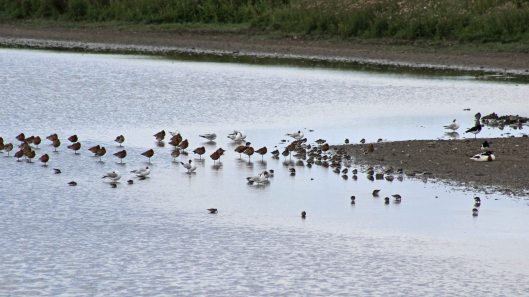
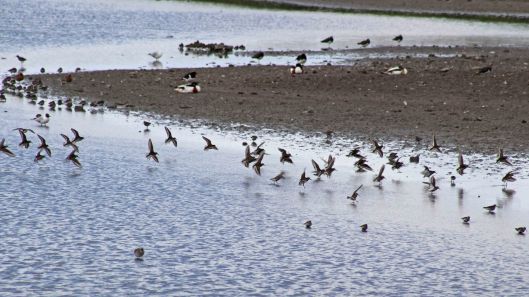
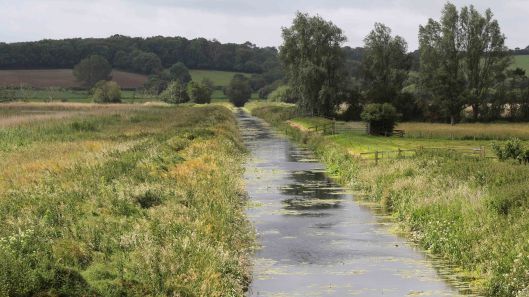
I thoroughly enjoyed my first visit to Goldcliff lagoons and Newport Wetlands with my Glamorgan Bird Club buddies this week. As their names suggest, these sites are perfectly suited to water birds and waders so in the two photos below the birds include Black-tailed godwits, Dunlins, Ringed and Little ringed plovers, Black-headed and Herring gulls, Oystercatchers and Turnstones, Lapwings and Shelducks.

170717 Waders (1)170717 Waders (2)

Apparently, 67 species were seen (or heard) though my personal list only totalled 44 – this is because the birds are mostly quite distant at these sites, and I don’t have binoculars, and I can only see so far with the 300mm lens on my camera, so some birds just elude my eyes.

170717 Buzzard
170717 Common & Black-headed gulls
170717 Little egret

I did, however, manage to grab a blurry shot of a water vole that a fellow birder spotted, and saw some lovely butterflies and moths, and my sightings did include my first ever Knot and Common gull, so I was happy.

170717 Green-veined white
170717 local sheep
170717 Water vole
Like Loading...

End of the day

15 Saturday Jul 2017

Posted by sconzani in birds, nature

≈ Leave a comment

Tags

birding, birdwatching, British birds, Corvus monedula, flock of jackdaws, jackdaw, Jackdaw flock, jackdaws roosting

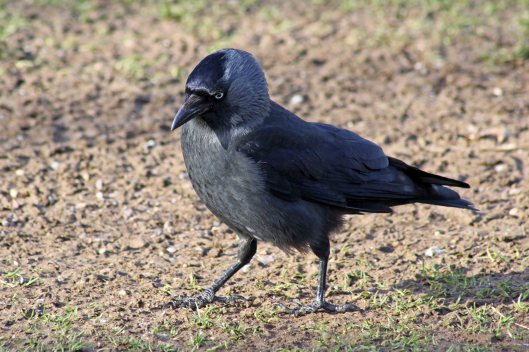
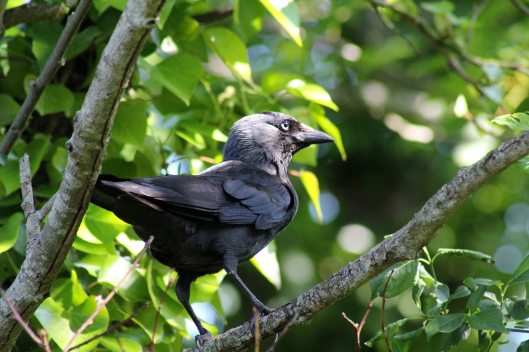
It’s 8pm and I hear them before I see them, squawking, arguing, flapping furiously. And then they arrive, all at once, circling and swooping and jostling, each trying to grab the best vantage point on the steeple, finials and rooftop of the church across the road. I’ve counted at least 40 but there are many more on neighbouring building roofs, chimney stacks and tv aerials. They don’t stay long, perhaps 10 minutes, and off they fly, to roost for the night.

170715 Jackdaws (2)

They’re jackdaws (Corvus monedula), members of the crow family, sociable, curious, intelligent, and devoted to their partners. I am particularly attracted to their bright blue eyes.

170715 Jackdaws (1)

170715 Jackdaws (4)
170715 Jackdaws (5)
170715 Jackdaws (6)


Like Loading...

Bird babies

10 Monday Jul 2017

Posted by sconzani in birds, nature

≈ Leave a comment

Tags

baby birds, birding, birdwatching, British birds, Coot, cootlet, cygnet, duckling, Mallard, Mute swan, Roath Park Lake

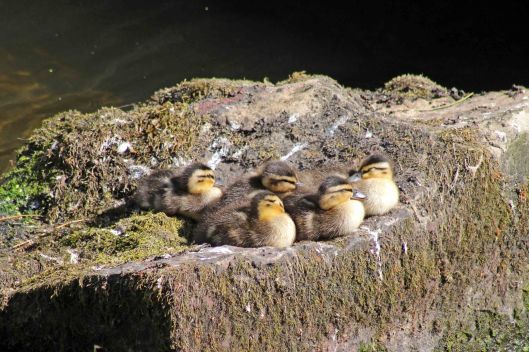
While it was a pleasure to see the Little egrets at Roath Park on Thursday, it was the other birds that brought me the most joy, especially because there were so many babies to be seen.

170710 bird babies (2)

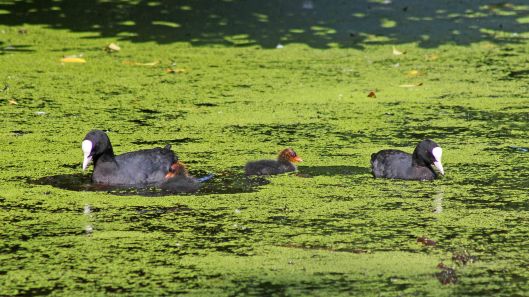
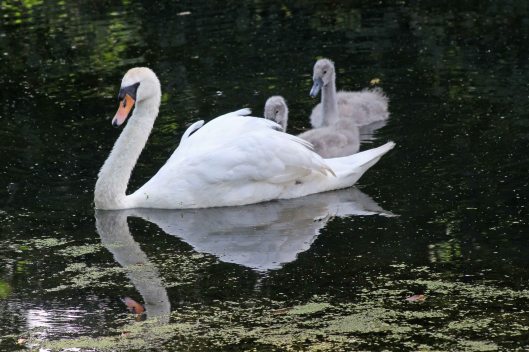
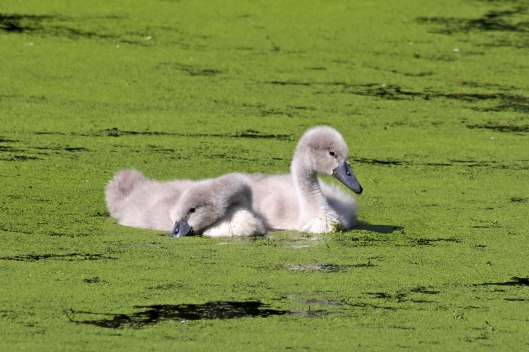
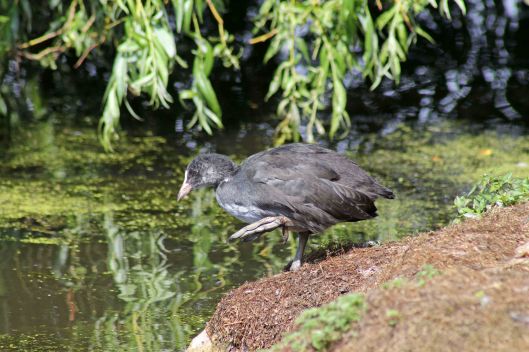
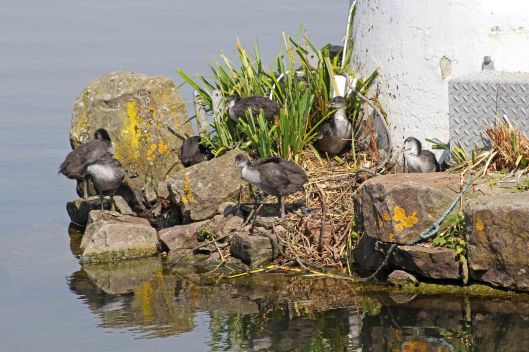
Cygnets, cootlets, ducklings, all at various stages of development, could be seen swimming, being fed by their parents and learning to feed themselves, and just sitting dozing in the warm sunshine.

170710 bird babies (1)170710 bird babies (3)

Even the base of the Scott memorial lighthouse has become a nursery for a family of seven little coots.

170710 bird babies (4)170710 bird babies (5)

I defy anyone to look at these and not smile!

170710 bird babies (6)

Like Loading...

Little egrets

09 Sunday Jul 2017

Posted by sconzani in birds, nature, parks

≈ 5 Comments

Tags

birding, birds, birdwatching, British birds, Egretta garzetta, Little egret

After reading reports of a Great white egret being seen at Roath Park lake last Wednesday evening, I decided a visit was in order for Thursday. Unfortunately, the Great white had flown the coop but I did manage to see Little egrets, which was almost as good.

170709 Little egrets (3)

Twenty years ago these birds were a rarity in Britain but, with the warming of our climate, the Little egret (Egretta garzetta) has been expanding its European range and was added to the British breeding list in 1996. They are still not that common in Cardiff so to see two birds together at the lake was a treat. (Apologies for the photos: the birds were a bit distant for my lens and their bright white makes them difficult to photograph in full sun.)

170709 Little egrets (4)
170709 Little egrets (1)
170709 Little egrets (2)
170709 Little egrets (5)

I wonder what their larger, much more common cousin and frequent lake visitor, the Grey heron, made of their visit.

170709 Grey heron (2)
170709 Grey heron (1)
Like Loading...

Cootlets, cootlings or cooties?

27 Tuesday Jun 2017

Posted by sconzani in birds, nature, spring

≈ 2 Comments

Tags

birding, birdwatching, British birds, chick, Coot, Coot babies, Coot chicks, Eurasian coot, Fulica atra


160627 Coot chicks (7)

The coot is a beauty but what of its chicks,
with their red baldy heads and orange hairy necks?

160627 Coot chicks (1)
160627 Coot chicks (2)
160627 Coot chicks (3)

Those gawdy colours soon change as they mature
to the timeless greys and blacks of haute couture.

160627 Coot chicks (4)
160627 Coot chicks (5)
160627 Coot chicks (6)

But what should we call these gorgeous wee cuties?
Should they be cootlets or cootlings or cooties?

160627 Coot chicks (8)

Like Loading...

Baby Blackcap

21 Wednesday Jun 2017

Posted by sconzani in birds, nature

≈ 4 Comments

Tags

birding, birdwatching, Blackcap, Blackcap chick, British birds, fledglings, Sylvia atricapilla

Okay, it’s probably more of a toddler than a baby but ’tis the season for young fledglings to be out and about, learning the ways of the world from their parents, so I thought I’d share some shots of one of four young Blackcaps (Sylvia atricapilla) that were harassing their parents most vociferously at Cosmeston recently.

170621 Blackcap fledgling (1)
170621 Blackcap fledgling (2)
170621 Blackcap fledgling (3)

This little one wasn’t quite sure what to make of the human with the camera pointed in its direction. I feel it was giving me a rather angry look in the photo above right and the caption for the image below might well read, ‘Are you still there?’

170621 Blackcap fledgling (4)

Like Loading...

Meet the Robins

19 Monday Jun 2017

Posted by sconzani in birds, nature, parks

≈ 6 Comments

Tags

birding, birdwatching, British birds, Cosmeston Lakes Country Park, fledgling robin, robin

Let me introduce you to Mr and Mrs Robin and their two children. They live at Cosmeston Lakes Country Park. Mr (or Mrs – I can’t actually tell male and female robins apart) came to greet me when I was standing by one the lakes yesterday, watching the ducks. He (or she) hopped over to within inches of where my hand was resting on a railing and looked at me with something akin to desperation. “Do you happen to have any food, lady?” Then, Mrs (or Mr) Robin popped up on to the closest fence post and also gave me a pleading look, “Please!”.

170619 Robin family (1)
170619 Robin family (2)

Luckily, I did have some seed in my bag so spread a little on top of another fence post. They were there immediately, picking up two or three seeds and flitting into a nearby tree. And then I saw the reason for their desperation – two ravenous fledglings were nagging them for food. Truth be told, the fledglings were probably old enough to feed themselves and did, in fact, pop down and peck around a bit. But Mum and Dad obviously still felt obliged to feed their youngsters if they could. I was very pleased to help out.

170619 Robin family (3)
170619 Robin family (4)
Like Loading...

Birding at RSPB Ham Wall

12 Monday Jun 2017

Posted by sconzani in birds, nature

≈ 6 Comments

Tags

birding, birdwatching, Bittern, Black-tailed godwits, Blackcap, British birds, Glossy ibis, Great Crested Grebe, Great white egret, Little egret, Marsh harrier, Mute swan, RSPB Ham Wall, Shapwick Heath

Yesterday was an absolutely fabulous birding day, an outing with my friends from the Glamorgan Bird Club to the RSPB’s Ham Wall Nature Reserve near Glastonbury in Somerset. We also ventured briefly into the neighbouring National Nature Reserve of Shapwick Heath but I reckon you’d need a week at least to explore both places thoroughly and at all times of the day.

170612 RSPB Ham Wall

Most of the birds were rather distant so you’ll have to excuse my poor photos but I was able to see the birds clearly as many of the bird club members have good ’scopes and were happy to share. Some birding highlights were:

170612 Great white egret
170612 Great white egret (2)

* three species of Egret: Cattle, Little and lots of Great whites.

170612 Little egret & Glossy ibis

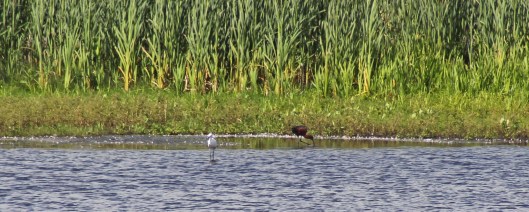
* my first sightings of a Glossy ibis (seen here with a Little egret) and a Red-footed falcon

170612 Marsh harrier (1)
170612 Marsh harrier (2)
170612 Marsh harrier vs Bittern

* more Bitterns than you could point a lens at and several beautiful Marsh harriers, gliding seemingly effortlessly over the reed beds. These two birds came into conflict at one point (fuzzy photo above right), with the Bittern presumably trying to defend its young against harrier predation.

170612 Baby Great crested grebe
170612 Baby Blackcap

170612 Baby Mute swans

* lots of babies, including those of Great crested and Little grebes, Mute swan, Tufted duck, Coot and Blackcap.

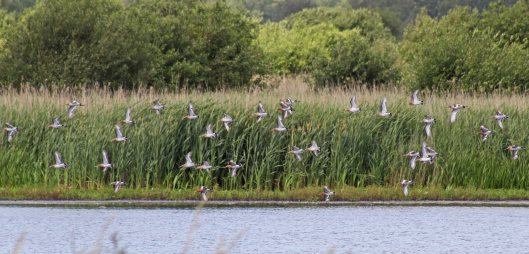
170612 Black-tailed godwits

* the Black-tailed godwits flying over the waters at Shapwick Heath.

On the way home, with the help of my car mates, I came up with an as-yet-unconfirmed list of 57 species seen on the day, and that was only the birds – more on the other creatures in tomorrow’s blog.

Like Loading...

The awesome avocet

16 Tuesday May 2017

Posted by sconzani in birds, coastal fauna, nature

≈ 3 Comments

Tags

Avocet, Avocet chicks, Avocet in flight, birding, birdwatching, British birds, Recurvirostra avosetta, RSPB logo, Rye Harbour Nature Reserve

Awesome is a much overused word but I feel my use of it here is justified – I truly was in awe of these most beautiful birds, seen at the Rye Harbour Nature Reserve in East Sussex last Saturday.

170516 avocets (1)

The Avocet (Recurvirostra avosetta) is one of Britain’s conservation success stories, hence its use as a logo by the Royal Society for the Protection of Birds. After years of being killed for food and taxidermy and having its eggs robbed by collectors, the Avocet disappeared from its British breeding sites around 1842, and it wasn’t until 1947 that just four pairs were rediscovered breeding in Suffolk. Incredibly, this was, in part, due to the Second World War: damage from an exploding bomb had inadvertently recreated their ideal habitat of shallow ponds and muddy islands near the seaside at Havergate and, at Minsmere, where the coastal marshes had been flooded to prevent enemy troops invading, shallow ponds also formed when the marshes began to dry up.

170516 avocets (3)
170516 avocets (4)
170516 avocets (5)
170516 avocets (6)

Further breeding sites have now been created and protected (at Rye Harbour, with electric fences to deter predators like foxes and badgers) in suitable areas around Britain’s coastline, and the number of breeding pairs is estimated to be around 500. Long may their success continue!

170516 avocets (2)

Like Loading...
← Older posts
Newer posts →

About me

sconzani

sconzani

I'm a writer and photographer; researcher and blogger; birder and nature lover; countryside rambler and city strider; volunteer and biodiversity recorder.

View Full Profile →

Follow earthstar on WordPress.com

Enter your email address to follow this blog and receive notifications of new posts by email.

Recent blog posts

  • First dragon of 2026 May 4, 2026
  • Lords-and-ladies May 3, 2026
  • The Fox and the crow May 2, 2026
  • More Green tigers May 1, 2026
  • Cute cootlet April 30, 2026

From the archives

COPYRIGHT

Unless otherwise acknowledged, the text and photographs on this blog are my own and are subject to international copyright. Nothing may be downloaded or copied without my permission.

Fellow Earth Stars!

  • Unknown's avatar
  • Unknown's avatar
  • Unknown's avatar
  • Unknown's avatar
  • Unknown's avatar
  • Unknown's avatar
  • Unknown's avatar
  • Unknown's avatar
  • Unknown's avatar
  • Unknown's avatar
  • Unknown's avatar
  • Unknown's avatar
  • Unknown's avatar
  • Unknown's avatar
  • Unknown's avatar
  • Unknown's avatar
  • Unknown's avatar
  • Unknown's avatar
  • Unknown's avatar
  • Unknown's avatar
  • Unknown's avatar
  • Unknown's avatar
  • Unknown's avatar
  • Unknown's avatar
  • Unknown's avatar
  • Unknown's avatar
  • Unknown's avatar
  • Unknown's avatar
  • Unknown's avatar
  • Unknown's avatar
  • Unknown's avatar
  • Unknown's avatar
  • Unknown's avatar
  • Unknown's avatar
  • Unknown's avatar
  • Unknown's avatar
  • Unknown's avatar
  • Unknown's avatar
  • Unknown's avatar
  • Unknown's avatar
  • Unknown's avatar
  • Unknown's avatar
  • Unknown's avatar
  • Unknown's avatar
  • Unknown's avatar
  • Unknown's avatar
  • Unknown's avatar
  • Unknown's avatar
  • Unknown's avatar
  • Unknown's avatar

Blog at WordPress.com.

Privacy & Cookies: This site uses cookies. By continuing to use this website, you agree to their use.
To find out more, including how to control cookies, see here: Cookie Policy
  • Subscribe Subscribed
    • earthstar
    • Join 643 other subscribers
    • Already have a WordPress.com account? Log in now.
    • earthstar
    • Subscribe Subscribed
    • Sign up
    • Log in
    • Report this content
    • View site in Reader
    • Manage subscriptions
    • Collapse this bar

Loading Comments...

You must be logged in to post a comment.

    %d