• ABOUT
  • BIRDING 2018
  • Birding 2019
  • BLOG POSTS
  • Butterflies 2018
  • Resources

earthstar

~ a celebration of nature

earthstar

Tag Archives: British birds

Bring out the Bunting!

07 Tuesday Feb 2017

Posted by sconzani in birds, nature, parks

≈ 6 Comments

Tags

birding, birdwatching, bodkin, bog sparrow, British birds, chink, Cosmeston Lakes Country Park, Emberiza schoeniclus, pit sparrow, Reed bunting

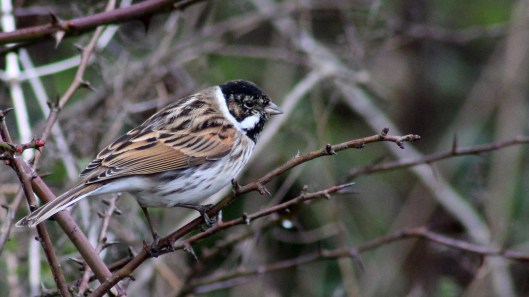
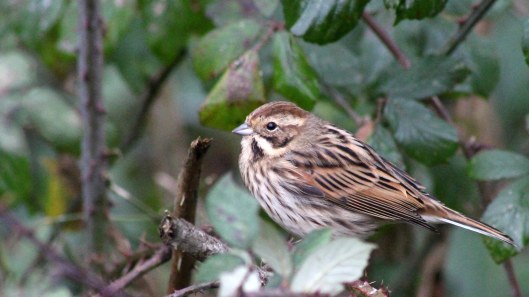
As its name implies, the Reed Bunting (Emberiza schoeniclus) is most at home in the reed beds and rush-filled pastures that surround many of Britain’s freshwater lakes and ponds, though it has been encroaching on farmlands and into woodlands during the last 80-odd years, perhaps in response to a reduction in its preferred wetland habitats. Luckily, it’s flourishing in the expanses of reed beds that fringe the conservation lake at Cosmeston Lakes Country Park, which is where I photographed these little beauties last Sunday.
170207-reed-bunting-2

170207-reed-bunting-1

I particularly like some of their common names (as supplied by Buczacki’s Fauna Britannica): black bonnet, coaly hood, bog sparrow and chink (Scotland); bodkin (Lancashire); pit sparrow (Cheshire; Colin blackhead (Renfrewshire); seave cap and toad snatcher (Yorkshire); ring bird and ring fowl (Aberdeenshire). I also particularly like the male bird’s large white and very stylish moustache.

170207-reed-bunting-4
170207-reed-bunting-3
Like Loading...

Incoming

06 Monday Feb 2017

Posted by sconzani in birds, nature

≈ 3 Comments

Tags

birding, birds landing on lake, birdwatching, British birds, Cosmeston Lakes Country Park, Tufted duck

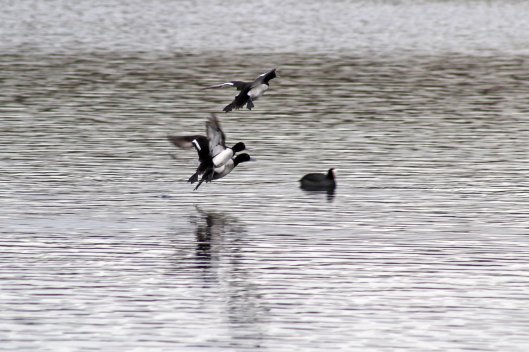
170206-tufted-ducks-landing-on-lake-1170206-tufted-ducks-landing-on-lake-2170206-tufted-ducks-landing-on-lake-3
‘Cosmeston Lakes West Lake is pleased to announce the safe arrival of Tufted duck flight 0502 from Cosmeston Lakes East Lake.’

Like Loading...

‘Little Trotty Wagtail’

04 Saturday Feb 2017

Posted by sconzani in birds, nature

≈ 4 Comments

Tags

birding, birdwatching, British birds, John Clare, Motacilla alba, Pied wagtail, poem about pied wagtail

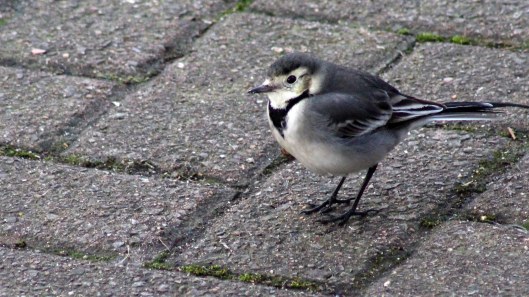
Little trotty wagtail, he went in the rain
And, tittering tottering sideways, he ne’er got straight again.
He stooped to get a worm and look’d up to catch a fly
And then he flew away ere his feathers they were dry.

170204-pied-wagtail-3

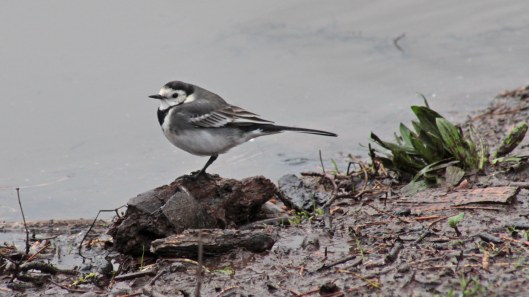
Little trotty wagtail, he waddled in the mud
And left his little foot marks, trample where he would.
He waddled in the water pudge and waggle went his tail
And chirrupt up his wings to dry upon the garden rail.

170204-pied-wagtail-1

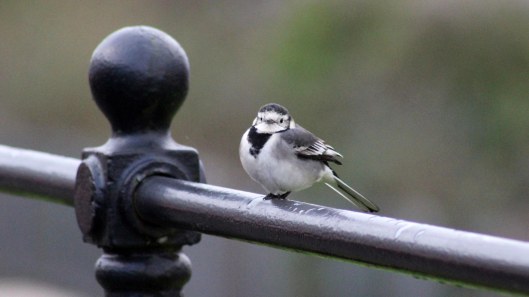
Little trotty wagtail, you nimble all about
And in the dimpling water pudge you waddle in and out.
Your home is nigh at hand and in the warm pigsty,
So little Master Wagtail I’ll bid you a ‘Good bye’.

170204-pied-wagtail-2

~ John Clare (1793 – 1864), the ‘Northamptonshire Peasant Poet’ who is often regarded as one of the most important poets of the natural world.

Like Loading...

Cardiff Bay birds

02 Thursday Feb 2017

Posted by sconzani in birds, nature

≈ 5 Comments

Tags

Anthus petrosus, Arenaria interpres, birding, birdwatching, British birds, Cardiff Bay, Common redshank, Rock pipit, Tringa totanus, Turnstone

My move closer to the seaside is already paying off with more and different bird sightings. Meet large, the Common redshank (Tringa totanus); medium, the Turnstone (Arenaria interpres); and small, the Rock pipit (Anthus petrosus). (Apologies for the poor images – it’s been a very grey week in Cardiff!)

170202-common-redshank
170202-turnstone
170202-rock-pipit

As they enjoy very similar diets of insects, crustaceans and molluscs, these birds were all foraging together, hipping and hopping, stalking and walking, stumbling and grumbling their way along the water’s edge of the artificial stony seawall where the River Ely now flows into the equally artificial Cardiff Bay. Though some of these birds may be residents, many also come from foreign parts to over-winter in Britain: up to half the winter population of Redshanks comes from Iceland; Turnstones can come from such countries as Canada and Greenland; and some Rock pipits come from Norway. I guess the British winters aren’t so bad after all.

170202-turnstones
170202-redshanks
Like Loading...

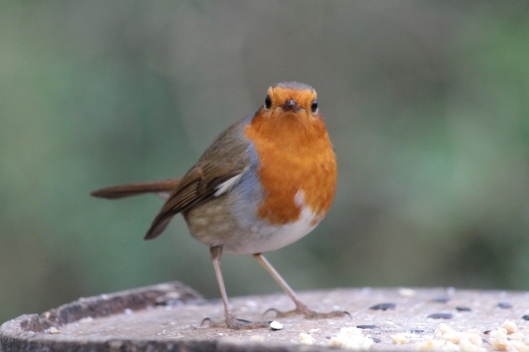
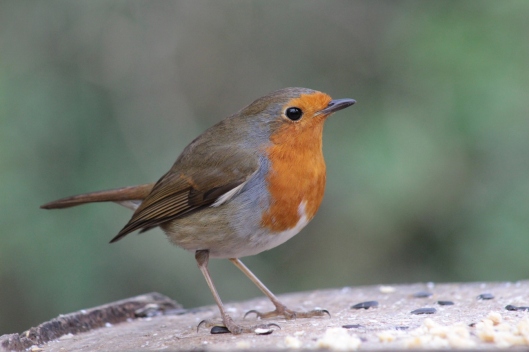
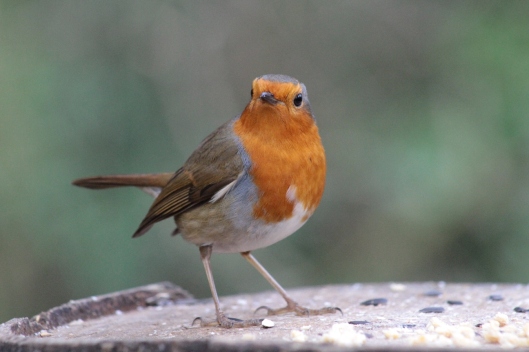
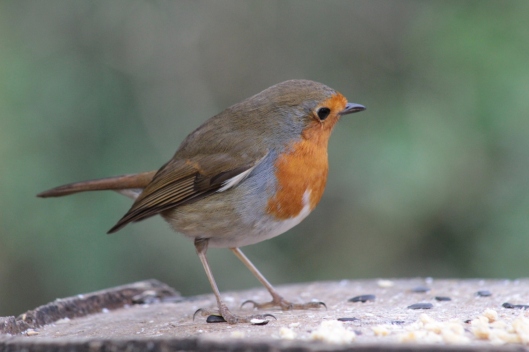
Conversations with robins: 6

28 Saturday Jan 2017

Posted by sconzani in birds, nature

≈ 13 Comments

Tags

birding, birdwatching, British birds, British robin, conversations with robins, robin

170128-conversations-with-robins-56-1

Robin: ‘The food table’s looking a bit empty!’

170128-conversations-with-robins-56-2

Me: ‘Well, hello to you, too, Robin.’
Robin: ‘Oh, okay. Hello, lady.’

170128-conversations-with-robins-56-3

Me: ‘Nice to see you today.’
Robin: ‘Never mind the small talk. It’s cold and I’m hungry!’

170128-conversations-with-robins-56-4

Me: ‘So, what else is new?’
Robin: ‘I’m still not seeing any food here. Suet is my favourite, y’ know.’

170128-conversations-with-robins-56-5

Me: ‘Yes, I know. And you’ll glare at me until I give you some, won’t you?’
Robin: ‘Darn right!’

Like Loading...

The bounteous cotoneaster

19 Thursday Jan 2017

Posted by sconzani in birds, nature, winter

≈ 6 Comments

Tags

berries, birding, birdwatching, blackbird, British birds, Cotoneaster berries, Redwing, Roath Park, winter berries for birds, Woodpigeon

They may look luscious and juicy but Cotoneaster berries contain toxins, which means that many people consider them poisonous. (There’s a good article about whether or not they really are poisonous on the Poison Garden website.) Yet the blackbirds, thrushes and woodpigeons seem to enjoy them and, when the more desirable berries like rowan have been consumed, these nutritious berries help to sustain the birds through the lean winter months.

170119-cotoneaster-pigeon

Roath Park has several cotoneaster trees that are covered in bright red and dull yellow berries at the moment so, as I walked home from the train station this afternoon I kept an eye out for feeding birds. And I got lucky.

170119-cotoneaster-blackbird-1
170119-cotoneaster-blackbird-2

The hefty woodpigeons were easy to spot as their clambering made the branches shake a lot. The blackbirds were more delicate but also more entertaining, as they performed their aerial trapeze, clinging to branches and stretching as far sideways or upside down as they could to reach the furthest fruit. The bonus of the day was a group of about five redwings also feeding spasmodically in these trees. They were more skittish, flitting quickly on to the very top branches for some rapid pecking but, always watchful, flitting away again to higher nearby trees as people walked past along the pathway.

170119-cotoneaster-redwing

Like Loading...

Roath Park Bird Walk

15 Sunday Jan 2017

Posted by sconzani in birds, nature, parks

≈ 7 Comments

Tags

birding, birdwatching, British birds, Grey wagtail, Jay, Pied wagtail, Roath Park, Roath Park Lake, robin, Tufted duck

My imminent house-moving was getting to me today and, as I’m already about two-thirds packed with a week still to go, I allowed myself an afternoon off for a long walk around my local parks for a Nature fix.

170115-grey-wagtail

It always amazes me how many species of birds I can see in a walk around Roath Park Lake. Today it was 28: Carrion crow, Magpie, Jay, Robin, Dunnock, Lesser black-backed gull, Black-headed gull, Canada goose, Barnacle goose, Greylag goose, Mallard, Manky mallard and Aylesbury duck, Coot, Moorhen, Pochard, Tufted duck, Teal, Shoveler, Pied wagtail, Grey wagtail, Redwing, Song thrush, Cormorant, Mute swan, House sparrow, Feral pigeon and Woodpigeon (though purists might not count the Aylesbury duck, Manky mallards or Feral pigeons as extra species). Still, I think it’s an impressive total. These are just a very small selection of the photos I took …

170115-jay
170115-pied-wagtail
170115-robin
170115-tufted-duck-female
Like Loading...

Cornish turnstones

09 Monday Jan 2017

Posted by sconzani in birds, nature

≈ 10 Comments

Tags

Arenaria interpres, birding, birdwatching, British birds, Turnstone, turnstones as scavengers, turnstones in Cardiff, turnstones in Cornwall

I’d only seen these delightful little birds, the Turnstones (Arenaria interpres), once before I went to Cornwall and they were doing as their name suggests, turning over stones around Cardiff Bay, looking for the tiny insects, molluscs and crustaceans they like to eat.

170101-turnstones

the Cardiff Turnstones

However, though they looked exactly the same, the Cornish Turnstones were different birds entirely. No turning over muddy wet stones for these cute creatures – instead, they’ve followed the example of the gulls (and the occasional Starling) and learnt that scavenging from humans is a much easier way to obtain food, with crumbs of Cornish pasty their morsels of choice!

170101-cornish-turnstones-1
170101-cornish-turnstones-3
170101-cornish-turnstones-4

Turnstones were present in all the little harbour towns we visited and, though their habit is to scurry very quickly to and fro, they appeared very comfortable around people. They are adorable little birds and a pleasure to watch.

170101-cornish-turnstones-2

Like Loading...

Conversations with jays: 1

07 Saturday Jan 2017

Posted by sconzani in birds, nature, winter

≈ 10 Comments

Tags

birding, birdwatching, British birds, conversations with jays, Eurasian jay, hungry bird, Jay

170107-jay-1

‘Hey, lady. I saw you talking to that robin just now. Why don’t you ever talk to me?

170107-jay-2

‘I get hungry in the wintertime too, y’know, and I’m just as handsome as that robin!’

170107-jay-3

‘I have sharp eyesight so I can see that you’ve still got some seed in that little tub you’re holding.’

170107-jay-4

‘So, how about throwing a cold wet hungry but gorgeous jay a handful of seeds …. please.’

170107-jay-5

I’m sure you’ll be pleased to know the cold wet but gorgeous jay is no longer hungry!

Like Loading...

‘Dedicated Naturalist’: The songs of birds

02 Monday Jan 2017

Posted by sconzani in 'Dedicated Naturalist' Project, birds, nature

≈ 6 Comments

Tags

birding, birdsong, birdwatching, British birds, Dr Mary Gillham, Mary Gillham Archive Project

A snippet from my volunteer work on the ‘Dedicated Naturalist’ Project, helping to decipher and digitise, record and publicise the life’s work of naturalist extraordinaire, Dr Mary Gillham.

Mary’s notes from a walk through the Cwrt yr Ala basin, near Dinas Powys, on 7 September 1975 are so very descriptive that I fancy I can almost hear the birds she heard:

Robin ‘ticking’ at our disturbance. Another squealing like a young bird – the squeal is a late summer call. One ‘playing dipper’ on stone in stream below Cwrt yr Ala lakes.

170102-robin

Wrens singing. House martins chirping. Swallows twittering. Long-tailed tits churring, blue tits scolding, woodpigeon cooing, jay screeching, magpie chattering, chaffinch chinking, bullfinch sibilant piping, pheasant barking. Chiffchaff and willow warbler, though with very different songs, have similar calls today, difficult to distinguish. Generally, as one would expect from the song, the chiffchaff has a more clipped, emphatic, less musical call, the willow warbler a softer one.

170102-jay

Goldcrests alarm note, blackbirds ditto. Mistle thrushes on wires saying nothing, song thrush on road ditto. Jackdaws and crows croaking, ravens flew past with scarcely a honk. Goldfinch. Grey wagtails – 3 on lower lake and spillway, one on stream below – have a more delicate call than the pied wagtails. Moorhen cronking on lake.

170102-jackdaw

For the full story about the Mary Gillham Archive Project, check out our website, and follow our progress on Facebook and on Twitter.

Like Loading...
← Older posts
Newer posts →

About me

sconzani

sconzani

I'm a writer and photographer; researcher and blogger; birder and nature lover; countryside rambler and city strider; volunteer and biodiversity recorder.

View Full Profile →

Follow earthstar on WordPress.com

Enter your email address to follow this blog and receive notifications of new posts by email.

Recent blog posts

  • Gorse and its weevil April 5, 2026
  • Chiffchaffs chiffchaffing April 4, 2026
  • Bearded tit!!! April 3, 2026
  • A Portland Bill Kestrel April 2, 2026
  • A proliferation of Peacocks April 1, 2026

From the archives

COPYRIGHT

Unless otherwise acknowledged, the text and photographs on this blog are my own and are subject to international copyright. Nothing may be downloaded or copied without my permission.

Fellow Earth Stars!

  • Unknown's avatar
  • Unknown's avatar
  • Unknown's avatar
  • Unknown's avatar
  • Unknown's avatar
  • Unknown's avatar
  • Unknown's avatar
  • Unknown's avatar
  • Unknown's avatar
  • Unknown's avatar
  • Unknown's avatar
  • Unknown's avatar
  • Unknown's avatar
  • Unknown's avatar
  • Unknown's avatar
  • Unknown's avatar
  • Unknown's avatar
  • Unknown's avatar
  • Unknown's avatar
  • Unknown's avatar
  • Unknown's avatar
  • Unknown's avatar
  • Unknown's avatar
  • Unknown's avatar
  • Unknown's avatar
  • Unknown's avatar
  • Unknown's avatar
  • Unknown's avatar
  • Unknown's avatar
  • Unknown's avatar
  • Unknown's avatar
  • Unknown's avatar
  • Unknown's avatar
  • Unknown's avatar
  • Unknown's avatar
  • Unknown's avatar
  • Unknown's avatar
  • Unknown's avatar
  • Unknown's avatar
  • Unknown's avatar
  • Unknown's avatar
  • Unknown's avatar
  • Unknown's avatar
  • Unknown's avatar
  • Unknown's avatar
  • Unknown's avatar
  • Unknown's avatar
  • Unknown's avatar
  • Unknown's avatar
  • Unknown's avatar

Blog at WordPress.com.

Privacy & Cookies: This site uses cookies. By continuing to use this website, you agree to their use.
To find out more, including how to control cookies, see here: Cookie Policy
  • Subscribe Subscribed
    • earthstar
    • Join 642 other subscribers
    • Already have a WordPress.com account? Log in now.
    • earthstar
    • Subscribe Subscribed
    • Sign up
    • Log in
    • Report this content
    • View site in Reader
    • Manage subscriptions
    • Collapse this bar
 

Loading Comments...
 

You must be logged in to post a comment.

    %d