It can be tricky to find a subject for the letter X in this countdown but this year it was made easier when I found a new fly last July (see Fly: Xyphosia miliaria, 31 July). Here is that little cutie.

29 Monday Dec 2025
Posted in insects
It can be tricky to find a subject for the letter X in this countdown but this year it was made easier when I found a new fly last July (see Fly: Xyphosia miliaria, 31 July). Here is that little cutie.
11 Thursday Sep 2025
Posted in insects
Tags
British flies, British fruit flies, British Tephritidae, flies on Ragwort, fruit fly, Merzomyia westermanni, Tephritidae
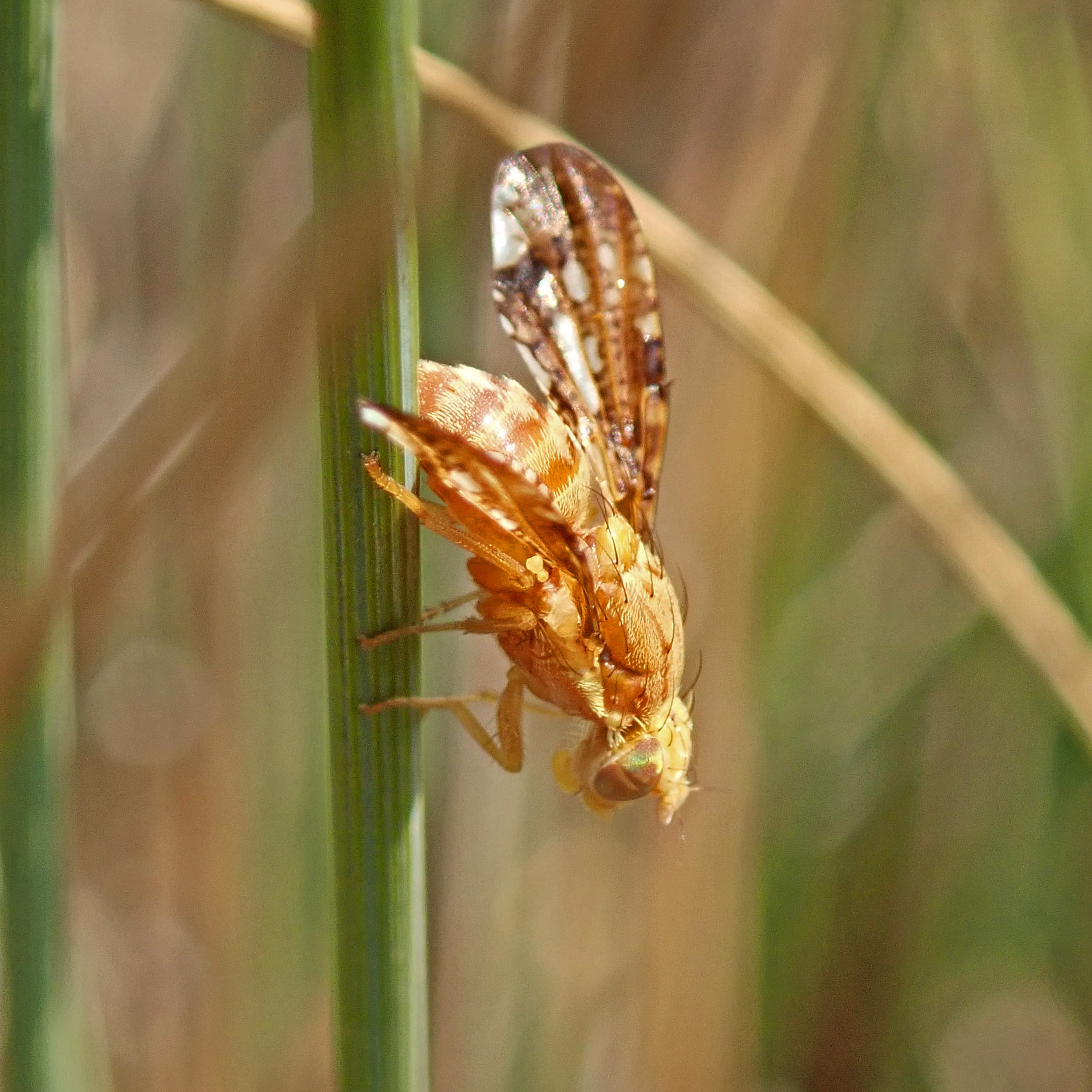
This little beauty is one of the Tephritidae, the fruit flies, and its name is Merzomyia westermanni. As I’m sure you all know by now, flies can be tricky to identify but, fortunately, the patterns on the wings of this creature are unique so, as long as you get a clear photo of its wings, it can be recorded with confidence. Even better, in my brief experience of this species – I’ve only seen them twice, they are more settled, more confiding than many fly species so getting a photo is less difficult. Look for these fruit flies in grassland, particularly around the Ragwort flowers they favour.
31 Thursday Jul 2025
Posted in insects
Tags
British flies, fruit flies, gall flies, gall-causing flies, thistle gall flies, Xyphosia miliaria
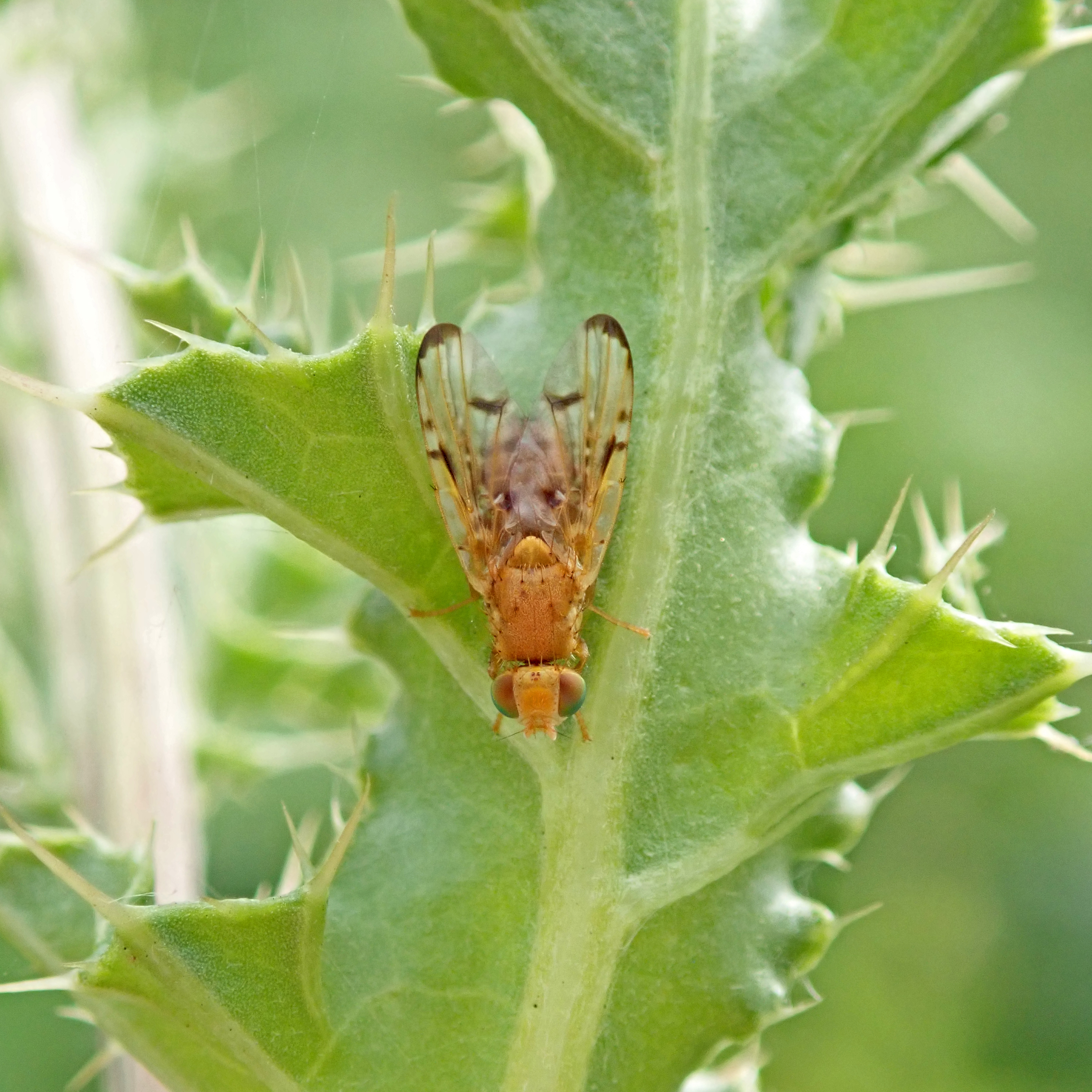
Isn’t this a lovely looking little creature? Meet the fruit fly, Xyphosia miliaria, which seems to have a couple of common names: Mottled thistle fly (presumably because of its patterned wings) and Orange thistle picturewing. The adult flies can be seen on or around thistles any time from May through to September. Like Urophora cardui (see More galls, part 2, October 2017) and Urophora stylata (Urophora stylata gall flies, only recently published, on 2 July), Xyphosia miliaria causes galls to form on its host plant, though this little fly pierces and lays its eggs within the plant’s flower head not its stems. Also, unlike the Urophora species, which specialise in a single thistle species, this little fruit fly isn’t fussy about which thistle species it uses as a larval host.

25 Friday Jul 2025
Posted in insects
Tags
bristly black and red fly, British flies, British insects, Eriothrix rufomaculata, fly, insect, parasitic fly larvae
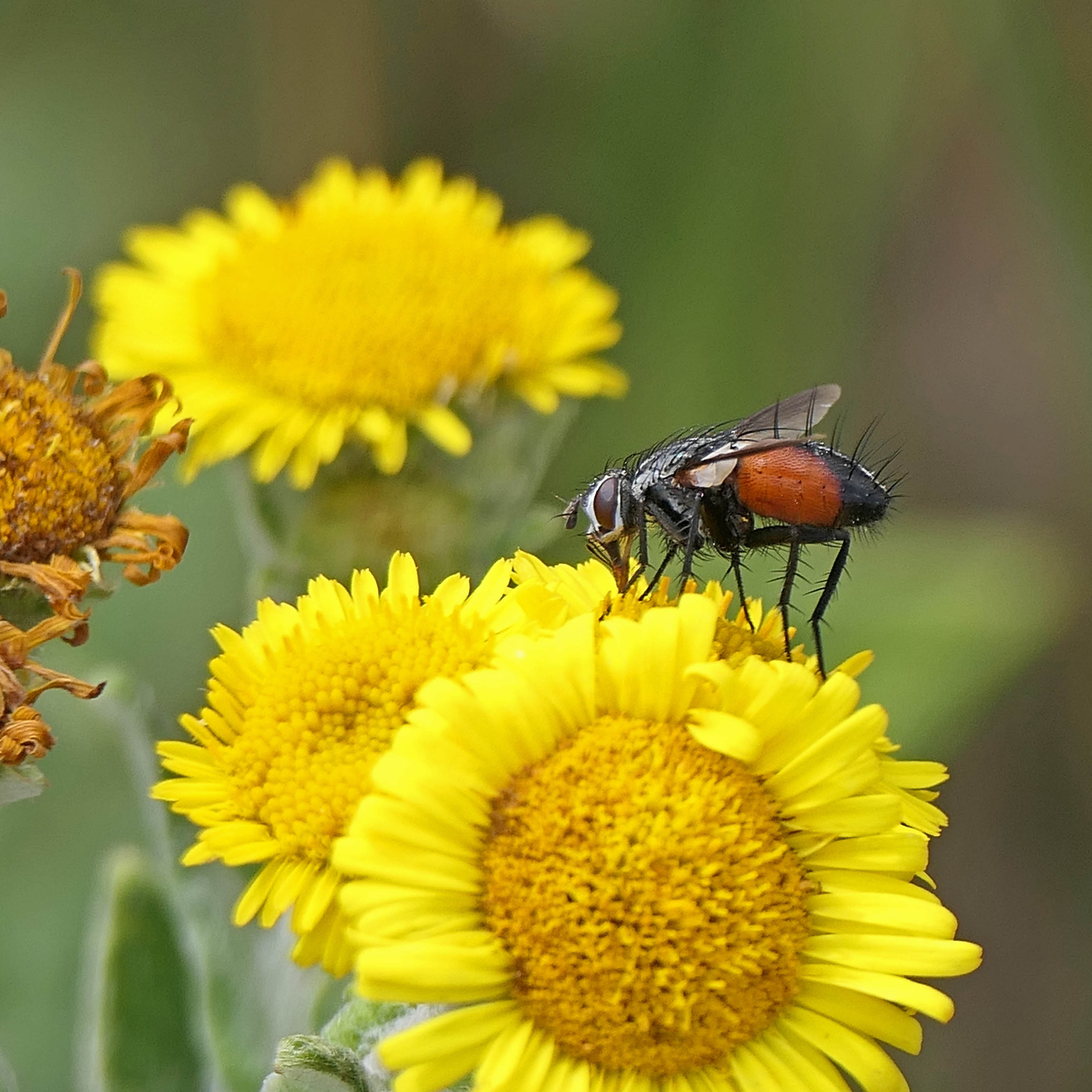
Over the past week I’ve had several sightings of this little fly, Eriothrix rufomaculata, and, though I usually shy away from trying to identify flies, this one is very distinctive. Amongst the checklist of features to look for that are listed on the Naturespot website entry for Eriothrix rufomaculata are the ‘red abdominal side patches’ ♥, ‘silvery face’ ♥, ‘projecting mouth edge’ ♥, and ‘slightly shaded wings’ ♥. It’s also very bristly.
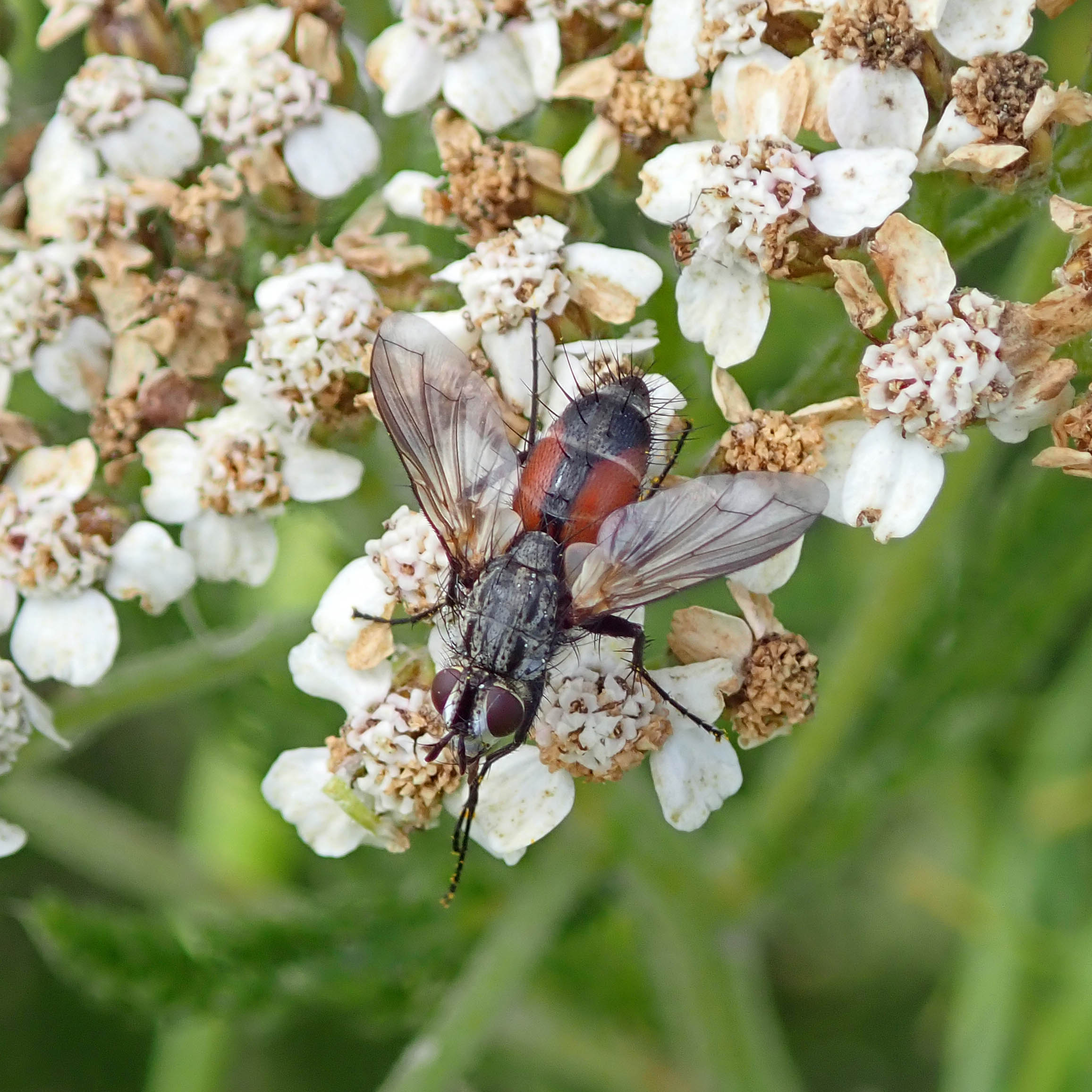
Though the adults are supposedly active from June to October, I presume I’m seeing more of these flies now due to recent hatchings. Look for them feeding on flowers, particularly umbellifers and flowers from the Daisy family, which includes everything from Ragwort to Fleabane, Yarrow to Hemp-agrimony, thistles to Knapweeds, and many more.
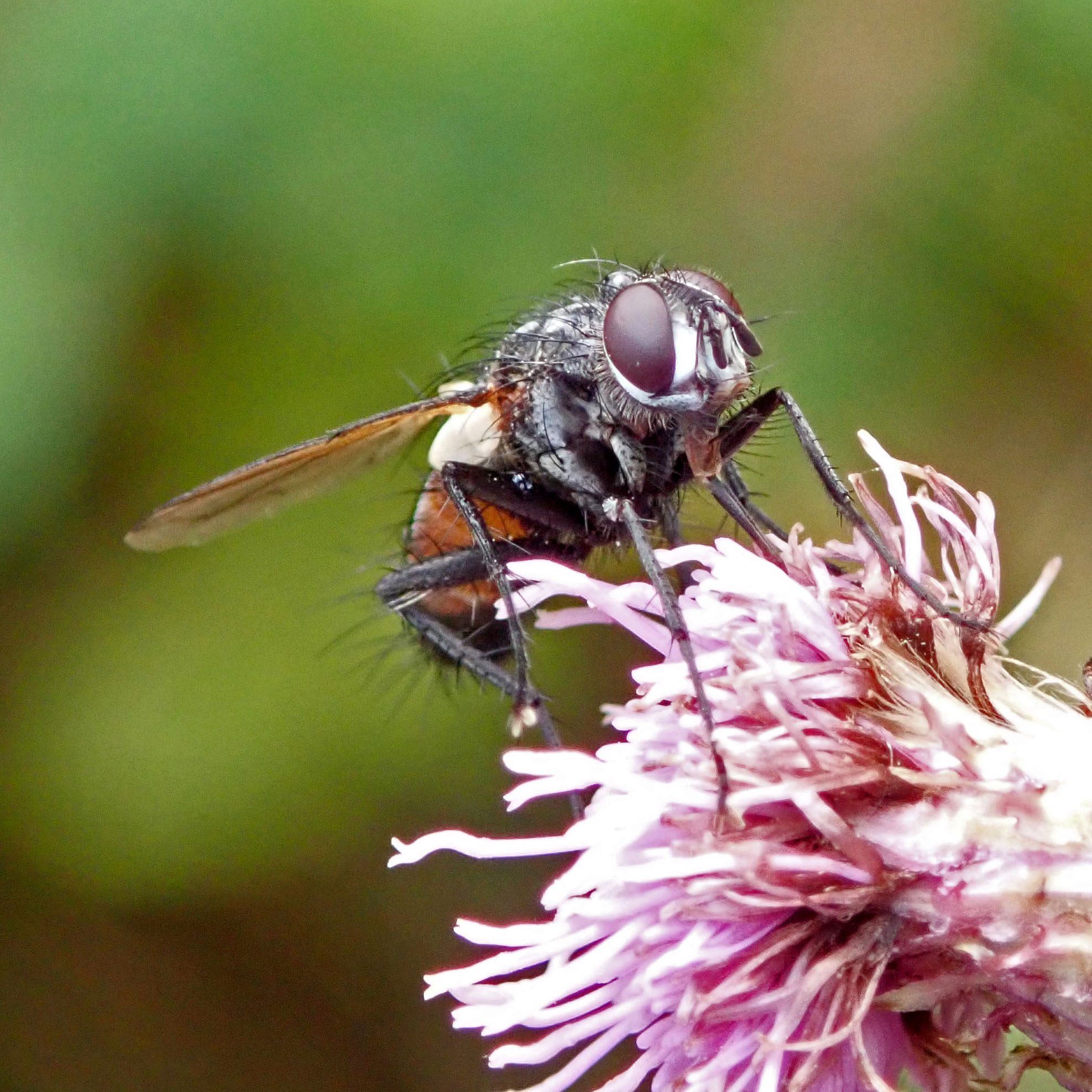
Like many creatures, these flies have a dark side to their life cycle: their larvae are parasitic, feeding on the larvae of various moth species, including the little grass moths (the Crambidae) and the very beautiful tiger moth species (the Erebidae).
26 Monday May 2025
Posted in insects
Its name sounds like an incantation a Harry Potter acolyte might chant to turn an annoying peer into a toad, though Google AI suggests: ‘The genus name Poecilobothrus comes from the Greek words “poikilos” (various, or variegated) and “botryx” (a cluster of grapes), likely referring to the diverse and ornate nature of some dance fly species’ and ‘The species name nobilitatus is derived from the Latin word “nobilitatus,” meaning “made noble” or “ennobled,” which could relate to the elegant or showy appearance of the fly, particularly during courtship.’ I can certainly agree that this little long-legged fly is an ornate and elegantly formed creature.

I don’t usually have much luck identifying fly species but, fortunately for me, this one was a male and so it has distinctive white markings on the end of its wings, which it flashes at potential mates during its courtship display. I spotted this specimen sitting on vegetation next to a local footpath but they are usually to be found in wet locations, often sitting on weed floating on the surface of a pond or slow-moving stream.
19 Monday May 2025
Posted in insects
Tags
British flies, Herina frondescentiae, picture-winged flies, Scribbled wingwaver, tiny fly with patterned wings
Is this the most charming insect name you’ve ever heard? The Scribbled wingwaver (Herina frondescentiae), one of the aptly named picture-winged flies, does indeed wave its pretty little wings around. Whether this is to attract the attention of other passing wingwavers or to warn off potential predators, I’m not sure, but it certainly attracted my eye.
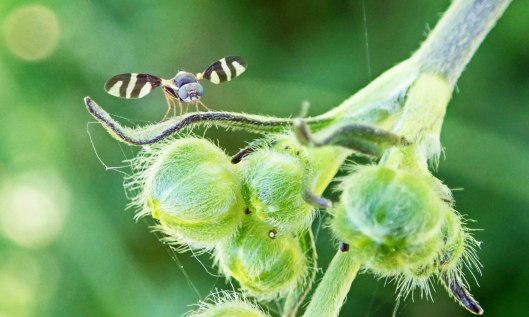
At just 3mm long, this is one of Britain’s smallest picture-winged flies. The one shown here is a female, which is why she has that large pointy bit on her rear end; it’s for depositing her eggs, possibly in rotting vegetation, but the species’ life cycle seems not to have been investigated fully yet.
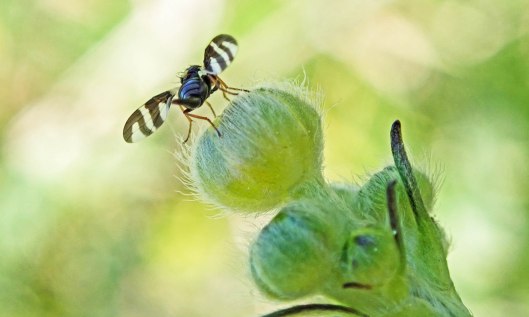
According to the Naturespot website, it usually inhabits ‘wet, rush-dominated habitats and brownfield sites’. I found mine during a wander around some local farm fields that have been earmarked for a housing development, though the site is adjacent to an old abandoned railway line so I guess that counts as brownfield. Apparently, the Scribbled wingwaver is quite common throughout Britain, so do keep your eyes peeled for a tiny fly waving its patterned wings at you as you walk by.
21 Monday Apr 2025
Tags
British flies, British leafmines, Cerodontha, fly pupa, leaf-mining flies, leafmines on Carex flacca, leafmines on Glaucous sedge
While checking Glaucous sedge (Carex flacca) for the leaf-mining moth larva I featured in last Monday’s post (Leafmines: Elachista cinereopunctella), this time at a different location, I found an altogether different leafminer. This larva had also munched a linear gallery inside the leaf but I knew when I saw the tiny black speck within the mine that this miner was a fly and the black speck was likely to be a pupa. I also guessed that it would be difficult to identify as fly miners often are so I brought home two of several pupae I found.

When I got home, I opened up one of the leaves to get a look at the pupa, took a few photos then popped the two snippets of sedge in a jar on my kitchen window sill to see what might emerge. Rob, from the British Leafminers website was able to confirm from my photo of the pupa that this was indeed a fly, likely belonging to the genus Cerodontha.

Twelve days later I was making my morning cup of tea when I noticed movement in the jar: a fly had emerged from the pupa I had photographed. Once again I took some photos and checked in with Rob – it was definitely a Cerodontha but a female, which are not as easy to pin to exact species as a male specimen (something to do with the genitalia, I suspect). Still, when I emailed Barry of the National Agromyzidae Recording Scheme, he thought an ID might be possible and volunteered to take a closer look. I’m waiting a few days to see if the second pupa hatches, then will send my specimens to him for further examination. If an exact identification results from that, I’ll update this post.
14 Friday Mar 2025
Posted in insects
Tags
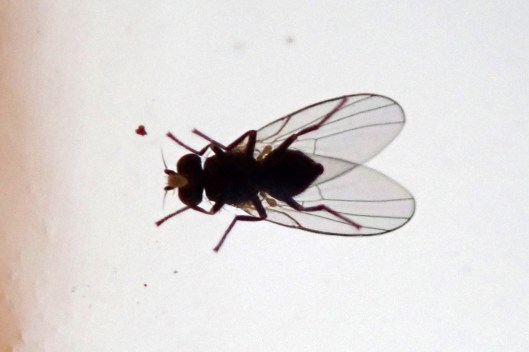
I mentioned in a recent post that one of the ways in which my local biodiversity records office (SEWBReC) supports its volunteer recorders (like me) is through book grants that we recorders can use to buy species guides to help identify our finds. With my grant I have so far obtained one book on spiders and another on craneflies; the third, A Photographic Guide to Flies of Britain & Ireland won’t, unfortunately, be published until October, and I really need it NOW!
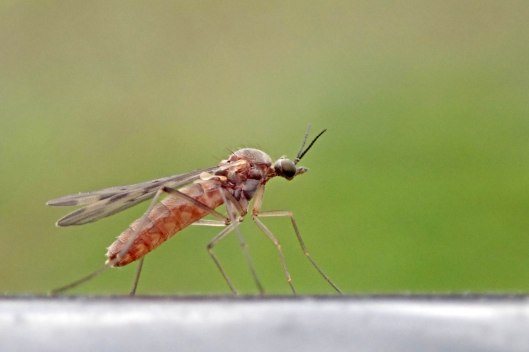
It may be that I still won’t be able to identify some species even when I get the book as many flies require examination of genitalia to accurately determine their species but I’m sure it will help me with many of my finds. In the meantime, this handsome little creature that I photographed on my local park railings yesterday will remain nameless, though I will return and edit this post ** at a later date if I do find out which species it is.
** Well, that didn’t take long. It’s the next day and I might have a name for this little fly, Sylvicola fenestralis, thanks to the very kind help of Gary from the UK Safari website. (It really needs more detailed examination to be certain but this identification looks likely.) If you don’t know the UK Safari site, you really should check it out as it contains a huge treasure trove of information on all aspects of UK wildlife.

06 Thursday Feb 2025
Posted in insects
My local park railings have done it again! This time a fly I’d never seen before was sitting there, giving itself a good clean, wiping along its body with some of its many legs.
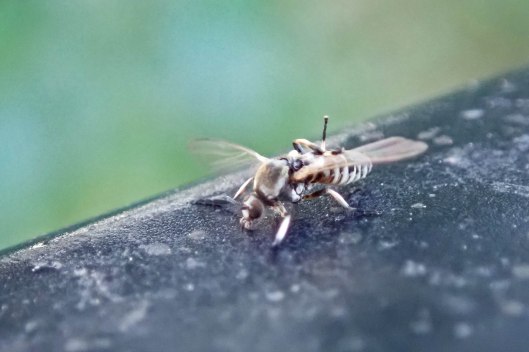
As I had no idea what this was, I threw it over to the entomologically minded people I follow on social media and within minutes had my answer: one of the Simulium species of black flies. You can read more about them on Wikipedia (not a place I would usually reference but their article is certainly interesting) and I also found a website called Blackfly (it’s flagged as not secure but is packed with information and probably okay for a quick read).

To be honest, rather than learning the name of the fly, I found the reactions to my post the most interesting. One person wrote ‘Itchiest bite ever!!!!!’, which horrified me slightly as I’d had the creature on my finger at one point, and I never react well to insect bites. Another told this story: ‘I was once in a boat nearly a mile out to sea when we spotted a black cloud on the horizon. A billion of these b*ggers landed on us and it was armageddon!’ That may read like a tall tale but people have compared the bites of these flies to those of the bloodthirsty Scottish midges and they are known to transmit diseases so should probably be avoided if at all possible.
07 Tuesday Jan 2025
Tags
British flies, fly larva in leaf litter, fly larvae, leaf-fossicking, Lonchoptera, Lonchoptera larva, Spear-winged flies, Spear-winged fly larva
In mid December, I was wandering in one of my local woodlands, looking for but not spotting any elfcup fungi, when I found the main path blocked by a fallen tree. Other fungi species seemed also to be absent, bird sounds were minimal, and, as the trees were mostly deciduous, there were no leaves remaining on the branches to check for insects or mines. There was nothing for it but to get down and dirty in the leaf litter. And I’m very glad I did, as I very quickly found something I’d never seen before.
When I got home and found myself unable to identify the creature by googling, I posted my short video clip on social media, asking for help. Almost immediately, Geoff, an expert in fly larvae, popped up with an identification and this very informative snippet:
Another denizen of winter leaf litter is the tiny fly Lonchoptera (Spear-winged flies). The minute larvae feed on microbes found in the biofilm that coats decaying, damp leaves. Measuring just 3 mm in length, they require a keen eye to spot.
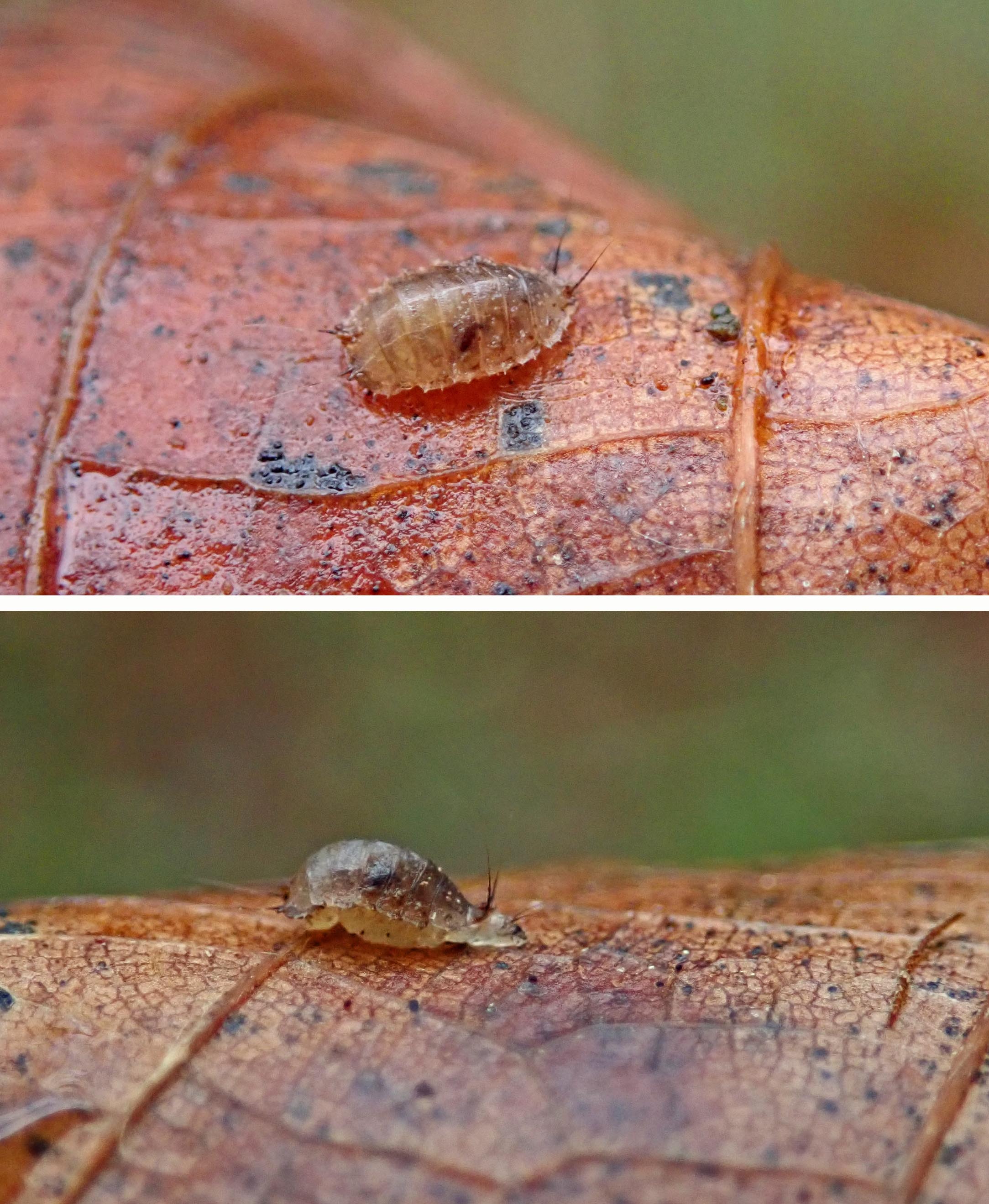
You can read more about the tiny flies of the genus Lonchoptera and see images of some of the species on the iNaturalistUK web page here.
 earthstar
You must be logged in to post a comment.