• ABOUT
  • BIRDING 2018
  • Birding 2019
  • BLOG POSTS
  • Butterflies 2018
  • Resources

earthstar

~ a celebration of nature

earthstar

Tag Archives: British hoverflies

36!

05 Wednesday Nov 2025

Posted by sconzani in insects

≈ Leave a comment

Tags

British hoverflies, British hoverfly larvae, fly larvae, hoverfly larvae, Syrphus larvae, Syrphus species

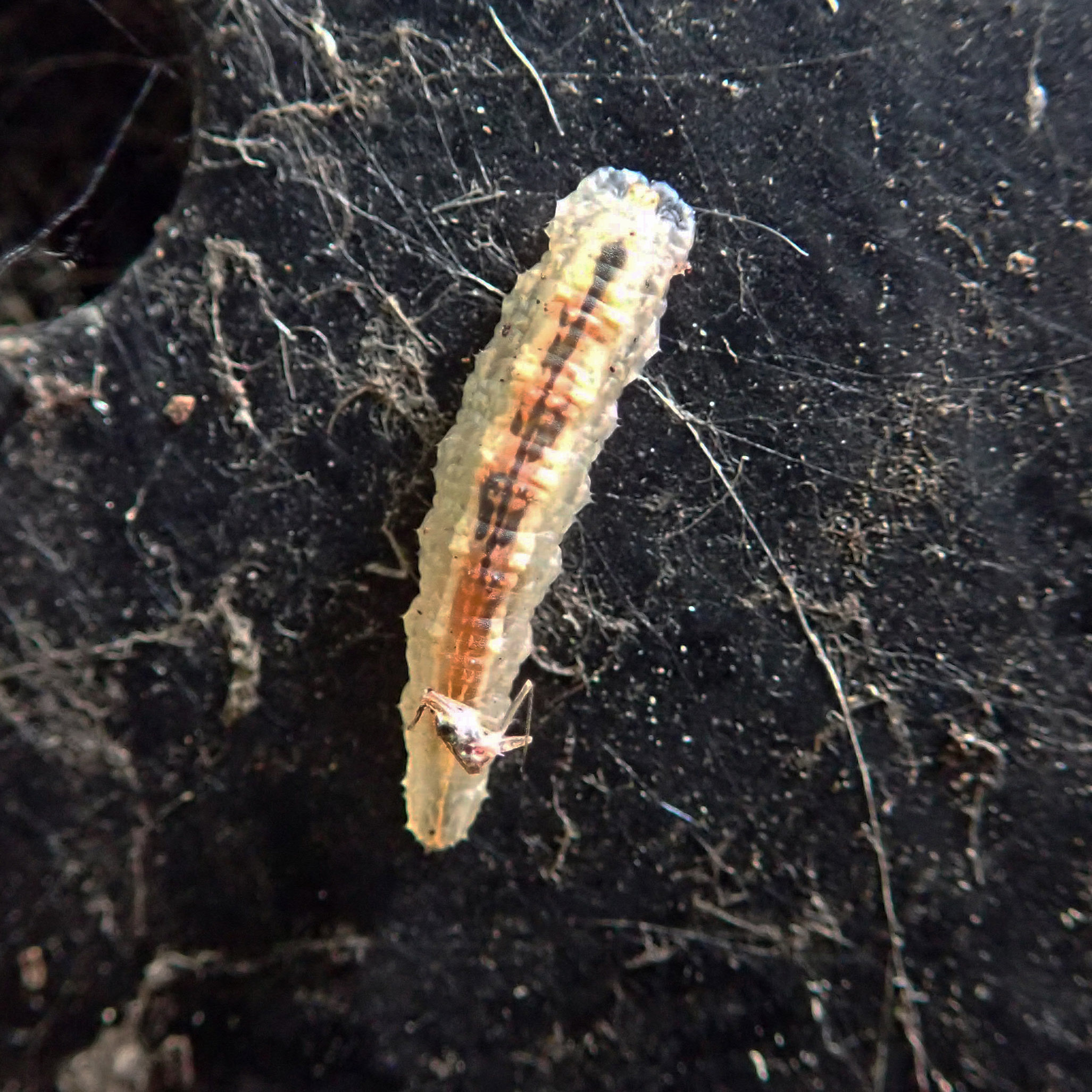
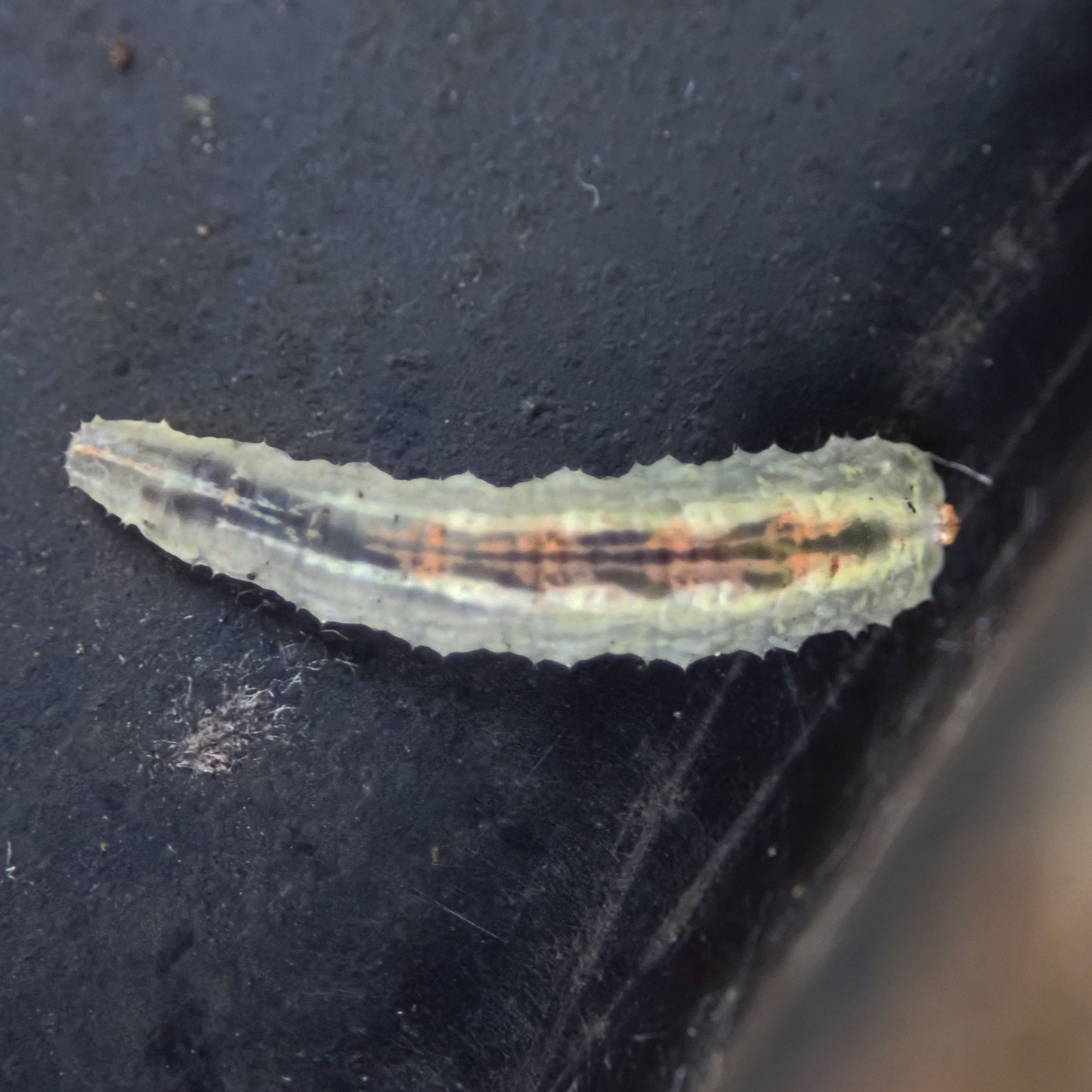
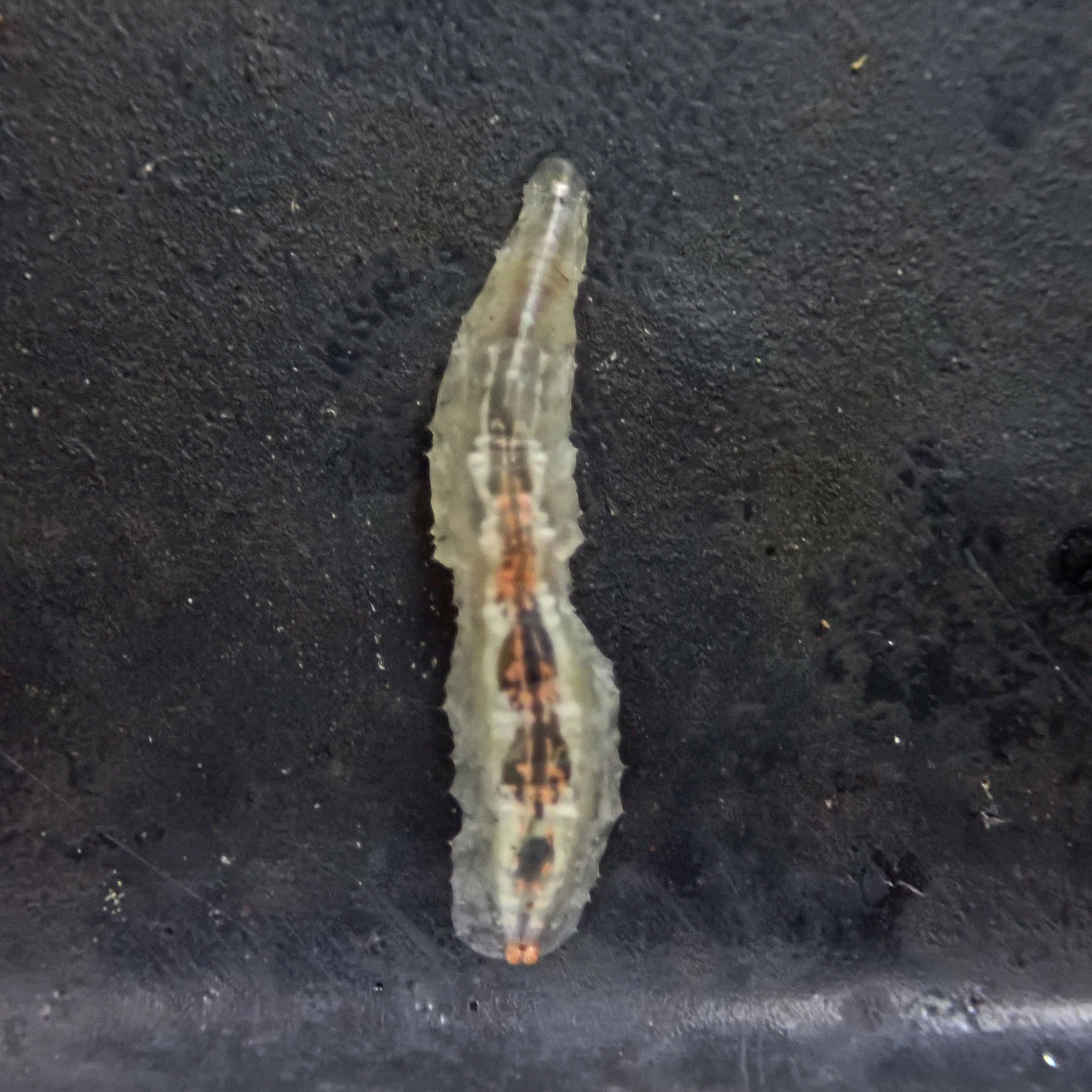
Thirty six is the number of hoverfly larvae I counted on a section of the local park railings, about 10 metres long, as I strolled very slowly past on Monday. They all look to be one of the Syrphus species of hoverfly; it’s not possible to be exact with the larvae of this particular species.

This is a great time of year to look for hoverfly larvae, particularly after stormy weather. They get shaken off the remaining leaves on trees, then try to climb back up to find yummy aphids to eat. So, if you look on railings or fences, even gravestones, particularly under Sycamore trees, you’ll probably be surprised at how many you can find.

And if you want to have a try at identifying any hoverfly larvae you discover, you’ll find a free downloadable pdf Colour Guide to Hoverfly Larvae on the Diptera.info website.

Like Loading...

Hoverfly: Ferdinandea cuprea

22 Tuesday Jul 2025

Posted by sconzani in insects

≈ 2 Comments

Tags

British hoverflies, Ferdinandea cuprea, hoverfly, hoverfly in woodland

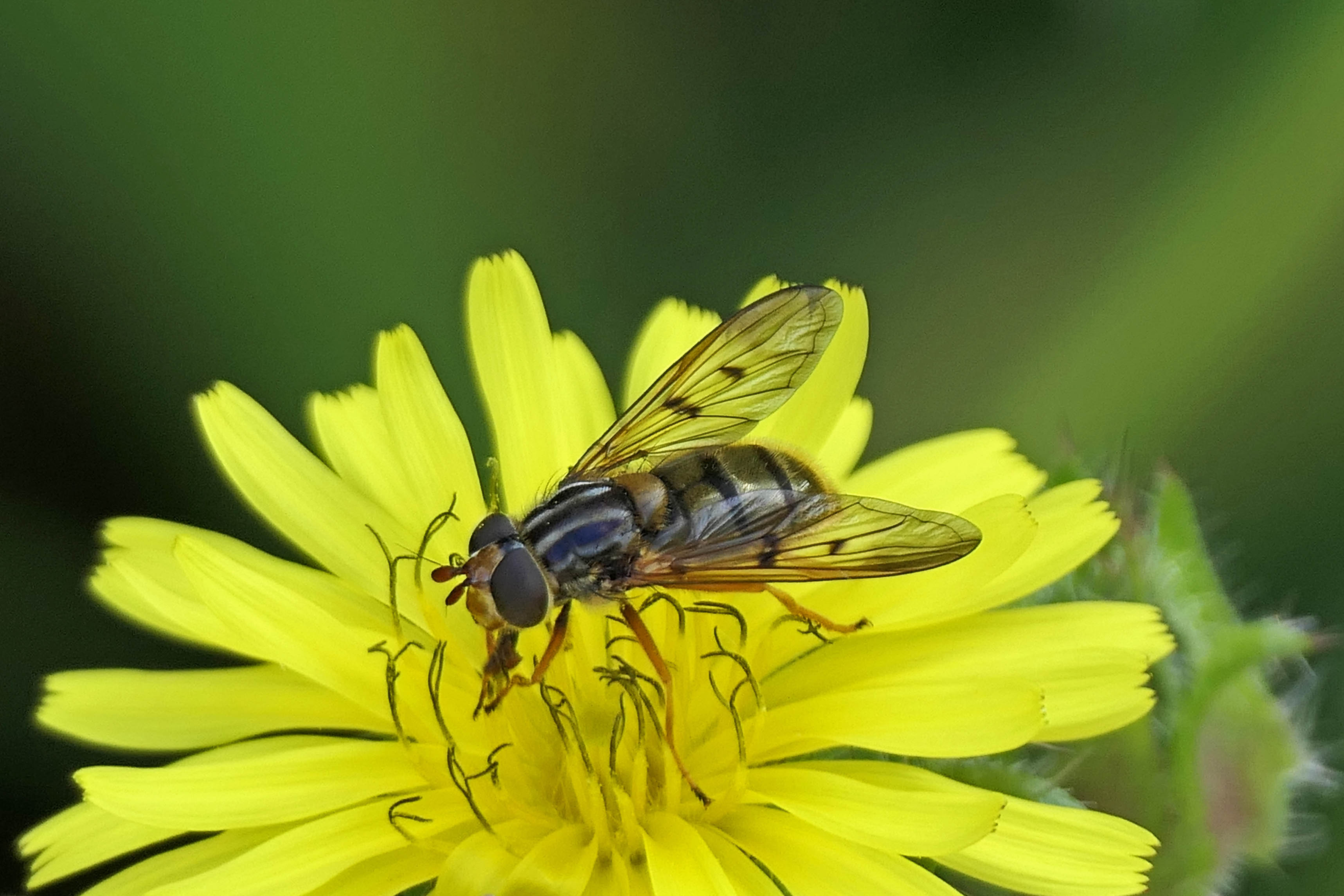
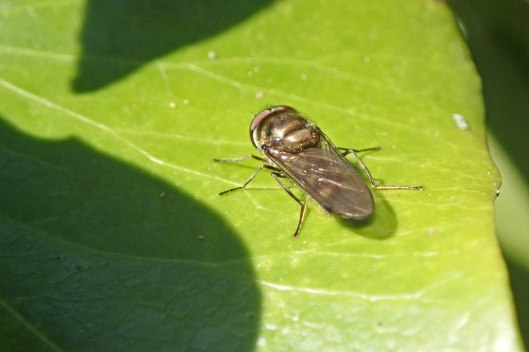
You could easily be fooled into thinking you were looking at a fly when you first saw the hoverfly Ferdinandea cuprea – I’m happy to admit I was. Fortunately, it looked unusual enough – and was settled enough – for me to take a few photos and, when I got home and looked more closely at those on my laptop, I realised this was no ordinary fly.

Now that I’ve seen one and know what to look for, I can agree with what’s written in my Britain’s Hoverflies guide book: ‘An instantly recognisable and very attractive hoverfly with a metallic, brassy abdomen, grey stripes running along the thorax, wing markings and yellow legs’. Ferdinandea cuprea favours wooded areas, mostly in southern parts of Britain and are, apparently, quite common. I presume I’ve been overlooking them for years!

Like Loading...

Five big hovers

12 Thursday Jun 2025

Posted by sconzani in insects

≈ Leave a comment

Tags

British hoverflies, Chrysotoxum cautum, hoverfly, large hoverflies, Merodon equestris, Volucella bombylans, Volucella inflata, Volucella pellucens

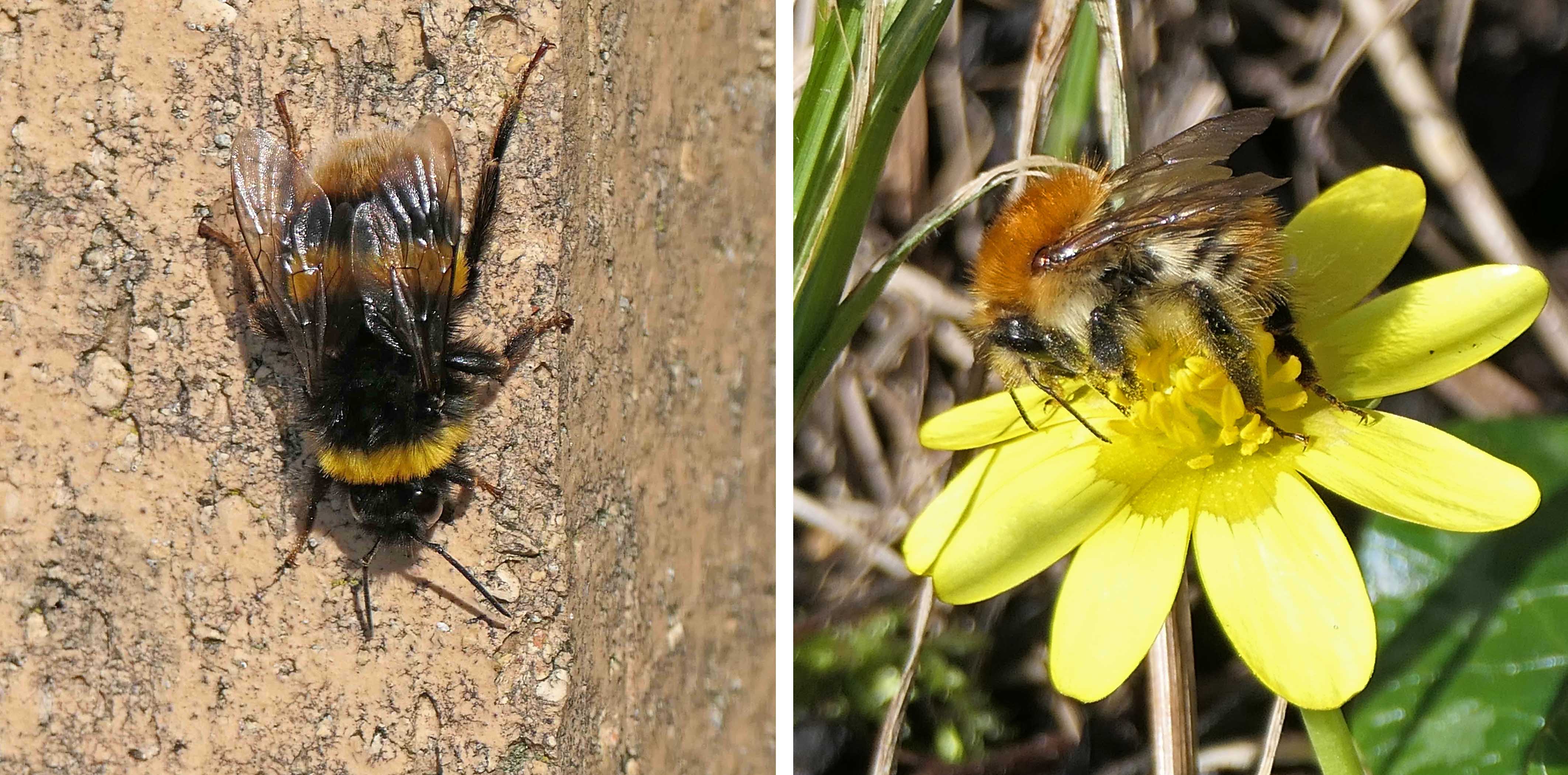
I’ve come to the conclusion, rightly or wrongly, that large hoverflies are like buses: you don’t see any at all and then they all come along at once. At least that has been my recent experience (it’s probably more to do with the weather and the time of year, but I like my buses theory). The five big beasties shown here were all seen over just four days, between 29 May and 1 June.

With its black-and-yellow striping, it’s easy to see that Chrysotoxum cautum is one of the wasp-mimicking hoverflies. The eight British species of Chrysotoxum all have quite long antennae, and it is the relative lengths of the segments of those antennae that are used to differentiate between the five most similar species.

Merodon equestris comes in a variety of colour forms, each of which mimics bumblebees. The one pictured above is a rather worn specimen of form validus, which has a totally dark thorax and a grey-buff coloured bottom.
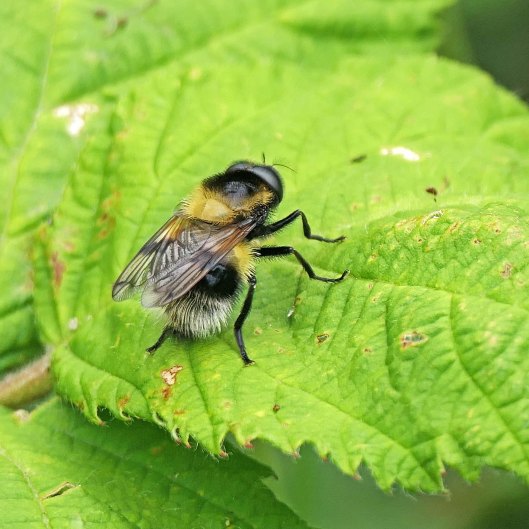
These final three are all members of the Volucellini, of which there are five British species. Like Merodon equestris, Volucella bombylans is a bumblebee mimic; which bumblebee it is attempting to mimic depends on which of the colour variations you see. This yellow-and-black form mimics Bombus lucorum, the White-tailed bumblebee, but there is also a mostly black, orange-bottomed variation of Volucella bombylans that mimics Bombus lapidarius, the Red-tailed bumblebee.
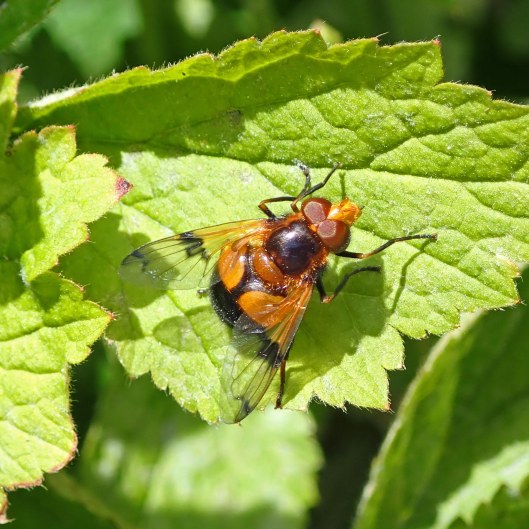
I was particularly pleased to see Volucella inflata as I’ve only found it once before. With its vivid and very distinctive markings, its round body, and protruding yellow snout, it’s a stunning hoverfly to encounter. Sadly for those of you in northern Britain, it’s mostly found in the southern counties and south Wales.
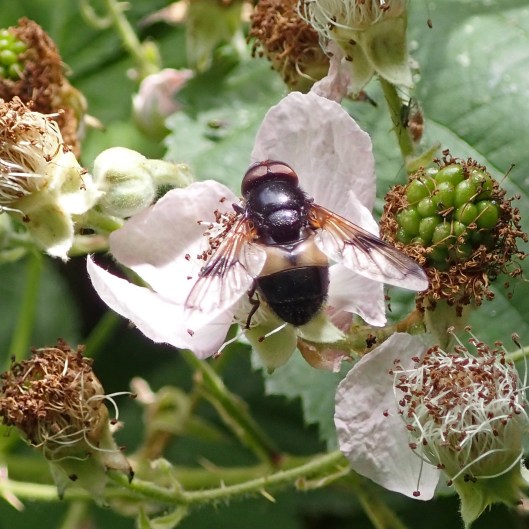
Volucella pellucens, on the other hand, is common and abundant throughout Britain, often seen hovering around head height along woodland rides and forest tracks. Due to its black-and-white colouring, it’s also known as the Great pied hoverfly.

Like Loading...

Meligramma trianguliferum larvae

22 Thursday May 2025

Posted by sconzani in insects

≈ Leave a comment

Tags

British hoverflies, hoverfly, hoverfly larvae, Meligramma trianguliferum, Meligramma trianguliferum larvae

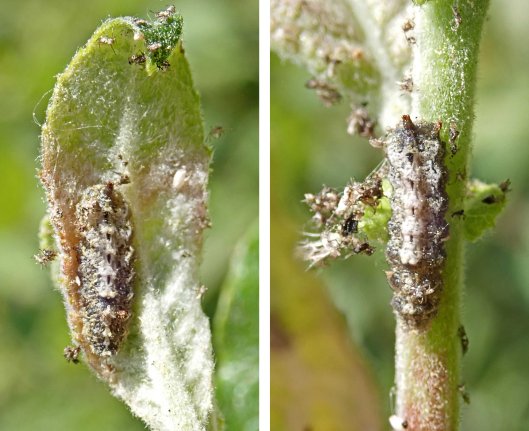
I’ve never seen an adult Meligramma trianguliferum hoverfly due, no doubt, to the fact that this species is rare in Wales, with only four previous sightings logged. However, I am now very hopeful I will see one this summer, as I found six larvae on one particularly heavily aphid-infested shrub in a local park, and there were probably more larvae that I didn’t spot lurking under the leaves.

I didn’t recognise the species when I saw it, of course, but, fortunately for me, the national hoverfly larvae recorder Geoff is on social media and is very willing to identify sighting from photographs where possible. There were so many aphids on this shrub that it was sticky with honeydew and even the larvae were covered in it and looking quite manky so I’m glad Geoff was still able to recognise them. To see the adults, check out the photos on the Naturespot website and, fingers crossed, I’ll find some and share photos of those sometime in the summer. 

Like Loading...

Hoverfly: Portevinia maculata

30 Wednesday Apr 2025

Posted by sconzani in insects, plants

≈ 2 Comments

Tags

British hoverflies, hoverfly on Wild garlic, Portevinia maculata, Ramsons hoverfly, Wild garlic

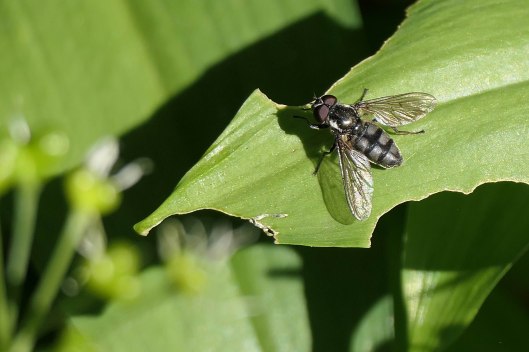
I have one of you to thank for the inspiration for this post; through his comments on my recent post about Wild garlic, Philip Strange (who, if you don’t already know and follow him, produces a really interesting science and nature blog) reminded me to look for the hoverfly associated with that plant. And so I did. And here it is.

For those of you who don’t live in Britain, we are currently experiencing a week of high (for us) temperatures (this is probably our summer, and normal conditions will resume shortly), so, yesterday, a walk through a shady woodland seemed like a good plan. When I arrived at Cwm George, in the nearby town of Dinas Powys, I was delighted to find it was peak garlic time and, when I stood watching those patches of flowering Wild garlic on which sunshine streamed through the tree canopy, I was even more delighted to spot several small grey-patterned hoverflies, both perched on and hovering around the plants.

These are Portevinia maculata hoverflies, and they have a very strong association with Wild garlic (aka Ramsons), as their larvae mine the bulbs and stem bases of those plants. My guide book says that ‘Where Ramsons is abundant, this hoverfly is usually also abundant’ but Philip and I might both dispute that statement. In my local park, where I took the photos for my recent blog and where Wild garlic is prolific, I’ve never seen this hoverfly. So, I was really pleased to find it in good numbers at Cwm George.

Like Loading...

First hoverflies

04 Tuesday Feb 2025

Posted by sconzani in insects, winter

≈ Leave a comment

Tags

British hoverflies, Episyrphus balteatus, first hoverflies, hoverfly, Marmalade hoverfly, Meliscaeva auricollis, winter hoverflies

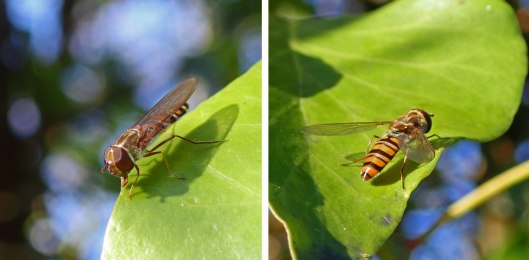
When the sun comes out, so do the insects, and, during last Friday’s walk along the coastal path, after failing to find the birds I was hoping for, I was very pleased to spot my first two hoverflies of the year basking on ivy leaves in the weak sunshine.

I wasn’t surprised that the first I saw was this Marmalade hoverfly (Episyrphus balteatus), as it’s the most common hoverfly in Britain, and, though adults are known to hibernate, they will emerge on warmer winter days.

This second hoverfly is Meliscaeva auricollis, a species that’s one of the first to emerge in the spring and then has a very long flight period, though its numbers are greatest towards the end of summer.

Like Loading...

X is for Xanthogramma pedissequum

29 Sunday Dec 2024

Posted by sconzani in insects

≈ Leave a comment

Tags

British hoverflies, hoverfly, Xanthogramma pedissequum

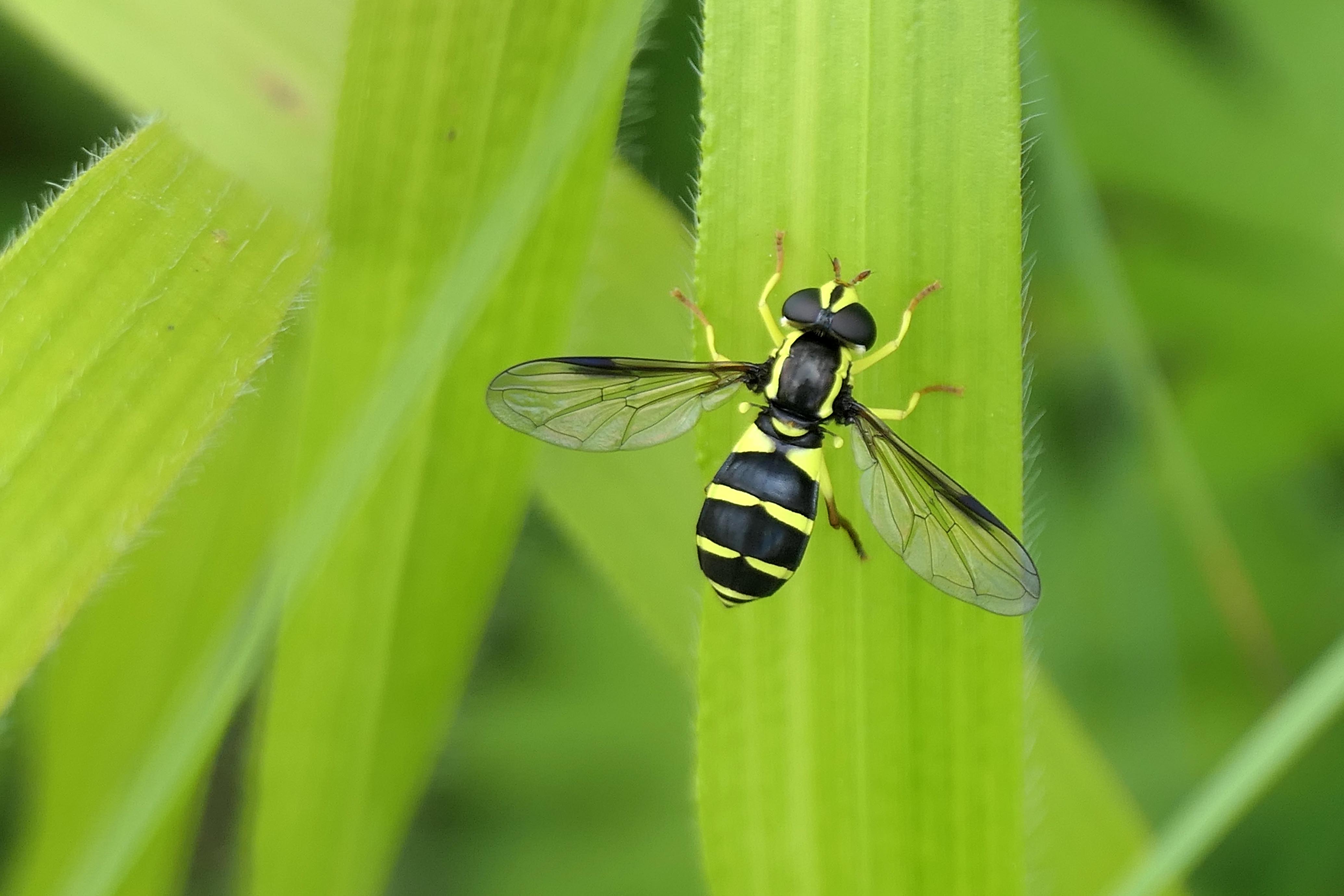
Hoverflies have barely flown in to my blog posts this year. There was a new-to-me species in August (Hoverfly: Melangyna umbellatarum, 3 August), and a hoverfly larva starred in a short video in October (Lucky, unlucky, 16 October) but that’s about the extent of their involvement. I have seen hoverflies, of course, though I often struggle to identify them. Luckily, the Xanthogramma pedissequum shown below is one of the easier species to name, and it fits perfectly in this countdown.

241229 x is for Xanthogramma pedissequum

Like Loading...

68!

07 Thursday Nov 2024

Posted by sconzani in autumn, insects

≈ Leave a comment

Tags

British hoverflies, Epistrophe grossulariae, Epistrophe grossulariae larvae, fly larvae, hoverfly larvae, larvae on Sycamore leaves, leaf fossicking, Syrphus species, Syrphus species larvae

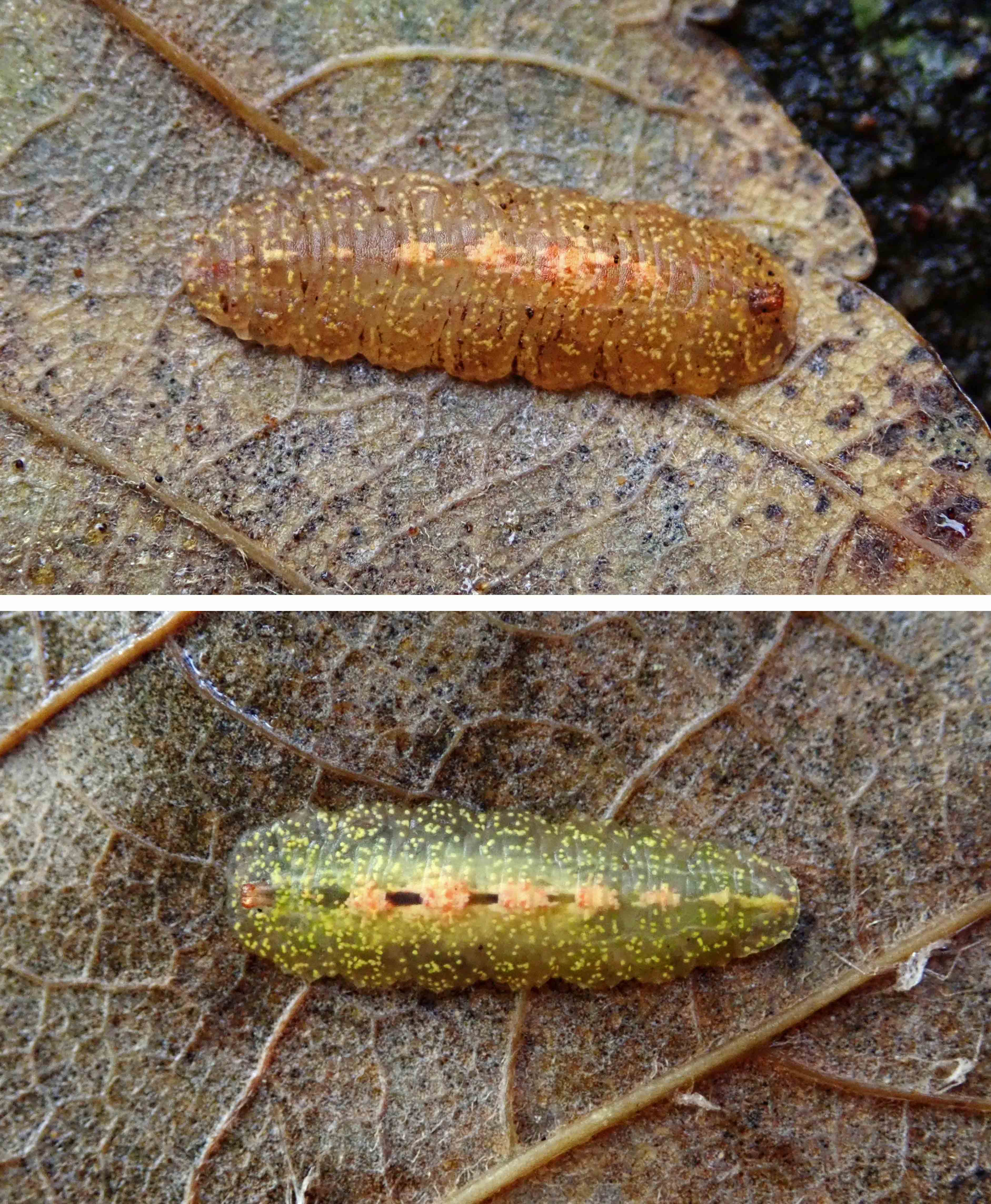
68! That’s the number of hoverfly larvae I found when turning over Sycamore leaves in a damp shady spot in one of my local parks last week. And they were all plump and well grown so had obviously been feasting well on aphids. (I have noticed during my leaf fossicking this year that, while insect numbers overall have been well down on previous years, the numbers of aphid seem about usual, which means that those creatures feeding on aphids seem also to have been thriving.)

241107 Epistrophe grossulariae

The hoverfly larvae were of only two types, the Epistrophe grossulariae shown above (these larvae are usually green but turn an orange-brown colour in the autumn, an effective camouflage tactic – hence the two colour variations shown here), and those from the various Syrphus species shown below (it’s not possible to be more specific as to the exact identification of these larvae).

241107 syrphus sp

Like Loading...

Lucky, unlucky

16 Wednesday Oct 2024

Posted by sconzani in insects

≈ 2 Comments

Tags

aphid, British hoverflies, hoverfly larva, ladybird, ladybird eating aphid, Syrphus sp larvae

The aphid-eating hoverfly larva (likely one of the Syrphus species) missed its chance here. As you’ll see, though, the ladybird was more on the ball and the aphid lost its second chance.

(I’ve set the video to mute as this park railing is next to a very busy road but I’m not sure that setting has worked, so best to mute your sound before viewing the video.)

Like Loading...

Hoverfly: Melangyna umbellatarum

03 Saturday Aug 2024

Posted by sconzani in insects

≈ Leave a comment

Tags

British hoverflies, egg-laying hoverfly, egg-laying Melangyna umbellatarum, hoverfly eggs, Melangyna umbellatarum

My guide book, Britain’s Hoverflies (Ball and Morris, Princeton, 2015) says the Melangyna ‘is a challenging genus with several species which are very difficult to identify’, and I thought ‘Just my luck! I might as well give up now’.

240803 Melangyna umbellatarum (1)

Fortunately, I didn’t, and, as this particular species has a shiny thorax and pale, almost white abdominal markings, it proved easier than expected to identify my first ever hoverfly from this genus. This little beauty has now been confirmed as Melangyna umbellatarum, a female that was egg-laying on Hogweed in Cardiff’s Heath Park last week.

240803 Melangyna umbellatarum (2)

You may just be able to spot one of her tiny white eggs above her head in the top photo, and I was able to get a close up (photo above). This was also the first time I’d observed a hoverfly laying her eggs.

Like Loading...
← Older posts

About me

sconzani

sconzani

I'm a writer and photographer; researcher and blogger; birder and nature lover; countryside rambler and city strider; volunteer and biodiversity recorder.

View Full Profile →

Follow earthstar on WordPress.com

Enter your email address to follow this blog and receive notifications of new posts by email.

Recent blog posts

  • M is for mite December 18, 2025
  • L is for lepidopteran lifers December 17, 2025
  • K is for Keeled skimmers December 16, 2025
  • J is for Jersey tiger December 15, 2025
  • I is for Ichneumon December 14, 2025

From the archives

COPYRIGHT

Unless otherwise acknowledged, the text and photographs on this blog are my own and are subject to international copyright. Nothing may be downloaded or copied without my permission.

Fellow Earth Stars!

  • Unknown's avatar
  • Unknown's avatar
  • Unknown's avatar
  • Unknown's avatar
  • Unknown's avatar
  • Unknown's avatar
  • Unknown's avatar
  • Unknown's avatar
  • Unknown's avatar
  • Unknown's avatar
  • Unknown's avatar
  • Unknown's avatar
  • Unknown's avatar
  • Unknown's avatar
  • Unknown's avatar
  • Unknown's avatar
  • Unknown's avatar
  • Unknown's avatar
  • Unknown's avatar
  • Unknown's avatar
  • Unknown's avatar
  • Unknown's avatar
  • Unknown's avatar
  • Unknown's avatar
  • Unknown's avatar
  • Unknown's avatar
  • Unknown's avatar
  • Unknown's avatar
  • Unknown's avatar
  • Unknown's avatar
  • Unknown's avatar
  • Unknown's avatar
  • Unknown's avatar
  • Unknown's avatar
  • Unknown's avatar
  • Unknown's avatar
  • Unknown's avatar
  • Unknown's avatar
  • Unknown's avatar
  • Unknown's avatar
  • Unknown's avatar
  • Unknown's avatar
  • Unknown's avatar
  • Unknown's avatar
  • Unknown's avatar
  • Unknown's avatar
  • Unknown's avatar
  • Unknown's avatar
  • Unknown's avatar
  • Unknown's avatar

Blog at WordPress.com.

Privacy & Cookies: This site uses cookies. By continuing to use this website, you agree to their use.
To find out more, including how to control cookies, see here: Cookie Policy
  • Subscribe Subscribed
    • earthstar
    • Join 667 other subscribers
    • Already have a WordPress.com account? Log in now.
    • earthstar
    • Subscribe Subscribed
    • Sign up
    • Log in
    • Report this content
    • View site in Reader
    • Manage subscriptions
    • Collapse this bar
 

Loading Comments...
 

You must be logged in to post a comment.

    %d