• ABOUT
  • BIRDING 2018
  • Birding 2019
  • BLOG POSTS
  • Butterflies 2018
  • Resources

earthstar

~ a celebration of nature

earthstar

Tag Archives: British insects

Parent bug mother and babies

12 Friday Jul 2024

Posted by sconzani in insects

≈ 2 Comments

Tags

British insects, British shieldbugs, early instar Parent bug nymphs, Elasmucha grisea, Parent bug, Parent bug nymphs, shieldbug

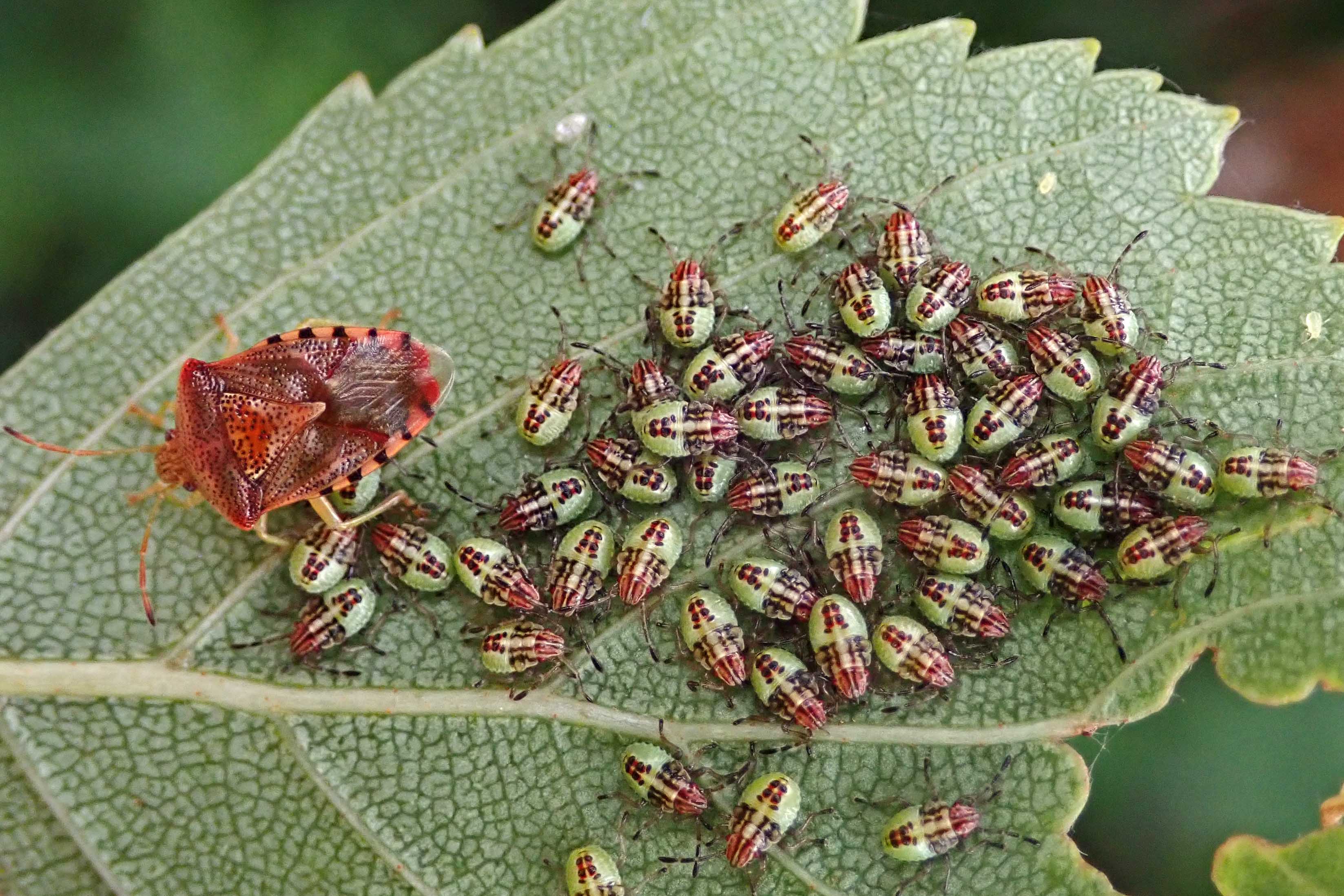
Leaf-bothering is quickly becoming one of my favourite things, especially when the weather isn’t good for bird-watching or spotting beautiful insects like butterflies and dragonflies. And it is most special when I turn over a leaf to see scenes like this, of a Parent bug (Elasmucha grisea) and her many babies (according to the British Bugs website, the male bug dies soon after mating while the female lives on to brood her eggs and young offspring). And these weren’t all of the Parent bug’s nymphs, as a neighbouring leaf held even more – I stopped counting at 80! At least she doesn’t have to feed them all.

240712 parent bug and babies

Like Loading...

Heterotoma planicornis

08 Monday Jul 2024

Posted by sconzani in insects

≈ Leave a comment

Tags

British bugs, British insects, Heterotoma planicornis, Heterotoma planicornis nymph, plant bugs

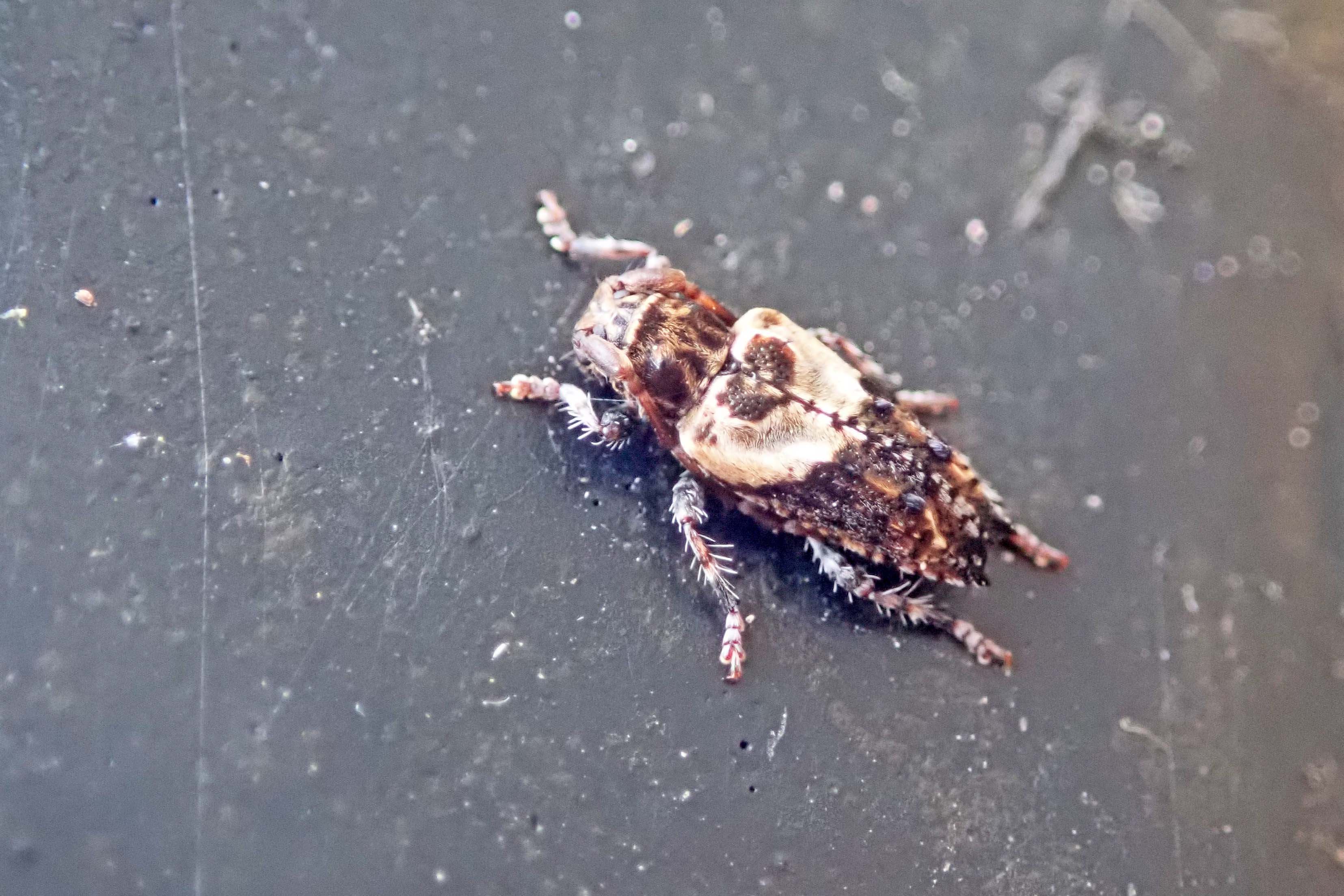
Though I had never seen one of these before, with those flattened parts of its antennae there was no mistaking this little insect. This is Heterotoma planicornis, a tiny member of the Miridae family of plant bugs. It can be found throughout Britain, on various plant species – mine was on the leaf of an Alder tree. The NatureSpot website reports that the eggs hatch in May and the nymphs develop in to adults from June onwards. The tiny bug I found was still a nymph so I guess it will be making its final change fairly soon.

240708 Heterotoma planicornis

Like Loading...

Metallic green beetles

03 Wednesday Jul 2024

Posted by sconzani in insects

≈ Leave a comment

Tags

British beetles, British insects, Cryptocephalus aureoles, green beetles, metallic green beetles

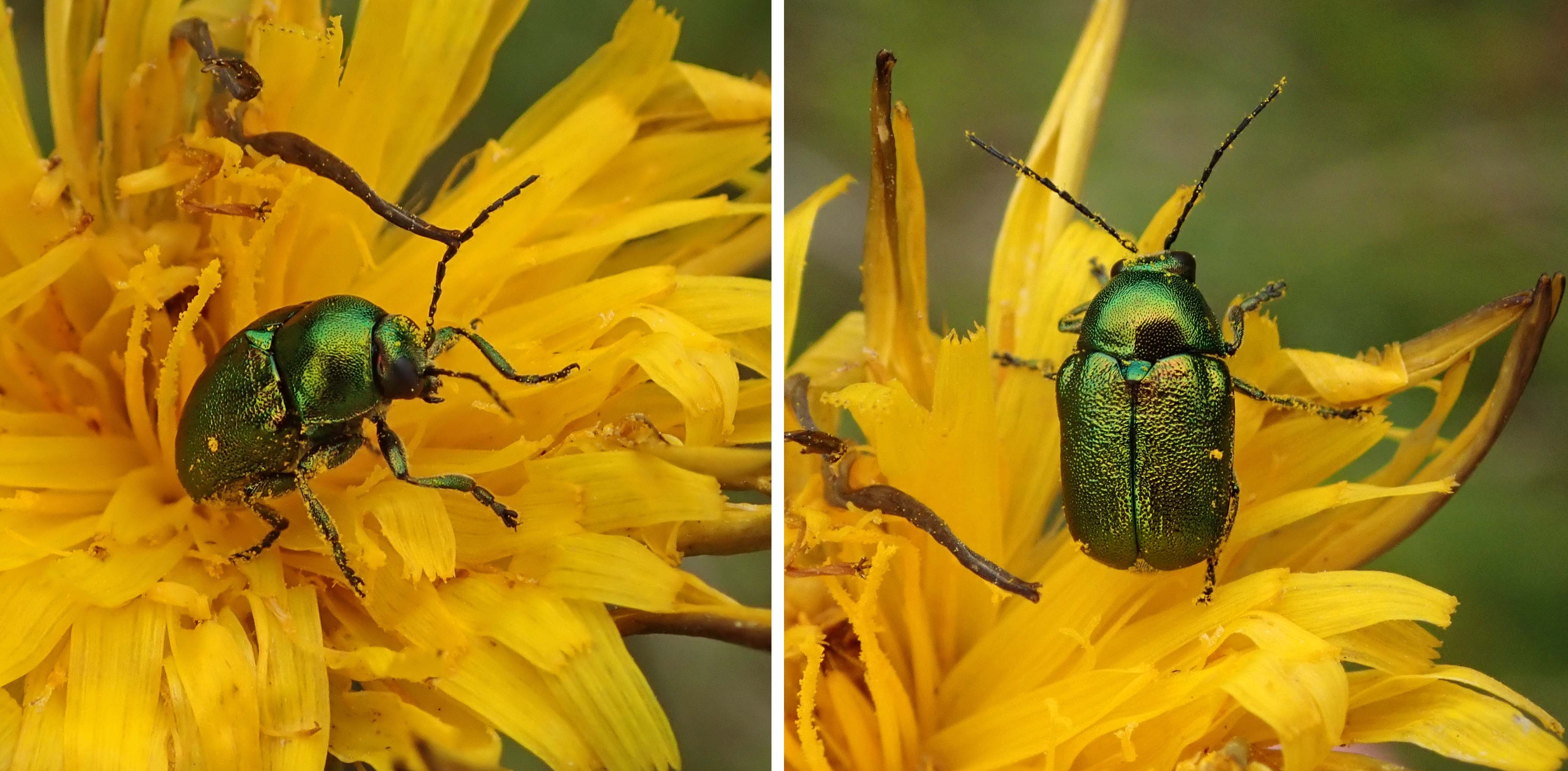
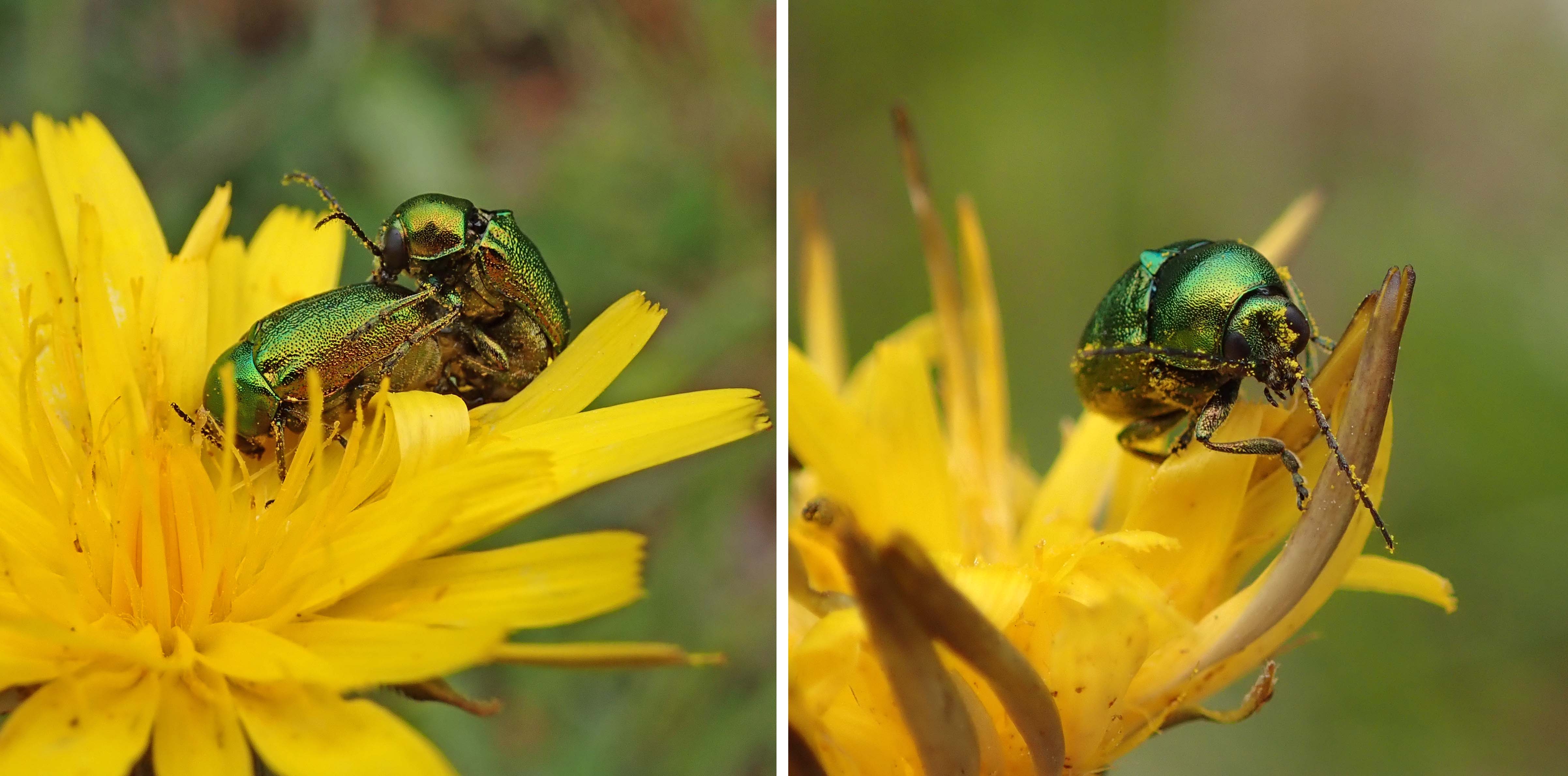
There are other species of similar metallic green beetles in Britain, but the UK Beetles website says only one (Cryptocephalus hypochaeridis) is likely to cause confusion, so I think I’ve got my identification right here. Meet Cryptocephalus aureoles, a beetle that is reasonably common in much of southern Britain, particularly in sunny, open, dry environments, like woodland and countryside footpath edges, roadsides, embankments and, in my case, the south-facing slope of a coal spoil tip.

240703 Cryptocephalus aureolus (1)

Though the adults can be seen from April through to September, they are particularly active in June and July, when they are often to be found feeding on various species of plants with yellow flowers – hawkweeds (Hieraceum sp.) and cat’s-ears (Hypochaeris sp.) are particular favourites.

240703 Cryptocephalus aureolus (2)

Somewhat surprisingly, their exact life cycle has not been confirmed. The UK Beetles website explains that, after mating,

oviposition occurs from late spring; each egg being coated with faecal matter and secretions and dropped to the ground by the female. Larvae emerge after three or four weeks, depending on the temperature, and develop through the summer, it is not known which stage overwinters but young larvae have been recorded late in the summer and so it is likely to be as larvae which complete their development and pupate in the spring

Like Loading...

On the Oxeyes

09 Sunday Jun 2024

Posted by sconzani in insects, wildflowers

≈ 2 Comments

Tags

British insects, British wildflowers, insects on Oxeye daisies, Oxeye daisy

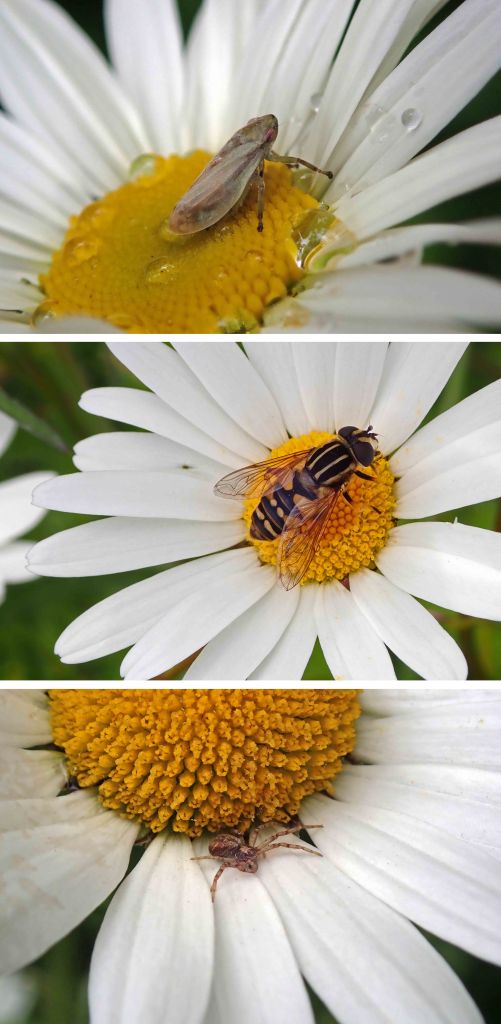
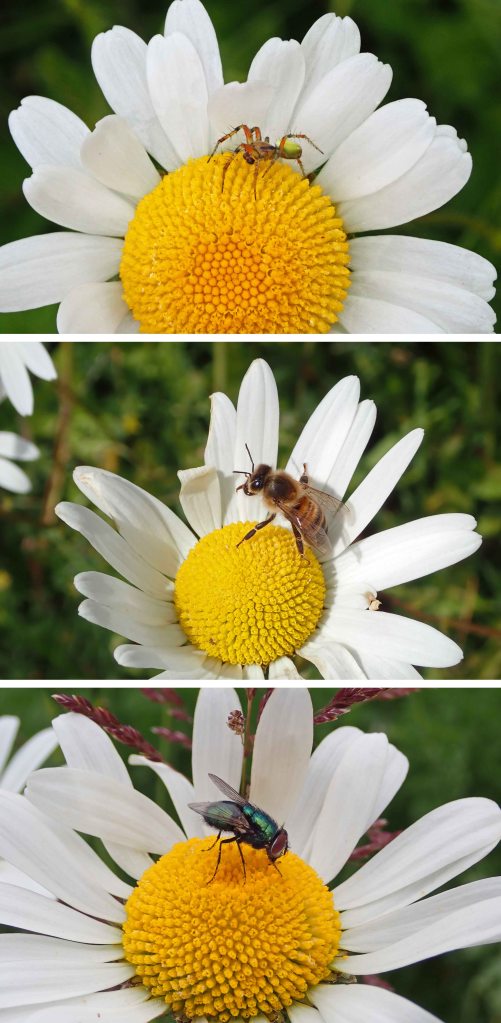
Perhaps because they are so common and abundant I am guilty of ignoring both the beauty and the usefulness of Oxeye daisies.

So, during my walks over the past few days I have been taking more notice and taking photos of the creatures either using the daisies as perches or feeding on their pollen.

If the weather had been more cooperative, without the constant breezy conditions, I probably would have got more photos.

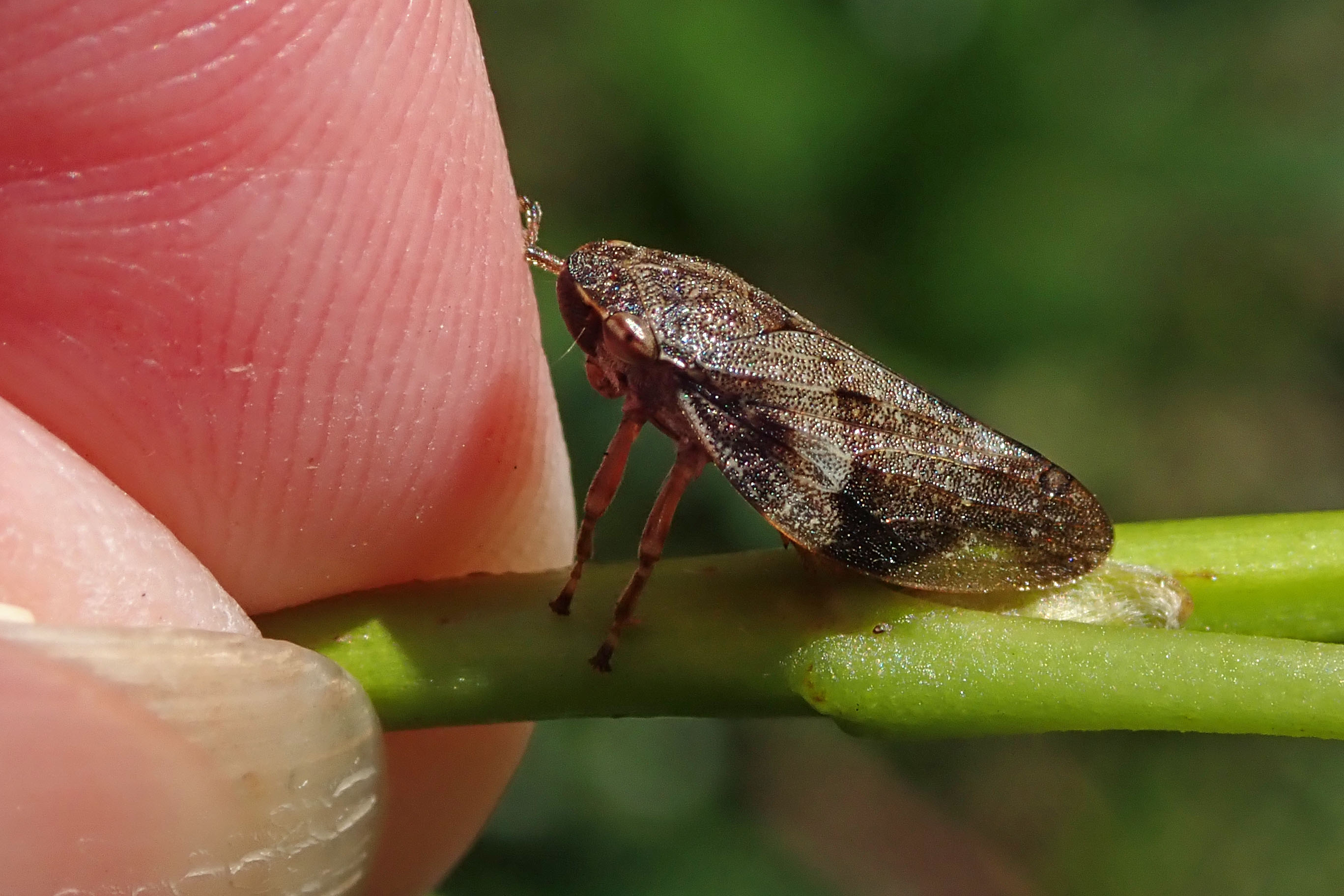
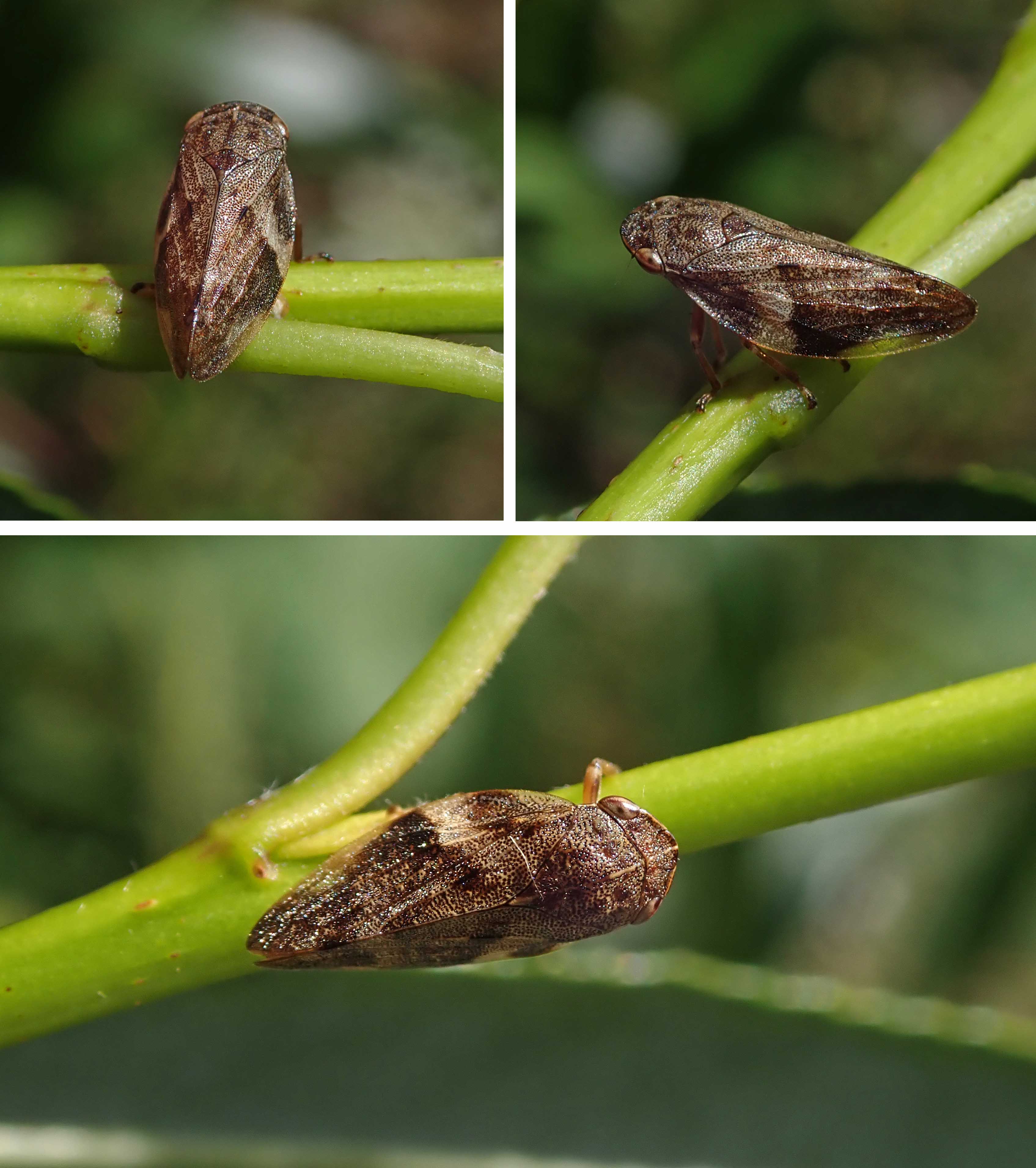
Still, it was nice to see such a variety of invertebrates: bees and hoverflies, ladybirds and their larvae, several species of spider, grasshoppers and froghoppers and tiny beetles.

Like Loading...

Marsh snipeflies

01 Saturday Jun 2024

Posted by sconzani in insects

≈ Leave a comment

Tags

British insects, British snipeflies, Marsh snipefly, Rhagio tringarius

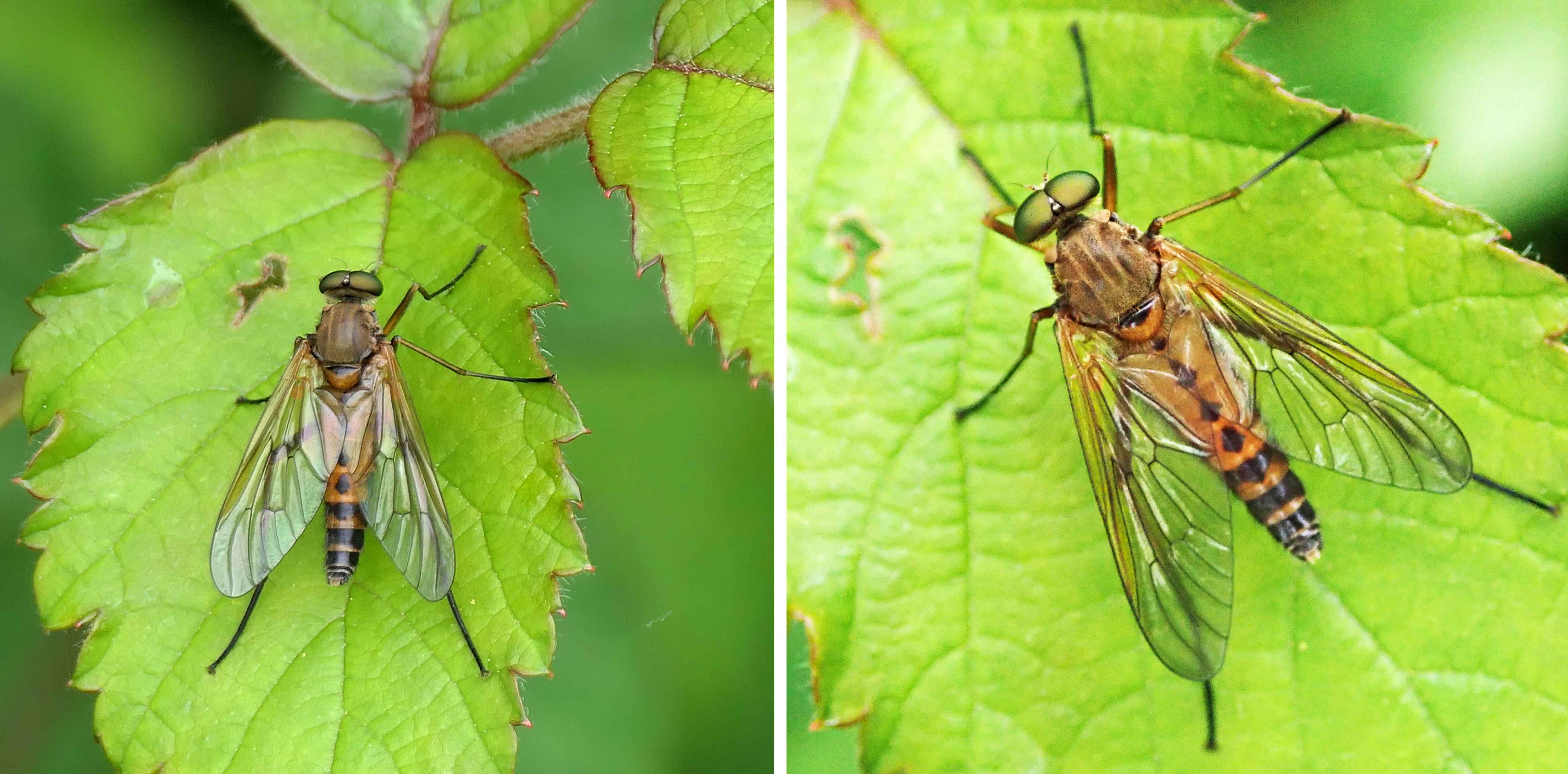
At one of my local walking spots a new path has been cut that runs close to a reed bed at the side of a stream, then along the edge of a woodland. The vegetation edging the path is lush, providing food and perching places for insects, and that’s where I found these two Marsh snipeflies (Rhagio tringarius). ‘My, what big eyes you have!’

240601 Rhagio tringarius (1)

Although there are six Rhagio species in Britain, four have dark markings on their wings and one is quite rare, so it was relatively easy to narrow down my identification to Rhagio tringarius (and my record has now been confirmed by an expert). Snipeflies can often be founding perching on leaves and twigs, always on the look out for the smaller insects they prey on.

240601 Rhagio tringarius (2)

Like Loading...

Weevil number 3

04 Monday Mar 2024

Posted by sconzani in insects

≈ 4 Comments

Tags

British insects, British weevils, weevil

For some unknown reason, the insects I’m seeing most often so far this year are weevils (there was An early weevil, on 16 February, and Weevil: Dorytomus taeniatus last week, on 28 February).

240304 weevil (1)

I’ve seen today’s weevil species at two different locations so far, and I’m thinking you’ll be able to guess what type of weevil it is from the plant it’s on. So, how about giving it a try? Name the weevil!

240304 weevil (2)

Like Loading...

U is for unknown

26 Tuesday Dec 2023

Posted by sconzani in insects, spiders

≈ Leave a comment

Tags

British flies, British insects, British spiders, insect larvae, invertebrates, larvae in leaf litter

As happens every year, I found many invertebrates I’ve not been able to identify, especially from riffling through the leaf litter. Perhaps one of you will recognise one of these creatures but, even if you don’t, I feel they deserve their moment in the spotlight.

231226 unknown larvae231226 unknowns in leaf litter231226 unknowns

Like Loading...

N is for new and noticed

19 Tuesday Dec 2023

Posted by sconzani in insects

≈ Leave a comment

Tags

Bombylius canescens, British insects, Eurygaster testudinaria, Mystacides azurea, Nematus lucidus, Nowickia ferox, Ribautiana tenerrima, Typhlocyba quercus

I’m using the letter N to highlight a few of the new insects I’ve been lucky enough to find during my 2023 meanderings. First up, in early spring, was a new fly species, the torpedo-shaped Nematus lucidus (below left) and then, in July, another, the bristly brute that is Nowickia ferox (below right).

231219 1 Nematus lucidus Nowickia ferox

Next up, a new bee-fly. We usually only see Dark-edged bee-flies (Bombylius major) in my part of south Wales so it was super to spot this Western bee-fly (Bombylius canescens) during a visit to Aberbargoed in mid June.

231219 1 Bombylius canescens

On 17 July, in my local ‘secret field’, I discovered the final instar of a new shieldbug, Eurygaster testudinaria (left), and, the following day, I had another new find, the pretty caddisfly, Mystacides azurea (right). I didn’t blog this little creature at the time as I wasn’t sure of my identification but you can read more about it on the Nature Spot website.

231219 3 eurygaster testudinaria Mystacides azurea

Last, but certainly not least as these are favourites of mine, are two new leafhopper species. The seventeenth of July was a red letter day, with two new species found in my ‘secret field’, both the shieldbug mentioned above and, perched on an Oak leaf, the vibrant little leafhopper Typhlocyba quercus (left). I’ll certainly be checking for more of these next summer. Then, in the middle of November, bopping around a Bramble bush in one of the local cemeteries, I spotted the beautifully patterned Ribautiana tenerrima (right), and was left wondering how I’d never seen them before. I’m already looking forward to what new invertebrate species 2024 will bring.

231219 4 shieldbugs

Like Loading...

Hide and huddle

09 Thursday Nov 2023

Posted by sconzani in autumn, insects, leaves

≈ 2 Comments

Tags

autumn leaves, British insects, importance of leaves, insect decline, insects in leaves, over-wintering insects in leaves, snails in leaves

When the weather’s cold and wet, it’s time to hide and huddle. I found five 7-spot ladybirds and a Hairy shieldbug in this rolled-up leaf. (And, don’t fret, I rolled it up again so they could get back to their snoozing.)

231109 hide huddle hairy shieldbug 7spots

And they’re not the only ones choosing leaves for home and shelter as the colder weather approaches. All sorts of creatures creep or crawl or slide inside a conveniently place leaf-roll. Like these earwigs and, below, those snails.

231109 hide huddle earwigs

Though these leaves will eventually fall to the ground, they’ll be home to a diverse abundance of creatures during the winter months, which is why it’s always best to let some leaves remain on the ground – please don’t be tempted to rake or blow them all away for the sake of tidiness. Nature is not tidy and, given there’s been a 60% decline in flying insects in the UK in the last 20 years (just one example of Nature’s overall decline), leaving leaves in place is the very least we can do.

231109 hide huddle snails

Like Loading...

Husks

21 Thursday Sep 2023

Posted by sconzani in insects

≈ Leave a comment

Tags

British insects, dead insects, insect husks

You know what they say about it being a dog-eat-dog world? Well, I think we could amend that to an insect-eat-insect world.

230921 husk (1)

During my recent leaf-turning, I’ve noticed a few insect husks lying about. I’m not sure what has done the damage, which other creatures have sucked these dry, but their husks are all that remain.

230921 husk (2)

Like Loading...
← Older posts
Newer posts →

About me

sconzani

sconzani

I'm a writer and photographer; researcher and blogger; birder and nature lover; countryside rambler and city strider; volunteer and biodiversity recorder.

View Full Profile →

Follow earthstar on WordPress.com

Enter your email address to follow this blog and receive notifications of new posts by email.

Recent blog posts

  • O is for Odonata December 20, 2025
  • N is for nest December 19, 2025
  • M is for mite December 18, 2025
  • L is for lepidopteran lifers December 17, 2025
  • K is for Keeled skimmers December 16, 2025

From the archives

COPYRIGHT

Unless otherwise acknowledged, the text and photographs on this blog are my own and are subject to international copyright. Nothing may be downloaded or copied without my permission.

Fellow Earth Stars!

  • Unknown's avatar
  • Unknown's avatar
  • Unknown's avatar
  • Unknown's avatar
  • Unknown's avatar
  • Unknown's avatar
  • Unknown's avatar
  • Unknown's avatar
  • Unknown's avatar
  • Unknown's avatar
  • Unknown's avatar
  • Unknown's avatar
  • Unknown's avatar
  • Unknown's avatar
  • Unknown's avatar
  • Unknown's avatar
  • Unknown's avatar
  • Unknown's avatar
  • Unknown's avatar
  • Unknown's avatar
  • Unknown's avatar
  • Unknown's avatar
  • Unknown's avatar
  • Unknown's avatar
  • Unknown's avatar
  • Unknown's avatar
  • Unknown's avatar
  • Unknown's avatar
  • Unknown's avatar
  • Unknown's avatar
  • Unknown's avatar
  • Unknown's avatar
  • Unknown's avatar
  • Unknown's avatar
  • Unknown's avatar
  • Unknown's avatar
  • Unknown's avatar
  • Unknown's avatar
  • Unknown's avatar
  • Unknown's avatar
  • Unknown's avatar
  • Unknown's avatar
  • Unknown's avatar
  • Unknown's avatar
  • Unknown's avatar
  • Unknown's avatar
  • Unknown's avatar
  • Unknown's avatar
  • Unknown's avatar
  • Unknown's avatar

Blog at WordPress.com.

Privacy & Cookies: This site uses cookies. By continuing to use this website, you agree to their use.
To find out more, including how to control cookies, see here: Cookie Policy
  • Subscribe Subscribed
    • earthstar
    • Join 667 other subscribers
    • Already have a WordPress.com account? Log in now.
    • earthstar
    • Subscribe Subscribed
    • Sign up
    • Log in
    • Report this content
    • View site in Reader
    • Manage subscriptions
    • Collapse this bar
 

Loading Comments...
 

You must be logged in to post a comment.

    %d