• ABOUT
  • BIRDING 2018
  • Birding 2019
  • BLOG POSTS
  • Butterflies 2018
  • Resources

earthstar

~ a celebration of nature

earthstar

Tag Archives: British moths

Flitting about in the grass

24 Saturday Jun 2023

Posted by sconzani in insects

≈ Leave a comment

Tags

Autographa gamma, British moths, Burnet companion, Chrysoteuchia culmella, Euclidia glyphica, Garden Grass-veneer, moth, Silver Y

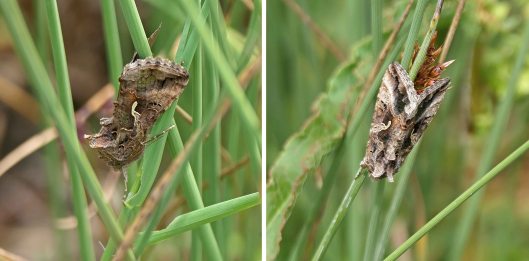
During my recent wanders, particularly through areas of long grass, moths tiny and large have been flitting up and flying a short distance, before fluttering back into the grass. Ninety-nine percent of the time, the moths have seemingly disappeared, so capable of stillness have they been and so well camouflaged. Fortunately for me, in the other one percent of instances I’ve managed to get photographs. Here are some of these flitters …

230624 burnet companion

– Burnet companion (Euclidia glyphica)

230624 silver y

– Silver Y (Autographa gamma)

230624 Chrysoteuchia culmella

– Garden grass-veneer (Chrysoteuchia culmella)

Like Loading...

Variations on a shell

09 Friday Jun 2023

Posted by sconzani in insects

≈ Leave a comment

Tags

British moths, Camptogramma bilineata, moth, Yellow Shell

The UK Moths website entry for the Yellow shell (Camptogramma bilineata) begins: ‘A very variable species, with examples ranging from bright yellow through to dark brown….’ And variable it most certainly is, as you can see in this series of images, not the sharpest of photos but a selection of the various Yellow shells I’ve seen over the years. These moths fly by day, and the adults are active from now through to August.

230609 yellow shell

Like Loading...

Leafmines: Eriocrania unimaculella

22 Monday May 2023

Posted by sconzani in insects, trees

≈ Leave a comment

Tags

British leafminers, British moths, Eriocrania unimaculella, leaf-mining moths, leafmine, leafmine on Birch, moth leafmines

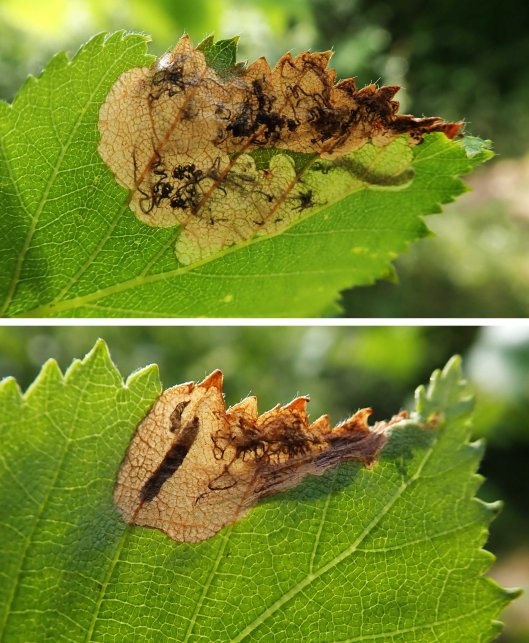
The moth formerly known as Heringocrania unimaculella, now known as Eriocrania unimaculella – either way a tongue twister! – spends its larval stage developing within the leaves of Birch trees. And it poohs … a lot … pooh that Rob Edmunds, expert from the British Leafminers website, describes as ‘long strands of spaghetti’. There are several Eriocrania species that can be difficult to identify but Rob produced an excellent well-illustrated guide explaining how to separate them in his March 2018 newsletter (click to access). The adult moth is a tiny golden critter, which you can see on the UK Moths website.

230522 eriocrania unimaculella on birch

Like Loading...

Leafmines: Coleophora serratella

15 Monday May 2023

Posted by sconzani in insects, trees

≈ Leave a comment

Tags

British leafminers, British moths, case-bearing moth larva, Coleophora serratella, Common case-bearer, leafminers on Birch, moth larvae

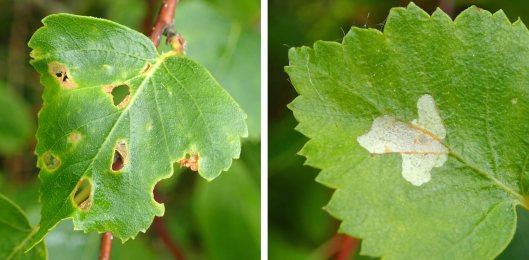
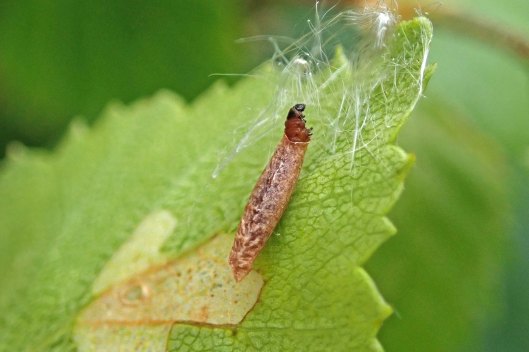
I’ve been checking Birch trees since their green leaves first started to unfold, prompted by a post I’d seen by Rob Edmunds (@leafminerman on Twitter) of the British Leafminers website to check for the small holes created by the feeding of the tiny Common case-bearer moth, Coleophora serratella. Finally, last Tuesday, I found some on a tree in Cardiff’s Grangemoor Park.

And, luckily, the little case-bearing larva was still in situ, initially checking out some silky seedhead fibres that had lodged on the end of its leaf, then retreating to the patch that marked where it had been feeding and resumed munching. You can read more about this beauty on the British Leafminers website and see the adult moth on the UK Moths website.

Like Loading...

Leafmines: Coleophora lutipennella

01 Monday May 2023

Posted by sconzani in insects, trees

≈ Leave a comment

Tags

British moths, case-bearing larvae, Case-bearing moth, Coleophora, Coleophora lutipennella, Common oak case-bearer, moth larvae on Oak

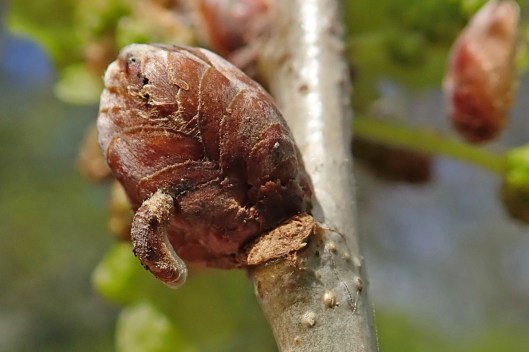
It’s often the way that, while looking for one thing, I find another. In this case, I was checking for eggs or larvae on the newly opening buds and flowers of an Oak tree where I’ve previously seen Purple hairstreak butterflies. No luck with those but I did find this …

230501 Coleophora lutipennella (1)

It’s the larva of the Common oak case-bearer moth (Coleophora lutipennella) – you can see the pretty little adult moth on the UK Moths website here. These case-bearing moths remind me a bit of snails, spending their larval stage in a home they carry around with them, though the moths don’t grow their own – they weave theirs from bits of vegetation and silk. In the photo below, you can see the larva poking its head out from the bottom of its case.

230501 Coleophora lutipennella (2)

It can be difficult to distinguish between the larvae of two very similar case-bearing moths, this one and Coleophora flavipennella. I had my find confirmed by expert Rob Edmunds, who manages the British Leafminers website. The difference between the two cases is minor but fascinating, the presence or not of a small hump of leaf tissue built in to the case – there’s an explanation and some excellent photos on the website’s June 2004 newsletter.

Like Loading...

The final countdown

19 Wednesday Apr 2023

Posted by sconzani in insects

≈ Leave a comment

Tags

British moths, moth larva, Oak eggar, Oak eggar caterpillar, Oak eggar larva

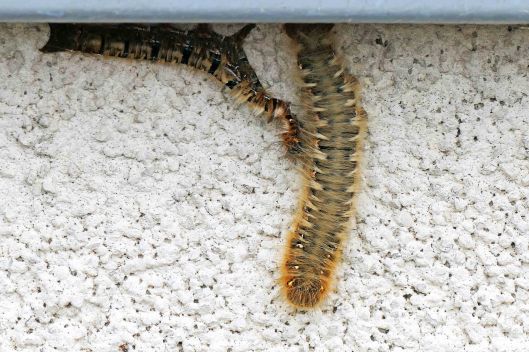
Though I was actually searching for migrating birds, the most exciting thing I found during last Sunday’s six-mile walk was this caterpillar that had just shed its skin. This is the larva of an Oak eggar moth (Lasiocampa quercus), now in the final instar of a one-year life cycle (some Oak eggar larvae have two-year life cycles) and due to pupate in June.

230419 oak eggar

Like Loading...

Beautiful plume

07 Wednesday Dec 2022

Posted by sconzani in insects

≈ Leave a comment

Tags

Amblyptilia acanthadactyla, Beautiful plume, British moths, moth, plume moth

This tiny moth was a lovely surprise from last week’s wildflower searching. I only managed a couple of quick shots before it flew into the vegetation but they were good enough for my friendly local moth expert to identify this as a Beautiful plume (Amblyptilia acanthadactyla), which George also told me is ‘One of the few plumes that overwinters as an adult’. Beautiful, indeed!

221207 Beautiful plume

Like Loading...

Rush veneer

07 Friday Oct 2022

Posted by sconzani in insects

≈ Leave a comment

Tags

British moths, migrant moth, moth, Nomophila noctuella, Rush veneer

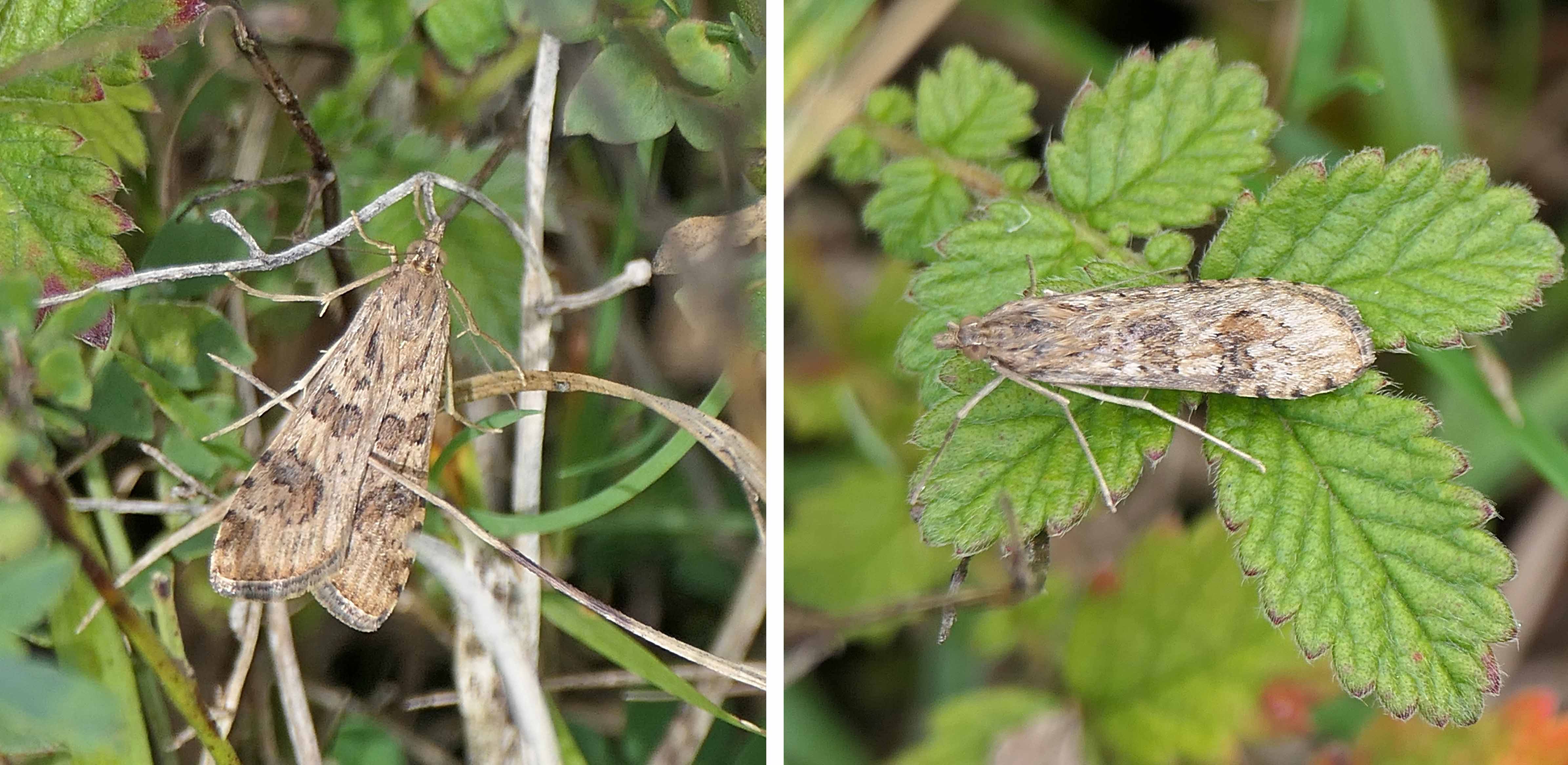
The migrants just keep coming, and I love to see them because it always seems so amazing to me that a little moth like this, with a wingspan of just 26-32mm, can fly all the way to south Wales from somewhere in Europe.

221007 rush veneer

Meet the Rush veneer (Nomophila noctuella), which the UK Moths website says ‘can often be found in large numbers at coastal watch-points, and tends to occur in the adult stage between May and September’. At least six of these little migrants flew up from the path as I walked through a local field earlier this week.

Like Loading...

Leafmines: Phyllocnistis saligna

03 Monday Oct 2022

Posted by sconzani in insects, leaves, trees

≈ Leave a comment

Tags

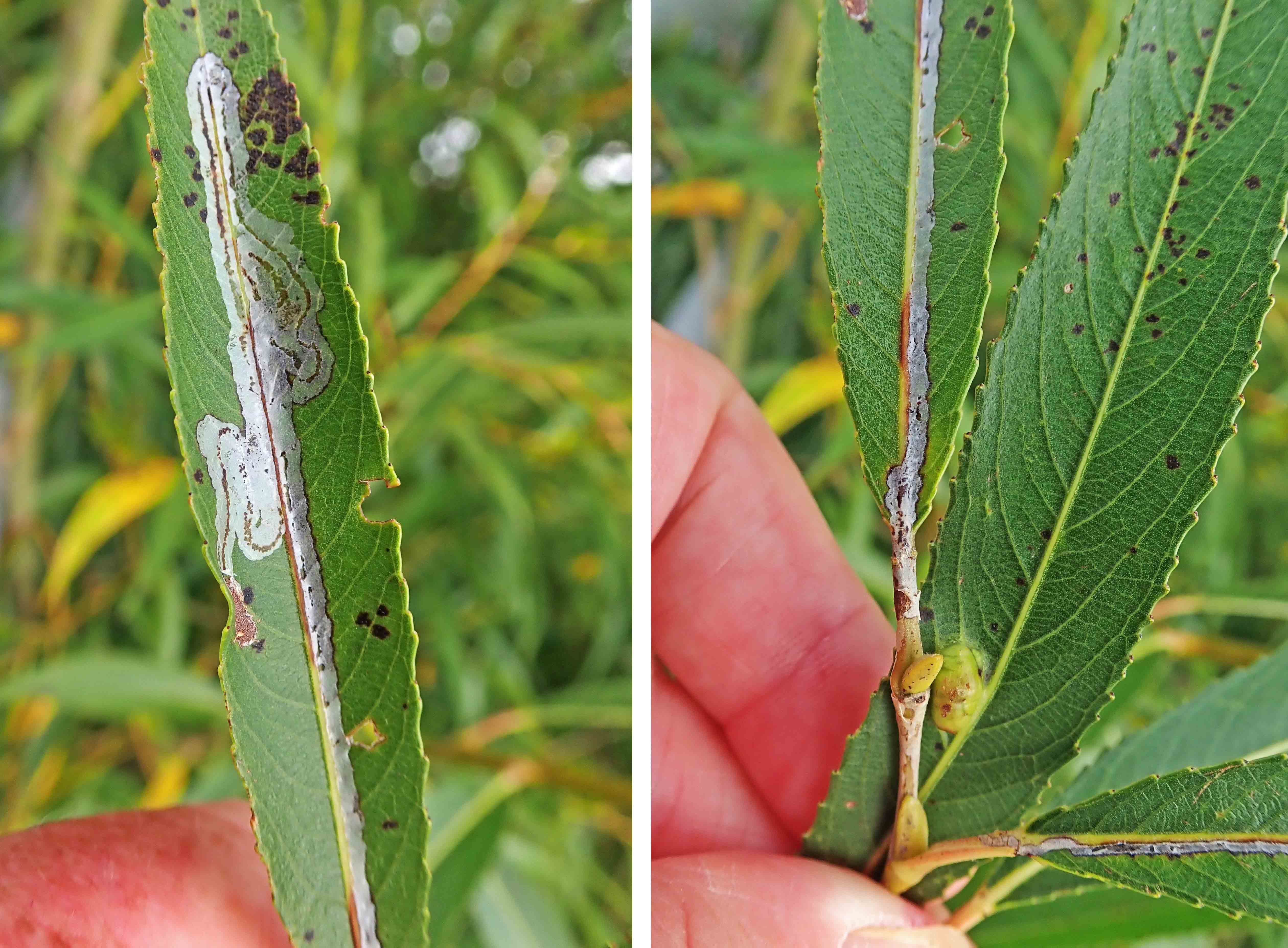
British moths, leaf-mining moth, leafmines on narrow-leaved willow, leafmining moth larvae, Phyllocnistis saligna, Phyllocnistis saligna leafmines, Willow bent-wing leafmines

A new month, a new leafmine challenge, and it’s got off to a very successful start for me. But let’s start at the beginning …
Our locally based Senior ecologist with Butterfly Conservation, George, kickstarted the challenge with a couple of tweets and some photos last Friday evening:

Ok #TeamLeafmine here’s another recent S. Wales colonist to look for; an easy one to identify too. Phyllocnistis saligna mines narrow-leaved willows, unusual because it mines both leaves & young stems. 3 recent records by the Taff in North Cardiff, must be out there elsewhere!

Cocoons are formed in a turned over leaf edge, see 3rd photo in original tweet. Quite a few Gwent records from the Levels and Monmouth/Abergavenny, also new to Carmarthenshire in 2021. Must be in & around Cardiff Bay! More info here: http://leafmines.co.uk/html/Lepidoptera/P.saligna.htm

221003 Phyllocnistis saligna (2)

I didn’t have any firm plans for Saturday’s walk so wended my merry way along the edges of the two local rivers, the Ely and the Taff. I soon realised that this challenge will be a little more difficult than previous ones, as narrow-leaved willows were few and far between and, when found, often inaccessible. However, I did manage to find mines in two locations along the River Taff, which has encouraged me to continue my search further up the river very soon. And, though I hope to find more mines, I doubt I’ll find one of the very lovely little adult Phyllocnistis saligna moths, the wonderfully named Willow bent-wings, which you can see on the UK Moths website.

OLYMPUS DIGITAL CAMERA

Like Loading...

Pearly underwing

13 Tuesday Sep 2022

Posted by sconzani in autumn, insects

≈ Leave a comment

Tags

British moths, migrant moth, Pearly underwing, Peridroma saucia

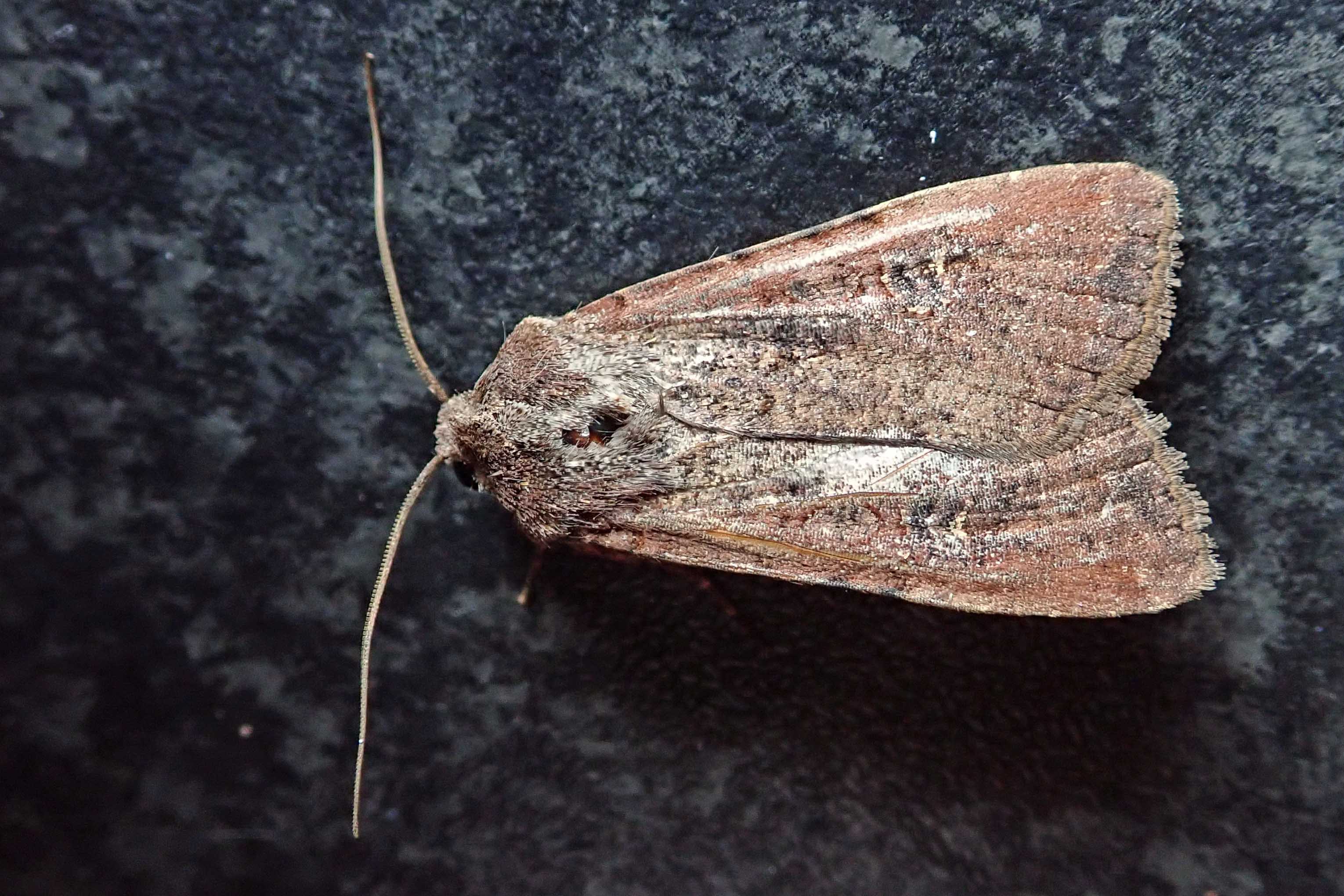
I start to put on my jacket before heading out on my daily walk when something flutters on the sleeve. It’s a moth, this moth, and I have no idea how it got there. Did it land on me during yesterday’s walk and spend the night on the jacket that I’d just flung over the back of a chair? Or did it creep in through the gap in a barely open window during the night?

220913 pearly underwing

A moth expert on Twitter tells me it’s a Pearly underwing (Peridroma saucia), a moth that doesn’t breed in Britain but migrates here from Europe, most often during September and October. No wonder it’s looking a little faded after such a long flight. I keep it inside during the day and release it after dark, hoping that will help it avoid any hungry birds.

Like Loading...
← Older posts
Newer posts →

About me

sconzani

sconzani

I'm a writer and photographer; researcher and blogger; birder and nature lover; countryside rambler and city strider; volunteer and biodiversity recorder.

View Full Profile →

Follow earthstar on WordPress.com

Enter your email address to follow this blog and receive notifications of new posts by email.

Recent blog posts

  • Our celebrity Redshank February 19, 2026
  • My first moth of the year February 18, 2026
  • Three Common sandpipers February 17, 2026
  • Beetle: Athous bicolor February 16, 2026
  • Crocus flower power February 15, 2026

From the archives

COPYRIGHT

Unless otherwise acknowledged, the text and photographs on this blog are my own and are subject to international copyright. Nothing may be downloaded or copied without my permission.

Fellow Earth Stars!

  • Unknown's avatar
  • Unknown's avatar
  • Unknown's avatar
  • Unknown's avatar
  • Unknown's avatar
  • Unknown's avatar
  • Unknown's avatar
  • Unknown's avatar
  • Unknown's avatar
  • Unknown's avatar
  • Unknown's avatar
  • Unknown's avatar
  • Unknown's avatar
  • Unknown's avatar
  • Unknown's avatar
  • Unknown's avatar
  • Unknown's avatar
  • Unknown's avatar
  • Unknown's avatar
  • Unknown's avatar
  • Unknown's avatar
  • Unknown's avatar
  • Unknown's avatar
  • Unknown's avatar
  • Unknown's avatar
  • Unknown's avatar
  • Unknown's avatar
  • Unknown's avatar
  • Unknown's avatar
  • Unknown's avatar
  • Unknown's avatar
  • Unknown's avatar
  • Unknown's avatar
  • Unknown's avatar
  • Unknown's avatar
  • Unknown's avatar
  • Unknown's avatar
  • Unknown's avatar
  • Unknown's avatar
  • Unknown's avatar
  • Unknown's avatar
  • Unknown's avatar
  • Unknown's avatar
  • Unknown's avatar
  • Unknown's avatar
  • Unknown's avatar
  • Unknown's avatar
  • Unknown's avatar
  • Unknown's avatar
  • Unknown's avatar

Blog at WordPress.com.

Privacy & Cookies: This site uses cookies. By continuing to use this website, you agree to their use.
To find out more, including how to control cookies, see here: Cookie Policy
  • Subscribe Subscribed
    • earthstar
    • Join 670 other subscribers
    • Already have a WordPress.com account? Log in now.
    • earthstar
    • Subscribe Subscribed
    • Sign up
    • Log in
    • Report this content
    • View site in Reader
    • Manage subscriptions
    • Collapse this bar
 

Loading Comments...
 

You must be logged in to post a comment.

    %d