• ABOUT
  • BIRDING 2018
  • Birding 2019
  • BLOG POSTS
  • Butterflies 2018
  • Resources

earthstar

~ a celebration of nature

earthstar

Tag Archives: British trees

Autumn trees: Whitebeam

30 Sunday Nov 2025

Posted by sconzani in autumn, leaves, trees

≈ 2 Comments

Tags

autumn colour, autumn leaves, British trees, Sorbus aria, Whitebeam, Whitebeam bark, whitebeam berries, Whitebeam leaves

Whitebeam (Sorbus aria) is a tree I’ve overlooked until now, though I did take a few photos earlier in the year, of its smooth grey bark and its berries, before they ripened. (According to the Woodland Trust website, the berries ‘are known as chess apples in north-west England and are edible when nearly rotten’, which doesn’t make them sound very appetizing to me.)
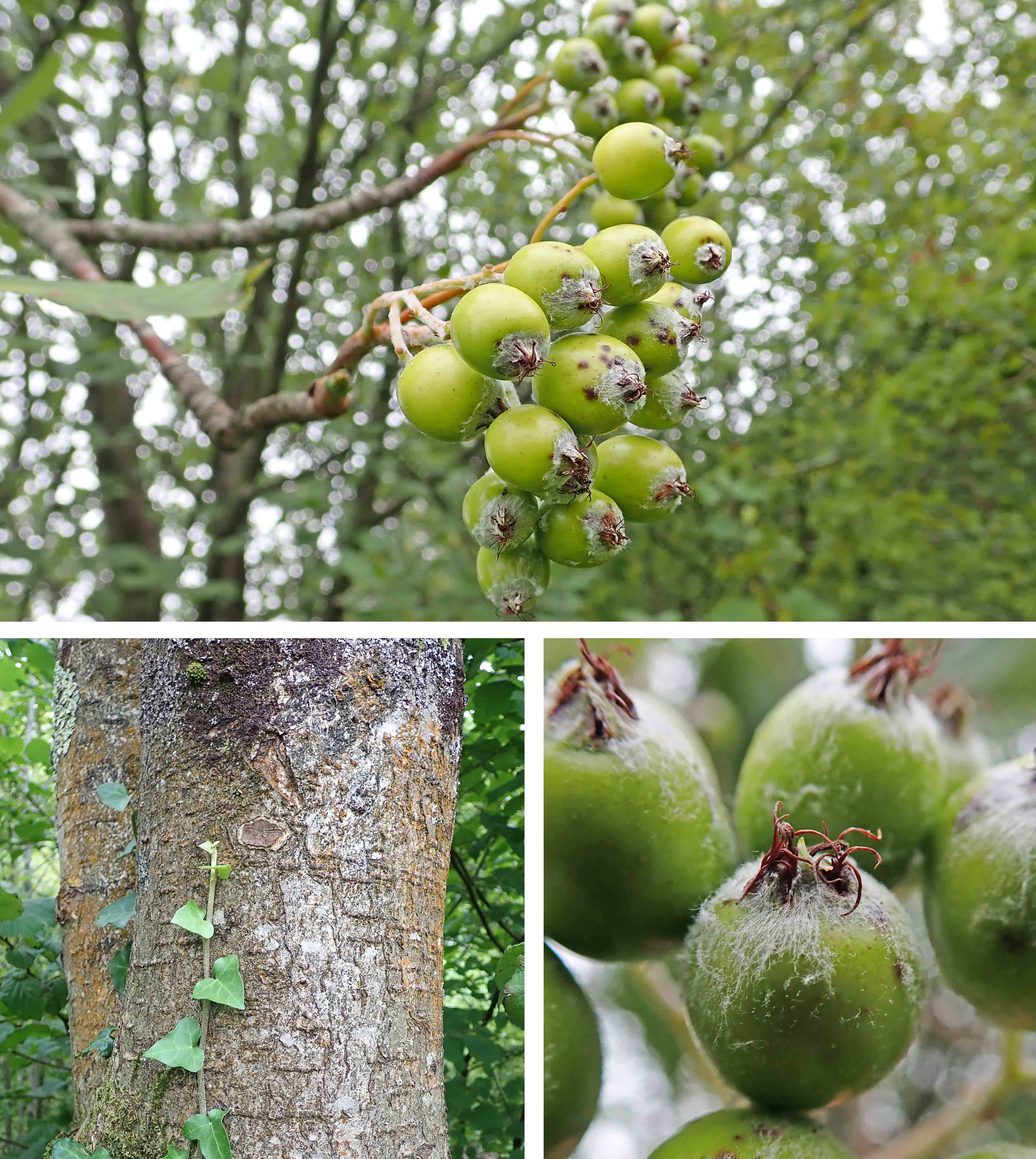
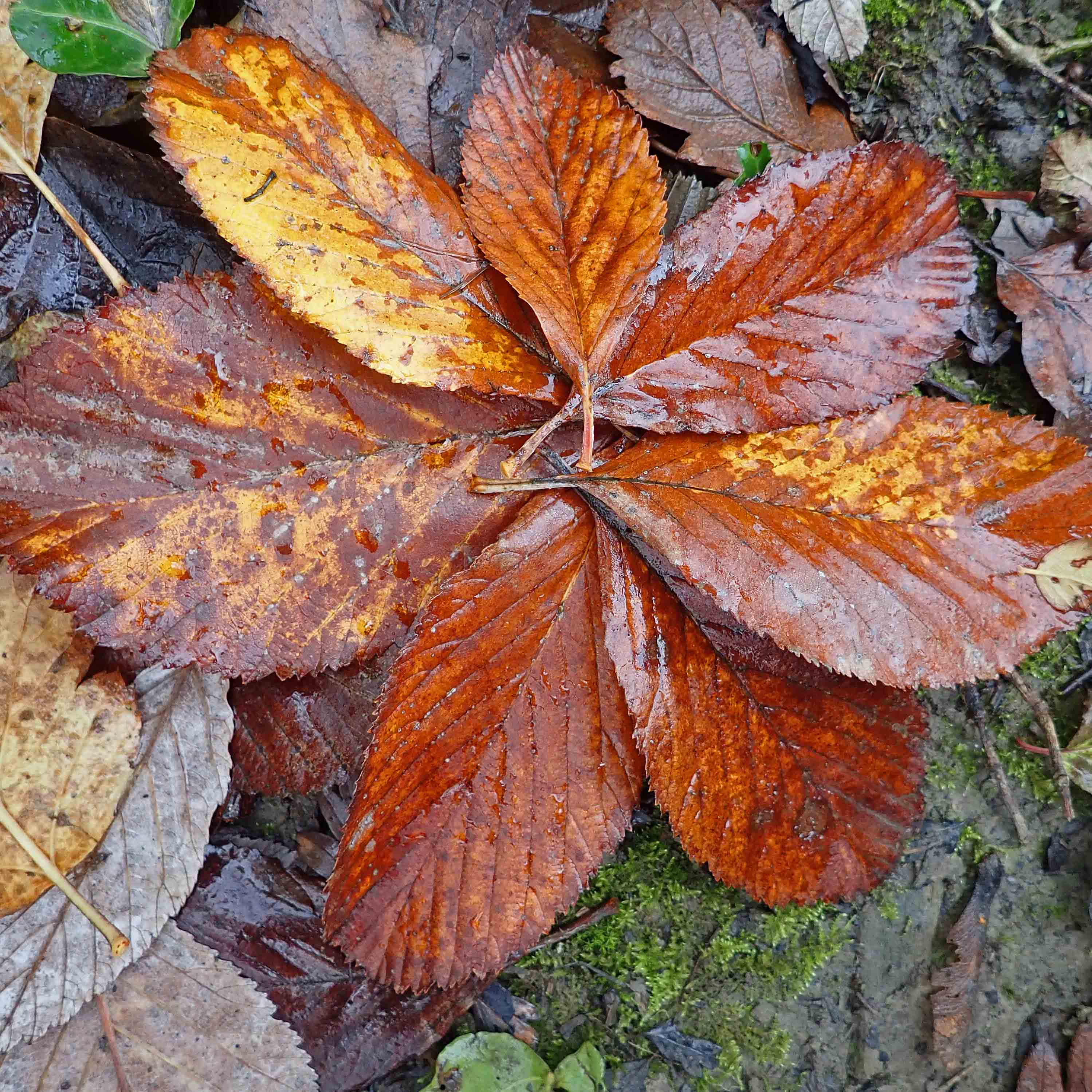
Whitebeam’s leaves are quite distinctive: elliptical in shape with serrated edges, the upper sides a shiny dark green, the under sides light grey and hairy. In the autumn, they aren’t particularly spectacular, simply changing to yellow, orange, and brown as they lose their chlorophyll.
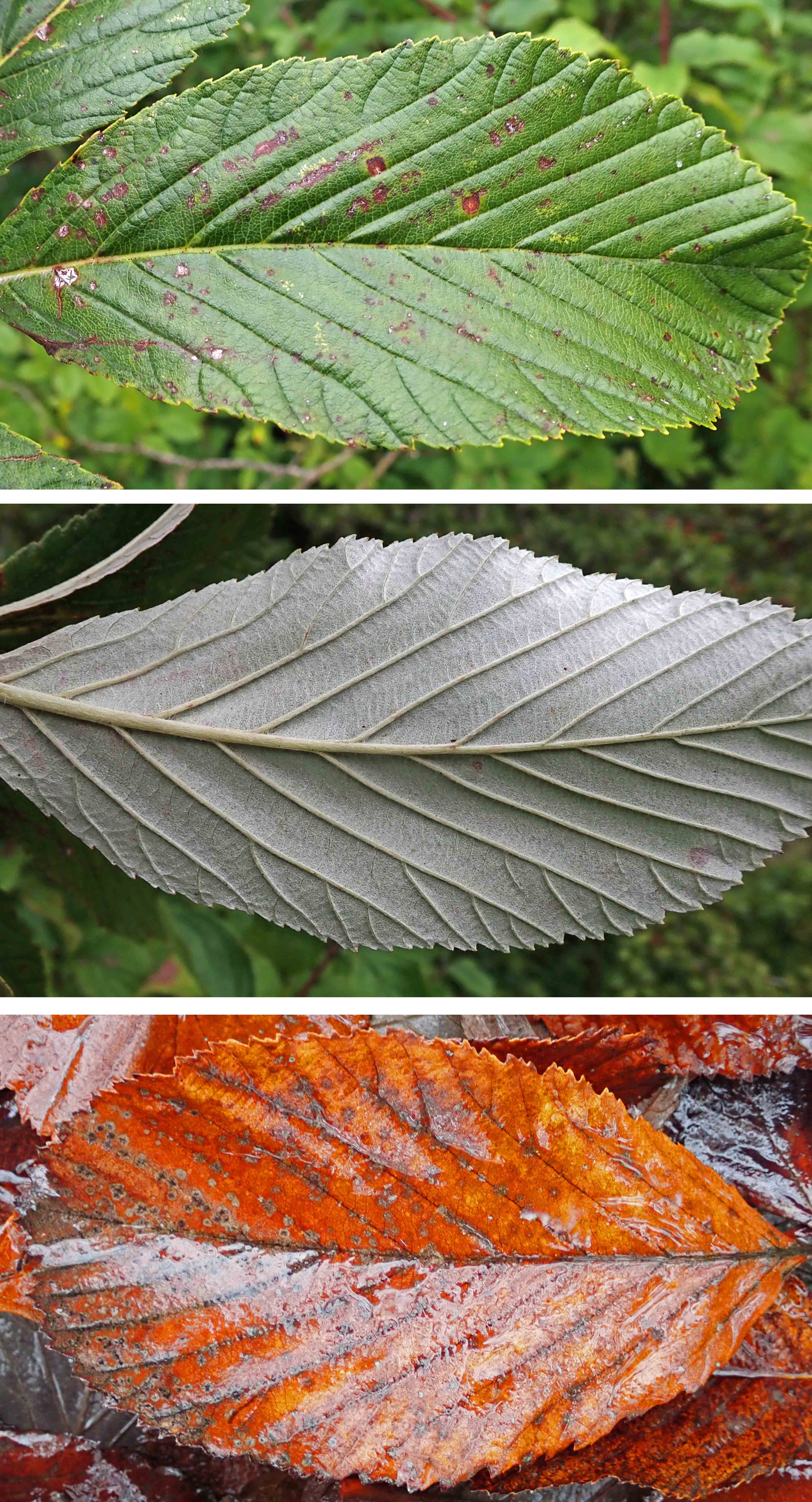
The Woodland Trust site has some interesting facts about this handsome tree:

Whitebeam timber is fine-grained, hard and white. Traditional uses included wood turning and fine joinery, including chairs, beams, cogs and wheels in machinery.

And

Whitebeam is native to southern England, though widely planted in the north of the UK. It is common in parks and gardens, but is quite rare in the wild.

And

The leaves are eaten by caterpillars of a number of moths, including Parornix scoticella, Phyllonorycter corylifoliella and Phyllonorycter sorbi.

All three of those moths have leaf-mining larvae, none of which I’ve yet seen, so I must keep an eye out next year.
Like Loading...

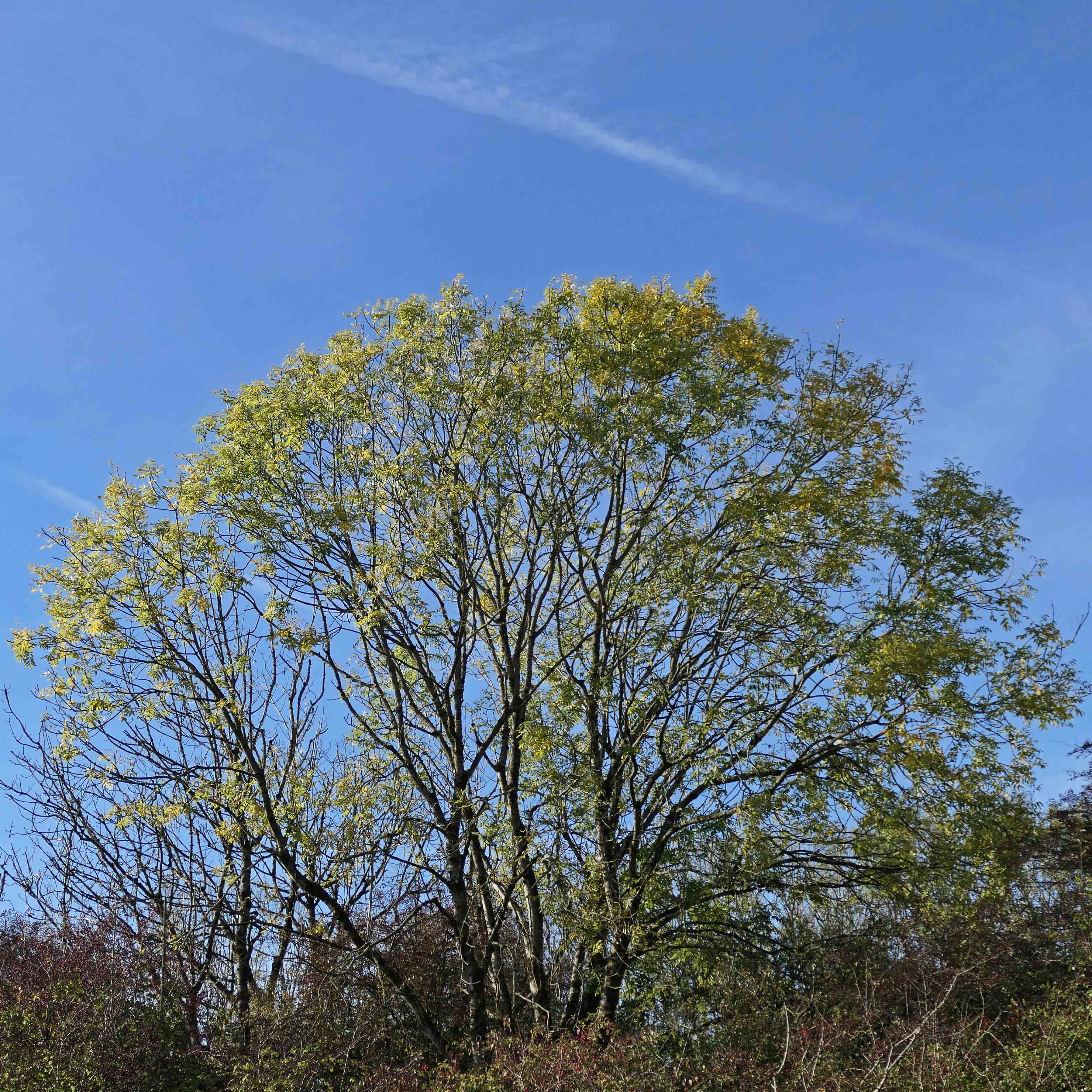
Autumn trees: Ash

23 Sunday Nov 2025

Posted by sconzani in autumn, leaves, trees

≈ Leave a comment

Tags

Ash, Ash keys, Ash tree, autumn colour, British trees, Fraxinus excelsior

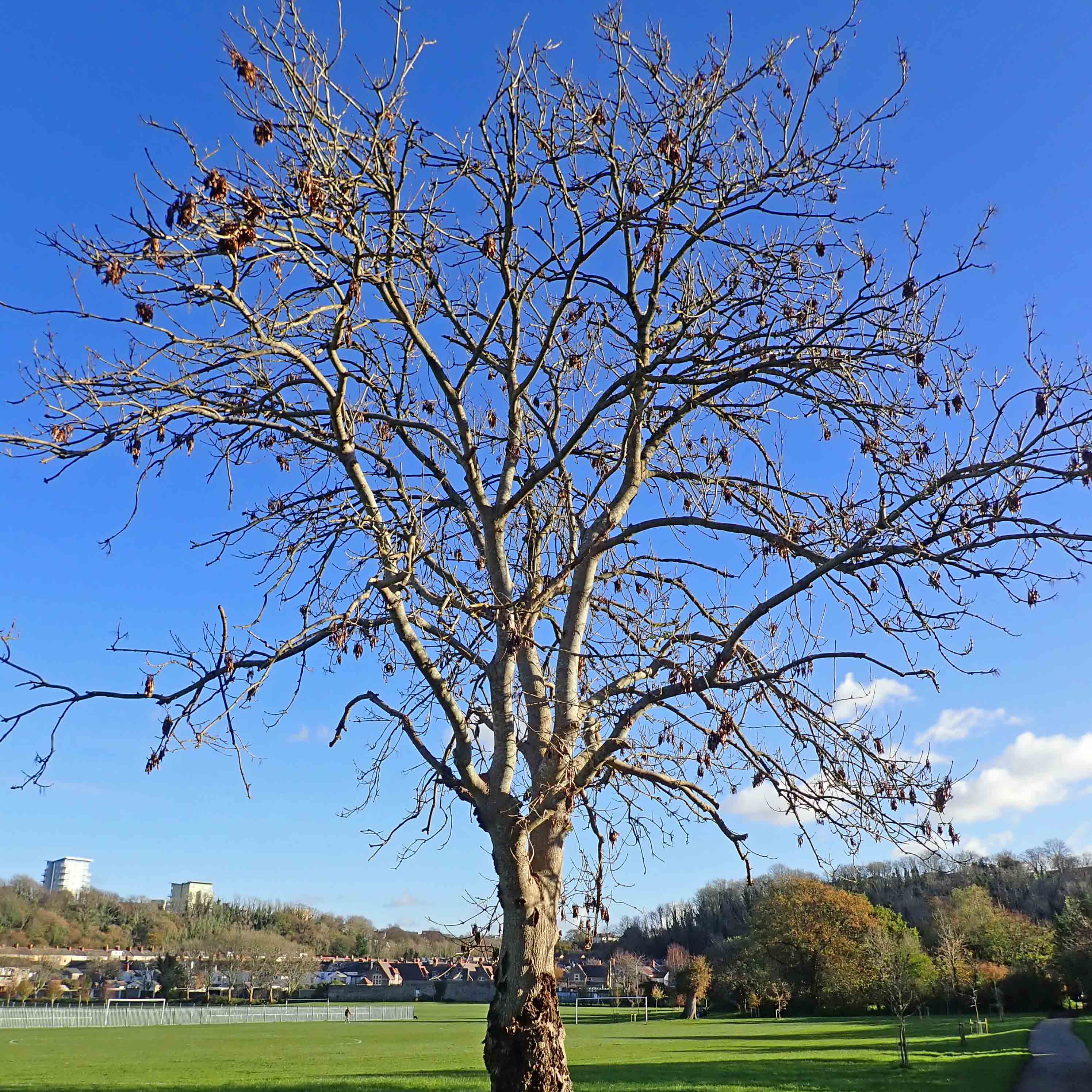
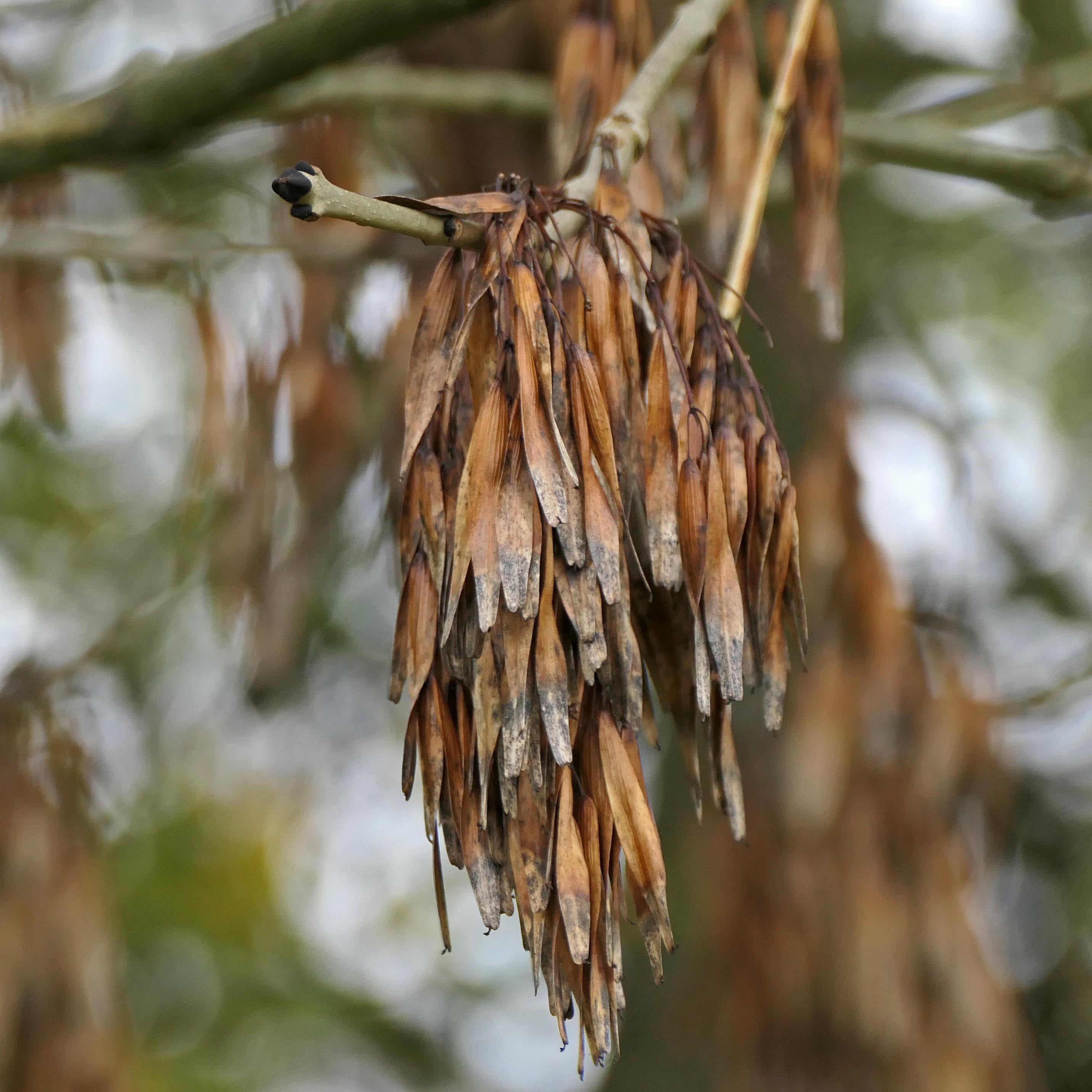
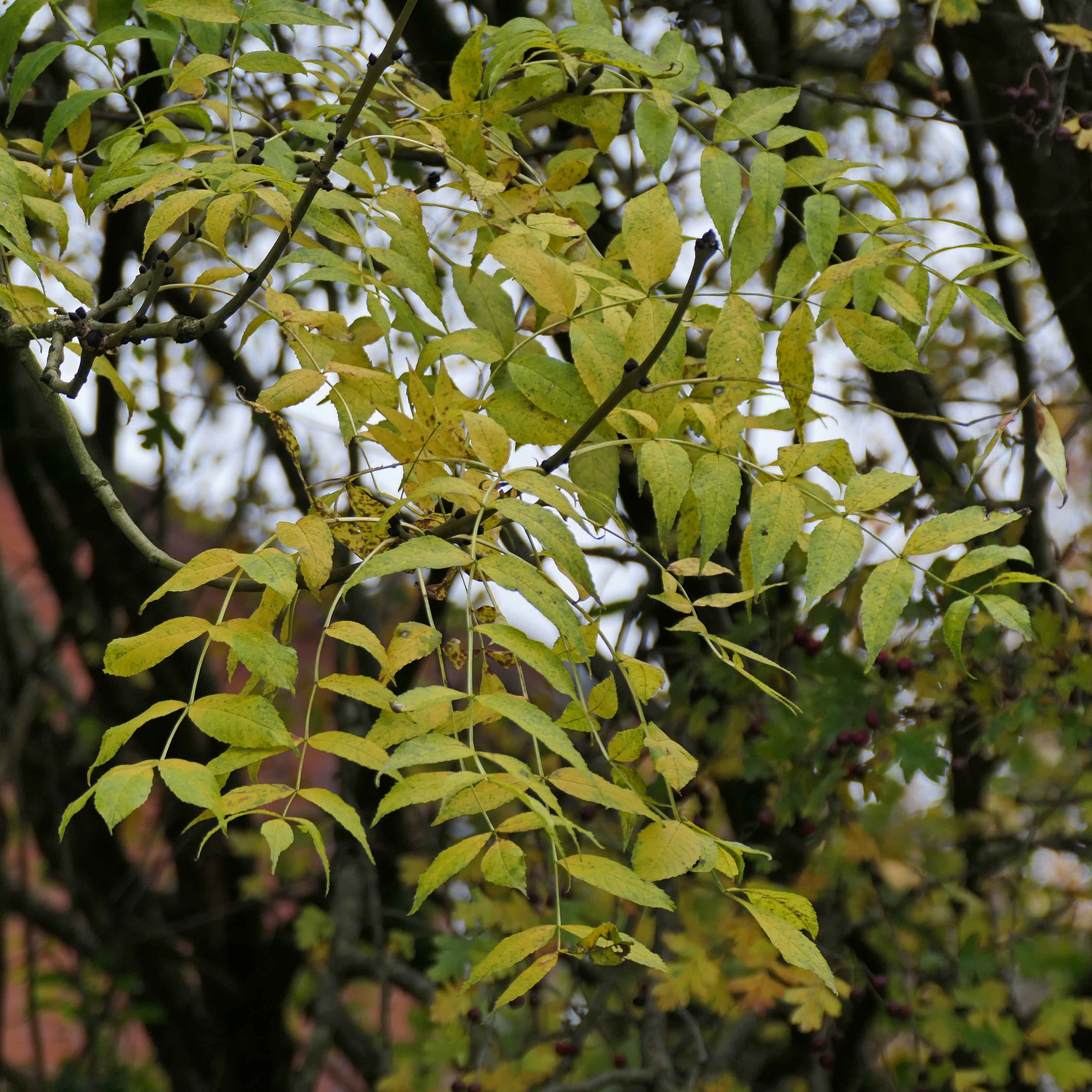
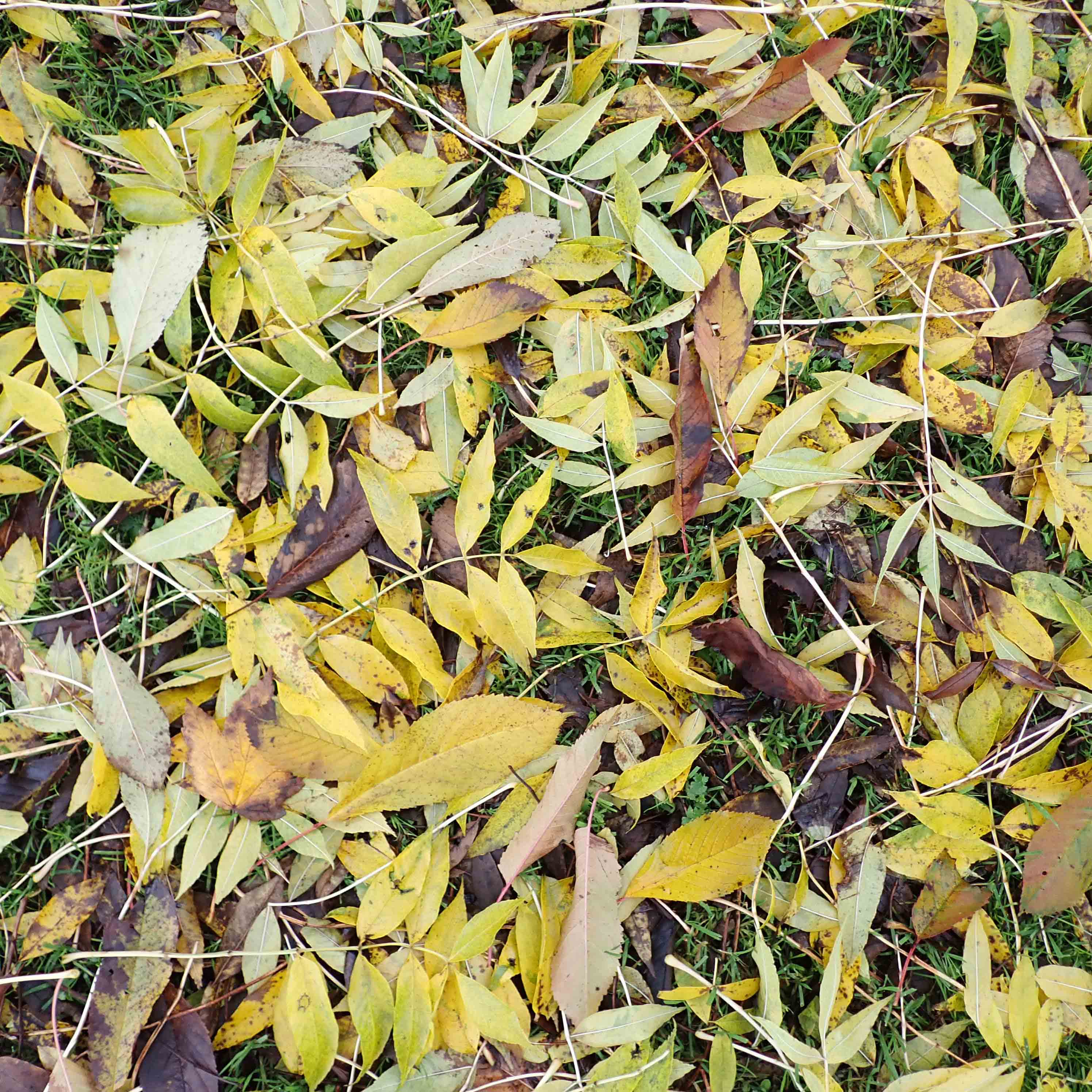
My Flora Britannica contains a myriad of fascinating information about the Ash tree (Fraxinus excelsior) but nothing that specifically relates to the tree in autumn. So, I googled “Ash keys”, thinking that might turn up some interesting facts. The AI overview produced this rather bizarre result:

“Ash keys” can refer to the winged seeds of an ash tree, which are used in poetry collections, or a caravan park in Yorkshire, UK. The ash tree seeds are a common sight in autumn and are also used to make pickles.

Yes, I was expecting the ‘winged seeds of an ash tree’ but ‘used in poetry collections’? (Turns out, there’s a book of poetry called Ash keys.) And, yes, ‘ash tree seeds are a common sight in autumn’ but are they really used to make pickles? (Turns out, this can be done but is an incredibly long-winded process, using a lot of electricity for multiple cooking stages and spices to create flavour, and is surely neither environmentally friendly nor worth the effort.) You may have guessed I’m no fan of AI!

So, here’s one of the much more interesting pieces from Flora Britannica instead:

In Britain, up until the end of the eighteenth century, it was regarded as a healing tree, and Gilbert White knew Hampshire villagers who, as children, had been through an Ash ritual as a ritual as a treatment for rupture or weak limbs. It was an extraordinary ceremony, a relic of pre-Christian sympathetic magic. A young Ash was split and held open by wedges, while the afflicted child was passed, stark naked, through the gap. The split was then ‘plastered with loam, and carefully swathed up. If the parts coalesced and soldered together … the party was cured; but, where the cleft continued to gape, the operation, it was supposed, would prove ineffectual.

Like Loading...

Autumn trees: Beech

16 Sunday Nov 2025

Posted by sconzani in autumn

≈ Leave a comment

Tags

autumn colour, beech, Beech in autumn, Beech leaves, British trees, Fagus sylvatica

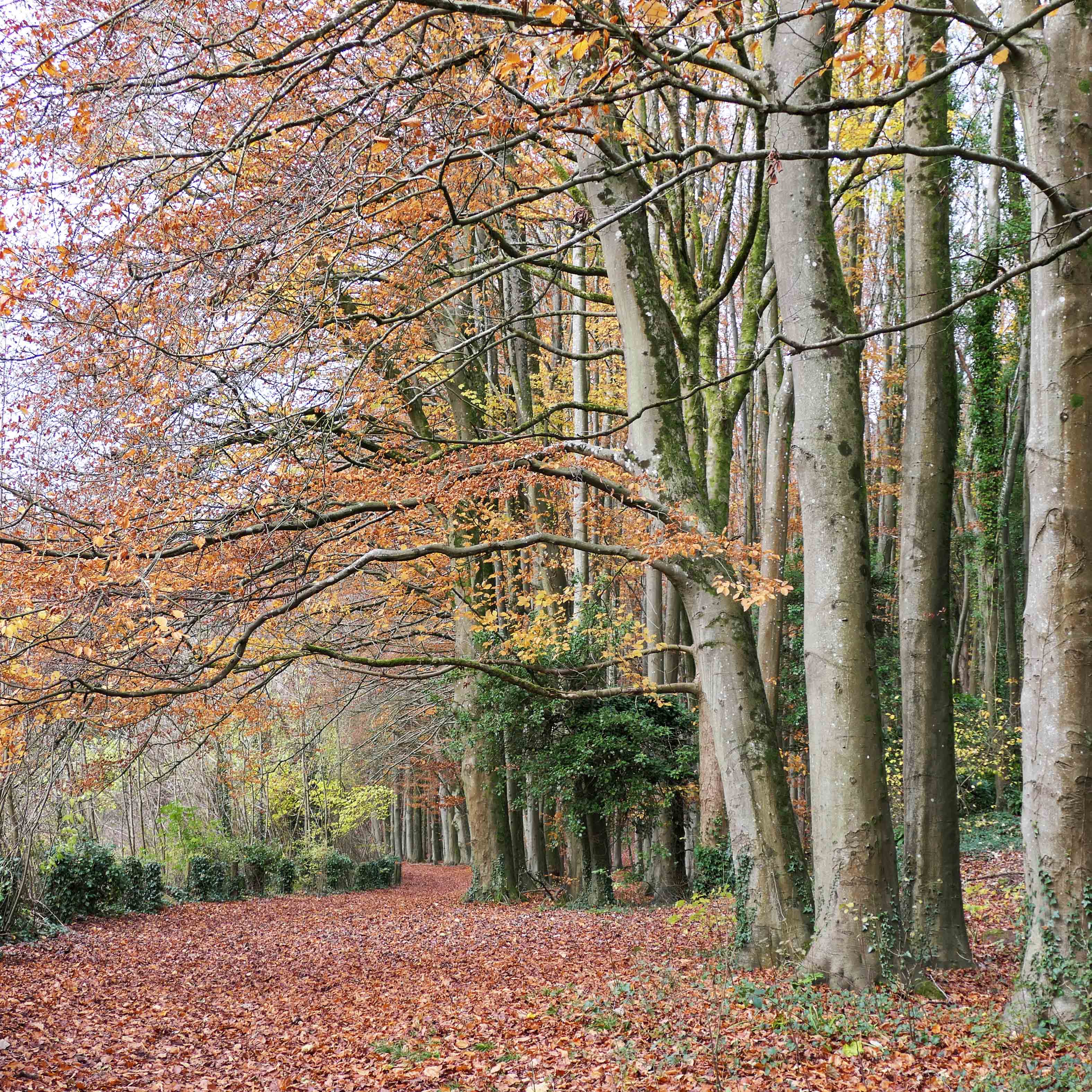
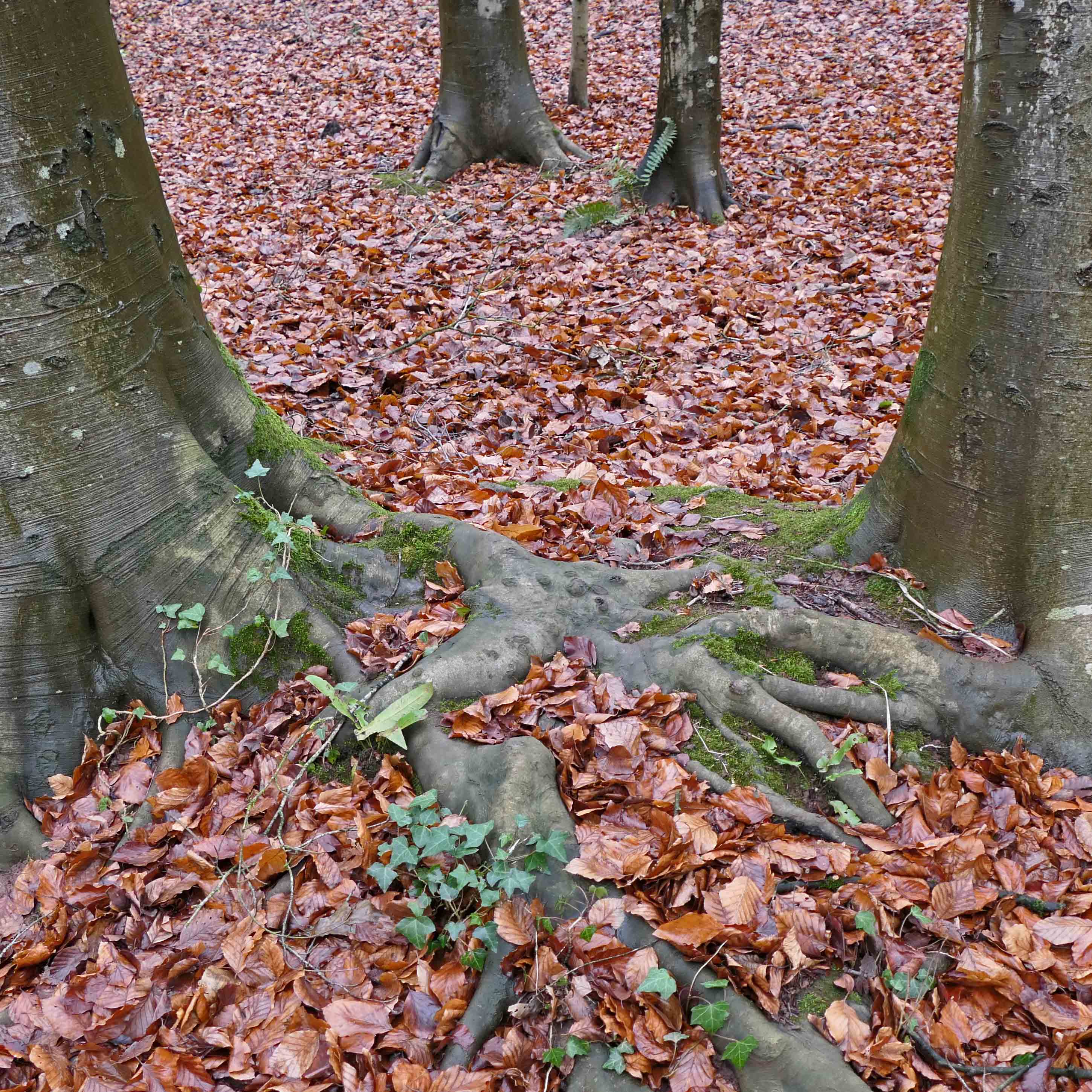
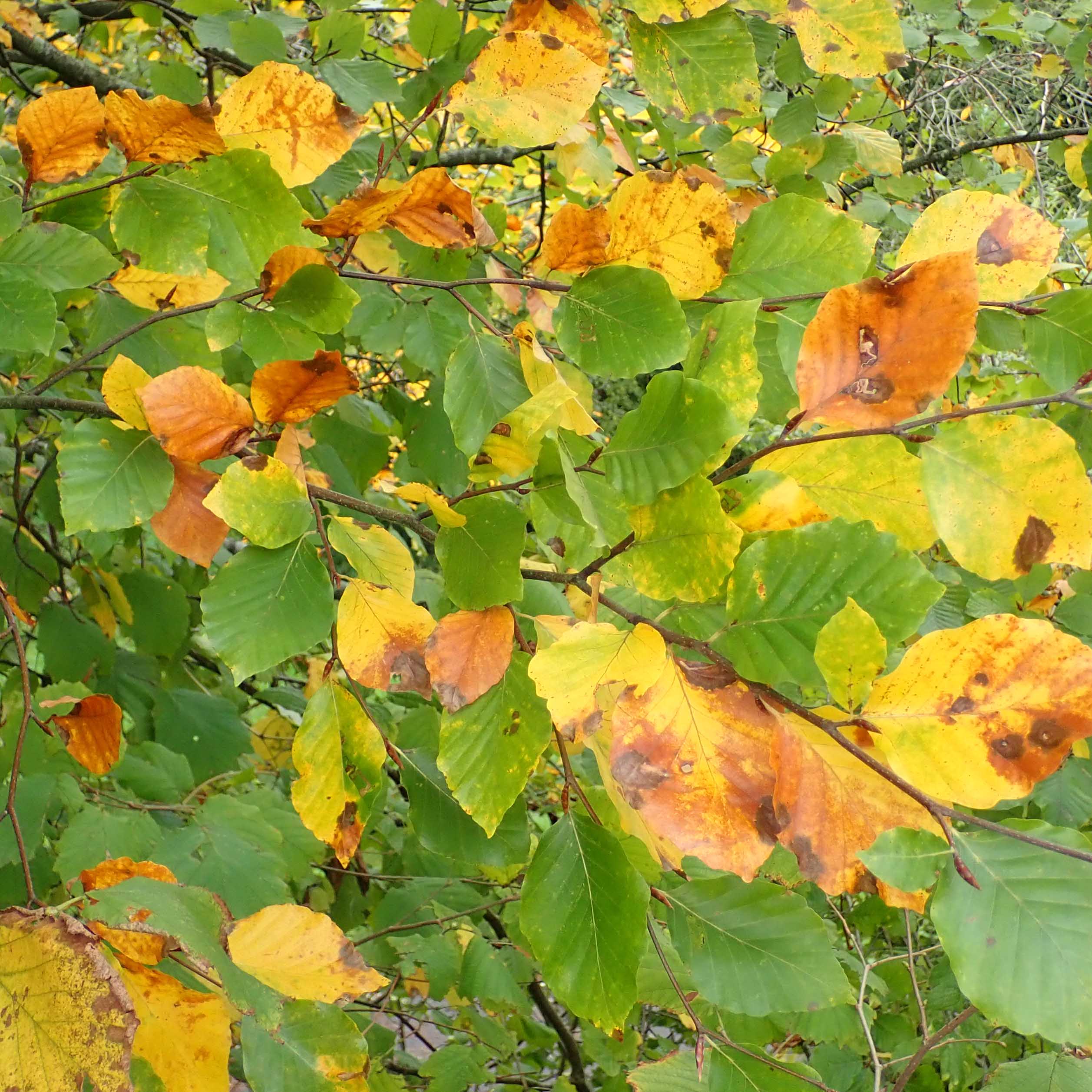
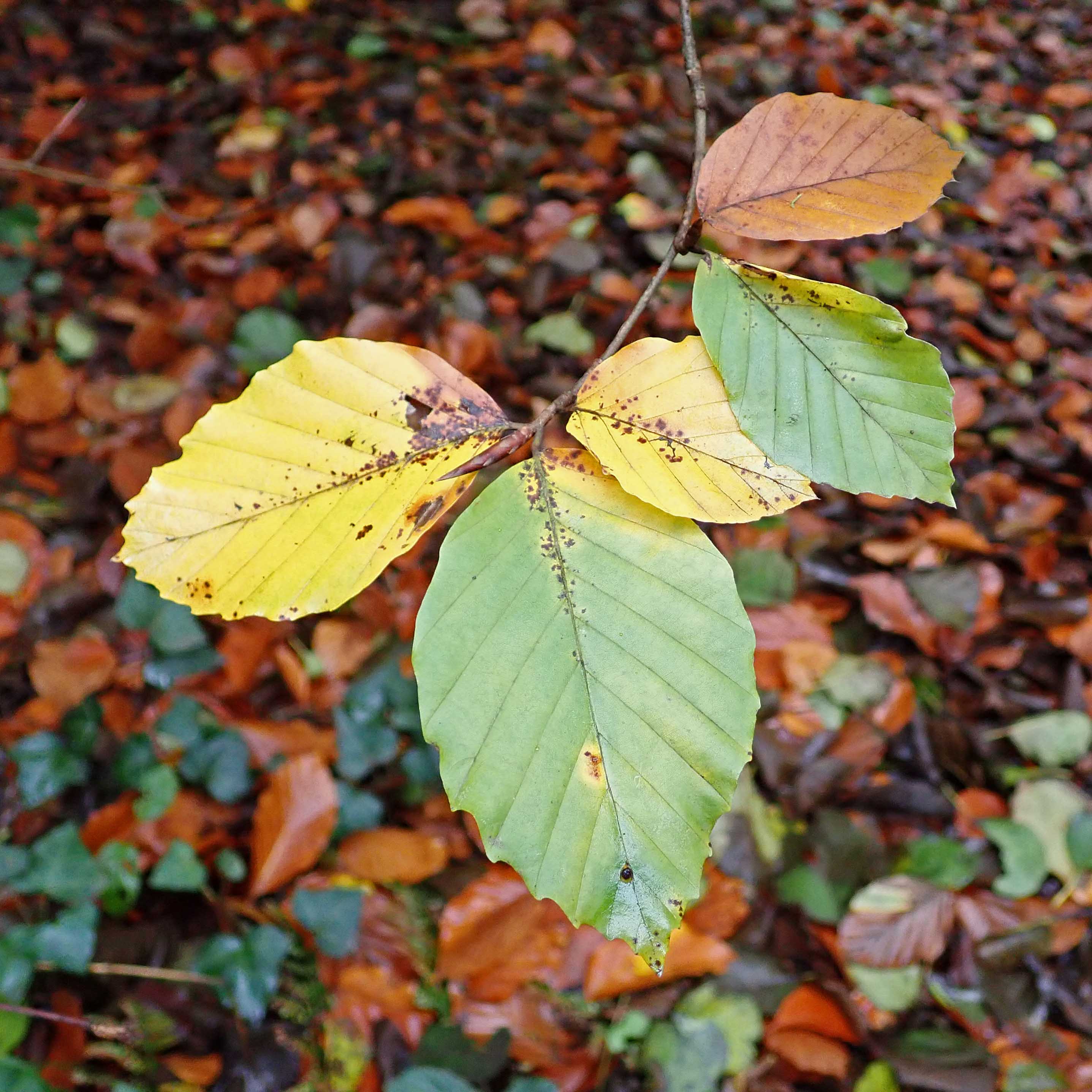
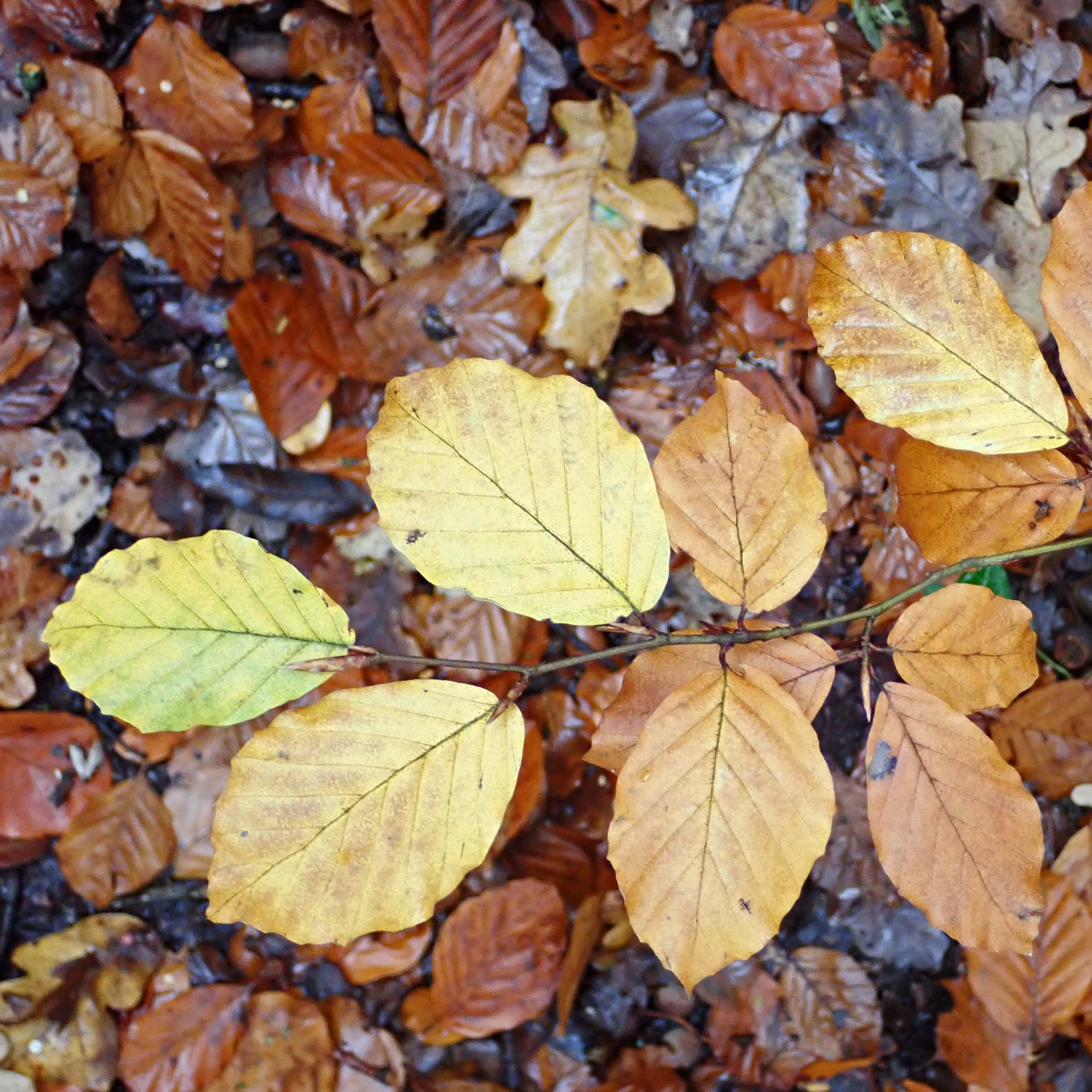
Things I didn’t know about the Beech tree (Fagus sylvatica) until I started to research this post, all courtesy of Richard Mabey’s Flora Britannica …

Even its arrival in this country has been a contentious matter, and it is often claimed to be a Roman introduction … But beech pollen remains have been found in the Hampshire basin that date from 6000 BC – about 2,000 years after the oaks returned to post-glacial Britain and 500 years before the Channel opened. So the beech just passes the key test of botanical nativeness; it was here when Britain became on island.

The leaves have been made into a potent alcoholic drink – beech-leaf noyau. This is a recipe remembered by a 70-year-old man in the southern Chilterns: ‘Wash and dry enough been leaves to fill your stone jar – cover them with gin. Leave for a week, then strain off the liquid and measure. To each pint add a pound of sugar which is dissolved in half a pint of boiling water. Add a good quantity of brandy and stir together, then leave to go cold before bottling.’

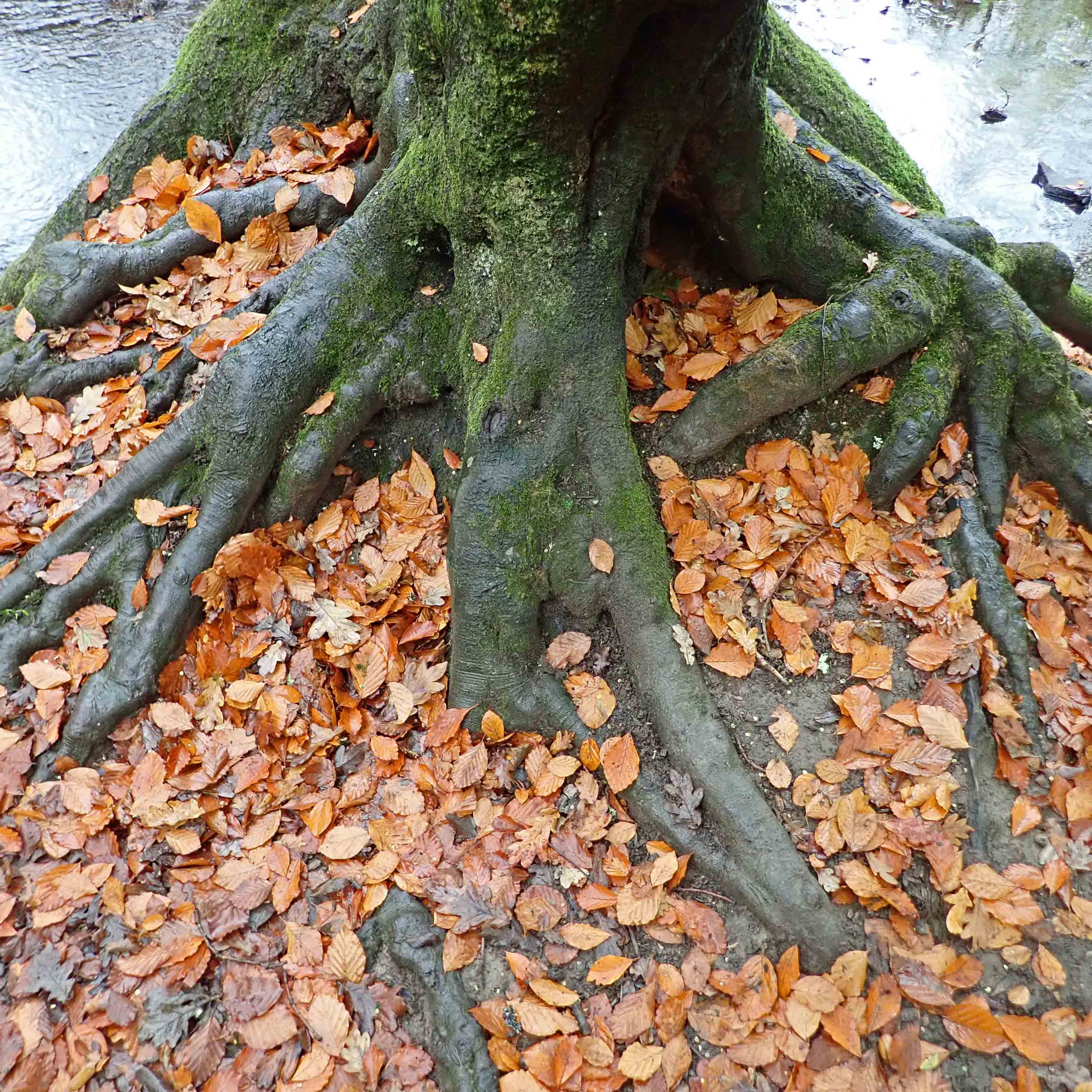
I’m not sure I’d give that drink a try but, standing tall and statuesque amongst its tree companions, the Beech is a magnificent tree, a definite favourite of mine in every season, but especially in autumn.

Like Loading...

Autumn trees: Hawthorn

02 Sunday Nov 2025

Posted by sconzani in autumn, leaves, trees

≈ Leave a comment

Tags

autumn colour, autumn leaves, autumn trees, berries, British trees, Crataegus monogyna, Hawthorn, Hawthorn berries, Hawthorn leaves

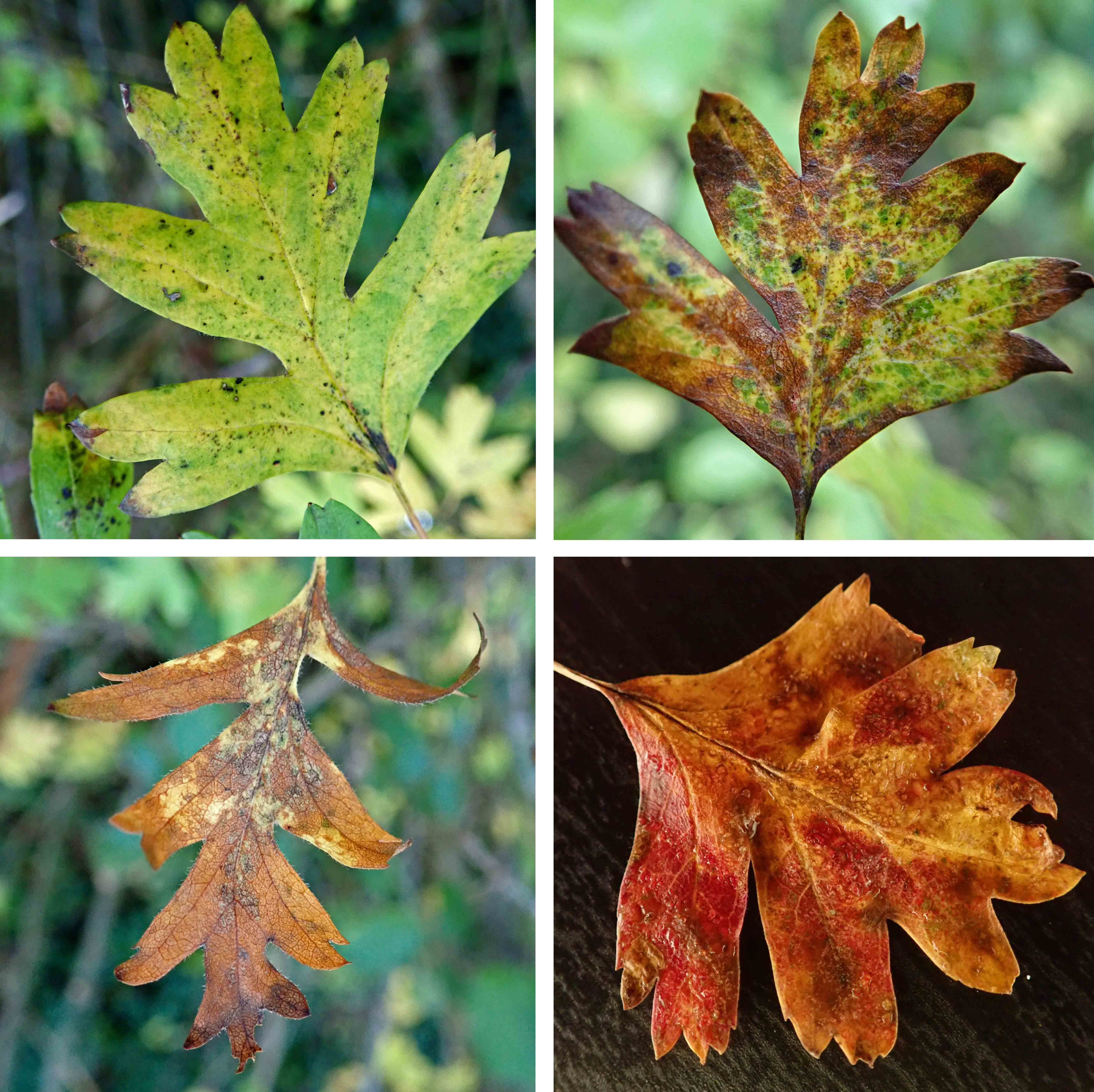
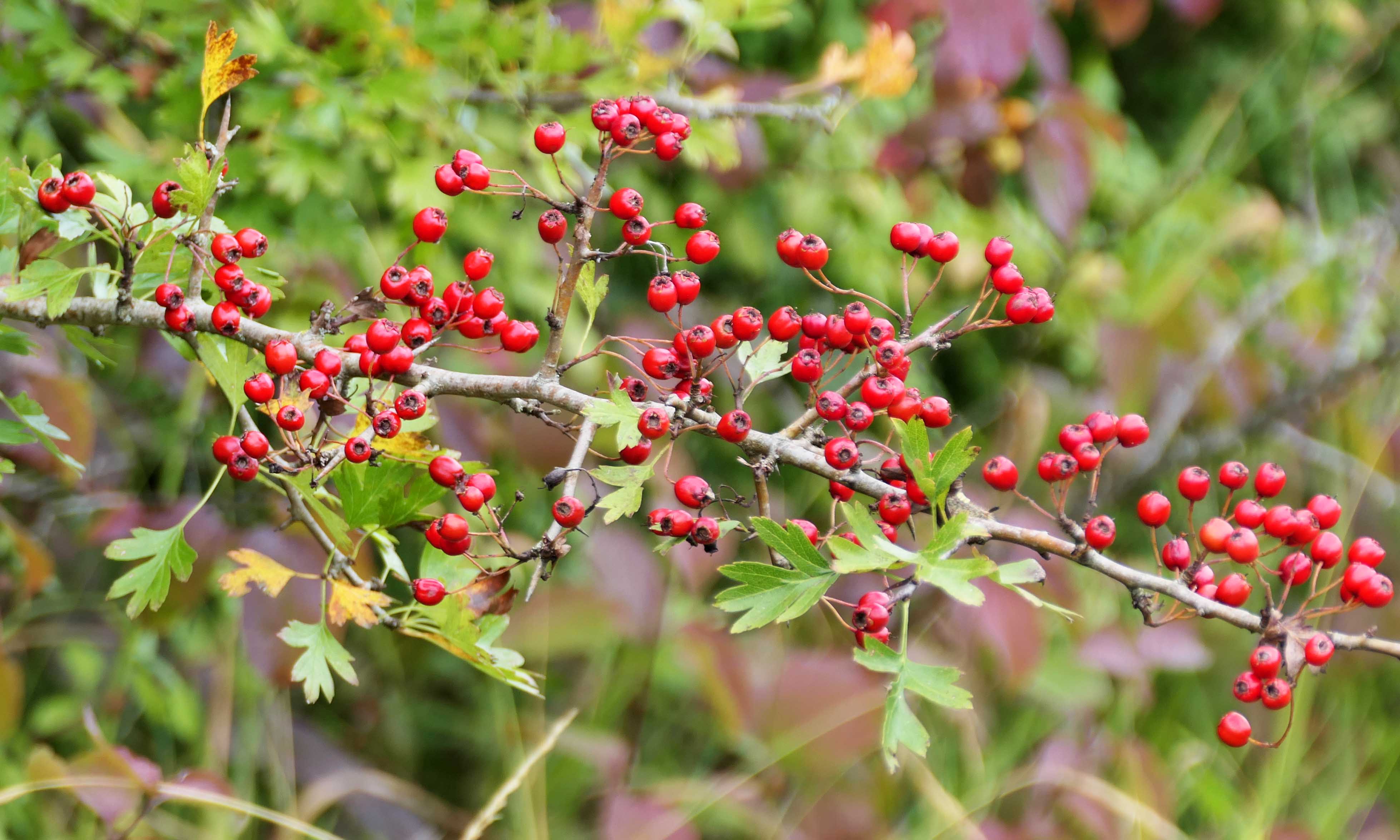
The Hawthorn (Crataegus monogyna) is not really a tree we notice for its foliage, though its leaves were, apparently, one of the models for the foliage that wreathes the faces of Green Men seen in carvings in churches.

And, according to Richard Mabey’s Flora Britannica, Bread-and-cheese is a vernacular name given to the leaves of the Hawthorn in some places around Britain. He says: ‘This is usually explained as referring to their rudimentary culinary qualities’ but then quotes a correspondent who writes:

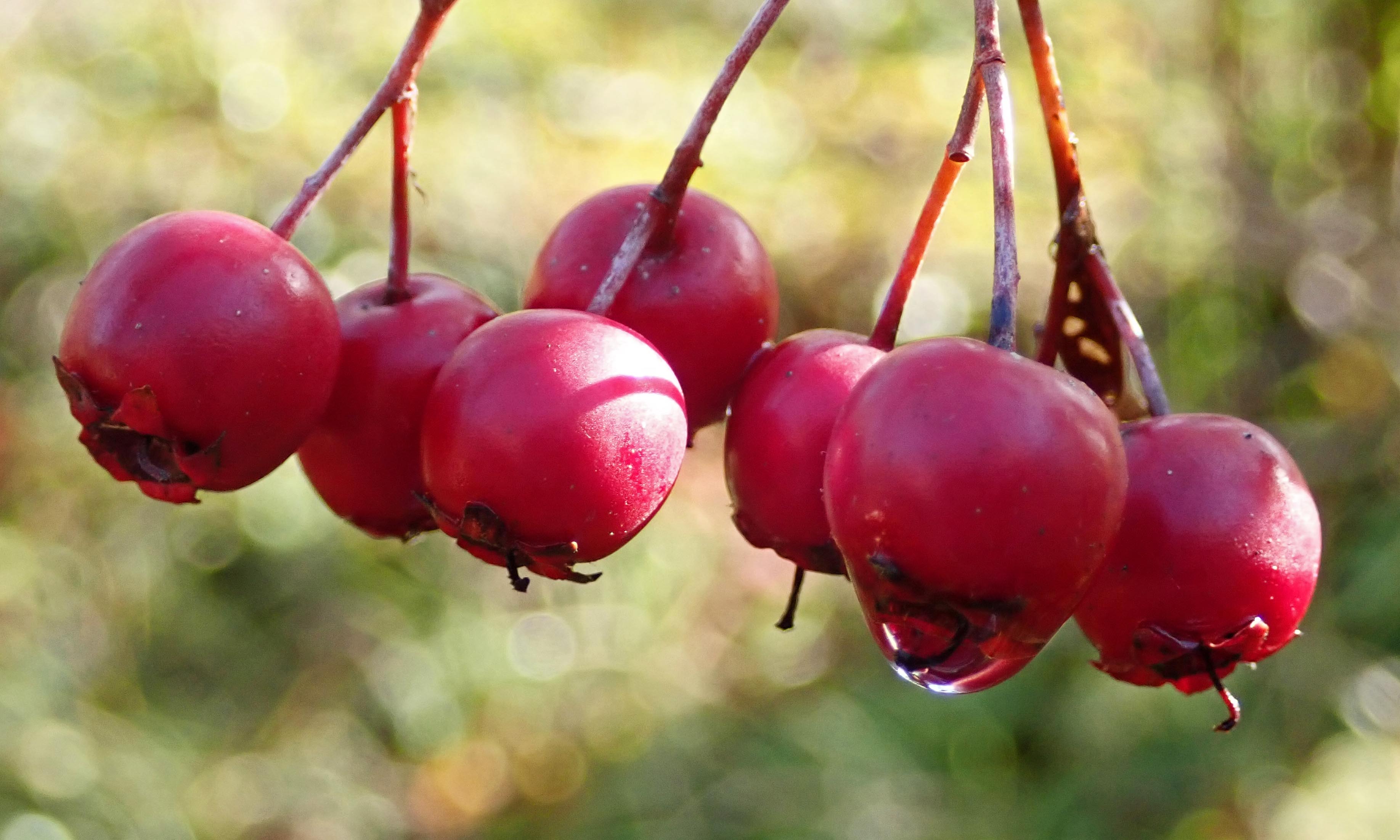
We would pick the red berries and green leaves in the autumn. These were known as “bread and cheese” – the leaf the bread, the berry the cheese.

In the autumn, though the leaves of the Hawthorn do, of course, change colour, the hues are mostly yellow and brown, with just the merest hint of red. So it’s the stunning red berries rather than the tree’s leaves that makes the Hawthorn stand out in the autumnal landscape. I’ve never tried eating the berries but Mabey notes that the ‘flesh is a little like overripe avocado pear or, more fancifully, a whey cheese.’ That doesn’t sounds very appetising to me so I think I’ll continue to admire, not to eat them.

Like Loading...

Rowan, the thinker

03 Sunday Nov 2024

Posted by sconzani in autumn, trees

≈ Leave a comment

Tags

autumn berries, autumn colour, British trees, Celtic Zodiac, Rowan, Rowan berries, Rowan The Thinker

Did you know there is an ancient Celtic zodiac, with trees as the symbols for each of the thirteen (moon-cycle-based, hence thirteen not twelve) signs? I didn’t, until I saw a post on Instagram by the extremely talented artist Luke Adam Hawker, who has just released a series of etchings, one for each of the signs (I wish I could afford to buy the etching for my sign!).

241103 rowan (1)

Along with the tree images he’s been posting, he’s also listed information about the qualities attributed to people born under each sign. The Rowan tree is the symbol for a person born between 21 January and 17 February, summarised as The Thinker, and the qualities they are said to possess are as follows:

Philosophical visionaries with original and creative minds, often misunderstood due to their passionate ideals. Despite a cool exterior, they burn with inner passion, transforming situations and inspiring others with their unique perspectives.

Are you a Thinker? Do you recognise yourself in this description?

241103 rowan (2)

The Rowans in my images, taken at Cardiff’s Cathays Cemetery during a recent wander, are lush with berries at the moment, providing welcome fodder for both local birds and the winter thrushes currently arriving from Europe and Scandinavia.

241103 rowan (3)

Like Loading...

WildflowerHour: Tree flowers

14 Sunday Apr 2024

Posted by sconzani in flowers, trees

≈ Leave a comment

Tags

#WildflowerHour, British trees, tree flowers

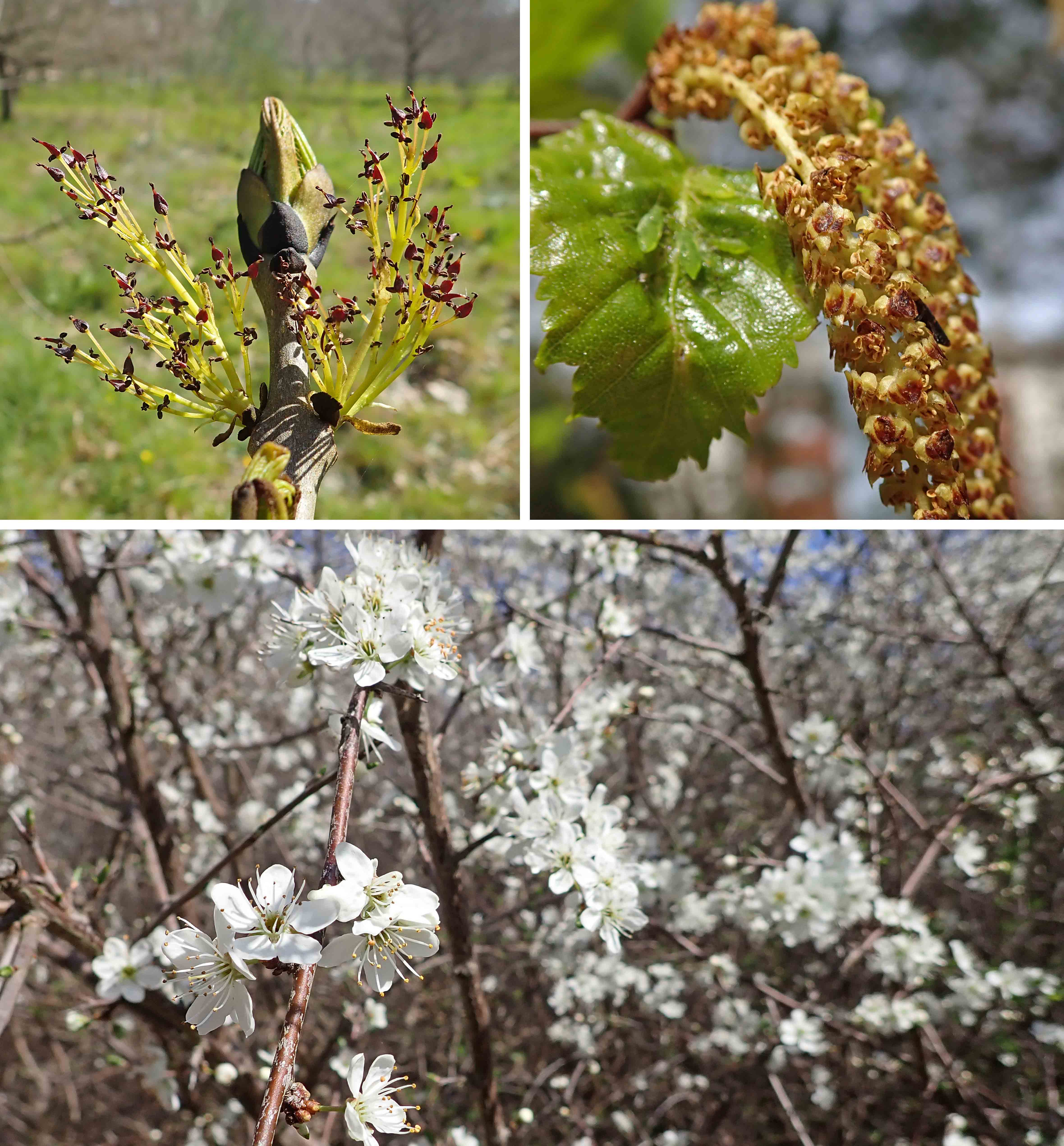
The challenge for this week’s #WildflowerHour on social media was to find as many tree flowers as possible. Here’s my contribution …

240414 ash birch blackthorn

Ash, Birch (not sure which species), and Blackthorn

240414 cherry laurel hawthorn

Cherry laurel (probably a garden escape) and Hawthorn

240414 maple field norway ornamental cherry

Field and Norway maples, plus I couldn’t resist adding an ornamental Cherry in to the mix, as they’re looking so gorgeous at the moment.

240414 willow female male

Goat willow, I think, female above and male below – Goat willows are dioecious, i.e. male and female flowers are on separate trees.

Like Loading...

Furry flowers

30 Sunday Jan 2022

Posted by sconzani in trees

≈ Leave a comment

Tags

Alder, Alder catkins, British trees, catkins, female Alder flowers, female Hazel flowers, Hazel, Hazel catkins

The catkins of Hazel (left) and Alder (right) are now swinging from their respective tree branches like furry pussycats’ tails – the male catkins, that is.

220130 male hazel
220130 male alder

The female flowers are rather different, the Hazel females (left) totally different, that startlingly hot pink, and the Alder flowers (right) a little catkin-ish but much smaller (my last photo shows both male and female Alder to show the size comparison).

220130 female hazel
220130 female alder

220130 alder male and female

Like Loading...

A return to my trees

09 Sunday Jan 2022

Posted by sconzani in trees

≈ 2 Comments

Tags

autumn trees, British trees, to return to my trees, Welsh phrase about trees

I read this recently on Twitter and liked the idea so much that I just had to share:
‘The Welsh phrase “dod yn ôl at fy nghoed”, meaning “to return to a balanced state of mind”, literally translates as “to return to my trees”.’ Works for me!

Like Loading...

Wayfaring berries

09 Monday Aug 2021

Posted by sconzani in plants

≈ 2 Comments

Tags

autumn berries, berries, British trees, tree berries, Wayfaring tree, Wayfaring tree berries

I’ve been resisting taking berry photos, trying to deny the fact that the days are shortening and the summer heat slowly fading, but I have been watching the Wayfaring trees I featured earlier this year, in the post The Wayfarer, and I couldn’t resist documenting how the glorious flowers from May have gradually been developing into luscious shiny red berries.

210506 wayfaring tree (7)
210809 wayfarer berries (1)
210809 wayfarer berries (2)
210809 wayfarer berries (3)

Like Loading...

Oak burst

14 Friday May 2021

Posted by sconzani in flowers, spring, trees

≈ Leave a comment

Tags

British trees, Oak bud burst, Oak flowers, oak tree, tree flowers

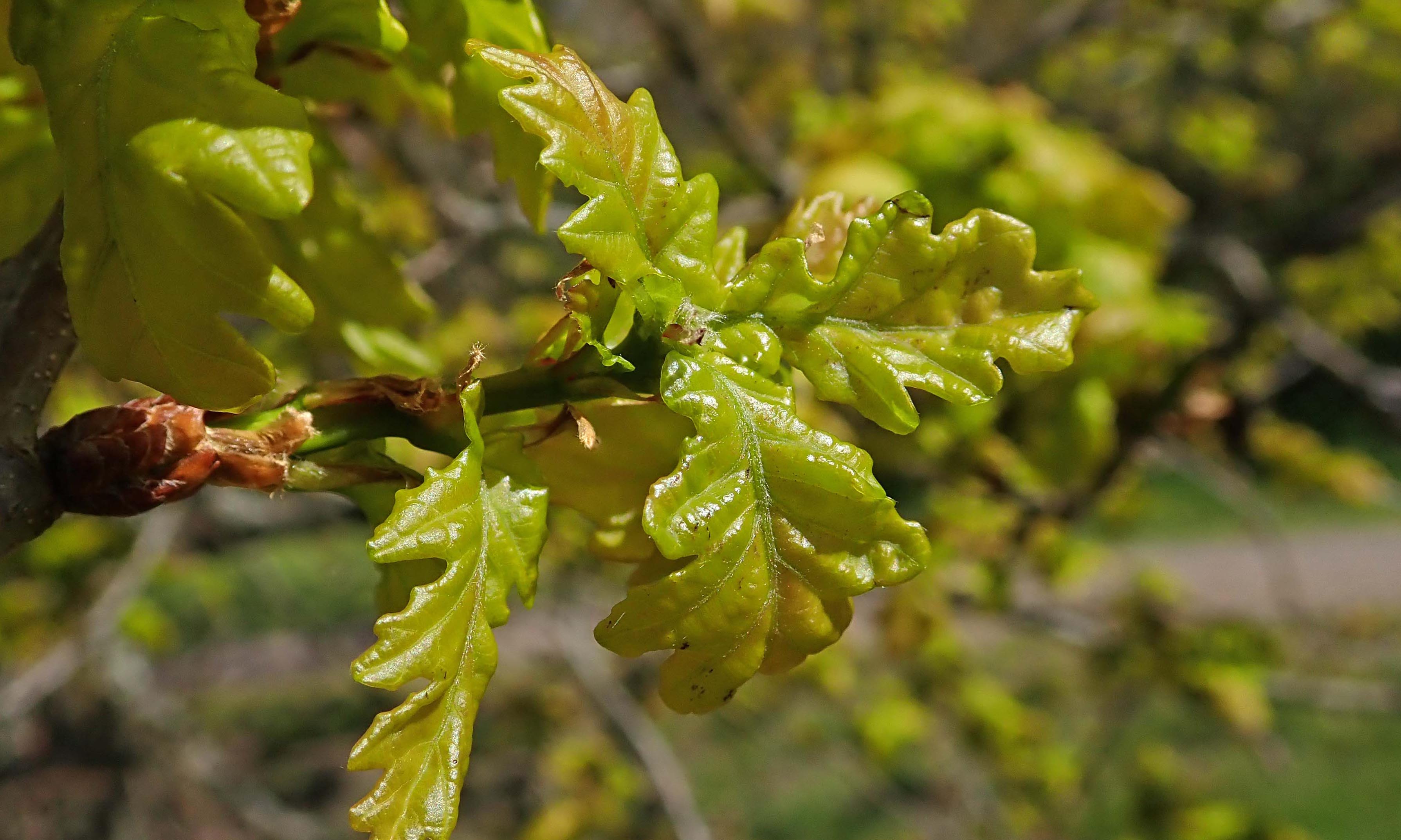
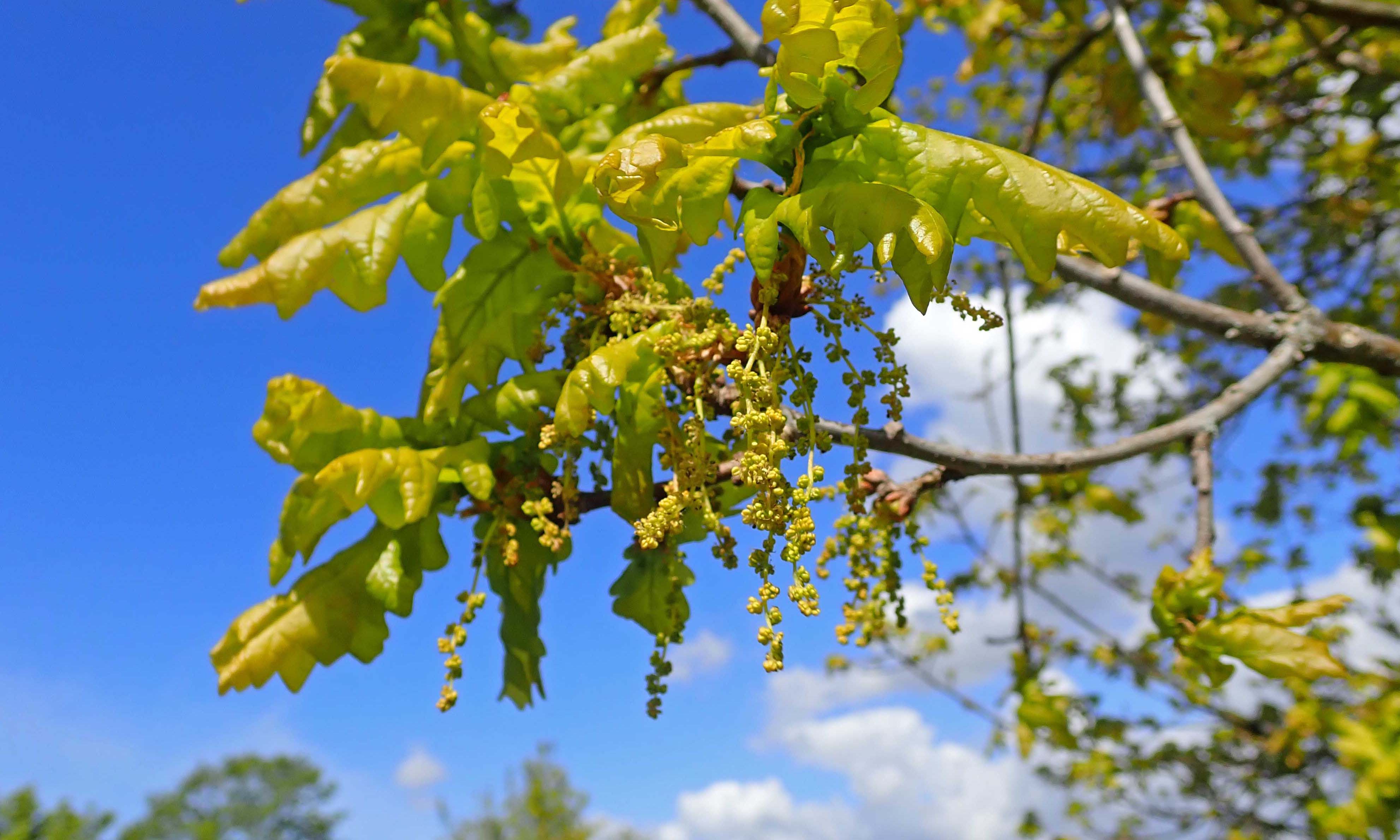
Here’s the latest in my occasional series of watching the trees come to life. This time, it’s the Oak tree – I’m not sure which of the Quercus species this is but I think they’re all fairly similar. First, the leaves burst from their buds, and the vibrancy of the new growth is dazzling.

210514 oak burst (1)
210514 oak burst (2)
210514 oak burst (3)

210514 oak burst (4)

And, of course, everyone knows acorns come from Oaks but perhaps, like me, you hadn’t noticed where the acorns come from. Below left are the male flowers, the catkins, dangling to catch the breeze that carries their pollen, and below right are the female flowers, tucked away, sheltered, waiting to be fertilised by the pollen and develop into acorns.

210514 oak burst (6)
210514 oak burst (5)

210514 oak burst (7)

Like Loading...
← Older posts

About me

sconzani

sconzani

I'm a writer and photographer; researcher and blogger; birder and nature lover; countryside rambler and city strider; volunteer and biodiversity recorder.

View Full Profile →

Follow earthstar on WordPress.com

Enter your email address to follow this blog and receive notifications of new posts by email.
Recent blog posts

  • M is for mite December 18, 2025
  • L is for lepidopteran lifers December 17, 2025
  • K is for Keeled skimmers December 16, 2025
  • J is for Jersey tiger December 15, 2025
  • I is for Ichneumon December 14, 2025

From the archives

COPYRIGHT

Unless otherwise acknowledged, the text and photographs on this blog are my own and are subject to international copyright. Nothing may be downloaded or copied without my permission.

Fellow Earth Stars!

  • Unknown's avatar
  • Unknown's avatar
  • Unknown's avatar
  • Unknown's avatar
  • Unknown's avatar
  • Unknown's avatar
  • Unknown's avatar
  • Unknown's avatar
  • Unknown's avatar
  • Unknown's avatar
  • Unknown's avatar
  • Unknown's avatar
  • Unknown's avatar
  • Unknown's avatar
  • Unknown's avatar
  • Unknown's avatar
  • Unknown's avatar
  • Unknown's avatar
  • Unknown's avatar
  • Unknown's avatar
  • Unknown's avatar
  • Unknown's avatar
  • Unknown's avatar
  • Unknown's avatar
  • Unknown's avatar
  • Unknown's avatar
  • Unknown's avatar
  • Unknown's avatar
  • Unknown's avatar
  • Unknown's avatar
  • Unknown's avatar
  • Unknown's avatar
  • Unknown's avatar
  • Unknown's avatar
  • Unknown's avatar
  • Unknown's avatar
  • Unknown's avatar
  • Unknown's avatar
  • Unknown's avatar
  • Unknown's avatar
  • Unknown's avatar
  • Unknown's avatar
  • Unknown's avatar
  • Unknown's avatar
  • Unknown's avatar
  • Unknown's avatar
  • Unknown's avatar
  • Unknown's avatar
  • Unknown's avatar
  • Unknown's avatar

Blog at WordPress.com.

Privacy & Cookies: This site uses cookies. By continuing to use this website, you agree to their use.
To find out more, including how to control cookies, see here: Cookie Policy
  • Subscribe Subscribed
    • earthstar
    • Join 667 other subscribers
    • Already have a WordPress.com account? Log in now.
    • earthstar
    • Subscribe Subscribed
    • Sign up
    • Log in
    • Report this content
    • View site in Reader
    • Manage subscriptions
    • Collapse this bar
 

Loading Comments...
 

You must be logged in to post a comment.

    %d