• ABOUT
  • BIRDING 2018
  • Birding 2019
  • BLOG POSTS
  • Butterflies 2018
  • Resources

earthstar

~ a celebration of nature

earthstar

Tag Archives: British wasps

I is for Ichneumon

14 Sunday Dec 2025

Posted by sconzani in insects

≈ Leave a comment

Tags

British wasps, ichneumon, Ichneumon wasps, British ichneumons, Pimpla species, Campopleginae pupa, Ichneumon pupa

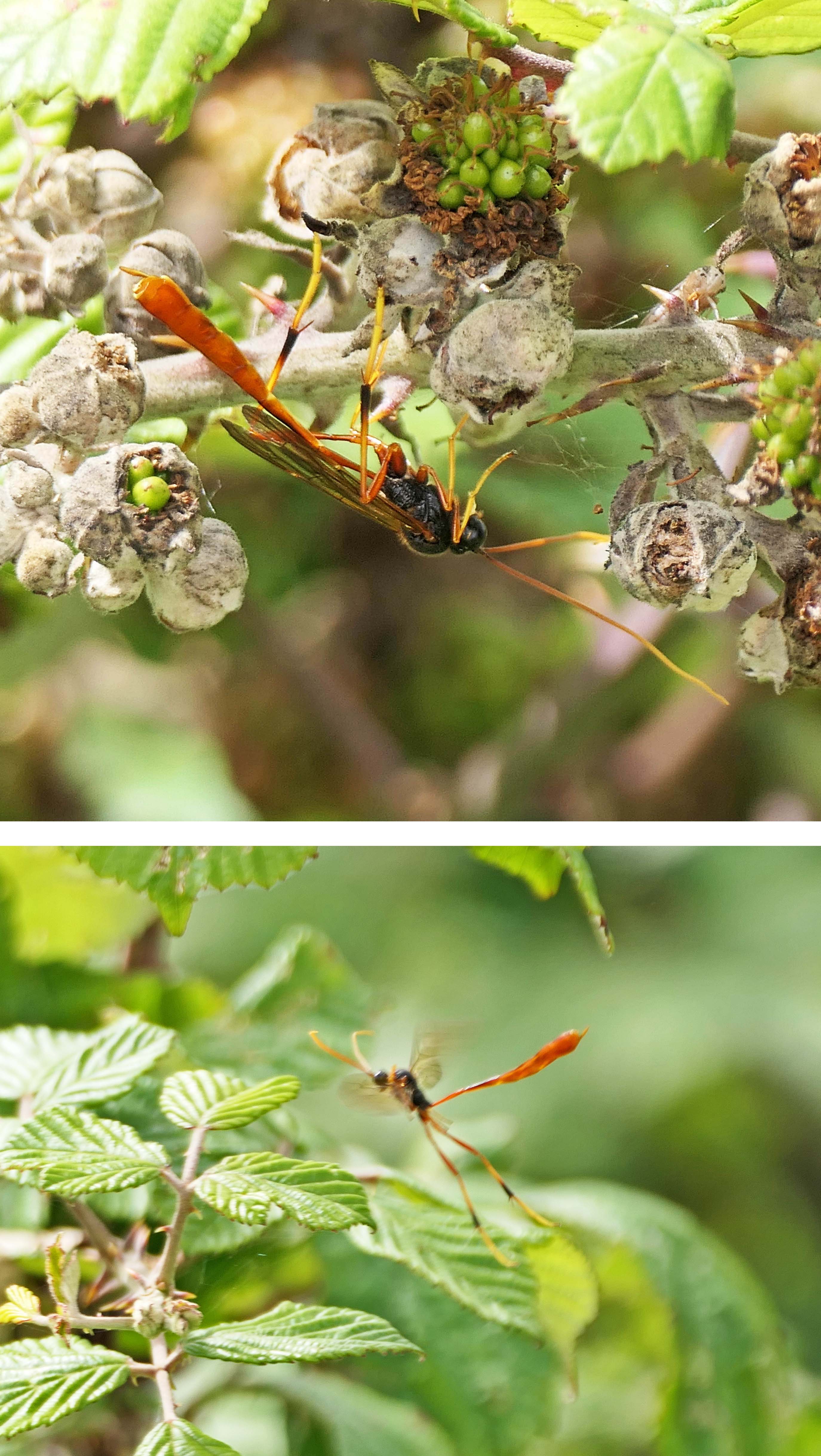
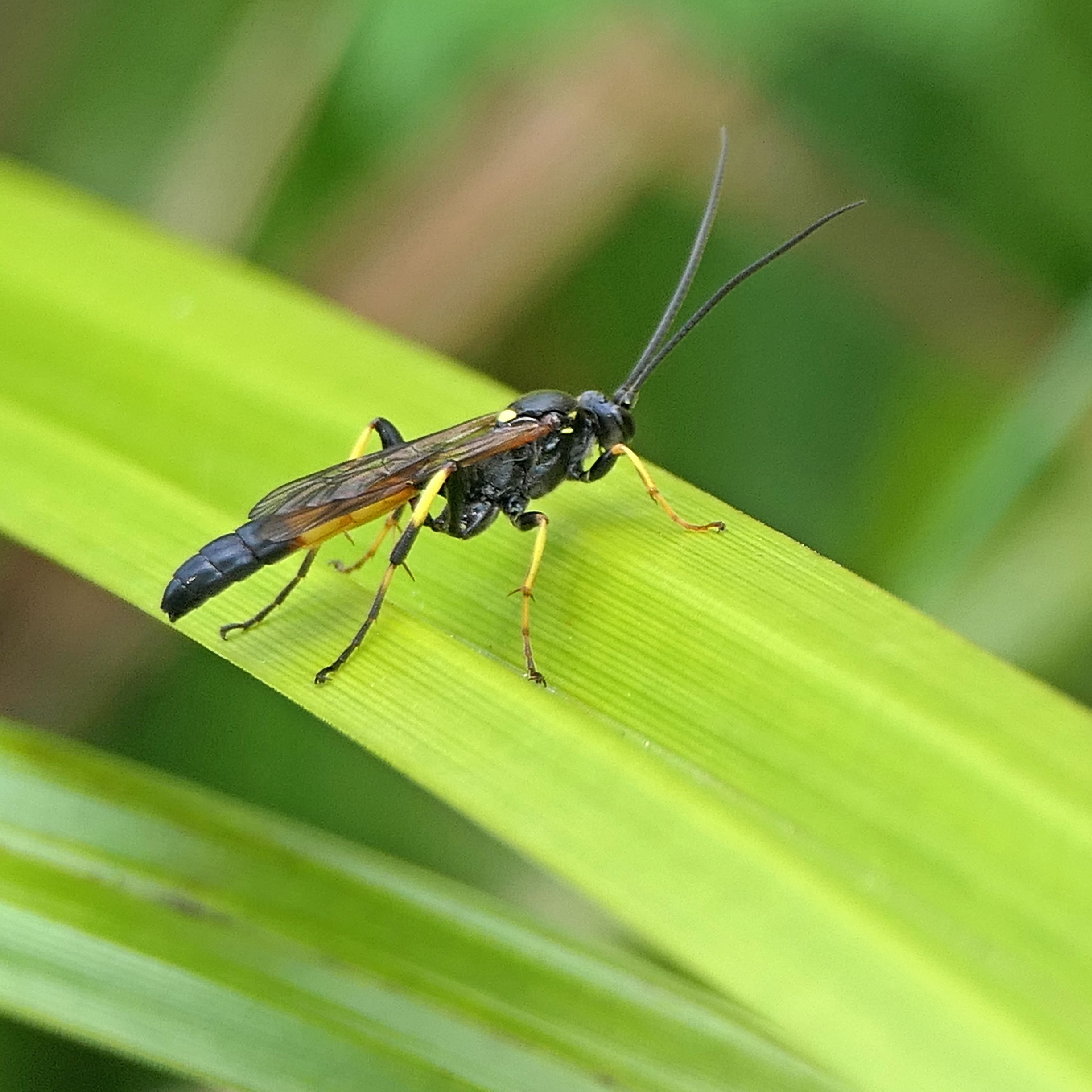
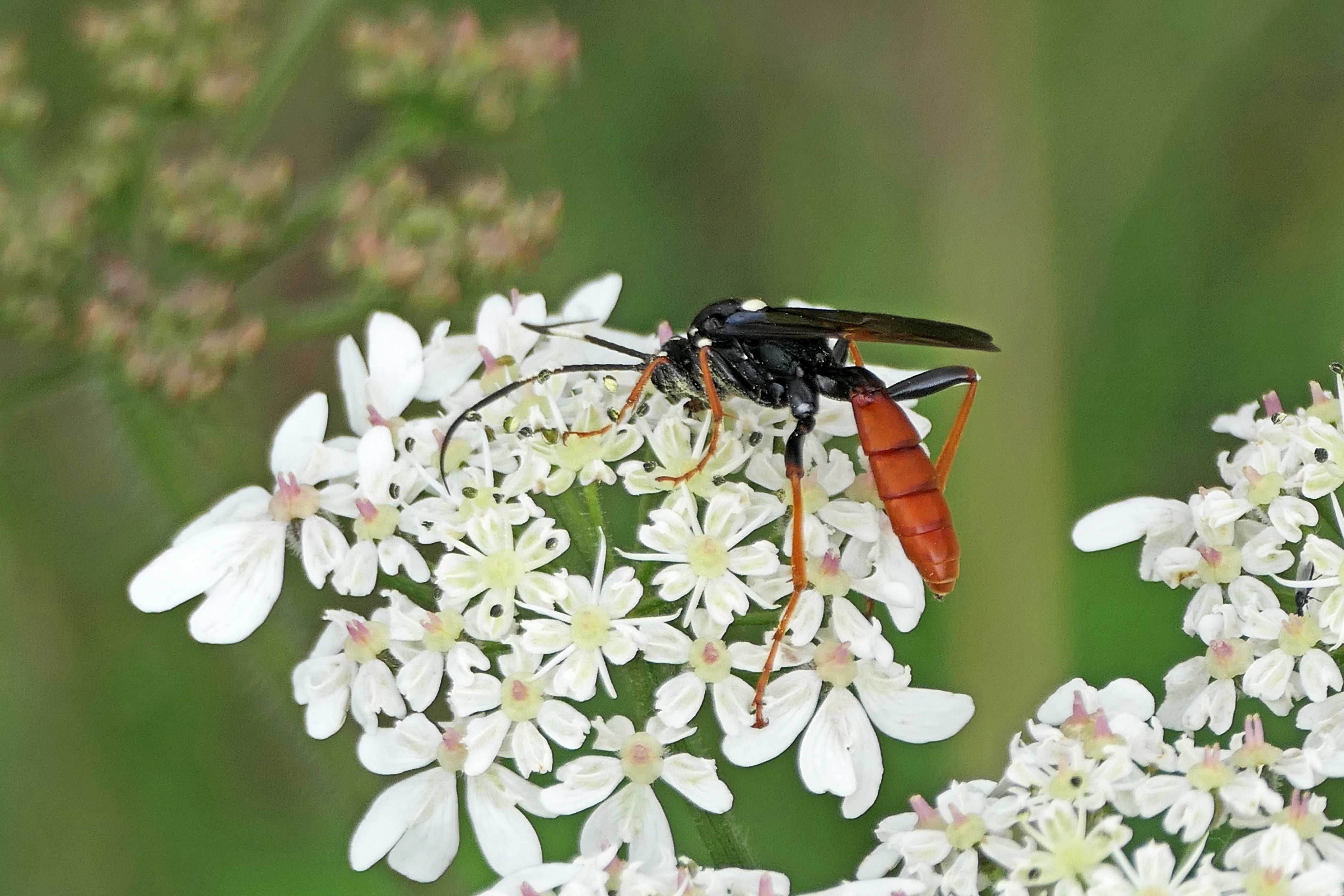
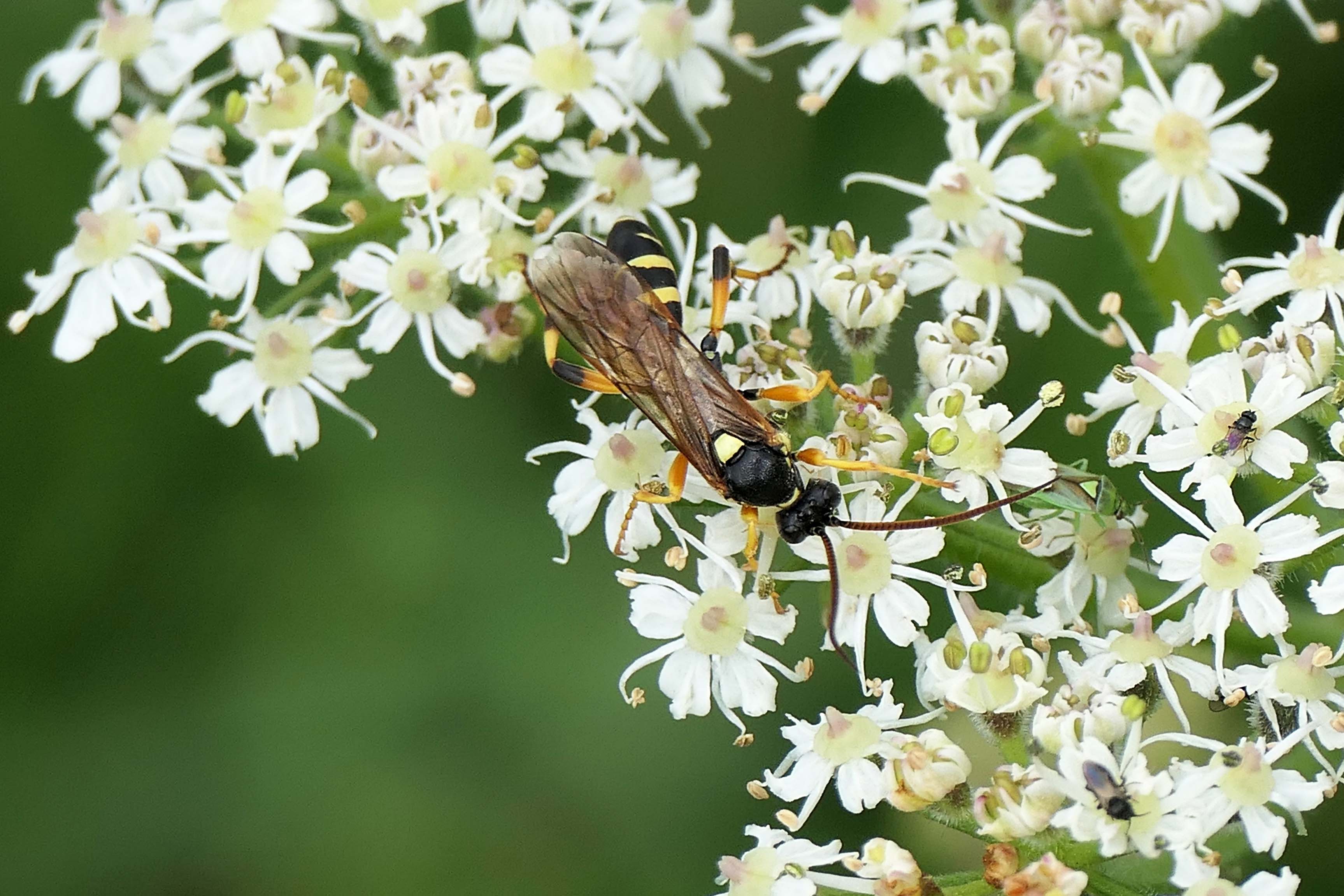
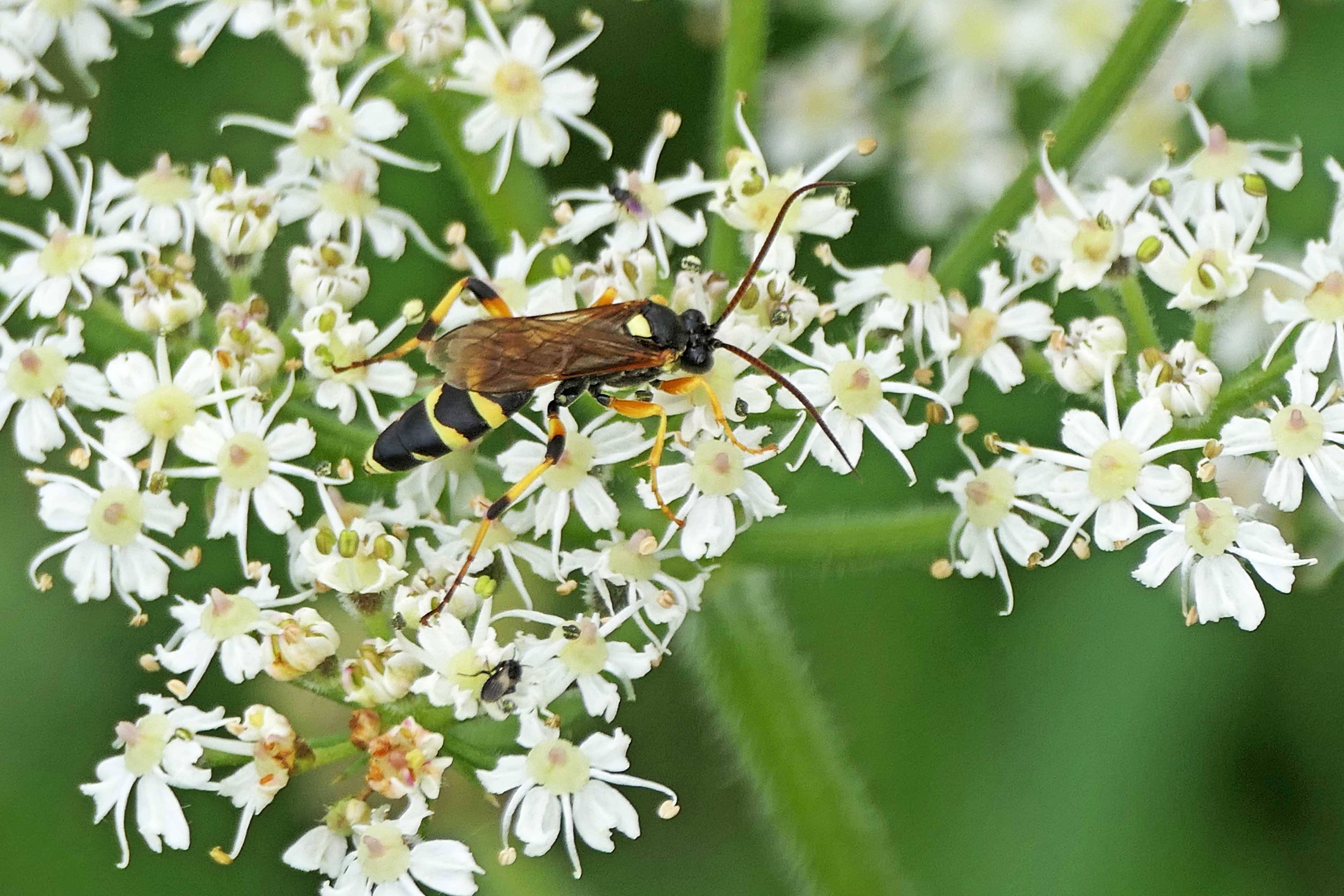
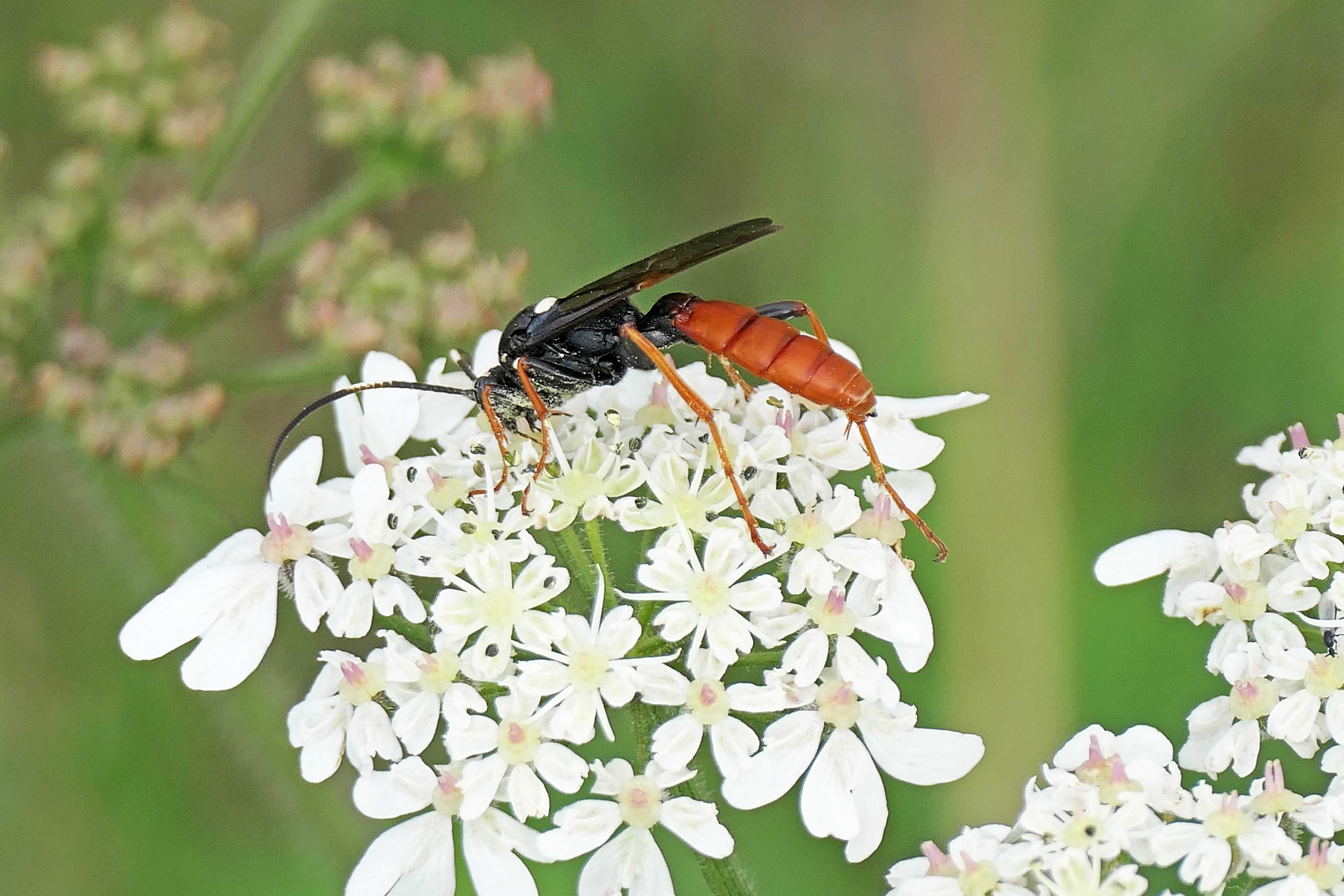
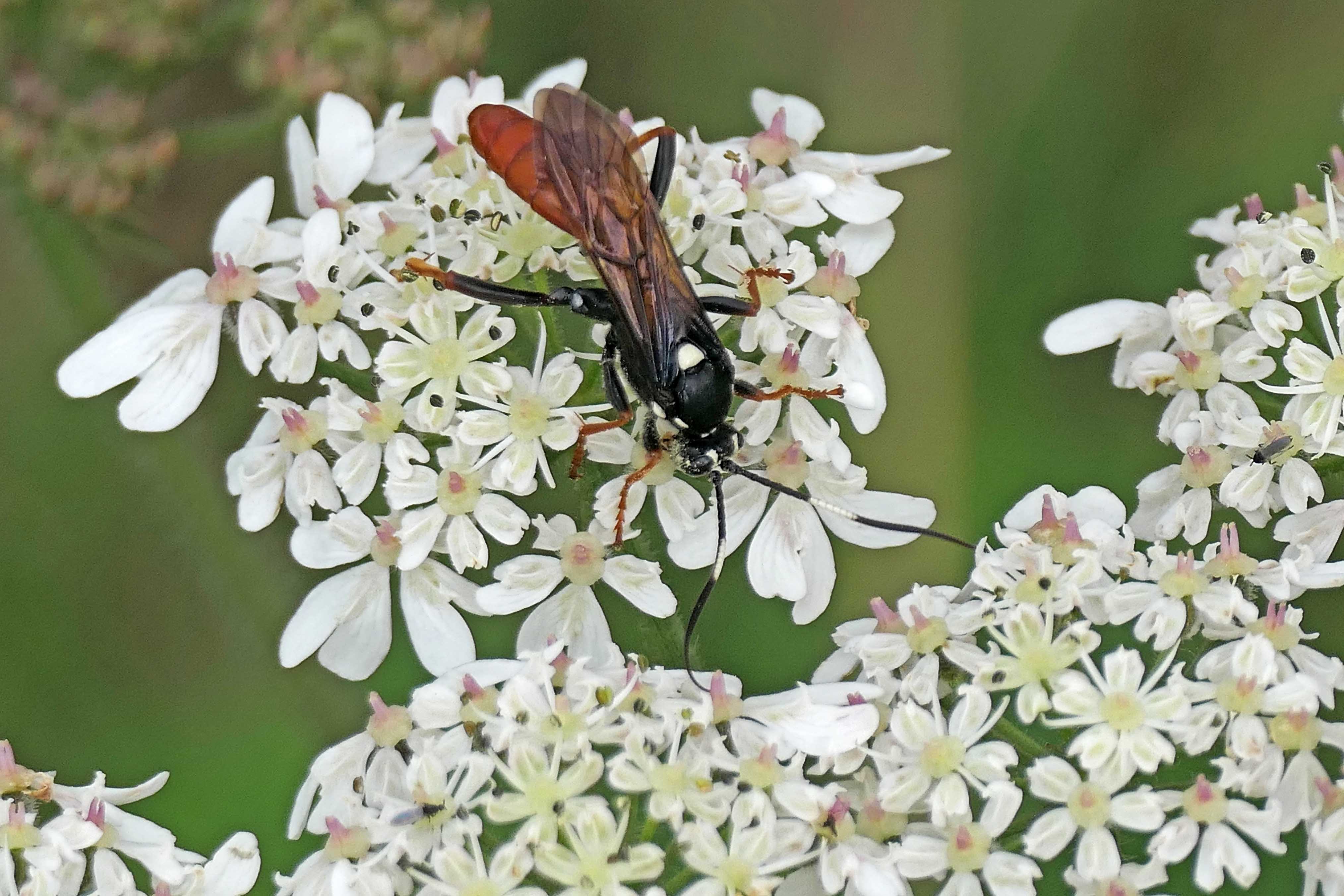
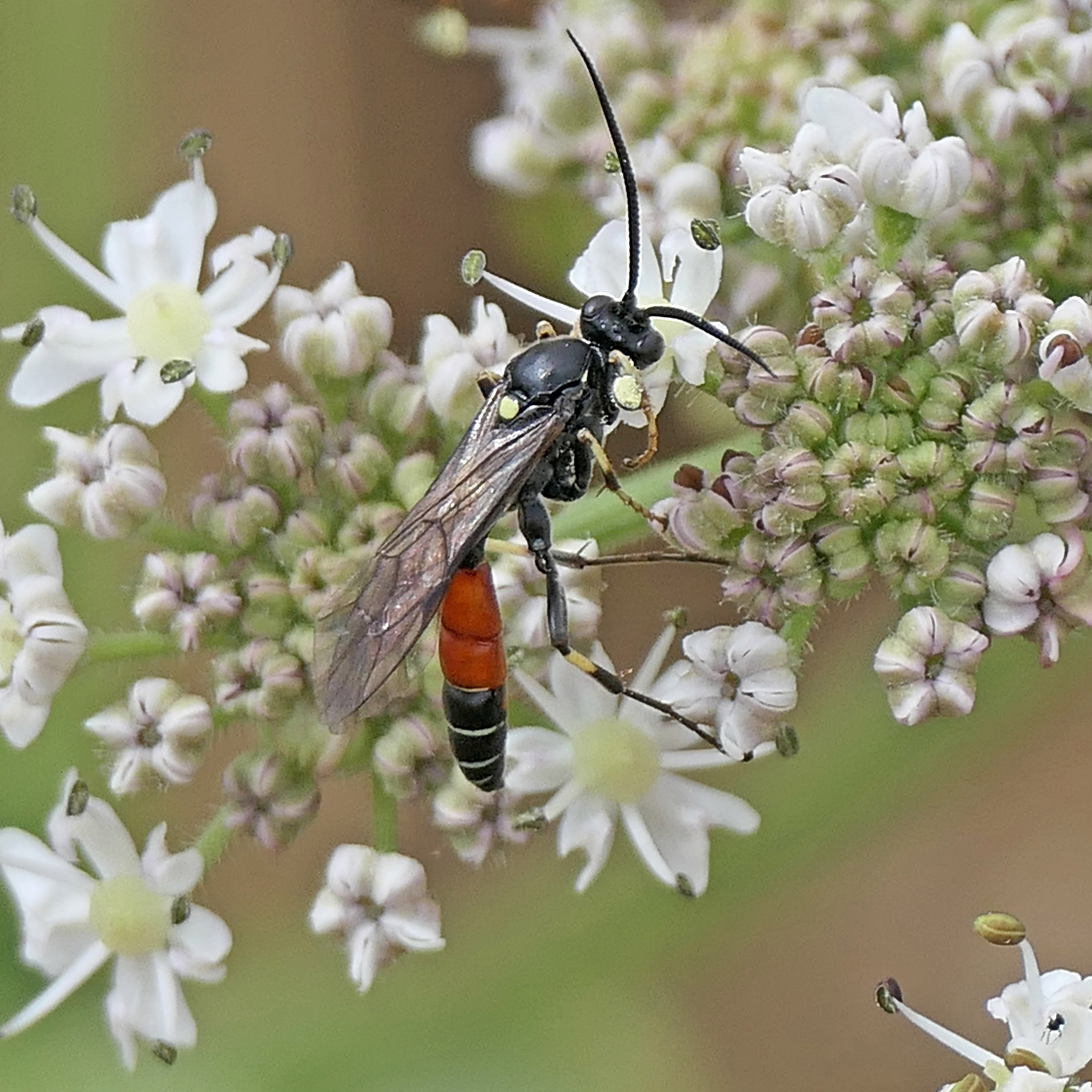
This has been a good year for sightings of Ichneumon wasps, and I have written a couple of posts about some I’ve found: Three Ichneumon wasps, on 19 August, featured my first Ctenichneumon panzeri record (now verified); Heteropelma amictum, found on the same day but not yet verified (the national Ichneumon recorder is currently working his way through what must be a huge number of national records – these voluntary verifiers do an incredible job!); and Ichneumon stramentor, a species I’d seen previously and which has been verified. Another first sighting, the handsome Tromatobia lineatoria, whose identity has also now been confirmed, featured in a second blog, Ichneumon: Tromatobia lineatoria, published recently, on 13 November.
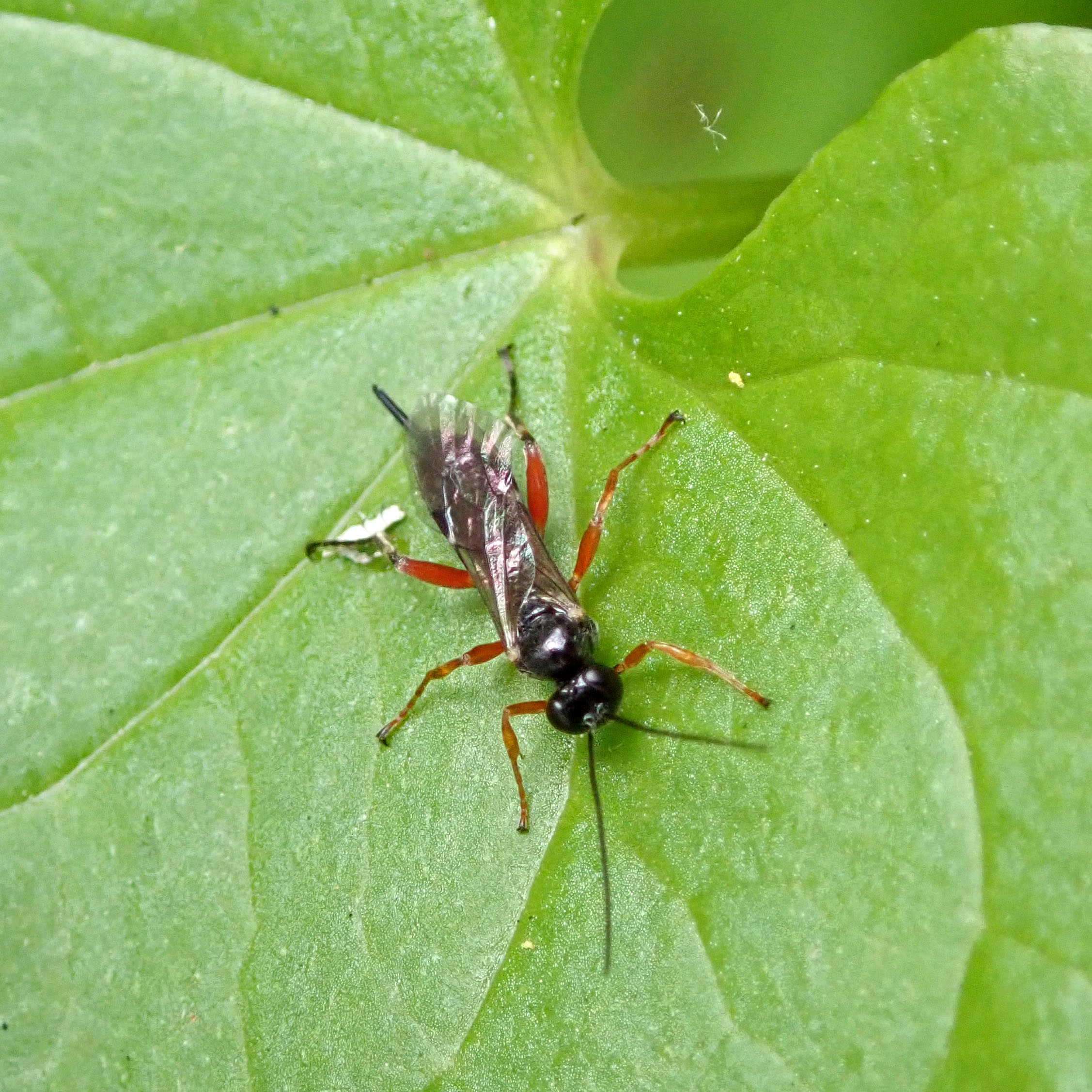
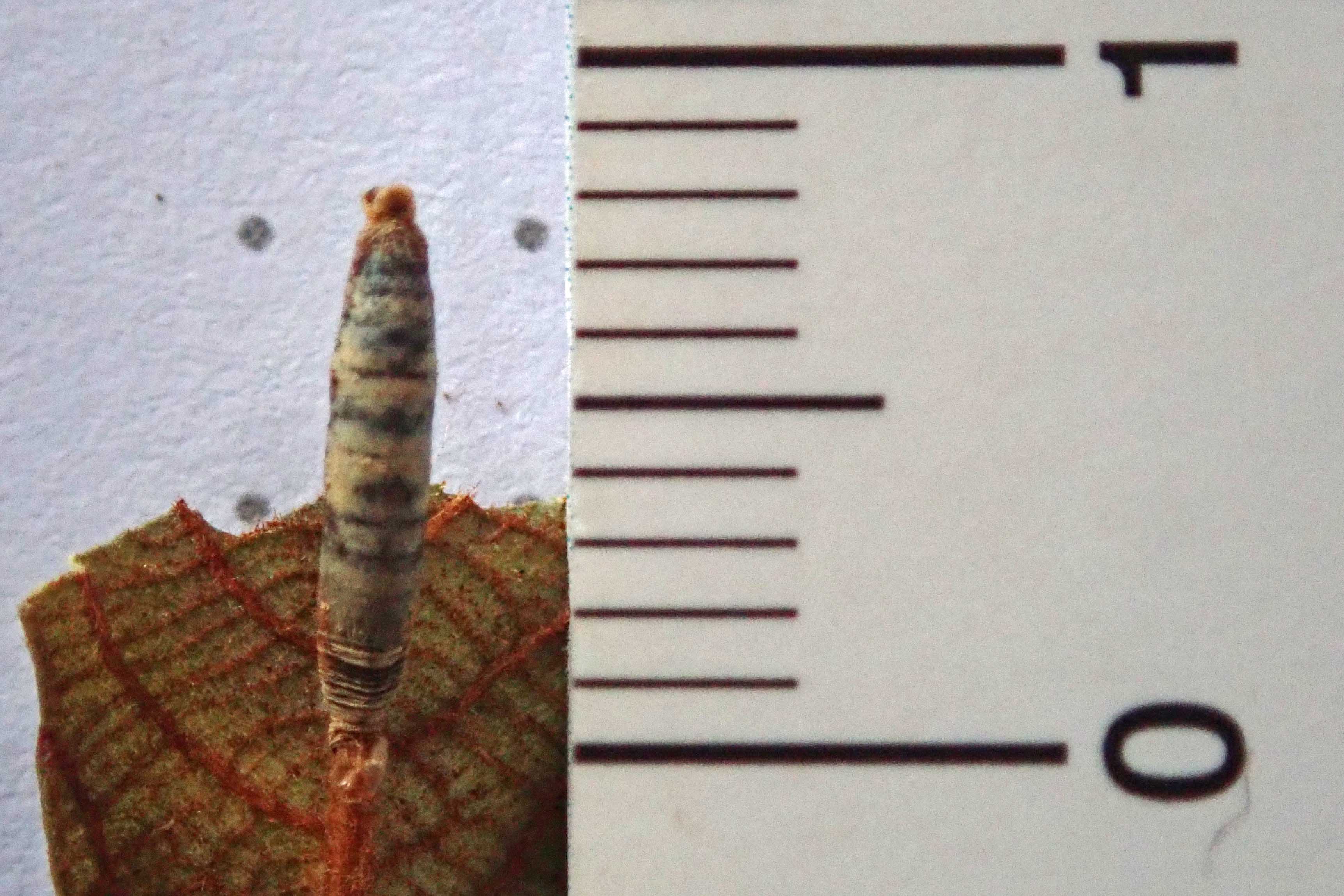
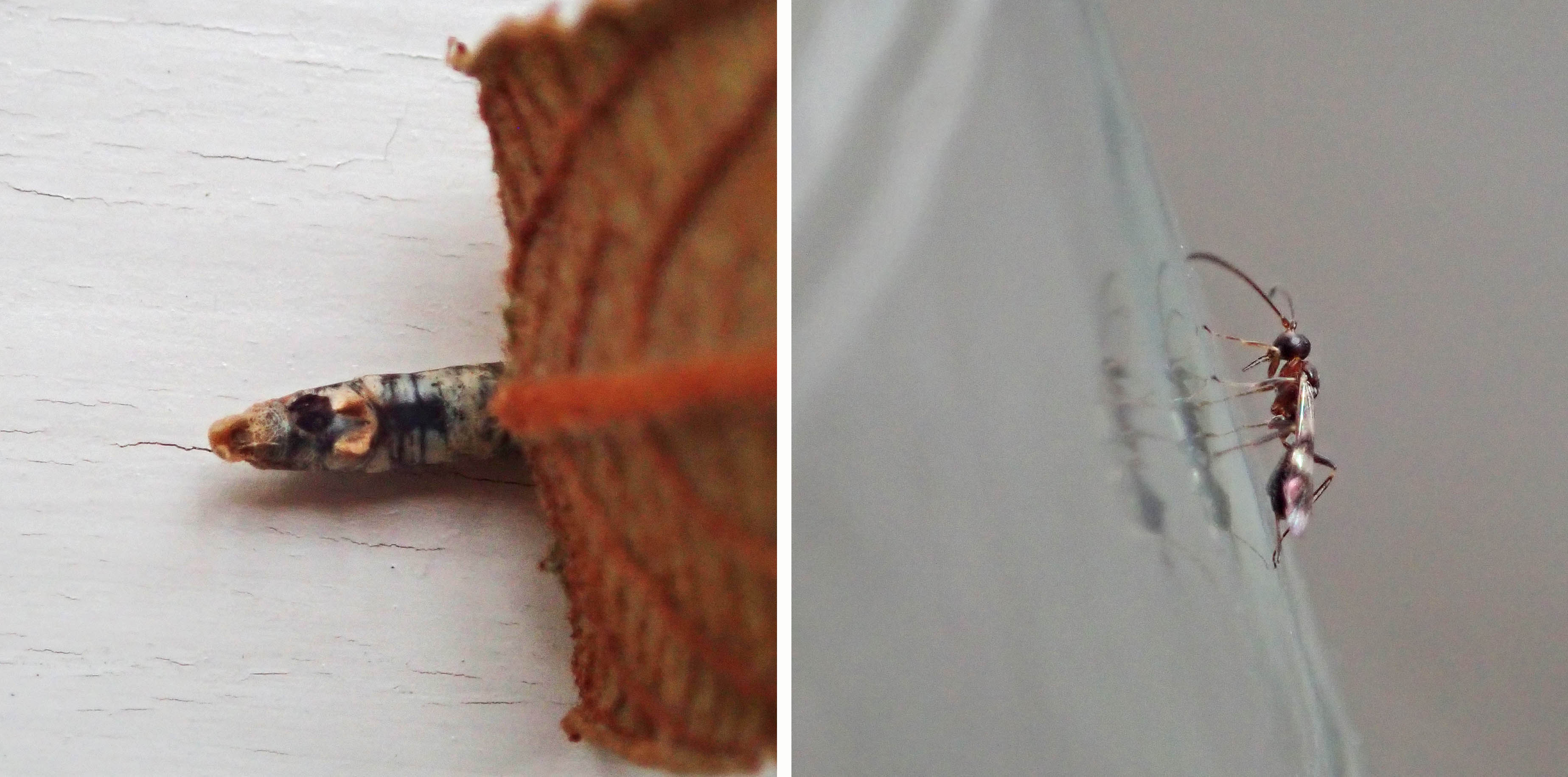
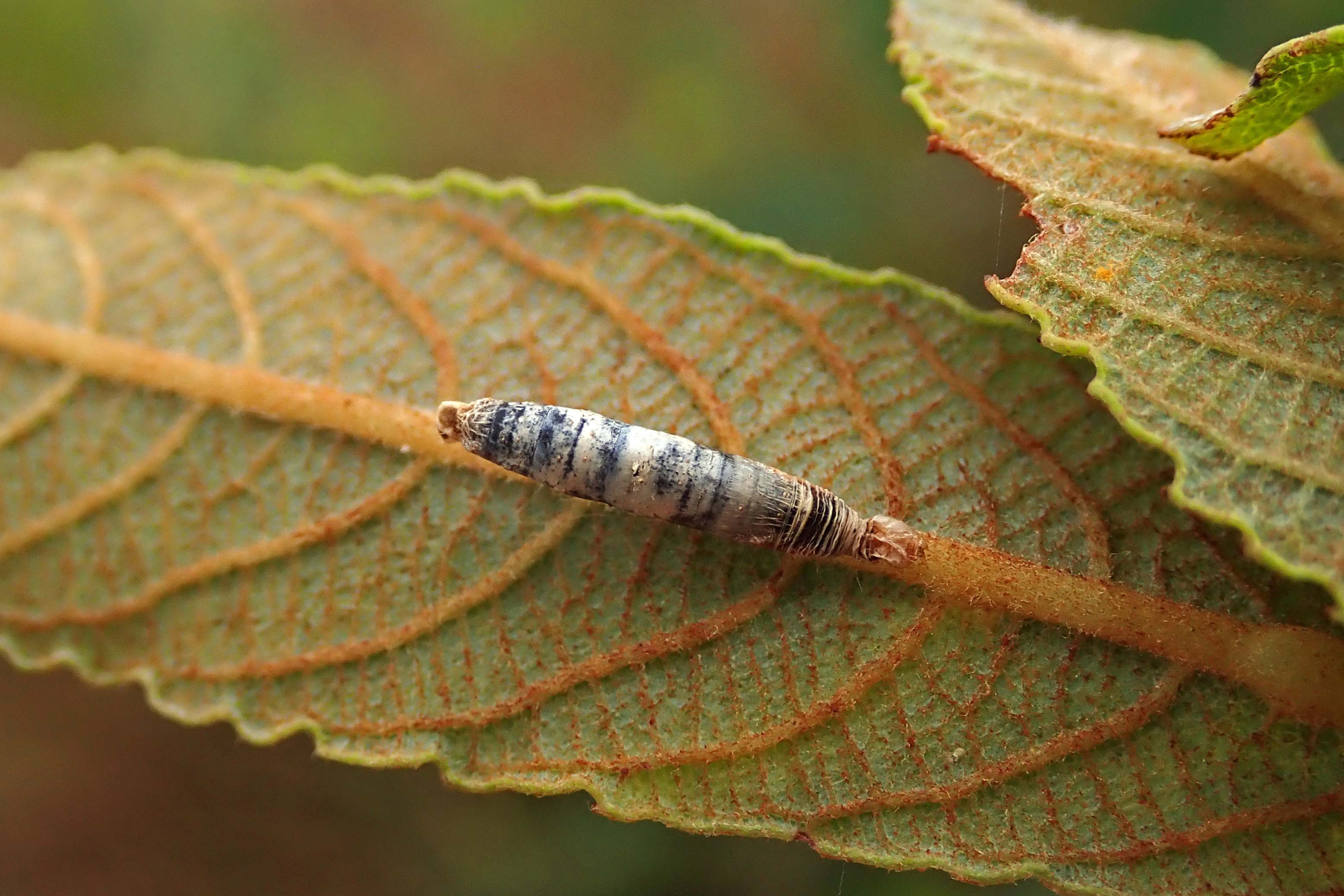
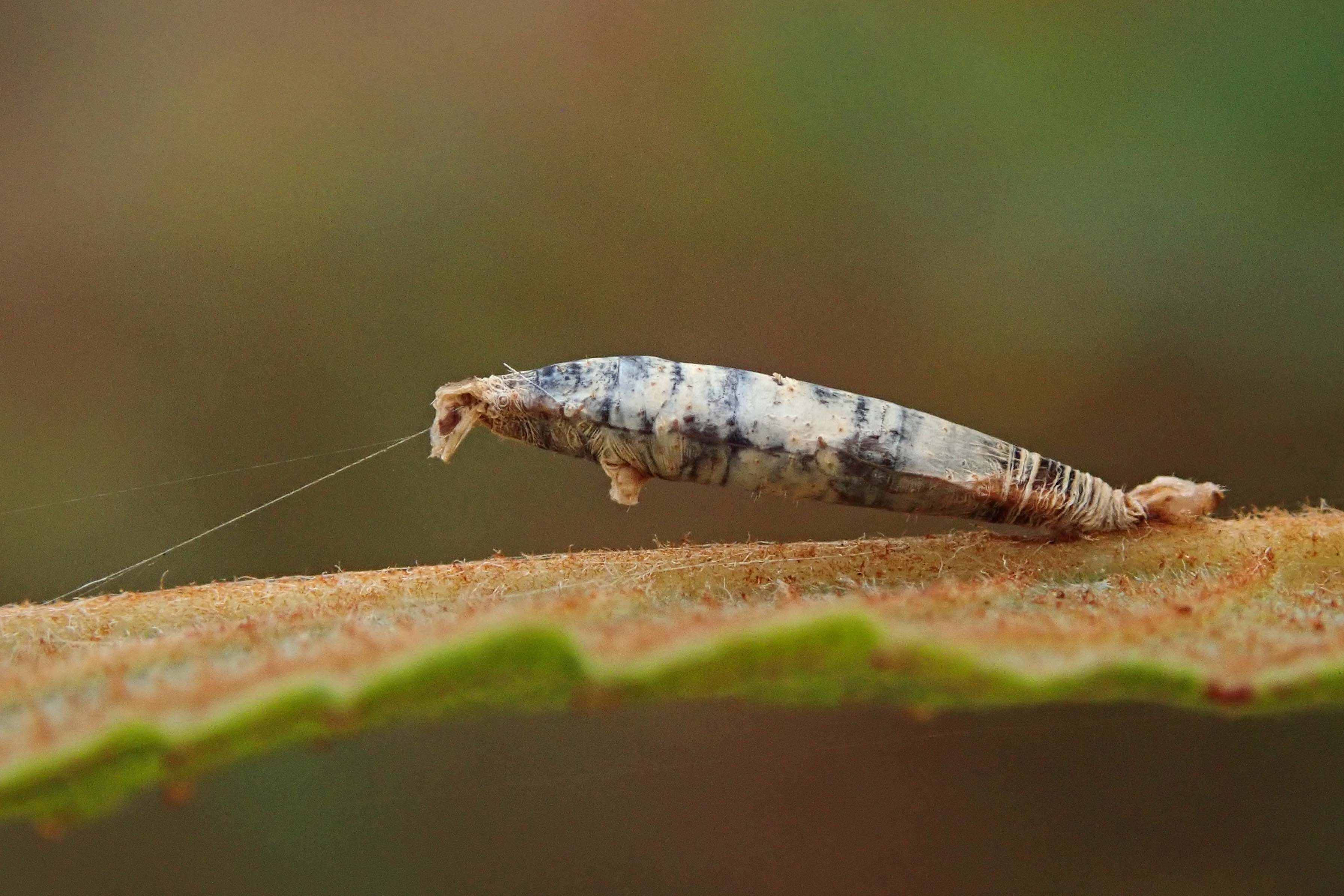
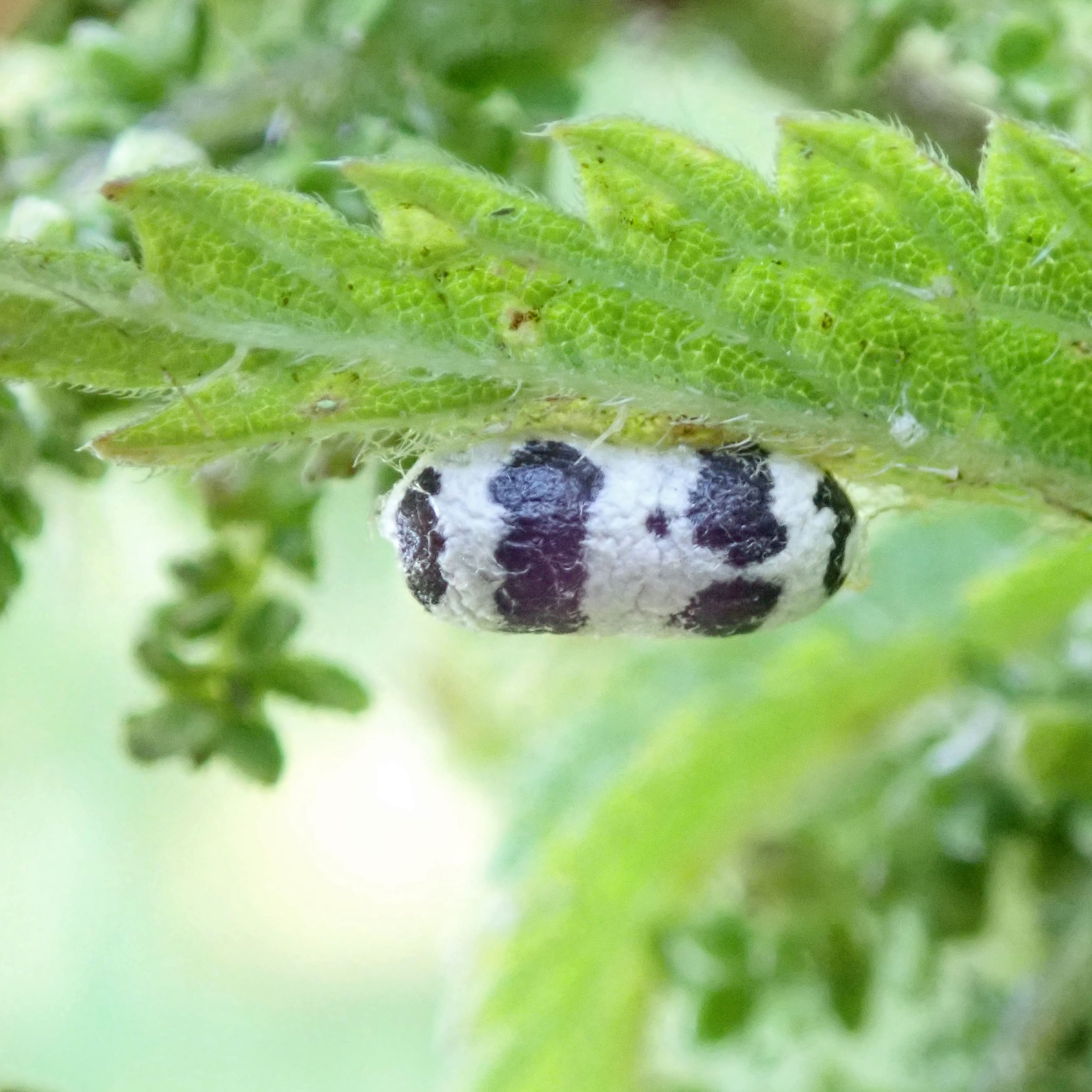
There have, of course, been other Ichneumon sightings. One that I didn’t write about because I was rather unsure of its identification is shown above; it has now been verified as one of the Pimpla species. And in July I found a cocoon, which I recognised as having been created by an Ichneumon wasp but has now been confirmed as belonging to the subfamily Campopleginae. I’m hoping my luck at finding new Ichneumon species will continue in 2026.
Like Loading...

Three Ichneumon wasps

19 Tuesday Aug 2025

Posted by sconzani in insects

≈ Leave a comment

Tags

British ichneumons, British wasps, Ctenicheumon panzeri, Heteropelma amictum, Ichneumon wasps, Ichneumon xanthorius

Two things:
Firstly, my records of these three Ichneumon wasps have not yet been verified so, although I’m fairly confident of their identification, I’m not 100% certain.
And, secondly, I decided to write this blog after someone replied to one of my social media posts, saying – supposedly jokingly – that they had scurried away after seeing one of these creatures, a female with a prominent ‘stinger’ (the implication being that they were frightened of the wasp). So, just to be clear, these wasps will not harm humans; the ‘stinger’ is an ovipositor, for depositing eggs in to their hosts; and many Ichneumon wasps are large, colourful, and really quite beautiful creatures.

At 10-15mm, Ctenichneumon panzeri is a medium-sized Ichneumon that can often be found on umbellifer flowers, as you can see in my photo. As with all Ichneumon wasps, they are parasitoids; Ctenicheumon panzeri deposits its eggs in the larvae of moths of the Noctuidae family.

Heteropelma amictum is one of the larger (20-30mm) and more spectacular ichneumonids, with a long narrow body and equally long back legs, both of which are very prominent when it flies (my flight photo is blurry but I wanted to show you how it holds its body erect and dangles its legs below). Heteropelma amictum uses moth pupae, rather than larvae, as its larval hosts.

Ichneumon xanthorius is another medium-sized wasp, and one I see more often than other species, when it’s feeding on umbellifer flowers or perching on shrubs and bushes. Its larvae feed on the pupae of both moths and butterflies.

The British Natural History Museum has produced an excellent Beginner’s Guide to identifying British ichneumonids, which you can access and download by clicking on this link.

Like Loading...

Ruby-tailed wasp

01 Tuesday Jul 2025

Posted by sconzani in insects

≈ 2 Comments

Tags

British wasps, Chrysididae, kleptoparasitic wasps, kleptoparasitism, parasitic wasps, Ruby-tailed wasp, wasp

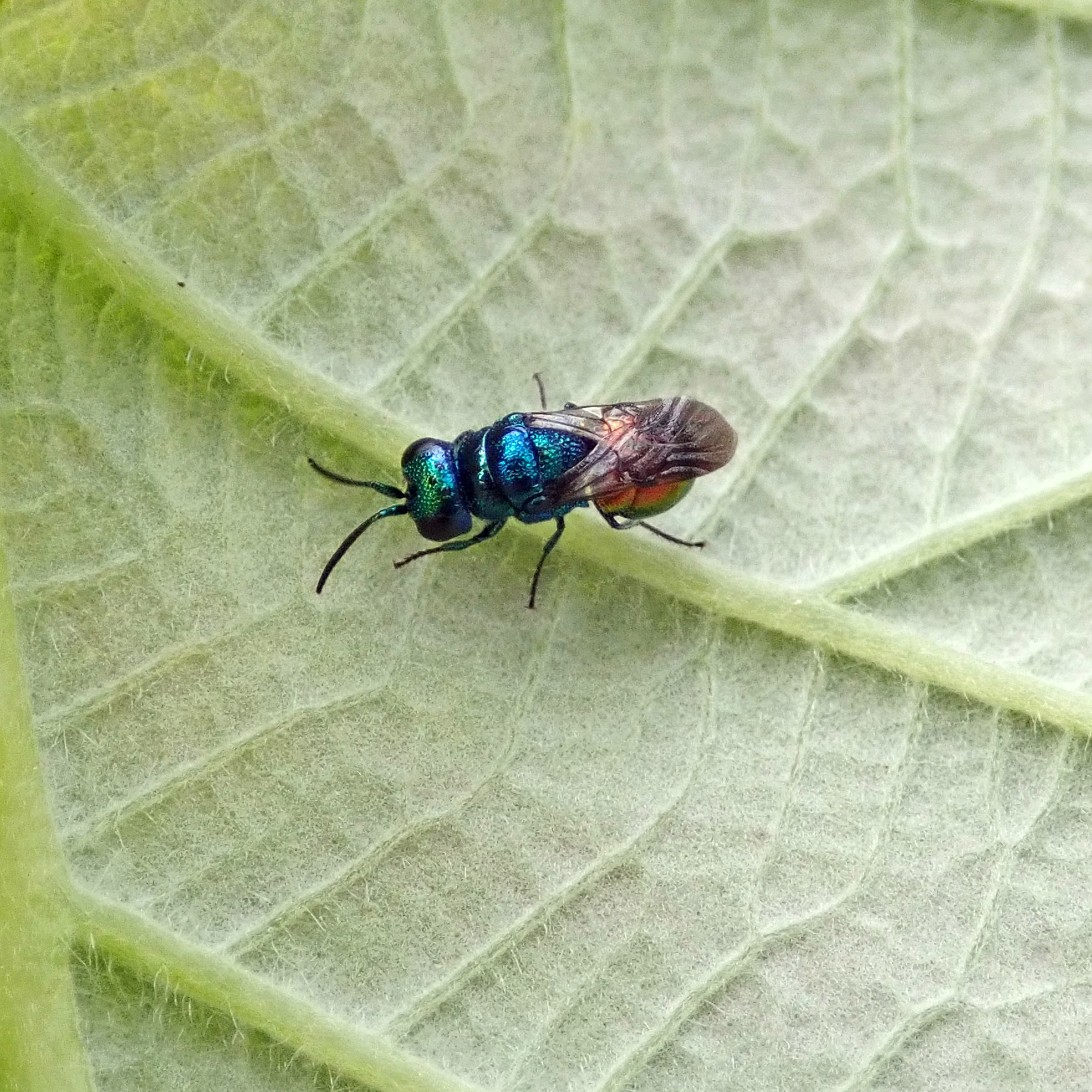
This gorgeous creature, clad in glimmering metallic colours of blue and green and red, is one of the Ruby-tailed wasps, the Chrysididae, and that’s as close to a definitive identification as I can come. According to an article I found on the BWARS (Bees, Wasps and Ants Recording Society) website, there are currently 38 species of Chrysid wasps in the British Isles and Channel Islands. Seven of those 38 species are shown on the Naturespot website, and they all look remarkably similar to my eye so I’m not even going to try to put an exact name to the one shown here. And, to be honest, I’m just incredibly pleased that this tiny wasp didn’t immediately fly away as I approached but, instead, allowed me to get reasonably good photos to share with you.

Now, just to be clear, though they look stunning, the Ruby-tailed wasps are almost all parasitic in nature. Some parasitise the eggs and larvae of other invertebrates, including other wasp species and bees; others are kleptoparasites, stealing the food other solitary wasps leave in their nests for their own larvae. Beauty and the beast encased in one tiny but beautiful bundle.

Like Loading...

Aleiodes wasp update

05 Thursday Sep 2024

Posted by sconzani in insects

≈ Leave a comment

Tags

Aleiodes wasp, British wasps, mummy wasp, parasitic wasp

When I checked the jars on my kitchen window sill yesterday morning, I discovered the Aleiodes wasp I blogged about last week had hatched (Aleiodes mummy wasp, 28 August). And here she is …

240905 aleiodes wasp (3)

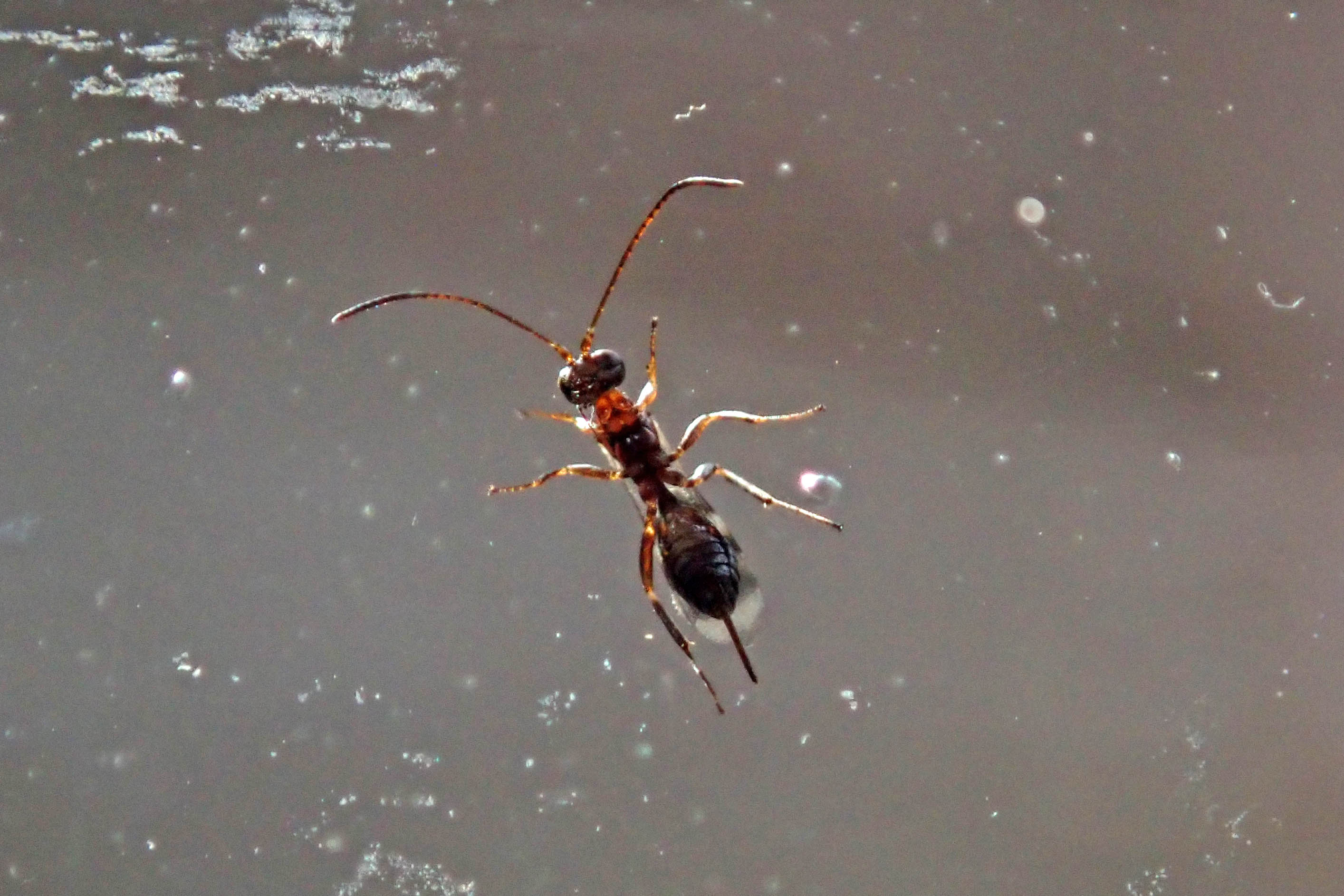
The photo above was taken through the glass of its jar so apologies that it’s not very sharp, but you can see she’s a female by the presence of the sharp ovipositor poking out the bottom of her body. And a reminder, below, of how small the cocoon was: approximately 7mm long, so I would guess the wasp was around 6mm.

240905 aleiodes wasp (2)

Finally, the image on the left below (also not very clear) shows the small circular dark hole on the underside of the cocoon where the tiny wasp had chewed her way out into the world. And, on the right, the wasp sitting, very briefly, on the outside of the jar before she flew off to begin her life in the wild.

240905 aleiodes wasp (1)

Like Loading...

Aleiodes mummy wasp

28 Wednesday Aug 2024

Posted by sconzani in insects

≈ Leave a comment

Tags

Aleiodes wasp, British wasps, caterpillar parasitised by wasp, mummy wasp, parasitic wasp

I found this remarkable but tiny object a couple of weeks ago when checking out some Buff-tip moth caterpillars on a small willow tree, but I’ve delayed posting about it until I had confirmation of identification.

240828 aleiodes (2)

The situation is this: a female Aleiodes wasp (species unknown) laid her egg in a caterpillar (species also unknown). When the egg hatched, it fed inside the caterpillar, eventually leaving the skin of the caterpillar hardened, in a state many people describe as a ‘mummy’, which is why the Aleiodes wasps are commonly referred to as mummy wasps. The wasp larva pupates inside the mummy, and will eventually bite a hole in the outer skin to emerge as an adult. As I was intrigued to see what might emerge, I’ve brought this mummy home, and it’s currently in a jar on my kitchen window. If/when something emerges, I’ll post about it.

240828 aleiodes (1)

There’s an image on Bug Guide website that looks quite similar to the mummy I found, and another on Jungle Dragon, where you can see the exit hole made by the adult wasp (or wasps) when it/they emerged from pupation.

Like Loading...

I is for ichneumon

14 Thursday Dec 2023

Posted by sconzani in insects

≈ Leave a comment

Tags

Amblyjoppa fuscipennis, British ichneumons, British wasps, Ichneumon sarcitorius, Ichneumon wasps, wasp

I’m not very good at photographing and/or identifying bee and wasp species (they’re almost never still, and they can be tricky to identify) so I was very happy to nail not one, but two wasp species in August. Both were ichneumon wasps, the first, which featured in An ichneumon, 10 August, is Amblyjoppa fuscipennis.

231214 Amblyjoppa fuscipennis

And this second beauty was also distinctive enough for me successfully to identify. Meet Ichneumon sarcitorius (from Another ichneumon, 11 August).

231214 Ichneumon sarcitorius

Like Loading...

Another ichneumon

11 Friday Aug 2023

Posted by sconzani in insects

≈ Leave a comment

Tags

British wasps, ichneumon, Ichneumon sarcitorius, Ichneumon wasps

As I mentioned yesterday, I found two ichneumon wasps on neighbouring umbellifers at Cosmeston last week. Their identities haven’t yet been confirmed but I think I’ve got them right, because their characteristics fit exactly the description in the Natural History Museum’s superb downloadable pdf, Beginner’s guide to identifying British ichneumonids. Today’s wasp is, I believe, a male Ichneumon sarcitorius.

230811 Ichneumon sarcitorius male (1)

The guide lists this ichneumon’s characteristics as follows:

Another of the medium to large (female=10mm, male=14mm) black-and-yellow or black-and-red species. The size, shape and precise colour patterns are distinctive to this species. … The males [which have black-and-yellow banding] are longer with broad white bands across the abdomen at the hind edges of the segments, with conspicuous indentations on the bands of the second and third segments. The bands on the first and fourth segments are usually broken. Both sexes have hind femora tipped with black.
Habitat: usually seen nectaring on umbellifers or flying through foliage hunting

230811 Ichneumon sarcitorius male (2)

Like Loading...

An ichneumon

10 Thursday Aug 2023

Posted by sconzani in insects

≈ Leave a comment

Tags

Amblyjoppa fuscipennis, British wasps, ichneumon, Ichneumon wasps

I found two ichneumon wasps on neighbouring umbellifers at Cosmeston last week. Their identities haven’t yet been confirmed but I think I’ve got them right, and I’ll explain why in today’s post and tomorrow’s. Firstly, though, I must acknowledge my source for this – the Natural History Museum has an excellent downloadable pdf, Beginner’s guide to identifying British ichneumonids, which I always find very helpful when trying to identify these lovely wasps.

230810 Amblyjoppa fuscipennis fem (1)

Firstly, I believe this is a female Amblyjoppa fuscipennis, which the guide describes as follows:

A large (16–25mm) and beautiful species with a black head. It has a black thorax with a small cream spot and a bright orange abdomen – quite broad and no other colours on it. Can be confused with Protichneumon pisorius, but where P. pisorius has black tips on the hind tibia and tarsus, these features on A. fuscipennis are entirely orange. Flies from June to August.

230810 Amblyjoppa fuscipennis fem (2)

Like Loading...

Flying critters

28 Monday Feb 2022

Posted by sconzani in insects

≈ Leave a comment

Tags

Andrena flavipes, British bees, British wasps, Lasioglossum species, Vespula vulgaris

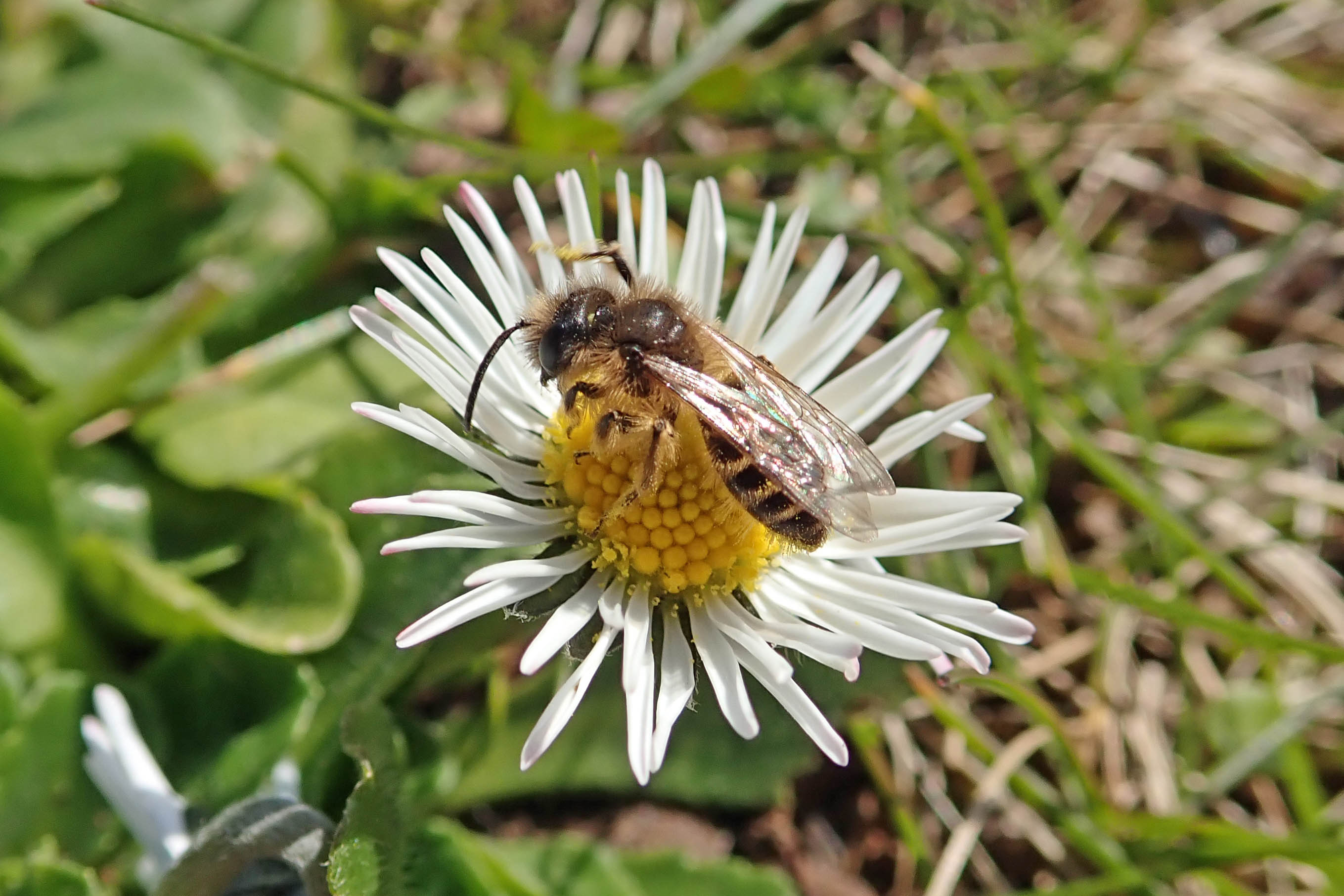
Though a cool breeze blew from the south east, yesterday was wonderfully sunny, so I planned my walk to check the more sheltered spots in the local landscape where I hoped I might find newly emerged flying critters. And I got lucky. As well as my first two butterflies of the year (Small tortoiseshell and Brimstone, both too distant for photos with the camera I had with me), I also found some solitary bees and a wasp.

220228 lasioglossum (1)
220228 lasioglossum (2)

Thanks to Liam Olds, of the Colliery Spoil Biodiversity Initiative, I can tell you the two bees above are both ‘female Lasioglossum sp. [species] (morio group but not possible to ID from pics)’ and the bee below is a ‘male Andrena flavipes by the looks’.

220228 andrena flavipes

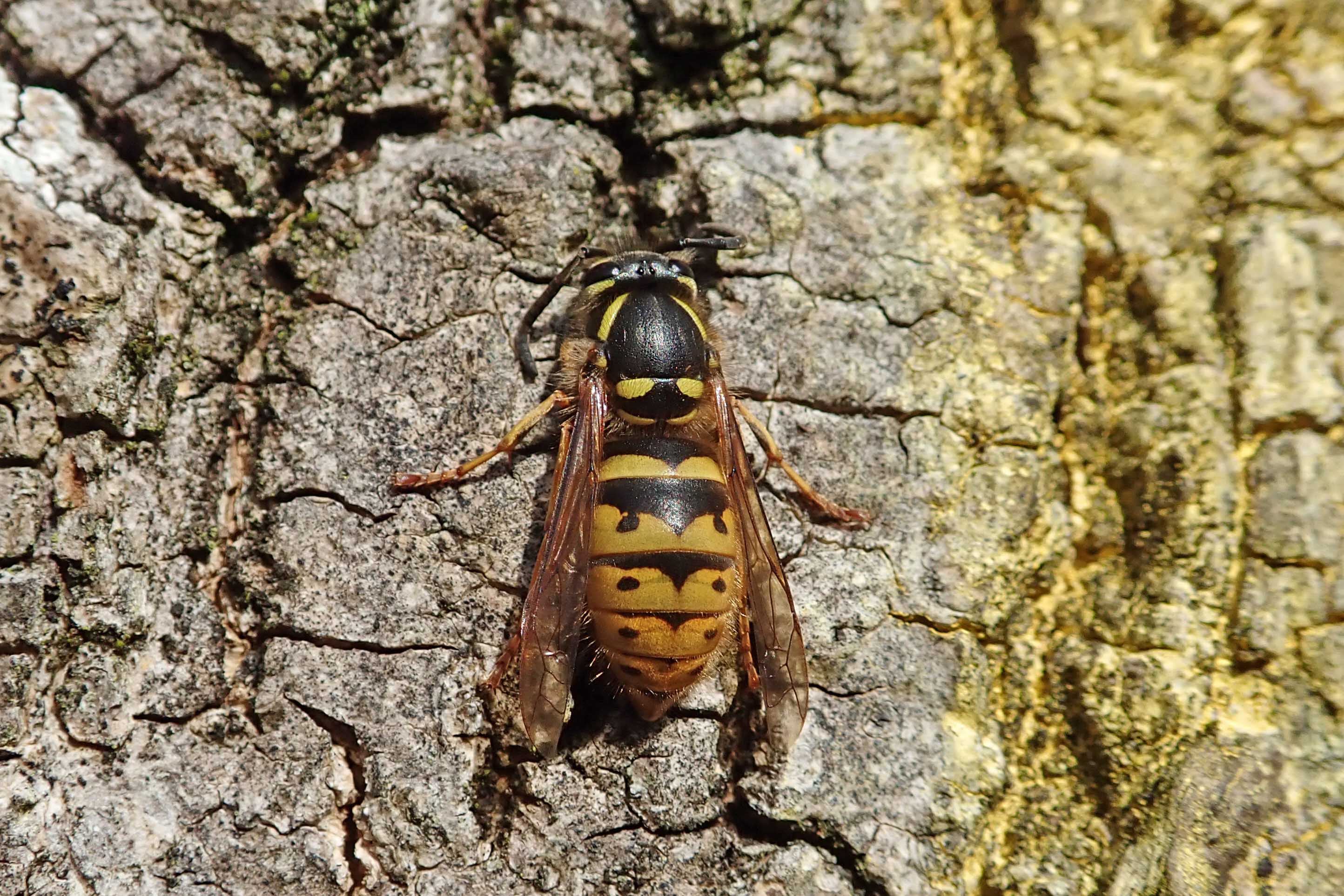
And the wasp I found basking on a tree trunk is a Vespula vulgaris.

220228 vespula vulgaris

Like Loading...

Face to face

10 Wednesday Nov 2021

Posted by sconzani in autumn, insects

≈ 2 Comments

Tags

British wasps, male wasps, Vespula vulgaris, wasp, wasps on ivy

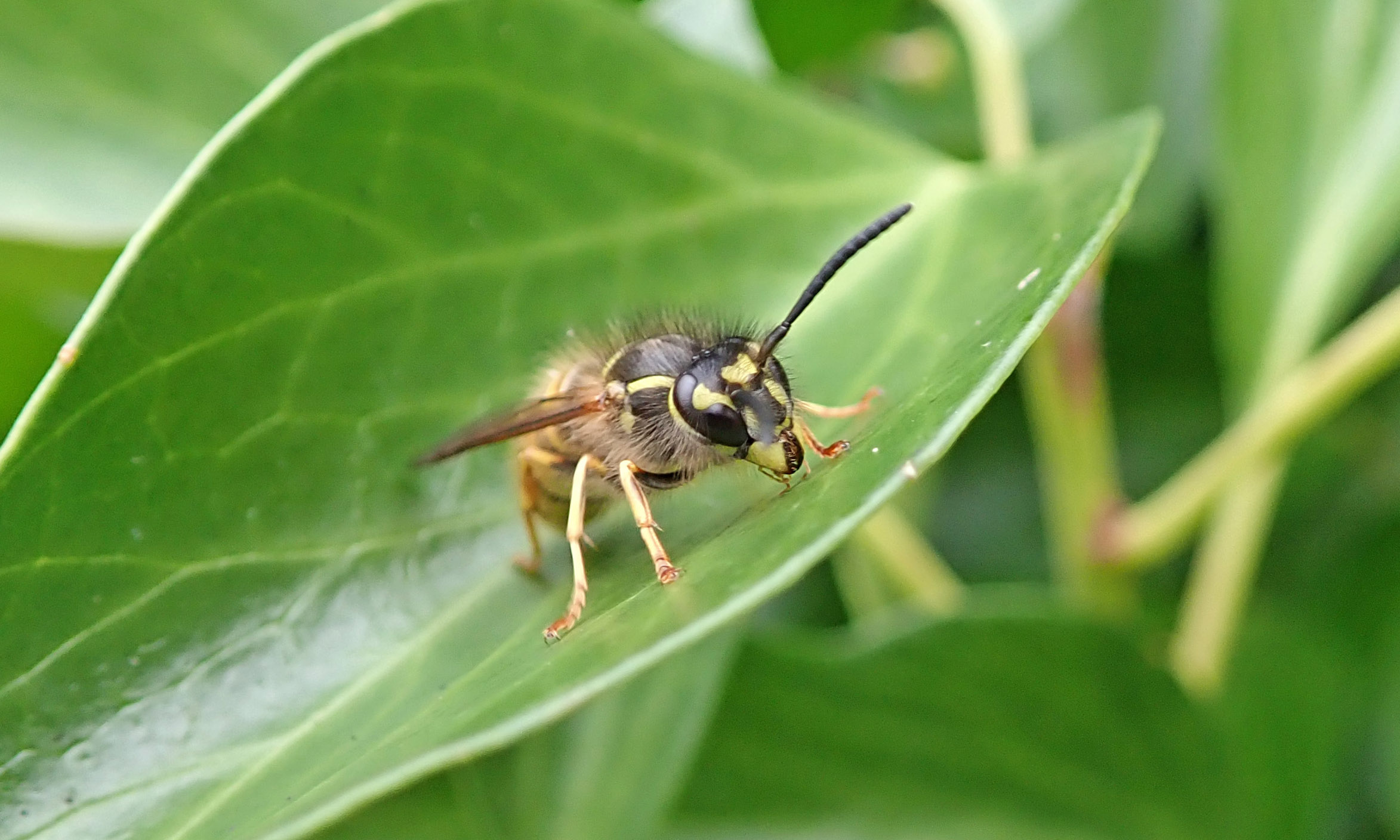
A long section of the coastal path where I walked yesterday was lined with Ivy, covered in ripening clusters of berries … and wasps. It seemed like each nest of wasps (all Vespula vulgaris, as far as I could tell) had laid claim to its own bush, where they sat preening on leaves, wandered over the berries, or just snoozed, and I was able to get quite close for some photos.

211110 wasp (1)

I’ve just been reading on the really informative Eakringbirds website that ‘Many wasps found on flowers from August onwards will often be males. These tend to be more docile and slightly less active than workers and often make better photographic subjects’, and that was certainly the case for me yesterday.

211110 wasp (2)

Like Loading...
← Older posts

About me

sconzani

sconzani

I'm a writer and photographer; researcher and blogger; birder and nature lover; countryside rambler and city strider; volunteer and biodiversity recorder.

View Full Profile →

Follow earthstar on WordPress.com

Enter your email address to follow this blog and receive notifications of new posts by email.

Recent blog posts

  • M is for mite December 18, 2025
  • L is for lepidopteran lifers December 17, 2025
  • K is for Keeled skimmers December 16, 2025
  • J is for Jersey tiger December 15, 2025
  • I is for Ichneumon December 14, 2025

From the archives

COPYRIGHT

Unless otherwise acknowledged, the text and photographs on this blog are my own and are subject to international copyright. Nothing may be downloaded or copied without my permission.

Fellow Earth Stars!

  • Unknown's avatar
  • Unknown's avatar
  • Unknown's avatar
  • Unknown's avatar
  • Unknown's avatar
  • Unknown's avatar
  • Unknown's avatar
  • Unknown's avatar
  • Unknown's avatar
  • Unknown's avatar
  • Unknown's avatar
  • Unknown's avatar
  • Unknown's avatar
  • Unknown's avatar
  • Unknown's avatar
  • Unknown's avatar
  • Unknown's avatar
  • Unknown's avatar
  • Unknown's avatar
  • Unknown's avatar
  • Unknown's avatar
  • Unknown's avatar
  • Unknown's avatar
  • Unknown's avatar
  • Unknown's avatar
  • Unknown's avatar
  • Unknown's avatar
  • Unknown's avatar
  • Unknown's avatar
  • Unknown's avatar
  • Unknown's avatar
  • Unknown's avatar
  • Unknown's avatar
  • Unknown's avatar
  • Unknown's avatar
  • Unknown's avatar
  • Unknown's avatar
  • Unknown's avatar
  • Unknown's avatar
  • Unknown's avatar
  • Unknown's avatar
  • Unknown's avatar
  • Unknown's avatar
  • Unknown's avatar
  • Unknown's avatar
  • Unknown's avatar
  • Unknown's avatar
  • Unknown's avatar
  • Unknown's avatar
  • Unknown's avatar

Blog at WordPress.com.

Privacy & Cookies: This site uses cookies. By continuing to use this website, you agree to their use.
To find out more, including how to control cookies, see here: Cookie Policy
  • Subscribe Subscribed
    • earthstar
    • Join 667 other subscribers
    • Already have a WordPress.com account? Log in now.
    • earthstar
    • Subscribe Subscribed
    • Sign up
    • Log in
    • Report this content
    • View site in Reader
    • Manage subscriptions
    • Collapse this bar
 

Loading Comments...
 

You must be logged in to post a comment.

    %d